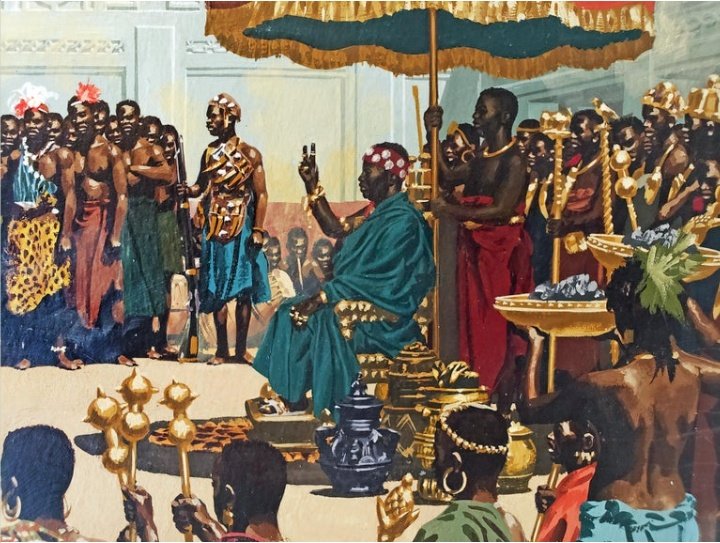
"Western historians have falsely assigned Ghana an origin of approximately 300 AD, in their attempt to keep all of the African nations south of the Sahara to history without pre-Christian origin" - Black Man Of The Nile And His Family by Dr. Yosef Ben Jochannan
"As the desert advanced, the Dhar Tichitt culture moved southward into the still well watered areas of northern Mali. This now seems the likely history of the civilization that can be documented at Koumbi Saleh" - African Time by Ife Killmanjaro
"in fact the greatness of Ghana stemmed from its position on the borders on the Sahara desert and it's control of large tracks of fertile lands in the far western part of West Africa" - African Time by Ife Killmanjaro
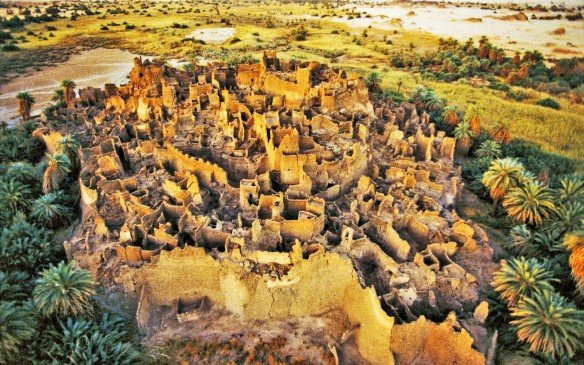
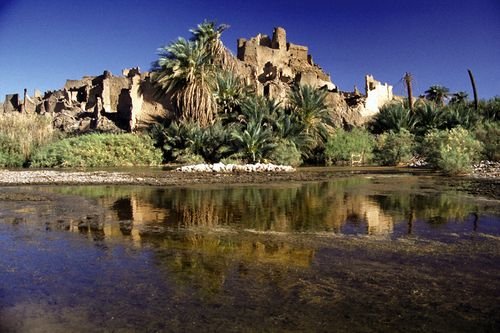
"Architectural elements in dry stone and clay that are found from Tichitt Walata in Mauritania to Tibesti. They symbolize the first organized civilizations of the drying up period of the Sahara: Garamante, Libyco-Berber, Toubou, and other groups of Black population." - UNESCO
Dr. John Henrik Clarke
Ancient Cultures and Civilizations Of The Green Sahara
"Ghana experienced many years of peace and prosperity because of two great ores-iron and gold. From about 500 B.C., iron was in general use among the West Africans along the Niger and Benue rivers. Scientists have found evidence of this in Nok, Nigeria" - Patricia McKissack
• • •
Missing some Tweet in this thread? You can try to
force a refresh

From Ounjougou to Amekni and Tessalit, tracing the origin of ancient West African agriculture
10th millennium BCE - 4th Millennium BCE
(Thread)
Since the African paleolithic (200,000 -100,000 ka) plants had been collected and used for food, medicinal purposes, anti pest control, as well as bedding, etc.
By the 10th millennium BCE, foragers in Ounjougou, Mali were manufacturing ceramics and pots to store and cook collected wild grains.
By the 9th millennium BCE, they had spread North into the southern - central green Sahara, associated with the emergence of round head rock art.
Ancient Nigerians in Nsukka started smelting iron some time between 2631 - 2458 BCE, long before the arrival of Nok people
The dufuna canoe, Nok canoe art and Atlantic seashell terracotta may be evidence of Nok long distance trade with iron metallurgists, down the Niger River
"Some very early iron dates include 1895–1370 BCE at Tchire Ouma 147 in the Termit Massif region of Niger; 2631–2458 BCE at Lejja in Nsukka region, Nigeria"
- Foreman Bandama
"The beginning of iron production sometime between 750 and 550 BC"
- Louis Champion
"In Taruga he recovered terracotta fragments in context with iron-smelting furnaces. Radiocarbon measurements dated the site to the mid-first millennium BC"
- Dr. Nicole Rupp
The Saharo-Sudanese industry, ancestors of Niger-Congo speakers constructed stone foundations to huts and stone enclosures 10,000 years ago, corralling Barbary sheep in caves during the green Sahara. This taming took place 2,000 years before the spread of pastoralism.
Dr. Jitka Soukupova speaking of the stone architecture of the green Sahara
"Early Holocene sheltered sites in the Tadrart Acacus massif offer impressive evidence of sophisticated forms of wild animal management and force us to reconsider the nature of human-animal relations prior to the introduction of domesticates to the region"
- Dr. Rocco Rotunno
Saharo-Sudanese culture in Morocco and the ivory trade with ancient Iberia, during the Late Holocene, 4th-2nd Millennium BCE
(THREAD)
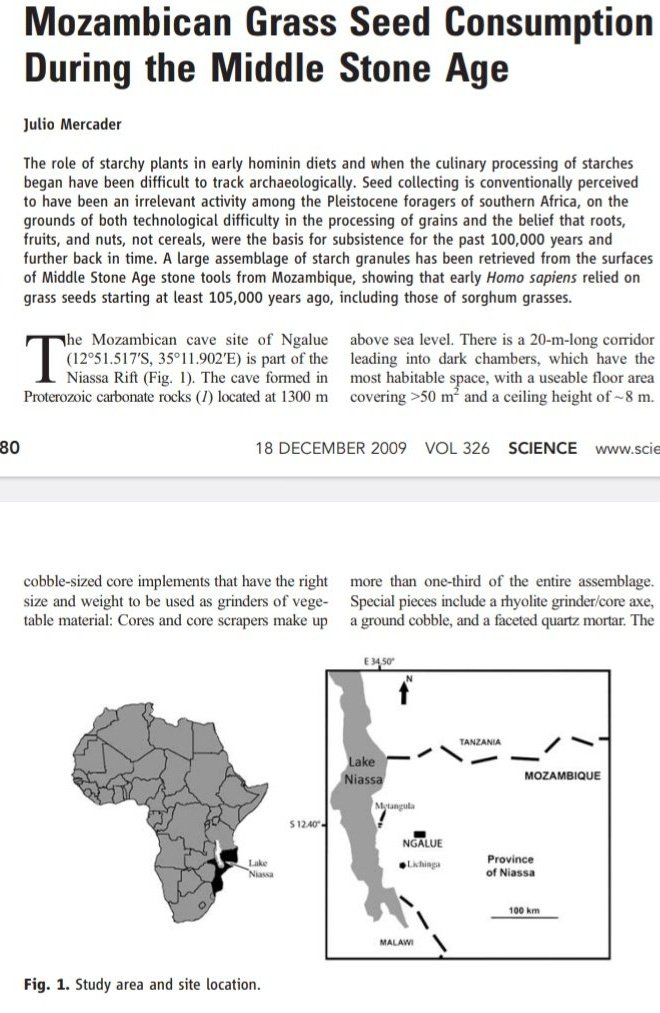
The oldest grass seed collection in the world was found in ancient South East Africa, dating back 100,000 years, long pre-dating some of the first signs of early Saharan farming in Mali and Takarkori, Libya. science.org/doi/10.1126/sc…
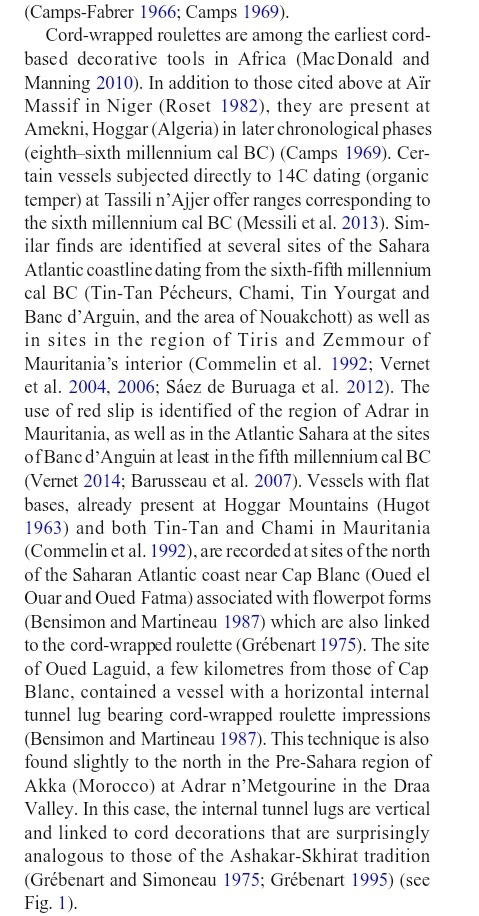
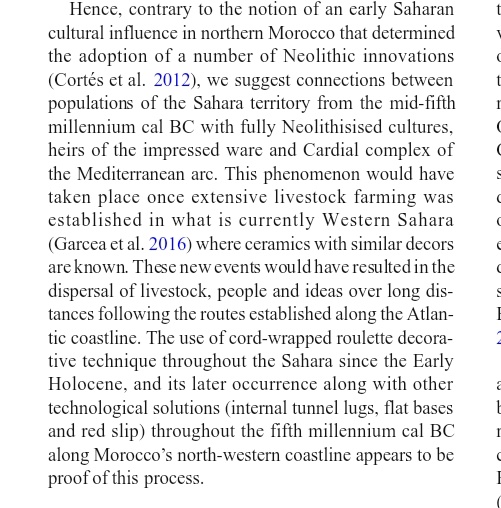
West African ceramics associated with proto-farming originated in Mali, 9,400 BCE and spread as far North as Morocco, where SSA roulette cord ceramics were found, along with Mediterranean derived ceramics from Iberia, 7,000 ka.
Diy-Gid-Biy/DGB stone ruins in the Mandara Mountains of northern Cameroon, were built between the 13th - 16th Century AD
Oral tradition, similar style stone architecture and pottery from the modern Chadic speakers of Gwoza hills, Nigeria links them to the builders of DGB sites
"archaeological considerations place the period of creation and use of the Diy-gid-biy between the 13th and 16th centuries . AD."
- Dr. Jean-Marie Datouang
"Known as Diy-Gi’d-Biy...... While varying greatly in size, they constitute the most impressive set of indigenous stone-built structures in sub-Saharan Africa out-side the Horn and the complex of ruins in Zimbabwe and Mozambique"
- Nicholas David
The Gangara Stone Ruins believed to be post neolithic, pre Islamic architecture
Built by Wangara/Soninke people called "Gangara" by medieval Arabs during the Ghana empire. The ceramics discovered are said to be similar to one's still being made by moden Black Mauritanians.
"Al-Bakrî mentions the Gangara as a group of Blacks in the neighborhood of the Senhaja town of Banklabîn.........Gangara, or Guangara, on the other hand, corresponds phonetically better to our group, whom al-Bakrî characterizes as black non-Muslims"
- Andreas W. Massing
"Traditions are agreed that
these 'post-neolithic, pre-Islamic' villages belonged to black people called 'Gangara', ancestors of the present-day Soninke (Sarracolet)"
- E. Ann McDOUGALL