Ethan Mollick Profile picture
Mar 3, 2022 8 tweets 6 min read Read on X
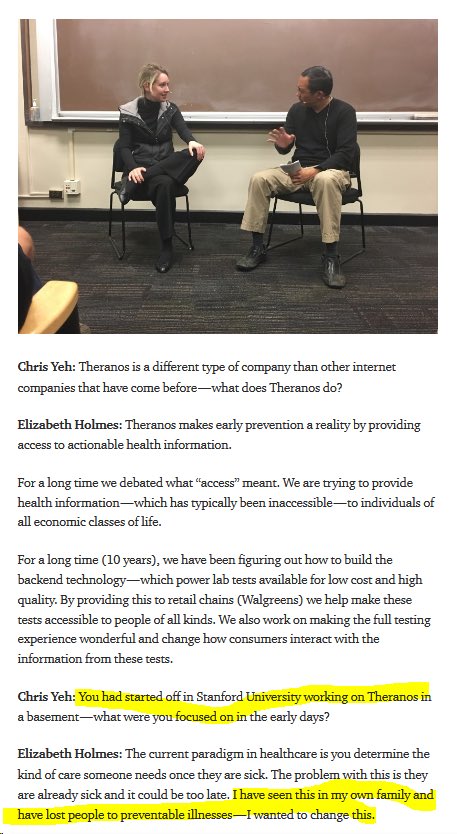
My sister @JMollick produced #TheDropout - the new Hulu series on Elizabeth Holmes. In addition to being entertaining, it also shows some drivers of success in entrepreneurship.

So: a 🧵 of research on Theranos, and what honest investors & founders can learn from the lies. 1/
Much of the fraud was explained by "Symbolic Action." In a classic paper, Zott & Huy find that founders who skillfully use symbols do better, since folks view the symbols as indicators of real ability. They identify four categories of symbolic action, all exploited by Holmes 2/
The first category is showing personal capability, and the paper describes multiple ways of doing this: you can look the part of the entrepreneur; you can conspicuously show connections to top schools; or you can show that you are personally "all in." Elizabeth did all three. 3/
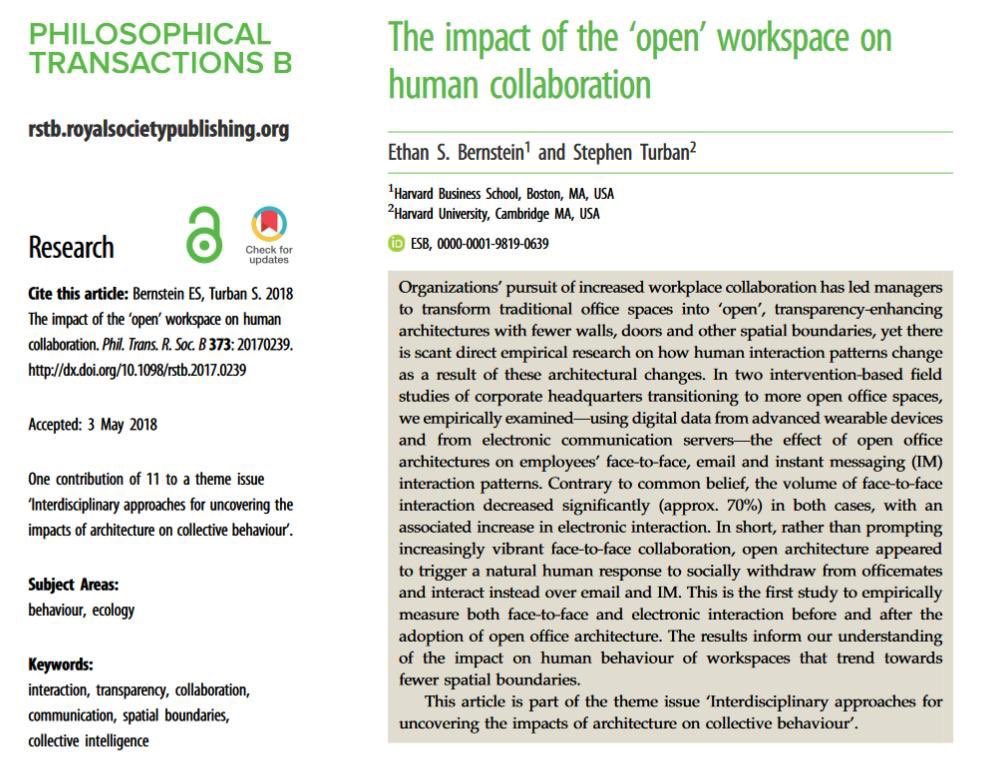
The 2nd category is showing that you are organized like a real professional organization. Common ways for entrepreneurs to indicate this are to have professional office spaces and the trappings of what people expect to see in a real firm. Elizabeth was very aware of this. 4/
The third category is to show symbols that your business can achieve its goals. The three classic ways to do this are to show off half-working prototypes, win industry awards, and show that you have received money from prestigious funders. 5/
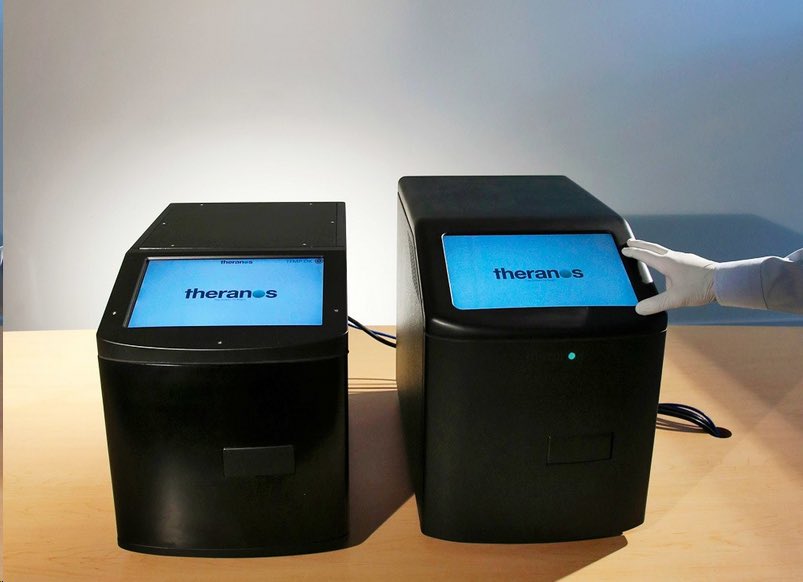
Finally, we have a demonstration of key stakeholders, because if important people back your company, it must be good right? See the Theranos Board! (Of course, this didn’t convince real biotech VCs, who would have wanted to see stakeholders in the medical field.) 6/
And Holmes also was very good at pitching. This paper shows how she pitched Theranos using powerful techniques:
🖼Framing: Why the world needs improvement
💉Filling: Vivid images of how she would solve it
👥Connecting: Showing others trusted her
💪Committing: Showing dedication
7
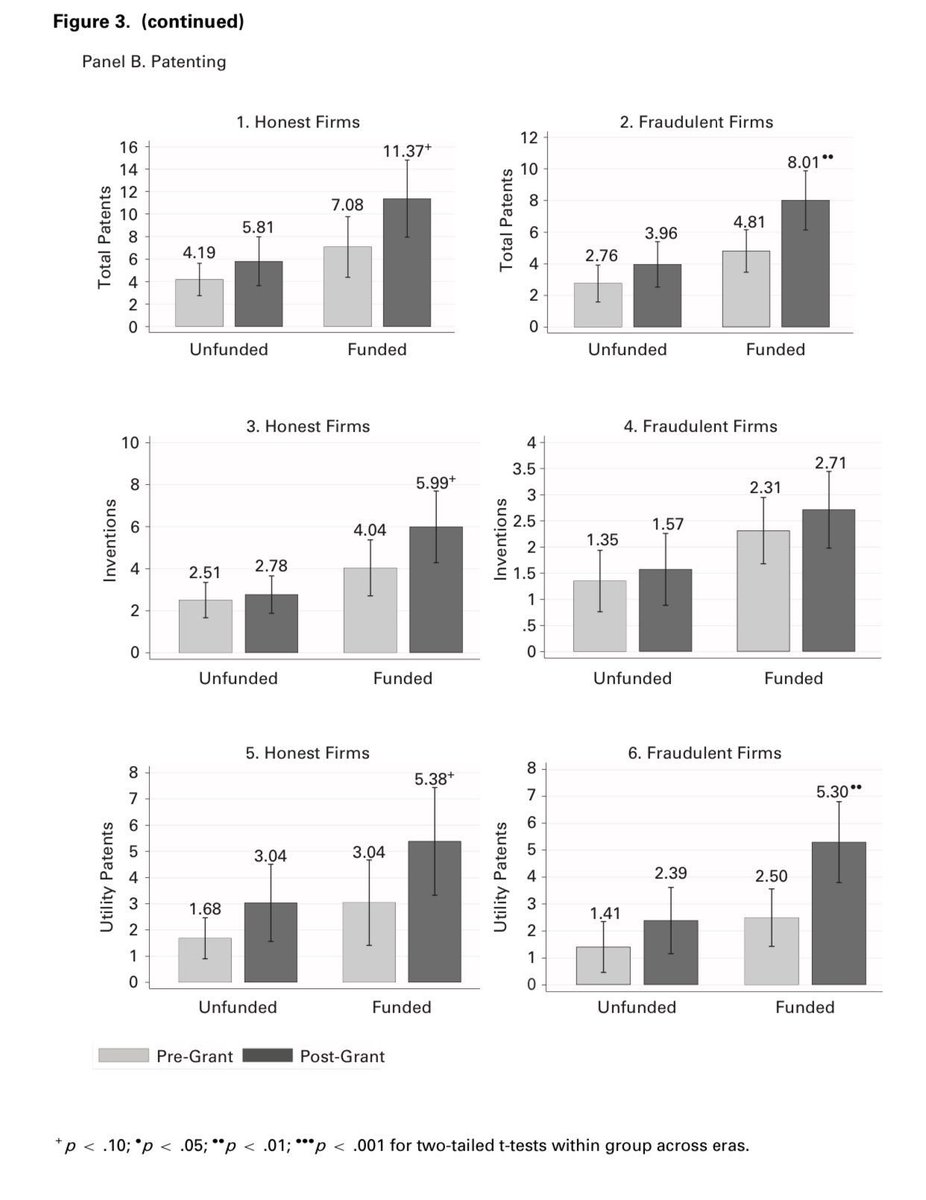
Unethical startups are more likely to raise 💰 but also tend to waste it, hurting overall innovation. By comparing 2 sets of books, this paper identifies Chinese startups that got grants via fraud. Frauds were less likely to hire quality people & to conduct significant innovation

• • •

Missing some Tweet in this thread? You can try to force a refresh

 

Keep Current with Ethan Mollick

Ethan Mollick Profile picture

Stay in touch and get notified when new unrolls are available from this author!

Read all threads

This Thread may be Removed Anytime!

PDF

Twitter may remove this content at anytime! Save it as PDF for later use!

Try unrolling a thread yourself!

how to unroll video
  1. Follow @ThreadReaderApp to mention us!

  2. From a Twitter thread mention us with a keyword "unroll"
@threadreaderapp unroll

Practice here first or read more on our help page!

More from @emollick

Nov 23
Voice is one of the most useful ways to interact with AI to do work but it seems to have been semi-abandoned for serious use outside of the “chat with a friend” case.

All of the voice modes only access weak models with low latency, making them zippy & fun but kind of useless.
If you don’t think of voice models as a fun chat, but rather as a way of working, it suggests that pauses are fine, even preferred (don’t talk with me unless you have something to say). And alternative UXs beyond “talk with your AI about the weather” become possible to explore.
Also I want to turn off the breathing, giggling, and disfluencies. Anthropomorphism can be helpful in many cases but it gets to be too much, especially for serious discussions. The tone is off and it feels ingratiating and slows things down.
Read 4 tweets
Nov 21
I think my “otters on a plane using WiFi” may be a saturated benchmark now that nano banana pro can do this. Image
Prompt: Scientists who are otters are using a white board to explain ethan mollicks otter on a plane using WiFi test of AI (you must search for this) and demonstrating it has been passed with a wall full of photos of otters on planes using laptops
Read 4 tweets
Oct 27
Since there are so many AI announcements, my advice is to focus on those expanding what folks can do with AI (& especially tools that democratize who can use AI) rather than every single UX improvement

Skills, connectors & agents with file access/CLIs are especially interesting.
Next up: pay attention to expansions in artifacts/vibe coding for non-coders, specialized AI tools for industries outside of coding (see Claude Finance) and systems that take software people use every day and radically transform how they work using AI (Excel agents, for example)
Also interesting to watch ambitious new applications that are AI-native. What Google is doing with NotebookLM, for example, is basically creating an entirely new interface for working with information that is a pretty strong break with older ways of handling large amounts of info
Read 4 tweets
Oct 14
I don’t have much to add to the bubble discussion, but the “this time is different” argument is, in part, based on the sincere belief of many at the AI labs that there is a race to superintelligence & the winner gets,.. everything.

It is a key dynamic that is not discussed much
You don’t have to believe it (or think this is a good idea), but many of the AI insiders really do. Their public statements are not much different than their private ones.

Without considering that zero sum dimension, a lot of what is happening in the space makes less sense.
This is not the only way folks justify the large spend on AI buildout (and whether there is a bubble seems very far from obvious), but it is a dimension that does not show up in as many economic analyses as it should.
Read 5 tweets
Oct 6
Very soon, the blocker to using AI to accelerate science is not going to be the ability of AI, but rather the systems of science itself, as creaky as they are.

The scientific process is already breaking under a flood of human-created knowledge. How do we incorporate AI usefully? Image
Science isn't just a thing that happens. We can have novel discoveries flowing from AI-human collaboration every day (and soon, AI-led science), and we really have not built the system to absorb those results and translate them into streams of inquiry and translations to practice
A lot of people are worried about a flood of trivial but true findings, but we should be just as concerned about how to handle a flood of interesting and potentially true findings. The selection & canonization process in science has been collapsing already, with no good solution
Read 4 tweets
Sep 20
Some new theoretical economics papers looking at the implications of AGI.

These two papers argue that a true AGI-level AI (equivalent to a human genius), if achieved, would eventually displace most human labor and reduce the economic value of remaining human work to near-zero. Image
Image
Full conference play-by-play here:
Read 4 tweets

Did Thread Reader help you today?

Support us! We are indie developers!


This site is made by just two indie developers on a laptop doing marketing, support and development! Read more about the story.

Become a Premium Member ($3/month or $30/year) and get exclusive features!

Become Premium

Don't want to be a Premium member but still want to support us?

Make a small donation by buying us coffee ($5) or help with server cost ($10)

Donate via Paypal

Or Donate anonymously using crypto!

Ethereum

0xfe58350B80634f60Fa6Dc149a72b4DFbc17D341E copy

Bitcoin

3ATGMxNzCUFzxpMCHL5sWSt4DVtS8UqXpi copy

Thank you for your support!

Follow Us!

:(