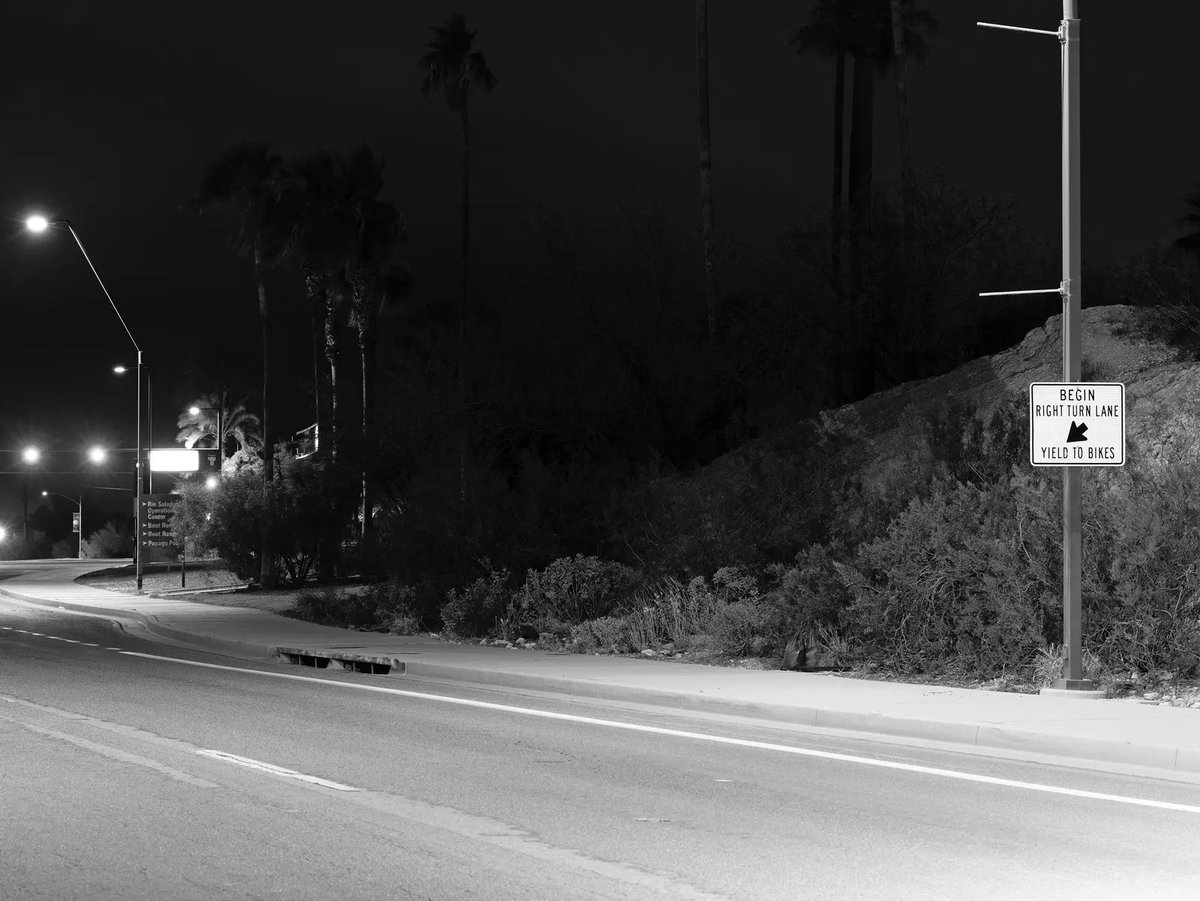
At one point the self-driving revolution felt right around the corner. Companies boasted about rapid time-lines, and tech workers raced to be a part of the solution. But the death of Elaine Herzberg punctured that promise and humbled an industry. wired.trib.al/ClXfdRc 1/13
In March 2018, Uber autonomous vehicle test operator Rafaela Vasquez set out on her route for the night. By her third loop in Tempe, AZ, the driving system registered a vehicle just seconds ahead but made no alert. It was not, in fact, a car. 📸: Cassidy Araiza 2/13
The computer fluctuated between calling it vehicle, other,and bicycle. It tried to generate a plan to steer around the object but couldn’t.Then Vasquez saw what it was:a person. By the time she put the car into manual mode,it was too late.🎥: Uber via Tempe Police Department 3/13
Elaine Herzberg had recently resorted to camping in the streets and often carried a radio to play the local rock station. That night, she became the world’s first pedestrian killed by a self-driving car. 📸:Cassidy Araiza 4/13
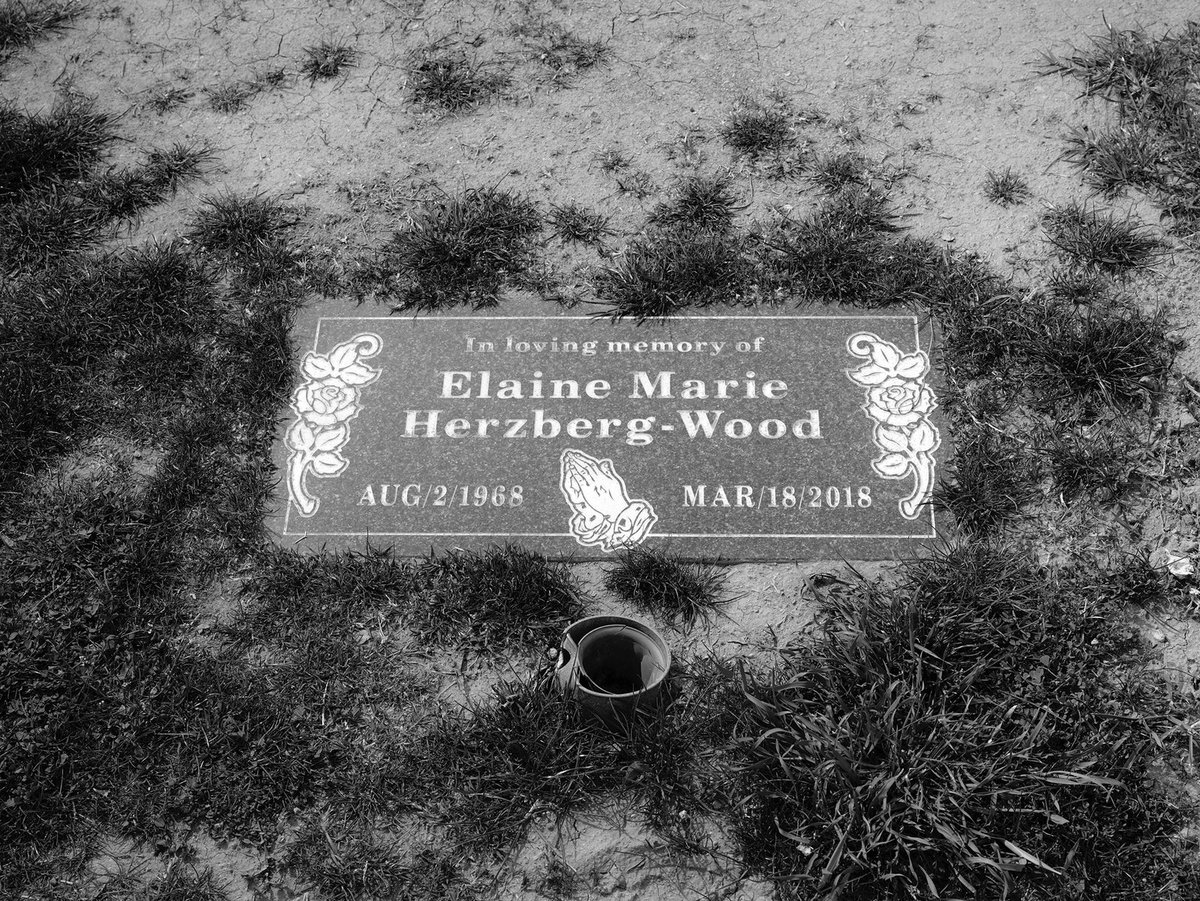
By 2017, Arizona had become the lead site for Uber’s test program. The company pushed hundreds of millions of dollars into its self-driving unit. And over three years, it grew to more than 1,000 employees across five cities.
Then the accident happened. 5/13
The police told Vasquez not to “beat yourself up about it”. But they, like the Uber reps at the scene, knew this wasn’t a normal collision; it was international news.And while Uber helped the police investigate,Vasquez became the face of the crash. 📸:Tempe Police Department 6/13
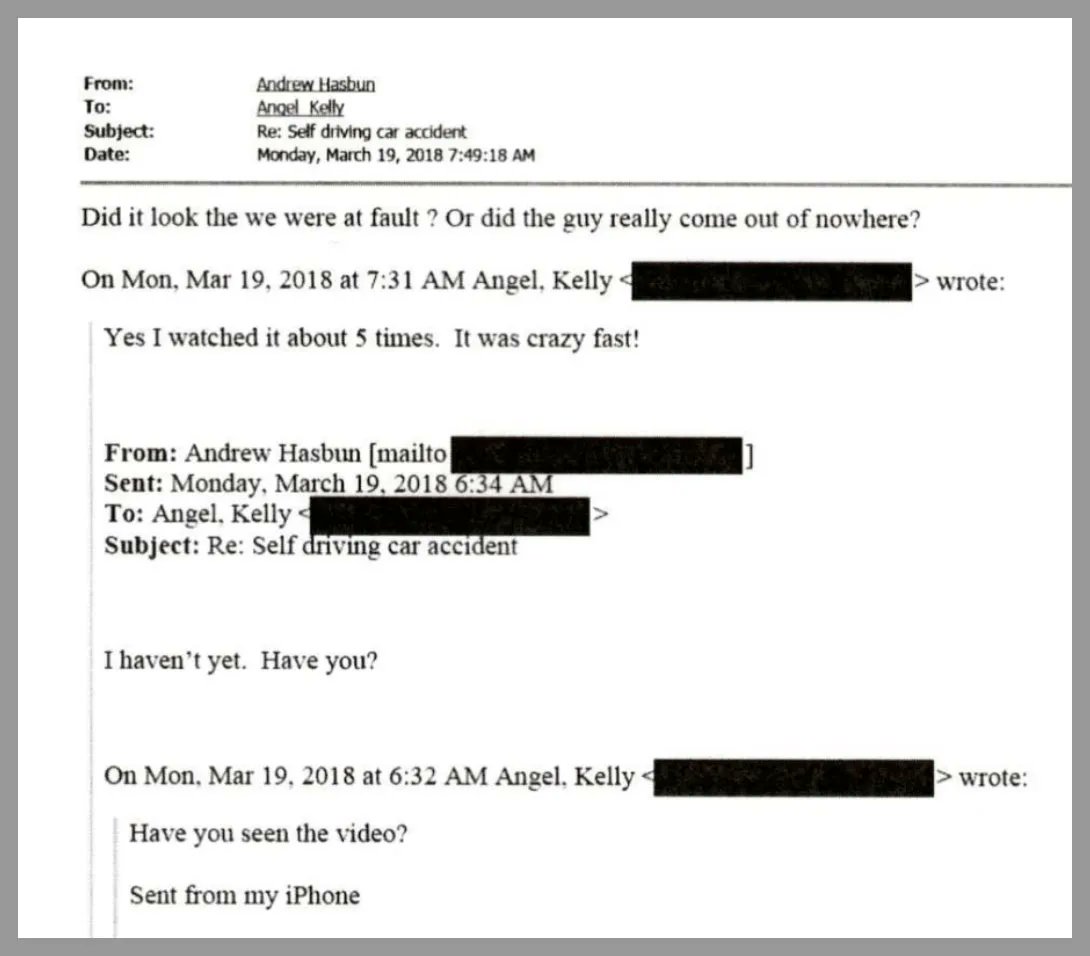
Questions swirled around whether Vasquez, who can be seen looking downwards in footage from the car’s camera, was using her phone before the impact. 7/13
In the aftermath of the crash, hundreds of employees were laid off. Uber’s Advanced Technologies Group ended its self-driving truck program, and the remaining staff shifted their attention to a new era hyper-focused on improving safety. 8/13
Some of Vasquez's colleagues soon turned against her. Others, along with the U.S. agency that investigates crashes, say that she was just one part of Uber’s flawed system to ensure safety. 📸: Cassidy Araiza 9/13
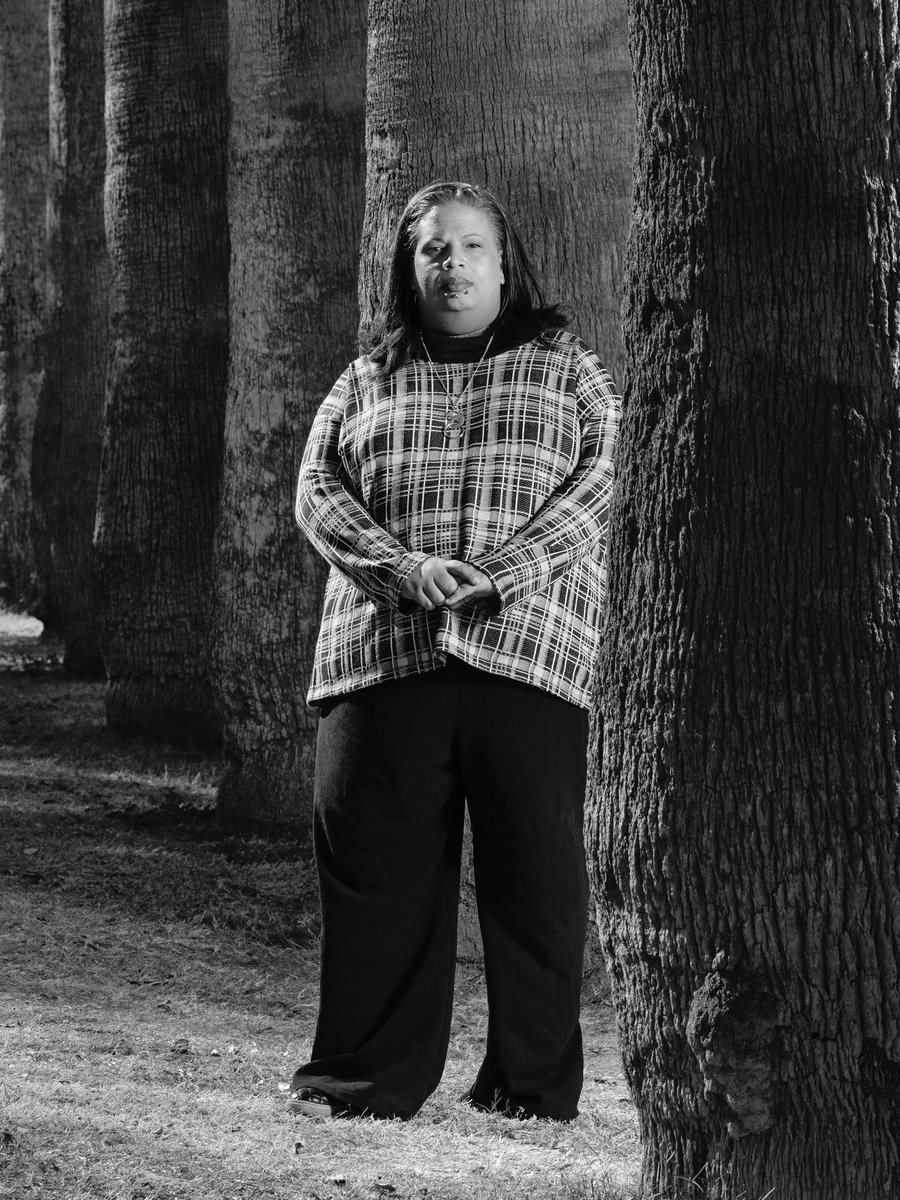
A year after the crash Uber learned it wouldn't face criminal consequences. In 2020, Vasquez was indicted for negligent homicide. And that’s how Rafaela Vasquez—and only Rafaela Vazquez—was indicted for allegedly causing the first pedestrian death by a self-driving car. 10/13
Vasquez, who has been publicly silent for three and a half years, spoke with WIRED.
“At first everybody was all on my side, even the chief of police. Now it's the opposite. It was literally, one day I'm fine and next day I'm the villain. It’s very—it's isolating.” 11/13
Click the link to learn more. And stay tuned for more stories from WIRED’s March edition. wired.trib.al/ClXfdRc 12/13
Subscribe to WIRED and get your first year of print and digital access for just $10 wired.trib.al/9E2tJFL 13/ 13
• • •
Missing some Tweet in this thread? You can try to
force a refresh

With each day, the number of lives impacted by Russia’s invasion of Ukraine grows. It's easy to feel helpless watching from afar. Here are 8 organizations that could use your support: wired.trib.al/ts7FvkV 📸: Daniel Leal/Getty 1/11
The Ukrainian Red Cross notably helped victims of the Chernobyl disaster. Now, it's supplying medicine, bedding, food, mental health support, first aid lessons, and other direct assistance to Ukrainians. 2/11
Voices of Children works with psychologists and is committed to helping children who are traumatized by war. Their art therapy program is a safe space where kids can work through complicated emotions and feel supported. 3/11
McDonald’s is known for its notoriously broken ice cream machines. But for years, the tiny startup Kytch worked to invent and sell a device designed to fix that problem—only to watch the fast food Goliath crush their business. wired.trib.al/xCwMUWP 1/11
Recently, Kytch filed a long-expected legal complaint against McDonald's, accusing the company of false advertising and tortious interference in its contracts with customers and asking for no less than $900 million in damages. 2/11
The two-person startup's new claims against McDonald's focus on emails the fast food giant sent to every franchisee in November 2020, instructing them to pull Kytch devices out of their ice cream machines immediately. 3/11
It certainly isn’t the biggest year for phones at the Mobile World Congress. Nevertheless, here are some of our favorite picks with a few added surprises. wired.trib.al/iUwcEKw 1/9
TCL dropped the new TCL 30 5G, TCL 30+, TCL 30, TCL 30 SE, and TCL 30 E. (Still with me?). But the big news here is the price point—the most expensive is the 30 5G which is roughly $280 US dollars (€249), and the price continues to plummet down to the 30 E. 2/9
Introducing: the TCL Fold 'n Roll. The name says it all here: This phone is both foldable and rollable, allowing you to both extend the display and shrink it down to size, then close it shut. Remember, this is a concept, so it's unlikely we'll see it for sale. 📸: TCL 3/9
A British man wasn’t prepared for what he received in the mail: A complete top set of false teeth. His teeth. Teeth he hadn’t seen in over a decade. Teeth with a story. wired.trib.al/HxVwAcj 1/8
The gnashers in question belonged to the recipient, Paul Bishop. He hadn’t seen them in 11 years, not since a boozy vacation to Spain. Within a few hours of receiving the unsolicited dentures, he had become a viral news sensation. 2/8
Here’s the scoop—according to Bishop: While celebrating a friend's birthday, he had one drink too many and vomited into a bin. But he didn’t just lose the contents of his stomach; he lost his teeth. That is until he received the mysterious package. 3/8
At the end of 2008, Firefox was flying high. Twenty percent of the 1.5 billion people online were using Mozilla’s browser to navigate the web. Almost 15 years later, things aren’t so rosy. wired.trib.al/JxGvWGw 1/12
In the two decades since Firefox launched, it has been key to shaping the web’s privacy and security. But now the privacy-heavy browser is flatlining. 2/12
The gloomy forecast has left industry analysts and former employees concerned about the browser's future. As one former Mozilla employee says: “They're just going to have to accept the reality that Firefox is not going to come back from the ashes.” 3/12
Every state prohibits driving under the influence of weed, but no state has found a reliable way to sort the stoned from the sober—defaulting primarily to another flawed method of assessment: human judgement. wired.trib.al/1HFLPdc 1/9
Some states have implemented a 5-nanogram-per-milliliter threshold, but cannabis pharmacokinetics are so variable that even if two people share a joint, one person might dip below that level within two hours and the other might stay above it for the rest of the week. 2/9
Stoned driving is therefore one of the biggest unresolved sticking points in the long slide toward legalizing marijuana in the US—a Kafkaesque quandary with no clear solution. 3/9