While communal politics across India has its claws out over food items, we recall the story of a humble bottle of lemonade that once blurred the lines of communal differences in a staunch Hindu home. A thread (1/n) 

Bipin Chandra Pal, one of the most revered Indian nationalists, social reformers and chief architects of the Swadeshi Movement was born to Ramchandra Pal, a wealthy Hindu scholar in Srihatta (modern-day Sylhet), Bangladesh (2/n)

During his school days, the Sylhet district had seen the nadir of communal tension. In his autobiography, Bipin Chandra Pal recounted many such incidents. Food was one of the key items under the communal spotlight (3/n)
In the middle-class Hindu Bengali households, food items were often deemed untouchable if they were produced or distributed by Muslims or lower caste Hindus. Bread & biscuit were often subject to suspicion as the dough would be prepared using their hand (4/n)
The companies started carefully marketing their products to their consumers, by specifically mentioning the items are not handmade (by Muslims) and hence completely safe for consumption in the Hindu households (5/n)
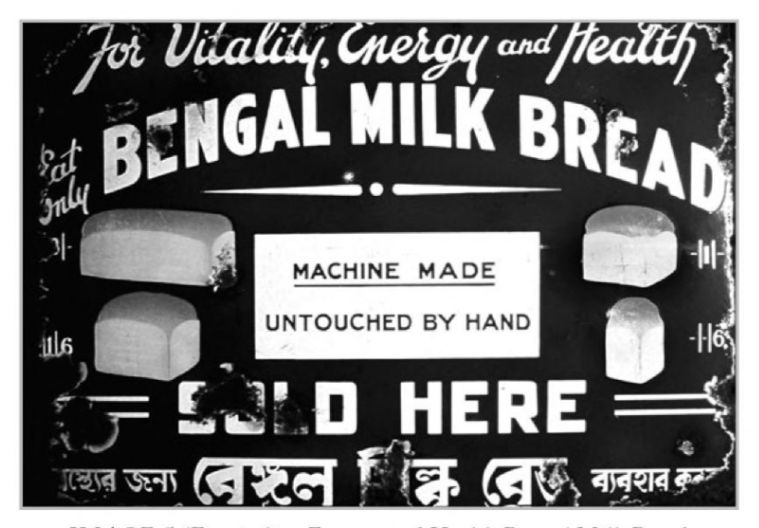
Sylhet and its neighboring districts witnessed multiple agitations by the Hindus against the consumption of bread and biscuits made by Muslims. The story took an interesting turn in the 1860s when a lemonade company established its factory in town (6/n)
Lemonade has a fascinating history of its own. Tracing its root back to ancient Egypt and the Mediterranean, lemonade made its way to Europe and eventually to the Indian subcontinent for the consumption of British aristocrats (7/n)
At that time, Sylhet was witnessing a tea-estate boom and as a result, many British associates had migrated to the town (8/n)
To serve the new British families, a small soda-water factory was established, which attracted the attention of students of the local Hindu school (9/n)
The boys from school started gathering near the lemonade shop to see how the machine works and often bought a bottle of lemonade or two. The shop owner promptly discovered a novel business opportunity (10/n)
Realizing there was a business potential outside of the handful of British families, the shop owner started sending a vendor with a basket of lemonade to wait on the street outside the school compound. The lemonade seller was a Muslim man (11/n)
Amidst all the communal tension, the lemonade became quite a popular beverage among the young boys and they couldn’t care much about any religious restriction of not consuming lemonade bottles from a Muslim vendor. Bipin Pal was one of them (12/n)
Pal, who grew up in a conservative household, was not given additional allowances during his school days but that didn’t prevent him from enjoying lemonades on credit. One day the Muslim lemonade-wallah visited his house asking for his due money (13/n)
Ramchandra Pal paid two annas to the lemonade seller, but being furious with the incident that his son consumed a beverage from a Muslim man, he punished Bipin severely. Pal was put under house-arrest until his mother intervened after a few months (14/n)
The story took a compelling turn a year later when young Pal suffered severely from diarrhoea. By evening, the diarrhoea stopped but he remained extremely thirsty as an after-effect. The Doctor advised lemonade as the cure (15/n)
His father, who was concerned with his dear son’s health, didn’t spare a moment before getting a bottle of lemonade from the market. A bottle of lemonade, made by Muslim factory workers and sold by a Muslim seller (16/n)
When young Bipin refused to have the beverage sold by a Muslim vendor, his conservative Hindu father compassionately admitted that there is no harm in consuming a medicine made by other communities (17/n)
That day, all religious barriers broke in a staunch Hindu's house as Ramchandra Pal helped his son drink lemonade sold by a Muslim man with his own hands (18/n)
Source:
Sattar Batsar Atmajibani by Bipin Chandra Pal
Culinary Culture in Colonial India By Utsa Ray
Pictures: Wikmedia
Sattar Batsar Atmajibani by Bipin Chandra Pal
Culinary Culture in Colonial India By Utsa Ray
Pictures: Wikmedia
• • •
Missing some Tweet in this thread? You can try to
force a refresh