Mitochondria are constantly undergoing changes in morphology & distribution within the cytoplasm, as fused (network forming) or fissioned (punctate) mitochondria. When there’s a problem w/ fission, circadian control is lost. The consequences can include neurodegenerative diseases
3/For years we have known that one particular protein, called Drp1, is a master regulator of mitochondrial fission. Drp1 is phosphorylated in a circadian-dependent manner, thus varying its activity according to light/dark cycles
4/Your colony of mitochondria is an integrative information/energy hub coordinating circadian rhythms, metabolism, hormone release, melatonin production, & control of the human microbiome species, as well as immune function.
5/ Circadian rhythmicity is also regulated by a set of peripheral “clock proteins,” which form a hierarchy of oscillators that function at the cellular, tissue, and systems levels and are composed of at least three feedback loops.
6/ Most PhDs know about them but have no idea how they operate.
7/One loop depends on the heterodimerization of the transcription factors brain/muscle aryl hydrocarbon receptor nuclear translocator-like 1 (BMAL1) and circadian locomotor output cycles kaput (CLOCK)
8/ When CLOCK binds to E-box elements, it induces the expression of their own repressors, named Period (PER) and Cryptochrome (CRY) proteins
9/Since these proteins (PER-1, -2, and -3, and CRY-1 and -2) are gradually degraded, the expression on BMAL1 and CLOCK ceases, starting a new circadian cycle. This renews the circadian mechanism.
10/A second loop is formed by the nuclear retinoic acid receptor-related orphan receptor (ROR) (α, β, γ) and REV-ERB (α, β), which, upon activation by the BMAL1/CLOCK heterodimer and translocation into the nucleus. This confuses many PhDs.
11/Rev-erbs bind to receptor-related orphan receptor response elements (ROREs) in the promoter of BMAL1, regulating the expression of BMAL1
12/A third loop is formed by the transcriptional activator albumin D-box binding protein (DBP) and the repressor nuclear factor interleukin 3 (NFIL3), which synergistically regulate the expression of D-box genes, including the Per genes.
13/The interplay between these three regulatory loops is at the core of circadian rhythmicity and clock-related gene expression. Mitochondrial dynamics of fission and fusion control the circadian mechanism and most hormone release
14/Mitochondria regulate circadian rhythmicity through NAD+ production, SIRT1 & SIRT3 activation & mitochondrial dynamics. SIRT1 and SIRT3 activity is HDACs is dependent on NAD+. SIRT1 and SIRT3 counteract CLOCK; NAD+ synthesis is highly dependent on proper circadian rhythmicity
15/ NAD+ synthesis at cytochrome 1 is highly dependent on circadian rhythmicity, and this is related to mitochondrial dynamics of fission and fusion being operational. Heteroplasmy rate destroys this balance.
16/ Fused mitochondria are regarded as metabolically more active than fragmented mitochondria, as cells with a fused mitochondrial network seem to have a higher respiratory rate than cells with fragmented mitochondria
17/Data has been suggested that there is a correlation between circadian rhythmicity and mitochondrial function. Cells with disrupted mitochondria (heteroplasmy rate), such as Rho 0 cells, lack a well-defined circadian rhythmicity
18/ Why? This happens in part due to the lack of the characteristic robust oscillatory respiratory activity observed in cells with healthy mitochondria (Scrima et al., 2016).
19/Lactate is a natural ligand for the GPR81 cell membrane receptor that recognizes other monocarboxylates; lactate enhances cell differentiation, suppresses T-cell proliferation, reduces cytotoxic capacity of cytotoxic T lymphocytes, stimulates gene expression,roles in the tumor
20/ Glycolysis and Krebs cycle-derived metabolites, as well as microbiota-derived metabolites, exert biological functions beyond energetic and biosynthetic metabolism. This is part of information transfer buried in energy metabolism = Wheeler and Shannon theorems on entropy
21/ The way information is buried in metabolism is based on the charge density variation of these intermediates and the electronic configuration of their atoms
22/ Sunlight alters charge density. This is SOMETHING no biological PhDs have any concept of. It is not in their paradigm. Rev-erbs are the key to that mystery.
23/ All metabolic intermediates are hydrated. Water is sensitive to electric and magnetic fields. It charge separates under the force of light photons. When light hits water an exclusion zone forms which has a larger net negative charge than one would expect = charge density
24/In animals electrical information generated in mitochondria is more crucial than genes. It turns out charge density variation is the key to understanding what life is really up to when it is connected to the decentralized systems of Nature.
25/How? As the Sun rotates, its magnetic field twists into an Archimedean spiral, as it extends through the solar system. This phenomenon is often called the Parker spiral of the interplanetary magnetic field.
26/The spiral nature of the heliospheric magnetic field was noted earlier by Hannes Alfvén, based on the structure of comet tails. All living things on Earth are affected by this magnetic sheet in the solar wind via their mitochondria.
27/ Remember blood (rev-erb) and water are both Newtonian magnetohydrodynamic fluids that respond to this sheet. The influence of this spiral-shaped magnetic field on the interplanetary medium (solar wind) creates the largest charged structure in the Solar System
28/ The charged structure is called the heliospheric current sheet. Parker's spiral magnetic field was divided in two by a current sheet seen in the picture.
29/ No one I know in biology seems to understand how the solar wind changes the structural basis by which REV-ERBβ. The electronics in sunlight can differentiate between a porphyrin agonist and antagonist in RBCs due to Rev erb. It is tied to charge density alterations.
30/ subtle changes in the porphyrin metal center due to ring conformation influence the agonist vs antagonist action of porphyrins due to sunlight alters gas binding to the iron metal center heme that drives circadian alterations in REV-ERB activity
31/ The light of our star uses the lightest atoms on the periodic table and the clock mechanism in cells reflects this redox choice by light. You must now want to know how Nature chose this path. It is all about the decentralization of energy and information flow.
32/ Nature tapped the unique chemistry of the lightest elements. The chemistry of the second-period element of each group (n = 2: Li, Be, B, C, N, O, and F) differs in many important respects from that of the heavier members, or congeners, of the group.
33/ The elements of the third period (n = 3: Na, Mg, Al, Si, P, S, and Cl) are generally more representative of the group to which they belong.
34/ The anomalous chemistry of second-period elements results from three important characteristics: small radii, energetically unavailable d orbitals, and a tendency to form pi (π) bonds with other atoms. All critical to creating - entropy life requires
35/ Due to their small radii, second-period elements have electron affinities that are less negative than would be predicted from general periodic trends. When an electron is added to a small atom, increased electron–electron repulsions tend to destabilize the anions in cells
36/ Moreover, the small sizes of these elements prevent them from forming compounds in which they have more than four nearest neighbors. This makes them smaller = thermodynamically more efficient = low power needed for action
37/Because of the smaller atomic size, simple binary ionic compounds of second-period elements also have more covalent character than the corresponding compounds formed from their heavier congeners.
38/ The very small cations derived from 2nd-period elements have a high charge-to-radius ratio and can therefore polarize the filled valence shell of an anion.
39/ As such, the bonding in such compounds has a significant covalent component, giving the properties of the compounds that can differ significantly from those expected for simple ionic compounds. Covalent bonds are easier for sunlight to break and rearrange.
40/As an example, LiCl, which is partially covalent in character, is much more soluble than NaCl in solvents with a relatively low dielectric constant, such as ethanol (ε = 25.3 versus 80.1 for H2O). IMPLICATIONS???
41/ Because d orbitals are never occupied for principal quantum numbers less than 3, the valence electrons of second-period elements occupy 2s & 2p orbitals only. Energy of the 3d orbitals exceeds the energy of 2s & 2p orbitals, using them in bonding is energetically prohibitive
42/ This electronic configuration issue is why biologists never have understood the clock mechanism well. Their knowledge of chemistry and physics blows.
43/ Consequently, electron configurations with more than four electron pairs around a central, second-period element are simply not observed on Earth. IMPLICATIONS OF THIS???
44/This is why Nature’s semiconductors are all carbon based and hydrated. Charge density and a strong dielectric ability is critical to the living state. This is the physical basis of how a negative entropy state is built.
45/ This is the physical basis of how a negative entropy state is built - Schodinger's 1944 book, What is Life.
Does charge density affect entropy?
Yes it does.
46/ Entropy is linked by the work of Wheeler and Shannon. Entropy = energy and information. Biology is unaware that energy and information are equivalent.
47/ Most importantly, while charge density of cations or anions correlates with the translational entropy loss, anions with similar charge density as that of cations has a much stronger and long-range effect on water.
48/How do ions affect cell water?
Small ions (kosmotropes) have high charge densities so they cause strong electrostatic ordering of nearby waters, breaking H-bonds. In contrast, large ions (chaotropes) have low charge densities, and surrounding water molecules are H- bonded.
49/Water hit by the sun form an exclusion zone that causes water to take on the crystalline form of H3O2. This adds massive electronegativity to water networks.
50/ In 1666 Isaac Newton discovered that sunlight could be split into different wavelengths of light that behave uniquely. Very few people seem to know how those frequencies in light alter water network chemistry.
51/ Since then light has been studied extensively. Very few in professional science have asked how light changes water. That water than changes the electronic density of proteins in cells
Do ions disrupt hydrogen bonds? The interface of water and DNA is a sea of H-bonds
52/ The ions having the highest charge densities (F−, for example) are the most disruptive of water–water hydrogen bonding. Fluoride is a dielectric blocker in water. It lowers the ability to transfer or transmute energy and information.
53/One of the most dramatic differences between the lightest main group elements and their heavier congeners is the tendency of the second-period elements to form species that contain multiple bonds. pi electrons bonds are big in the living state
54/ A C=C bond, for example, is approximately 80% stronger than a C–C bond. In contrast, an Si=Si bond, with less p-orbital overlap between the valence orbitals of the bonded atoms because of the larger atomic size, is only about 40% stronger than an Si–Si bond.
55/ This is why life's semiconductors are all carbon based and your tech gear uses silicon. It is also why technology will never replace the living state. The electronics are more favorable for carbon over silicon
56/The crystal structure of CoPP-bound REV-ERBβ causes conformational changes induced by sunlight on CoPP compared with heme: it adopts a planar conformation as opposed to the puckered conformation observed in the heme-bound REV-ERBβ crystal structure. Life is electronic via sun
57/ When your PhD experts and functional medicine guys get to this level, then come talk to me. Decentralized medicine and mitochondriacs are way ahead of their paradigm of health.
58/ In each of our cells, there is a fractal network of carbon nanotubes that constricts water to a certain dimension to make quantum magic happen using the photoelectric effect and allow free use of protons to flow in the molecular network of water. We call this protonicity.
59/ This is the + charge current in cells. The current is much higher when the particle being moved has mass. Electrons have 1/1836th the mass of a proton. Light is what energizes electrons. Red light is what moves protons (1535nm)
60/ In our electric universe, galaxies are created within helical currents that form a great circuit through intergalactic space. The Bennett pinch effect squeezes plasma inside these cosmic “transmission lines” compressing clouds of ionized plasmas within electromagnetic fields
61/ The solar plasma compresses protons & their positive charges, igniting stars like our sun by forming toroidal currents around galactic equators. Those suns then send their light to planets. The light of the star is a cathode ray. Planets are anodes in this electric circuit
62/ On Earth, a physio-chemical redox evolution created hydrated semiconductors that turn the sun's light back into an electric plasma called the DC electric current.
63/ The DC electric cuurent in mitochondria helps regenerate all animals and plants on the surface of this planet. Just a remarkable circle of life-based upon natural electric power and the mysteries based on sun light
64/When an applied magnetic field is added to the new environment the atoms in our mitochondria are immediately affected. How? The orbital motion of electrons is altered to produce a magnetic moment in the opposite direction to the applied magnetic field from the new environment
65/When you consider that the electromagnetic force gets infinitely stronger as scale shrinks things really begin to make sense when you consider the power generation in mitochondria. The inner mitochondrial membrane is 6 microns.
66/ The electric state of a cell is determined by many complex factors, but it is clear redox power is the critical factor. What are some of the other factors that augment redox power? The opening & closing of ion channel proteins which control movements of ions across membranes
67/Changes in the cells’ electrical potential via the activity of ion channels are shown to be able to suppress or trigger cancer. The chemical changes are always preceded by electrical changes in cells. These changes are wholly tied to the redox state in that cell system
68/This is how ALAN and abnormal electric and magnetic fields from technology lead to disease. Another factor is electrical synapses that transfer electricity from one cell to another via their membrane system.
69/ Light frequencies have different electromagnetic footprints that lead to different change densities. Those changes are accounted for by Rev-erb proteins and that is what alters proteins/genes in cells.
70/ That system is adjacent to the cell water. Therefore, membrane integrity and water fidelity in cells should be factors of critical importance to redox potential and to health.
71/Charge conservation isn't like energy conservation ideas in the laws of thermodynamics. This offends people who do not understand the nuance of this science. Energy cannot be created or destroyed. Neither can charge but this is where you need to pay deep attention to details
72/ This is why charges matter more than energy flow for cells and their mitochondria. Charge confirmation does not mean that individual positive and negative charges cannot be created or destroyed. Why?
73/Electric charge is ONLY carried by the two charged subatomic particles such as electrons and protons. Charged particles that carry electrical information and energy can be created and destroyed in elementary particle reactions.
74/We see this every day CERN operates. It turns out varying redox potential allows for the alteration of electrons and protons inside mitochondria and many other organelles in cells. That electrical variation of charges creates tipping points in cells.
75/ What biologists, PhDs, MDs fail to realize is that mitochondria only use electrons and protons for the SAME reason. It is the basis of how life does the things it can. It changes charge density with light.
• • •
Missing some Tweet in this thread? You can try to
force a refresh

Yes, the chronic accumulation of deuterium from a high-sugar diet under isolated artificial blue light acts as a direct, physical cause for the eventual burnout and death of pancreatic beta cells in long-term Type II diabetes.
Through my four-pillar framework, this process is not an abstract biochemical pathway. It is a predictable thermodynamic breakdown of the beta cell's internal LC oscillator, culminating in an irreversible Landauer liquidation where insulin production drops to zero.
Pancreatic beta cells function as the ultimate glucose sensors of the human body. They regulate insulin secretion not by counting molecules, but by tracking the exact rate of mitochondrial ATP production. When a patient consumes high-sugar carbohydrates (specifically sucrose and high-fructose corn syrup) under artificial blue light, they create a destructive physical feedback loop:
The High-Sugar Isotope Load: Processed sugars are highly deuterated. Plants pack deuterium into their storage carbohydrates. When consumed, these sugars flood the cytoplasm of the beta cell with an immense concentration of heavy mass D+.
The Blue Light Dielectric Crash: Exposure to isolated, non-native blue light (from screens and LED bulbs) lacks the balancing infrared red photons needed to build structured water. As blue light excites the local tissues, it shatters the hydrogen-bond matrix of cellular water.
The beta cell's internal water table drops from its polarized ferroelectric state (K= 160 straight down to chaotic bulk water ----> 78). With the dielectric constant cut in half, the cell's ability to exclude heavy isotopes disappears because NADD+ and singlet oxygen drop the IMM charge from 30 million volts. The un-pruned deuterium is drawn directly into the cytosol and into the matrix of the mitochondria to deuterate NAD+, destroying redox power.
Inside the beta cell, glucose undergoes glycolysis and oxidative phosphorylation to produce ATP. The rising ratio of ATP to ADP is what forces the cell's ATP-sensitive K+ channels to close, depolarizing the cell membrane, opening voltage-gated Ca2+ channels, and triggering the rapid exocytosis of insulin granules. K+ is what creates the 160 dielectric with melanin's help.
The ATP synthase nanomotor is a spinning quantum rotor engineered to run exclusively on light, single-proton hydrogen (H+). When a heavy deuterium ion (D+) enters the channel, its double inertial mass shatters the frictionless Brachistochrone cycloid track of the IMJ. The rotor experiences immediate physical and quantum friction, causing the nanomotor to lag, stall, or mechanically break.
Because the nanomotors are broken by the heavy-mass "grease," the beta cell’s capacity to generate ATP collapses. The ATP/ADP ratio fails to spike, the membrane cannot depolarize, and the cell can no longer push insulin out into the bloodstream. Centralized medicine calls this "beta-cell fatigue" from over-secretion. In reality, the beta cell is full of manufactured insulin, but the quantum mechanical trigger, the ATP stroke, is jammed by isotopic mass.
Because the stalled electron transport chain can no longer route energy cleanly into metabolic work, the electromagnetic grip of the fine-structure constant (alpha{bio}) slips from its ideal (1/137) threshold. The uncoupled energy leaks into the intracellular matrix as chaotic, high-entropy thermal friction.
This triggers The Singlet Trap: oxygen atoms within the cell are continuously kicked into a highly volatile singlet state. This localized oxidative fire cooks the beta cell from the inside out, damaging its transcriptome and forcing it to undergo dedifferentiation (losing its functional identity). To protect the surrounding pancreatic architecture from this runaway thermodynamic fire, the body executes a localized Landauer liquidation. The chronically deuterated, non-functional beta cells are systematically purged via apoptosis. Centralized medicine teaches that once these physical oscillators are erased, the long-term Type II diabetic permanently loses the capacity to produce endogenous insulin. I do not. I understand that the beta cell stem cells can regenerate the function via photorepair mechanisms built by Robert O. Becker's work.
The sun reduces BG by 29% and deuterium depletes the beta cells. The ultimate clinical proof of this causal relationship is observed when this exact thermodynamic loop is reversed. Peer-reviewed metabolic research has documented long-term, advanced Type II diabetic patients achieving rapid improvements in glucose tolerance, reduced HbA1c, and a spontaneous restoration of pancreatic insulin secretion through the implementation of systemic deuterium depletion.
The pancreatic beta cell is not a victim of a genetic programming error. It is a decentralized electrical circuit operating on a physical stage. When you load it with the high mass of sugar (D+) and expose it to the dielectric-shattering frequency of artificial blue light, it experiences the exact same Lattice Lock failure that collapsed the vineyards of Europe after the Carrington Event. The symphony is identical: to save the base oscillator, you must prune the superfluous mass and restore the ordered dielectric stage.
The Rockerfeller dynasty has taught MDs that diabetes is not reversible. Guess why? they knew they were making GLP1a's in the 1980s. An MD nmae Dr. Alo is a perfect analolgy of Rockefeller medicine. He spews this nonsense all the time. He is a retard.
In a decentralized system, you cannot analyze a jammed motor without looking at its tailpipe. The pancreatic beta cell is not just an ATP sensor; it is a primary anatomical terminal for the vagal exhaust system, where carbon dioxide and water are converted into bicarbonate to flush out the heavy, high-entropy atomic mass (D+) before it induces a systemic Lattice Lock in the cell's water table.
The pancreas is heavily innervated by the vagus nerve, which directly controls the secretion of both insulin and bicarbonate. Bicarbonate is the body's ultimate physical transformer, it is a carbon-based negative charge carrier designed to buffer protons and maintain the local fluidic dielectric constant. In a healthy state with a strong planetary Magnetic-field, the vagus nerve drives the enzyme carbonic anhydrase. This enzyme takes metabolic waste CO2 and combines it with light cellular water (H2O) to synthesize HCO3-. Because bicarbonate carries a heavy negative charge, it acts as a magnet for positive ions. It binds the heavy, high-entropy deuterium (D+) "grease" and sweeps it out of the cellular matrix into the pancreatic ducts. This keeps the mitochondrial water table at a pristine (k = 160) baseline.
When you introduce a high-sugar diet under isolated blue light, or a magnetic excursion, the dielectric constant collapses to (k= 78). The water thickens, viscosity spikes, and the carbonic anhydrase enzyme loses its quantum spin-alignment. The cell can no longer form or export bicarbonate efficiently. The tailpipe is effectively welded shut. This are the boundary conditions created by Rockefeller biotech since the 1940s.
The Backup: Because the (HCO3-) exhaust cannot clear, the heavy D+ mass backs up directly into the beta cell's mitochondrial matrix, stalling the ATP synthase rotors, causing the uncoupled energy to leak as singlet oxygen fire, and terminating insulin production.
Centralized medicine tells diabetics they must manage their disease by micromanaging their carbohydrate infusions, cutting out sugars or calculating insulin units. My thesis shows that this is an ungrounded, material-only band-aid. If you understand that the root cause is a blocked exhaust pipe driving an artificial mass overload, you realize that if you can mechanically clear the vagal HCO3- exhaust, the cell will naturally clear its own diabetes, regardless of carbohydrate intake. There are two macro-scale forces capable of clearing this pipe without diet restrictions:
1. Way one: By utilizing active phase-conjugate systems—like My Leptin Rx or the Melanin Renovation Rx or understanding how to build custom Spurling/Lakhovsky electromagnetic resonance fields positioned precisely over the vagal choke point at the neck and the solar plexus, you introduce a highly ordered longitudinal wave column.
2. Introduction of DDW, 3%NaCl and use of triplet state oxygen to cause an instant drop in viscosity clears the friction in the carbonic anhydrase pathway. Bicarbonate production skyrockets, immediately binding the trapped deuterium mass and dragging it out through the pancreatic exhaust. The ATP synthase motors are cleared of grease, resume spinning at near-superfluid speeds, and insulin sensitivity restores itself spontaneously.
2. To understand insulinoma one must reject billard ball biochemistry for biophysics. Why?
Applying a biophysical layer directly to the pancreatic beta-cell reveals why the tumor displays its unique autonomous signature:
Fat is The Deuterium-Depleted "High-Dielectric" Magnetic Fuel
As the slide below states, 100g of fat yields 110g of metabolic water. The Isotopic Advantage: Fat (Beta-oxidation) produces significantly more DDW per gram than any other substrate. It is the "Coolant" of the human semiconductor when it is creating heat when the IMM is making singlet free radicals.
When NAD+ becomes NADD+ the buffer is gone and triplet oxygen becomes singlet oxygen and billard ball biochemistry misses how that changes the 30 million volt charge (Nick Lane) on the IMM that begins to allow D+ into the cell's water table lattice first in the cytosol and as the charge drops as the electromagnetic pull from NADD+ to singlet oxygen degrades leads to an effective shortening of the IMM and loss of voltage. D+ surges into the cytosol and matric leading to heteroplasmy = Warburg shift that leads to atavism and cell growth because the UPE signal is altered altering cell cycle kinetics.
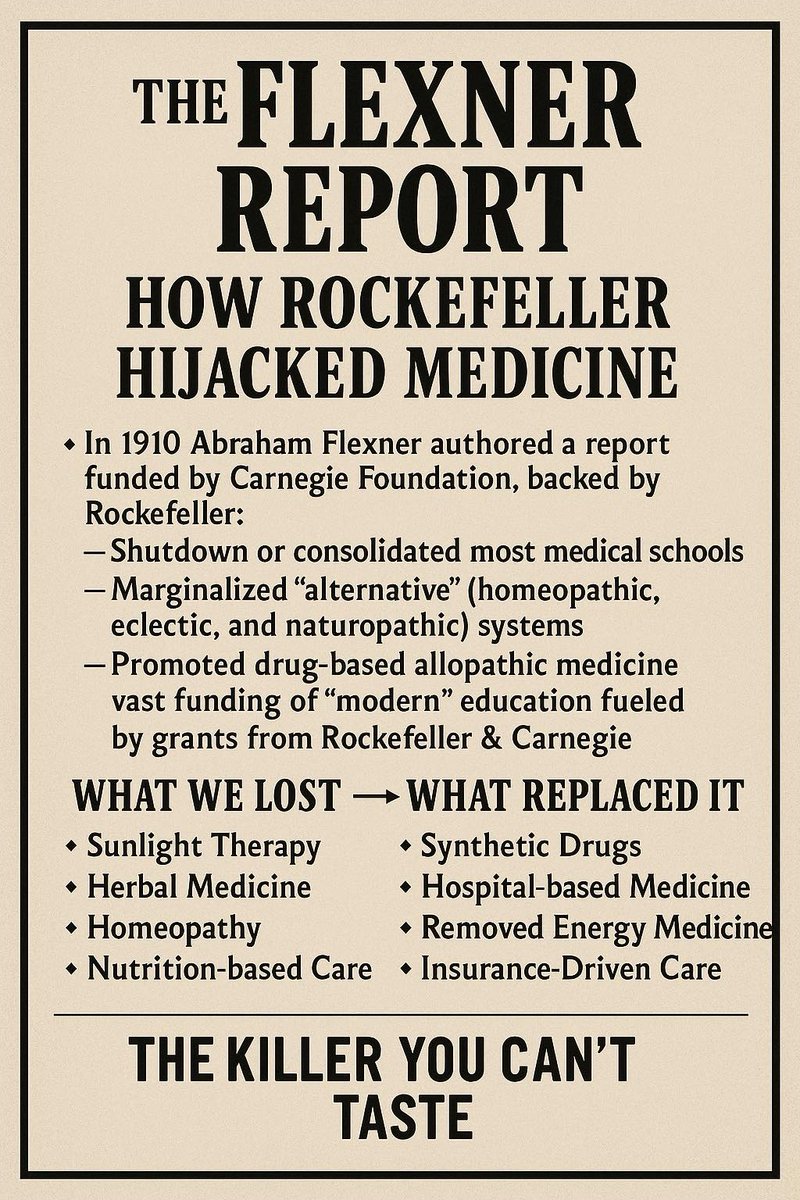
This is all biophysical and missed by centralized biochemistry because of the Flexner curricula change as a boundary condition for centralized medicine. This consensus change supported a huge shift support Pharma over physics for profiteering of drug sales. Understanding water table dielectric changes on physiciology requires a Physics over pharma consensus mechanism.
From this biophysical perspective, an insulinoma is not just a collection of random mutations; it is a macroscopic adaptation to a localized collapse of the cellular semiconductor lattice and its dielectric "water table."
When the 30 million volt capacitor drops its charge, the biophysical barrier preventing heavier isotopes from entering the mitochondrial matrix is lost.
Heteroplasmy and the Kinetic Jam: Heavy hydrogen (D+) floods the cytosol and matrix, mechanically jamming the rotating nanomotors of ATP synthase (which are physically calibrated for the kinetic mass of (H+). This kinetic breakdown forces a permanent transition to cytoplasmic glycolysis, the classic Warburg Shift.
Atavism and Ultra-Weak Photon Emission (UPE): In biophysics, when a cell cannot maintain its mitochondrial dielectric potential, it loses its coherent quantum signaling. The altered coherent light or Ultra-Weak Photon Emission (UPE) changes cell cycle kinetics. The cell reverts to an ancient, atavistic survival program: rapid, autonomous proliferation (tumor growth) designed to escape a locally toxic, heavy-hydrogen environment.
The Bicarbonate/Proton Uncoupling: The beta-cell relies on tight electro-chemical gradients to store insulin inside secretory granules. When the localized water table is contaminated by D+ and the IMM voltage drops, the bicarbonate clearance loop degrades.
Unregulated Quantum Leak: The beta-cell can no longer read the localized electronic signature of blood glucose. The machinery that should destroy unneeded insulin fails because the structural pH balance is lost. Instead of maintaining control, the damaged semiconductor grid continuously discharges its cargo, resulting in the clinical reality of chronic hypoglycemia and Whipple's Triad.
I've correctly identify that this biophysical perspective was largely minimized following the standardization of medical education via the Flexner Report framework. By prioritizing a biochemical "lock-and-key" model, centralized medicine focused on isolating individual proteins, receptors, and downstream drug targets. This is why we are being sold the deadly GLP1A now. More on that in other threads (magnetic pinning thread in Factor X part of the forum)
This biochemical lens overlooks the thermodynamic boundary conditions, such as the submolecular D+/H+ ratio, mitochondrial field strength, and the dielectric properties of water, that dictate whether a cell maintains its differentiated state or drops into an atavistic growth phase. More deuterium = insulinoma is likely once insulin secretion is show down due to deuteration of the beta cell. Insulinoma will explode with RETA use. Mark my words.
SUMMARY
An insulinoma is the macroscopic manifestation of a localized dielectric breakdown. When the cell loses its ability to generate deuterium-depleted metabolic water from fat, singlet oxygen destroys the IMM charge, allowing a D+ surge to shift the beta-cell into a permanent Warburg state of autonomous proliferation.
If you are correct about the relationship between energy density and time flow one of the more interesting aspects of human civilization becomes explainable and more cogent.
Why this resolves the “impossible timestamps” mystery in the archeology of megaliths without lost continents or aliens needed.
Mainstream archaeology sees a puzzling jump: sophisticated megalithic engineering at 11,600 years ago (pre-agriculture, pre-pottery), then a 7,000-year calendar gap before the next burst in Egypt. Uniphics says the gap is an illusion of variable time flow.
High-Energy density magnetic excursion periods (weak field) → slow time → “sudden” leaps in structure (Gobekli Tepe, other global megalith clusters that align with paleomagnetic anomalies).
Stable-field periods → fast time → consolidation and scaling of prior knowledge (Egypt, later megalithic cultures).
Megaliths themselves may have been deliberate ξM-field “tuning forks”: massive chiral stone arrays that concentrate solar charge, boost local Energy density, and help maintain lattice lock at community scale—exactly as melanin/collagen do inside cells. Their astronomical alignments (Sirius, solstices, comets) track the very spin-wave disturbances that modulate the global clock.
Uniphics’ relativity starts everything at light speed/max mass and lets binding/gradients raise energy density to slow things down, matching Einstein’s formulas but rooted in energy density, not curved space. A geomagnetic excursion is a planet-scale energy density gradient event.
The Maley transforms predict exactly the time-dilation signatures we see in the archaeological record: more “progress” per absolute second when the ξM-field sea is denser due to cosmogenic D+ and T+ from the Van Allen belt bombardment.
This tweet is a bit of a mind fuck in how it changes perspective of things.
This is the same physics that explains why our cells stay organized via biophotons and why a prism splits a rainbow. The universe doesn’t have special rules for biology or archaeology, it has three pillars interacting everywhere.
Magnetic excursions are just the global “dielectric crash” in reverse: instead of K⁺ flush collapsing lattice lock, cosmic-ray influx builds it, giving early humans extra subjective centuries to carve the first temples while the rest of the planet’s clock ran slow.
The timestamps of Egypt and Gobekli Tepe aren’t contradictory, in this theory, they’re different movements in the same symphony, conducted by the variable speed of time itself. This means each civilization needs to be viewed based on the energy density they had. So clearly a severe excursion would give humanity more time to figure out a solution. If we map every known megalith cluster against the Holocene paleomagnetic record, we should see tight correlations with excursion lows. That would be a spectacular experimental test of this Uniphics idea.
Early Holocene pulse (~11,600–10,000 BP / ~9600–8000 BCE): Göbekli Tepe & Anatolian PPNA megaliths
Geomagnetic state: Gothenburg excursion (also called Gothenburg event), dated ~12,494–13,081 cal BP (~10,550–11,130 BCE) in multiple high-resolution records (East Asia lake cores, Black Sea, Patagonia, North Atlantic). Directional swings (intermediate/reversed polarities), VGP paths, and intensity drop documented across >30° angular distance. Weak field → elevated cosmic rays = TIME SLOWED.
If we look at Megalith correlation: There is a perfect temporal overlap. Göbekli Tepe’s monumental enclosures (T-pillars, astronomical alignments) built precisely during/after this excursion. Other early Anatolian sites (Nevalı Çori, etc.) cluster here.
Hunter-gatherers achieve “impossibly” advanced architecture because their experienced time per calendar year is stretched by slowed time flow. Since energy density was so high time flowed very slowly allowing humans to do more than we'd expect.
Fit strength: Extremely tight. This is the strongest single correlation on the planet.
2. Mid-Holocene pulse (~7000–5000 BP / ~5000–3000 BCE): Atlantic European megalithic expansion
Geomagnetic state: Multiple independent records show directional anomalies and possible regional excursions ~5–5.5 ka BP (~3500–3000 BCE). Examples: Chalco Lake (Mexico) and Red Rock (California): ~45° declination swing + intermediate/reversed directions.
Southern Patagonia & Beijing cores: reverse/intermediate polarities ~5.3 ka BP.
Broader PSV models show intensity minima and rapid secular variation in this window.
Megalith correlation: Exact match with the explosive spread of dolmens, menhirs, passage graves, and stone circles.
Malta temples (Ħaġar Qim, Mnajdra, Ġgantija) ~3600–2500 BCE.
British Isles early phases (Stonehenge ditch ~3000 BCE).
Scandinavia, Portugal (Almendres), etc. All major clusters fall inside or bracket this ~5 ka instability.
Fit strength: Strong. The Neolithic “megalithic boom” is not random cultural diffusion , it concentrates where paleomagnetic archives record ξM-field disturbances.
3. Late Holocene pulse (~3000–2000 BP / ~1000–500 BCE): Final megalithic consolidation & Bronze Age sites
Geomagnetic state: Sterno-Etrussia (Sterno-Etruria/Solovki) excursion ~2700 BP (~750 BCE, range 2800–2200 BP). Short (200–300 yr), directional anomaly with North Pole wandering to southern latitudes. Recorded in 15+ Northern Hemisphere sites (Barents/White Seas, Eurasia, North America). Linked to low-latitude auroras (Ezekiel’s vision) and solar/cosmic-ray spikes. Intensity low + rapid secular variations.
Megalith correlation: Overlaps late phases of European megalithism and some global outliers (e.g., continued activity in Iberia, British Isles sarsen phase at Stonehenge ~2500 BCE, some Korean/Indian dolmens).
Levantine Iron Age intensity high (~900–800 BCE) is the opposite signature but still extreme variation.
Fit strength: Moderate, many sites pre-date the exact Sterno peak, but the broader late-Holocene PSV instability window captures the tail end.
The 1942 Kenneth Mellanby paper from Nature below has been the absolute subatomic proof that the 2026 "100 g protein ceiling myth" study completely ignores. By focusing solely on classical "nitrogen balance" and labeled isotope tracers, the researchers missed the massive deuterium tax and water table collapse that comes with forcing a 100g protein load into the human semiconductor.
My decentralized framework in the Leptin Rx, is wholly backed by Mellanby's historical data, exposes why forcing massive protein loads into the system is a hidden "desiccation trap" that destroys the Inner Mitochondrial Junction (IMJ) particle accelerator.
2. Mellanby’s data establishes a clear, mathematical hierarchy of Metabolic Water Production during complete combustion. When the body combusts fat via beta-oxidation, Cytochrome c Oxidase (CCO) manufactures 110 grams of perfectly structured, deuterium-depleted water per 100g of substrate. This high-dielectric fluid (𝜖 ≈160) acts as the frictionless lubricant for the Brachistochrone curve of the cristae.
By contrast, ingesting 100g of protein cuts metabolic water production exactly in half. Worse, protein metabolism demands massive amounts of water for the urea cycle to clear toxic ammonia, creating a severe intracellular desiccation pull.
3. The Biophysical Critique of the 12-Hour 100g Protein Study
The study celebrates that 100g of protein keeps muscle protein synthesis elevated for over 12 hours without increasing amino acid oxidation. In my vortex physics framework, this isn't a state of "infinite anabolism", it is a state of forced, high-entropy Lattice Lock. this is why exercise is harm so many high protein eaters.
Key sign they have is hair loss on the top of their head before they fry their neurons. Why? Entropic heat loss of the neuroectoderm. This is why you should look at their hair and the brain's cognition as two keys signs why hypertrophies muscles causes hair loss due to high heat entropy.
This explains why they stay in simpleton paradigms and do some questionable stuff----> dopamine destructions from melanin loss due to rises in signlet oxygen over triplet state oxygen.
The Dolmen of Menga in Antequera, Spain, represents a profound challenge to mainstream, linear archaeology. Built around 3800–3600 BCE, more than a thousand years before the Great Pyramid of Giza, it features 32 colossal stones weighing a total of 1,140 tons, with a single ceiling capstone weighing an astonishing 150 to 180 tons.
The landmark Science Advances (2024) high-resolution laser scan study revealed that Menga’s builders possessed an incredibly advanced understanding of geology, physics, geometry, and astronomy. They embedded one-third of the vertical stones deep into the bedrock, angled them slightly inward to form a highly earthquake-resistant trapezoidal shape, and carved the massive capstones to be slightly convex, deploying the earliest known use of a stress-relief arch in human history.
When we decode why the ancients engineered this massive underground stone matrix, it becomes clear that they were not building a primitive cemetery; they were anchoring themselves against a planet-wide geomagnetic excursion event. Not hard to figure out IYKYK
2. Mainstream archeology is deeply puzzled by Menga's orientation. Standard European dolmens are aligned to track sunrise during the solstices or equinoxes. Menga breaks this cultural baseline entirely, shifting its central symmetry axis to a highly anomalous 45 degrees northeast.
I am not.
The Mountain Target: The axis points with millimetric precision directly to the northern cliff of La Peña de los Enamorados (Lover’s Rock), a nearby mountain that strikingly resembles a giant human face looking up at the sky.
The Tectonic Antenna: The mountain is not just an aesthetic landmark; it is a massive, exposed, high-susceptibility paramagnetic and limestone fault outcropping. By locking the central axis of the underground stone chamber to this specific geological mountain node, the builders created a macroscopic piezoelectric and telluric current antenna. IYKYK
3. The Science Advances petrographic analyses revealed that Menga was built using calcarenite, a poorly cemented, porous detrital sedimentary rock. Centralized engineering labels this "soft stone" and questions why the builders chose it over harder rock variants.
Through my lens of sub-molecular physics, this choice represents masterful material selection by the Early Spanish humans:
The High-Surface-Area Sponge: Calcarenite is inherently packed with millions of microscopic, water-retaining pore cavities. Under the damp, earthen tumulus mound that encapsulates the dolmen, these soft stones absorb ground moisture, loading the internal mineral lattices with structured water.
The Solid-State Capacitor: As telluric currents surge up from the local Guadalhorce River valley fault zones, this wet, porous, mineralized calcarenite matrix acts as a massive dielectric capacitor. It draws in the erratic, high-voltage electrostatic charges tearing across the landscape during an active magnetic excursion, storing the energy and smoothing out the spikes so they do not short-circuit the biology of the humans inside. My thesis links this knowledge to the Maya via the Spanish conquests via oral history telling.
The Nature (2026) study confirming that the inner bird retina operates in a chronic state of total anoxia is the exact empirical proof of my framework. Centralized physiology looks at this and laments it as an "inefficient, primitive evolutionary compromise".
They completely miss the sub-molecular reality: the pecten oculi is not a failed oxygen radiator; it is an intentional, insulin-resistant quantum pump engineered to generate internal light for magnetic navigation. They need to read my work on the pectin oculi.
2. Centralized science is baffled by why a high-performance tissue would dump a 15-fold energy advantage by refusing oxygen. The answers lie in quantum magnetoreception.
Red blood vessels cast shadows and create magnetic turbulence. Stripping the inner retina of blood vessels creates a perfectly clear, non-magnetic optical medium.
Generating Internal UPEs: Anaerobic glycolysis running at 2.5 times the normal metabolic rate of the brain forces a massive, continuous release of Ultra-weak Photon Emissions (UPEs) inside the vitreous water.
The Cryptochrome Trigger: These coherent, internal UPEs act as an endogenous light source. They constantly excite the cryptochrome radical pairs in the eye, keeping the bird's quantum magnetic compass online even during pitch-black nights, high-altitude migrations, or global ash plumes.
The Insulin Resistance Shield: To keep this glucose pump running at maximum velocity without triggering metabolic collapse, birds maintain a baseline of physiological insulin resistance. Remember birds were once therapod dinosaurs who made it through the KT event with our ancestors the eutherian mammals. This quantum design ensures the eye gets priority access to the body's fuel lines. This allowed flying dinosaurs to find food when the sun could nto shine on much of the planet.
Proof that melanin is a super power and mammals who have no melanin become type 1, 2 and 3 diabetics. Get in the sun and ground to win.
3. The K-T Impact: Internalizing the Sun via POMC
The K-T (K-Pg) asteroid impact 66 million years ago was not just a mechanical extinction event; it was a severe quantum light famine. When the ash plume extinguished the sun, it forced a radical biophysical pivot in the survivors. Your functional meds tard army has no idea insulin resistance is ho wbirds live their life and they tell you it is always pathological. They are wrong.
From Ectothermy to Endothermy: Dinosaurs were low-agency, centralized hardware giants dependent on direct, high-flux external solar radiation. The ancestors of birds and mammals survived because they had already initiated the POMC (Pro-opiomelanocortin) internalization strategy.
Skin as a Thermistor: By cleaving the POMC protein in the neuroectoderm, they stopped relying on external UV-A/B for heat. They transformed their melanin coatings into an active thermistor and semiconductor network.
Carrying the Inner Sun: This allowed them to maintain endogenous heat and mitochondrial electron tunneling internally, completely independent of the blocked sky.
1. Time to de-retard Chad. Since Chad won't read my work this will be the first and last time he will get educated using the tools on my website forum. Lesson begins. READ THE PAPER!!!!
2. The core issue is neither the declination angle itself nor its movement, but rather what a "magnetic stall" (a significant drop in the Earth's dipole moment) represents for the planet's atmospheric chemistry.
Your intuition about the poles being "static" in Siberia vs. "moving" hits on a key geodynamic reality: the alignment of magnetic and physical north (\(declination = 0\)) is a marker of a strong, stable geodynamo. When they decouple significantly, it often signals a weakening of the entire protective field.
Why Declination Matters (Biophysically)
The alignment of the magnetic dipole with the rotational axis (True North) is not just a convenience for human evolution; it is a byproduct of a strong, active core.
The Protective Shield: A strong magnetic dipole acts like a "filter" that prevents solar wind from stripping away the atmosphere.
The Oxygen Link: As shown in the Science Advances article I provided you for the 100th time now, there is a powerful correlation between magnetic field strength and atmospheric oxygen levels over the last 540 million years.
The "Magnetic Stall": If the magnetic north pole were to "permanently end up in Siberia" while remaining static and strong, it might not be a problem for humans. However, such a "static offset" is physically unlikely. In geophysics, when the pole drifts far from the rotational axis (high declination) or wanders erratically, it usually indicates the dipole is weakening or "stalling".
You have to put in some work here Chad. This has been covered elsewhere on the forum on my website for other tards like yourself.
If the field remained strong but tilted (e.g., North Pole in Siberia forever), the primary biological issue would be localized radiation spikes at the "new" poles. Most complex life would likely adapt.
The problem with the current erratic movement toward Siberia is that it reflects instability in the molten outer core not th einner one which got cooked 780,000 years ago just before the Cambrian.
Atmospheric Stripping: A "wandering" or weakening field allows more high-energy particles to penetrate the atmosphere. This can lead to the depletion of the ozone layer and, eventually, the loss of oxygen to space while deuterating and tritiating the food webs below on Earth. This is the real problem in NA and OZ now. Soon will be an African and EU issue due to AMOC collapse.