
Some thoughts on the apparent sinking of the Russian Black Sea flagship Moskva: if confirmed, it's likely to go down in history as one of the most audaciously successful attacks in modern naval history. /1 
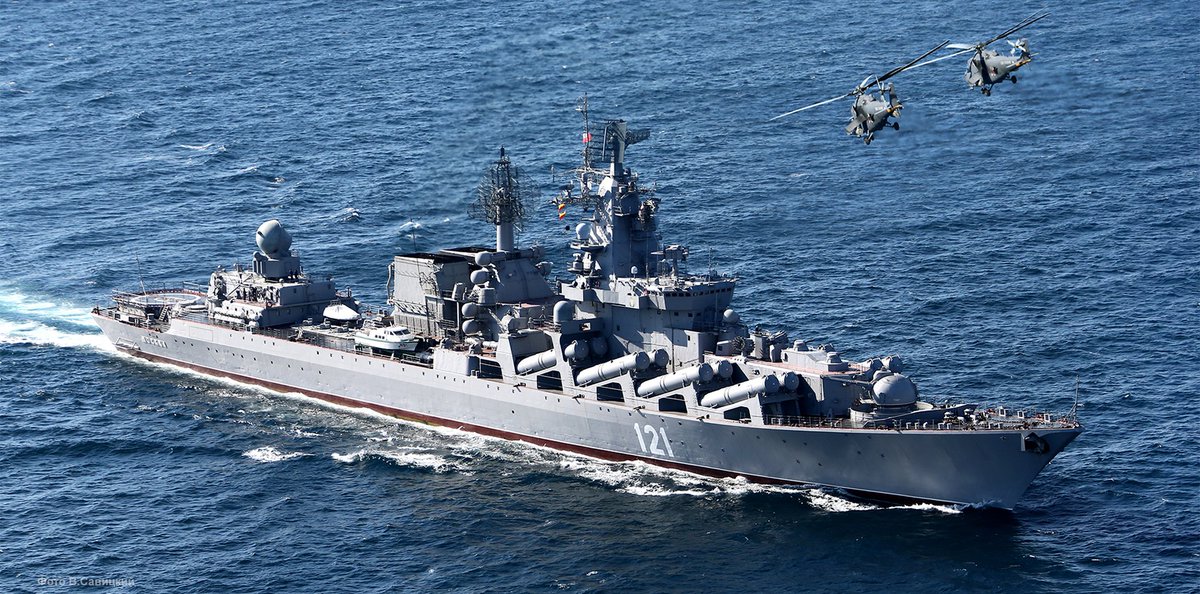
If she's been sunk, the Moskva will be the biggest warship lost since WW2: at 12,490 tons she's bigger than Argentina's General Belgrano, sunk by the Royal Navy in 1982. /2
Apart from the symbolism of her likely loss, she's of great military value as a platform for air defence and missile bombardment of land targets. Her loss is of great significance to both sides. /3
She will likely be irreplaceable - the only ship of her class, built in Ukraine (!) in 1979. Russia can't transfer warships from elsewhere to replace her as Turkey has closed the Bosphorus to military traffic. /4
So how did Ukraine do it? Early reports suggest a brilliantly effective combination of tactics, strategy and the exploitation of its own capabilities, combined with awareness of Russian weaknesses. /5
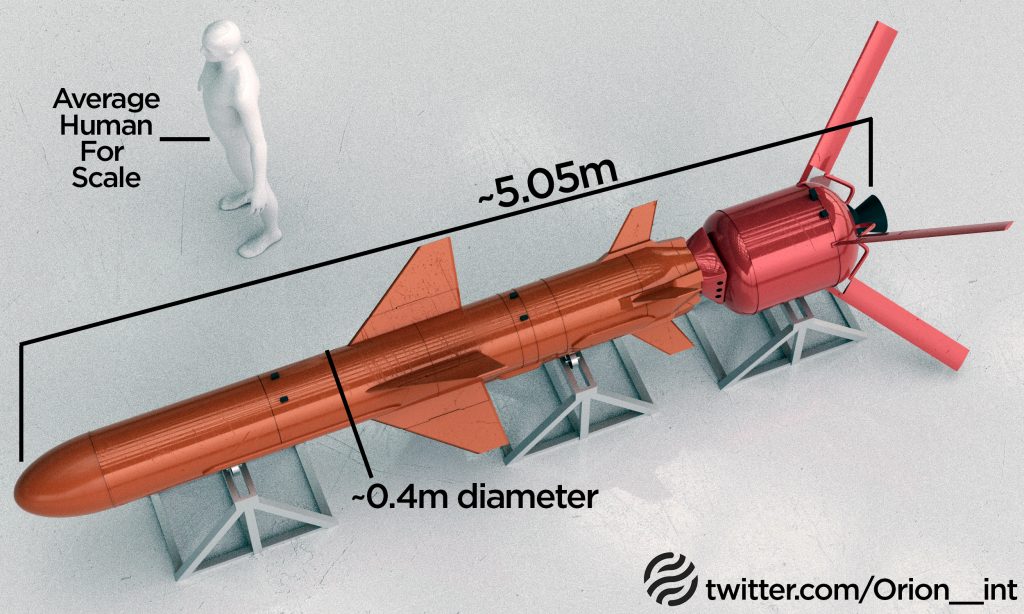
The Moskva was reportedly struck by Ukrainian-designed Neptune anti-ship cruise missiles. These only entered service in 2019. They apparently hadn't seen action before in this war. /6
According to early reports, the attack took place during a storm. This would have made flying difficult but also helps to conceal shore-based activity from observation. The Russians wouldn't have seen the preparations. /7
Reportedly, the Ukrainians used a Bayraktar TB-2 drone to distract the Moskva. The Ukrainian Navy introduced TB-2s into service in August 2021. /8
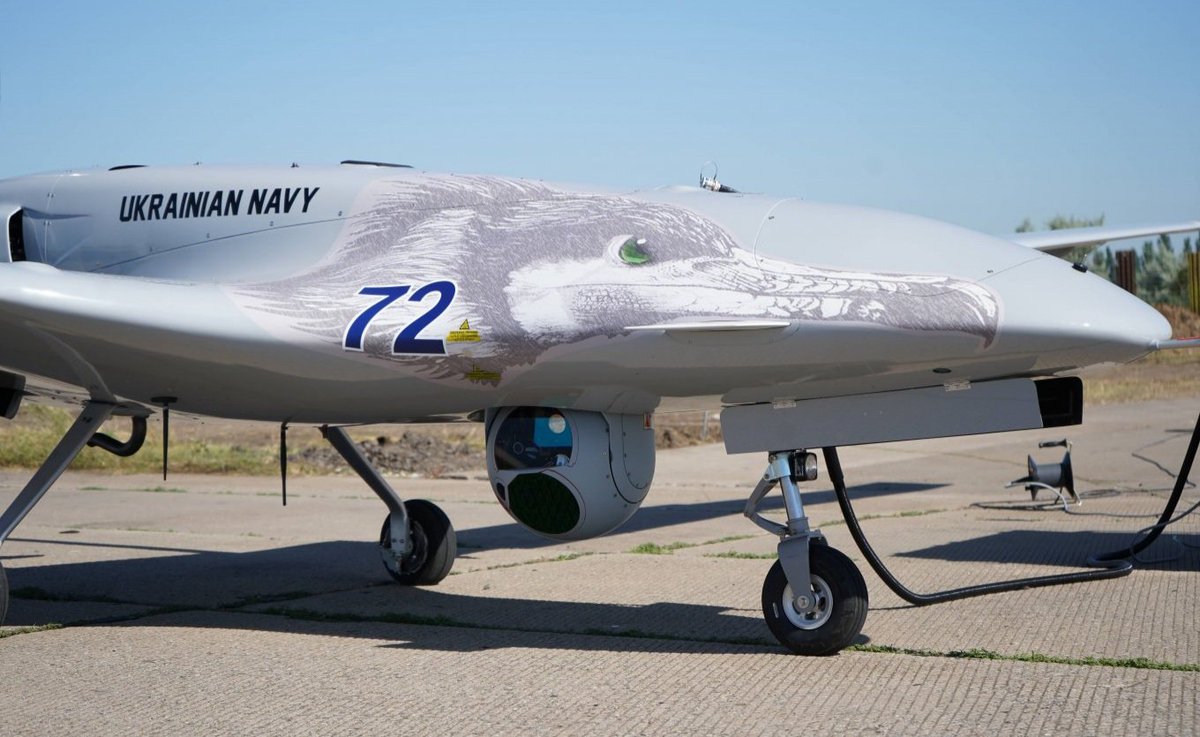
In naval use, they can be employed to find enemy ships and relay their positions to coastal missile batteries, as well as carrying out direct attacks using their own payloads. /9 oryxspioenkop.com/2021/08/black-…
It's possible that the Ukrainians used a TB-2 to identify and target the Moskva for the Neptune battery. Or it could have been a sacrificial pawn to distract the cruiser. Or both! (I don't know if the TB-2 survived.) /10
How did the Russians not see the incoming Neptunes? The Moskva has/had a single main air defence radar - a 3P41 Volna phased array to guide S300 missiles. Problem is, it only has a 180 degree field of vision. /11
360 degree coverage is provided by MR-800 Voshkod/Top Pair 3-D long range air search radars for shorter-range SA-8 missiles. But it's likely that in the storm, they couldn't distinguish the sea-skimming Neptunes from the wavetops. /12
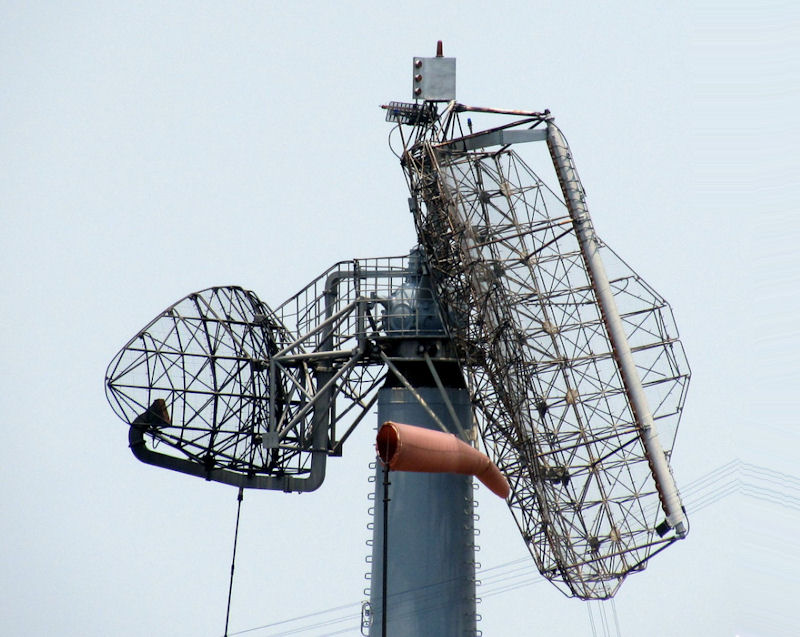
So it's likely that the Ukrainians purposefully got the Moskva to point its best radar in the wrong direction while the Neptunes sneaked under the coverage of the other radars. Very smart. /13
As for the Moskva - the Russians say it caught fire and the (surviving?) crew were evacuated. No crew means no damage control, which means an uncontained fire. /14
At the very least, it's likely to have burned down to the waterline, if it hasn't actually sunk. Reports suggest it was listing badly before it was evacuated, so there was probable water ingress. /15
Either way, the total loss of the Moskva as a military asset is highly, highly likely. The man in the Kremlin is having a very bad day today. /end
Now confirmed by the Ukrainian military:
https://twitter.com/IAPonomarenko/status/1514562883144855557?t=SfnVm-myAdEe_BGK8kUGUQ&s=19
The Russian news agency TASS is reporting that the Moskva has indeed sunk. /17
https://twitter.com/tass_agency/status/1514693528047259654?t=suMCLF-LDnvay2ETVWmDoQ&s=19
Russian Ministry of Defence statement: “The cruiser ship Moskva lost its stability when it was towed to the port because of the damage to the ship’s hull that it received during the fire from the detonation of ammunition. In stormy sea conditions, the ship sank.” /18
The Lithuanian Defence Minister, Arvydas Anušauskas, has posted an account of the sinking:
"A SOS signal was given from the Russian cruiser "Moskva" at 1:05; [at] 1:14 the cruiser ship was lying on the side and half an hour later all power went out. ... /19
"A SOS signal was given from the Russian cruiser "Moskva" at 1:05; [at] 1:14 the cruiser ship was lying on the side and half an hour later all power went out. ... /19
As of 2 o'clock at night, a Turkish ship evacuated 54 sailors from the cruiser and at around 3 o'clock at midnight Turkey and Romania reported that the ship had completely sank. ... /20
Related Russian personnel losses are not yet known, although there were 485 people in the ship's crew (66 of them soldiers)." /21
To put this in perspective, the Moskva is the biggest Russian naval loss since the accidental sinking of the battleship Novorossiysk at Sevastopol in October 1955 and the first Russian flagship lost since the battleship Knyaz Suvorov at Tsushima in May 1905. /22
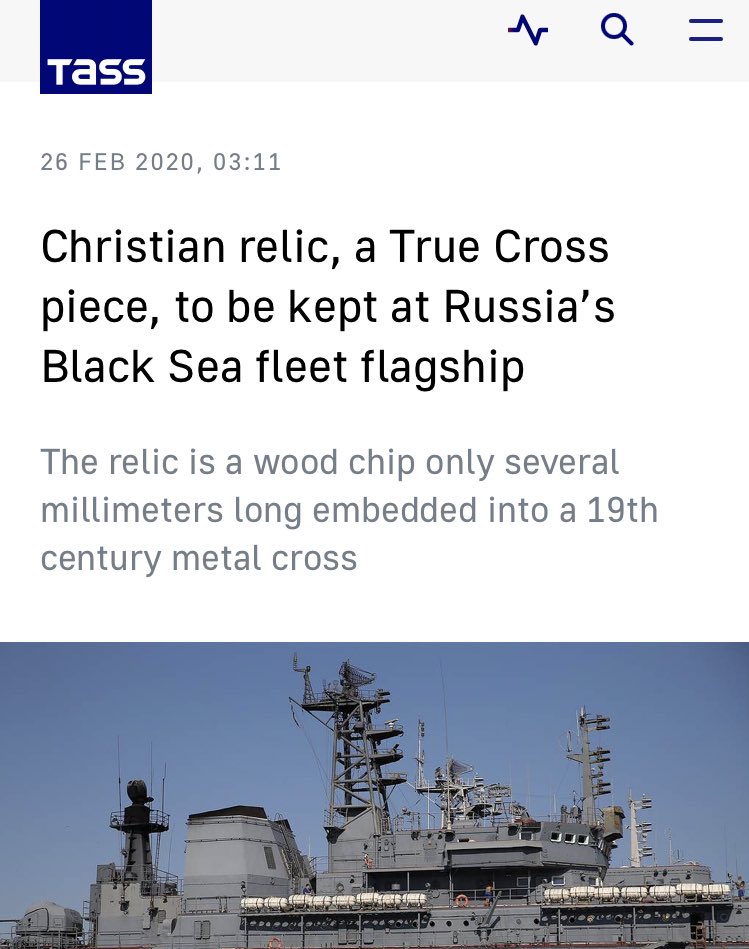
One unexpected thing: the sinking has sent a (very much alleged) piece of Jesus' cross to the bottom of the Black Sea, just in time for Easter: tass.com/society/1123855
More thoughts here!
https://twitter.com/ChrisO_wiki/status/1514963136314593286?t=JRS0VkCtNHH8BEz_K5shrQ&s=19
And some further reasoned speculation on the fate of Moskva's crew:
https://twitter.com/ChrisO_wiki/status/1515400356230057986?t=skI3TlklYdf0evXaydsX6A&s=19
• • •
Missing some Tweet in this thread? You can try to
force a refresh






