A brief discussion of some old IE motifs: Here is Herakles (left) seizing the dog of the netherworld Kerberos (note 2 headed here). Behind the dog is the god Hermes with his caduceus. To the right is the awful Persephone, the goddess of the realm of the dead. While Hermes is a 
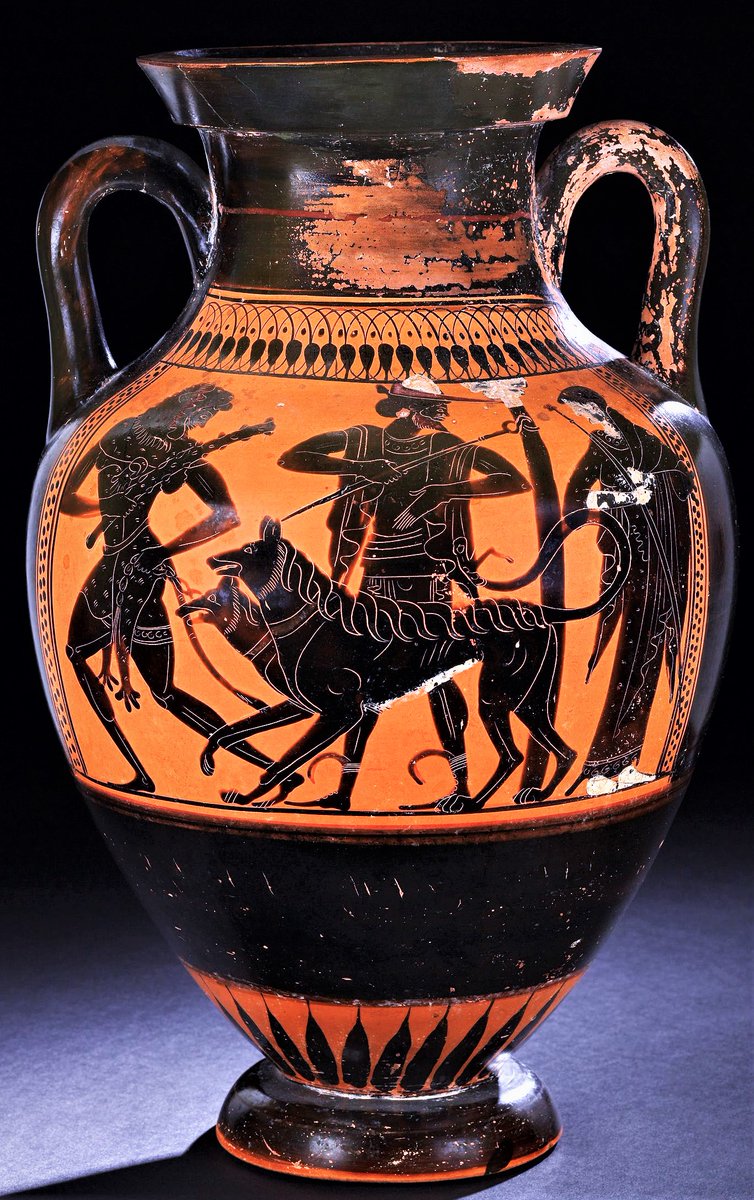
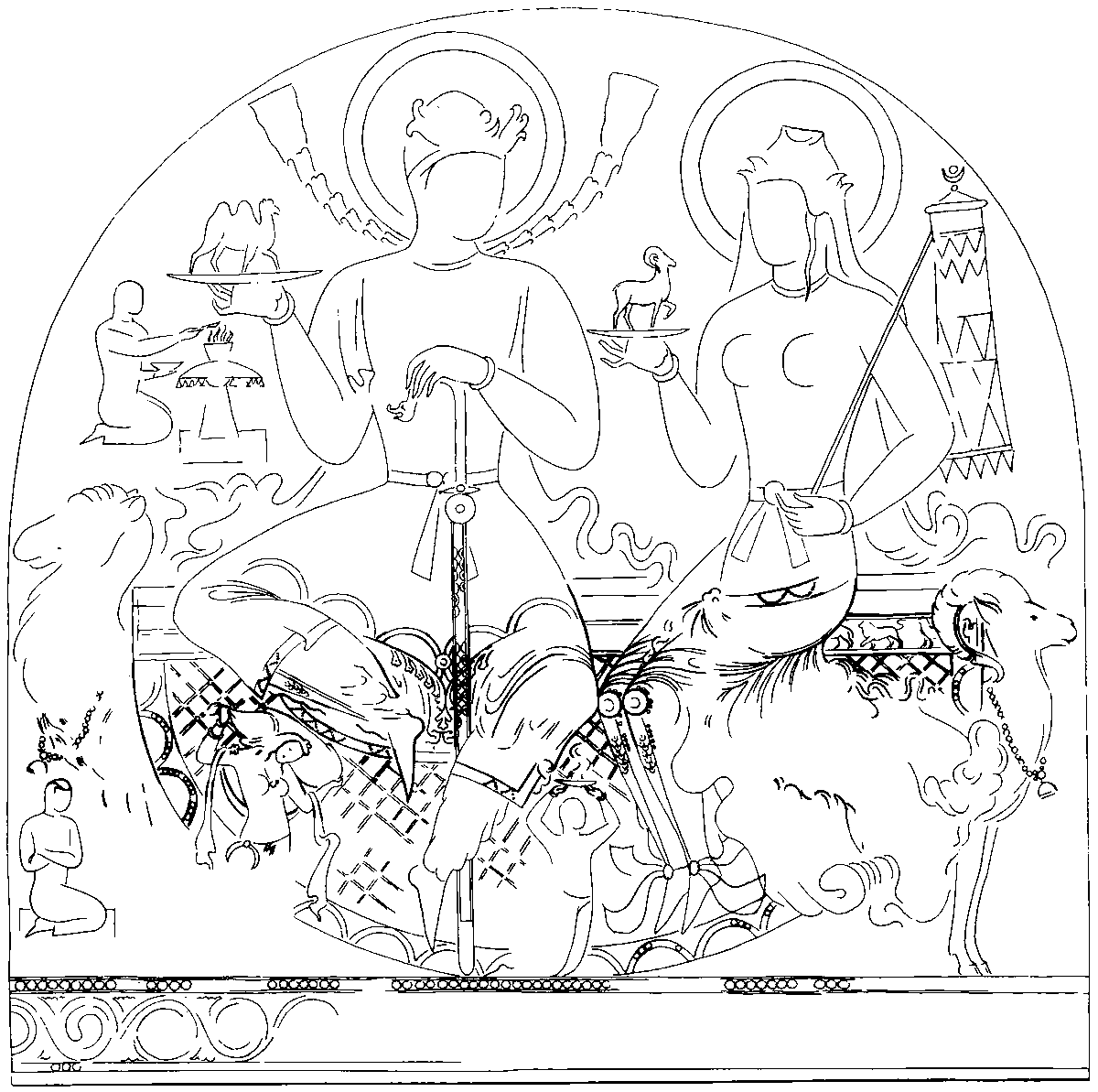
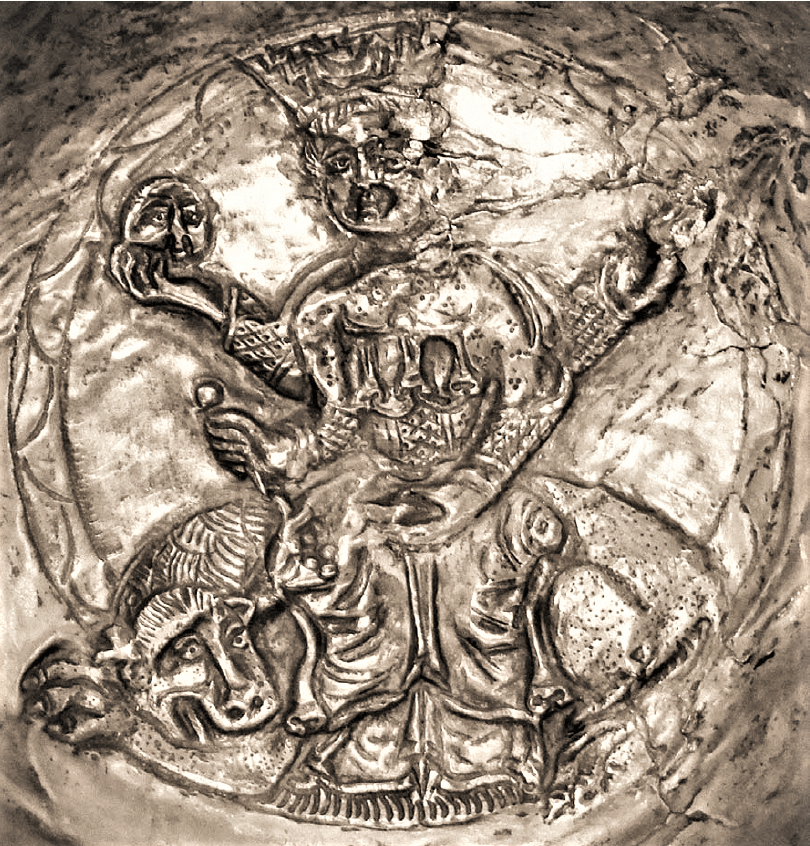
cognate of H puShan but his name might also be a cognate of saramA the mother of the hell-dogs in the H tradition. Comparable to the Attic amphora, the 2 dogs are depicted here in Iranic iconography from the kuShANa age gandhAra. Here the urvan of a dead Iranian is seen meeting

the goddess daenA with the two dogs as he crosses over the bridge cinvato peretu to the realm of the dead. daenA has the features of a benign manifestation of Persephone as Kore, reminding one of her favoring Herakles by giving him Kerberos as shown on the above amphora. The H
cognate of the dogs appears in the funerary incantation:
अति॑ द्रव सारमे॒यौ श्वानौ॑ चतुर॒क्षौ श॒बलौ॑ सा॒धुना॑ प॒था ।
अथा॑ पि॒तॄन्सु॑वि॒दत्राँ॒ उपे॑हि य॒मेन॒ ये स॑ध॒मादं॒ मद॑न्ति ॥
Speed past the two dogs, sons of saramA, four-eyed and brownish yellow, along the good path. Then
अति॑ द्रव सारमे॒यौ श्वानौ॑ चतुर॒क्षौ श॒बलौ॑ सा॒धुना॑ प॒था ।
अथा॑ पि॒तॄन्सु॑वि॒दत्राँ॒ उपे॑हि य॒मेन॒ ये स॑ध॒मादं॒ मद॑न्ति ॥
Speed past the two dogs, sons of saramA, four-eyed and brownish yellow, along the good path. Then
approach the benevolent ancestors who are in joyful revelry together with yama.
यौ ते॒ श्वानौ॑ यम रक्षि॒तारौ॑ चतुर॒क्षौ प॑थि॒रक्षी॑ नृ॒चक्ष॑सौ ।
ताभ्या॑मेनं॒ परि॑ देहि राजन्स्व॒स्ति चा॑स्मा अनमी॒वं च॑ धेहि ॥
Your two dogs, o yama, who are the four-eyed guardians of the path
यौ ते॒ श्वानौ॑ यम रक्षि॒तारौ॑ चतुर॒क्षौ प॑थि॒रक्षी॑ नृ॒चक्ष॑सौ ।
ताभ्या॑मेनं॒ परि॑ देहि राजन्स्व॒स्ति चा॑स्मा अनमी॒वं च॑ धेहि ॥
Your two dogs, o yama, who are the four-eyed guardians of the path
looking upon men, to them deliver him, o king, and give him weal and a disease-free existence.
उ॒रू॒ण॒साव॑सु॒तृपा॑ उदुम्ब॒लौ य॒मस्य॑ दू॒तौ च॑रतो॒ जनाँ॒ अनु॑ ।
ताव॒स्मभ्यं॑ दृ॒शये॒ सूर्या॑य॒ पुन॑र्दाता॒मसु॑म॒द्येह भ॒द्रम् ॥
The 2 broad-nosed, life-stealing, reddish-yellow agents
उ॒रू॒ण॒साव॑सु॒तृपा॑ उदुम्ब॒लौ य॒मस्य॑ दू॒तौ च॑रतो॒ जनाँ॒ अनु॑ ।
ताव॒स्मभ्यं॑ दृ॒शये॒ सूर्या॑य॒ पुन॑र्दाता॒मसु॑म॒द्येह भ॒द्रम् ॥
The 2 broad-nosed, life-stealing, reddish-yellow agents
of yama, track down the folks. May these two [dogs] grant an auspicious life again here today to us, to keep seeing the sun.
One notable point is their description as being four-eyed -- a duplication within a duplication. Their duality expressed in the ancient mantra is captured
One notable point is their description as being four-eyed -- a duplication within a duplication. Their duality expressed in the ancient mantra is captured
in both the yavana &Iranic iconography. The former further hints an internal duplication in showing them as 2 eyed. Next we come to the presence of Hermes in the image. As suggested by some, 1 connection is the link to saramA the mother of these dogs praised in mantra-s of the YV
However, multiple lines of evidence suggest that Hermes is a cognate of puShan. We shall that there is tangled web of connections between puShan, the dog & the realm of the dead. First, the shruti refers to a mysterious entity agohya in the context of the R^ibhu-s. When the
R^ibhu-s are sleeping the house of agohya for 12 days (dvAdasha dyUn yad agohyasyAtithye raNann R^ibhavaH sasantaH |) they were woken up. They ask agohya who did so & he says: shvAnam basto bodhayitAram abravIt saMvatsara idam adyA vy akhyata |
The goat said "the dog woke you up"
The goat said "the dog woke you up"
You opened your eyes here today [at the end] of the year. Thus, this agohya is identified as goat, which is the animal of pUShan. The RV seems to identify pUShan with the goat: narA vA shaMsam pUShaNam agohyam agniM deveddham abhy archase girA |
here we take the agohya as going
here we take the agohya as going
with pUShan. Thus, the dog associated with the house of agohya, who is likely pUShan gives us a link between the two (also astronomically relevant -- see BG Tilak). The next more direct connection is the role of pUShan in the funerary ritual, where oblations are made to him.
They made with the following mantra-s & invoke pUShan to guide the ghost of the deceased to the realm of yama:
पू॒षा त्वे॒तश्च्या॑वयतु॒ प्र वि॒द्वानन॑ष्टपशु॒र्भुव॑नस्य गो॒पाः ।
स त्वै॒तेभ्यः॒ परि॑ ददत्पि॒तृभ्यो॒ऽग्निर्दे॒वेभ्यः॑ सुविद॒त्रिये॑भ्यः ॥
Here pUShan is called to arouse
पू॒षा त्वे॒तश्च्या॑वयतु॒ प्र वि॒द्वानन॑ष्टपशु॒र्भुव॑नस्य गो॒पाः ।
स त्वै॒तेभ्यः॒ परि॑ ददत्पि॒तृभ्यो॒ऽग्निर्दे॒वेभ्यः॑ सुविद॒त्रिये॑भ्यः ॥
Here pUShan is called to arouse
the ghost of the deceased & deliver it to the realm of ancestors.
आयु॑र्वि॒श्वायुः॒ परि॑ पासति त्वा पू॒षा त्वा॑ पातु॒ प्रप॑थे पु॒रस्ता॑त् ।
यत्रास॑ते सु॒कृतो॒ यत्र॒ ते य॒युस्तत्र॑ त्वा दे॒वः स॑वि॒ता द॑धातु ॥
Here pUShan is called to lead the deceased along path -- the equivalent
आयु॑र्वि॒श्वायुः॒ परि॑ पासति त्वा पू॒षा त्वा॑ पातु॒ प्रप॑थे पु॒रस्ता॑त् ।
यत्रास॑ते सु॒कृतो॒ यत्र॒ ते य॒युस्तत्र॑ त्वा दे॒वः स॑वि॒ता द॑धातु ॥
Here pUShan is called to lead the deceased along path -- the equivalent
of the Iranic chinvato peretu to the realm where those who have done good deeds sit. the god savitR^is also invoked to place the dead one there.
पू॒षेमा आशा॒ अनु॑ वेद॒ सर्वाः॒ सो अ॒स्माँ अभ॑यतमेन नेषत् ।
स्व॒स्ति॒दा आघृ॑णिः॒ सर्व॑वी॒रोऽप्र॑युच्छन्पु॒र ए॑तु प्रजा॒नन् ॥
pUShan is
पू॒षेमा आशा॒ अनु॑ वेद॒ सर्वाः॒ सो अ॒स्माँ अभ॑यतमेन नेषत् ।
स्व॒स्ति॒दा आघृ॑णिः॒ सर्व॑वी॒रोऽप्र॑युच्छन्पु॒र ए॑तु प्रजा॒नन् ॥
pUShan is
said to know these realms completely & leads the dead along a path that is least threatening.
प्रप॑थे प॒थाम॑जनिष्ट पू॒षा प्रप॑थे दि॒वः प्रप॑थे पृथि॒व्याः ।
उ॒भे अ॒भि प्रि॒यत॑मे स॒धस्थे॒ आ च॒ परा॑ च चरति प्रजा॒नन् ॥
pUShan is said to have arisen in the path leading to the heavens
प्रप॑थे प॒थाम॑जनिष्ट पू॒षा प्रप॑थे दि॒वः प्रप॑थे पृथि॒व्याः ।
उ॒भे अ॒भि प्रि॒यत॑मे स॒धस्थे॒ आ च॒ परा॑ च चरति प्रजा॒नन् ॥
pUShan is said to have arisen in the path leading to the heavens
& that leading to the earth & he moves along both these paths with full knowledge. This parallels the Orphic hymn 56 from the yavana world, where, Hermes (who wanders around) is invoked to lead the deceased to the realm of Persephone.
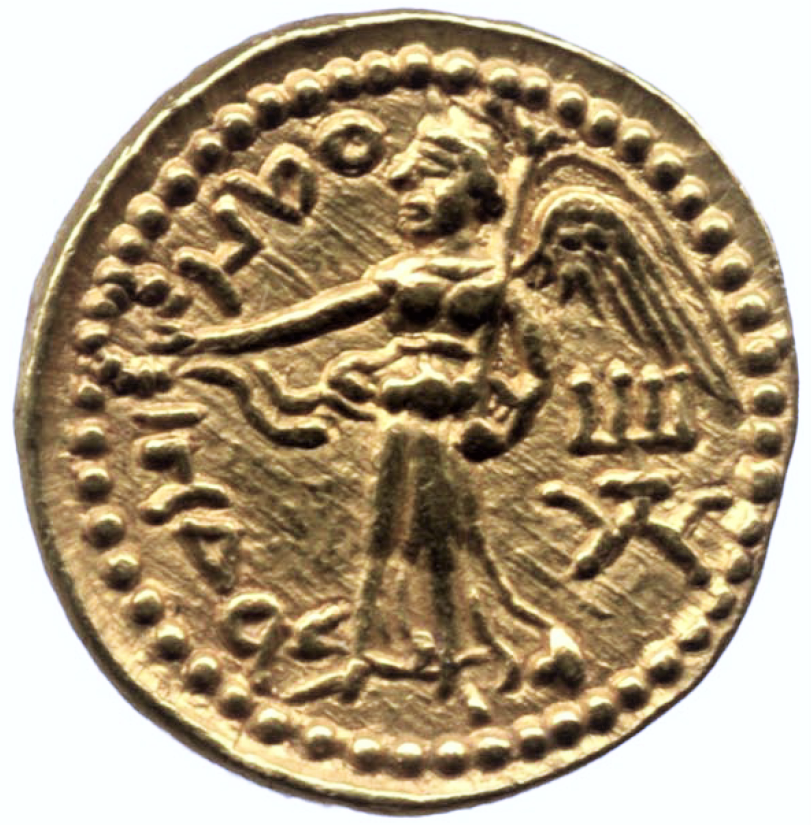
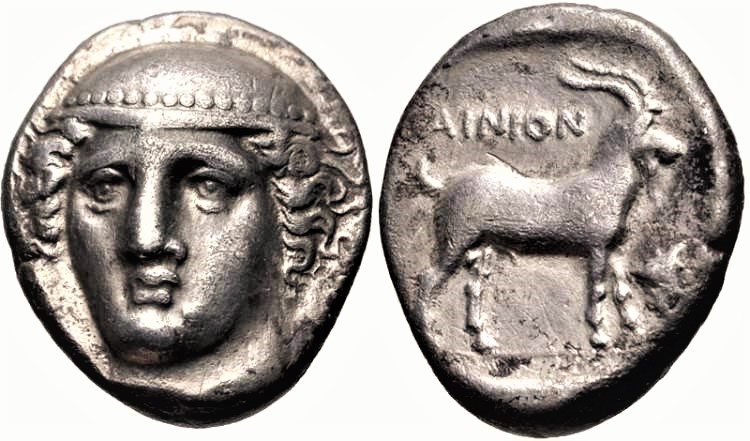
An Ainos coin with Hermes and his goat. As bharadvAja says:
आजासः॑ पू॒षणं॒ रथे॑ निशृ॒म्भास्ते ज॑न॒श्रिय॑म् ।
दे॒वं व॑हन्तु॒ बिभ्र॑तः ॥
The goats draw the chariot bearing the the god. Further, the RV mentions a peculiar rod of pUShan. e.g. the bharadvAja-s mention it thus:
आजासः॑ पू॒षणं॒ रथे॑ निशृ॒म्भास्ते ज॑न॒श्रिय॑म् ।
दे॒वं व॑हन्तु॒ बिभ्र॑तः ॥
The goats draw the chariot bearing the the god. Further, the RV mentions a peculiar rod of pUShan. e.g. the bharadvAja-s mention it thus:
या ते॒ अष्ट्रा॒ गोओप॒शाघृ॑णे पशु॒साध॑नी । तस्या॑स्ते सु॒म्नमी॑महे ॥
This rod the अष्ट्रा is often rendered as a goad, whose favor is implored by the yajamAna. Note that it is specifically described as गोओप॒शा -- with a top like a cow. Note the Ainos coin showing Hermes with the
This rod the अष्ट्रा is often rendered as a goad, whose favor is implored by the yajamAna. Note that it is specifically described as गोओप॒शा -- with a top like a cow. Note the Ainos coin showing Hermes with the
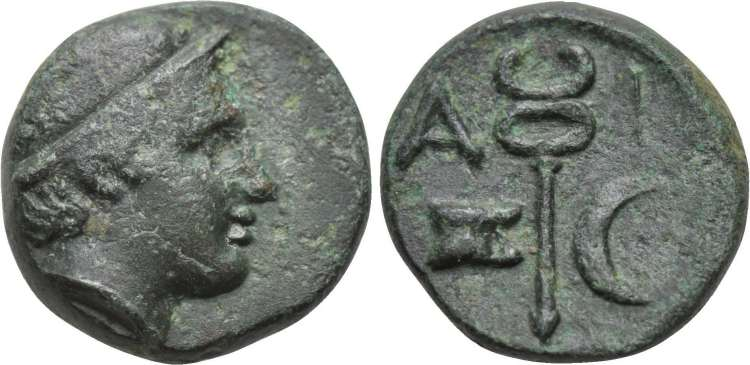
caduceus on the opposite side. This iconography of the caduceus fits the description of pUshan's aShTrA precisely. Hence, we may conclude that the RV vipra-s visualized the aShTrA of pUShan comparably to that seen in this iconographic tradition from Thrace.
Finally, we come to the analogs of the goddess on the Attic amphora. While, the Iranic daenA & Persephone are not exact cognates, they, nevertheless, indicate the presence of a goddess in the passage to the nether realm. Who is their equivalent in the H tradition? Whereas in a
a functional sense we could say that the hell-goddess nirR^iti overlaps with Persephone the match is not exact & she is never in the "picture" in this context. Instead, the funerary ritual of Arya-s indicates the equivalent goddess in this context is sarasvatI svadhAvati
Thus, after pUShan, sarasvatI is invoked to give a good state to those who had performed good actions in life:
सर॑स्वतीं देव॒यन्तो॑ हवन्ते॒ सर॑स्वतीमध्व॒रे ता॒यमा॑ने ।
सर॑स्वतीं सु॒कृतो॑ अह्वयन्त॒ सर॑स्वती दा॒शुषे॒ वार्यं॑ दात् ॥
Those who seek the gods invoke her
सर॑स्वतीं देव॒यन्तो॑ हवन्ते॒ सर॑स्वतीमध्व॒रे ता॒यमा॑ने ।
सर॑स्वतीं सु॒कृतो॑ अह्वयन्त॒ सर॑स्वती दा॒शुषे॒ वार्यं॑ दात् ॥
Those who seek the gods invoke her
सर॑स्वति॒ या स॒रथं॑ य॒याथ॑ स्व॒धाभि॑र्देवि पि॒तृभि॒र्मद॑न्ती ।
आ॒सद्या॒स्मिन्ब॒र्हिषि॑ मादयस्वानमी॒वा इष॒ आ धे॑ह्य॒स्मे ॥
sarasvatI comes to the funerary ritual pleased by svadhA offerings, giving a ride to the ancestors in her chariot to take a seat at the grass in the funeral
आ॒सद्या॒स्मिन्ब॒र्हिषि॑ मादयस्वानमी॒वा इष॒ आ धे॑ह्य॒स्मे ॥
sarasvatI comes to the funerary ritual pleased by svadhA offerings, giving a ride to the ancestors in her chariot to take a seat at the grass in the funeral
सर॑स्वतीं॒ यां पि॒तरो॒ हव॑न्ते दक्षि॒णा य॒ज्ञम॑भि॒नक्ष॑माणाः ।
स॒ह॒स्रा॒र्घमि॒ळो अत्र॑ भा॒गं रा॒यस्पोषं॒ यज॑मानेषु धेहि ॥
Here sarasvatI is said to come from the southern direction with the ancestors & even as she arrives they invoke her. She's called upon to give goodies among
स॒ह॒स्रा॒र्घमि॒ळो अत्र॑ भा॒गं रा॒यस्पोषं॒ यज॑मानेषु धेहि ॥
Here sarasvatI is said to come from the southern direction with the ancestors & even as she arrives they invoke her. She's called upon to give goodies among
the living ritualists. Thus, sarasvatI svadhAvati who receives the funerary oblations may be seen as sarasvatI with Persephonian characteristics. Similarly, in Plato's Cratylus we get a hint of the sarasvatian characteristics of Persephone as he says: "...all things are in motion
and she [Persephone] in her wisdom moves with them, and the wise God Hades consorts with her -- there is nothing very terrible in this, any more than in her other appellation Persephone, which is also significant of her wisdom (sophe). Thus, in Plato's brAhmaNa-style etymologies
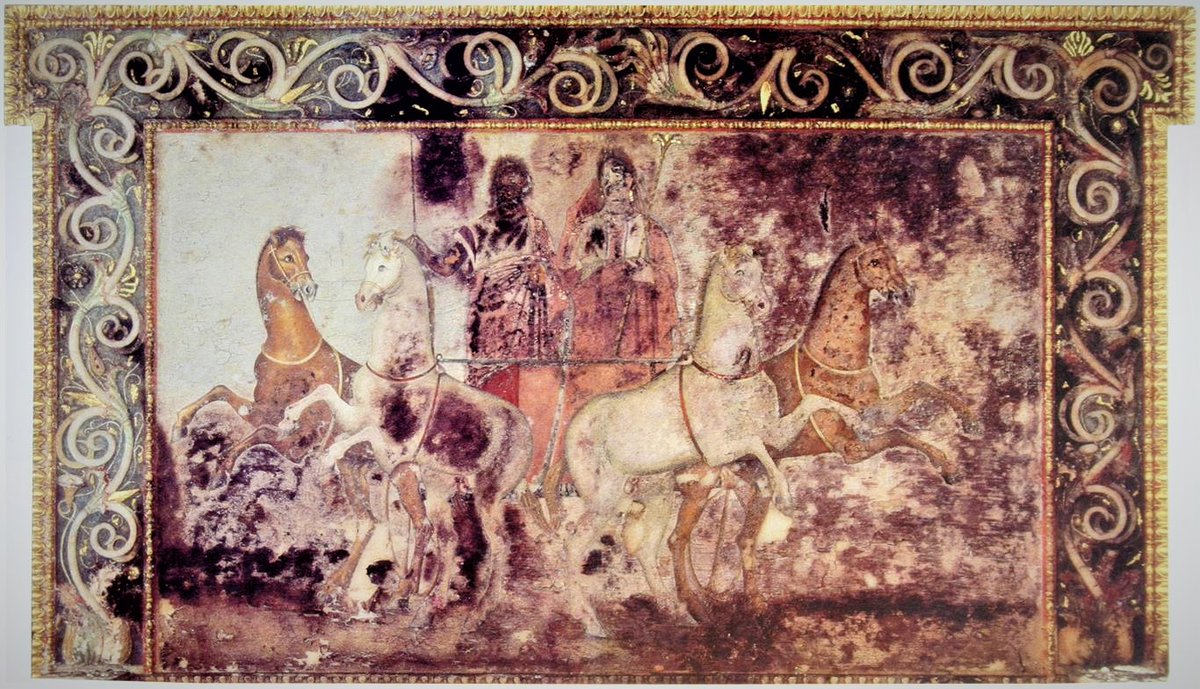
we get a hint of Persephone's wisdom connections quite like those of sarasvatI in the Arya world (Above transl from Jowett. A Greek funerary fresco showing Persphone coming in her chariot with Hades; reminding one of sarasvatI coming with the pitR^i-s
• • •
Missing some Tweet in this thread? You can try to
force a refresh