Thanks to @FADA_India we have detailed sales of electric vehicles in India for FY22.
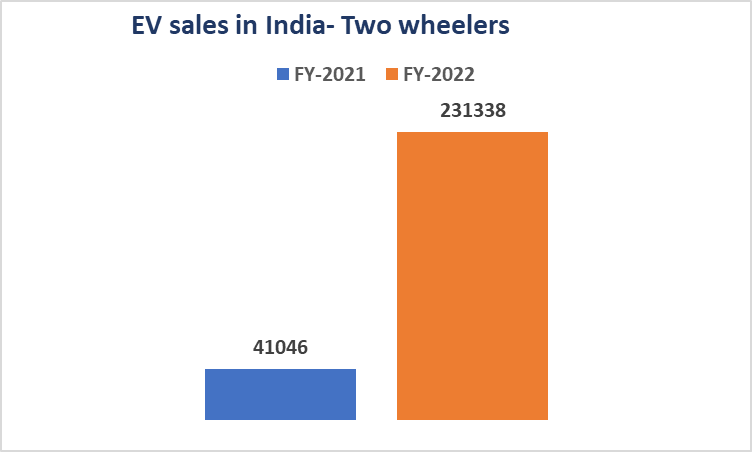
1. India sold 231,338 two wheeler EVs in FY22 up 464% from FY21 with 41,046 sales
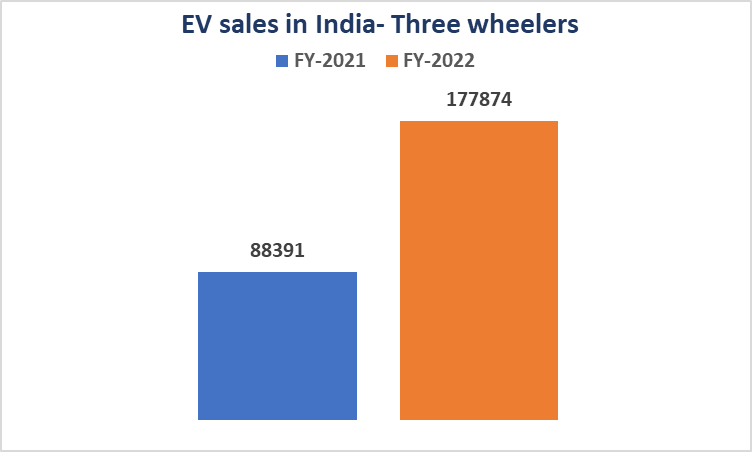
2. India sold 177,874 three wheeler EVs in FY22 up 101% from FY21 with 88,391 sales
#EV
1. India sold 231,338 two wheeler EVs in FY22 up 464% from FY21 with 41,046 sales
2. India sold 177,874 three wheeler EVs in FY22 up 101% from FY21 with 88,391 sales
#EV
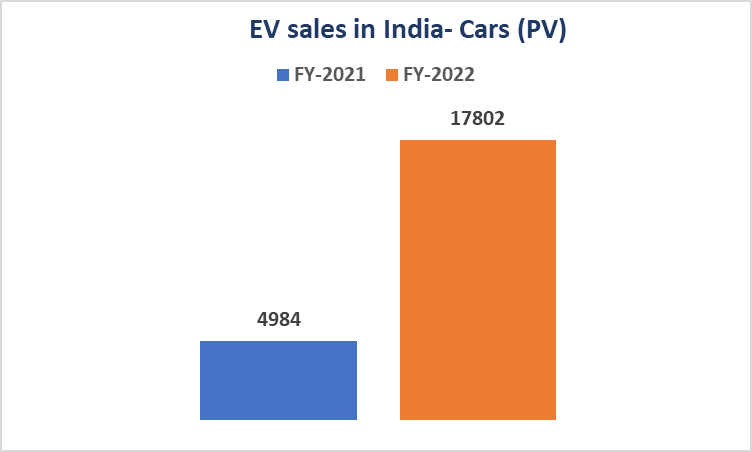
3. India sold 17,802 electric cars (PV) in FY22 up 257% from FY21 with 4,984 sales
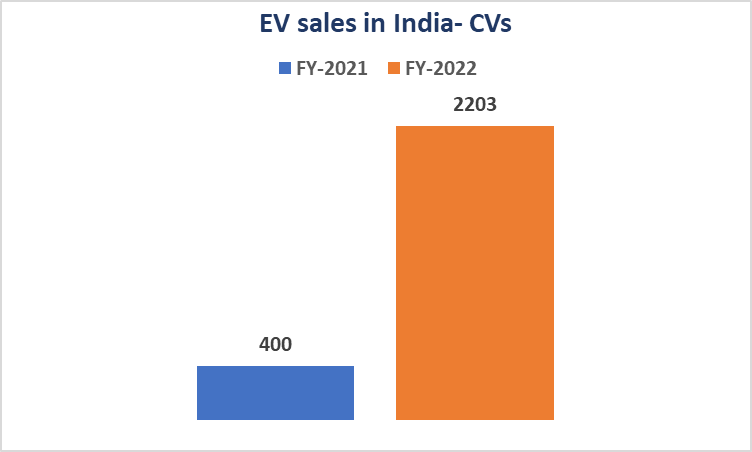
4. India sold 2,203 electric commercial vehicles in FY22 up 451% from FY21 with 400 sales.
#EV
4. India sold 2,203 electric commercial vehicles in FY22 up 451% from FY21 with 400 sales.
#EV
To understand this better, let us look at share of EVs as part of total sales in each category.
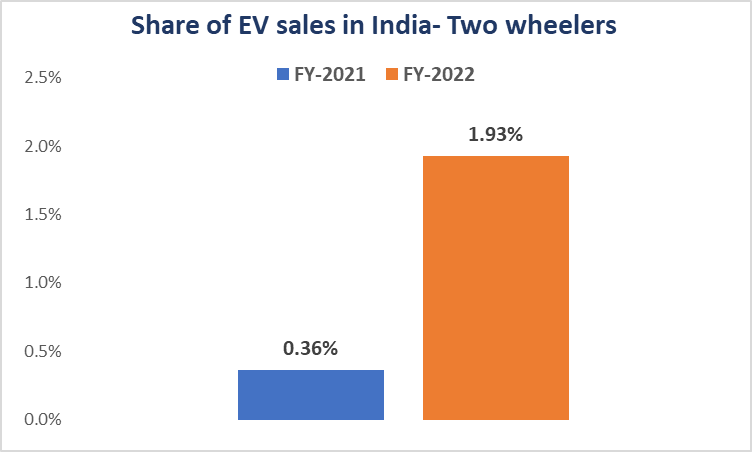
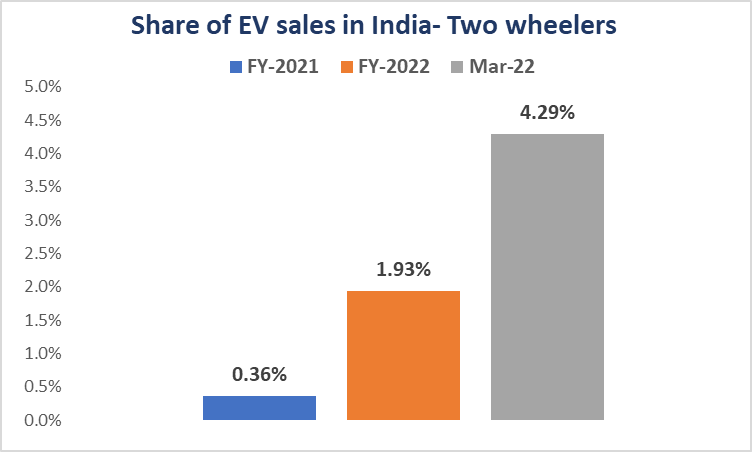
1. Electric share of two wheelers sales was ~2% in FY22 vs 0.36% in FY21
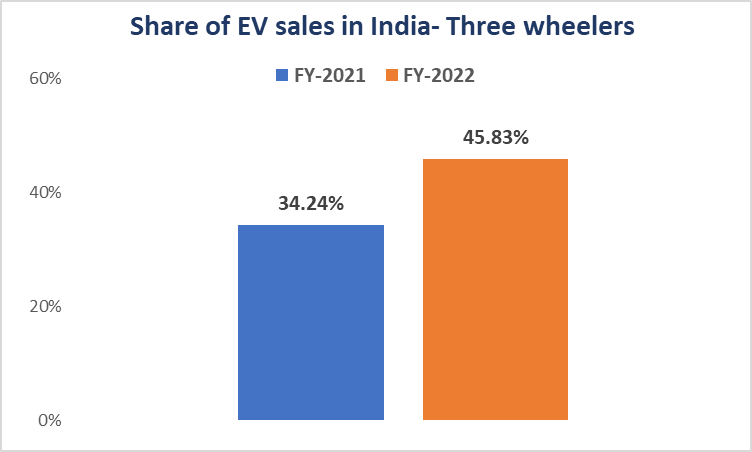
2. Electric share of three wheelers sales was 46% in FY22 vs 34% in FY21
#EV
1. Electric share of two wheelers sales was ~2% in FY22 vs 0.36% in FY21
2. Electric share of three wheelers sales was 46% in FY22 vs 34% in FY21
#EV
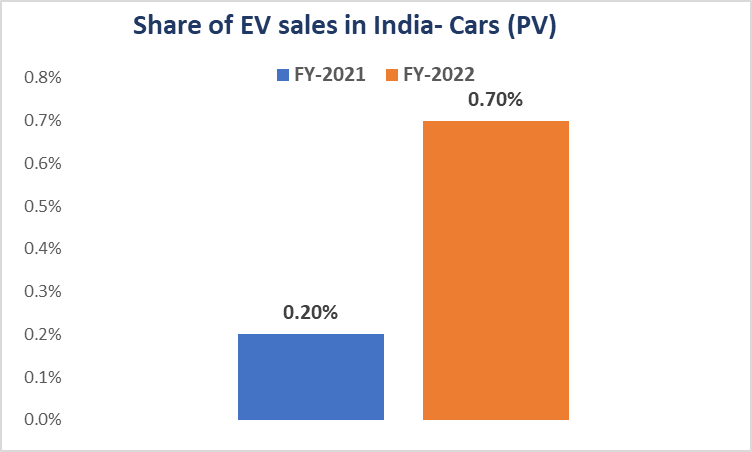
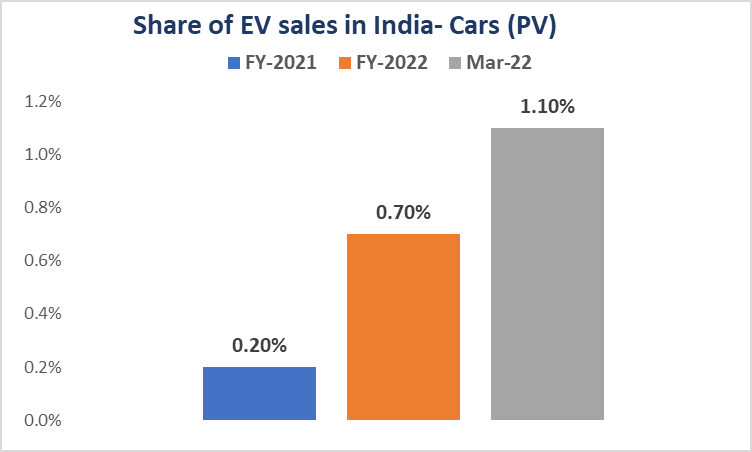
3. Electric share of car (PV) sales was 0.7% in FY22 vs 0.2% in FY21
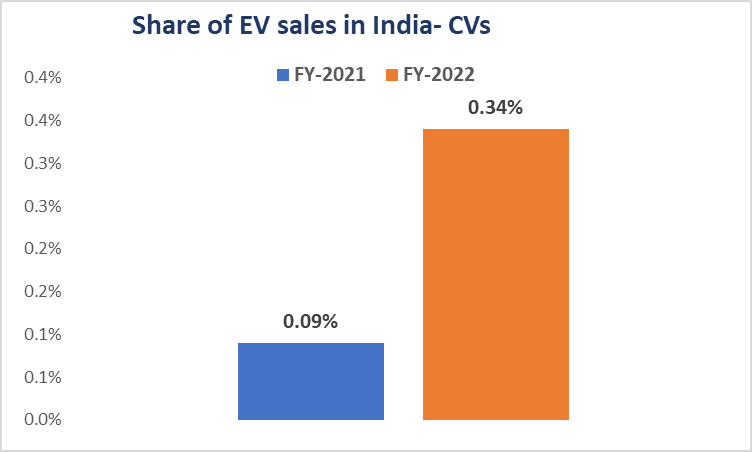
2. Electric share of three wheelers sales was 0.34% in FY22 vs 0.09% in FY21
#EV
2. Electric share of three wheelers sales was 0.34% in FY22 vs 0.09% in FY21
#EV
And this trend will only increase, we can already see that in the shares for two wheelers and Car sales in March 2022.
Share of EVs in Two wheelers sales is 4.3% in March 2022 and share of EVs in Car sales is 1.1% in March 2022
Share of EVs in Two wheelers sales is 4.3% in March 2022 and share of EVs in Car sales is 1.1% in March 2022
My own crude projections for FY23 are as follows with regards to share of EVs of total sales.
Two wheelers: 7-9%
Cars: 2-3%
Three wheelers: 55-60%
#EV
Two wheelers: 7-9%
Cars: 2-3%
Three wheelers: 55-60%
#EV
• • •
Missing some Tweet in this thread? You can try to
force a refresh