The time has finally arrived to simplify how we use the volume indicator on our charts. With a Tradingview script at the end, here is a thread🧵 on what “simple” volumes are, & how to use them: 👇
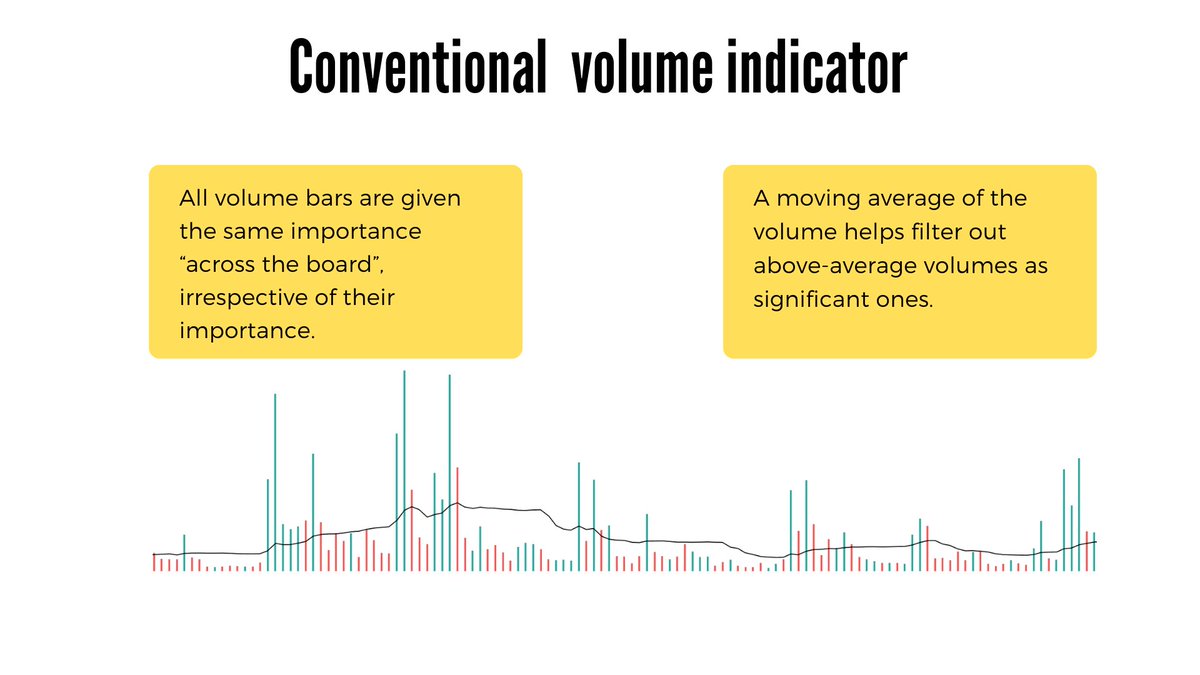
The conventional volume indicator is full of ‘noise’ in that all volume bars are given the same importance. Color & size are the two informations they provide. But this information is “across the board”, irrespective of when it’s important enough or not.
The Simple volume indicator is minimalistic, in that it strips away the conventional volume indicator from a lot of “noise”, & help narrow our focus on actionable volume bars only. It displays only 3 type of volume bars prominently: blue, green & red.
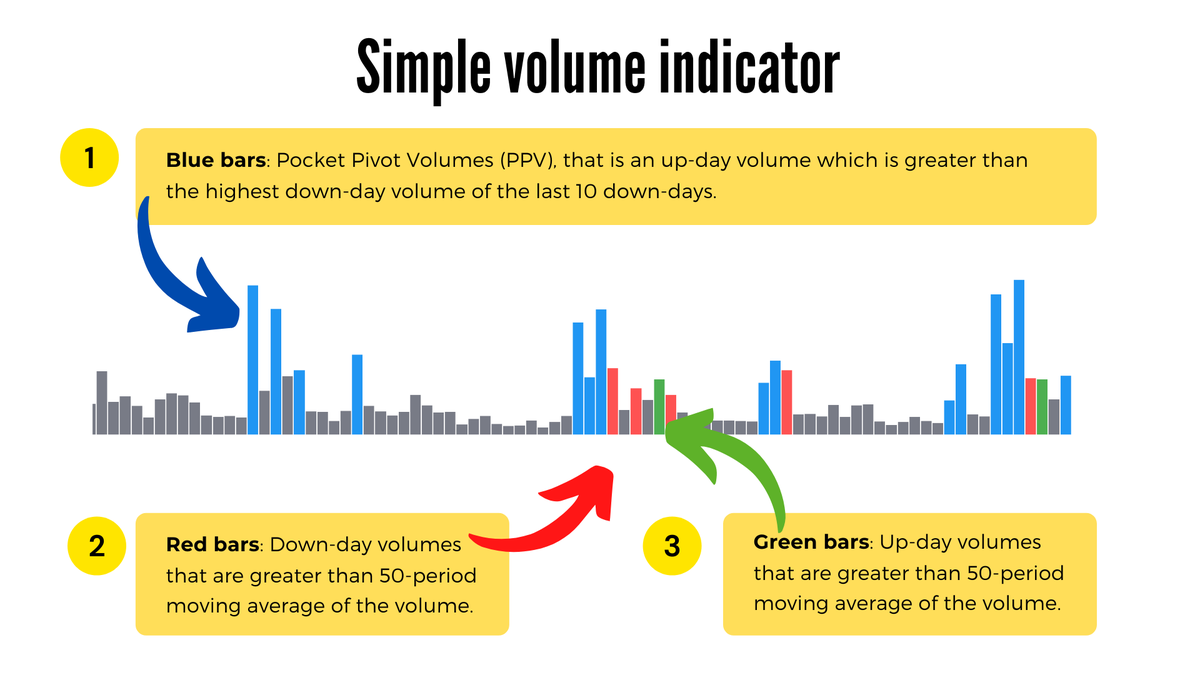
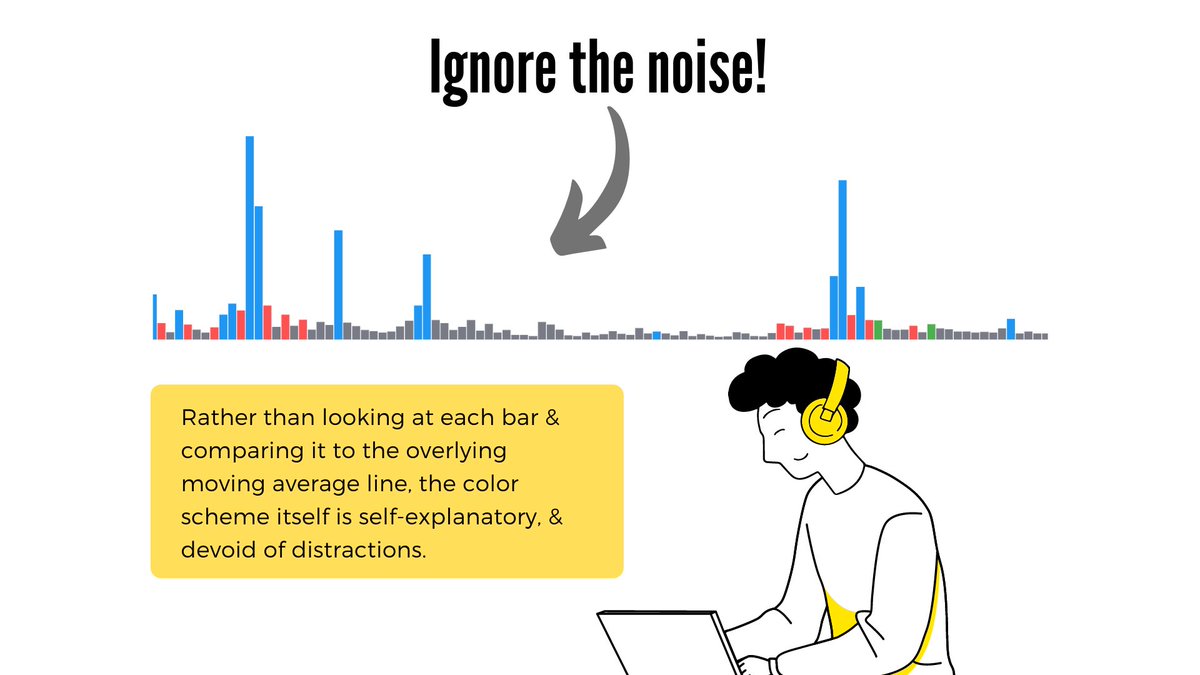
Other than these 3, all other volumes are “noise” & need not be kept into any actionable consideration. All these inconsequential bars are grey. Moving average of the volume is also purposely hidden, as the grey bars themselves are indication of a below-average volume.
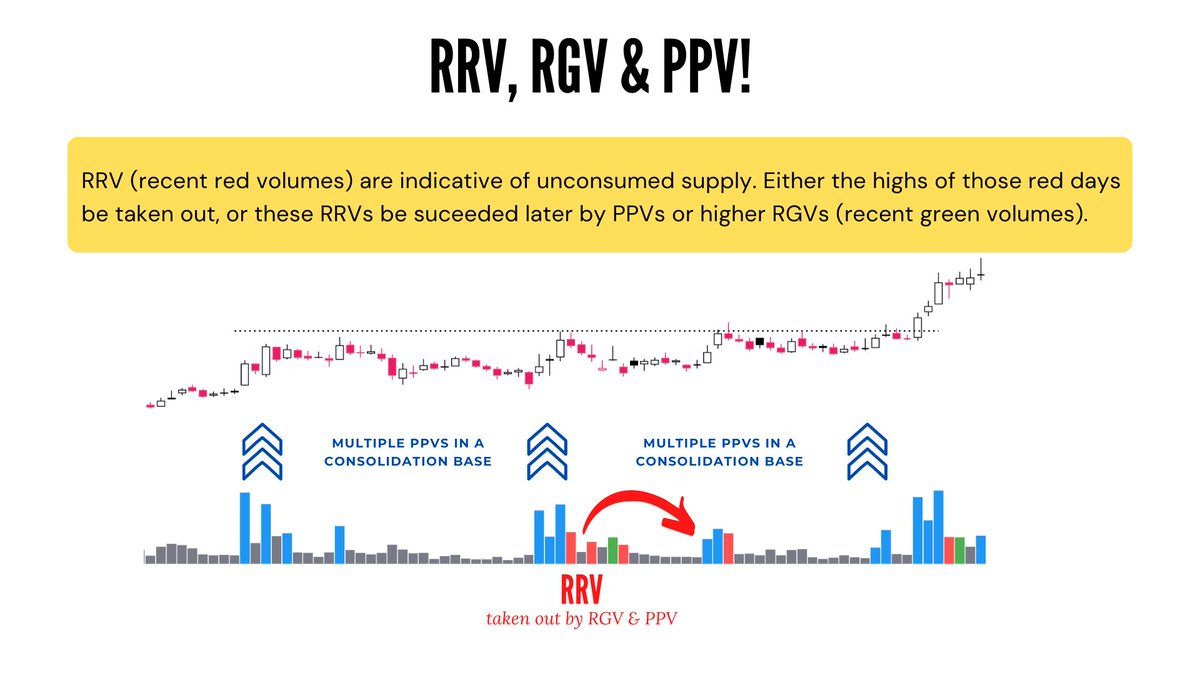
While initiating a long entry, we need to look out for only these 3 volume bars, & arrive at our decision. PPVs are the best indicator of institutional accumulation. Multiple PPVs in a consolidation base, & in a breakout candle are very bullish signals.
Here is the link of the Tradingview script for Simple volumes:
The simplest way to judge if we're in a bear or a bull market is via the % of stocks above 200-day MA.
% of stocks above 200 MA sustaining for at least a month above 50 → Bull Market
% of stocks above 200 MA sustaining for at least a month below 50 → Bear Market
A thread 🧵
2018-2020
A ‘clean’ example of a bear market is from the period between Feb 2018 to Aug 2020, where the % of stocks above 200-day MA stayed below 50 levels almost throughout:
2020-2022
A ‘clean’ example of a bull market is from the period Aug 2020 to May 2022, where the % of stocks above 200-day MA stayed above 50 levels almost throughout:
EEC is simply a high probability of reporting blockbuster results in the upcoming quarter, worthy of news headlines, leading to more inflows of liquidity.
The concept of EEC was explained in the book ‘Insider Buy Superstocks’ by Jesse Stine.
What is an Earnings Comparison?
An earnings comparison looks at a company’s earnings (or sales) from one quarter to the same quarter in the previous year. This is called an Year-over-Year (YoY) comparison.
For example, if a company had an EPS of 5.2 last year and this rises to 12.6 this year, that's a 140% increase.
Why Do Easy Earnings Comparisons Matter?
Let’s say the company posted an EPS of 12.6 again next quarter, but last year it had an EPS of 14.9 in that same quarter.
Even though the company is still making money, the YoY comparison shows a decline, which might not impress investors.
Entry (23-May-23): First pullback to the 20-day MA.
Exit (24-May-23): Exited in the backdrop of Nifty making something like an evening star, & the trade having no cushion.
Entry (06-Apr-23): Entered as price seemed to breakout of a multi-touch descending trendline.
Exit (11-Apr-23): Exited as SL got hit. Within a week, the price recovered & was back at the same levels, giving another opportunity that was not… https://t.co/s952z71rJKtwitter.com/i/web/status/1…
I have a very simple method for swing trading in cash stocks.
With a Tradingview script at the end, here is a thread🧵 on my Simple Swing strategy: 👇
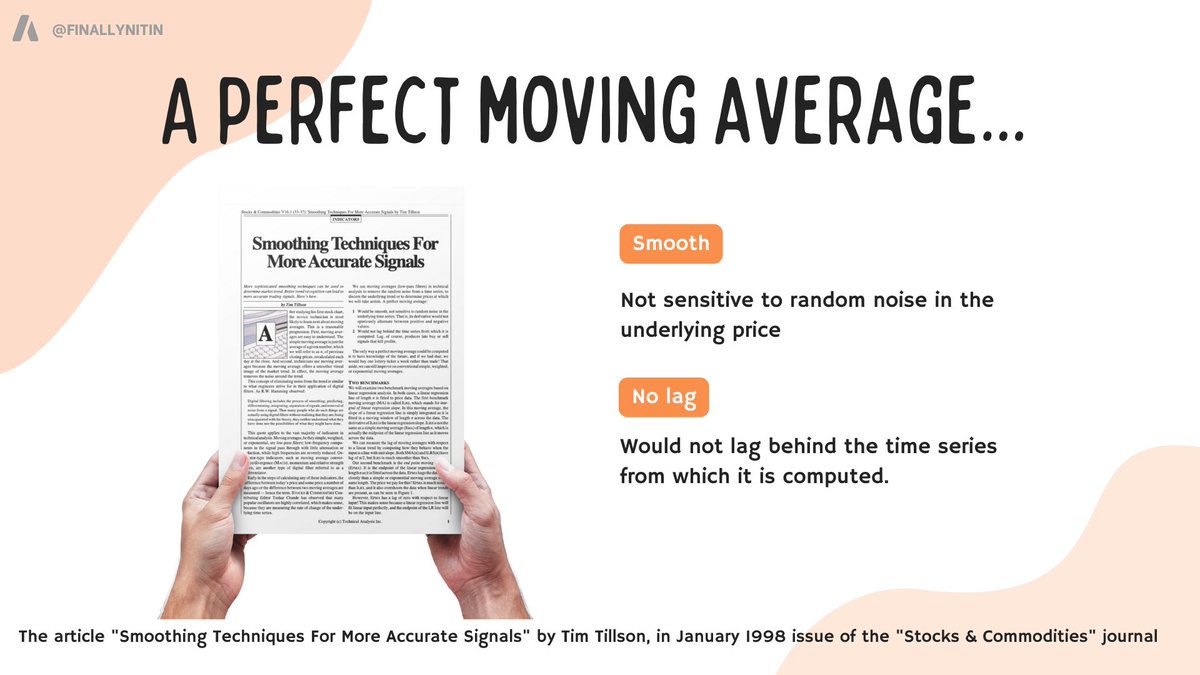
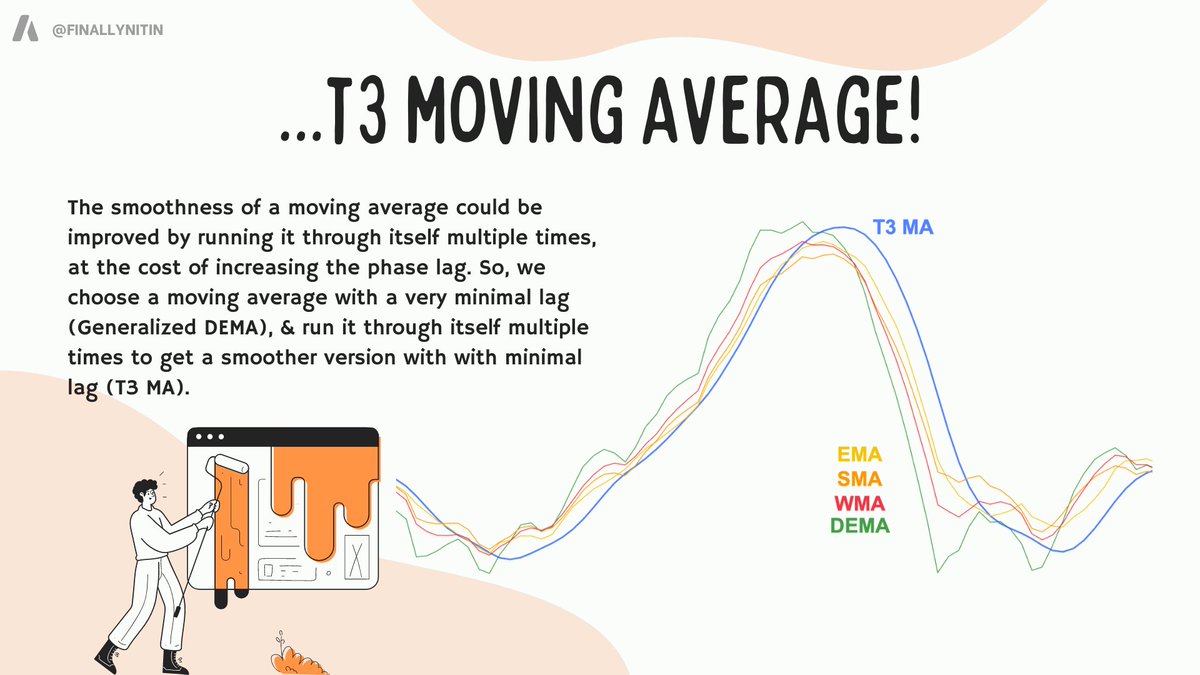
The Simple Swing indicator is based on T3 Moving Average, which was first described by Tim Tillson, in the search for a “perfect” moving average.
The T3MA incorporates a smoothing technique which allows it to plot curves more gradual than common MA & with a smaller lag.
During most of the time in a trend, price will stay well away from the T3MA. Thus, a decisive close beyond the T3MA often indicates the end of a trend.