Do you know about
The Eastern Ganga Dynasty?
The Eastern Ganga dynasty aka Rudhi Gangas or Prachya Gangas reigned from Kalinga for nearly a Millennium (that's a 1000 years) from as early as the 5th century to the early 15th century.
The Eastern Ganga Dynasty?
The Eastern Ganga dynasty aka Rudhi Gangas or Prachya Gangas reigned from Kalinga for nearly a Millennium (that's a 1000 years) from as early as the 5th century to the early 15th century.


They are known as "Eastern Gangas" to distinguish them from the Western Gangas who ruled over Karnataka.
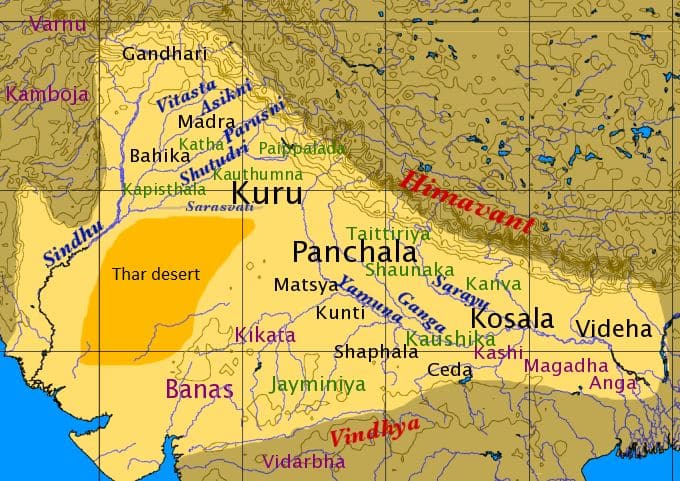
The territory ruled by the Eastern Ganga Kings consisted of the whole of Odisha as well as major parts of West Bengal, Andhra and Chattisgarh.
The territory ruled by the Eastern Ganga Kings consisted of the whole of Odisha as well as major parts of West Bengal, Andhra and Chattisgarh.


The early rulers of the dynasty ruled from Dantapuram; the capital was later moved to Kalinganagara (modern Mukhalingam), and ultimately to Kataka (modern Cuttack).
Today, they are most remembered as the builders of the world renowned Jaganath Puri Mandir...
Today, they are most remembered as the builders of the world renowned Jaganath Puri Mandir...


...and the Konark Surya Mandir, a UNESCO World Heritage Site.
The rulers of Eastern Ganga dynasty defended their kingdom from the constant attacks of the barbaric Muslim invaders.and this Empire is attributed to have served as the conservatory of the Hindu religion, art and...
The rulers of Eastern Ganga dynasty defended their kingdom from the constant attacks of the barbaric Muslim invaders.and this Empire is attributed to have served as the conservatory of the Hindu religion, art and...


...culture at a time when India's indigenous civilization was endangered through the large scale massacre of Hindus, plundering of cities, desecration and destruction of temples and forcible conversions of the Hindu populace.


The Ganga Empire also harbored the fleeing culture and art from other parts of India.
This kingdom prospered through trade and commerce and the wealth was mostly used in the construction of temples.
This kingdom prospered through trade and commerce and the wealth was mostly used in the construction of temples.


The rule of the dynasty came to an end under the reign of King Bhanudeva IV (1414–34), in the early 15th century.
Their currency was called Ganga fanams and was similar to that of the Cholas and Eastern Chalukyas of southern India.
Their currency was called Ganga fanams and was similar to that of the Cholas and Eastern Chalukyas of southern India.
The script used by the Eastern Ganga king Indravarma of the 7th century CE, like his predecessors, is the common Kannada-Telugu script used also by the Chalukyas of Badami and their related subordinate Vengi Chalukya branch.
All these indicate a strong proof for the Eastern Gangas having originated from the earlier Western Gangas (established 350 CE) of Karnataka.
• • •
Missing some Tweet in this thread? You can try to
force a refresh