Russian Artillery Thread
If you've been following the war with even a modicum of interest, by now you've heard a lot about the vaunted Russian artillery. It's possible you're wondering why and how Russia's artillery might be better than competitors. Let's take a look. (1/N)
If you've been following the war with even a modicum of interest, by now you've heard a lot about the vaunted Russian artillery. It's possible you're wondering why and how Russia's artillery might be better than competitors. Let's take a look. (1/N)
Let's start by thinking about what sort of problem Russian military planners might be trying to solve. In this case, we have to start with the US Air Force. It's good. Very good. Going back to WW2, America has fielded exceptionally powerful air assets. (2/N)
So how might Russian planners prepare for this? Risking everything on wrestling air superiority away from the USAF is a dangerous plan. The Russian Air Force is good, but this is still a big gamble. So, you must build a military that can function without air superiority. (3/N)
The way you do this is by fielding more and better anti air defenses and artillery. The AA turns your army into a porcupine that can ward off air attack, and artillery lets you apply firepower without using lots of aircraft. Russia accordingly excels in these systems. (4/N)
Russian anti-air weaponry is exceptional. From the S-400 (a world class long range system that shot down a Ukrainian jet from 150 km away early in the war) to point defense systems like the Pantsir. But that's not the subject of this thread. Let's talk artillery. (5/N) 
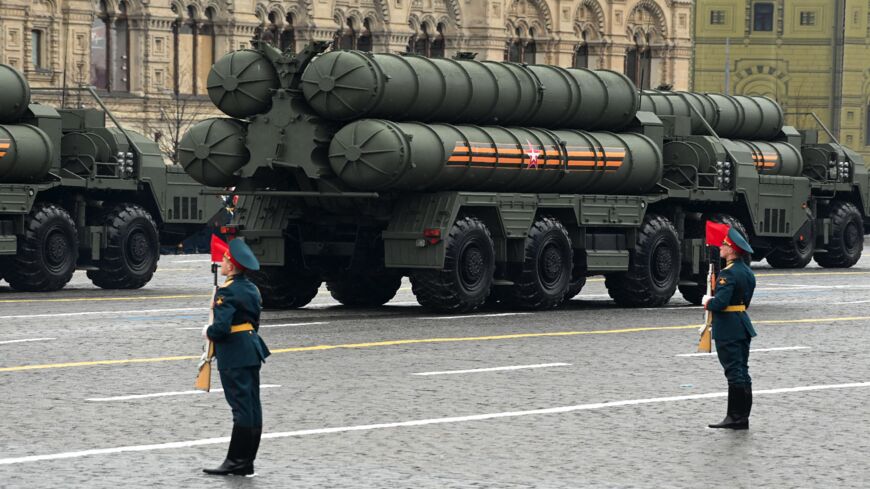
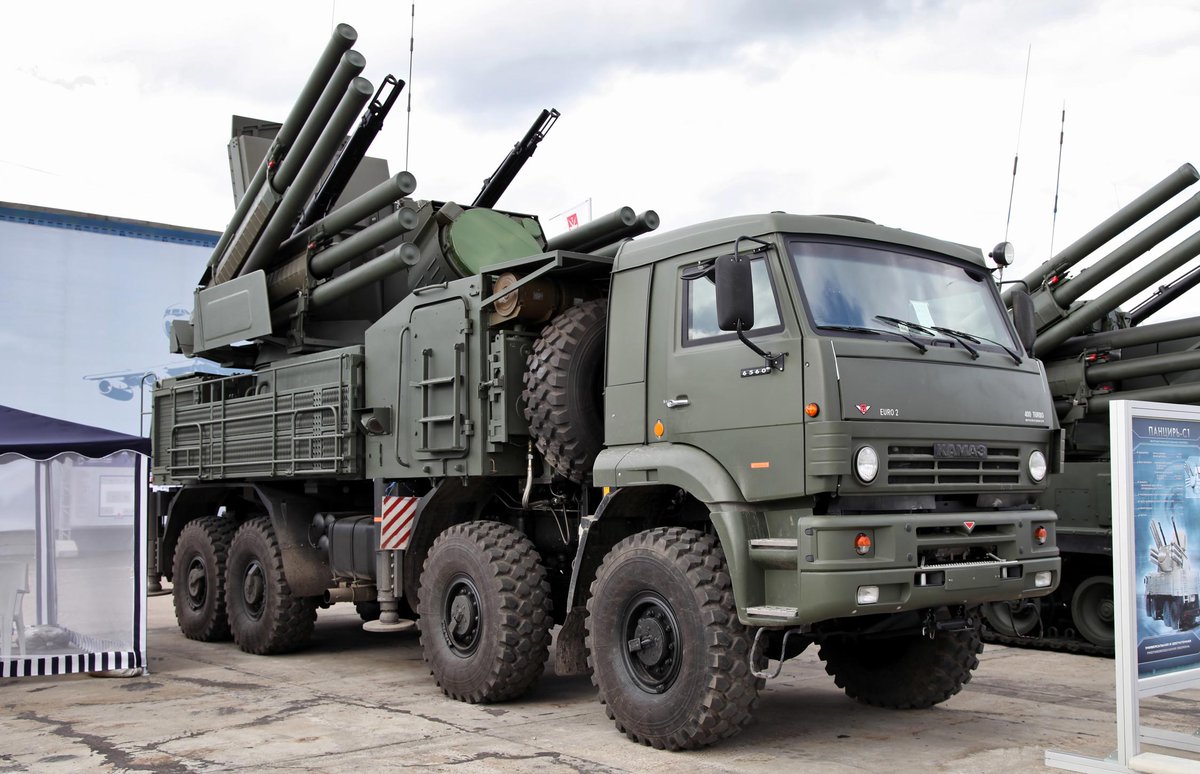
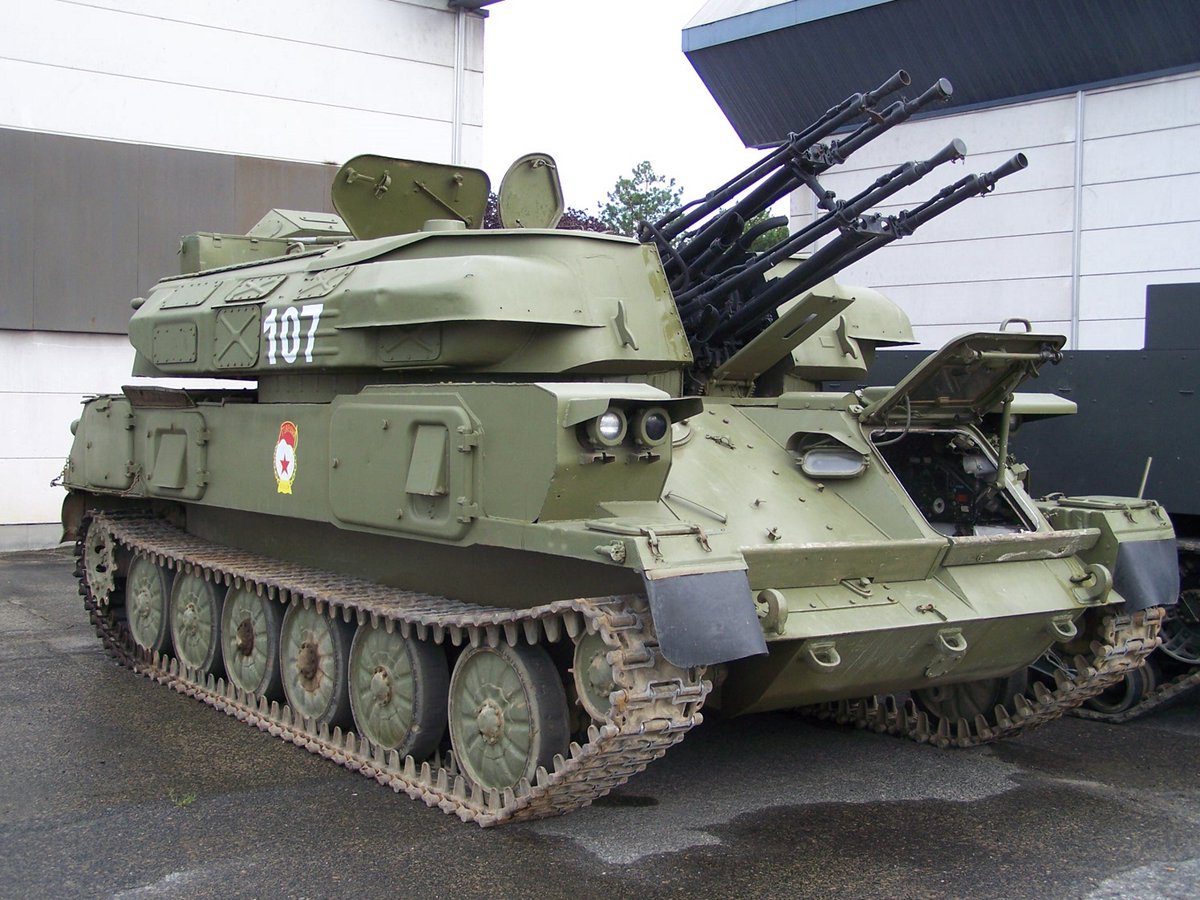
Remember what we said about planning for a war where you may not have control of the air. That means Russian ground forces need to be able to dish out massive punishment on their own. Russian army units have both a higher concentration of artillery, and longer ranges. (6/N)
We can use an American brigade as a baseline for this. An American armored brigade will have a single artillery battalion equipped with 18 "Paladin" howitzers, to support a cav squadron and 3 combined arms battalions. This is a unit heavy in armored vehicles and infantry. (7/N)
In contrast, a typical Russian brigade will be equipped with 54 artillery pieces - quite literally three times that of an American brigade. This is a unit with fewer infantry but more big guns (more about the types of weapon in a moment). (8/N)
Now, it's important to remember the air power aspect of all this. America fully expects to control the air and deliver firepower that way. Just look at what American air power did to Iraq. Russian brigades are instead built to deliver punishment independent of air assets. (9/N)
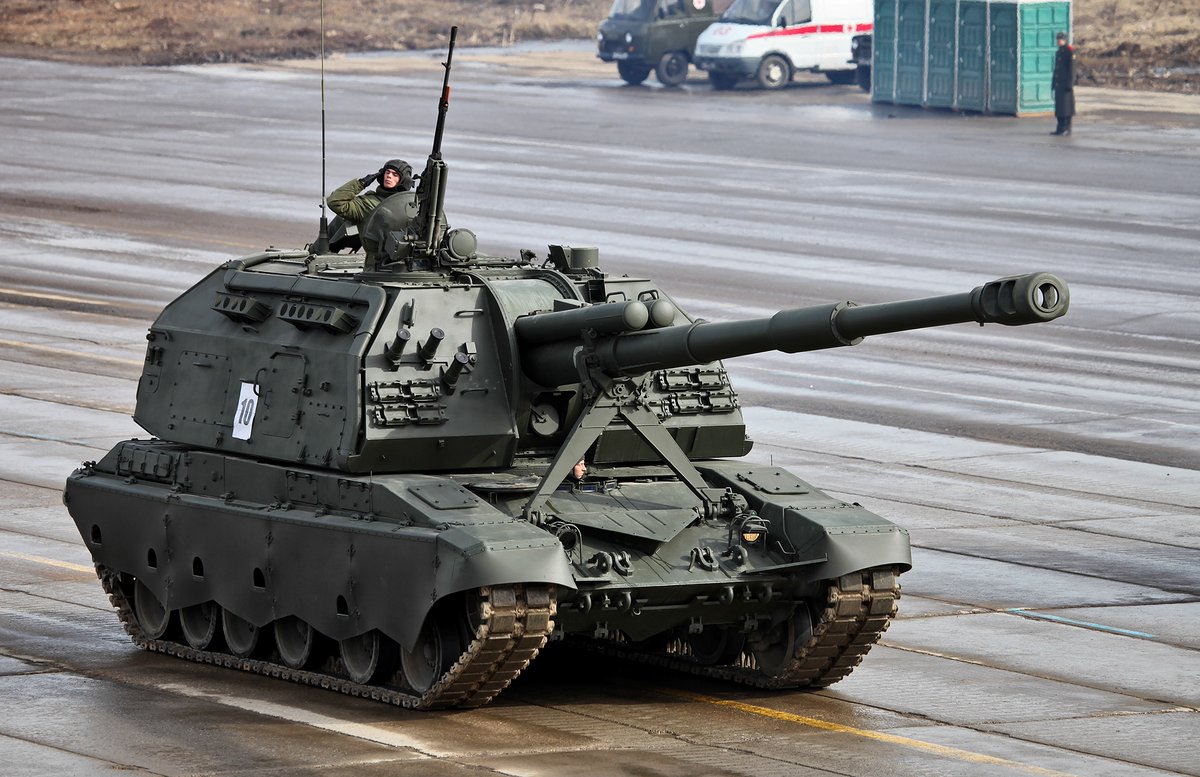
Let's look at some of the weapons that Russia uses. First, we have the 2S19 Msta. This is a 152 mm howitzer that is corollary to America's 155 mm Paladin. It has a firing range of about 25 km, slightly outranging the Paladin. A Russian brigade will have 36 of these! (10/N)

Russia also fields the "Tornado" family of Multiple Launch Rocket Systems (MLRS). There are a few variants, but the G version, for example, can fire 40 122 mm rockets up to 40 km. Another variant fires heavier 300 mm rockets. A typical brigade has 18 Tornados. (11/N)
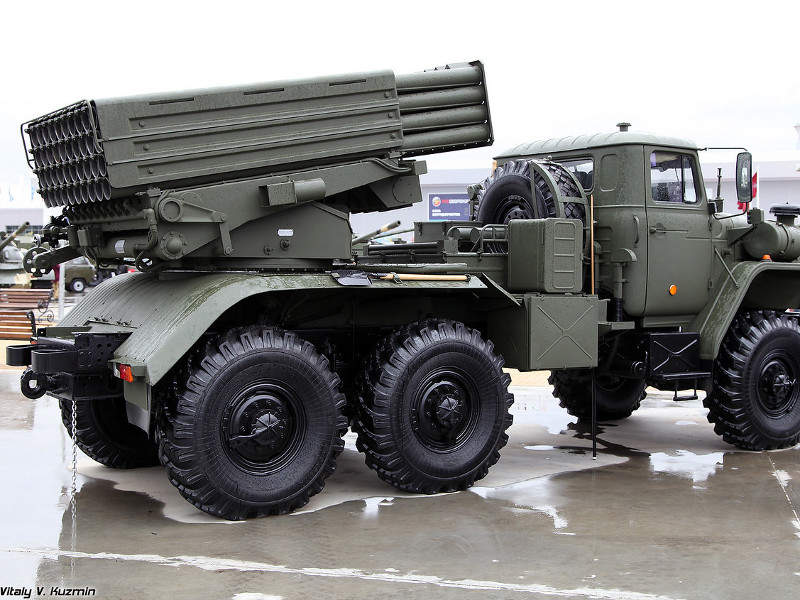
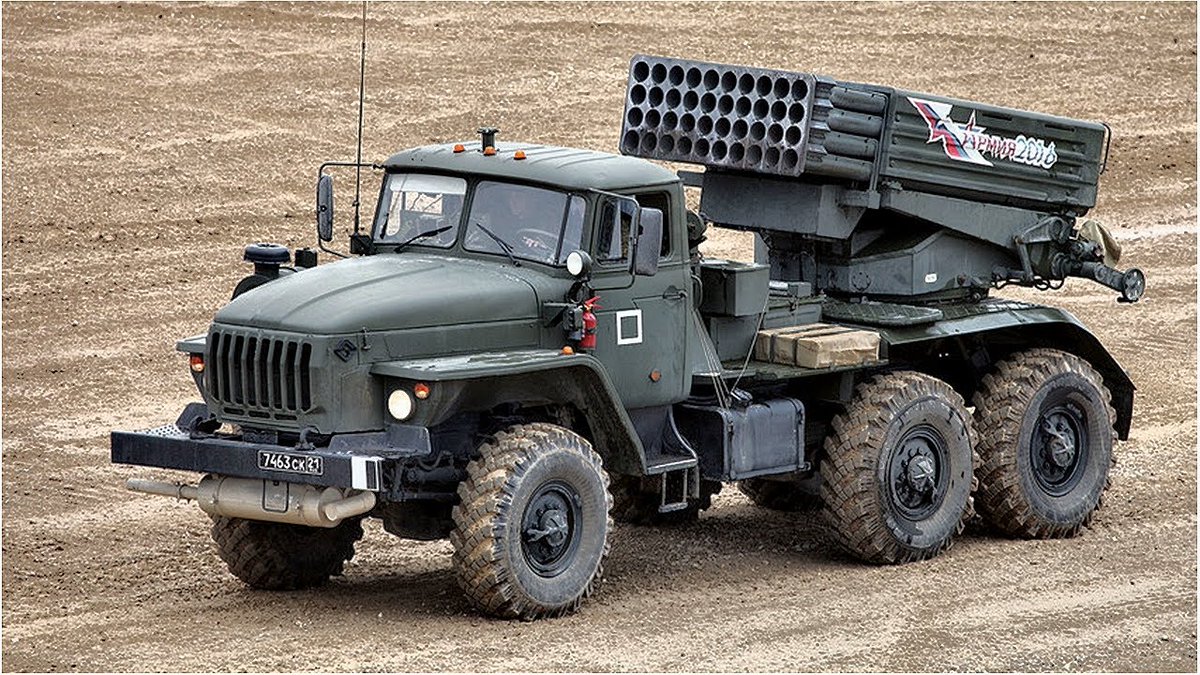
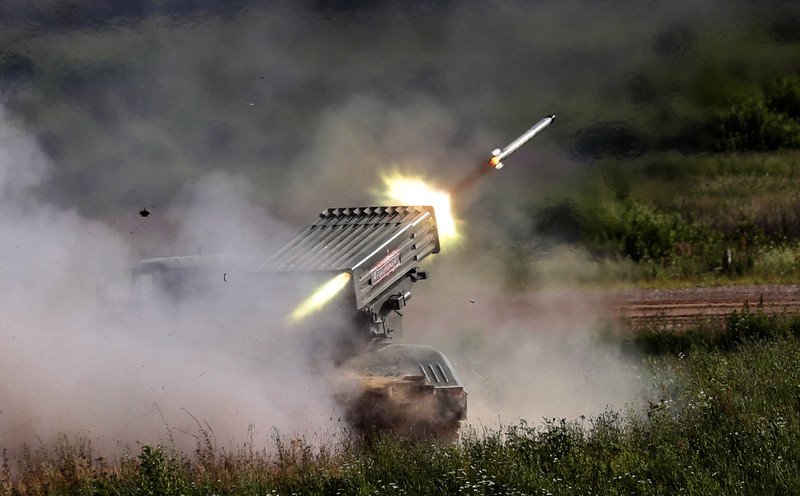
The Tornado is the newest and best Russian MLRS system, but the army also fields other rocket systems like the BM-21 Grad and the BM-30 Smerch. (12/N)
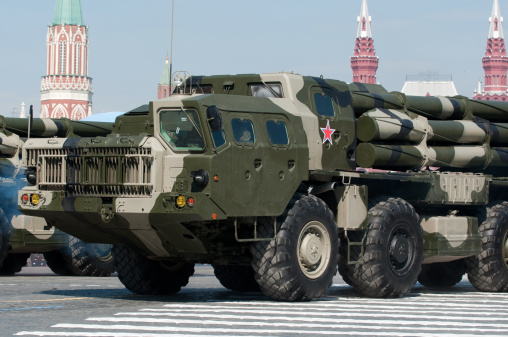
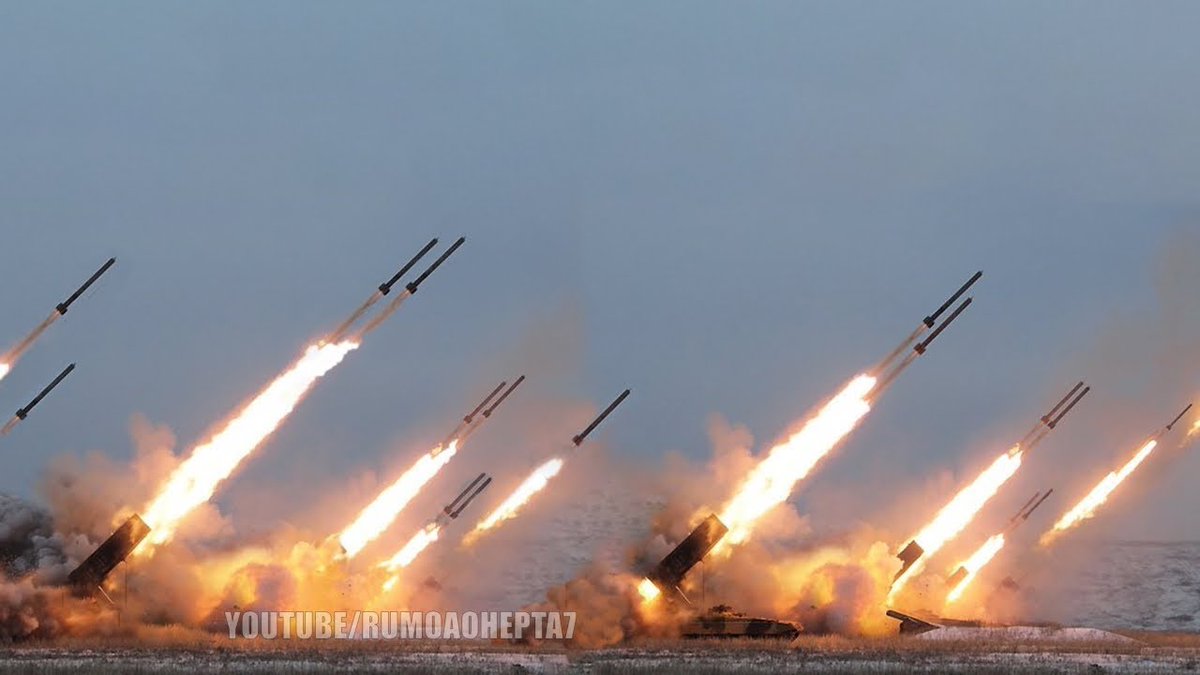
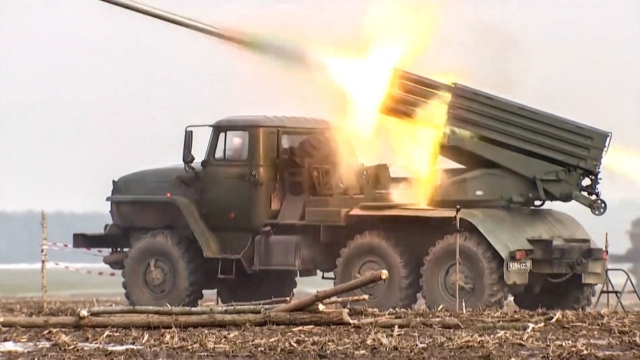
So to recap, the Russian army deploys artillery with three times the density of an equivalent American formation, and their weapons have a range advantage. It's all about firepower. (13/N)
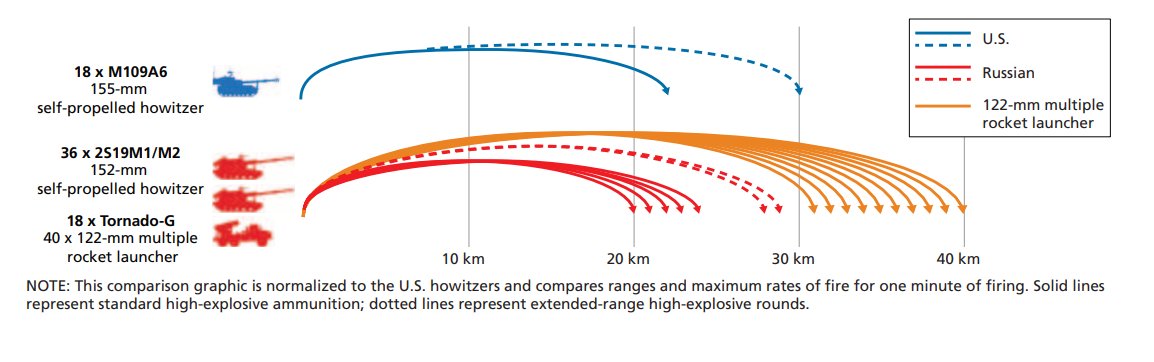
Russia isn't fighting the American army, and God willing they never will. However, American doctrine is the starting point for western militaries and Ukraine is operating at a similarly huge artillery disadvantage, but without the air superiority that America can count on. (14/N)
Russia is fighting this war the way they plan to. They are pummeling Ukraine with ground based firepower at various operational depths, with brigade fires on the local battlefield and Kalibrs doing damage deep in the country. (15/N)
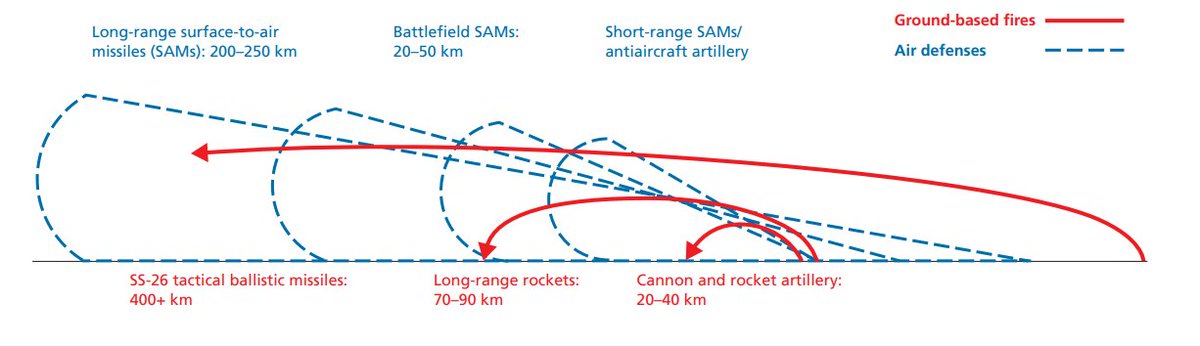
Ultimately, when able, Russian troops would prefer not to overrun Ukrainian positions with tanks and infantry. They would instead like to fix Ukrainian units in place and destroy them with their overwhelming fires. This is what we're seeing in the Donbas. (16/N)
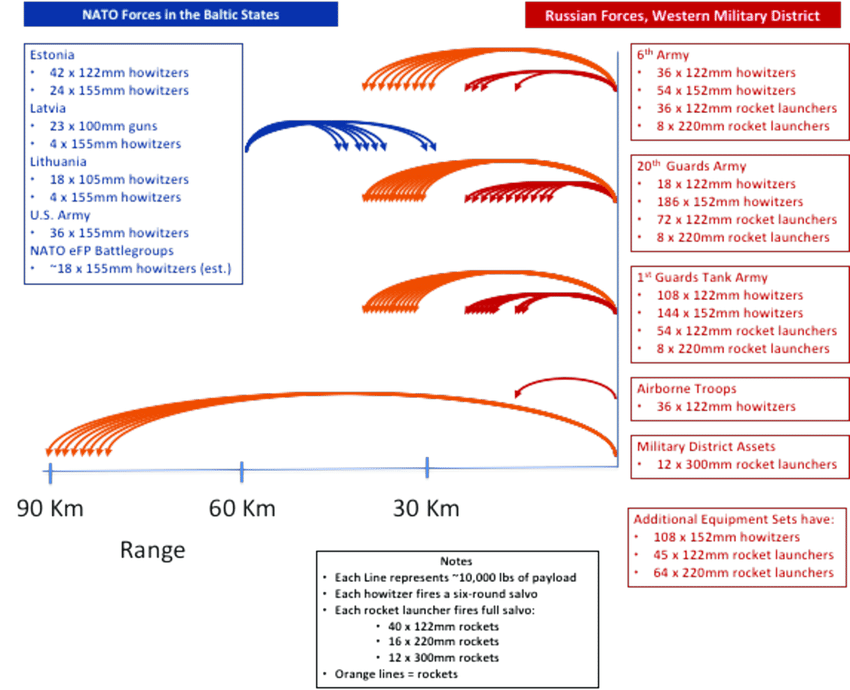
Addendum: a nice graphic from 2019. Forces have been reallocated so this is no longer a representation of facts on the ground, but it illustrates how much more artillery heavy Russian forces are than NATO competitors.
@MoonofA Notes the toll this artillery edge is taking on Ukrainian infantry.
https://twitter.com/MoonofA/status/1522259822212751366
• • •
Missing some Tweet in this thread? You can try to
force a refresh