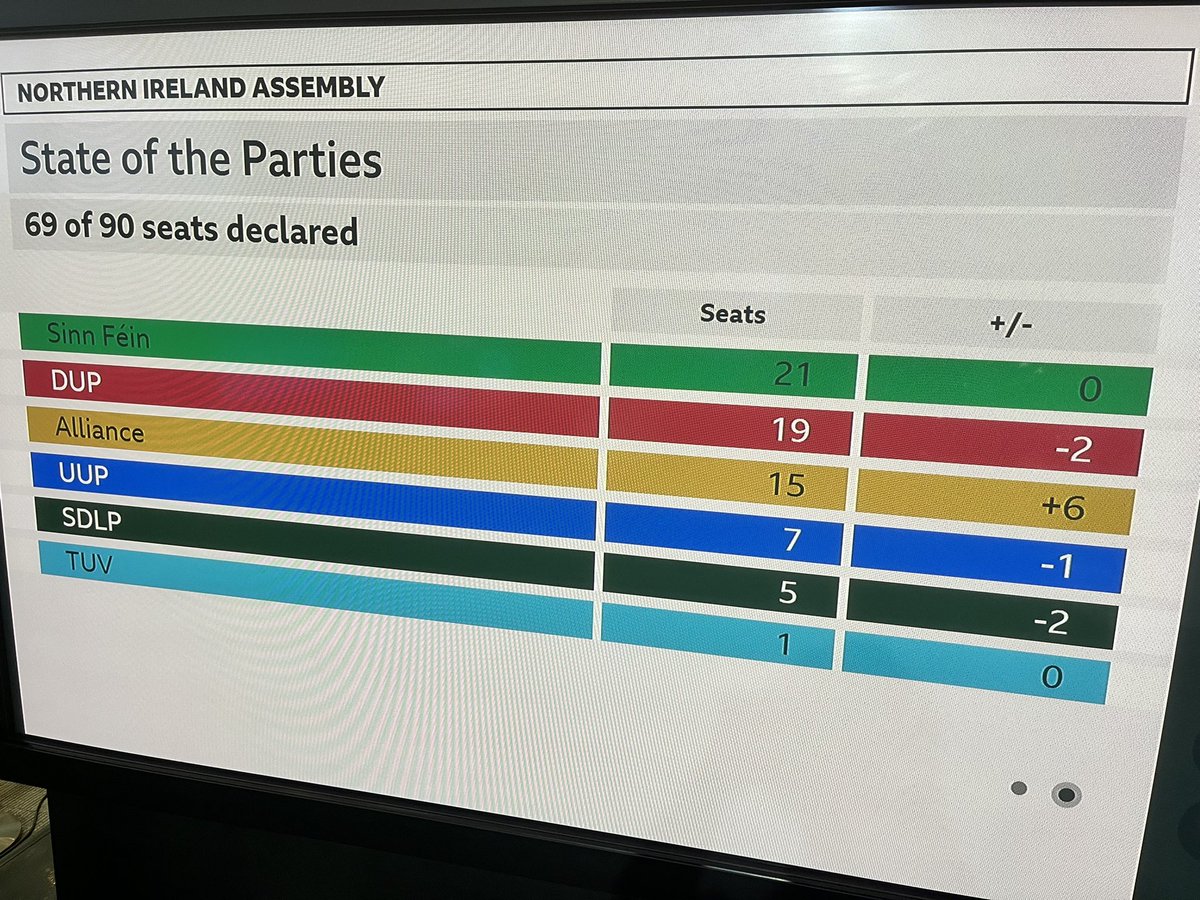
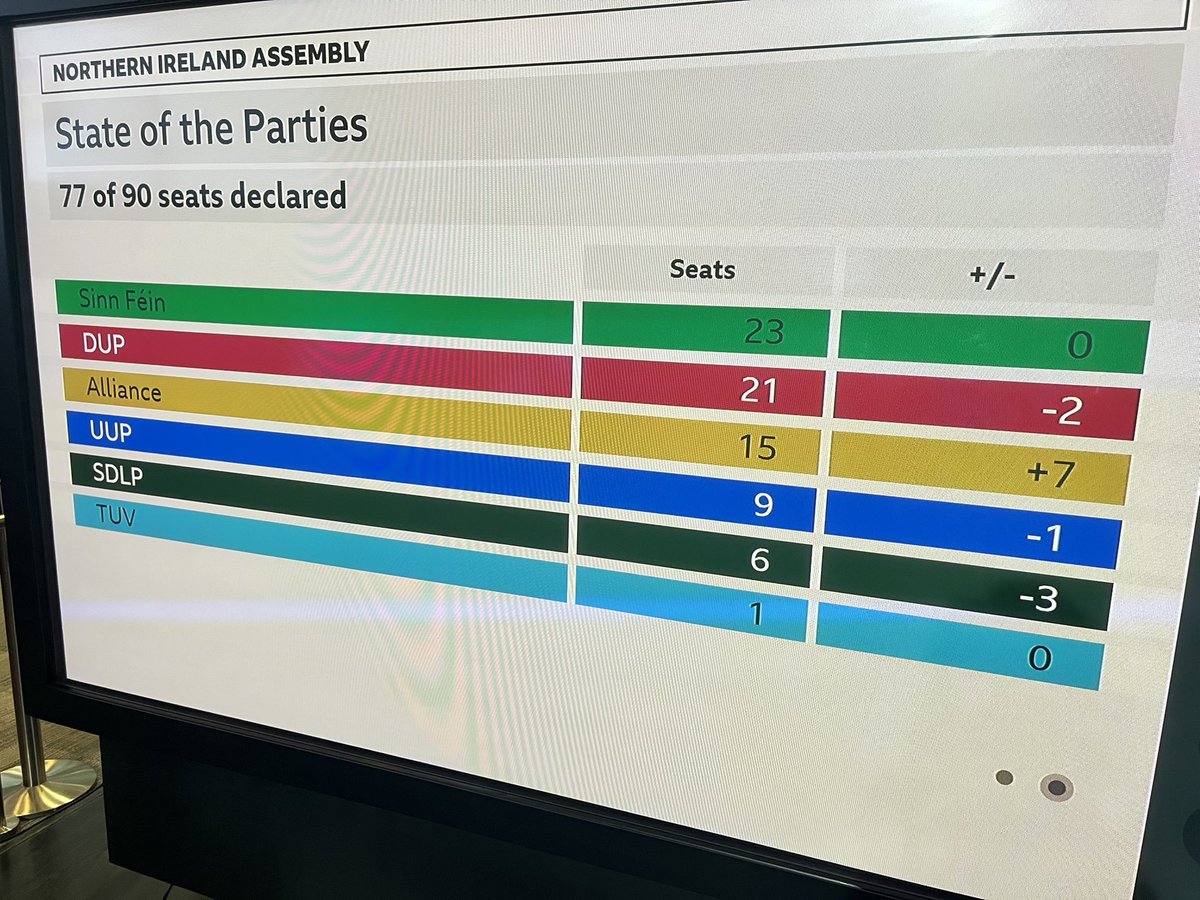
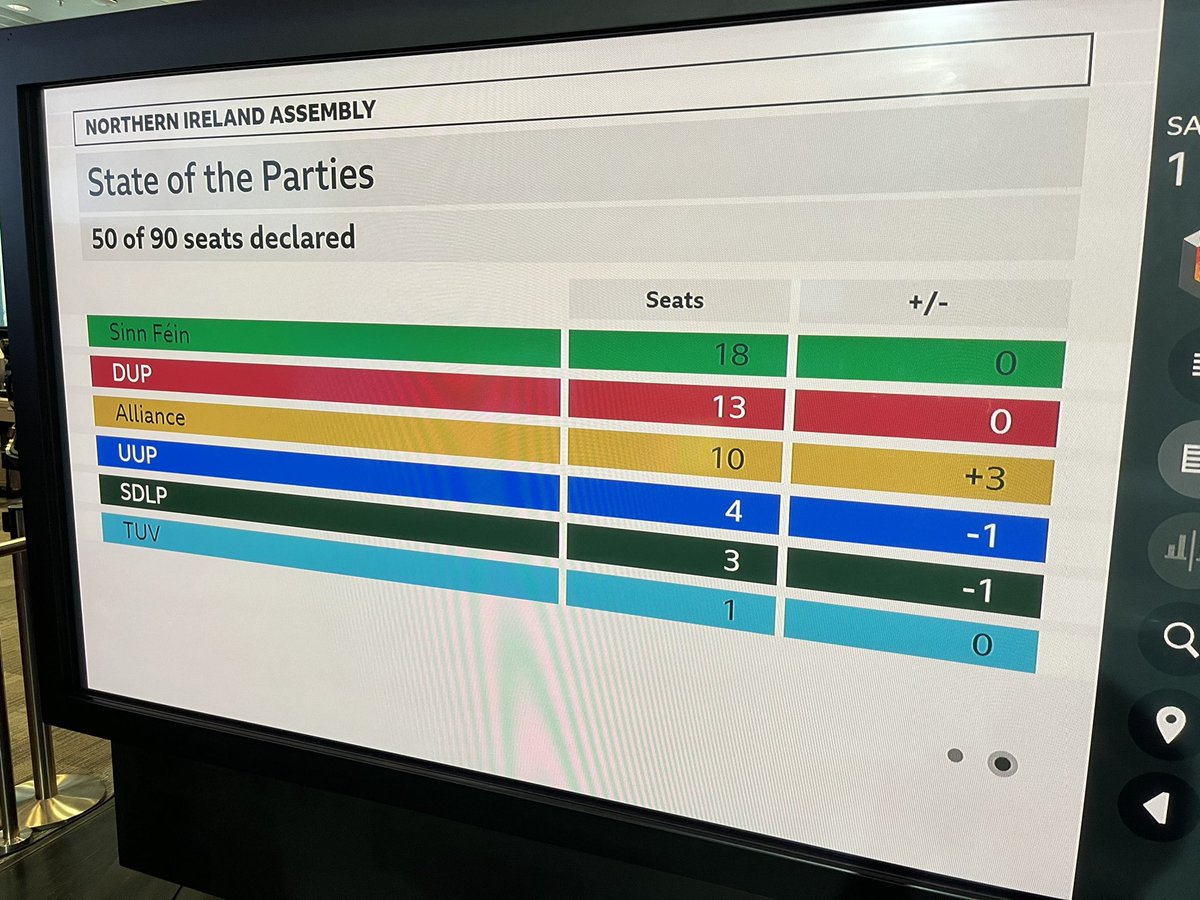
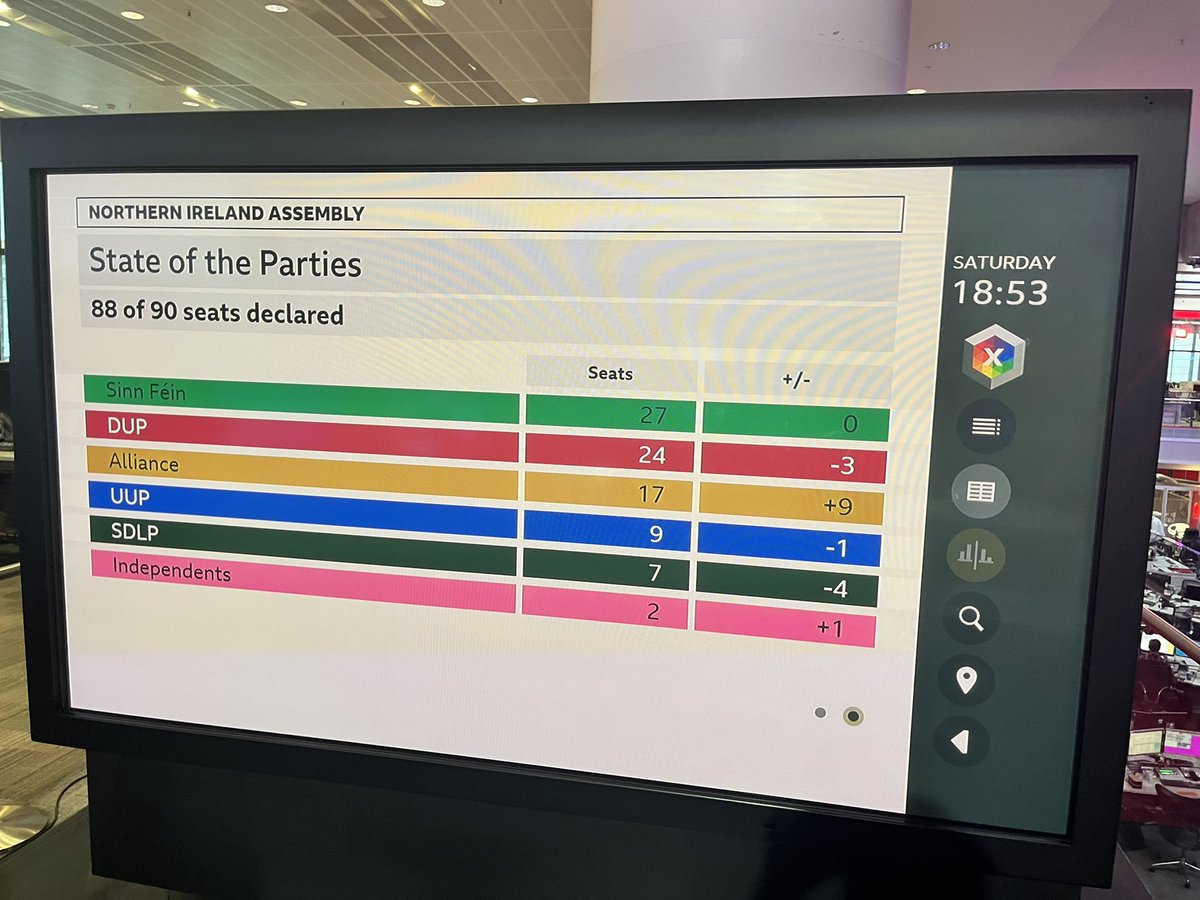
BREAKING: Sinn Féin are now on 27 seats- they’re at a point where numerically where they cannot be beaten by the DUP.
It is the first time in the 101 year history of Northern Ireland that a nationalist party has won the most seats in an election. Historic.
It is the first time in the 101 year history of Northern Ireland that a nationalist party has won the most seats in an election. Historic.
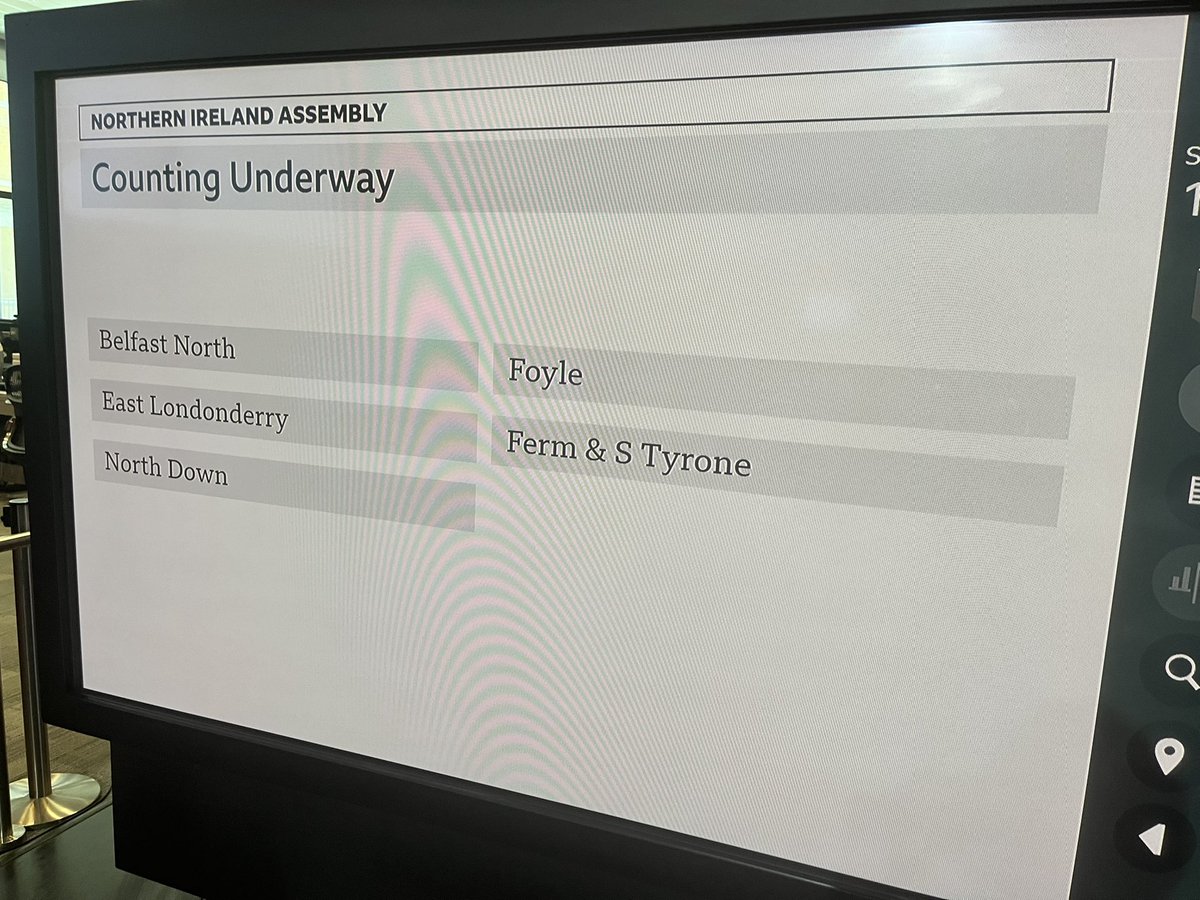
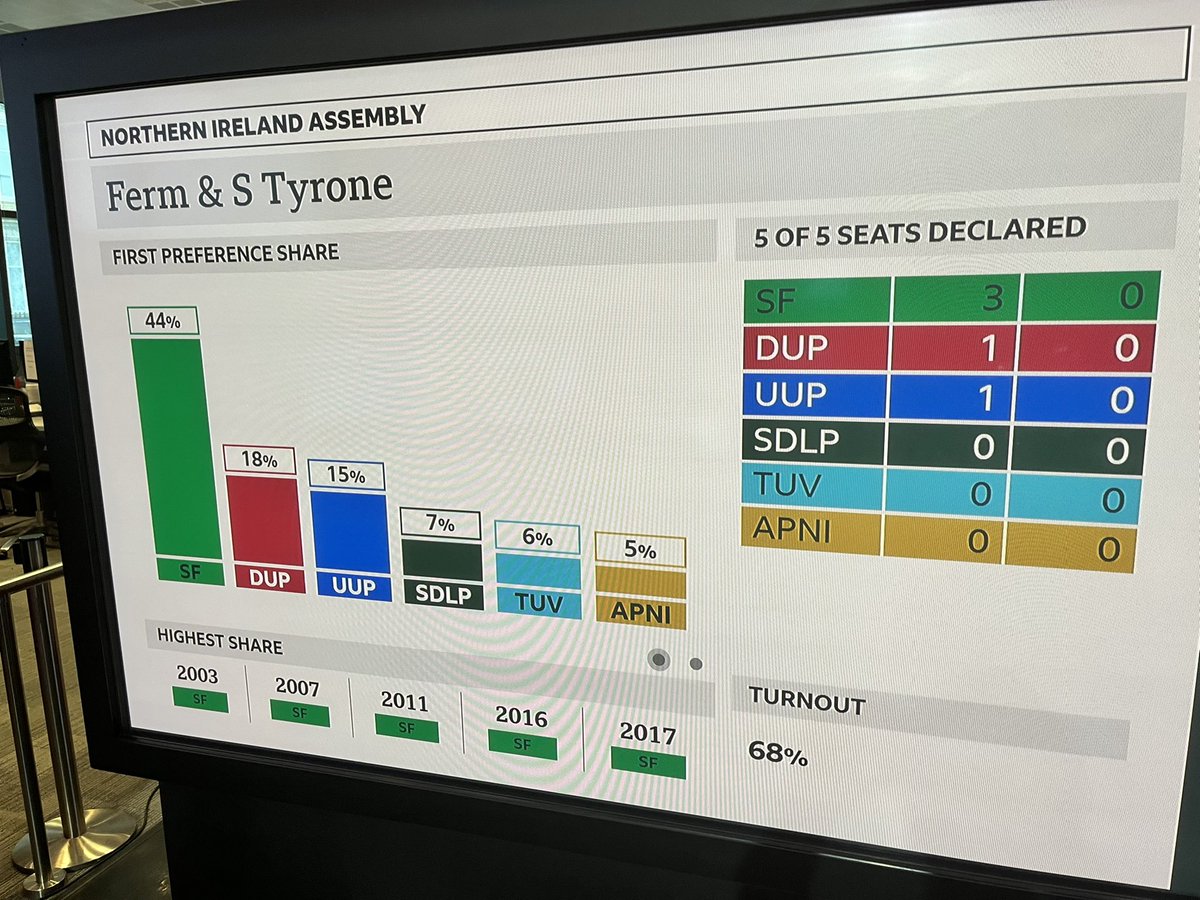
Fermanagh and South Tyrone have pushed them over the top. 3 seats, no change.
Indeed with 2 seats to go we can say that SF aren’y going to gain seats, they’ll stick on 27. They’re going to come first because of the decline of DUP and splintering of unionism.
Indeed with 2 seats to go we can say that SF aren’y going to gain seats, they’ll stick on 27. They’re going to come first because of the decline of DUP and splintering of unionism.
It’s a significant moment of fact and of symbolism. For a long time political nationalism in Northern Ireland was essentially disbarred from or contained within the system. Now a nationalist, and a Sinn Fein nationalist at that, would be the nominee for First Minister.
It is historically important and remarkable too. The partition of Ireland took place after the 1918 general election, where most of Ireland voted for the first Sinn Fein, much of Ulster voted for unionist parties. Hence the divide and NI's borders were drawn up to ensure...
...a Unionist majority and dominance in the then subsequent political institutions. Instead we've gone from Terence O'Neill, the fourth Northern Ireland Prime Minister of the old Unionist dominated Stormont, to the prospect of Michelle O'Neill, as powersharing First Minister.
But much of the fevered talk about an imminent collapse of the UK and reunification is misplaced. For the following reasons
1) There's no guarantee O'Neill will become FM. Power sharing requires the assent of the DUP and Unionism to operate. DUP have six months to play with.
1) There's no guarantee O'Neill will become FM. Power sharing requires the assent of the DUP and Unionism to operate. DUP have six months to play with.
2) Even if there is a new Stormont and O'Neill becomes FM, the posts of FM and DeputyFM are equal. There will be no practical changes to nationalism's power. They cannot call a border poll, in the gift of the UK govt.
3) Part of the reason nationalism won't have more power...
3) Part of the reason nationalism won't have more power...
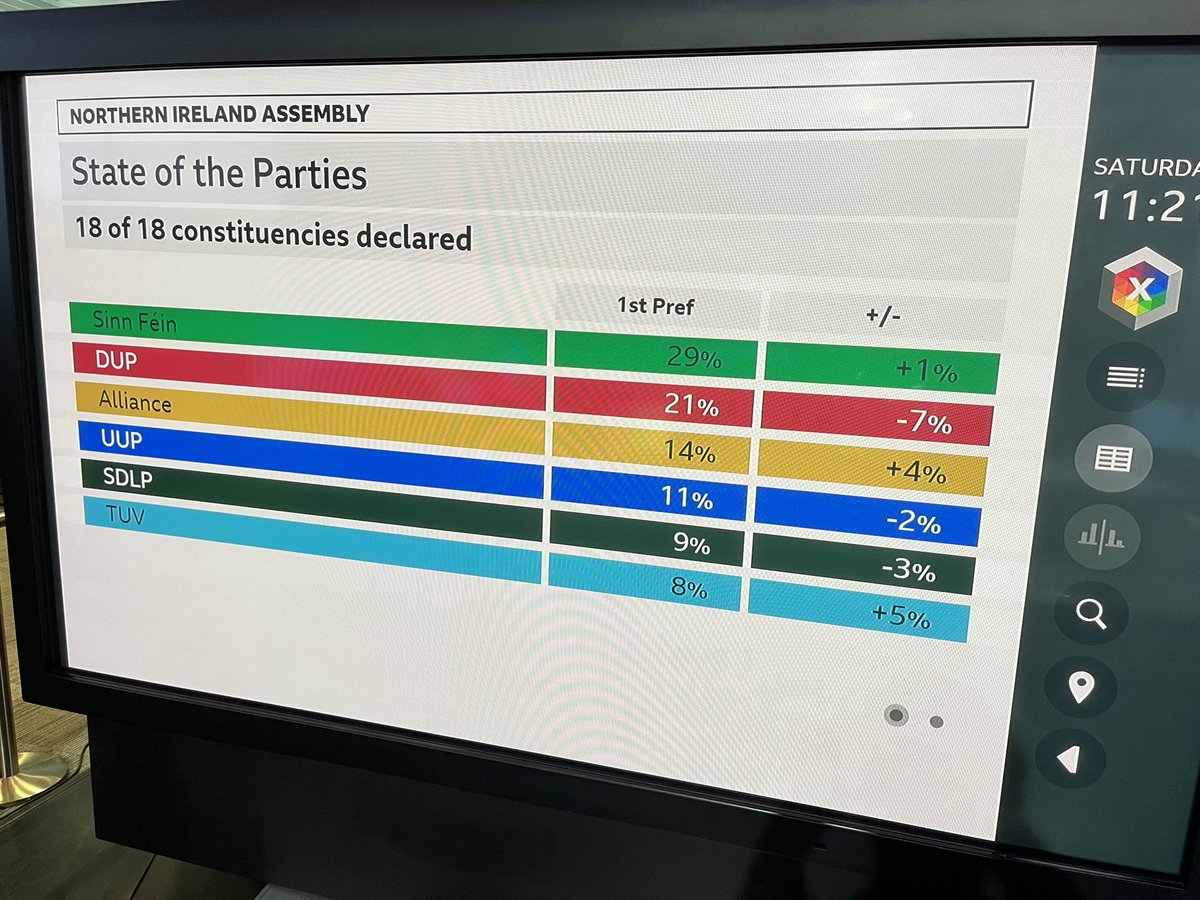
...is because in terms of the strength of the two blocs there really hasn't been much change. If you add up the votes of the nationalist parties and the unionist parties they're both on roughly 40% each. That's why the DUP has ended up just behind SF on seats even though...
...they were quite a bit behind on share- they received the reallocated second, third etc preferences of other unionist parties. SF itself stayed static in terms of seats and only a modest increase in share, largely from SDLP, the other main nationalist party.
4) Had it not been for the workings of the electoral system, the TUV (the hardline unionist party led by Jim Allister) would have won more seats.
Again, that's not to underestimate the symbolic and historical significance of SF coming top, in NI of all places symbolism matters.
Again, that's not to underestimate the symbolic and historical significance of SF coming top, in NI of all places symbolism matters.
And clearly the prospect of having Sinn Fein in first place in Northern Ireland and possibly a Sinn Fein Taoiseach after the next Irish elections changes the dynamics and tone of Anglo-Irish elections. The biggest parties in north and south would be agitating for a border...
...poll and reunification in a way that certainly in the Republic has not happened for decades. We've gone from a place pre-Brexit where the constitutional question in NI was entering near dormancy to a place where it is again central.
But overemphasis on SF's first place risks distracting us from two other big stories in this election
1) the rise of the Alliance: There have always been two blocs in NI politics, Unionism and Natioanlism. The Alliance is non-aligned and non-sectarian and wants to move NI away..
1) the rise of the Alliance: There have always been two blocs in NI politics, Unionism and Natioanlism. The Alliance is non-aligned and non-sectarian and wants to move NI away..
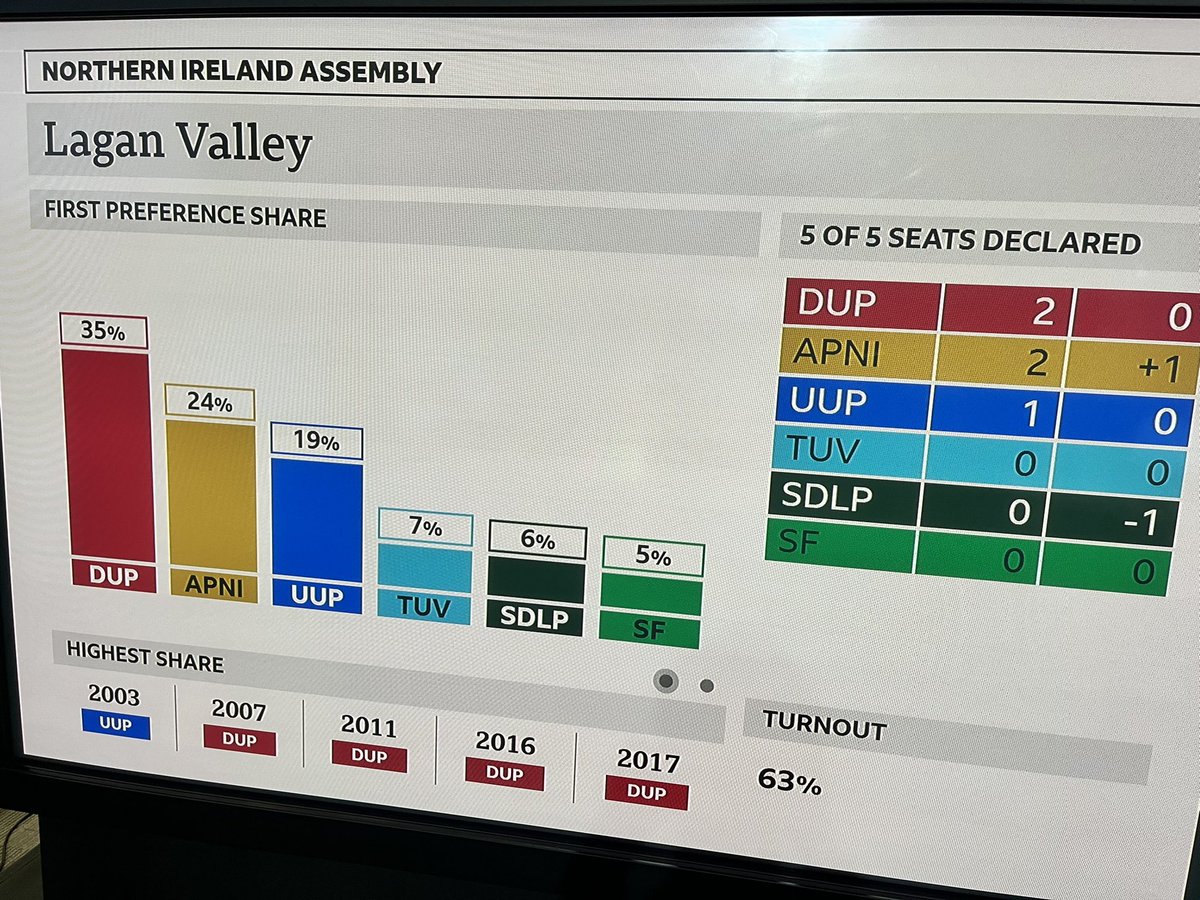
...from that sort of politics, for which it remains such an outlier in modern Europe. It was the big winner of the election, gaining 9. It had 17% of the vote. It's a sizeable bloc of its own, winning support from unionists and nationalists and young people in particular...
...for whom those labels mean less. If there were to be a border poll, these voters will be the key. But even short of that, their presence adds a new dimension, a glimmer of a different sort of politics in NI which shouldn't be underestimated.
2) A border poll isn't going to...
2) A border poll isn't going to...
...happen any time soon in any event. Far more pressing than lofty discussions about the breakup of the UK is the immediate stability of NI, which has been destabilised by Brexit, by the changes in the UK's political arrangements with the EU and therefore the Republic...
...which has placed Northern Ireland and its old settlement in the most difficult position. We find ourselves consistently drawn into the dreary steeples of the debate around how Brexit can work in NI, and the inescapable quicksand of the fact unionists won't accept...
...the protocol and nationalists can't accept the alternative of any kind of border with the Republic. That fact and deep contestation means represents a continuing unstable element in the politics of NI which is far more pressing than questions around a border poll.
Talk of reunification will get all the headlines. But that belies the fact the politics and power bloc of NI remains finely balanced. Finding a way through this impasse will be extremely difficult. It's going to be up to London and Dublin to find answers. The stakes are high.
And those stakes relate more to the stability of Northern Ireland itself, ie the continued viability of power sharing and the institutions created as part of the Good Friday agreement, than it does to which state it might ultimately find itself a part of.
• • •
Missing some Tweet in this thread? You can try to
force a refresh