

The #COVID19 pandemic slowed fossil fuel use but didn’t really impact the amount of CO₂ in the atmosphere. Why is that?
We have a short explainer for you!
We have a short explainer for you!
Overall, the temporary reduction in greenhouse gas emissions was too small and too brief to have a big impact on the atmosphere.
Worldwide, carbon dioxide (CO₂) emissions dropped by 5.4% in 2020, mostly due to a downturn in driving and air travel.
A 5.4% reduction in CO₂ emissions might sound like a big change, but in the grand scheme of things, it wasn’t.
2020 emissions were the 9th largest in history, similar to 2012 emissions.
So even though 2020 emissions were lower than the year prior, it wasn’t a major reduction.
2020 emissions were the 9th largest in history, similar to 2012 emissions.
So even though 2020 emissions were lower than the year prior, it wasn’t a major reduction.

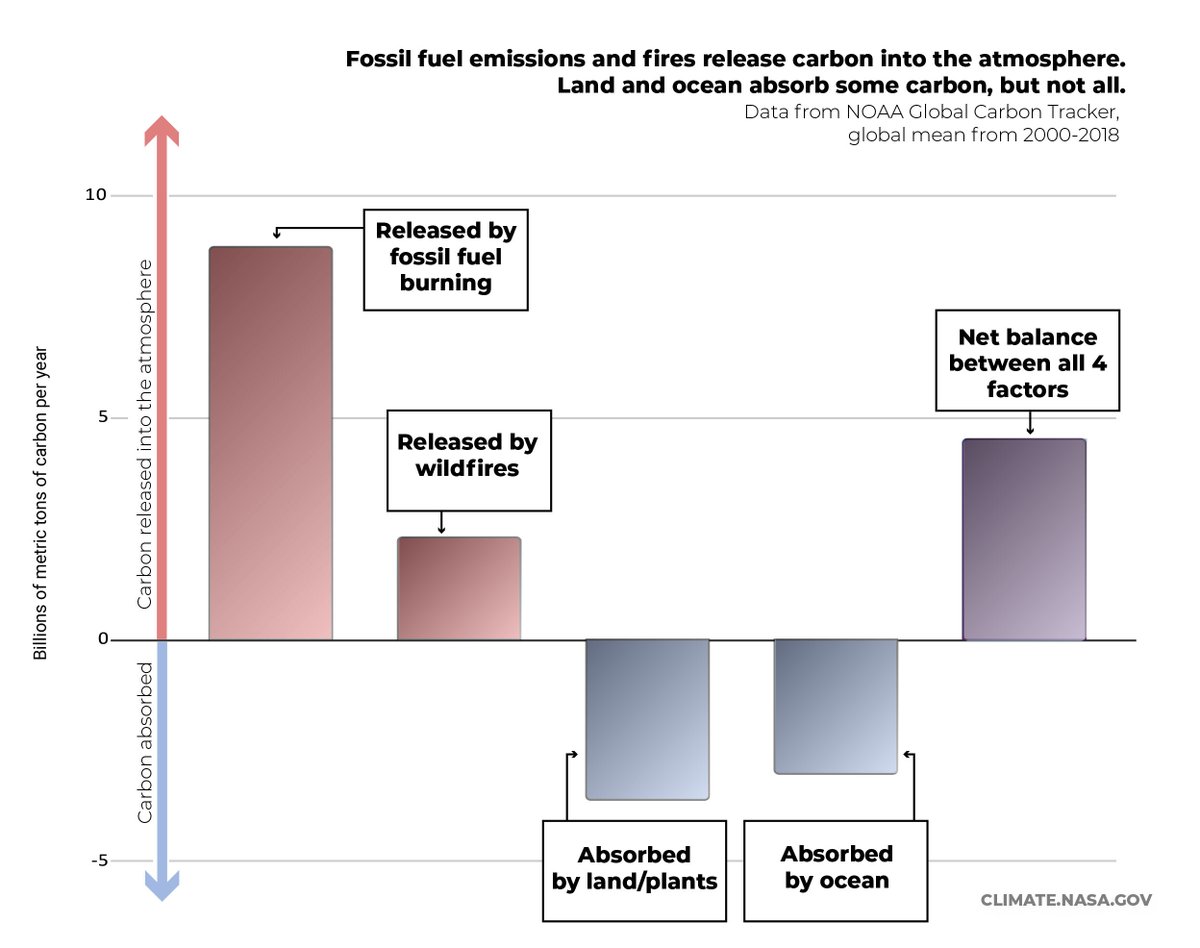
But not all the CO₂ that’s emitted ends up in the atmosphere. Some CO₂ is taken up by plants. Some is absorbed by ocean water. These natural factors vary somewhat from year to year.
This graph shows how much CO₂ was added to the atmosphere each year. It’s called the “growth rate,” and it’s like a chart that shows how many inches a child grew each year, rather than how tall they are.
The ups and downs show how the growth rate of CO₂ varies each year.
The ups and downs show how the growth rate of CO₂ varies each year.
In addition to the yearly variations, there’s also a large and ongoing trend of increasing CO₂ in the atmosphere from fossil fuel burning.
During 2020, CO₂ emissions shrank by 5.4%, and the growth rate of CO₂ shrank by 7%. Part of this reduction was caused by the global decrease in fossil fuel use.
But 2020 was not that different from the typical fluctuations seen in the overall carbon cycle in recent history.
But 2020 was not that different from the typical fluctuations seen in the overall carbon cycle in recent history.
The drop in fossil fuel use in 2020 was too small and too brief to have a big effect on the atmosphere. To decrease the amount of CO₂ in the atmosphere, fossil fuel burning would need to be reduced for a longer time, and by larger amounts. Learn more ⬇️ climate.nasa.gov/news/3129/emis…
• • •
Missing some Tweet in this thread? You can try to
force a refresh



