Video of an apparent Ukrainian attack on a Russian tank on 6 May is getting much attention for the turret's attempt to go to the Moon. It should be getting a lot more attention, though, for where it happened and what this means for Russia. A short 🧵. /1
This attack wouldn't have been particularly remarkable if it had taken place on the front lines. It didn't. The site of the attack has been geolocated to near Novoazovsk, a town deep in the separatist "Donetsk People's Republic". /2 
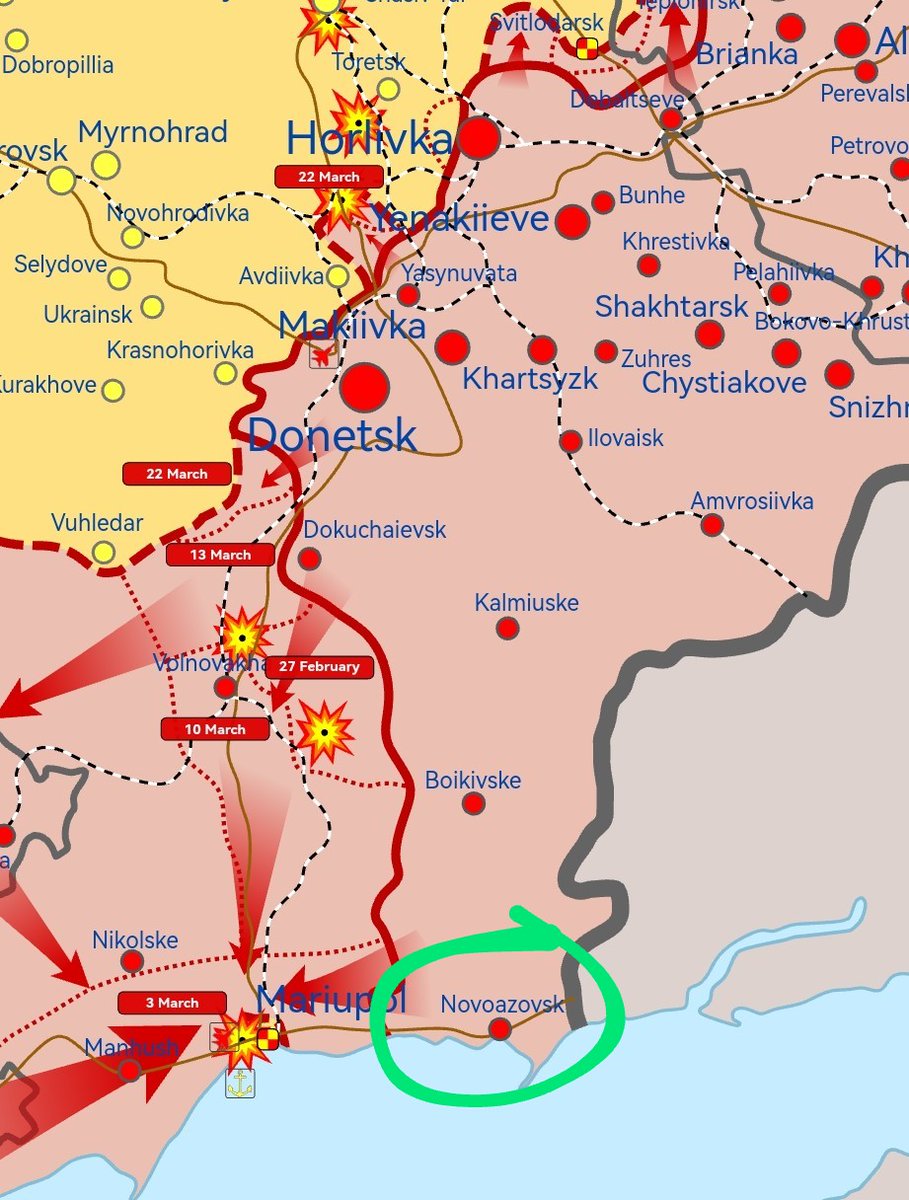
The town has been under Russia/separatist control since 27 August 2014, when it was the scene of fighting (pictured below) during an attempted advance on Mariupol. It's 100 km inside separatist territory, and only 13 km from the Russian border. /3

So how on earth did the Ukrainians blow up a tank this far inside separatist territory? It shows that Russia's worst nightmare in its occupied territory is coming true: a guerrilla war of roadside bombs, drones and loitering munitions - Iraq or Afghanistan on steroids. /4
It's not yet clear how this attack was carried out. Ukraine doesn't have any artillery that can reach that far, and there's no obvious sign in the video of incoming fire. Special forces were very likely involved. There are a few possible scenarios. /5
DRONES: Ukraine has been using octocopters (like the one pictured) to drop RKG-1600 grenades - anti-tank grenades of a 1950s design converted into aerial bombs by fitting 3D-printed fins. They can penetrate 200mm of armour, more than enough to destroy a tank. /6

During testing, Ukrainian drone pilots were able to hit targets 1m wide from an altitude of 300m. This would certainly be accurate enough to destroy a tank, or as in this video, a BMP-3 (targeted with a drone-dropped mortar round). /7
https://twitter.com/i/status/1520562004704079873/video/1
IEDs: Improvised Explosive Devices were the bane of NATO forces in Afghanistan and Iraq, causing hundreds of deaths. Ukrainian troops served alongside NATO in both conflicts. They will certainly have learned how to defuse IEDs, and by extension how to make them (not too hard). /8
The Ukrainians have certainly used IEDs against Russian forces. In one notable incident, Ukrainian special forces used daisy-chained IEDs (probably using 152mm shells) to attack a Russian convoy, likely somewhere near Kyiv. /9
MINES: Landmines are easily transported and concealed on or off roads. Recently, Ukrainian forces have been using German-made PARM-1 off-road mines (pictured), compact but nasty weapons that sit in the bushes until a tank goes past. /10

ATGMs: Ukraine has lots of anti-tank missiles, of course, but they need the operators to be quite close. I would be surprised if this was how it was done. /11
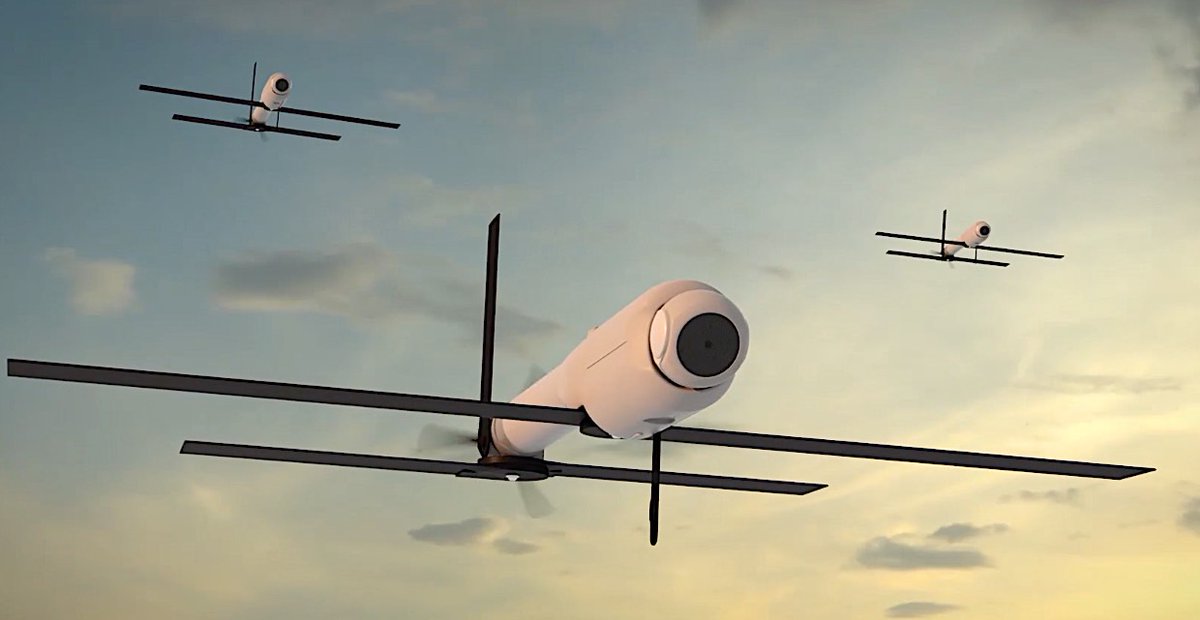
LOITERING MUNITIONS: Ukraine has recently taken delivery of US-made Switchblade 600 loitering munitions. These have a total range of 80 km. It's quite possible that Ukrainian units infiltrated Russian-held territory and used a Switchblade for a deep strike. /12
So what does this all signify? Big trouble for Russia. The strip of territory it controls in southern Ukraine is only about 100 km wide. It's clearly vulnerable to infiltration, and the Russians are unpopular with the local people. It's ideal for insurgent tactics. /13

Unconventional and asymmetric tactics tend to favor the militarily weaker side. This makes them ideal for Ukraine, particularly given the already demonstrated weaknesses of the Russian occupiers. Ukrainian SOF have already shown themselves very proficient at this. /14
The attack at Novoazovsk is clearly a statement both of intent and capability: that Ukraine is capable of striking wherever it wants in occupied territory, and that it's willing to use insurgent tactics to do so. Western weapons will help with this. /15
Expect to see more attacks of this sort aimed at disrupting, demoralising and attriting Russian forces far behind the front lines. Ukraine clearly aims to show the Russians that they're not safe anywhere in the territory they hold. If I was the Russians, I'd be very worried. /end
@Nrg8000 @UAWeapons @RALee85 @yarotrof @TrentTelenko @WarintheFuture @KofmanMichael @IAPonomarenko @JoshManning23 @McFaul @DomNicholls
Some people have been asking "how much does the turret weigh?" and "how high did it go?". Assuming it's a T-72, the turret plus gun weighs about 17 tons (the turret alone is 12 tons), and is about 7m (21 ft) long. I'd estimate it reached a height of at least 50m (~160 ft).
• • •
Missing some Tweet in this thread? You can try to
force a refresh