Let's talk artillery ammunition.
A thread 🧵
Artillery, especially rocket artillery, requires a lot of transport and logistic capacity. Good militaries plan ahead to ensure munitions flow efficiently from factory to front.
But russia's military isn't a good military.
1/n
A thread 🧵
Artillery, especially rocket artillery, requires a lot of transport and logistic capacity. Good militaries plan ahead to ensure munitions flow efficiently from factory to front.
But russia's military isn't a good military.
1/n

First let's go back in time to WWII:
In WWII artillery ammo came in wooden crates. Be it the US Army (color photo) or Red Army (b&w photo) - lots and lots of crates. Each crate had to be unloaded by hand, stacked by hand, loaded on trucks by hand.
Slow, tedious work.
2/n
In WWII artillery ammo came in wooden crates. Be it the US Army (color photo) or Red Army (b&w photo) - lots and lots of crates. Each crate had to be unloaded by hand, stacked by hand, loaded on trucks by hand.
Slow, tedious work.
2/n


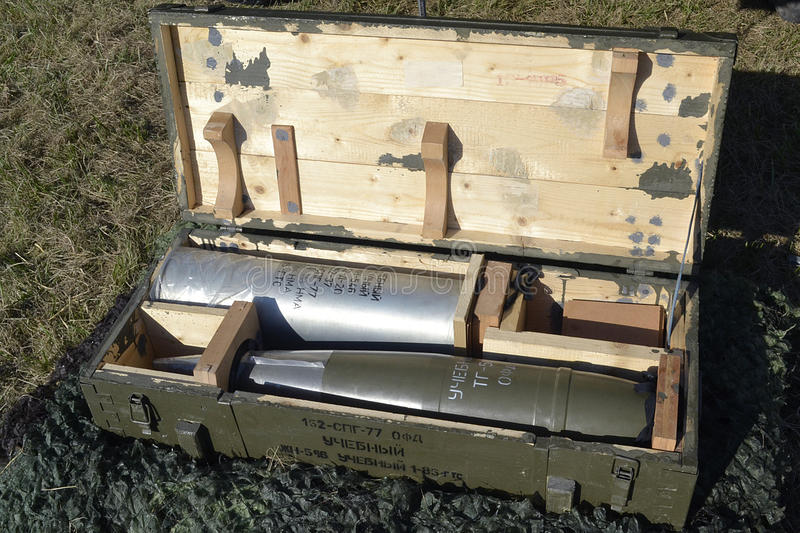
And yes, you guessed that right: russian ammunition still comes in wooden crates.
Here we see a 152 mm projectile and the cartridge holding the charges in their crate. Lovely carpentry work... but dreadful to transport.
3/n
Here we see a 152 mm projectile and the cartridge holding the charges in their crate. Lovely carpentry work... but dreadful to transport.
3/n
And I am sure you guessed this too: yes, russian troops still have to load and then unload each crate by hand, stack them by hand, then load them on trucks by hand, unload them again by hand...
4/n
4/n
And when you unpack crates you get:
• projectiles with fixed fuzes. Need to use a different fuze? You can't. If you didn't grab the right crate at the logistic point you're stuck now.
• cartridges holding a fixed charge. Need less or more charge? You can't.
5/n
• projectiles with fixed fuzes. Need to use a different fuze? You can't. If you didn't grab the right crate at the logistic point you're stuck now.
• cartridges holding a fixed charge. Need less or more charge? You can't.
5/n
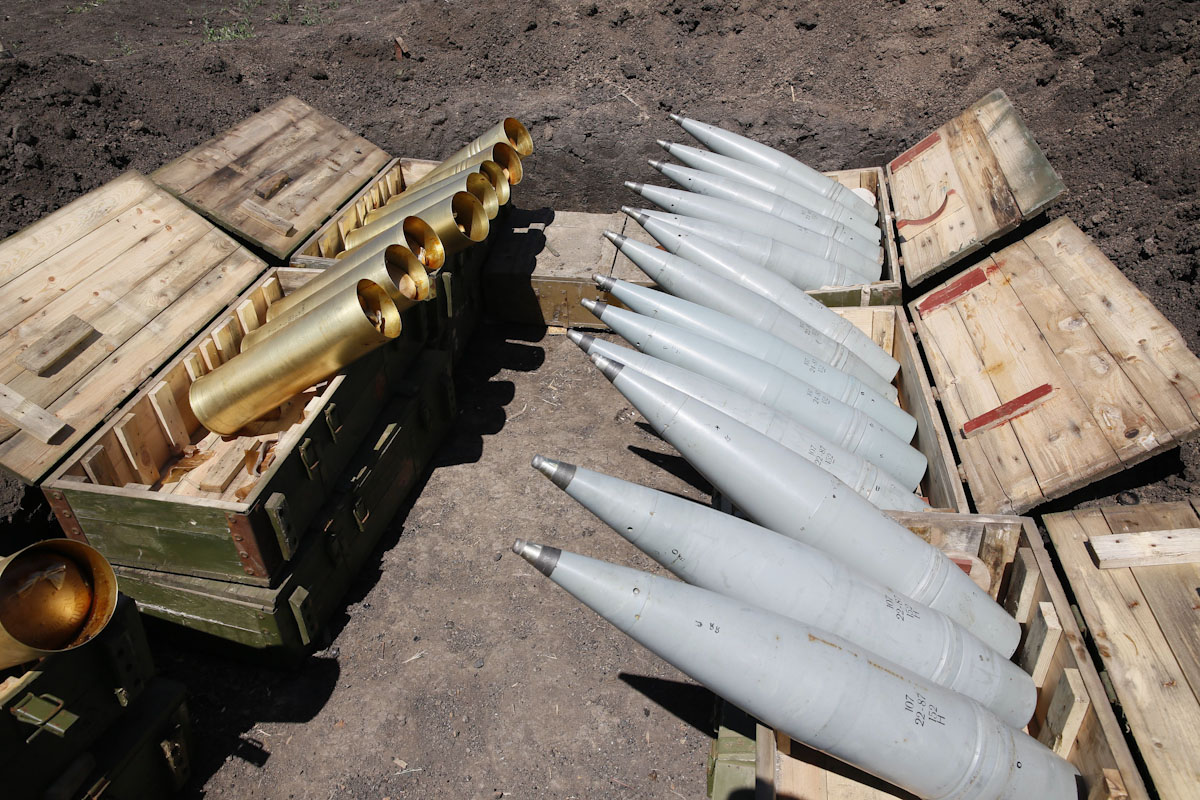
The russians even pack their Grad rockets in wooden crates... 42 wooden crates for one Grad launcher load... and each 80-85 kg Grad missile has to be loaded by hand.
6/n
6/n
But the absolute pinnacle of russian engineering is how Uragan and Smerch missiles are transport: 4x respectively 2x missiles in a metal cage, but
7/n
7/n
neither Uragan and Smerch can reload on its own. Both need specific reloading vehicles. No reloading vehicle = the Uragan and Smerch are useless.
Naturally the two reloading vehicles are not compatible and each missile needs to be reloaded on its own.
8/n
Naturally the two reloading vehicles are not compatible and each missile needs to be reloaded on its own.
8/n

What about the TOS-1 flamethrower? That's a modern vehicle for sure... nope: 2x missiles in a metal cage, a dedicated reload vehicle and every missile needs to be pushed in separately... by hand.
9/n
9/n

Now let's look at Western armies... where all artillery ammo comes on pallets.
• projectiles - on pallets
• charges - on pallets
• fuzes and primers - on pallets
because Western armies have a secret tool, the knowledge of which has never reach russia.
10/n
• projectiles - on pallets
• charges - on pallets
• fuzes and primers - on pallets
because Western armies have a secret tool, the knowledge of which has never reach russia.
10/n
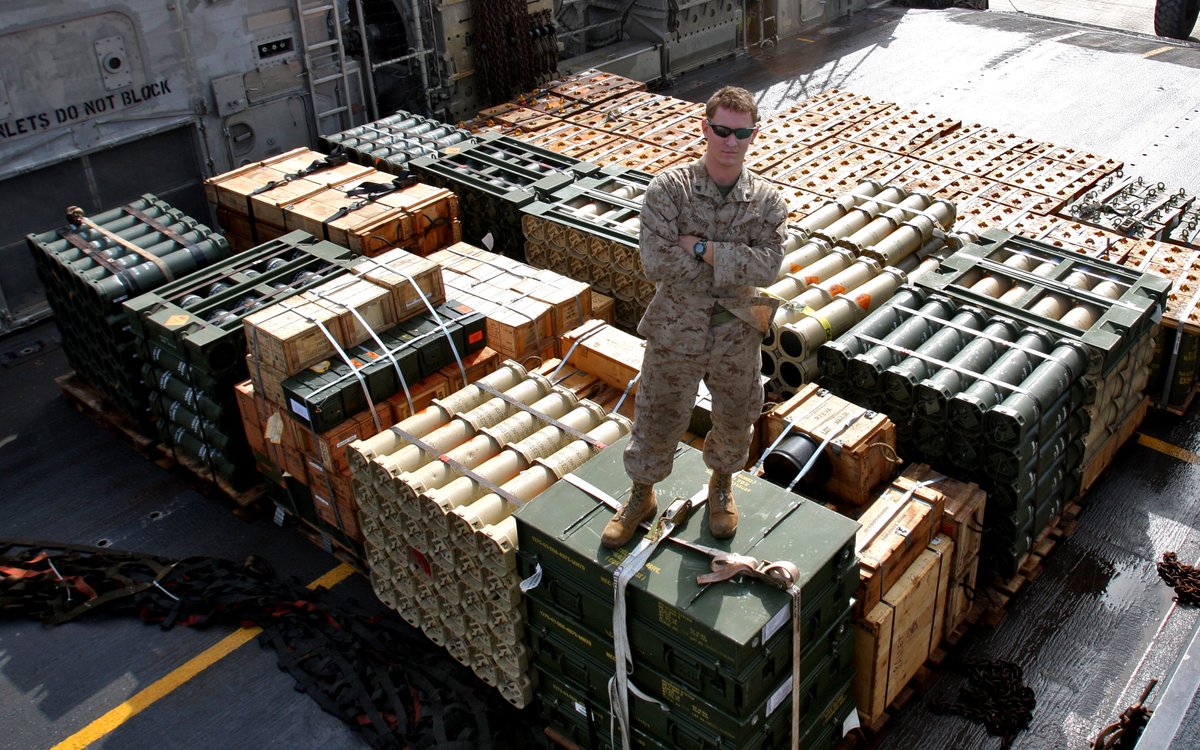
That tool is the forklift.
NATO armies: 24x projectiles on a pallet + 1x forklift
russian army: 24x projectiles = 24 crates
The forklift is done in a minute, the russians in 30 minutes.
11/n
NATO armies: 24x projectiles on a pallet + 1x forklift
russian army: 24x projectiles = 24 crates
The forklift is done in a minute, the russians in 30 minutes.
11/n

And Western armies unload 35x charges and 24x projectiles in 2 minutes thanks to trucks with cranes.
Everything that leaves Western munitions factories is packaged in the most easy way to handle for logistic troops.
12/n
Everything that leaves Western munitions factories is packaged in the most easy way to handle for logistic troops.
12/n

And if you're in a hurry to supply a battery - well as you can see a standard NATO truck can unload the entire ammo supply for a battery in one go and in under a minute.
13/n
13/n

And when it comes to Western rocket artillery - again: everything has been optimized for speed and efficiency.
A supply truck lowers a rocket pod with 6x rockets on the ground and a HIMARS or M270 with their build in cranes pick the pod up and reload on their own.
14/n
A supply truck lowers a rocket pod with 6x rockets on the ground and a HIMARS or M270 with their build in cranes pick the pod up and reload on their own.
14/n


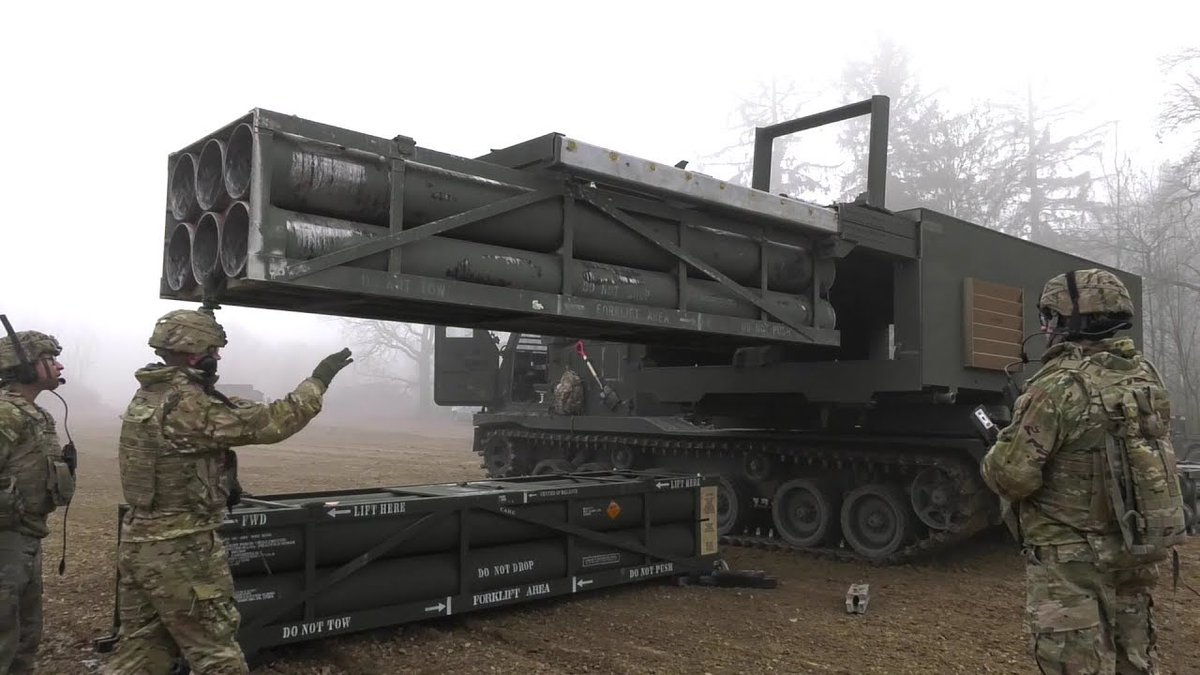
Reloading rockets is a breeze for NATO armies... while for russian troops it is a continuous clusterfuck.
Flawless logistics is the difference between a military that wants to win, and a clown show, which only exists to parade once a year before the dear leader.
15/n
Flawless logistics is the difference between a military that wants to win, and a clown show, which only exists to parade once a year before the dear leader.
15/n

With Western weapons Ukraine also receives Western logistics standards. This will further improve Ukraine's capabilities, especially on the offensive.
And on the offensive Ukraine will go as soon as HIMARS and Patriot arrive in Ukraine.
16/n
And on the offensive Ukraine will go as soon as HIMARS and Patriot arrive in Ukraine.
16/n
• • •
Missing some Tweet in this thread? You can try to
force a refresh