This paper outlines 7 classes of errors that destroy strategic decisions, ending with the epic-sounding Type VII Iatrogensis Cascade.
If you understand these errors, you will know what questions to ask to avoid strategic failures. So, a 🧵on seven types of errors... 1/9
If you understand these errors, you will know what questions to ask to avoid strategic failures. So, a 🧵on seven types of errors... 1/9
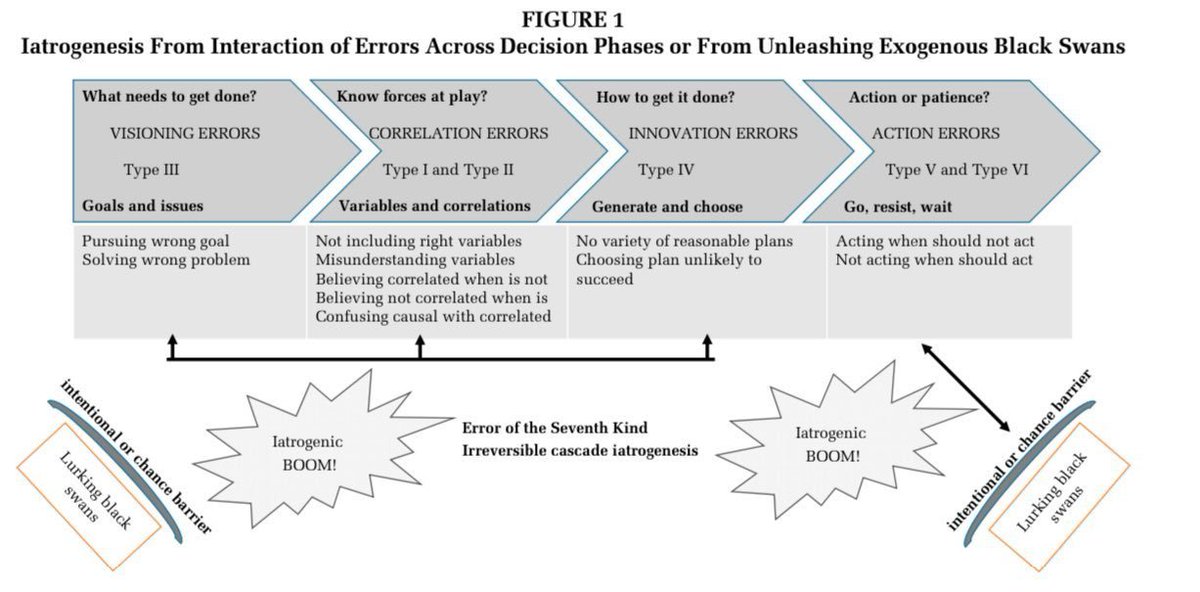
Type I and II Strategic Errors are the most well-known. Type I Errors happen when decision-makers assume there is a relationship that isn't there. Setting up the Iraq War on the premise that there were weapons of mass destruction, without proof WMDs were real, is one example. 2/9
Type II Errors are when people assume a negative relationship and are wrong. When rolling out New Coke, the Coca-Cola company tested it on people who didn't drink Coke, who liked it more than Pepsi, but never tested it on regular Coke drinkers, assuming they would like it! 3/9
Type III Errors involve "solving the wrong problem very precisely." Technology companies fall prey to this often, rolling out carefully built products for markets that don't exist, and often ignoring larger, more important problems that linger because of misplaced effort. 4/9
Type IV Errors happen when organizations understand the right problem to focus on, but pick the wrong solution. Microsoft was right that computers needed to be easier to use... but they picked Clippy as the solution, rather than a deeper overhaul of how their software worked. 5/9
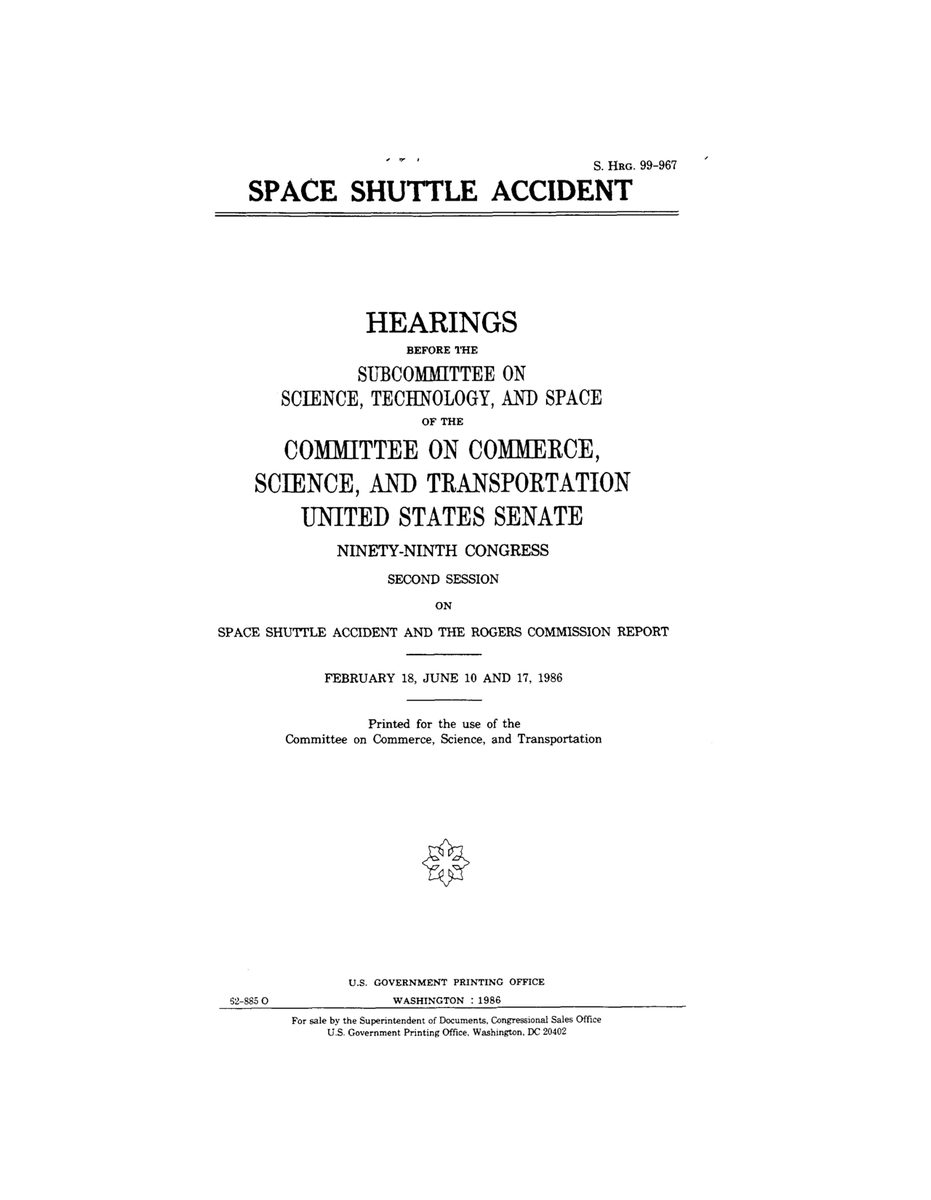
Type V Errors are taking action when you should not, often because you don't know enough. Think about launching the Challenger, rather than waiting for more information on the state of the O-rings that prevented fuel from leaking. A bias towards action can hurt you. 6/9
Type VI Errors are not acting when you should. Kodak waiting to commit to the digital camera technology it helped invent is one famous example. But there are many cases where decision-makers hesitate when action is needed, allowing windows of opportunity to pass. 7/9
Type VII Errors are worst. They happen when interactions between other errors lead to a failure cascade, turning the original normal problems into “wicked problems” that have complex & overlapping causes without simple solutions. Think the Iraq War & Subprime Mortgage Crisis. 8/9
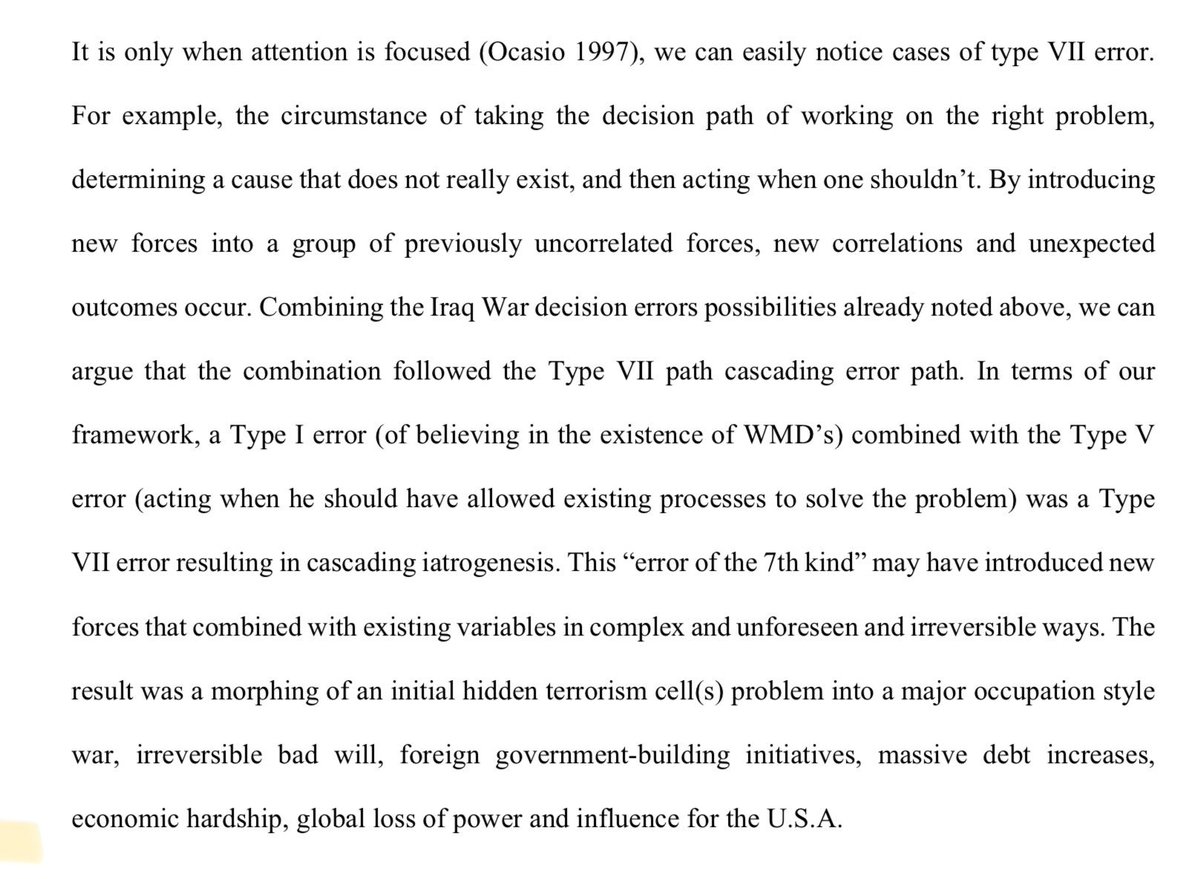
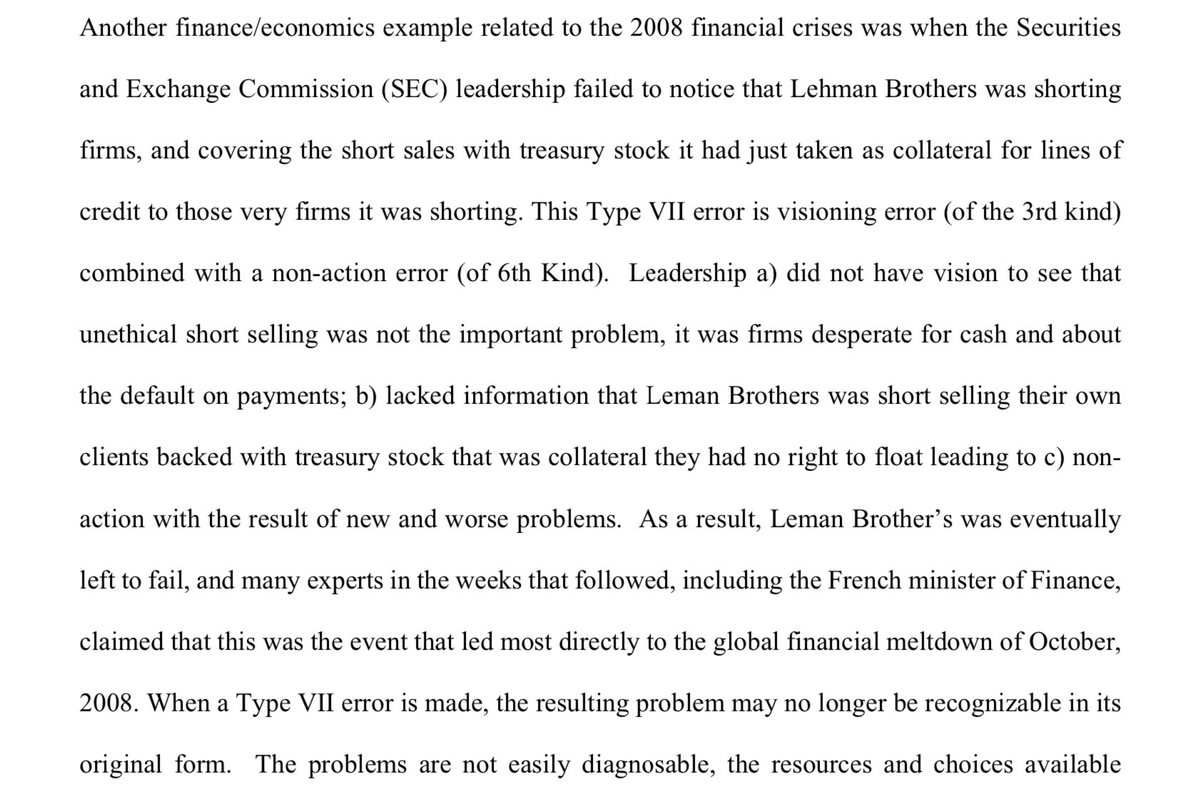
Type I through Type VI errors can be avoided through good practice. Type VII cascades are hugely damaging & hard to predict.
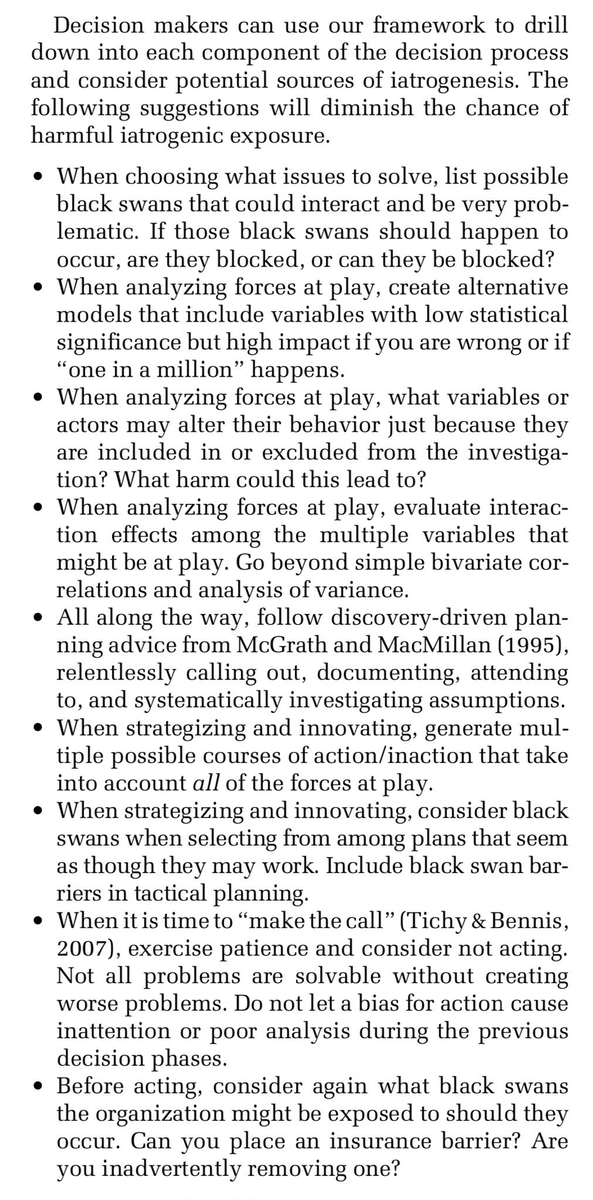
Decision-makers can avoid cascades by asking yourself 👇 questions. You can also read the article, which is full of examples: 9/9 kimboal.ba.ttu.edu/Selected%20wri…
Decision-makers can avoid cascades by asking yourself 👇 questions. You can also read the article, which is full of examples: 9/9 kimboal.ba.ttu.edu/Selected%20wri…
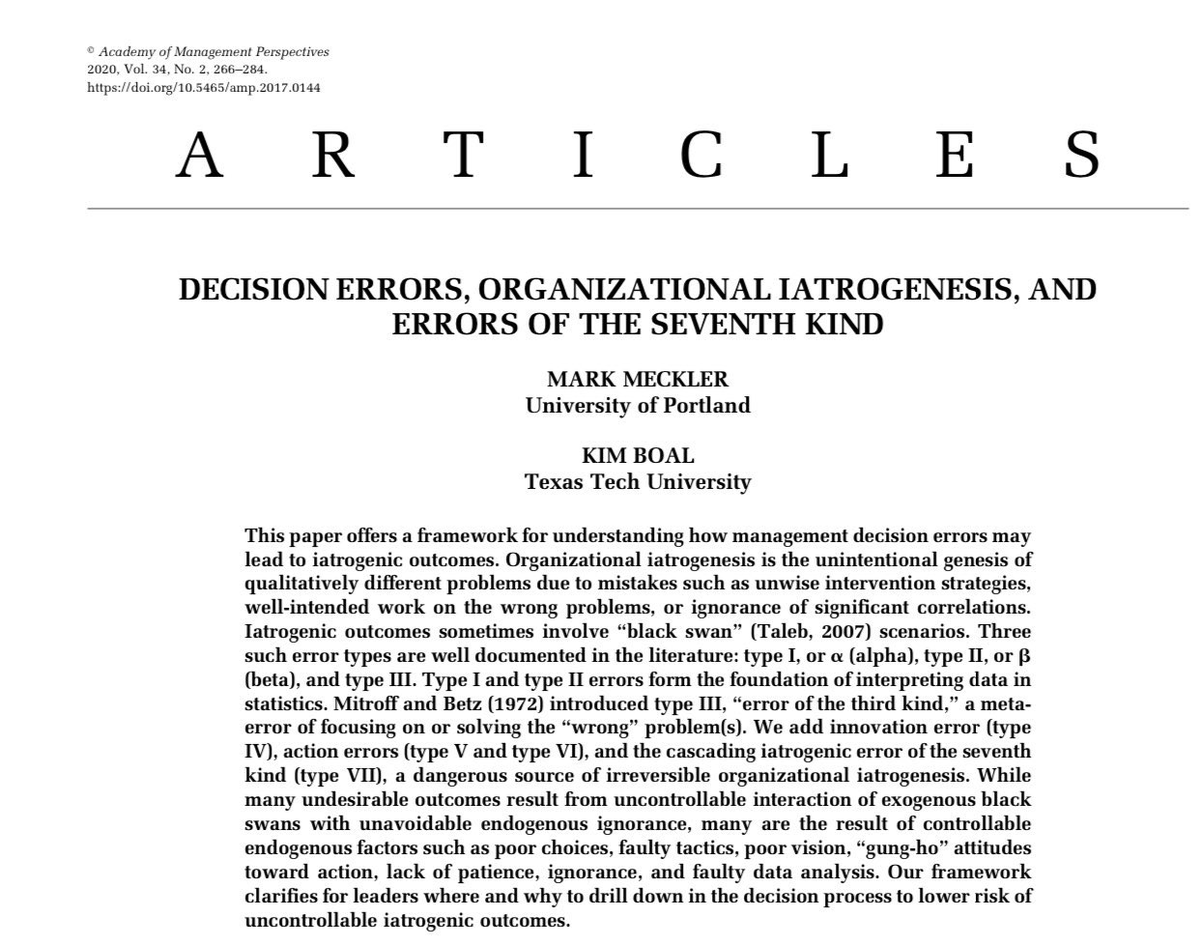
Cascades happen in complex systems, thus “all of the interesting systems (e.g. transportation, healthcare, power generation) are inherently and unavoidably hazardous.”
Read why complex systems fail. All 3 pages are in the images attached to this tweet. researchgate.net/publication/22…
Read why complex systems fail. All 3 pages are in the images attached to this tweet. researchgate.net/publication/22…
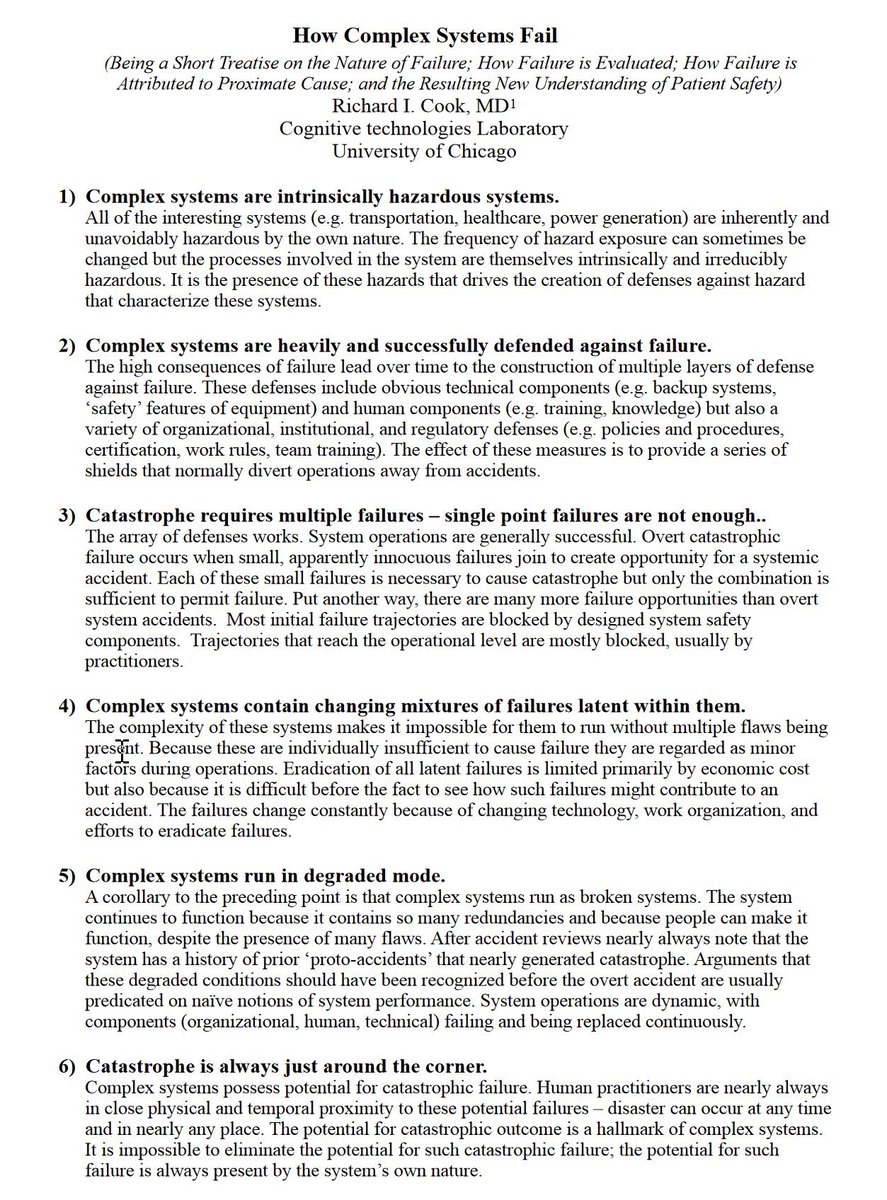
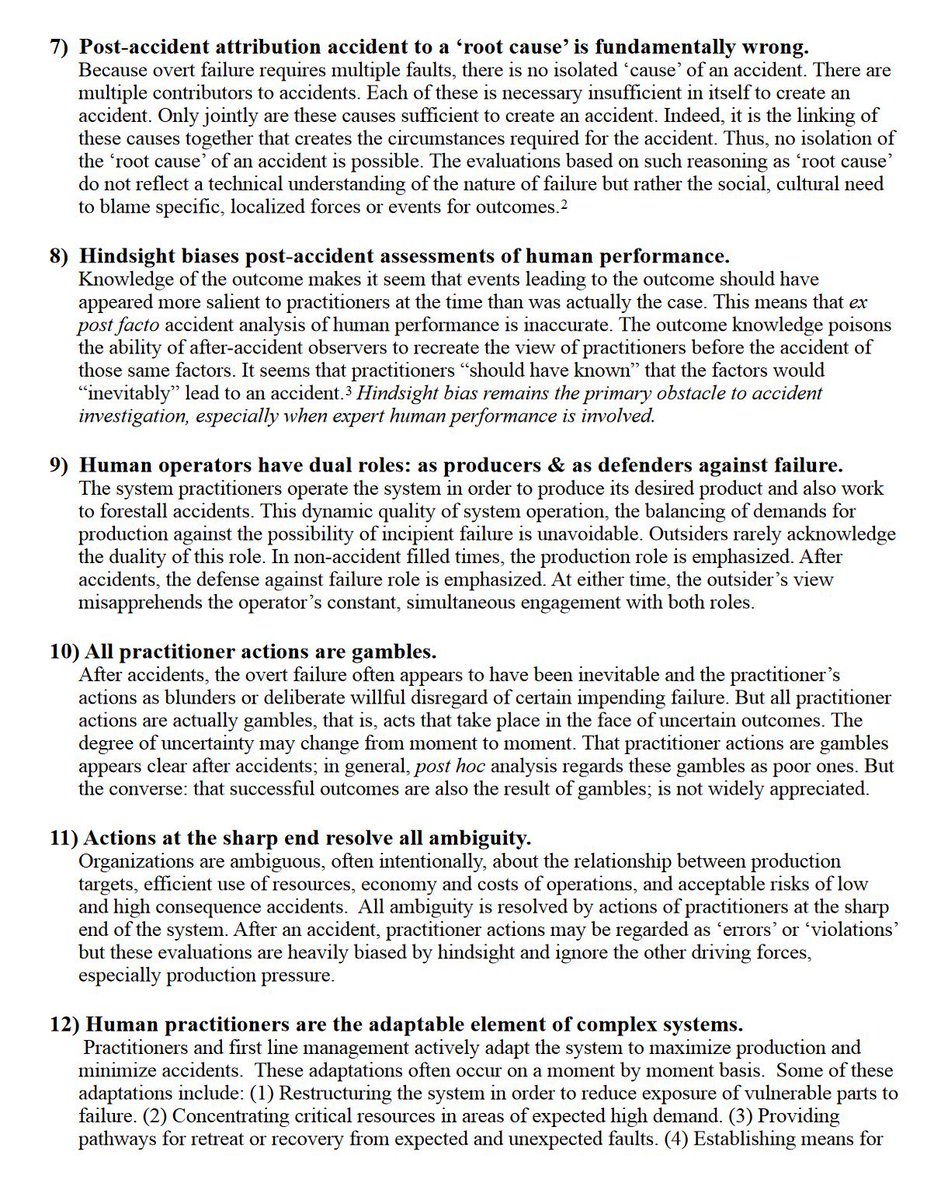
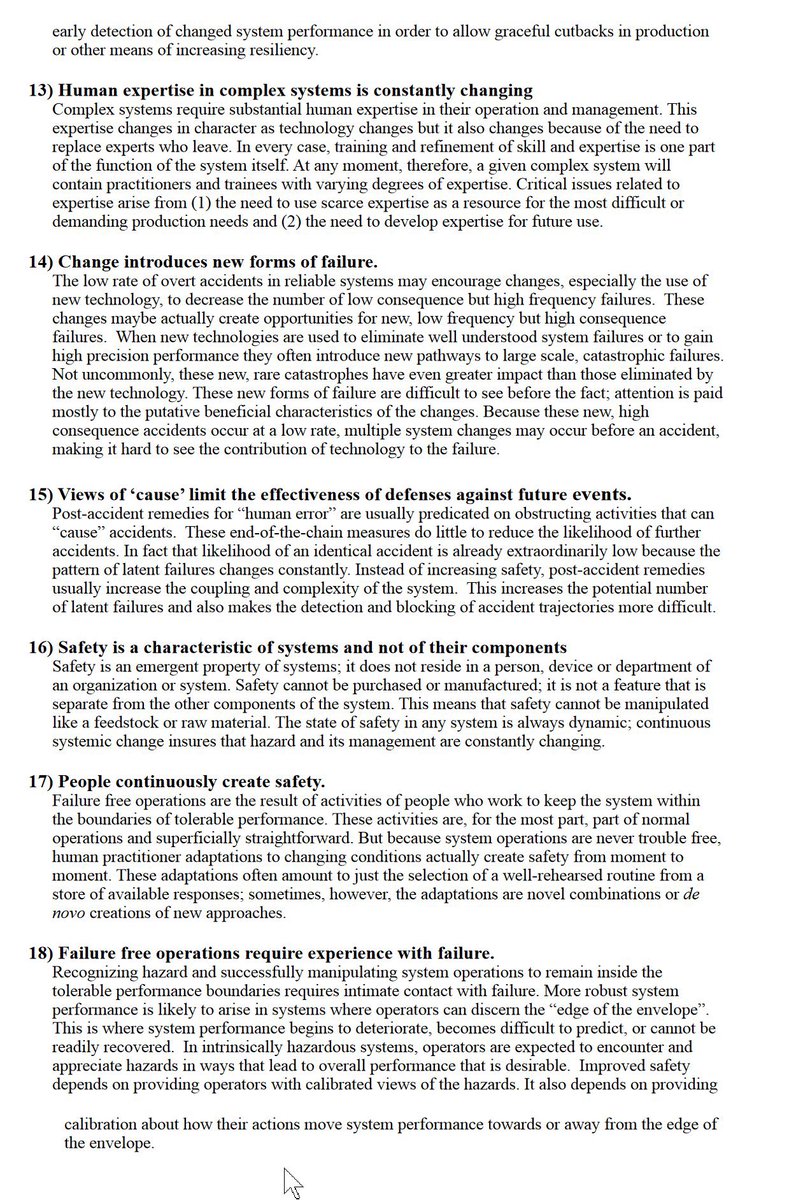
In some ways, the huge interest on cognitive biases (which are important 👇) has distorted our views about why we fail.
Cognitive biases are generally things that effect individuals, but most large-scale failures are of systems & organizations, where the errors in the 🧵 live!
Cognitive biases are generally things that effect individuals, but most large-scale failures are of systems & organizations, where the errors in the 🧵 live!
https://twitter.com/emollick/status/1499433033543393285
• • •
Missing some Tweet in this thread? You can try to
force a refresh