@irri @IFPRI @CGIAR 1/18》The scientific evidence is compelling that manmade #ClimateChange is modest and benign, CO2 emissions are beneficial rather than harmful, and the "social cost of carbon" is negative.
@IRRI's work complements the benefits of elevated CO2 for crops.
@IRRI's work complements the benefits of elevated CO2 for crops.
https://twitter.com/ncdave4life/status/1432810945017962505
@irri @IFPRI @CGIAR 2/18》Contrary to climate industry propaganda, none of the supposed major harms of carbon emissions are actually happening. They are all merely hypothetical, and mostly implausible.
Sea-level trends have been virtually unchanged for 90+ years.
sealevel.info/learnmore.html…
Sea-level trends have been virtually unchanged for 90+ years.
sealevel.info/learnmore.html…

@irri @IFPRI @CGIAR 3/18》Extreme weather is not worsening.
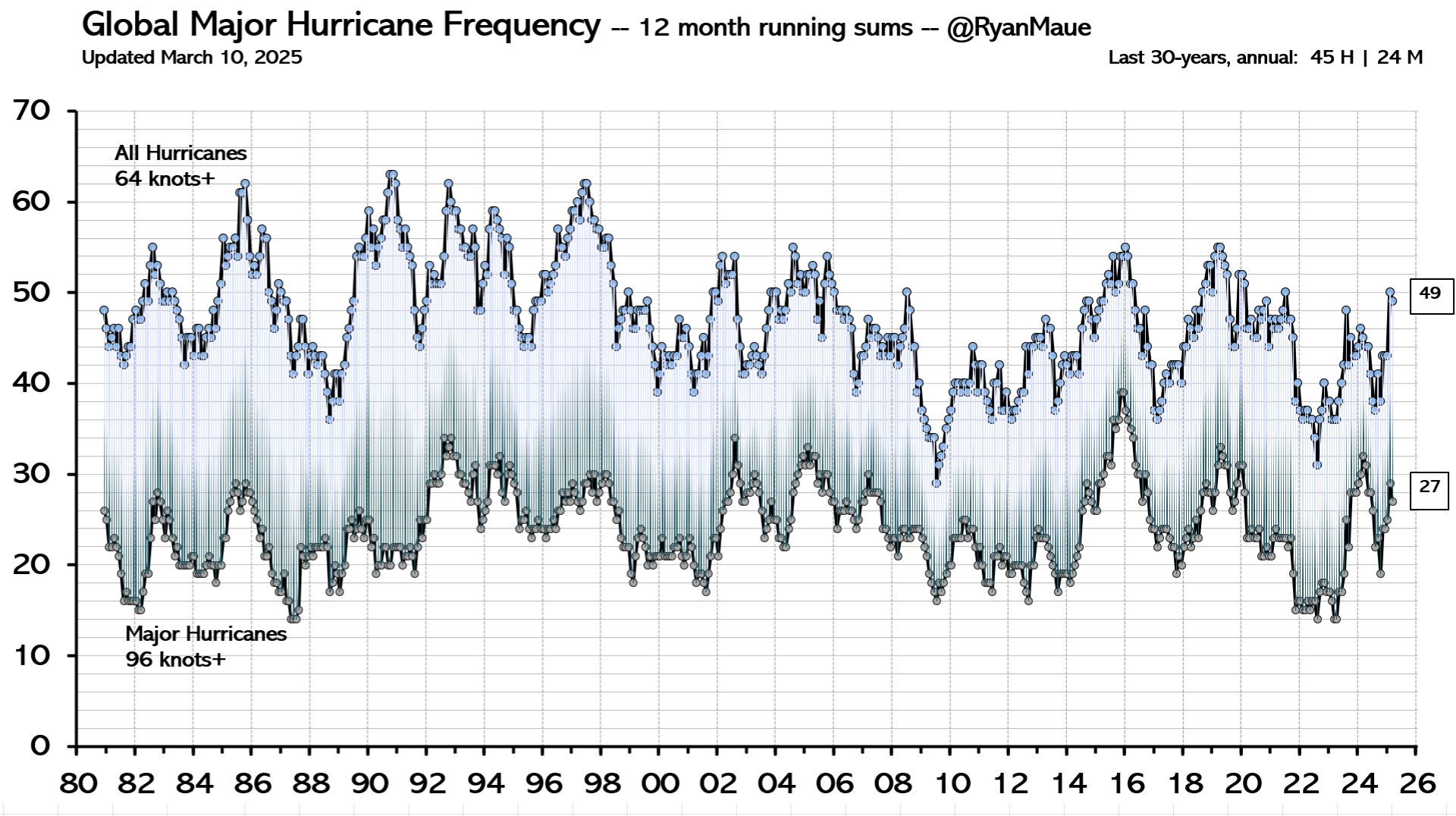
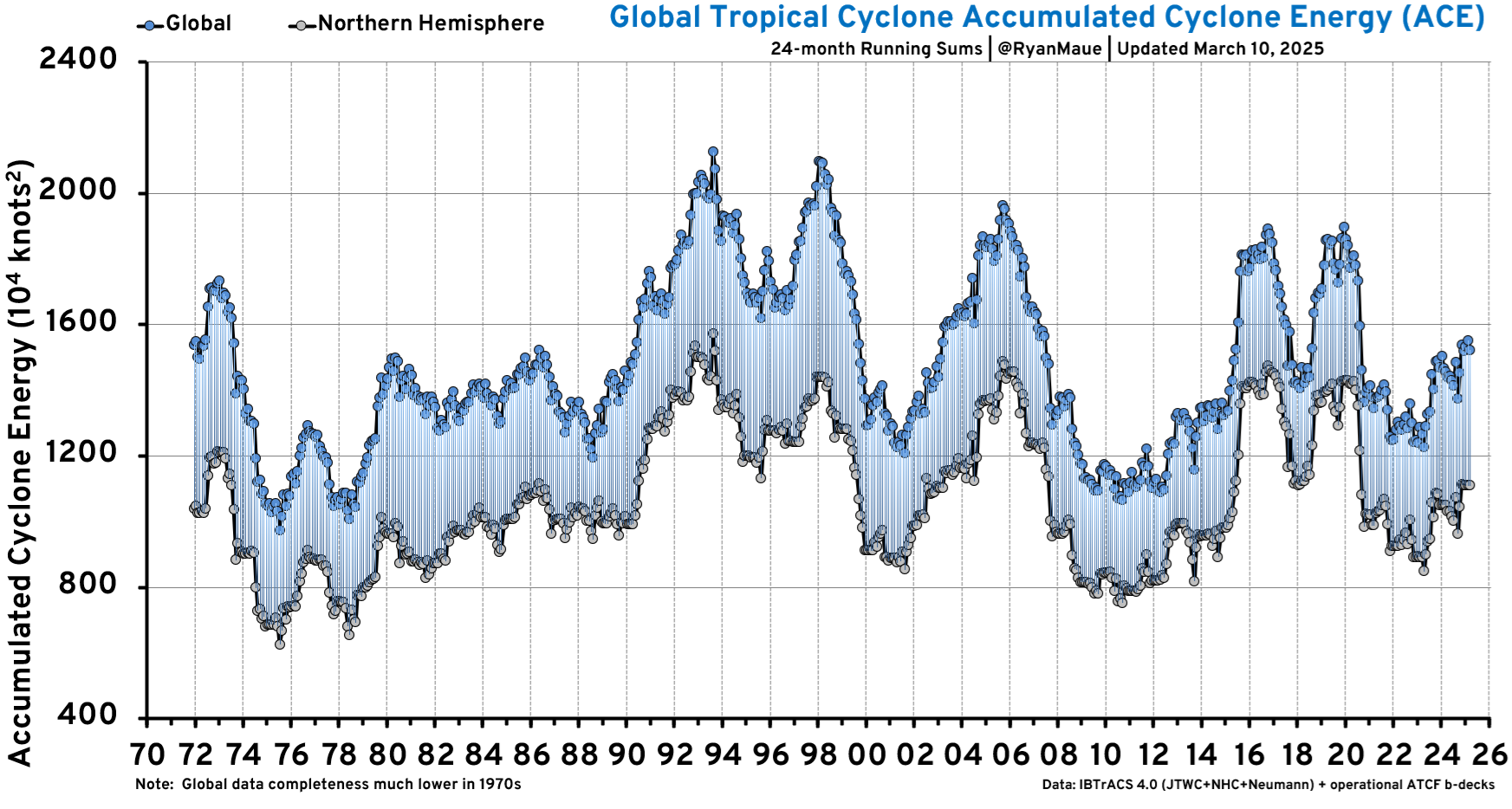
The first type of extreme weather most people think of is hurricanes and tropical cyclones. They are not worsening. Nor are extratropical storms.
sealevel.info/learnmore.html…
The first type of extreme weather most people think of is hurricanes and tropical cyclones. They are not worsening. Nor are extratropical storms.
sealevel.info/learnmore.html…
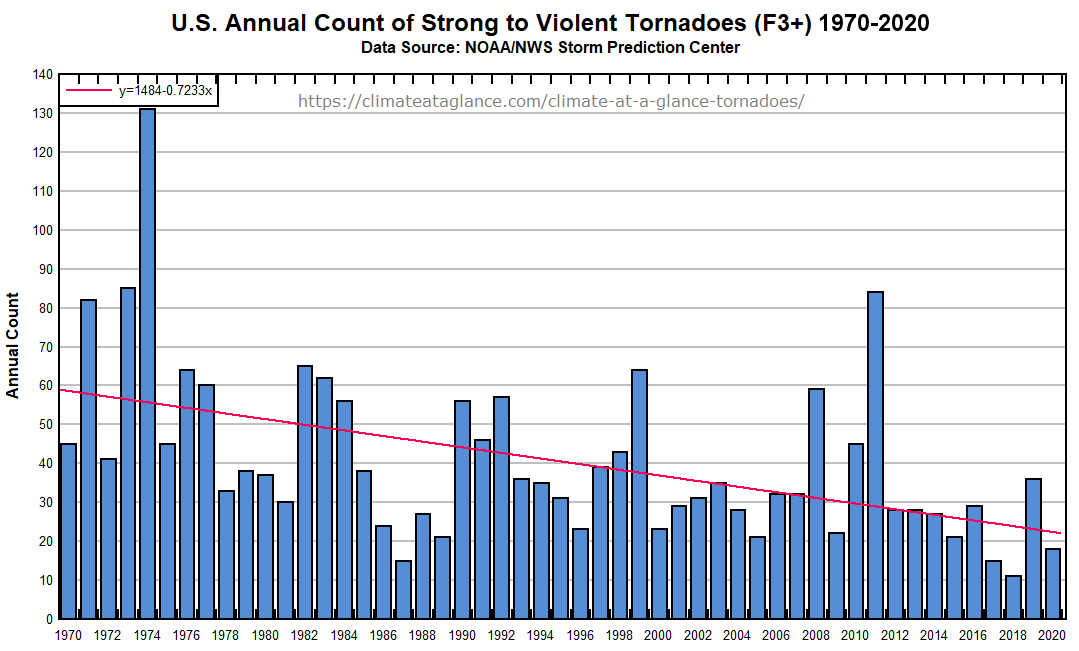
@irri @IFPRI @CGIAR 4/18》Tornadoes are a big problem in the United States. They are not worsening, either.
sealevel.info/learnmore.html…
sealevel.info/learnmore.html…
@irri @IFPRI @CGIAR 5/18》Polar bears and coral reefs are doing fine.
polarbearscience.com
In fact, the scientific data shows elevated CO2 (eCO2) is very beneficial for natural ecosystems.
polarbearscience.com
In fact, the scientific data shows elevated CO2 (eCO2) is very beneficial for natural ecosystems.
https://twitter.com/ncdave4life/status/1464556388139646976
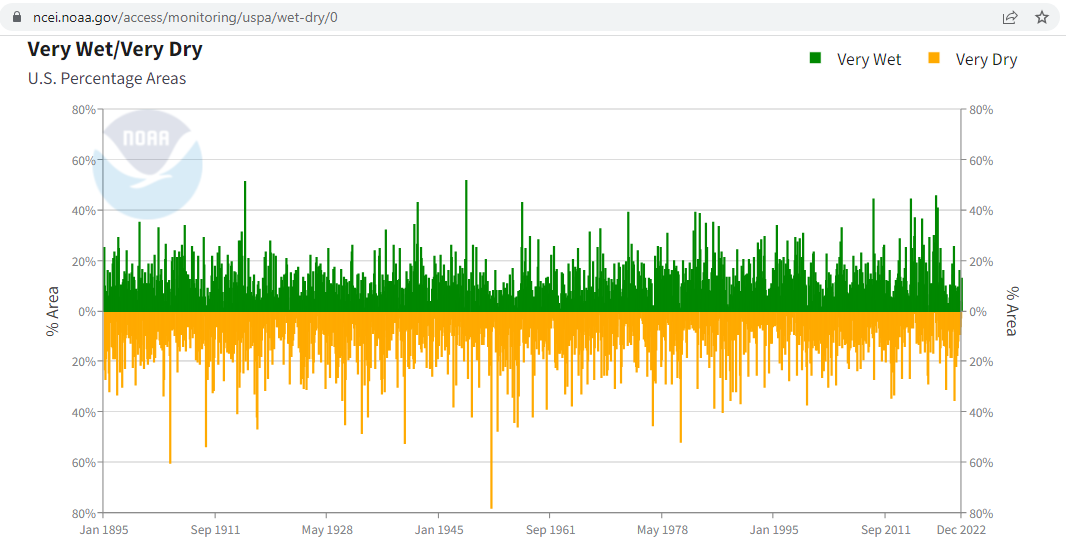
@irri @IFPRI @CGIAR 6/18》Droughts are not worsening, and elevated CO2 levels mitigate drought impacts, by making plants more water efficient and drought resistant.
sealevel.info/learnmore.html…
sealevel.info/learnmore.html…
@irri @IFPRI @CGIAR 8/18》ALL important effects of CO2 emissions are beneficial. In fact, improved crop yields from CO2 Fertilization & drought impact mitigation from higher CO2 levels, have helped eliminate major drought-triggered famines for the first time in human history!
sealevel.info/learnmore.html…
sealevel.info/learnmore.html…
@irri @IFPRI @CGIAR 9/18》Agronomists have done thousands of rigorous studies, measuring the benefits of elevated CO2 for agriculture. It's long-settled science: elevated CO2 is beneficial for ALL major crops. It's one of the most important reasons famines have become rare.
sealevel.info/learnmore.html…
sealevel.info/learnmore.html…
@irri @IFPRI @CGIAR 10/18》It's impossible to overstate the importance of that blessing. Compare:
● Covid-19 has killed about 0.1% of world population, so far
● The 1918 flu killed ≈2%
● WWII killed ≈2.7%
● But the global drought & famine of 1876-78 killed an estimated 3.7% of world population
● Covid-19 has killed about 0.1% of world population, so far
● The 1918 flu killed ≈2%
● WWII killed ≈2.7%
● But the global drought & famine of 1876-78 killed an estimated 3.7% of world population

@irri @IFPRI @CGIAR 11/18》Elevated CO2 is also very beneficial for natural ecosystems. By improving crop yields eCO2 releases land from agriculture, for natural forest. But it also benefits wild plants directly. In fact, it's "greening" the Earth, especially in arid regions!
sealevel.info/learnmore.html…
sealevel.info/learnmore.html…
@irri @IFPRI @CGIAR 13/18》The Sahel (southern Sahara) is benefiting tremendously.
https://twitter.com/ncdave4life/status/1361063480804192258
@irri @IFPRI @CGIAR 14/18》In 2009 @NatGeo reported, "Vast swaths of North Africa are getting noticeably lusher due to warming temperatures, new satellite images show, suggesting a possible boon for people living in the driest part of the continent."
sealevel.info/Owen2009_Sahar…
sealevel.info/Owen2009_Sahar…
@irri @IFPRI @CGIAR @NatGeo 15/18》The best peer-reviewed science shows that CO2 emissions are beneficial and the "social cost of carbon" is negative.
sealevel.info/negative_socia…
sealevel.info/negative_socia…
@irri @IFPRI @CGIAR @NatGeo 16/18》But some scientists have worried that better crop yields from elevated CO2 (eCO2) could be accompanied by nutrient level reductions (the "dilution effect"). That can happen when soil nutrient levels are low, though it is largely mitigated with agricultural best practices.
@irri @IFPRI @CGIAR @NatGeo 17/18》In fact, food grown in greenhouses at 1500 ppmv CO2 is as nutritious as food grown outdoors at 400 ppmv CO2.
https://twitter.com/ncdave4life/status/1296585424501186562
@irri @IFPRI @CGIAR @NatGeo 18/18》But agricultural best practices aren't always followed, so it's reassuring @IRRI is creating more nutritious rice. Your work should allay fears of a nutritional downside to the better crop yields from elevated CO2.
allianceforscience.cornell.edu/blog/2018/05/u…
@ThreadReaderApp @Rattibha unroll
allianceforscience.cornell.edu/blog/2018/05/u…
@ThreadReaderApp @Rattibha unroll
• • •
Missing some Tweet in this thread? You can try to
force a refresh