With the M777 and CAESAR two of the four artillery systems promised to Ukraine are now confirmed to be at the front in Donbas:
🇺🇸🇦🇺🇨🇦 M777
🇮🇹 FH70
🇫🇷 CAESAR
🇳🇱🇩🇪 PzH 2000
How do they work? What are their differences? What makes the later two the best?
A thread 🧵:
1/n
🇺🇸🇦🇺🇨🇦 M777
🇮🇹 FH70
🇫🇷 CAESAR
🇳🇱🇩🇪 PzH 2000
How do they work? What are their differences? What makes the later two the best?
A thread 🧵:
1/n


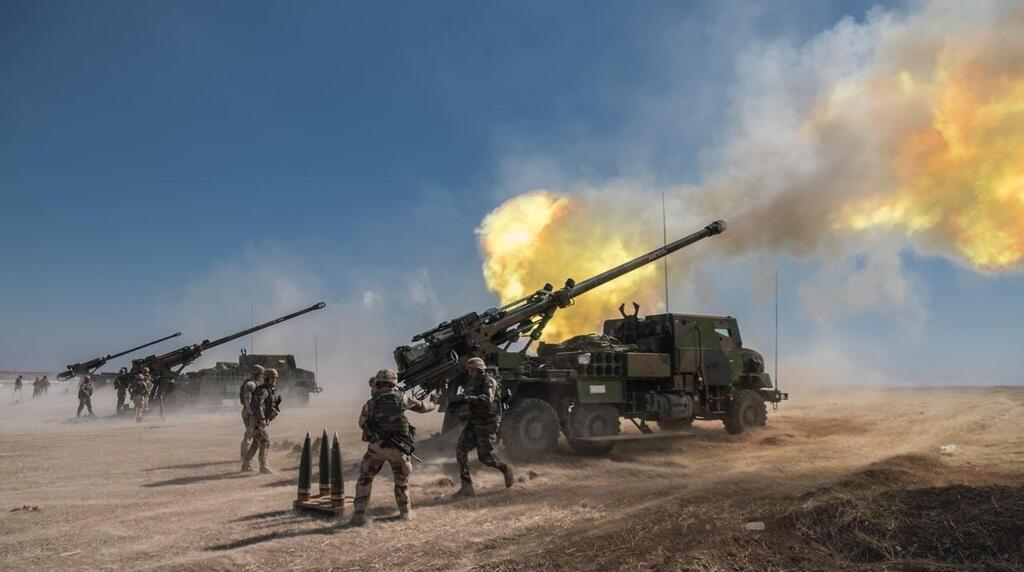

All 155 mm NATO howitzers operate the same way and if you have not yet read my earlier thread about operating an American M777 howitzer, please do so now to familiarize yourself with fuzes, projectiles, primers, charges, etc. and how they are used.
2/n
https://twitter.com/noclador/status/1526328417230241796
2/n
M777 and FH70 are towed 155 mm howitzers with 39 caliber barrels.
This means their barrels are 39 × 155 mm = 6045 mm
This results in an 18 liter charge chamber, which can fit up to 5x M232A1 charges. Therefore the range for both guns is the same.
3/n
This means their barrels are 39 × 155 mm = 6045 mm
This results in an 18 liter charge chamber, which can fit up to 5x M232A1 charges. Therefore the range for both guns is the same.
3/n


The FH70 includes a small engine, which allows the gun crew to drive it into position. The engine also powers the hydraulics to emplace the gun.
This makes the FH70 easier and faster to set up than a M777, which is emplaced by pure muscle power and needs a truck to move.
4/n
This makes the FH70 easier and faster to set up than a M777, which is emplaced by pure muscle power and needs a truck to move.
4/n

The FH70 and M777 use the same projectiles, fuzes, and charges. Only the primers are of different size. The sequence of preparing the projectiles and then loading the gun is also the same.
5/n
5/n

Just like the M777, the FH70 has to be sighted optically and adjusted manually. After each shot the gunner has to check and correct the gun.
The M777 A1/A2 are fully digitized and sighted with two LCD displays, but all M777 are adjusted manually too.
6/n
The M777 A1/A2 are fully digitized and sighted with two LCD displays, but all M777 are adjusted manually too.
6/n

One advantage of the FH70 is the semi-automatic projectile loading. The projectile still needs to be rammed into the barrel, but this still results in a higher rate of fire than the M777.
Other advantages are the automatic loading of the primer when the breech closes and
7/n
Other advantages are the automatic loading of the primer when the breech closes and
7/n
the ability to fire the gun from the gunners seat, while the M777 requires the use of a lanyard.
The M777 and FH70 are similar systems and Ukrainian troops will use them in similar ways, which cannot be said about the next two systems.
8/n
The M777 and FH70 are similar systems and Ukrainian troops will use them in similar ways, which cannot be said about the next two systems.
8/n

CAESAR and PzH 2000 are self-propelled 155 mm howitzers with 52 caliber barrels: 52 × 155 mm = 8060 mm
The longer barrel allows for a larger charge chamber of 23 liter. This larger chamber can fit up to 6x M232A1 charges, which results in a better range for both systems.
9/n
The longer barrel allows for a larger charge chamber of 23 liter. This larger chamber can fit up to 6x M232A1 charges, which results in a better range for both systems.
9/n


This one charge more improves the range of both systems for base bleed projectiles from 29 km to 40 km and for standard projectiles from 24 km to 30 km.
But the extended range is not the main advantage of these two systems.
10/n
But the extended range is not the main advantage of these two systems.
10/n
The CAESAR is fully digitized, with automatic gun laying, semi-automatic projectile loading, automatic ramming, and automatic primer loading. This allows the CAESAR to stop, emplace, fire 6x rounds, and depart in less than 2.5 minutes as this old French Army video shows.
11/n
11/n
This speed allows the CAESAR to operate within range of russian artillery. M777 and FH70 crews will likely avoid operating within 20 km of the frontline as there they would be in range of russian counter battery fire.
But counter battery fire is no problem for the CAESAR
12/n
But counter battery fire is no problem for the CAESAR
12/n

or PzH 2000. Both will be long gone before russian return fire hits:
1) russian radar picks up CAESAR fire
2) russian radar informs a battery to fire back
3) russian battery sights and loads its guns
4) russian battery fires
5) russian projectiles need 70-80 seconds to hit
13/n
1) russian radar picks up CAESAR fire
2) russian radar informs a battery to fire back
3) russian battery sights and loads its guns
4) russian battery fires
5) russian projectiles need 70-80 seconds to hit
13/n
but already by the time a russian battery gets the order to fire back the CAESAR and PzH 2000 are gone. This is the main advantage of modern self-propelled artillery: the ability to shoot and scoot.
14/n
14/n

The only drawback of the CAESAR is that it carries only 18x rounds. So after 3x stops to fire 6x rounds the CAESAR has to return to the ammunition supply point to reload.
Still the CAESAR is the best artillery systems in Ukraine now... until the PzH 2000 arrives.
15/n
Still the CAESAR is the best artillery systems in Ukraine now... until the PzH 2000 arrives.
15/n

The PzH 2000 is fully digitized, with automatic gun laying, automatic projectile loading, automatic ramming, automatic fuze setting, and automatic primer loading.
The PzH 2000 is also Multiple Round Simultaneous Impact (MRSI) capable - it's the best system in the world.
16/n
The PzH 2000 is also Multiple Round Simultaneous Impact (MRSI) capable - it's the best system in the world.
16/n

The PzH 2000's automatic magazine holds 60 projectiles, sorted to allow the use of different projectiles and fuzes in a fire mission.
Btw: the guy in the back of this photo is the driver.
17/n
Btw: the guy in the back of this photo is the driver.
17/n

The magazine is loaded by hand. It takes about 12 minutes to load all 60 projectiles and 288 charges.
18/n
18/n
To speed up reloading the projectiles and fuzes are prepared by a dedicated support crew at the ammunition supply point (the same is done for the CAESAR).
19/n
19/n


When the PzH 2000 commander receives a fire mission he orders the driver to park at a suitable location. Once stopped turret and gun barrel automatically deflect and elevate for the fire mission.
If time or proximity fuzes need to be set, the gun does this automatically too.
20/n
If time or proximity fuzes need to be set, the gun does this automatically too.
20/n

Due to all the automation 3x rounds can be fired in 10 seconds. Or 20x rounds in 2 minutes.
After each round the fire computer automatically re-adjusts the barrel and improves accuracy by using data gathered by the radar on the barrel, which measures the projectile's speed.
21/n
After each round the fire computer automatically re-adjusts the barrel and improves accuracy by using data gathered by the radar on the barrel, which measures the projectile's speed.
21/n
The PzH 2000 also has MRSI capability, which means it can calculate and automatically adjust the barrel to deliver up to 5x projectiles at the same moment onto the same target.
No russian system has this capability.
22/n
No russian system has this capability.
22/n
Sadly Ukraine only will get 12x CAESAR and 12x PzH 2000. Ukraine needs more such systems.
Ukraine is now in talks to acquire Slovak Zuzana 2 howitzers, which are similar in capability to the PzH 2000... but it might take months for them to be built and arrive.
23/n
Ukraine is now in talks to acquire Slovak Zuzana 2 howitzers, which are similar in capability to the PzH 2000... but it might take months for them to be built and arrive.
23/n

If we want Ukraine to win this war, we must send more Western artillery: especially self-propelled artillery with 52 caliber barrels and automatic gun laying (CAESAR, PzH 2000, Zuzana 2, AHS Krab (photo), AHS Kryl, K9 Thunder, Archer).
24/n
24/n

But we also must send M270 MLRS or M142 HIMARS (photo), because without them russian supply points and long range air defense positions remain out of reach for Ukrainian artillery.
The brave Ukrainians need our help. Let us be brave like them and send them all they need.
25/n.
The brave Ukrainians need our help. Let us be brave like them and send them all they need.
25/n.

What military/ weapons/ tactical/ strategic/ logistics/ materiel/ historic topic should I thread about next?
Please leave suggestions and wishes under this tweet.
Please leave suggestions and wishes under this tweet.
• • •
Missing some Tweet in this thread? You can try to
force a refresh