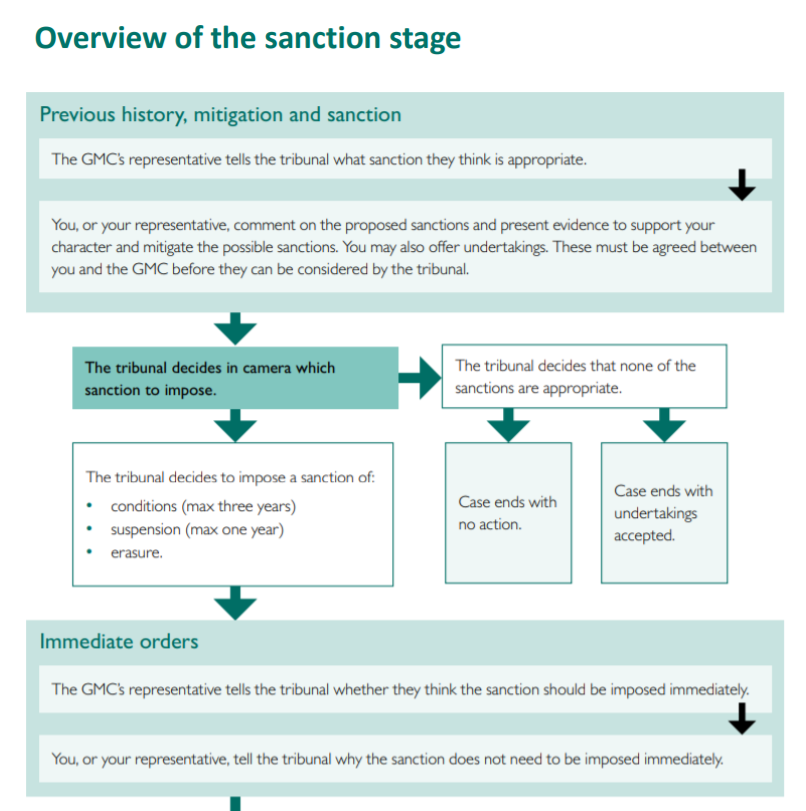
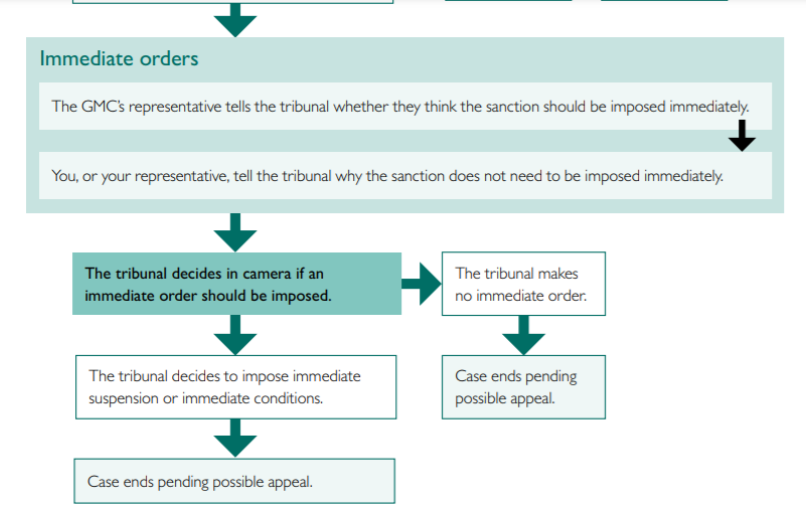
Good morning: this is the reporting from the 9th June MPTS hearings into Dr Helen Webberley. This stage of the process is the sanctions hearing.
Proceedings are due to begin at 9.30 am.
You can read our summary, and the previous days' tweet threads, at tribunaltweets.substack.com/p/tribunal-of-…
Proceedings are due to begin at 9.30 am.
You can read our summary, and the previous days' tweet threads, at tribunaltweets.substack.com/p/tribunal-of-…
Abbreviations:
HW - Dr Helen Webberley
SJ - Simon Jackson QC for the GMC
IS - Ian Stern QC for HW
C - the legally qualified Panel Chairman Angus Macpherson
Trib - other Tribunal panel members
HW - Dr Helen Webberley
SJ - Simon Jackson QC for the GMC
IS - Ian Stern QC for HW
C - the legally qualified Panel Chairman Angus Macpherson
Trib - other Tribunal panel members
A reminder that we at TribunalTweets do not have access to any of the Tribunal's documents (witness statements, evidence documents, authorities lists or anything else) so if reference is made to these in submissions all we can do is try our best to paraphrase anything read out.
We expect today's hearing to consist of the Chair's proposed legal summary/advice to the panel, and an opportunity for the barristers for each side to make representations about it.
We are advised by MPTS that the public part of today's hearing will not begin before 10am.
We are advised by MPTS that the public part of today's hearing will not begin before 10.30am.
We are advised by MPTS that the public part of today's hearing is likely to begin around 11.00am.
[The session is beginning]
C: Welcome everyone. SJ - you have submitted a revised document on impairment to correct a numbering problem, thank you.
C: I sent my proposed advice to both barristers - have only heard back on it from IS?
SJ: I have not been able to send my document - an annotation of Mr Stern's, largely in agreement with him, but would wish you to see it.
SJ: I have not been able to send my document - an annotation of Mr Stern's, largely in agreement with him, but would wish you to see it.
C: We need to proceed; will hope your notes come through shortly but if not please make your points orally after this.
SJ: Could I have just 2 or 3 minutes to try to get this sent, technical difficulties?
C: Will give you until 11.20
SJ: Could I have just 2 or 3 minutes to try to get this sent, technical difficulties?
C: Will give you until 11.20
[Hearing closes while we wait for this]
[We resume]
C: Mr Jackson your submission has come through; will endeavour to take into account when presenting my advice.
C: Shall read out my advice and where I have a note from IS or SJ will endeavour to address
C: Mr Jackson your submission has come through; will endeavour to take into account when presenting my advice.
C: Shall read out my advice and where I have a note from IS or SJ will endeavour to address
C: My colleagues are entitled to take or to ignore my advice and IS and SJ are entitled to comment.
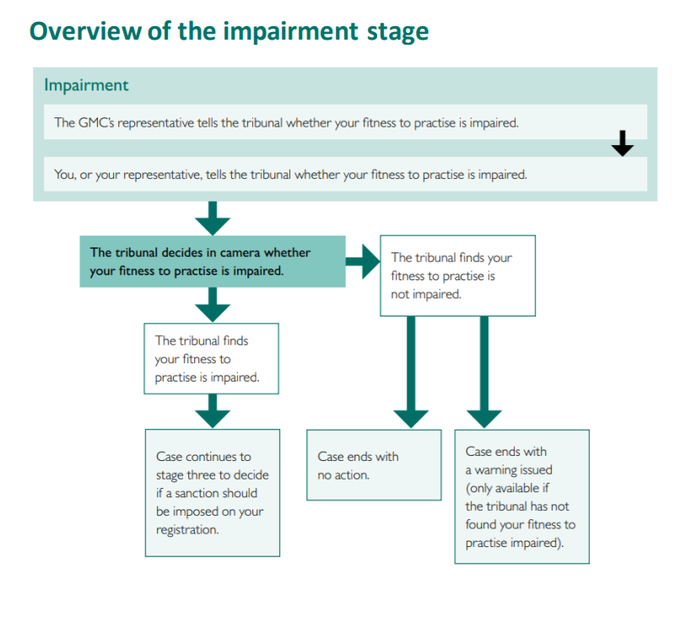
C: Having found the facts the tribunal must decide whether HW's fitness to practice is impaired. Firstly by deciding whether HW conduct amounts to misconduct; and secondly whether HW fitness to practice is thereby impaired.
C: If there are factual matters beyond what already found that the tribunal needs then the burden of proving those facts lies on the party relying on them.
C: IS has queried why the burden is that way.
C: IS has queried why the burden is that way.
C: Re HW continuing to operate the unlicensed medical agency and reasons given for that; IS and SJ both say there is no burden/standard of proof on HW so will withdraw comment on burden/standard, tribunal will decide for itself.
C: There is much case law about what "misconduct" is; one primary one. Definition is conduct falling short of what it normally should have been. Allows tribunal to consider conduct in context.
C: Case law confirms that to be considered for the second stage - impairment - misconduct must be serious. Well established.
C: Both counsel have referred to [case] that confirms misconduct must be serious. But also introduces fact that conduct outside medical practice, if deplorable and disreputable, can also constitute misconduct.
C: I comment that I am unclear why the latter has been presented; it appears to me that GMC case only deals with conduct within medical practice.
C: Decision in every case as to whether misconduct is serious must be made by the tribunal relying on its expertise and judgement.
C: I then turn to what must the tribunal take into account. The first thing is public interest. [Case] cited by SJ - tribunal should consider protection of patients, trust in profession.
C: Tribunals do not often cite the public interest point but I have included it here. I have been asked to refer instead to a [appeal] but I retain the reference to the original [case] cited by SJ.
C: Personal mitigating circumstances are *not* relevant, but surrounding situation can be. [Campbell] we discussed in detail yesterday and I include it in my advice.
C: I note advice in a [case] that also adduces [Campbell] in a similar context.
C: SJ has questioned this, re personal mitigation is not relevant plus different jurisdiction. Agree with this but disagree that [case] is not relevant, because non-personal circumstances may be.
C: SJ has questioned this, re personal mitigation is not relevant plus different jurisdiction. Agree with this but disagree that [case] is not relevant, because non-personal circumstances may be.
C: We touched on "accumulation" yesterday. My advice includes on this; whether tribunal can add together multiple misconducts to add up to "serious". SJ has confirmed GMC does not seek this approach and my advice is that the tribunal should not.
C: I also considered [another case] which proposed: mere negligence is not misconduct; but serious negligence might. Including a single act of negligence. But deficient performance may not constitute negligence.
C: This case does not concern deficient performance. I draw attention to ruling that a single act of negligence is less likely to cross threshold of misconduct than multiple acts.
C: I then move on to impairment.
C: IS has observed that these are separate allegations and must be addressed separately. Assessed separately. SJ has agreed with this.
C: IS has observed that these are separate allegations and must be addressed separately. Assessed separately. SJ has agreed with this.
C: Also must consider separately whether misconduct constitutes impairment; and whether the conviction constitutes impairment.
C: [case] cited by IS says, re impairment: Any Q as to whether impaired, must be considered in light of public interest, safety of patients, confidence in the profession.
C: It must not be forgotten that a ruling of impairment can go on to say what sanctions should be.
C: It must not be forgotten that a ruling of impairment can go on to say what sanctions should be.
C: Tribunal should not only consider whether there was impairment at the time of misconduct, though they should of course consider it. But tribunal must look forward as well as back. Consider way person has acted since also.
C: Two aspects to "public interest" - first is public protection. [Case] found 3 issues to consider. a) whether conduct is easily remediable b) whether it *can* be remedied and/or has been c) whether misconduct is highly likely to be repeated.
C: SJ has queried "highly" - pointed out that not in standards guide, so am removing "highly".
C: When considering the public interest - I quote from [case] - tribunal should consider whether trust in profession would be undermined if impairment not found. [Another case] about issue of whether patients put at risk and/or liable to in future.
C: And whether acted dishonestly and/or wd in future.
C: Tribunal must look forward, not just back, when looking at wider public interest.
C: Tribunal must look forward, not just back, when looking at wider public interest.
C: Further in the issue of impairment and the wider public interest: consider context. [Case]: the context of the doctor's misconduct must be considered, to decide whether fitness to practice is impaired. A tribunal might decide misconduct so egregious that it is:
C: Or might decide, looking forward, that in changed circumstances the fitness is *not* impaired.
C: In this context I consider [case] cited by SJ.
C: In this context I consider [case] cited by SJ.
C: [Case] confirms tribunal must consider public interest but then goes on to say that where a Dr has committed misconduct, whether public confidence in profession and its regulation would be undermined by not finding impairment.
C: I am not completely sure why SJ has introduced this but I have included it.
C: IS complains that if so, I must include also his reference to [another case]
C: IS complains that if so, I must include also his reference to [another case]
C: Which considers the two situations, one of a dr where misconduct so egregious impairment *must* be found, other end where looking forward that is not the case. Tribunal will have to consider these Qs.
C: turning to the conviction - is HW fitness to practice impaired by the conviction. It is not automatic that any and every conviction does cause impairment.
C: It has been said that the conviction is a regulatory one. HW received a fine of £12,000
C: It has been said that the conviction is a regulatory one. HW received a fine of £12,000
C: We as tribunal have been considering whether it is legitimate to consider HW's explanation of *why* she did the things that led to the conviction.
C: [case] says that circumstances *may* reduce culpability; but would normally consider only when considering level of sanctions; but it *might* be considered on Q of impairment; but usually not, usually only re sanctions.
C: So tribunal will need to consider this. SJ has cited [B-G case discussed yesterday]. But, my view of [Campbell] is that the tribunal *is* able at this stage, impairment, to consider surrounding circumstances.
C: However the tribunal must not go-behind the ruling made by the District Judge; if tribunal decides the DJ *did* take circumstances into account, they cannot consider explanation/circumstances at this, impairment, stage.
C: SJ observes that GMC do not accept [Campbell] can help this tribunal; I accept that this my advice disagrees with that, but does accept that this tribunal cannot go-behind the District Judge in the HW conviction case.
C: And finally. What else shd tribunal consider. Must consider the misconduct in the light of all relevant factors, including the record of the doctor.
C: I note that SJ challenges whether that is relevant.
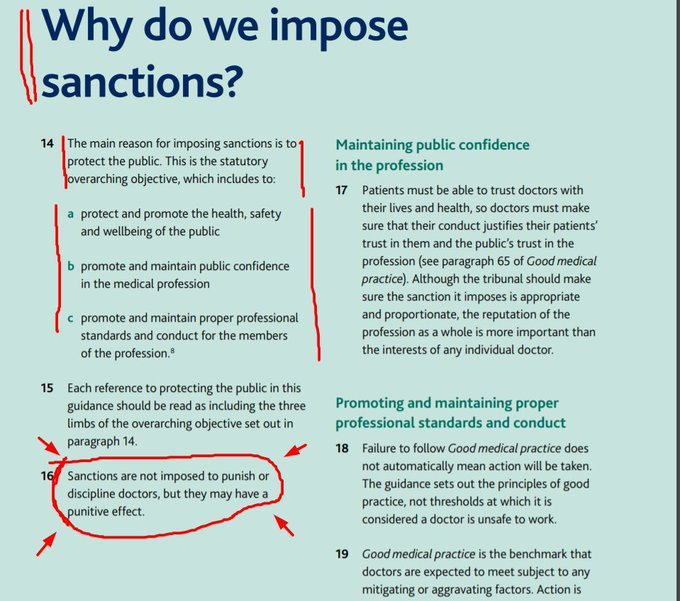
C: And finally, must remember that the purpose of tribunal is not to punish, but to protect - public interest.
C: Any observations? SJ?
C: Any observations? SJ?
SJ: Thank you. GMC's case is not that the conviction is a particular moral culpability, but that it is relevant to the question of public confidence. Part of wider context. Would say "found behaviour" of HW by the district judge.
SJ: I had misunderstood something IS had said, hence my comment, withdraw.
SJ: Re [Campbell]. GMC stands by saying it is relevant to sanctions not to conviction.
SJ: We aren't aware of any use of it for the opposite.
SJ: Re [Campbell]. GMC stands by saying it is relevant to sanctions not to conviction.
SJ: We aren't aware of any use of it for the opposite.
SJ: Would draw attention to [case] - important to note that is about where there is a *single* instance of misconduct. That is not the case here. Multiple.
SJ: Re [case] - Dr called evidence of complete remediation but it was *still* found that impairment finding needed because public trust would be failed otherwise.
SJ: Re the conviction - you say tribunal has DJ's comments. They are not comments, they are the court's *judgment* -
IS: [intervenes] SJ is just re-hashing the whole case, not just commenting on legal advice.
SJ: I note that with wry amusement given IS on findings stage, yesterday
SJ: I note that with wry amusement given IS on findings stage, yesterday
C: I take point about "comments" and will change. It is a short passage.
SJ: Would submit that looking for what is *not* there would be wrong approach.
SJ: Would submit that looking for what is *not* there would be wrong approach.
C: Anything from IS?
IS: Not really - we have your legal advice. Will just say - when comments missing from a judgment, those reading cannot assuming anything *was* taken into account either.
IS: Not really - we have your legal advice. Will just say - when comments missing from a judgment, those reading cannot assuming anything *was* taken into account either.
IS: Just to turn to one [case] - have not found references to it in [technical lawyer talk here - I think IS is saying the quote SJ gave is from a different case but am not sure exactly what is being meant]
IS: So my point is, I have not seen this case, I'm unfamiliar, perhaps SJ could email it to me.
C: [actually has reference to hand] though I may have got the page number wrong. Yes public interest is relevant to consideration of misconduct.
C: [actually has reference to hand] though I may have got the page number wrong. Yes public interest is relevant to consideration of misconduct.
C: I have not given advice that it *should* be considered in any tribunal before, but I am agreeing with SJ that it may apply here and tribunal should consider it.
C: The panel will now withdraw to consider whether HW fitness to practice is impaired. Which will take some time. If we have reached a decision at the end of next week we will let you have it; otherwise it will be the last week of June.
C: Tribunal will need to go through this all carefully.
C: Does HW have any questions - no.
C: Does HW have any questions - no.
[Panel member]: Q re what "strict liability" actually means?
C: In this context - lead from IS - it does not matter what was in HW's mind, when carrying on the unlicensed business. What does matter is what was done.
C: In this context - lead from IS - it does not matter what was in HW's mind, when carrying on the unlicensed business. What does matter is what was done.
SJ: agrees - "strict liability" does not require any consideration of the intention
IS: also agree definition.
IS: also agree definition.
C: 28-29 are the relevant paragraphs of the finding - I think the Judge's remarks are as of the time of conviction, and that sentencing was later and there are no further remarks from Judge?
IS: Yes I think that's so.
IS: Yes I think that's so.
SJ: Agree, the fact of the sentence and the level of the fine (and surcharge) is what to consider.
IS: Memorandum of conviction - note that it was the company fined not HW personally I think? Tribunal should check?
C: Let's check now
IS: Memorandum of conviction - note that it was the company fined not HW personally I think? Tribunal should check?
C: Let's check now
IS: [looks up] does not seem clear on that. I think there were 2 defendants, the company and HW.
SJ: It is HW listed on the memorandum of conviction.
IS: But it refers to "not registered" - would be the company not HW that had to register
SJ: It is HW listed on the memorandum of conviction.
IS: But it refers to "not registered" - would be the company not HW that had to register
SJ: It was HW's company
IS: Yes I agree but am saying that technically was not HW, no separate penalty
C: Not sure I agree.
IS: Yes I agree but am saying that technically was not HW, no separate penalty
C: Not sure I agree.
C: Reads to me as if HW - says "she" - I think it's very clear.
C: But what I was asking is, is there additional material re the sentencing.
IS: No, nothing in the bundle
SJ: Agree with that. Tribunal need to look at what DJ said in closing remarks.
C: But what I was asking is, is there additional material re the sentencing.
IS: No, nothing in the bundle
SJ: Agree with that. Tribunal need to look at what DJ said in closing remarks.
C: But we don't have any separate sentencing remarks.
IS&SJ: Agree.
C: We have discussed timetable from here: thank you all for attending.
IS&SJ: Agree.
C: We have discussed timetable from here: thank you all for attending.
SJ: Am available Thursday and Friday
IS: Can be available with a little notice.
C: Good afternoon to everyone.
[PUBLIC HEARING ENDS FOR NOW]
IS: Can be available with a little notice.
C: Good afternoon to everyone.
[PUBLIC HEARING ENDS FOR NOW]
@threadreaderapp please unroll
• • •
Missing some Tweet in this thread? You can try to
force a refresh