Interesting the takes from some scientists/clinicians that because most kids are exposed to SARS-CoV-2, it's meaningless to evaluate past exposure in an outbreak of acute fulminant hepatitis. Some thoughts:
It's our policies of mass infection that led to children being mass infected. Maybe it's then worth looking at evidence from other countries where this didn't happen. Israel & Austria both had fewer cases, & were able to show recent COVID-19 infection in most/all cases. How?
Excellent surveillance in kids. We never prioritised this. We limited symptom eligibility criteria, our contact tracing was done by centralised private companies with little experience, we disincentivised testing by having very low support for isolation.

A comparison of ONS (random community survey) results with test-based results shows consistent underascertainment of infection, especially in young children. They didn't have access to rapid tests either. Or saliva testing, which was introduced by Austria.
And we stopped testing for the majority of the population in April altogether. And got rid of contact tracing in Feb when we ended isolation (all steps that added to mass infection but without detection). So, sadly ascertaining recent infection is going to be problematic here.
However, so far the data released by UKHSA suggest seropositivity in under 5s was ~47% up to Feb 2022. We don't know what's happened since, but I don't think we can assume that the expectation is that its near 100%. We need UKHSA to release more recent estimates.
I think it's important to keep in mind that a lot of this is down to the failed policies implemented in the UK, and the poor surveillance especially in young children. Rather than saying 'there's no point evaluating for past exposure' - maybe do better going forward.
We *need* good surveillance. This is a novel virus, and every day we're seeing new report of how it affects people- both children and adults. If we don't surveil it- we won't know what's going on. We know it's been associated with higher risk of many chronic conditions now.
So if/when we see young people coming in with diabetes, pulmonary embolisms, strokes, cognitive effects- how will we evaluate for these being post covid complications? If we have little record of infections/re-infections and when these happened.
So - rather than saying 'it's useless to evaluate', perhaps consider how we got here (other countries didn't!), and how we can do better in the future. And also look at evidence from other countries that *have done better* rather than dismissing evidence from them.
It's disingenuous to be part of a process of dismissing impacts on children, ending the means to diagnose people with COVID-19, mass infected children - to then say
'we can never know now because everyone had infection (that we didn't even bother ascertaining when it happened)'.
How on earth are we going to understand the impact of re-infections for example, if we've stopped surveilling infection? Serology isn't going to help with that. We know this. So do better- instead of later saying 'we can't say' when you designed this!
or at least became part of a narrative that normalised this...

• • •

Missing some Tweet in this thread? You can try to force a refresh

 

Keep Current with Dr. Deepti Gurdasani

Dr. Deepti Gurdasani Profile picture

Stay in touch and get notified when new unrolls are available from this author!

Read all threads

This Thread may be Removed Anytime!

PDF

Twitter may remove this content at anytime! Save it as PDF for later use!

Try unrolling a thread yourself!

how to unroll video
  1. Follow @ThreadReaderApp to mention us!

  2. From a Twitter thread mention us with a keyword "unroll"
@threadreaderapp unroll

Practice here first or read more on our help page!

More from @dgurdasani1

Jun 13
Think it's important to challenge the claims here about the impact of masks in children on development. This isn't backed up by current evidence (except in specific circumstances e.g. hearing impairment). On the other hand educational disruption from covid does impact learning.🧵
Evidence shows that children process emotions through multiple inputs & this isn't affected by masks. Children's development and interaction doesn't appear to be affected either. Indeed, so many countries across the globe have had children 6+ wearing masks for at least a yr.
We would expect to see huge impacts in emotional cognitive development if masks had these effects. But we don't.
"There’s a lot of other cues that kids can use to parse how other people are feeling, like vocal expressions, body expressions, context,”
nature.com/articles/d4158…
Read 21 tweets
Jun 13
This is huge. We're incredibly lucky to have brave journalists with integrity like @carolecadwalla who've highlighted the risks posed to our democracy at *huge* personal cost again & again. We need to fight intimidation of journalists & support those acting in the public interest
I'm sure the journey for @carolecadwalla was incredibly difficult and traumatic here. There are power gradients even in legal systems - especially when it comes to financial costs. For most of us, having to pay £1 million for someone's legal costs would destroy our lives.
Those who bring these cases often have less at stake than those who're defending their right to speak in the public interest. Often they're people in very privileged positions who can afford it. This leads to journalists having to become more and more cautious about speaking up.
Read 5 tweets
Jun 12
Now that the Israel report is out on paeds hepatitis, we're already seeing push back from various scientists/public health officials who have either played a role in pushing the Adv narrative/minimised impact of SARS-CoV-2 on kids. Here're some of the most inspired takes:-
1. The 'but is the Israel study really sound?' takes:
-'they had small numbers. UK have more patients' (no points for guessing why...)
-'yes, all the patients developed hepatitis after COVID & had no evidence of any other virus - but there are no controls so not a rigorous study'
2. The 'Is the Israel study really relevant to us?' takes
-'they didn't have excess hepatitis cases like we do, so it's not the same thing' (again, no points for guessing why we have 'excess cases' of hepatitis in children)
Read 11 tweets
Jun 12
post-covid hepatitis in children- report from Israel- 2 children required transplant, 3 recovered with steroids. Hard to fathom the damage the denial that COVID impacts children has done in the UK and many other countries🧵
In the UK- an implausible link with Adv was floated resulting in children treated with antivirals not steroids in many countries. People believed the UK public health and paeds community- because UK had the most cases (no points for guessing why...).
Many other countries also treated these cases as adenovirus, not post-covid auto-inflammation. Children died in the US. I don't have words. The most obvious cause was right there. It wasn't hindsight- Israel, Austria, and Italy got it right from day 1.
Read 14 tweets
Jun 11
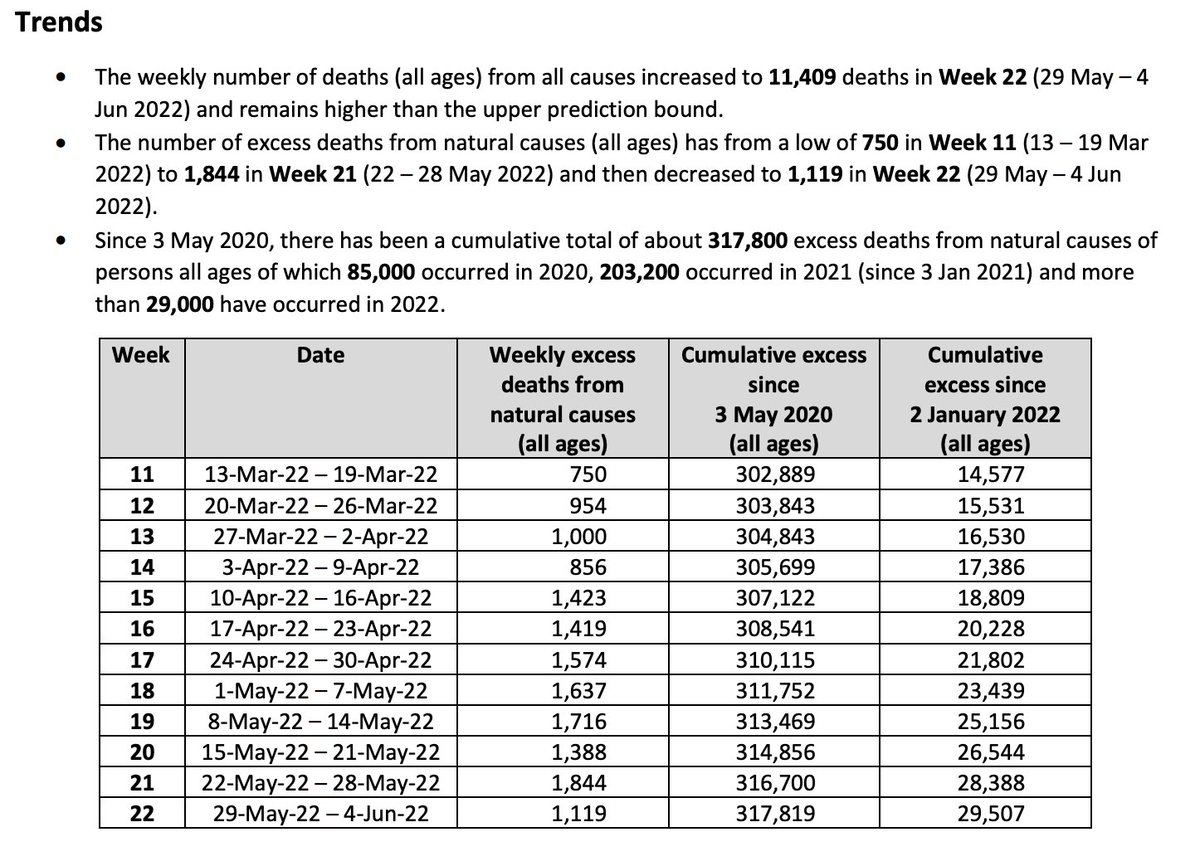
To anyone pointing to South Africa to suggest the impact of the omicron wave has been 'mild' or that the BA.4/5 haven't had much impact, I'd urge you to look at excess deaths. 29,500 excess deaths since Jan (omicron wave) & a peak of 1,844 excess deaths/wk during BA.4/5 wave.🧵
Data here:
samrc.ac.za/sites/default/…
Thanks to @MRCza for making this available. And Debbie Bradshaw, Ria Laubscher, Rob Dorrington, Pam Groenewald, @tomtom_m for reporting on this.
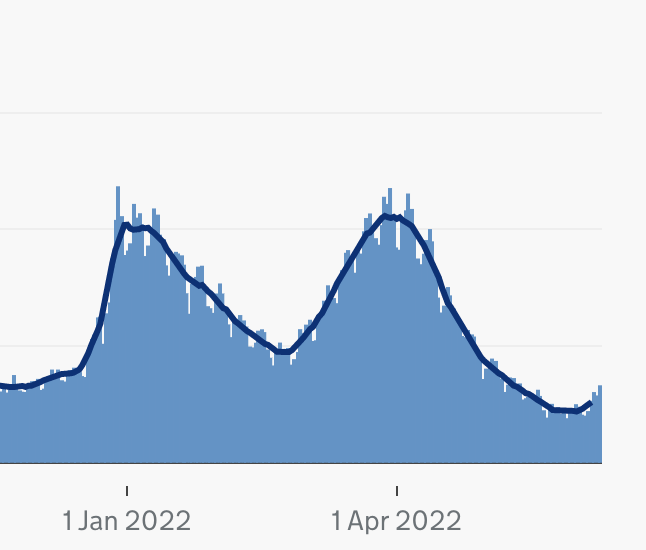
Yes, impact will be much lower than before with vaccination- but we've also let cases get much higher than before in England. For example in England prevalence hasn't dropped to below 1 in 70 (1.5%) this year- it's been continuously high. Hospitalisations are increasing now.
Read 8 tweets
Jun 10
Just a note: if you're a paediatrician/scientist suggesting 'immune debt' is a serious issue, at minimum, you will need to show that cases of a given infectious disease have *actually* increased post-pandemic. 🧵
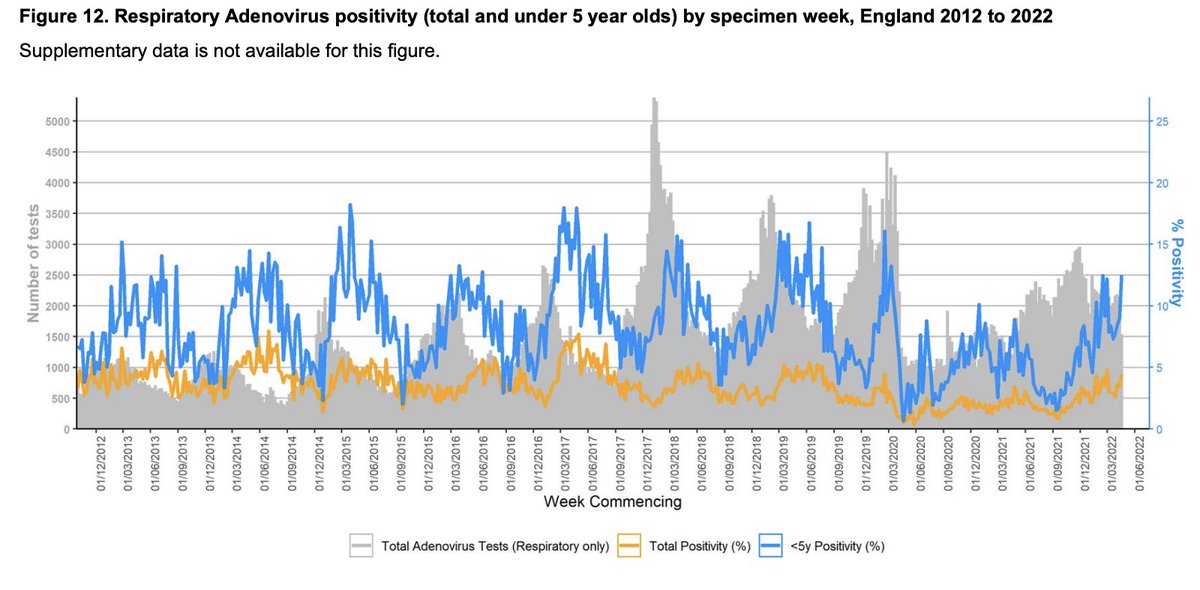
So, let's look at this. Adenovirus 'increase' was initially linked to immune debt. But did it increase? UKHSA reports show positivity remained exactly the same- perhaps even lower than previous yrs - and it didn't die out during the pandemic. So no.
Of course, the figure that's been highlighted is this one, which doesn't control for number of tests- so absolute numbers were seen to increase, but this seems to have been due to increased testing- as positivity remained the same. Welsh data is also consistent with this.
Read 16 tweets

Did Thread Reader help you today?

Support us! We are indie developers!


This site is made by just two indie developers on a laptop doing marketing, support and development! Read more about the story.

Become a Premium Member ($3/month or $30/year) and get exclusive features!

Become Premium

Don't want to be a Premium member but still want to support us?

Make a small donation by buying us coffee ($5) or help with server cost ($10)

Donate via Paypal

Or Donate anonymously using crypto!

Ethereum

0xfe58350B80634f60Fa6Dc149a72b4DFbc17D341E copy

Bitcoin

3ATGMxNzCUFzxpMCHL5sWSt4DVtS8UqXpi copy

Thank you for your support!

Follow Us on Twitter!

:(