
1/ Few incidents of military corruption in Russia were more shameless than the destroyer captain who stole the bronze propellers from his own ship, replacing them with cheaper steel ones to net 39 million rubles. A final 🧵 on the impact of corruption on Russia's military. 

2/ For the first thread in the series, on low- and medium-level military corruption, see below.
https://twitter.com/ChrisO_wiki/status/1531716422220632067
3/ For part 2, on corruption among Russia's military elite, see:
https://twitter.com/ChrisO_wiki/status/1536422857777025024
4/ Part 3, on the Russian military's problems with gangster culture, is here:
https://twitter.com/ChrisO_wiki/status/1539019204267057153
5/ And part 4, on the contribution of the Russian military's rules and structures to the problem of corruption:
https://twitter.com/ChrisO_wiki/status/1540428518642909184
6/ Russia's invasion of Ukraine has revealed many flaws in the Russian military's equipment: everything from medical kits and rations that are years out of date, to soldiers having to buy body armour on Russia's equivalent of eBay, to vehicle tires falling apart.
7/ However, it's difficult to disentangle the effects of corruption from other problems such as incompetence and mismanagement. So this thread is necessarily a bit more speculative than its predecessors. However, some points are apparent.
8/ Quantifying the scale of corruption is hampered by the fact that a lot of it is never disclosed or prosecuted. Statements by the Russian government suggest that it's costing huge amounts annually, and that losses are growing.
9/ According to the Russian government, corruption caused losses of at least 58 billlion rubles ($1 bn) in 2020, up from 55 billion rubles in 2019. Out of 10,879 officials charged with corruption, 1,337 (12.3%) were from the Ministry of Defence - the second biggest cohort.

10/ The largest number of recorded corruption-related crimes were committed in the field of public order and security, accounting for 19.9% (4,521) of the total. The Ministry of Defence recorded a 30% jump in the number of persons charged with corruption.

11/ Although it didn't say how much corruption cost the Russian military, in 2010 Russian prosecutors reported that losses had doubled between 2008 and 2009 to over 3 billion rubles in a single year. The Moscow newspaper Nezavisimaya Gazeta calculated what this could have bought:
12/
* 50-55 T-90 tanks
* 75-80 BMP-3 or BMP-4 infantry fighting vehicles
* 3-4 Su-30 or MiG-35 aircraft
* 8-10 Mi-28N or Ka-52 combat helicopters
* One Steregushchiy-class corvette
* 1-2 Topol-M nuclear missiles
* 3-4 reconnaissance satellites
* 50-55 T-90 tanks
* 75-80 BMP-3 or BMP-4 infantry fighting vehicles
* 3-4 Su-30 or MiG-35 aircraft
* 8-10 Mi-28N or Ka-52 combat helicopters
* One Steregushchiy-class corvette
* 1-2 Topol-M nuclear missiles
* 3-4 reconnaissance satellites

13/
* a year's worth of food for 130,000 soldiers
* military uniforms for 300-350,000 personnel
* two apartment buildings for 150-200 military families.
So it's apparent that military fraud and embezzlement have had very real costs in terms of missed opportunities.
* a year's worth of food for 130,000 soldiers
* military uniforms for 300-350,000 personnel
* two apartment buildings for 150-200 military families.
So it's apparent that military fraud and embezzlement have had very real costs in terms of missed opportunities.
14/ According to Russia's former foreign minister Andrey Kozyrev, much of the money that Russia has spent on modernising its military "was stolen and spent on mega-yachts in Cyprus." Russia's defence spending reflects this.

15/ Between 2001-2004, Putin increased Russia's defence budget from 55 billion rubles to 188 billion. Yet, reportedly, almost no money reached defence contractors in 2004, disappearing instead within the Russian Defence Ministry system.
16/ In 2008 alone, 20 generals and admirals were prosecuted for corruption. 1,611 officers were convicted, of whom 160 were commanders of military units. Officers were reportedly responsible for 1 in 4 military corruption offences. Despite this, case numbers were increasing.

17/ That's the big picture. Let's look at the impact that corruption has on the ground, starting with recruitment. As many as 70% of those conscripted gain exemption, often through bribery. Exemption 'tickets' reportedly cost between 50,000-500,000 rubles ($950-$9,500).

18/ Those who don't get exempted are disproportionately sick or poorly fed. More than 30% of Russian Air Force conscripts were reported in 2007 to be "mentally unstable," 10 percent suffered from alcohol and drug abuse, and 15 percent were ill or malnourished.

19/ So even before they join, the average Russian soldier is more likely to be sick and starved than the general population. Do things improve after that? Not at all.
20/ Let's consider food: corruption often means that soldiers are served with rotten, mouldy food contaminated with bacteria. Scams by suppliers often mean that instead of what has been ordered, cheaper food in smaller portions is served. Poor hygiene causes e. coli outbreaks.

21/ Living accommodation can be terrible as well. In the Russian Navy's training centre located in Lomonosov, Leningrad Region, conscripts reportedly faced worse conditions than convicts. They were described being forced to live in abandoned barracks buildings.

22/ "The guys were shoved into an abandoned part where there is no canteen. Imported food is disgusting. There is no hot water. There is mould, dampness and one dryer for 180 people in the barracks."
23/ "Drying socks on radiators is not allowed, everyone wears wet clothes and gets sick. At the same time, there are no medicines, and the paramedic gives only soda and salt to gargle."
24/ Engineering conscripts in Volgograd faced similar conditions: "There are no elementary medicines in the unit's medical centre, and what parents bring must be hidden from the officers (if it is not taken away immediately after receiving the package)."

25/ The consequences of neglect and corruption can be fatal. In July 2015, a barracks in Omsk collapsed due to poor construction, lack of maintenance and corruption by the contractors responsible for repairing it two years earlier. 24 soldiers died.

26/ The brutal exploitation of Russian troops by their officers and fellow soldiers also has a morally corrosive effect, brutalising everyone concerned. Corruption and exploitation are part of the ethos, and are reflected in the way they treat civilians who get in their way.

27/ A common form of exploitation has been the use of junior personnel - especially conscripts - as unpaid labour on construction projects or in factories, for the benefit of corrupt officers. This seriously impacts their training time, leaving them unprepared for combat.

28/ Russian troops are paid in cash, providing opportunities for officers to simply steal their wages. One stole the salary of 200 subordinates - amounting to 2 million rubles - and spent it on himself and his family. It's easy to imagine how demoralised his men must have been.

29/ Theft and corruption also mean that Russian troops have been ill-equipped when they go into battle. Russian milbloggers have been crowdfunding for donations to buy basic supplies for troops - often purchased online from corrupt logistics troops who steal from army depots.

30/ In the early days of the invasion of Ukraine, many Russian vehicles were abandoned because they ran out of fuel. Russian soldiers were reported to have illicitly sold their vehicles' fuel to Belarusians before the invasion, unaware that they'd need it.
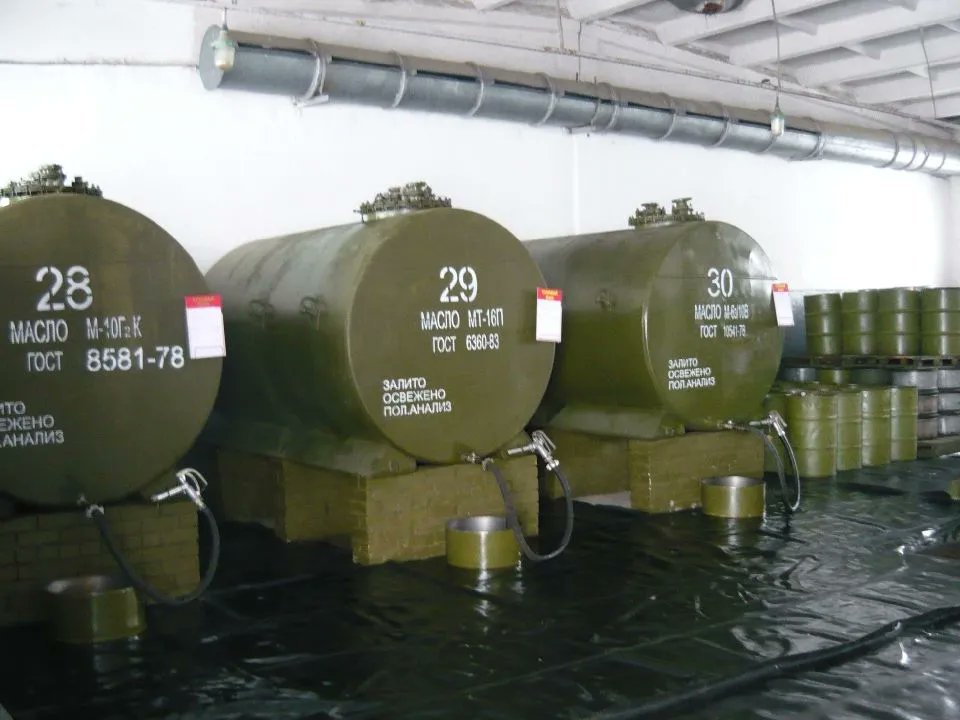
31/ Fuel embezzlement is commonplace in the Russian military, to the point that fuel is viewed as a 'second currency' (after rubles). In one 2019 instance, three sailors were convicted of selling 126 tons of fuel in Sebastopol for 3.6 million rubles. Petty fuel theft is frequent.
32/ Breakdowns appear to have also been frequent, enabling the Ukrainians to capture numerous tanks, trucks and armoured vehicles in an intact condition, able to be used against the Russians. Again, corruption is almost certainly a factor.

33/ In one example, Major General Pyotr Piven, responsible for maintaining the Baltic Fleet's armoured vehicles, falsely certified the repair of 4 tanks and 10 infantry fighting vehicles. The contractor didn't do the work but got 5.7 million rubles, likely sharing some as bribes.
34/ Component substitution is a frequent scam. Russian trucks and even high-end wheeled systems were abandoned because the tires fell apart, reportedly because cheap Chinese tires had been substituted for better but more expensive Russian ones.
https://twitter.com/i/status/1500597046583205889/
35/ The impact of corruption on operational performance is likely to have been particularly serious when it came to communications. This is the R-187P Azart radio, dubbed 'the green crocodile' - an advanced software-defined radio said to be immune to interception.

36/ Every stage of the Azart's development has been hindered by corruption. It was commissioned after Russia's 2008 invasion of Georgia was marred by serious communications breakdowns. Originally an existing system was to have been improved, but that didn't happen.

37/ Instead, a company with close links to then-president Dmitri Medvedev was awarded an 18 billion ruble contract in 2009 to develop and produce a wholly new radio (with all the risk that entailed). Every soldier was supposed to have received one.

38/ Instead, 13 years later, only about 60,000 Azarts are estimated to have been issued to Russia's 900,000 military personnel. If every single Azart had been issued to the troops involved in the invasion of Ukraine, there would still only be enough for 1 in 3 of those troops.
39/ The number of Azarts actually in the hands of Russian troops is certainly less than 60,000. Stolen Azarts have appeared regularly on Avito, Russia's equivalent of eBay, for around 40,000 rubles - they cost 300,000. Not great for a supposedly secret device.

40/ And the cherry on the cake is that what's inside the Azart's case isn't even Russian. The contractors and corrupt officials stole a third of the 18 billion ruble budget by substituting cheap Chinese components for military-spec Russian ones and pocketing the difference.
41/ The result has been a communications disaster for Russia's forces in Ukraine. Instead of using Azarts, Russian troops have used mobile phones and cheap Chinese-made analogue radios, making it very easy for the Ukrainians to listen in - and also drop artillery on them.

42/ According to the New York Times in March, "many Russian generals are talking on unsecured phones and radios. In at least one instance ... the Ukrainians intercepted a general’s call, geolocated it, and attacked his location, killing him and his staff."
https://twitter.com/i/status/1520567045229887488/
43/ It will likely take years for Russia and outside commentators to work out all the ways in which corruption has harmed its efforts in Ukraine. But it's very likely that Russia's efforts to conquer all of Ukraine will fail partly because of the impact of military corruption.
44/ If there had been no corruption, Russia would have had more and better equipment, better trained troops with higher morale, and plenty of fuel and food. That might have been enough to enable it to seize Kyiv, Kharkiv and Odesa in the early days of the war.
45/ But you go to war with the army you have, as Donald Rumsfeld once said. In Russia's case that means going to war with an army that has been hollowed out by corruption at every level. Kleptocracy has consequences. /end

@OSINTEng @RALee85 @Blue_Sauron @Osinttechnical @TrentTelenko @MarkHertling @DomNicholls @Nrg8000 @UAWeapons @TrueFactsStated @WarintheFuture @KofmanMichael @michaeldweiss @aravosis @JoshManning23 @general_ben @tomiahonen @PToveri @MarkGaleotti @MishaGlenny @mdmitri91
• • •
Missing some Tweet in this thread? You can try to
force a refresh






