THREAD What the founding fathers thought about race. I know that this stuff is well known but want to have it all in one place to respond to people who say America was built on ideas: …z1nq4jj237m22-wpengine.netdna-ssl.com/wp-content/upl… 
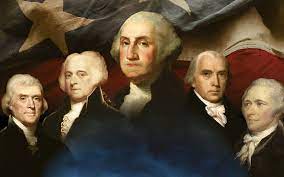
In 1770 40% of white households in Manhattan owned slaves, Jefferson wanted black slaves to removed beyond the point of mixture when they were freed...
9 of the first 11 presidents owned slaves. Madison served as the Chief executive of the American Colonization society to repatriate blacks back to Africa
The federalist papers praised Americas homogeneity. The first naturalization law only applied to whites, and blacks couldn't be citizens until ratification of the 14th amendment in 1868
There were many anti-abolition riots in the north because people feared it would lead to miscegenation...
Many supported abolition only if it lead to blacks being sent back to Africa. 44 of 50 states had laws against miscegenation at some point
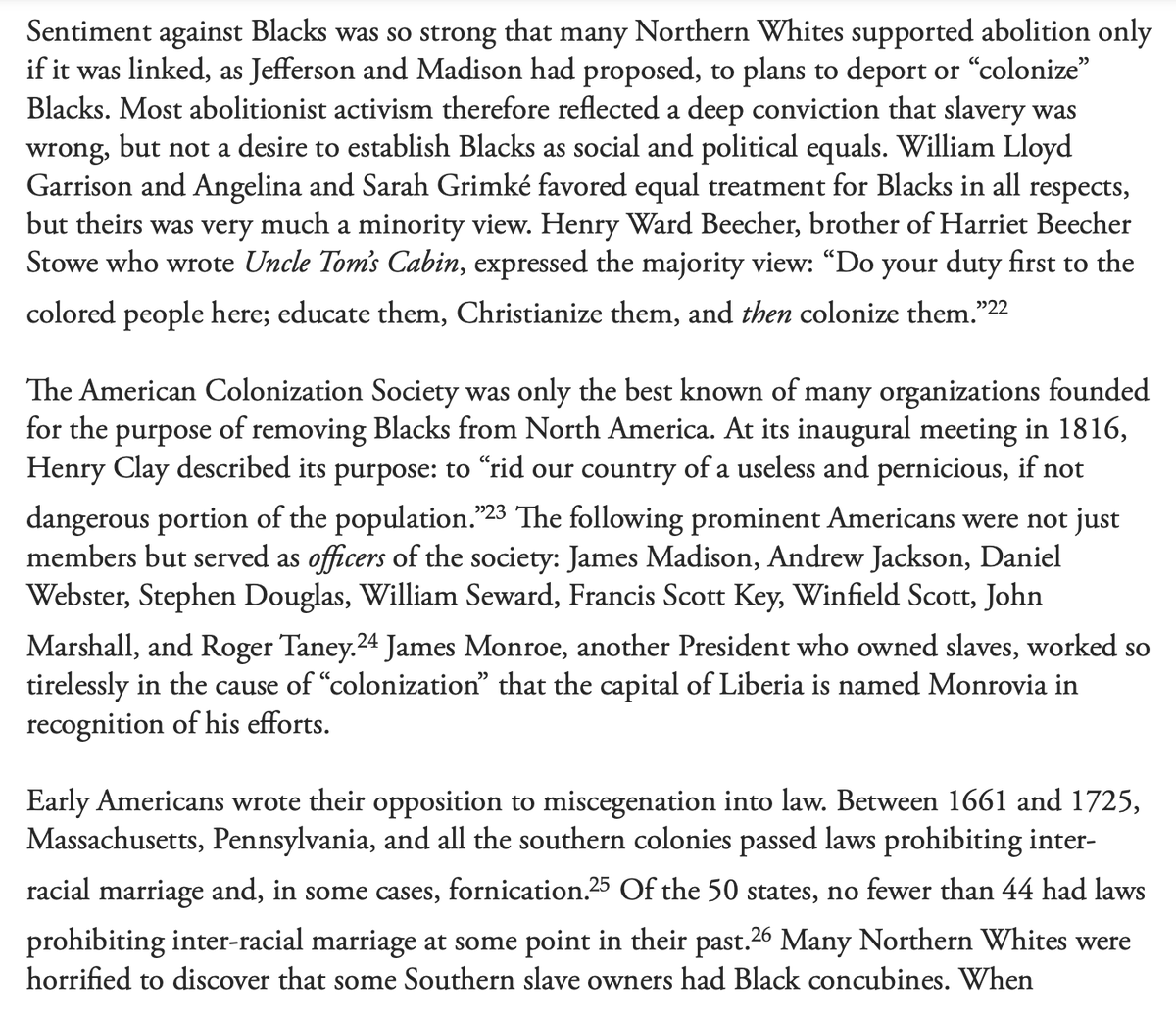
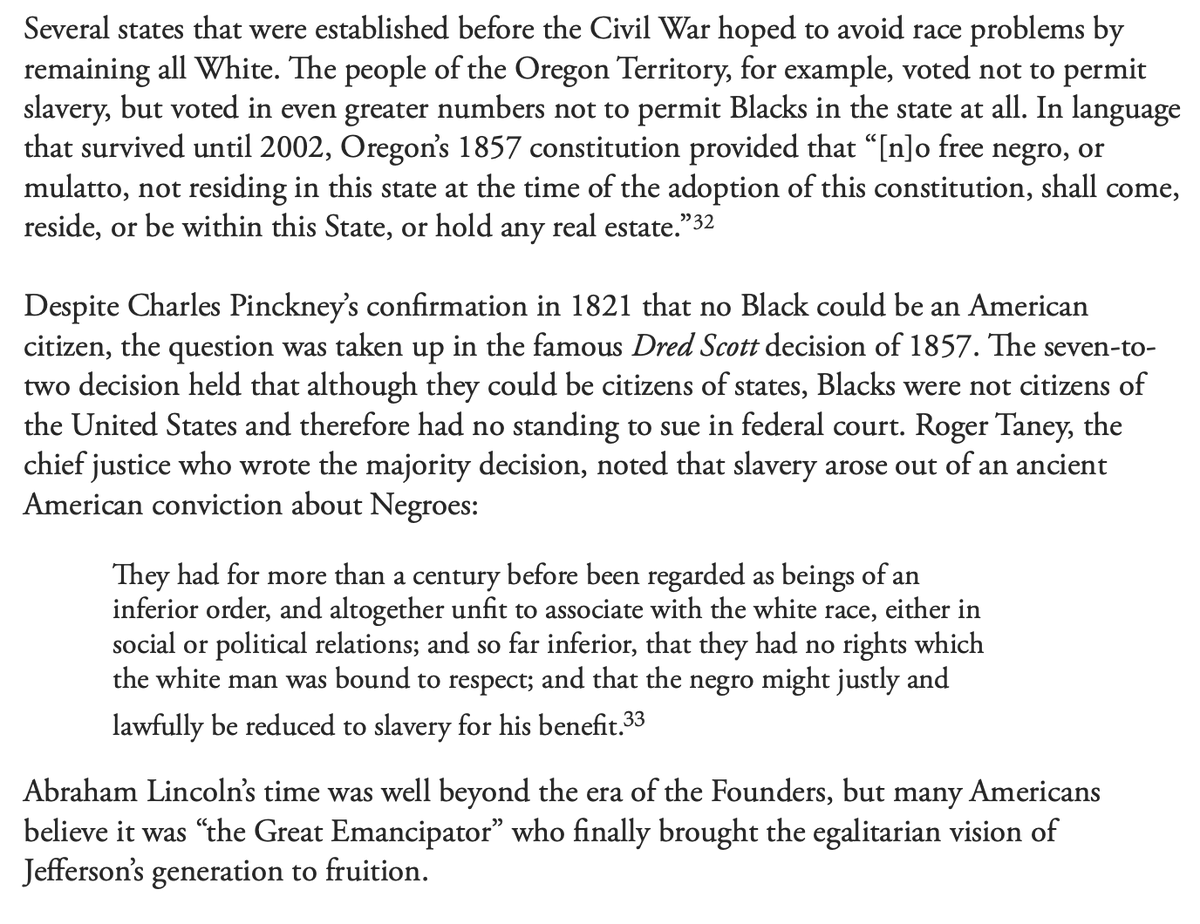
Oregon tried to avoid the race problem by banning blacks altogether. That provision was in the constitution until 2002.
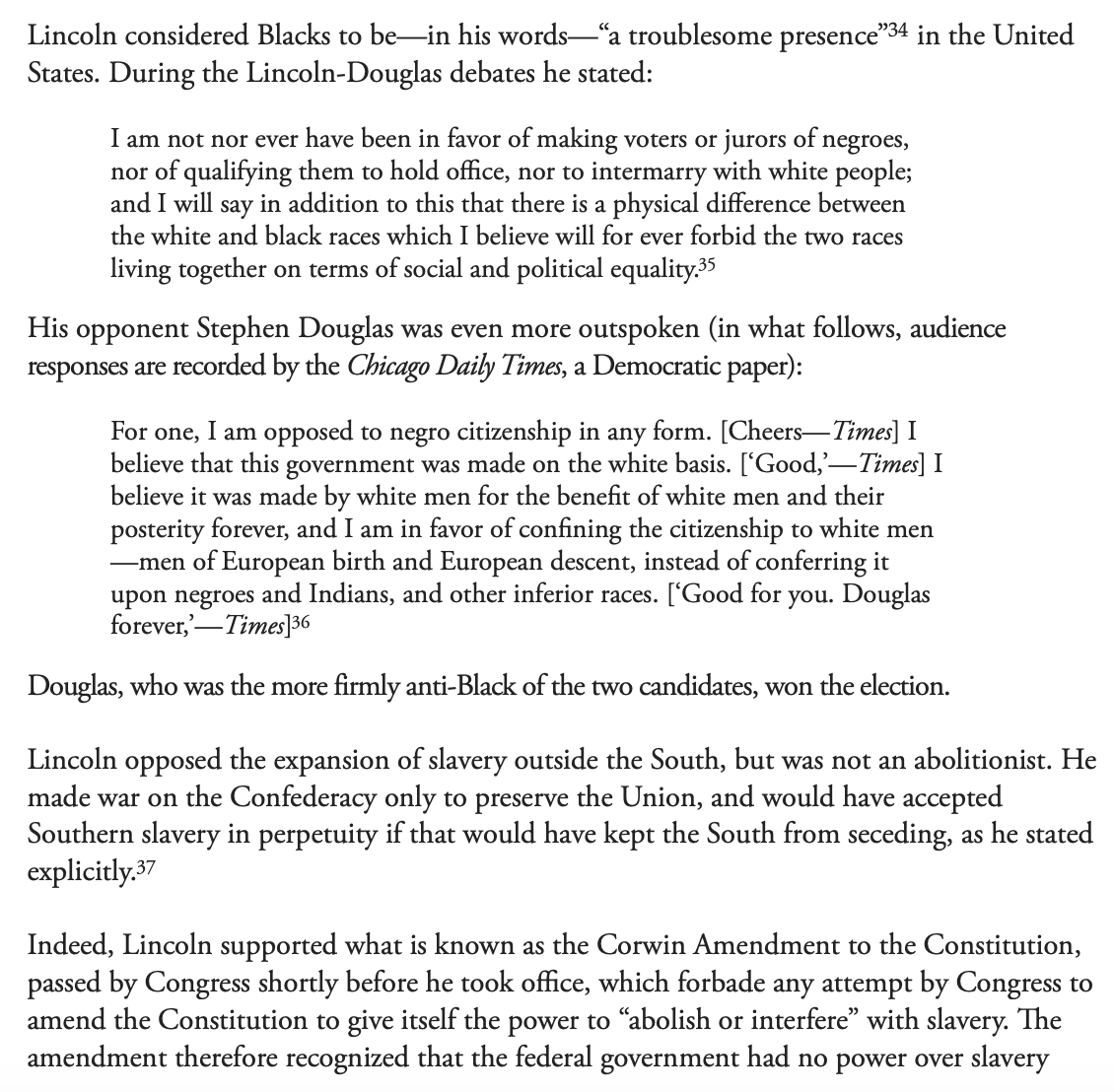
Lincoln was not a racial egalitarian or an abolitionist either...
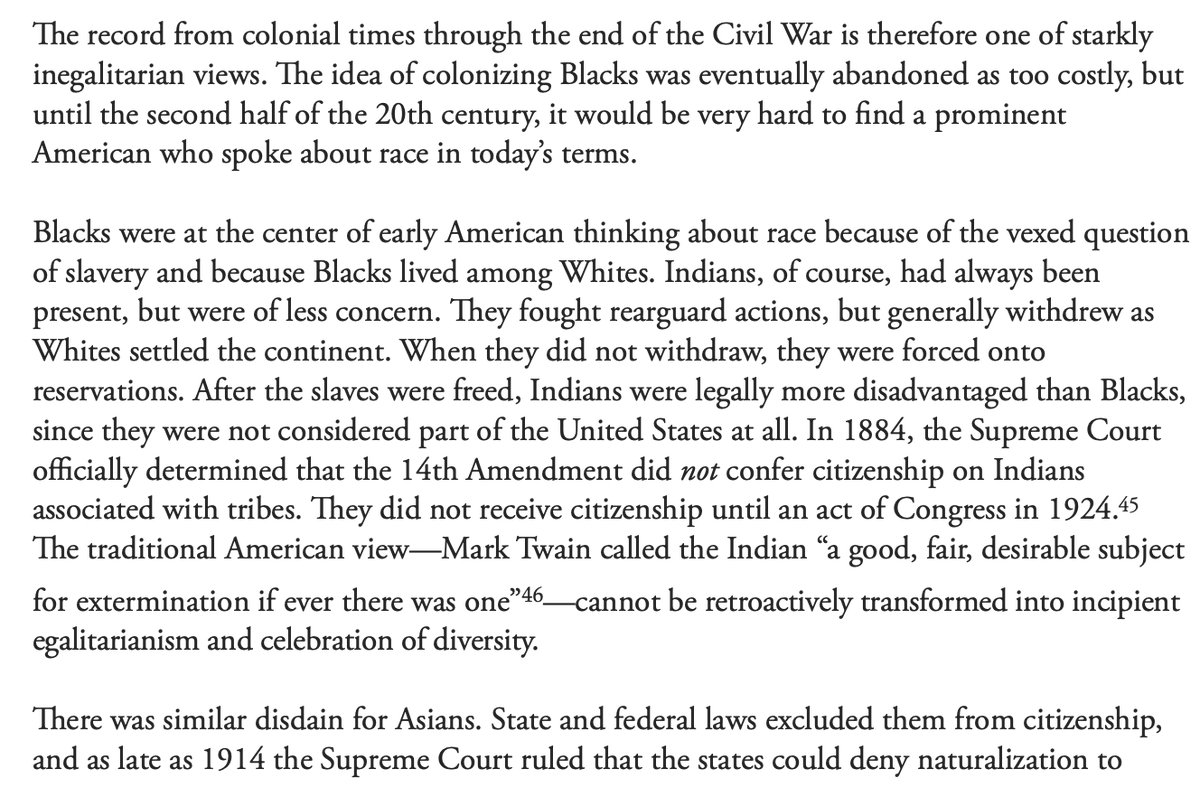
Indians were not citizens until 1924 and there were also laws restricting Asians from immigrating
You can find US presidents expressing inegalitarian sentiments all the way up to Kennedy.
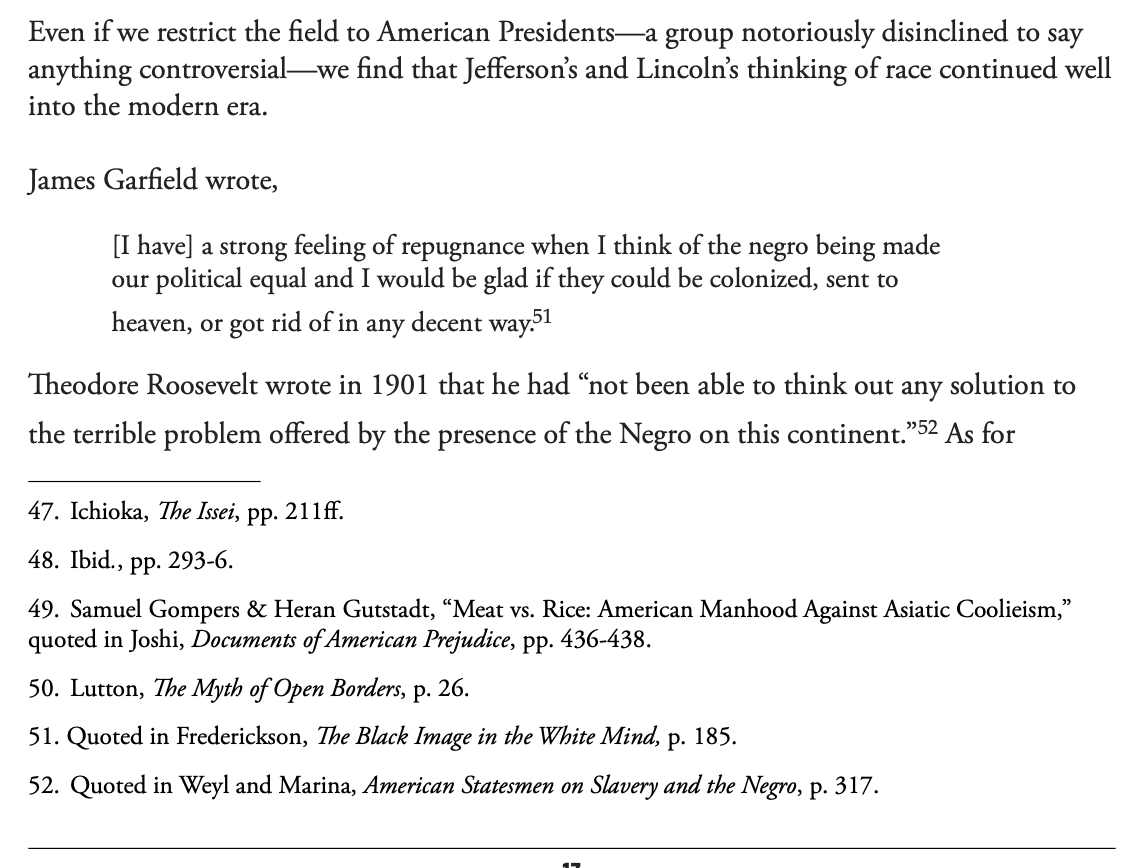
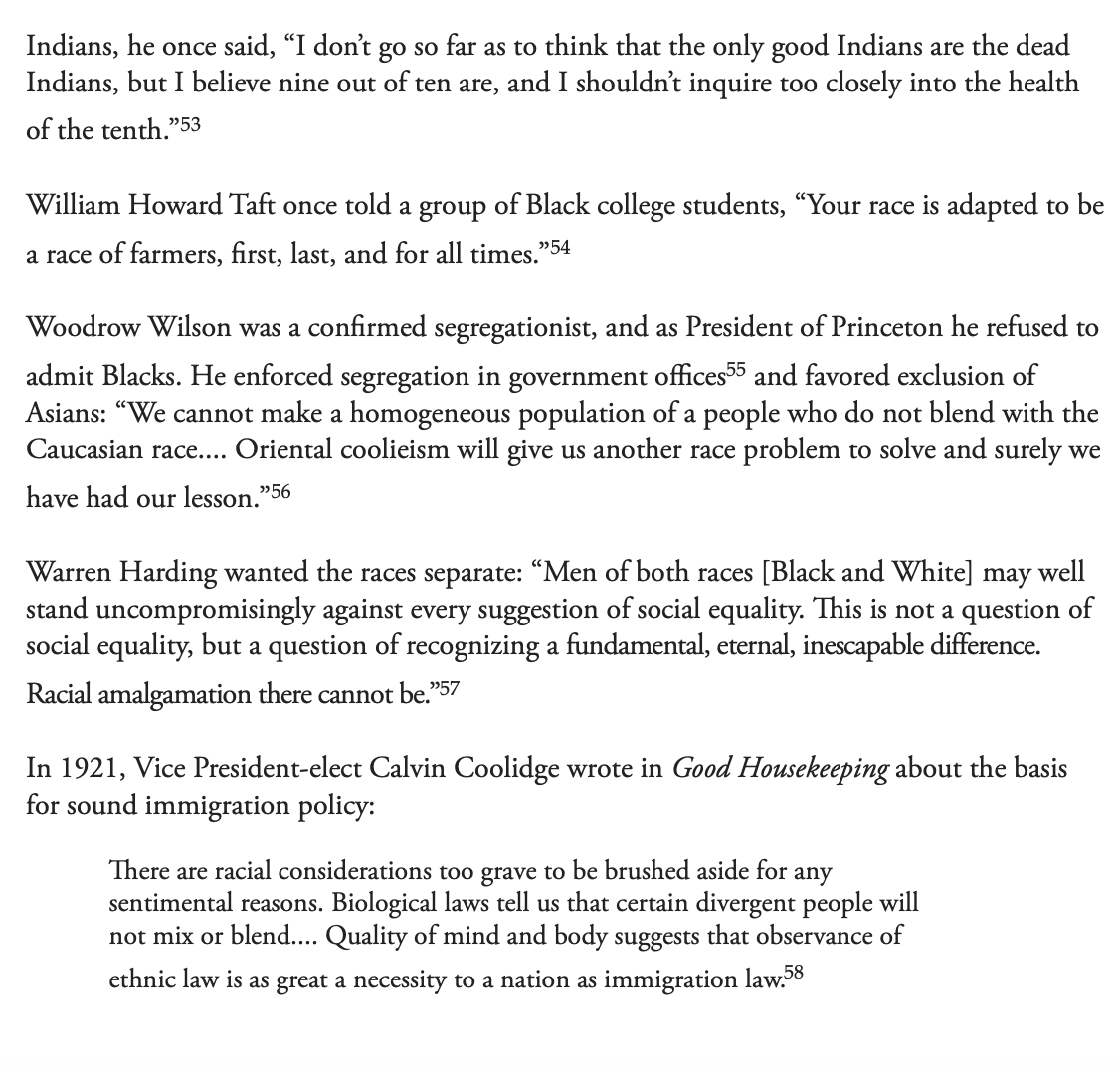
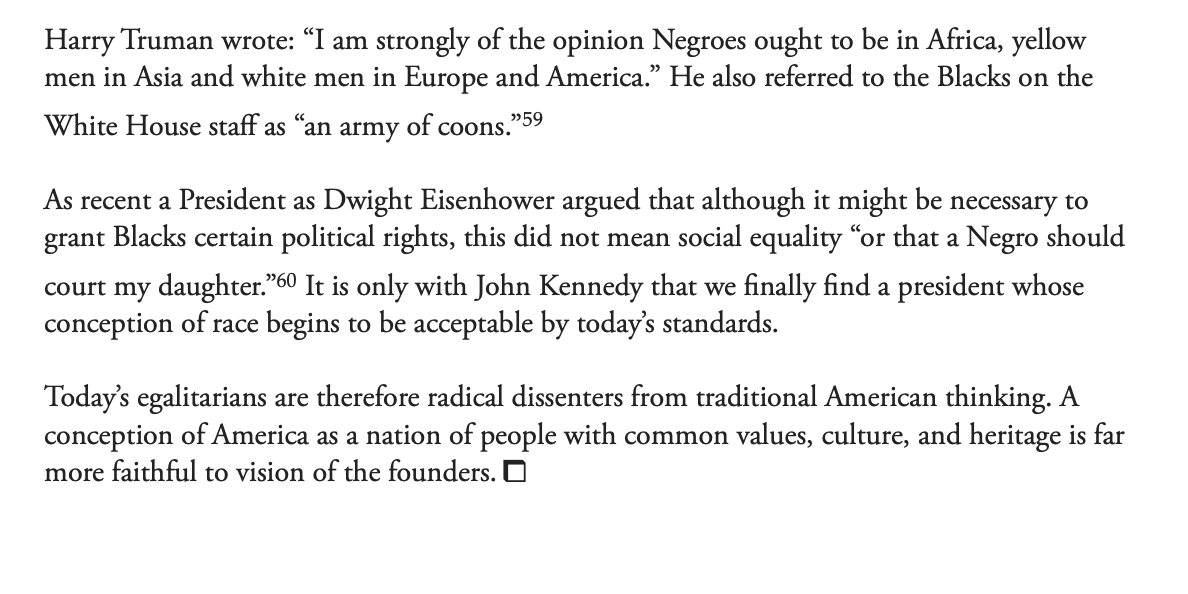
Even after that Reagan and Nixon can be heard laughing about calling blacks monkeys: theatlantic.com/ideas/archive/…
So to summarize most prominent Americans expressed extremely inegalitarian views about race until just a few decades ago, and enacted inegalitarian policies.
Today this is sometimes acknowledged when convenient for the narrative, but a white person who expresses the views of the founders is un-american. Schroedingers America. The past is evil and racist, but simultaneously you betray our principles if you want to keep America white.
• • •
Missing some Tweet in this thread? You can try to
force a refresh