Let's talk complexity.
A thread about the F-16 🧵
The F-16 is a capable fighter, which is in service with 11 NATO air forces (Norway retired theirs this January). It's the fighter Ukraine will most likely receive from the US.
1/n
A thread about the F-16 🧵
The F-16 is a capable fighter, which is in service with 11 NATO air forces (Norway retired theirs this January). It's the fighter Ukraine will most likely receive from the US.
1/n

I explained why it will be the F-16 in a short 1 April thread.
I am all for giving Ukraine 80-90 F-16, as it is a far better fighter than the junk russia has.
However Ukrainian Su-27 or Mig-29 pilots can not master a F-16 in a few weeks.
2/n
I am all for giving Ukraine 80-90 F-16, as it is a far better fighter than the junk russia has.
However Ukrainian Su-27 or Mig-29 pilots can not master a F-16 in a few weeks.
2/n
https://twitter.com/noclador/status/1510001675670536194
First let's talk air bases: the moment Ukraine lands F-16 at its air bases, russia will hammer these bases with cruise and ballistic missiles.
So before a F-16 can fly to Ukraine, each air base needs a Patriot air defense battery to protect it from russian attacks.
3/n
So before a F-16 can fly to Ukraine, each air base needs a Patriot air defense battery to protect it from russian attacks.
3/n

These batteries need to include PAC-2/GEM+ missiles against aerial threats, and PAC-3 and PAC-3 MSE missiles against missile threats.
So before any F-16 can arrive Ukrainian troops need to be trained to operate Patriot batteries... and that takes 30 weeks.
4/n
So before any F-16 can arrive Ukrainian troops need to be trained to operate Patriot batteries... and that takes 30 weeks.
4/n

As for F-16 training: the basic course is 9 months and includes 62 flights. And the basic course comes AFTER 15 months of initial flight training with T-6 and T-38 (photo).
Ukrainian pilots can skip the initial training, but I doubt the intense basic course can be reduced.
5/n
Ukrainian pilots can skip the initial training, but I doubt the intense basic course can be reduced.
5/n

After the basic course the month-long suppression of enemy air defenses (SEAD) course begins. So in the best case scenario Ukrainian pilots can take to the skies after 10 months of training in the US... but also 100s of maintainers and weapon technicians need to be trained.
6/n
6/n

I don't know how long ground crew training is, but it too will take many months, because you can't just mount missiles and bombs onto a F-16. First you need to mount racks and rails:
To use GBU-39/B bombs you have to mount the BRU-61/A bomb rack (photo under the right wing).
7/n
To use GBU-39/B bombs you have to mount the BRU-61/A bomb rack (photo under the right wing).
7/n

To attach two JSOW or JDAM bombs to a pylon you have to mount a BRU-57/A bomb rack (photo, and in the photo above mounted under the F-16's left wing).
A F-16 communicates with the racks and rails, which in turn communicate with the weapons.
8/n
A F-16 communicates with the racks and rails, which in turn communicate with the weapons.
8/n

Air-to-air missiles: want to use AIM-9X Sidewinder underwing (photo) - mount the LAU-129A/A rail launcher, unless you want to mount the Sidewinder on the wingtip, then you need the 16S210.
Want to use AIM-120D AMRAAM - LAU-129A/A again, even if you mount it on the wingtip.
9/n
Want to use AIM-120D AMRAAM - LAU-129A/A again, even if you mount it on the wingtip.
9/n

The F-16 is an extremely complex combination of dozens of weapon systems and if pilots and ground crew don't receive months of training, they won't be able to properly use the many features of the F-16... worse they might damage the F-16 by improper use.
10/n
10/n

Let's look at SEAD missions to understand how complex the F-16 is and how many systems a pilot has to master before he can use it.
For a SEAD mission two F-16 will be loaded out with:
• 2x AIM-9X Sidewinder air-to-air missiles
• 2x AIM-120D AMRAAM air-to-air missiles
11/n
For a SEAD mission two F-16 will be loaded out with:
• 2x AIM-9X Sidewinder air-to-air missiles
• 2x AIM-120D AMRAAM air-to-air missiles
11/n
• 2x AGM-88E AARGM air-to-surface anti-radiation missiles
• 1x AN/AAQ-33 Sniper Advanced Targeting Pod
• 1x AN/ASQ-213 HTS to locate radar guided systems
• 1x AN/ALQ-184(V)9, which combines a ALQ-184 ECM electronic countermeasures pod with a AN/ALE-50 towed decoy system
12/n
• 1x AN/AAQ-33 Sniper Advanced Targeting Pod
• 1x AN/ASQ-213 HTS to locate radar guided systems
• 1x AN/ALQ-184(V)9, which combines a ALQ-184 ECM electronic countermeasures pod with a AN/ALE-50 towed decoy system
12/n
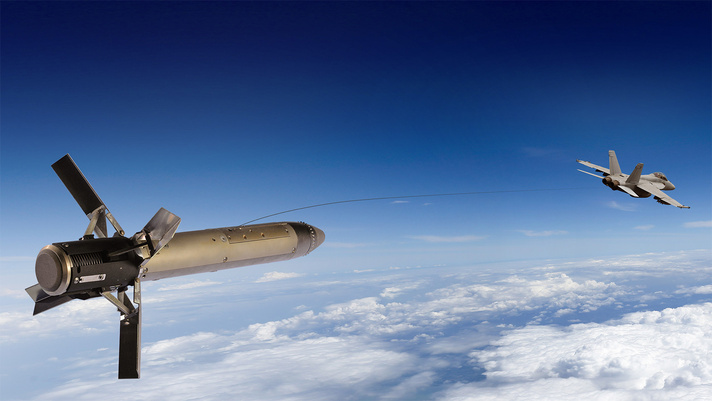
This leaves two free pylons, where either fuel tanks or additional missiles and bombs can be mounted.
These two F-16 on a SEAD mission choose to two mount fuel tanks (and use the ALQ-184 ECM pod without AN/ALE-50).
These two pilots will fly along an enemy's air defense
13/n
These two F-16 on a SEAD mission choose to two mount fuel tanks (and use the ALQ-184 ECM pod without AN/ALE-50).
These two pilots will fly along an enemy's air defense
13/n

zone and try to incite enemy air-defense sites to target them with their radars.
Once the AN/ASQ-213 detects an active enemy radar the pilots will fire a AGM-88E missile, which will autonomously attack and destroy the enemy radar.
The pilots will then use the AN/ALQ-184(V)9
14/n
Once the AN/ASQ-213 detects an active enemy radar the pilots will fire a AGM-88E missile, which will autonomously attack and destroy the enemy radar.
The pilots will then use the AN/ALQ-184(V)9
14/n
to protect their planes from surface-to-air missiles the enemy air-defense site might fire at them.
If enemy fighters approach the F-16 will use their AIM-120D to attack the enemy planes. With their AN/AAQ-33 Sniper pods (photo) they can then fly over the enemy air-defense
15/n
If enemy fighters approach the F-16 will use their AIM-120D to attack the enemy planes. With their AN/AAQ-33 Sniper pods (photo) they can then fly over the enemy air-defense
15/n

site and check if their AGM-88E strike was successful.
If the F-16 carry GBU-39B/B bombs they could use these in combination with the Sniper's laser targeting to strike the remaining missile launchers and vehicles of the enemy air-defense site.
Photo: F-16 SEAD fighters
16/n
If the F-16 carry GBU-39B/B bombs they could use these in combination with the Sniper's laser targeting to strike the remaining missile launchers and vehicles of the enemy air-defense site.
Photo: F-16 SEAD fighters
16/n

F-16 pilots need a month to master the basics of SEAD missions; and as Ukraine will have to fly SEAD missions before its F-16 can start bombing russian positions, there is no way this training can be skipped.
So the idea of Ukrainian pilots being able to fly F-16 after just
17/n
So the idea of Ukrainian pilots being able to fly F-16 after just
17/n
a few weeks of training is absurd. If pilots would get just a few weeks of training, then they would be shot down by russian air-defense systems and fighters within days of arriving in Ukraine... if the fighters would even survive the first night on air bases without Patriot
18/n
18/n
systems to protect them from missile strikes.
Yes, Ukraine needs and deserves to receive F-16 as soon as possible, but it will take 8-10 months before F-16 fly in Ukrainian skies.
That is why I tweeted on 1 April that the training of Ukrainian pilots needs to start ASAP.
19/n
Yes, Ukraine needs and deserves to receive F-16 as soon as possible, but it will take 8-10 months before F-16 fly in Ukrainian skies.
That is why I tweeted on 1 April that the training of Ukrainian pilots needs to start ASAP.
19/n

And if Ukraine wants to make the most out of its F-16, then KC-46 Pegasus aerial tankers and E-7A Wedgetail airborne early warning and control aircraft need to be delivered too.
To interdict russian aircraft Ukraine needs radars peeking into russia and Belarus.
20/n
To interdict russian aircraft Ukraine needs radars peeking into russia and Belarus.
20/n
Ground based radar is vulnerable to russian cruise missile strikes and the F-16C/D AN/APG-68(V)9 radar has a range of 300 km and arc of 120°, while the E-7A Wedgetail radar has a range of 600 km and arc of 360°.
Four E-7A Wedgetail will give Ukraine 24/7 airspace coverage.
21/n
Four E-7A Wedgetail will give Ukraine 24/7 airspace coverage.
21/n

To interdict russian fighters approaching Ukrainian positions F-16 need to be in the air 24/7, which means that they either need to mount fuel tanks (reducing speed & weapons loadout) or need to be refueled while on patrol.
So Ukraine should get four KC-46 Pegasus tankers.
22/n
So Ukraine should get four KC-46 Pegasus tankers.
22/n

But again: flying KC-46 Pegasus and refueling F-16 takes time to master, training for which has to begin now. Same as for operating E-7A Wedgetail.
The US can provide Ukraine with everything needed to rebuild Ukraine's Air Force, but training needs to start NOW.
23/n
The US can provide Ukraine with everything needed to rebuild Ukraine's Air Force, but training needs to start NOW.
23/n
I didn't serve in the air force and Italy operated F-16 only for a short time, so my F-16 knowledge is limited, but I know three things:
1) Ukraine needs F-16
2) it will take almost a year to get F-16 to Ukraine
3) and DC's dithering is wasting time Ukraine doesn't have
24/.
1) Ukraine needs F-16
2) it will take almost a year to get F-16 to Ukraine
3) and DC's dithering is wasting time Ukraine doesn't have
24/.

This complexity applies to everything - send Ukraine M1A2 SEPv3 Abrams tanks, then you also have to send M2A4 Bradley infantry fighting vehicles to protect the Abrams from russian infantry with anti-tank guided missiles. And to make the most of the Abrams Ukraine needs
PS 1/n
PS 1/n


M88A2 Hercules armored recovery vehicles, M1150 Assault Breacher Vehicles, and M1074 Joint Assault Bridge System vehicles... and an 100s of fuel trucks and a whole lot of maintainers and technicans.
PS 2/n
PS 2/n


Or give Ukraine MH-60R Seahawk helicopters to hunt and sink russian submarines, then Ukraine needs F-16 with AGM-84N Harpoon Block II+ anti-ship missiles to bottle up russian surface combatants in Sevastopol harbor, and F-16 with AIM-120D AMRAAM air-to-air missiles to
PS 3/n
PS 3/n

defeat russian fighters trying to interdict the Seahawks, and Ukraine will need F-16 in the SEAD role to neutralize russian S-300/400 air defense systems in Crimea first.
The least complex and thus fastest way to help Ukraine is more M142 Himars (at least 48 in total),
PS 4/n
The least complex and thus fastest way to help Ukraine is more M142 Himars (at least 48 in total),
PS 4/n
with all the low-rate-production ER-GMLRS rockets, 1000s of standard GMLRS rockets, and 100+ M57 and M57E1 ATACMS missiles.
Also a lot more self-propelled artillery. And we must force Israel into delivering IAI Harpy and IAI Harop drones, as well as Spike NLOS missiles.
PS 5/.
Also a lot more self-propelled artillery. And we must force Israel into delivering IAI Harpy and IAI Harop drones, as well as Spike NLOS missiles.
PS 5/.
• • •
Missing some Tweet in this thread? You can try to
force a refresh