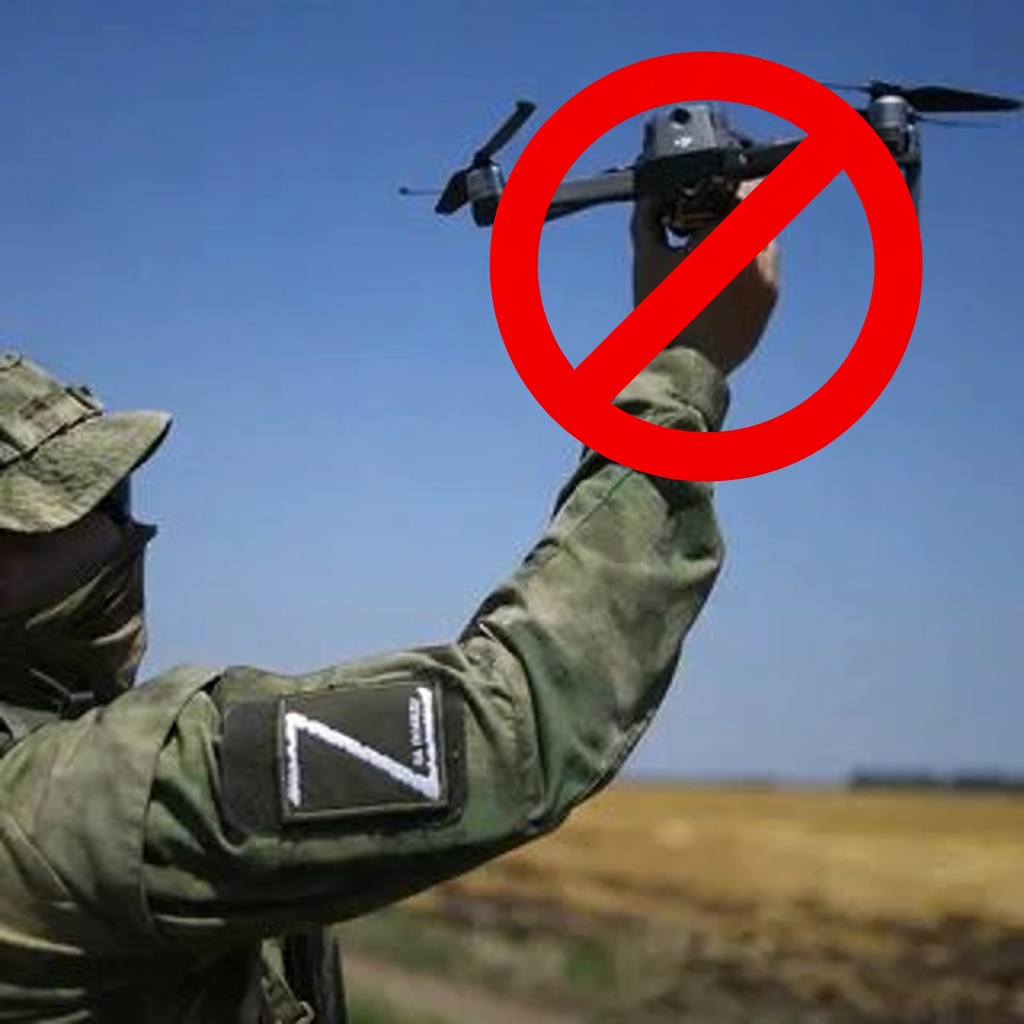
Marcin @Wyrwal of onet.pl has published a fascinating piece on how Ukrainian software developers are using artificial intelligence (AI) to improve the aim of their bomber drones. It deserves attention in English, so here's a 🧵 to summarise it. /1 

I've previously written about Ukraine's drone warfare tactics - see below: /2
https://twitter.com/ChrisO_wiki/status/1520561969153073153
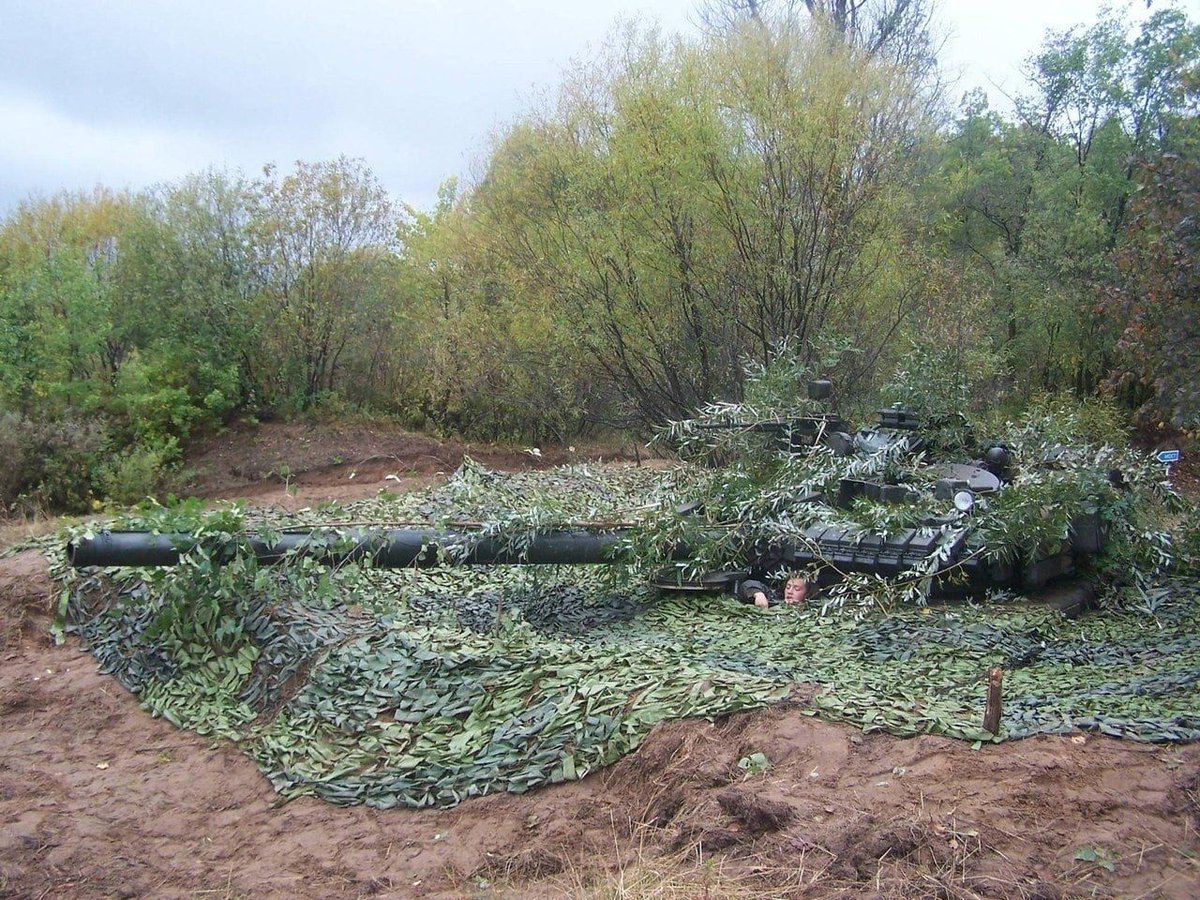
Marcin reports that Ukraine's large community of software developers have put their skills to use to resolve a key problem for drone pilots: identifying and accurately hitting camouflaged Russian targets. /3
The developers are working for the Ukrainian military's 'Delta' initiative, which seeks to find technological ways of fighting the Russian invasion. The military sets tasks which development teams try to find solutions for. /4
Two developers had worked before the war on scanning objects for commercial purposes. Colleagues who went to the front lines highlighted the difficulties they faced in targeting hidden Russian hardware. The developers realised their AI tools could be used to defeat camouflage. /5
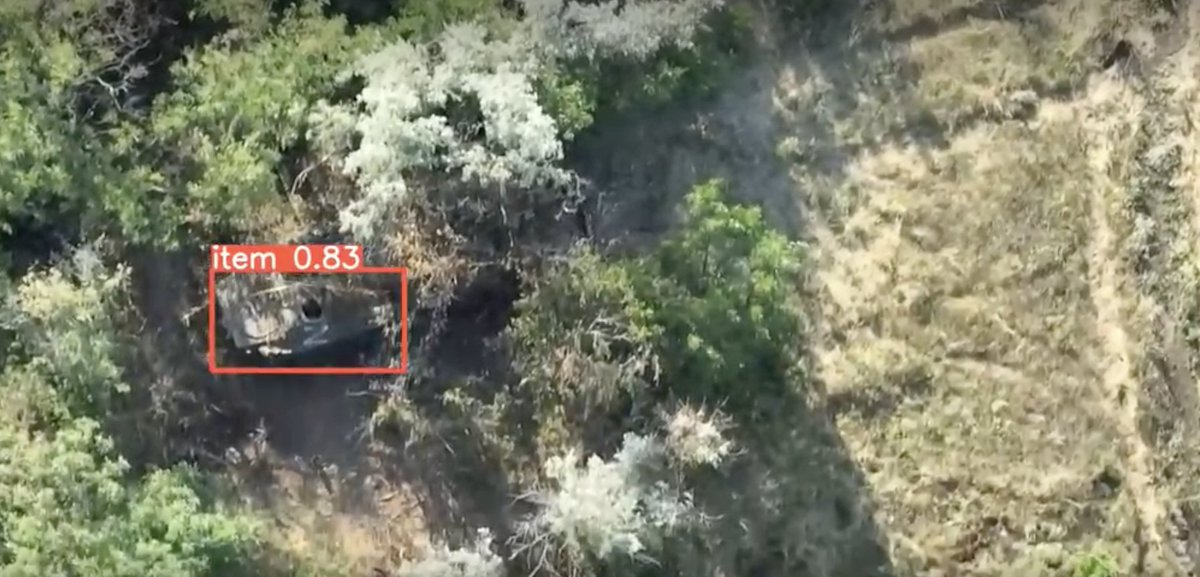
The drone videos what it's seeing with its camera. The developers' AI system automatically recognises camouflaged enemy equipment and marks it with the precise geographical coordinates. The data is sent both to the drone operators and the commander in the field. /6
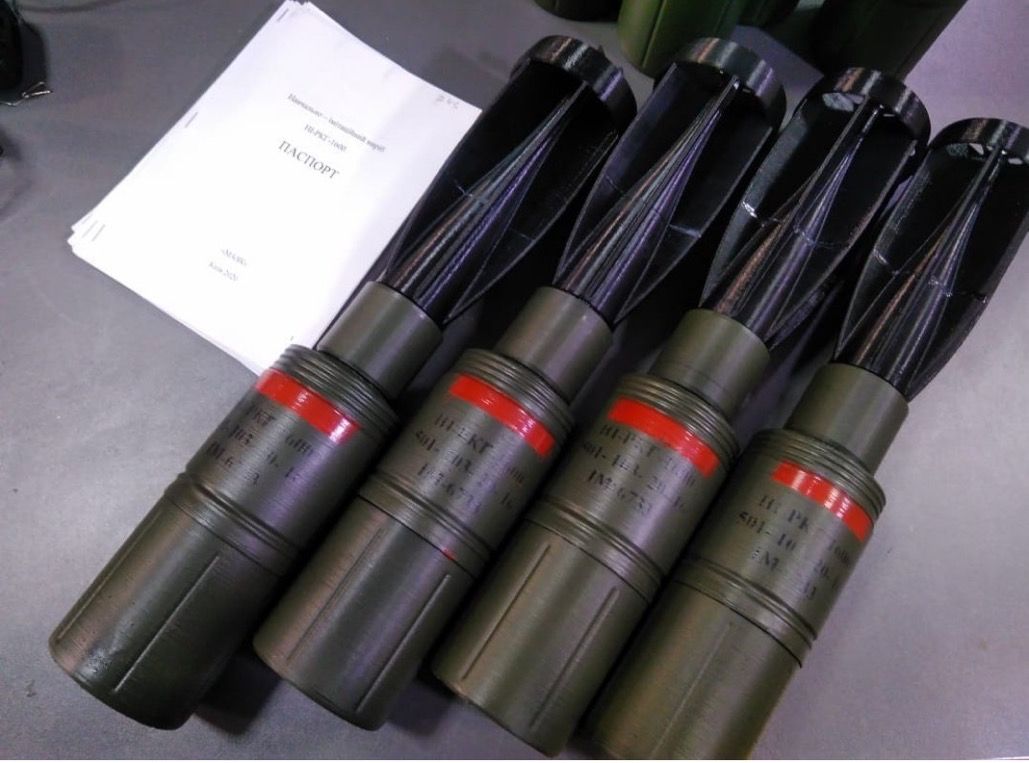
Assuming the drone is armed, the commander can then order an attack. Using a small improvised bomb, such as one of these RKG-1600s (a 1950s anti-tank grenade adapted with a new 3D-printed plastic tail fin), the drone can strike and destroy even a main battle tank. /7
The shot is taken from an altitude of about 100m (300 ft). Drones often carry several bombs. The first is often used as a test drop before the drone corrects its position to hit the target directly. /8
Some drones carry up to 4 bombs, meaning they can attack at least 2 targets on each flight. (Marcin doesn't mention if AI is also used for targeting refinement but I suspect it may well be.) /9
The drones themselves are cheap - costing $15,000-20,000 - and the bombs cost only about $1,000 each. As Marcin's interviewees point out, this costs far less than a main battle tank or armoured personnel carrier. /10
Interestingly, the developers say that their drones are resistant to Russian electronic warfare due to the use of a proprietary navigation system that doesn't rely on GPS. The drones can also engage a kamikaze mode to fly into targets deemed important enough. /11
The developers also point out a fundamental difference between the Russian and Ukrainian approaches to drone development. Russia has a state-led unified approach in which big companies develop a limited number of systems like the Orlan-10 to standardised designs. /12

In contrast, Ukraine's "civic movement of software professionals" has created many independent systems, often operating on completely different principles, using completely different protocols. It's a heterogeneous bottom-up approach, in contrast to the top-down Russians. /13
This gives Ukraine a qualitative advantage, both in terms of more rapid development cycles and in terms of creating a more diverse ecosystem of many different types of drones, in contrast to Russia's reliance on just a few types. /14
It's thus easier for Ukraine to work out how to hack Russia's older and less diverse drone fleet than it is for Russia to counter the many different types of drones being rapidly developed and fielded by the Ukrainians. /15
And Ukraine's capabilities are constantly improving. The team interviewed by Marcin currently flies drones which can carry up to 3 kg and can fly up to 10-15 km. They are developing drones which can fly up to 50 km with a load of up to 20 kg. /16
That's enough summarising - go and read Marcin's article (or use Google Translate) for the rest. onet.pl/informacje/one…
And see the link below for more information on these AI-driven drones and how to donate to support the developers: saker.airforce
The drone operators interviewed by Marcin also need a new pickup truck, as the one they're using now has been shot up by the Russians. Details on how to contribute here: zrzutka.pl/z/pickupdrony
• • •
Missing some Tweet in this thread? You can try to
force a refresh