Just read Christopher Caldwell's "Age of Entitlement." It's a good book; the general thesis (that Civil Rights replaced the Constitution) is familiar to the internet right (albeit still foreign to the mainstream) but he substantiates it well and at book length. Some excerpts:
The mid-century US, being highly multiethnic, was not strongly bound by heritage of culture. The national cohesion essential for a multiethnic state was highly dependent on the Constitution, which was then undermined by Civil Rights. 

Brown v Board was wrongly decided on political grounds and revolutionized the US by overturning the right to freedom of association and granting USG arbitrary powers in the process.
Civil Rights has been possibly America's largest endeavor, costing trillions of dollars over the course of generations.

Before Civil Rights, race issues were only one part in many of America's historical self-conception. Now, race is paramount.


Northern/Western whites viewed Civil Rights and the race problem as relevant only to the South, which could be remedied at little cost to themselves. They were wrong. Who could've guessed that the people with the most experience w/ blacks (Southerners) were right?
As is so often the case with left wing victories, opponents of Civil Rights were viciously mocked for correctly predicting the consequences of the legislation (see: the LGBT movement and the Religious Right). Proponents were totally wrong about the results.


Northern whites viewed themselves as magnanimously helping blacks; blacks viewed whites as having admitted their eternal blood-guilt before history. A lesson for "allies" of various sorts.


Caldwell Sailer-posting. Throughout the book, it's clear that part of Caldwell's project is laundering race-aware dissidents like Steve Sailer into a more respectable form. Needs doing.

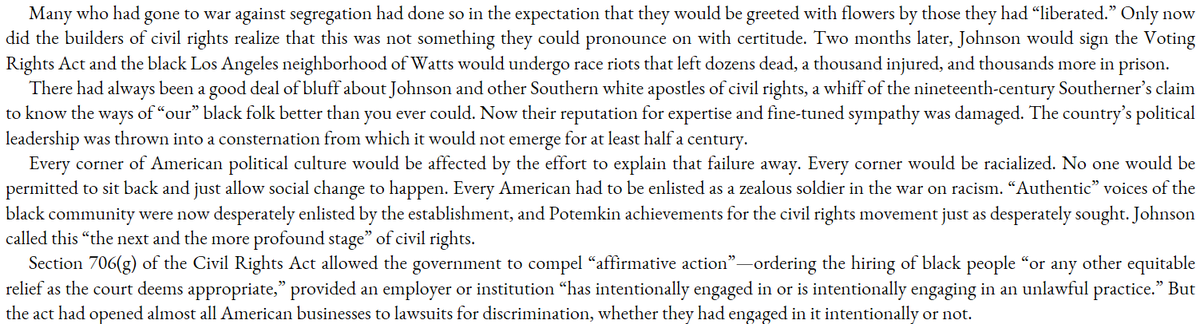
Civil Rights movement immediately began demanding and getting special privileges after the Act. Funnily enough, blacks relative advances compared to whites slowed after 1964, and they never converged. Who could've predicted that? (Answer: a racist).
The complete failure of Civil Rights to achieve its nominal goals demanded scapegoats.
Opponents of 2nd wave feminism claimed equal rights for women would destroy marriage and force employers to hire homosexuals. As usual with opponents of left-wing victories, they were right, and supporters of 2nd wave feminism were wrong. Slippery slope wins again.


The post-Vietnam American establishment was overwhelmingly composed of highly-atypical highly-educated people who had opposed the war and almost never fought in it.

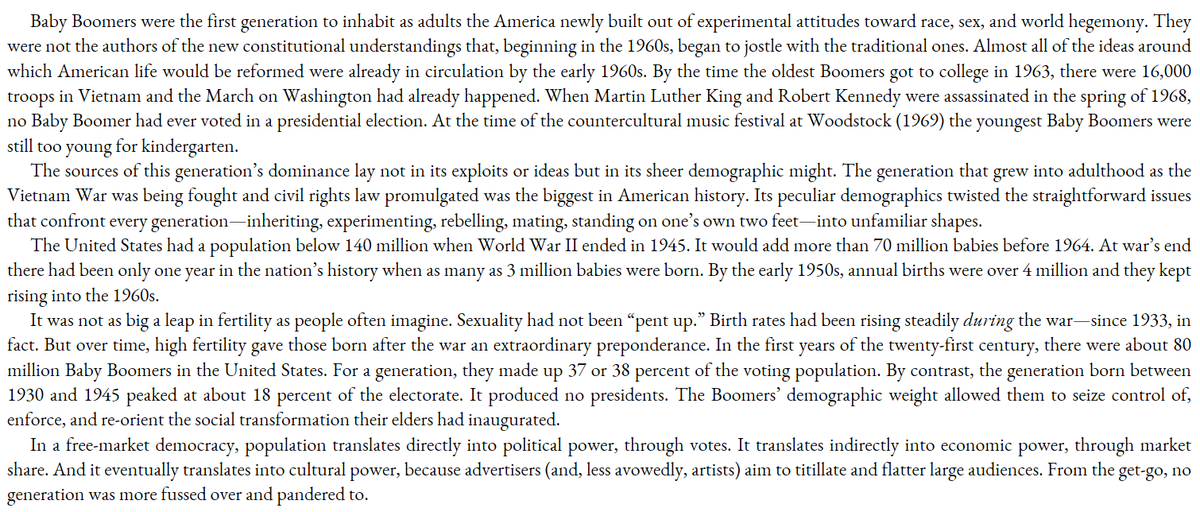
One thing the e-right often gets wrong is that the Boomers were very much not responsible for the 60's revolution. Most of them were in grade school when it was decided. Will probably do another thread on this myself later.
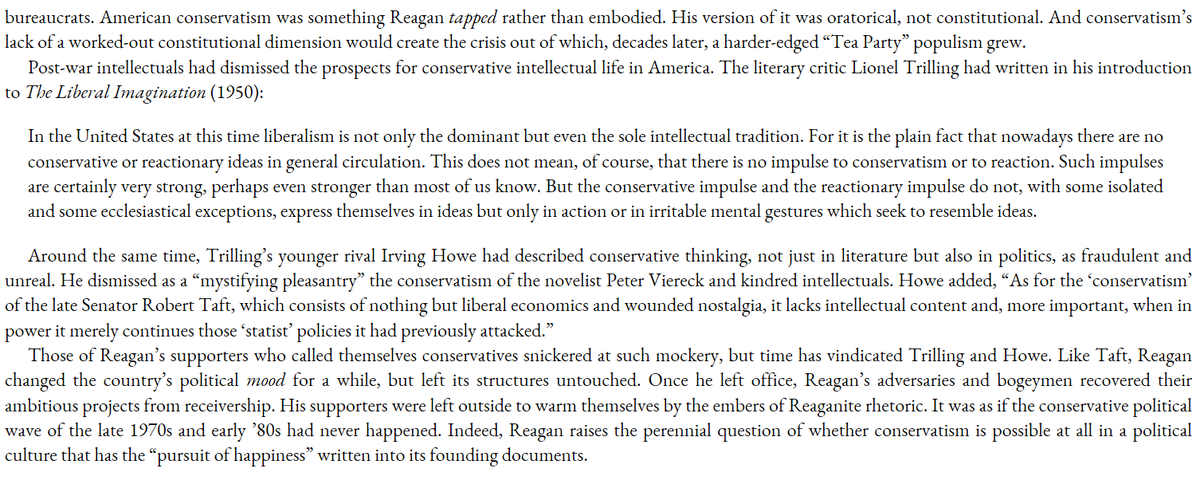
Caldwell is very harsh on Reagan, who talked a good game about rolling back much of the 60s (and won on that basis), but when in power mostly just consolidated and even expanded it. Shades of Trump.

Reagan did more then any other politician to enshrine 2nd wave feminism into law.

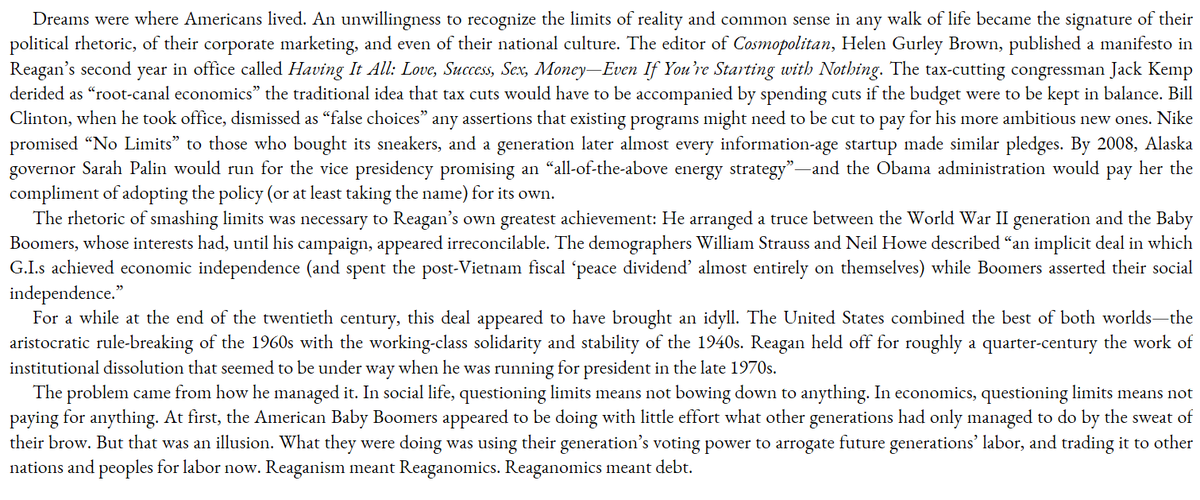
Reagan brokered a truce between 60s radicalism and its enemies by borrowing a tremendous quantity of money to pay for everything. This worked for a while, but the bill is coming due.
Lots of (leftist academic created) myths about Reaganite neoliberalism slashing the state. In reality, all he did was slow its growth.

Reagan's colossal borrowing, undertaken at the height of the Baby Boom's productive years, was mostly to be able to simultaneously pay for Great Society social programs, Civil Rights, and military build up. RIP seed corn.

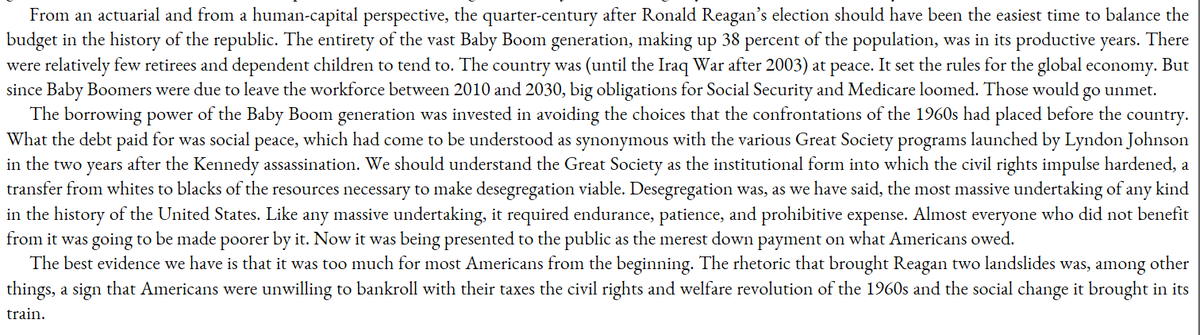
USG gives colleges hundreds of billions a year, partly thanks to Reagan. Much of the post-Reagan economy is pretty much just rent-seeking on govt favor. Debt let Boomers ignore this for a generation. The bill is coming due.
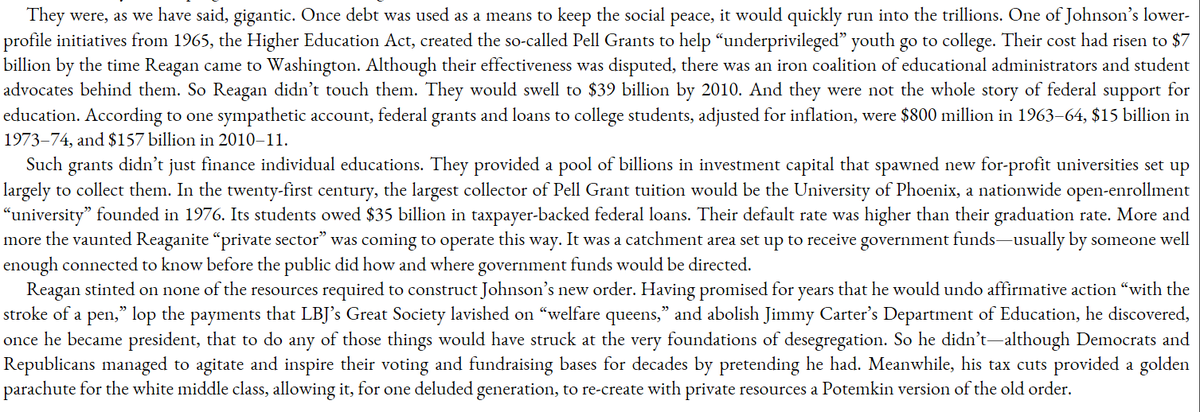
Reagan allowed the losers of Civil Rights (mostly middle class whites, especially men) to avoid paying for it via borrowing from the future, thus sapping any backlash.

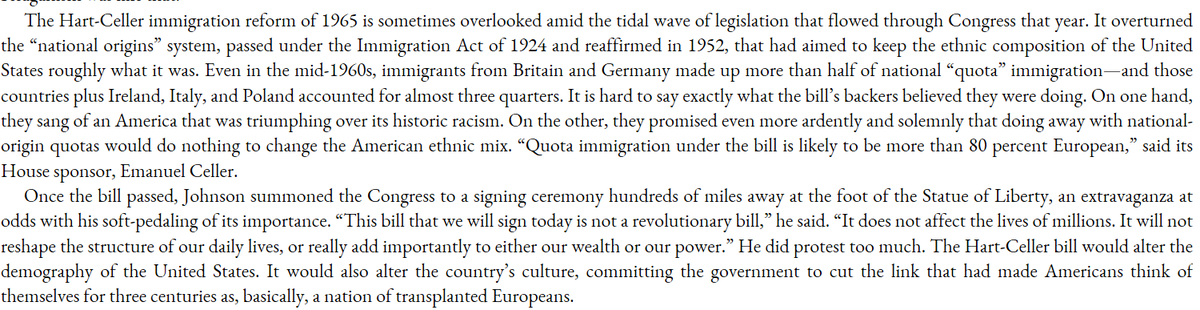
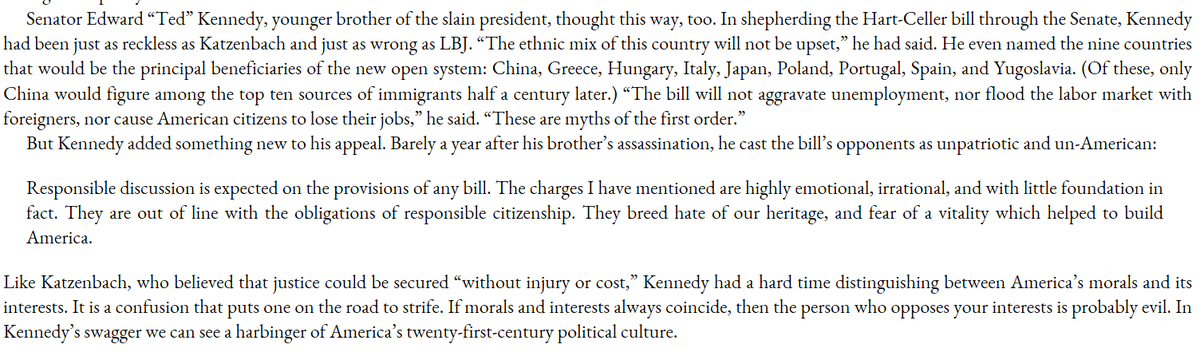
Hart-Celler was passed under false pretenses. Supporters claimed it would have no effect, that iwas basically meaningless virtue signaling. In reality, it was more transformative then even its worst opponents predicted.

The Reagan amnesty (IRCA) was actually composed of two parts: a wildly popular increase in immigration law enforcement combined with an extremely unpopular amnesty. Guess which part of the law was actually enforced? (Democracy BTFO).
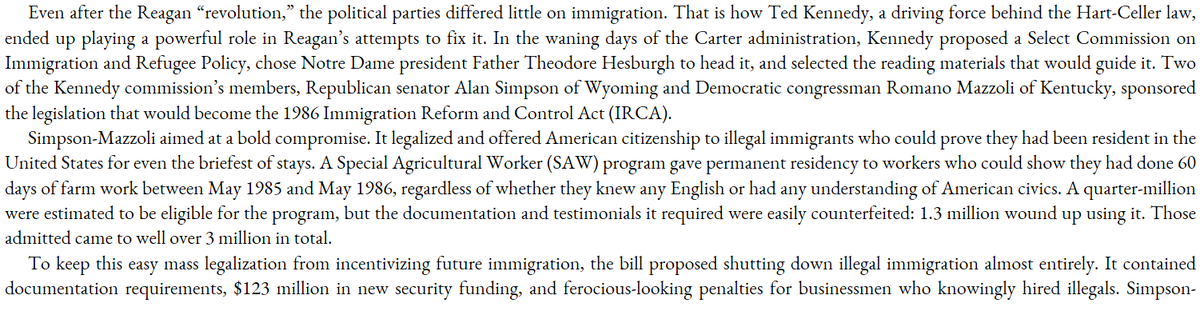

IRCA was an example of how every law became an extension of the Civil Rights act. It included language that made it illegal to discriminate on national origin, making it more dangerous for employers to enforce immigration law then to ignore it.
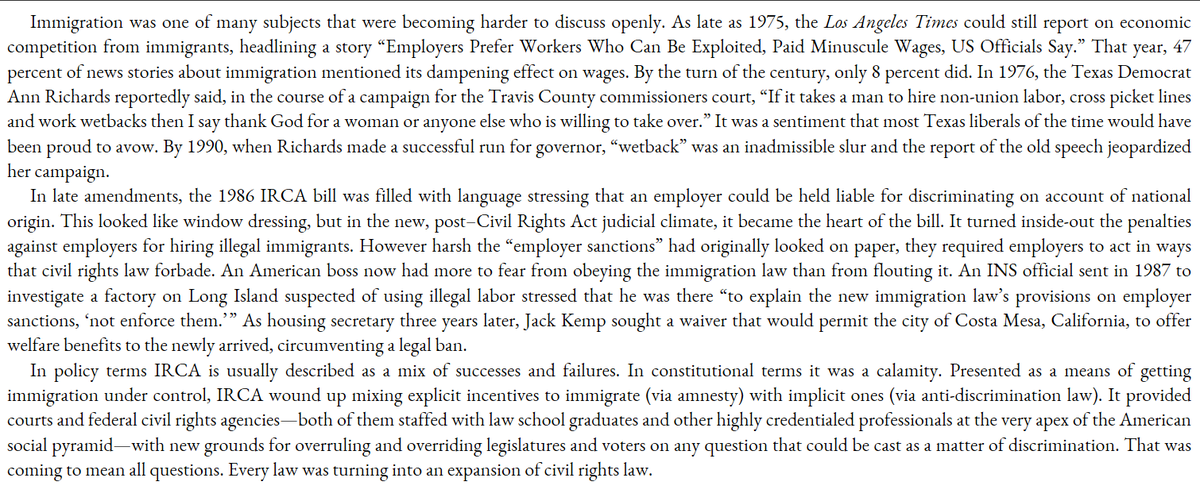
Immigrants made blacks look bad by being more successful then them, but remained legally privileged over whites.

After 1965, the courts and bureaucracy replaced the legislature.

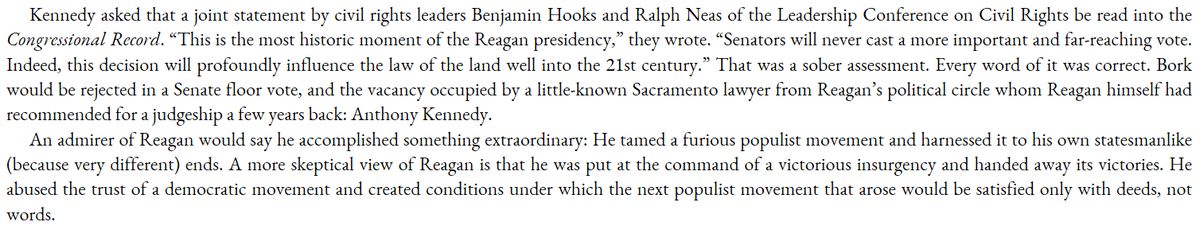
After Ted Kennedy sank the Bork nomination, Reagan responded by nominating... Anthony Kennedy. Oops.
"Wokeness if just Civil Rights Law": the whole obsession w/ diversity came entirely from a 1978 court case (Bakke) which made it the legal rationale for Affirmative Action and thus mandatory.
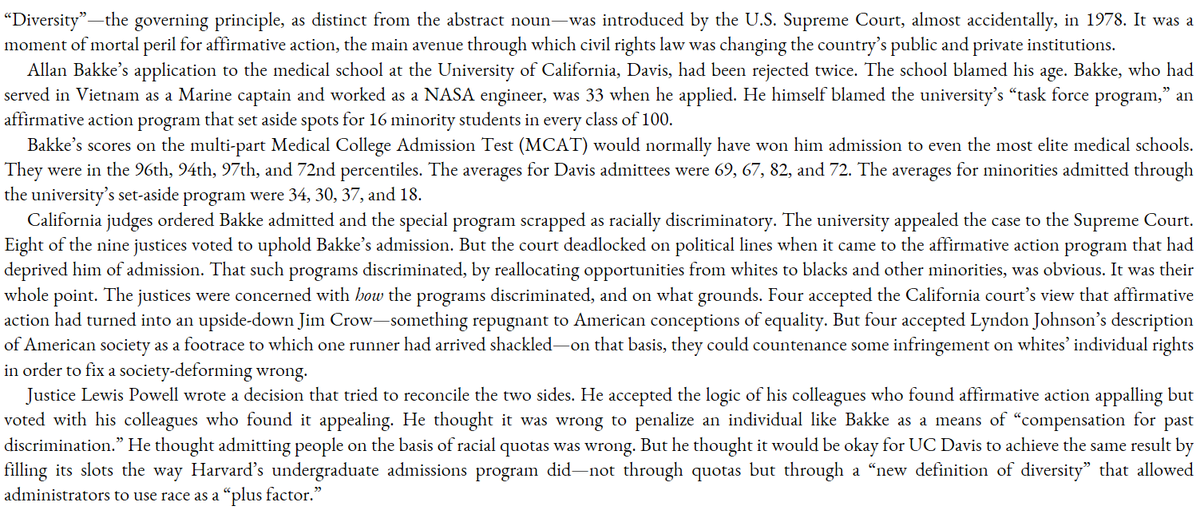
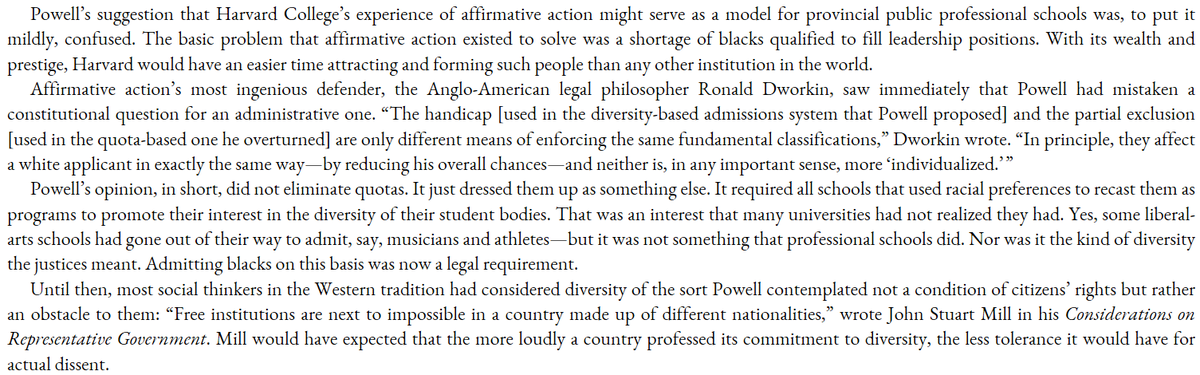
Bakke also created the concept of systemic racism, by shifting the rational for AA from remedying *past* discrimination to remedying *present* discrimination, even where there was no evidence of any discrimination at all.
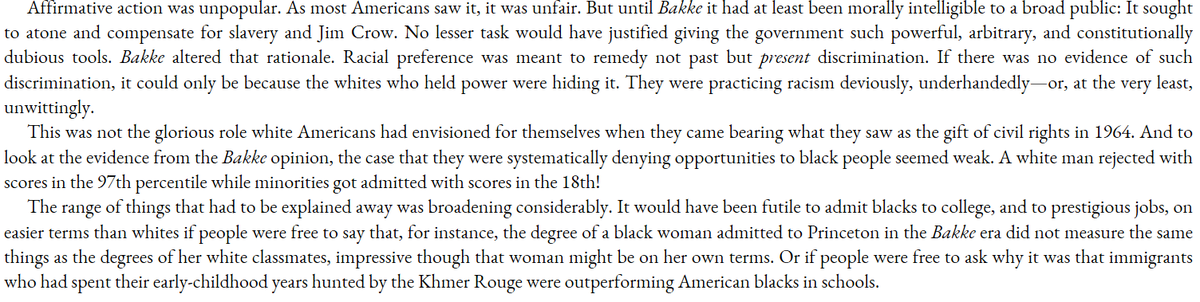
Bakke also got govt into mandating attitudes about race (and sex. and sexuality. and...). The whole apparatus of PC largely came out of here.
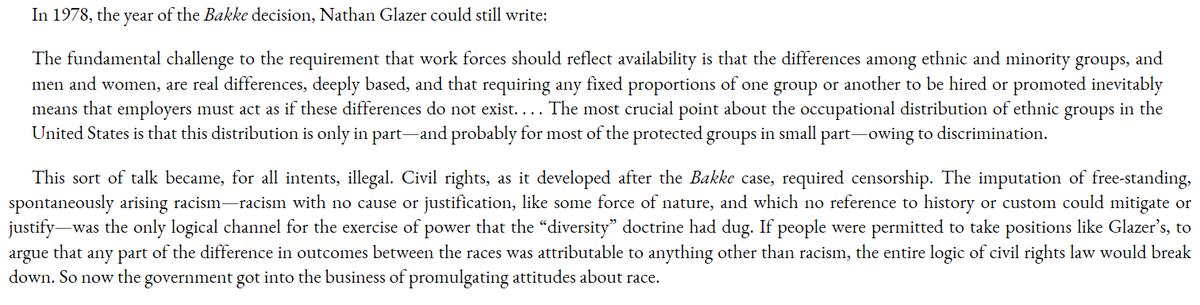
Woke capital isn't new. When Arizona refused to make MLK day a holiday, dozens of corporations mobilized to punish them.
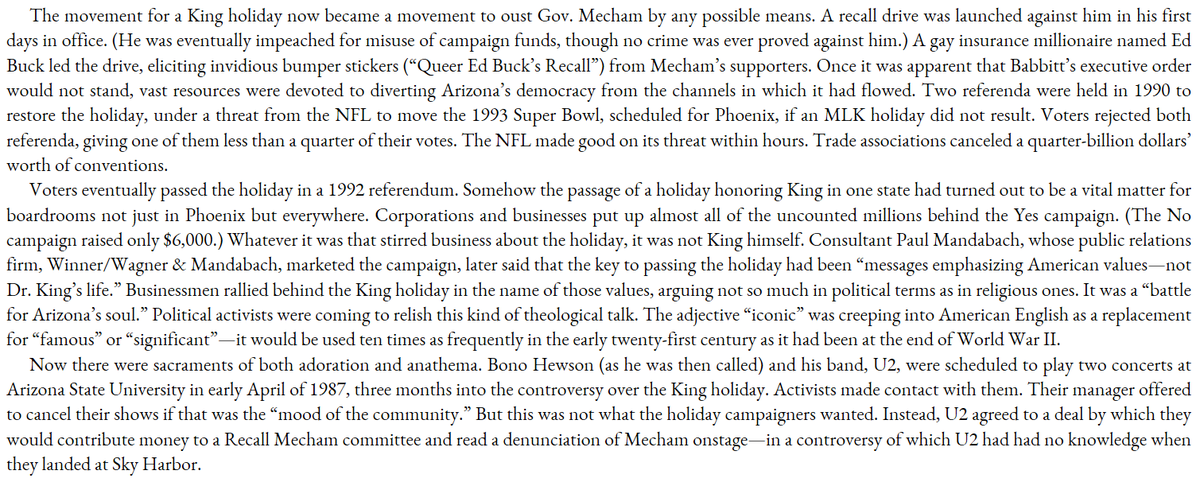
MLK day marked the transformation of white American's history to a more... German form, emphasizing white's guilt and evil as the main thread of American historical memory.
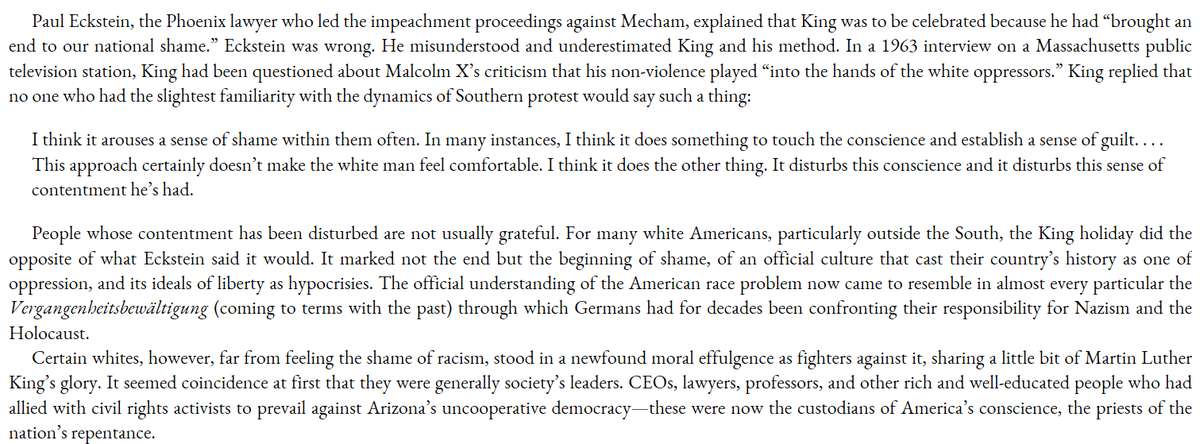
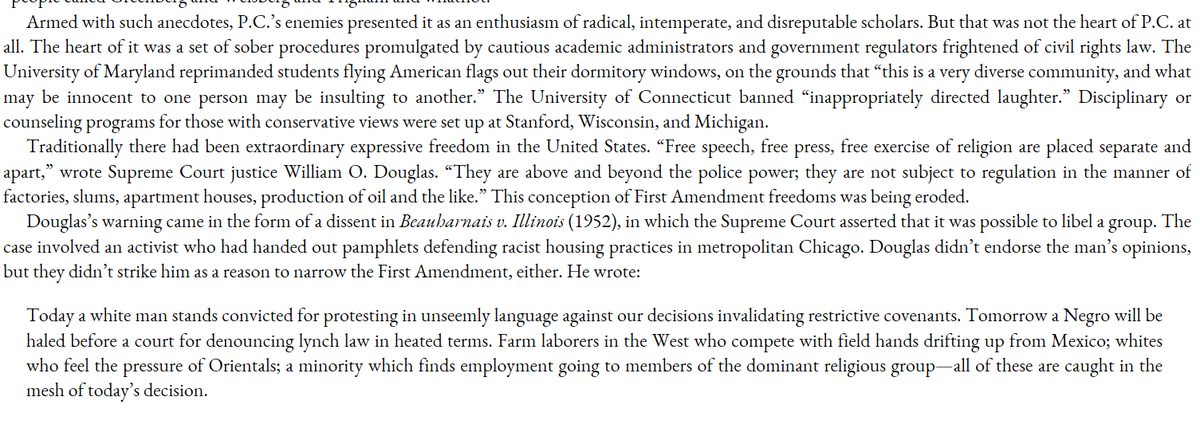
The heart of PC wasn't the insane campus activists, it was bureaucratic legalism that came from ultimately from the govt.

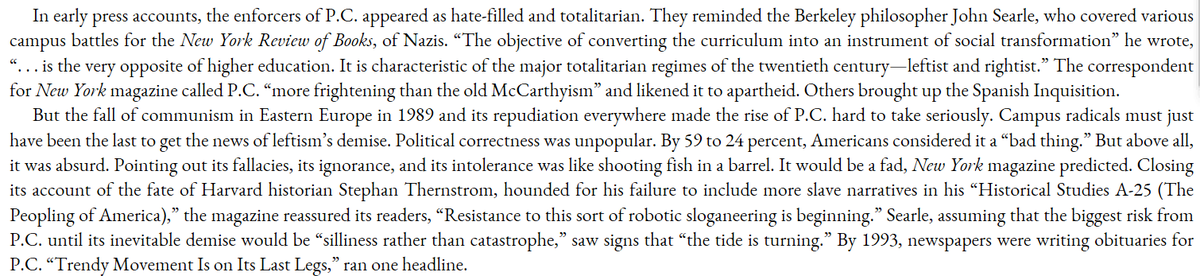
PC was extremely unpopular when it appeared, and so absurd that even attacking it felt unfair. Newspapers were writing its obituary by 1993. But it was never actually dismantled. Shades of all of the "the tide of Wokeness is receding" takes today.
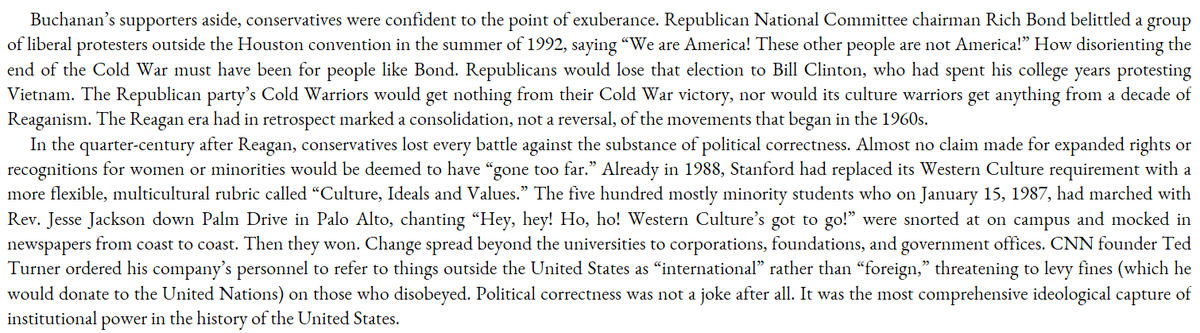
Political correctness was a comprehensive program of ideological capture, pooh-poohed at the time for its absurdity by complacent conservatives who saw themselves as having won the Cold War and thus defeated the radical Left for good. But PC won every substantial battle.
Universities weren't radicalized by the entry of leftist boomer professors, they were radicalized by the exit of conservative boomer students. Boomers unfairly maligned.
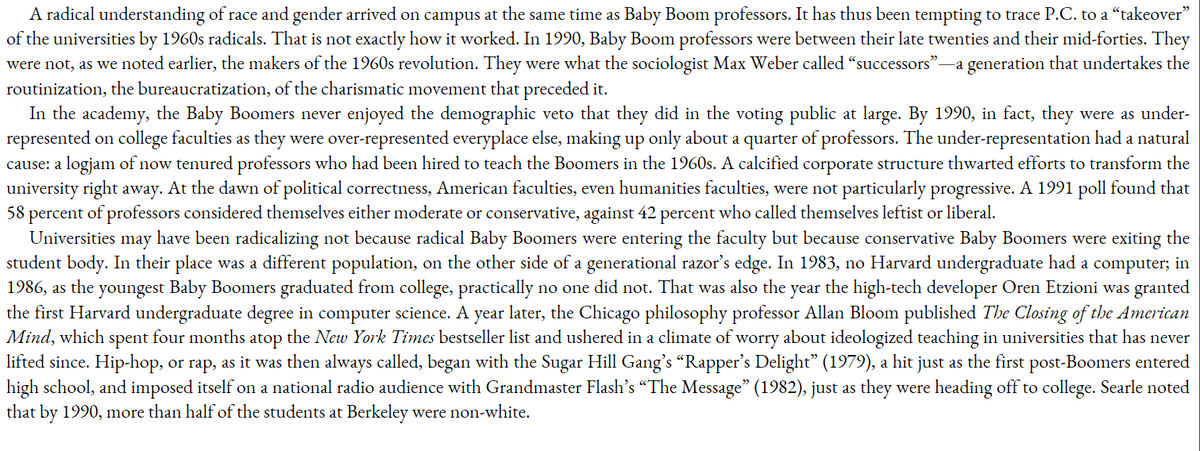
PC's victories were all from top down mandates of the Civil Rights bureaucracy, against public opinion. Democracy BTFO.

Civil Rights gave all kinds of minorities, including ones no one had ever considered in 1964 (see: 🏳️⚧️) an iron grip on state power.

Republicans often won elections by lampooning and attacking PC. But winning elections did not allow them to reverse it, because power was no longer in the elected govt. Once an issue became a Civil Rights issue, cons lost 100% of the time.
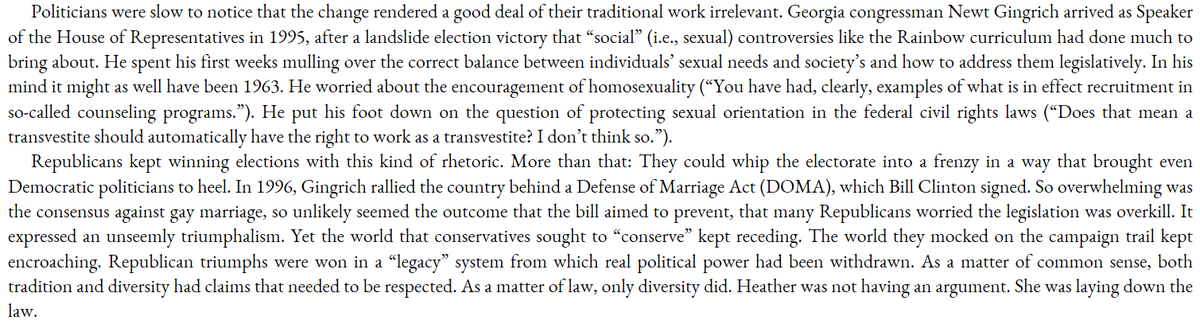

Reaganites had no answer to the capture of respectable institutions (via Civil Rights law) by the Left. Businesses in particular, taken over by HR, became the hammer of Civil Rights enforcement in the US.
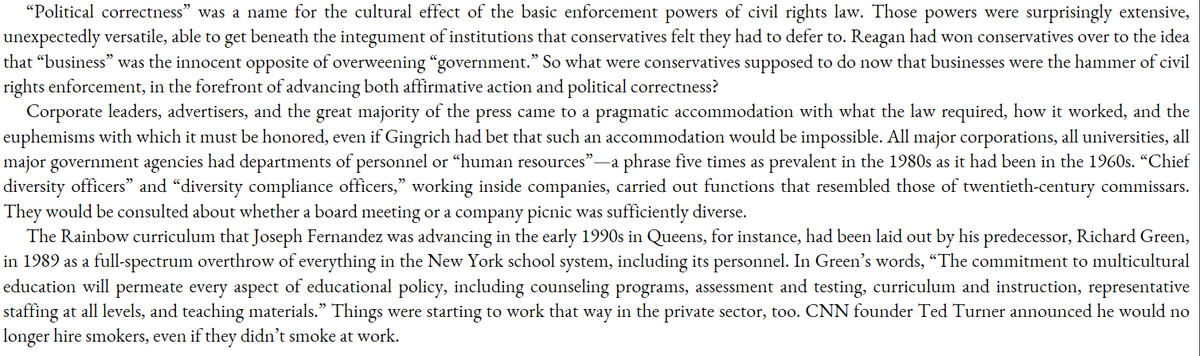
Almost everything done via Civil Rights was irreversible by the electorate. Controversy often strengthened it, by creating the illusion of democratic consultation when there was none. Democracy BTFO.

This is the main thesis of the book: Civil Rights created a 2nd constitution, one that usually prevails against the original whenever they come in conflict.


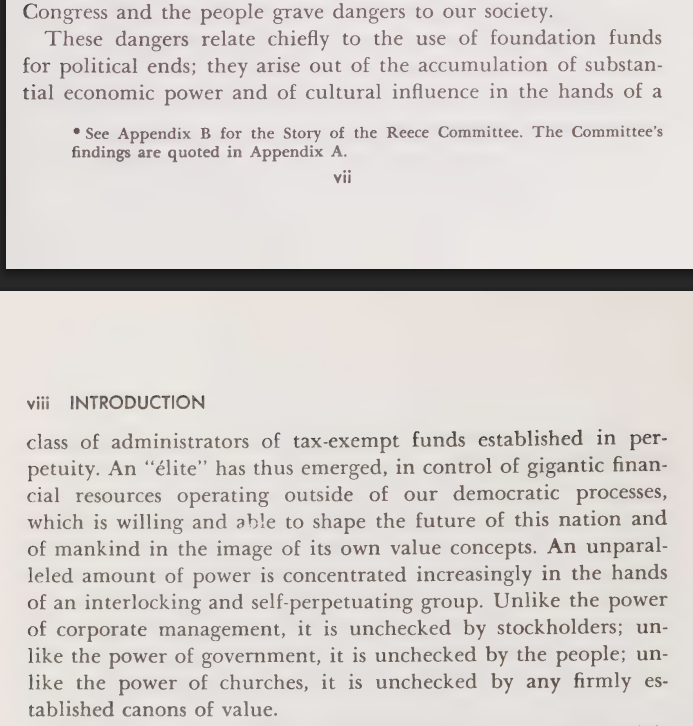
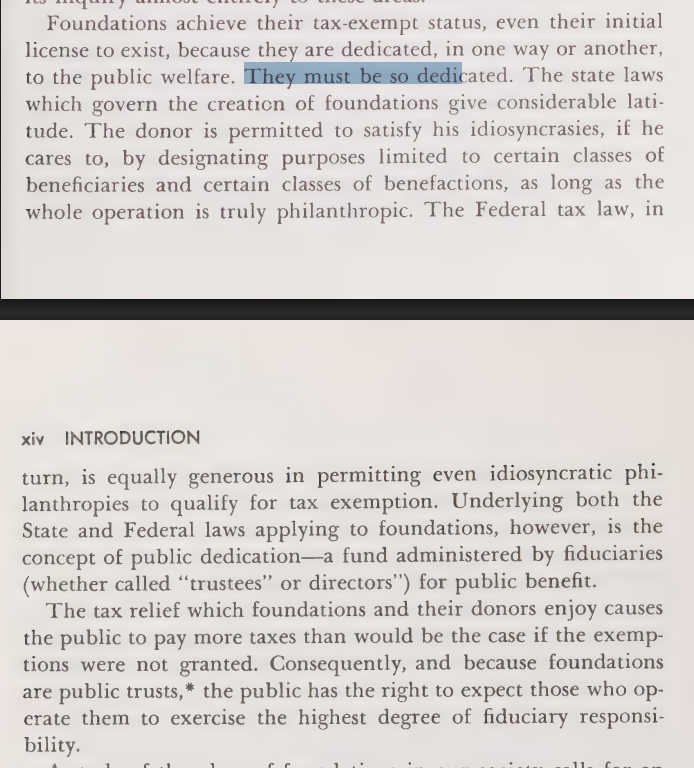
Left NGOs are USG cutouts. Exhibit A.

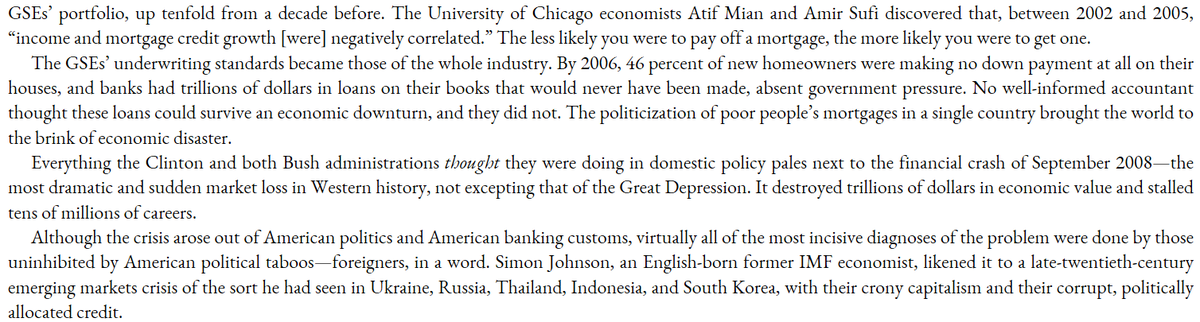
2008 crash caused by Civil Rights-mandated affirmative action loans. Compares govt-allocated credit to the usual issues in Third World countries.

Obama broke with previous posts-60s presidents by governing in an explicitly race-conscious way, very much against what he'd promised on the campaign trail.
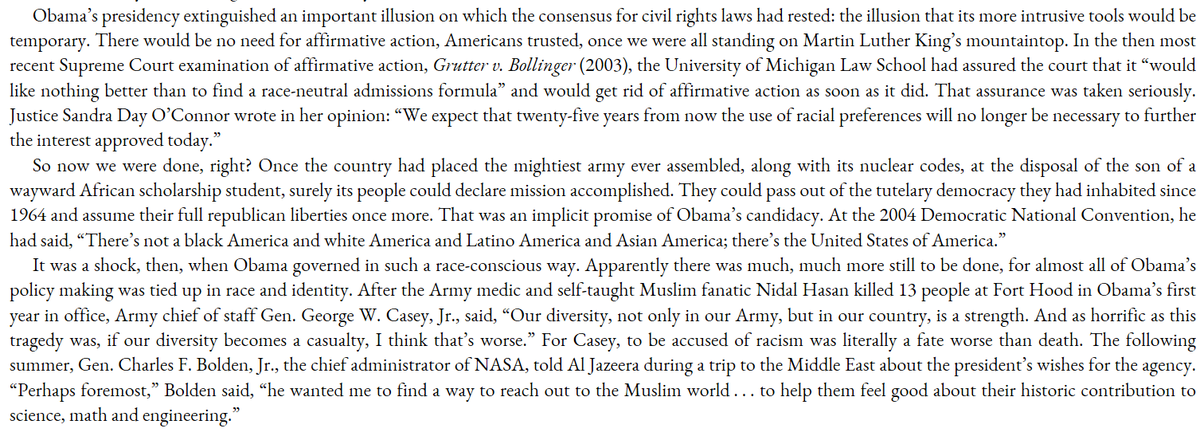
Obama broke the illusion that Affirmative Action and 2nd class citizenship for whites was temporary, converting whites from the position of welcoming others into American life to being ousted from it.

Tech giants have effectively become part of the govt.


Obama generally tried to govern without government, routing around the legislature and ruling via executive orders, friendly billionaires, foundations, and NGOs.

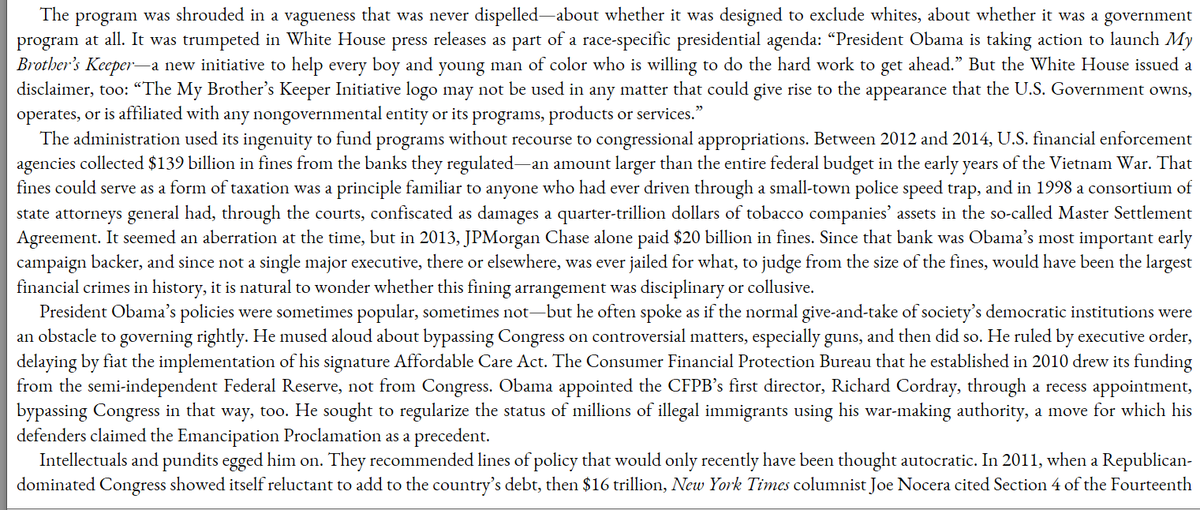

The Establishment, virtually everyone with any money or power, heavily backed gay marriage, and succeeded in forcing it down the throats of an unwilling populace. Democracy BTFO.
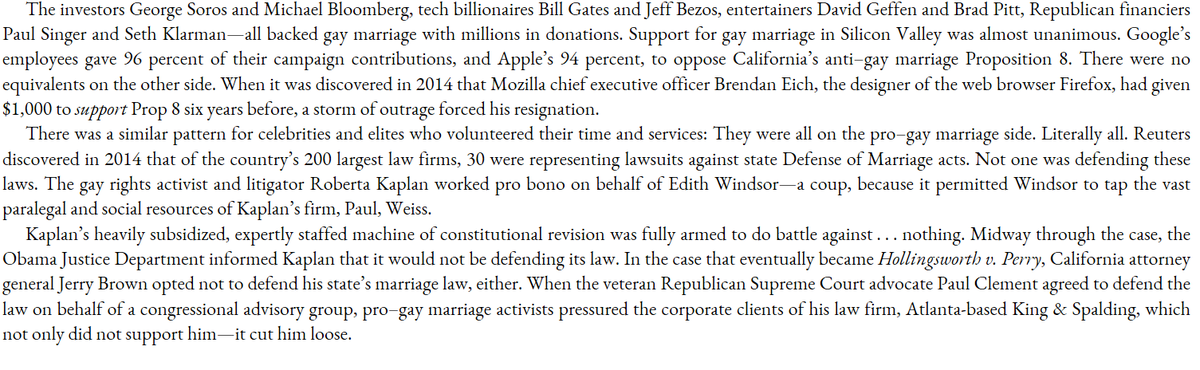
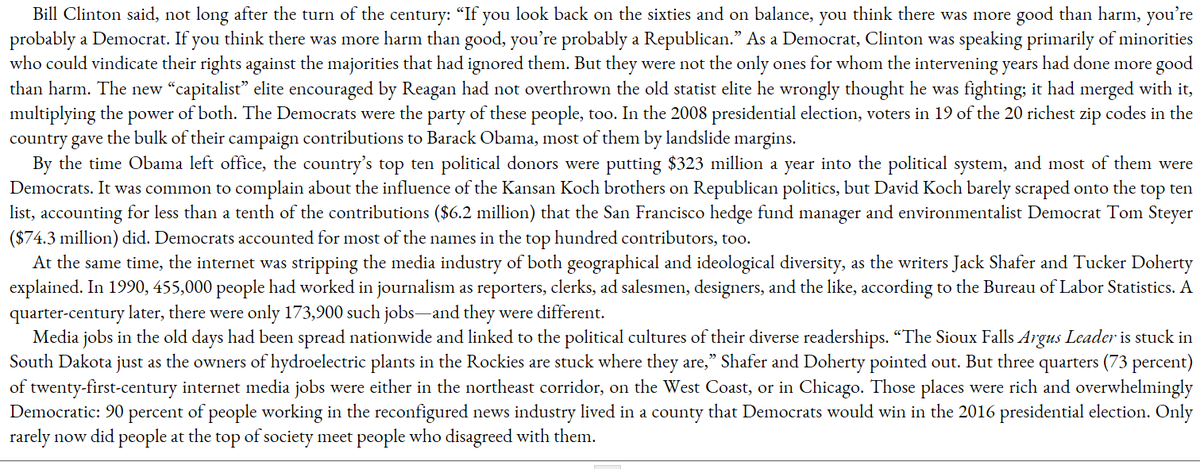
The "private elite" essentially merged with USG and the Democratic party under Obama.
White life expectancy has been falling in the US since 2014 (non-college has been falling for even longer). Not only that, but whites are becoming more in pain, less able to work, less competent, and generally falling apart. Complete social collapse.
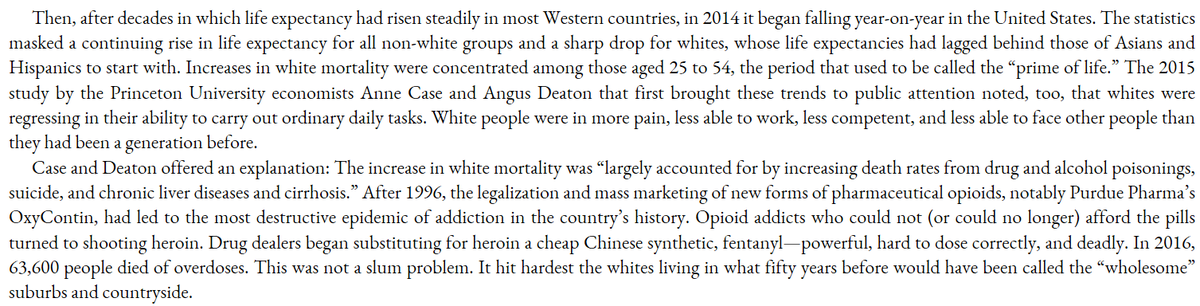
Opioid crisis basically ignored (until Trump) because it was happening to suburban and rural whites.

War on Drugs did more to help racial integration then any other policy, since it allowed for enforcing the law in black neighborhoods under the Civil Rights constitution. Libertarians BTFO.

Civil Rights was supposed to make race as a subject disappear, but turned it into the premier national obsession.

Shades of Moldbug here.

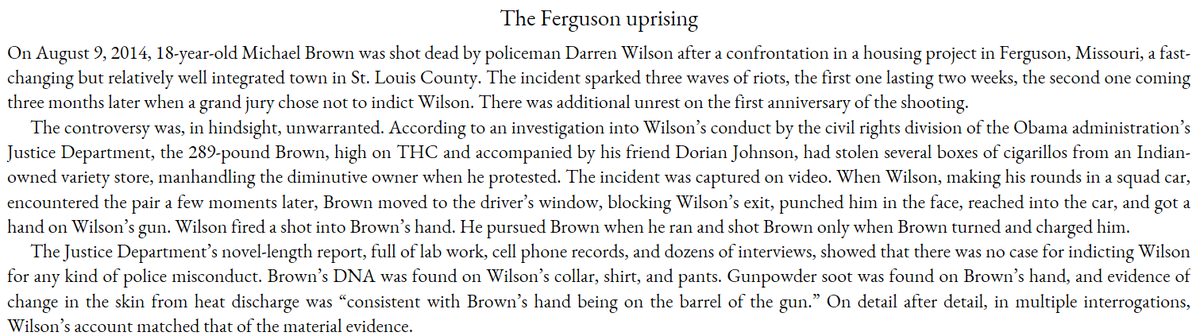
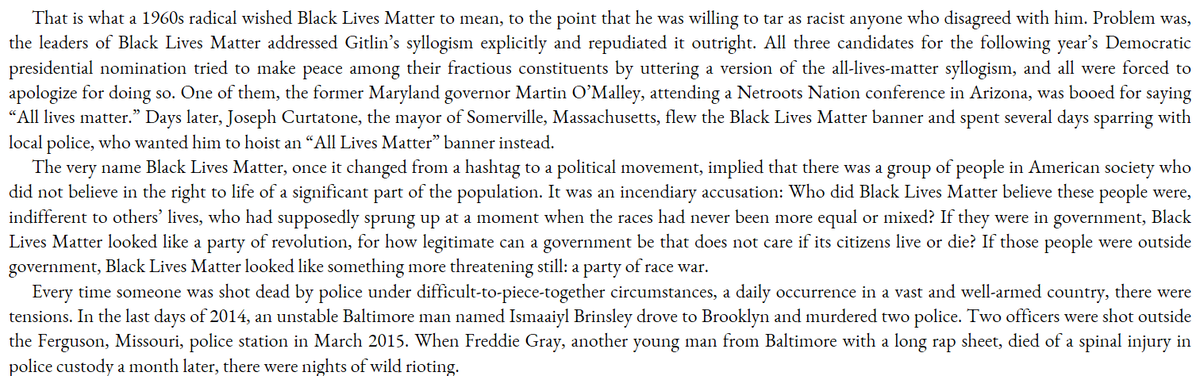
Ferguson narrative was based on nonsense. BLM was full of s*** from the start, and always had an implicit "only" at the beginning. It is effectively the party of race war.

"[Whites] fell asleep thinking of themselves as the people who had built this country and woke up to find themselves occupying the bottom rung of an official hierarchy of races."


One problem with a proposition nation is people can fall out of it for having the wrong opinions. Obama repeatedly claimed that his own political positions were "who we are as Americans." Now I better understand why Obama was so uniquely hated by cons.

Book ends on a cliffhanger about Trump. But now it's clear that Trump totally failed to even dent the Civil Rights constitution. He might get one more shot. Hope he doesn't waste it.

• • •
Missing some Tweet in this thread? You can try to
force a refresh