

 The US version - admitting millions of people and training them - destroys the domestic talent pipeline and diffuses tech to other countries; the Chinese approach, hiring a handful of world-class foreign experts and having them train Chinese, does the opposite.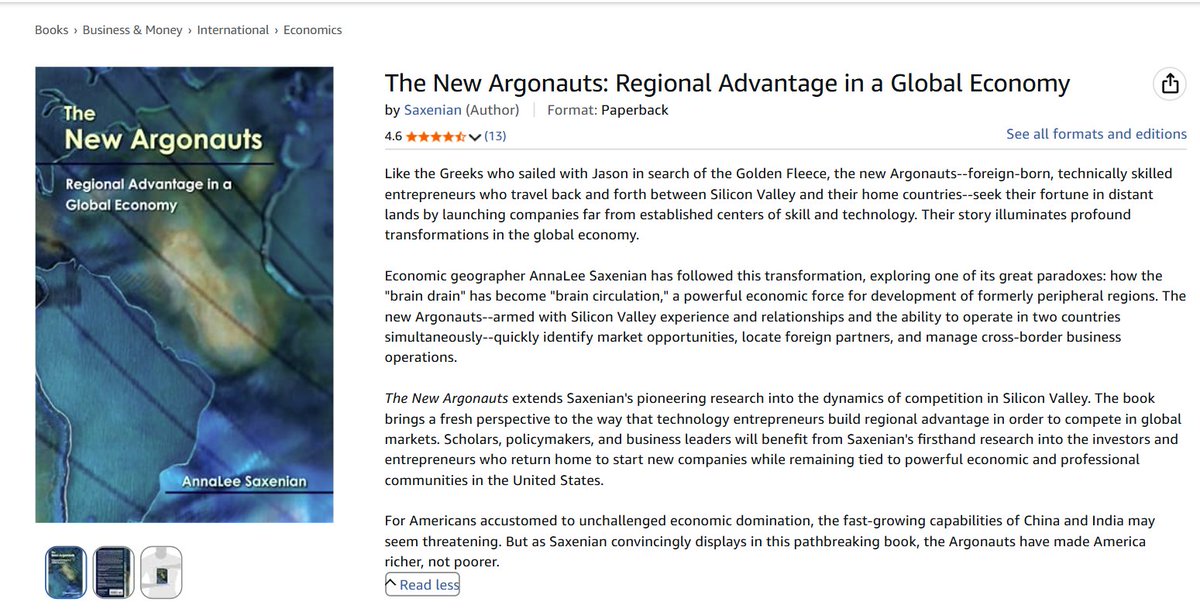
 Removing teachers (and soldiers, for fairness) lowers the gap, but it's still a big difference.



 Here is the link: arctotherium.substack.com/p/llm-exchange…
 Kirk was not a case of the lib hate machine whipping up hatred against someone until someone took a shot at him, it was a case of the lib hate machine ramping up after he was murdered.
 The administrators of the great foundations formed an interlocking cartel wielding (illegally) immense political and cultural influence using other people's money, as the foundations are tax exempt.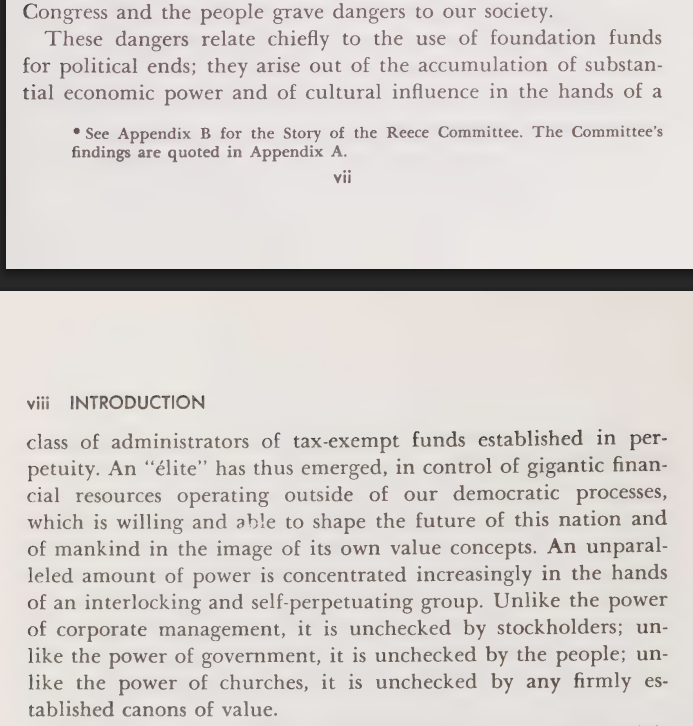
 Both the French Left and Right framed the 2005 riots as part of the long French tradition of revolt. But they were wrong; the protestors were mostly Arabs rioting against France itself, not against "the bosses" or "the state."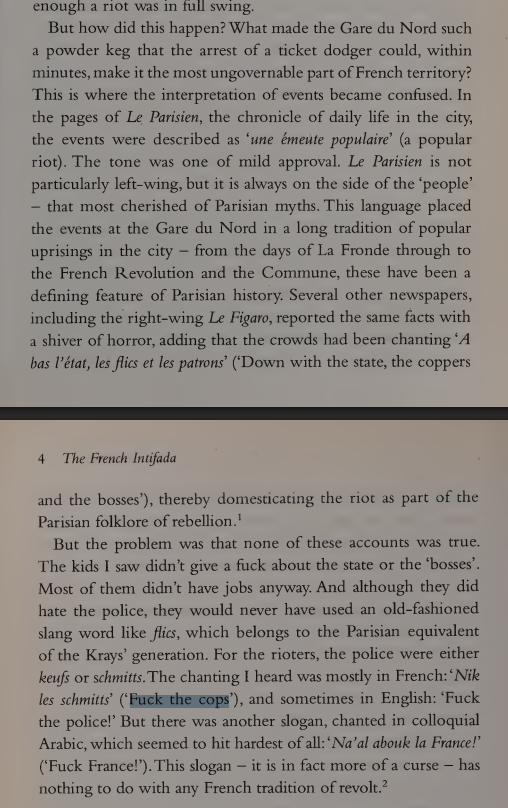
 The below is typical (from a D-Day veteran): "I am absolutely disgusted with the way things are turning out... and sometimes wonder if it was worth all the suffering of a war."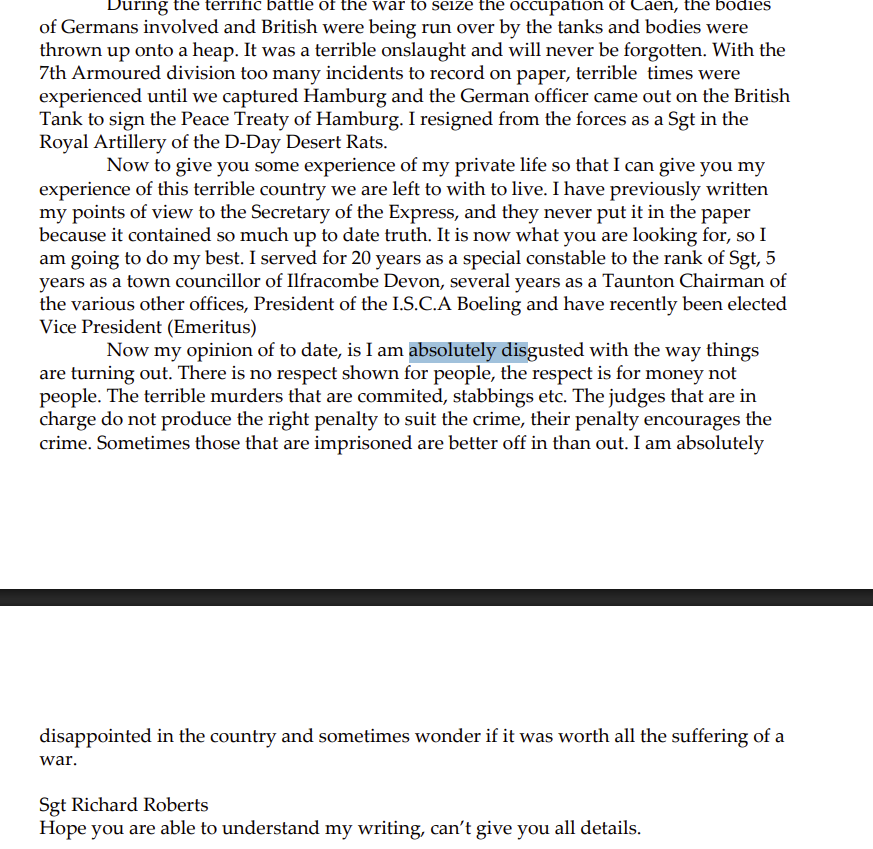

 In the training/internal labor markets model, a company struggling to find specific skills will train promising entry-level employees. In the hiring market model, they can raise wages or otherwise improve conditions. In both, they can also substitute technology for labor.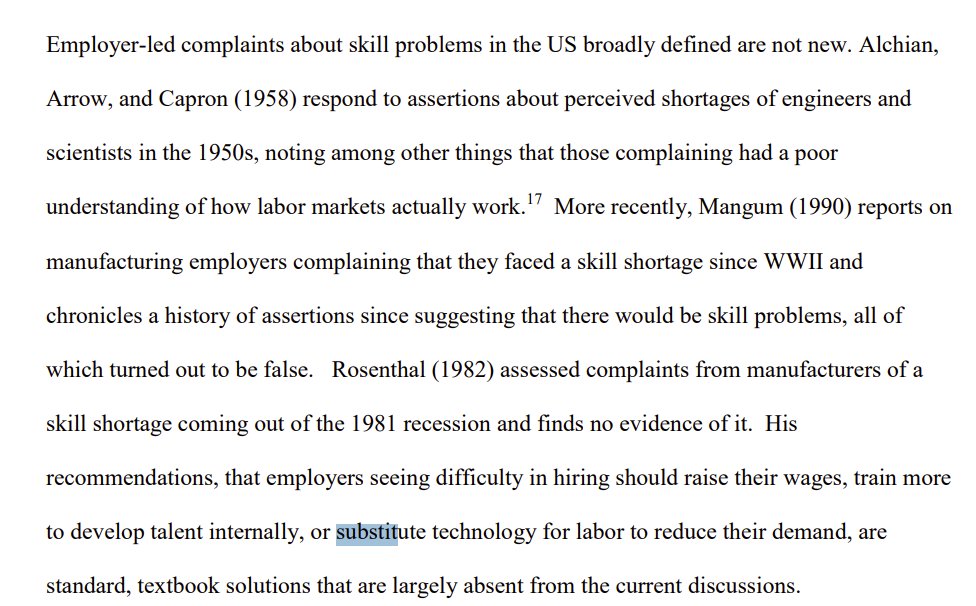

 In 1968, security forces fired upon a massive student demonstration/riot against the Olympic Games.
 The Calles/Obregon governments were corrupt, but never succumbed to paranoia; there was no equivalent to the Soviet or Chinese liquidations of class enemies, the press was free, and the average Mexican had nothing to fear from the govt (Red Terror against the Church aside).

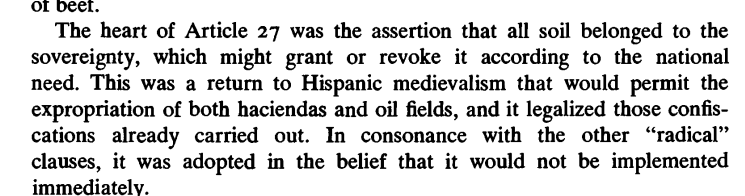 The Constitutionalists defeated the Villistas in battle and assassinated the leader of the last revolutionary faction, Zapata, by treachery.
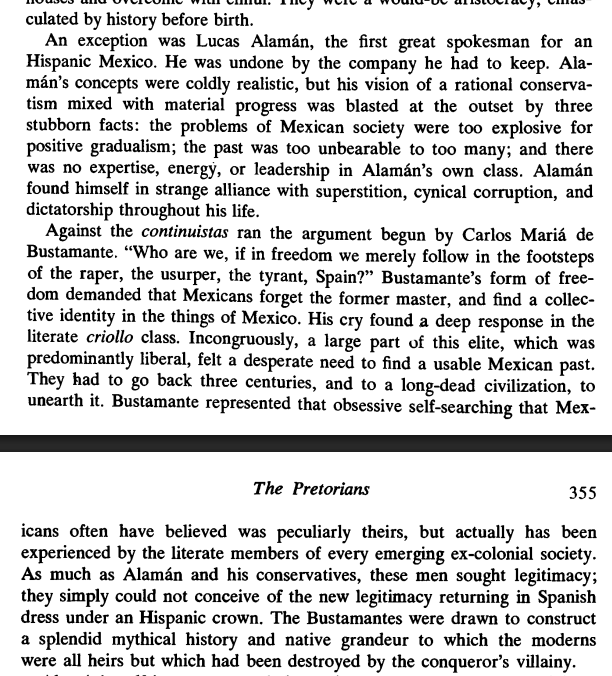
 Independent Mexico's problem was that Mexicans were incapable of setting aside personalisms for truly national institutions; congress, for example, was a joke.
 Every Mexican president was a Freemason, but Catholicism was still universal and the position of the Church, which retained its royal privileges even in republican Mexico, was a flashpoint.
 An incident where French warships blockaded Veracruz over nonpayment of debts from unstable and perpetually-bankrupt Mexican governments. The Mexican response: show "Death to the Anglo-Saxons and Jews" and bring back Santa Anna.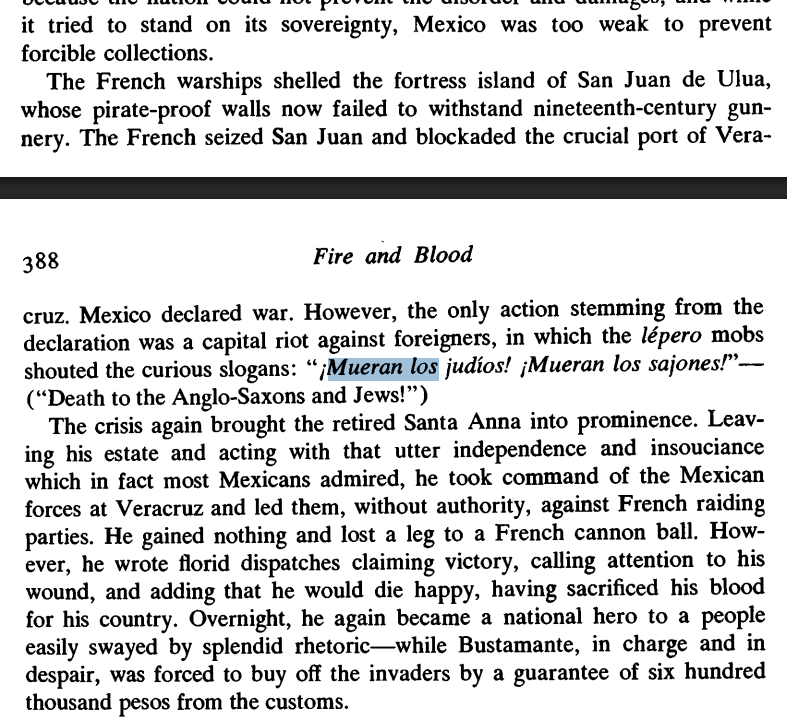
 Mexico was the reverse, with no history of self-rule, the criollo/casta/indio split, and no great leadership. The two major factions were the 'continuistas' (conservatives) and the 'reformistas' (liberals).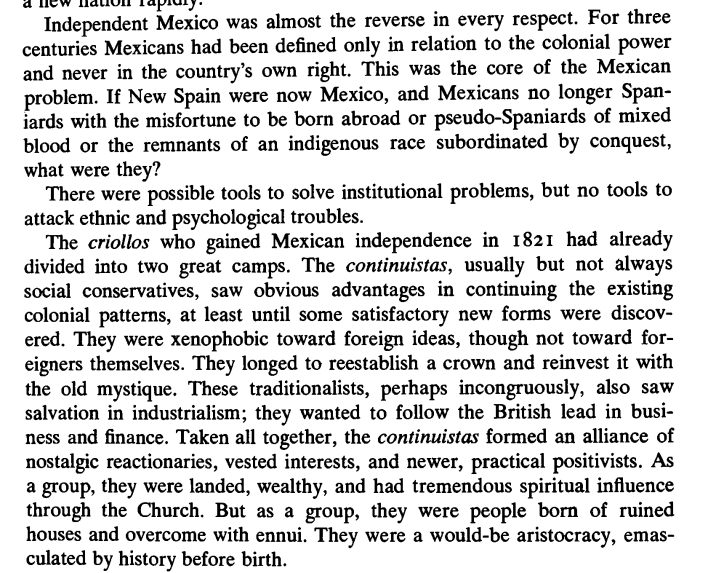
 Where the South American criollos quickly declared independence upon the French conquest of Spain, the Mexican ones dithered. Acting quickly, the local peninsulares coup'd the government and the criollos accepted it.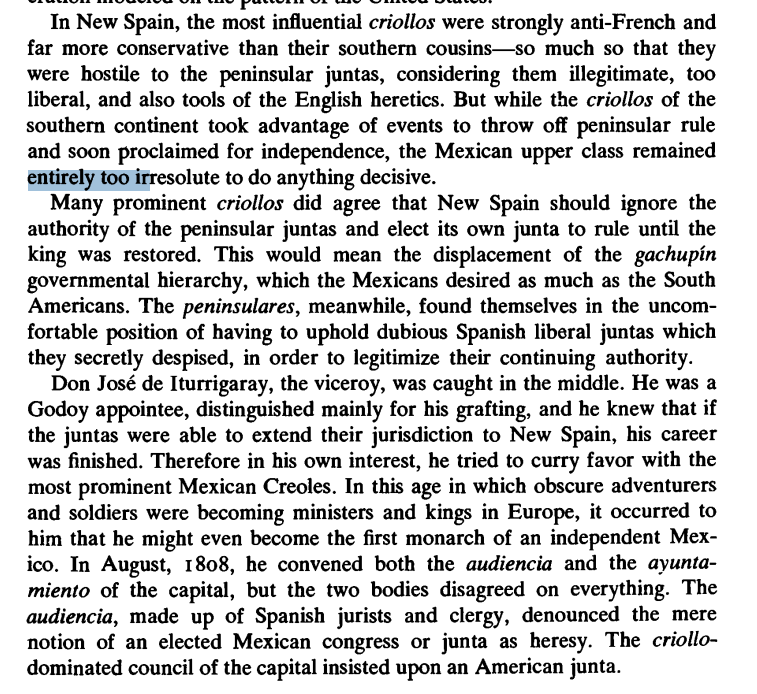

 The true frontier of New Spain was not the thinly-populated and stagnant (almost identical when the Anglos showed up as in the 17th century) New Mexico, but much further to the south, in the arid regions only a little north of the Valley of Mexico.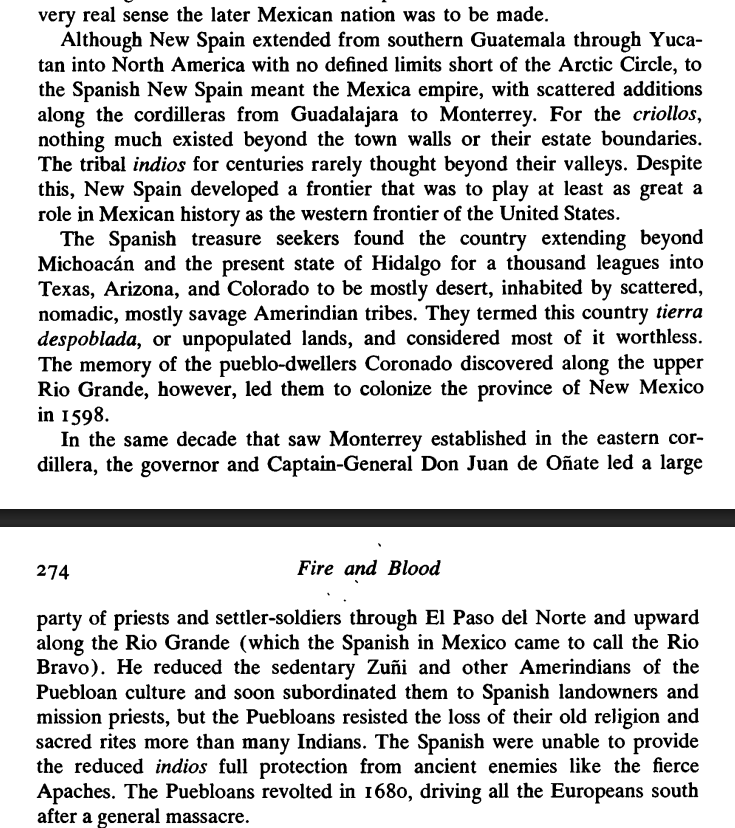

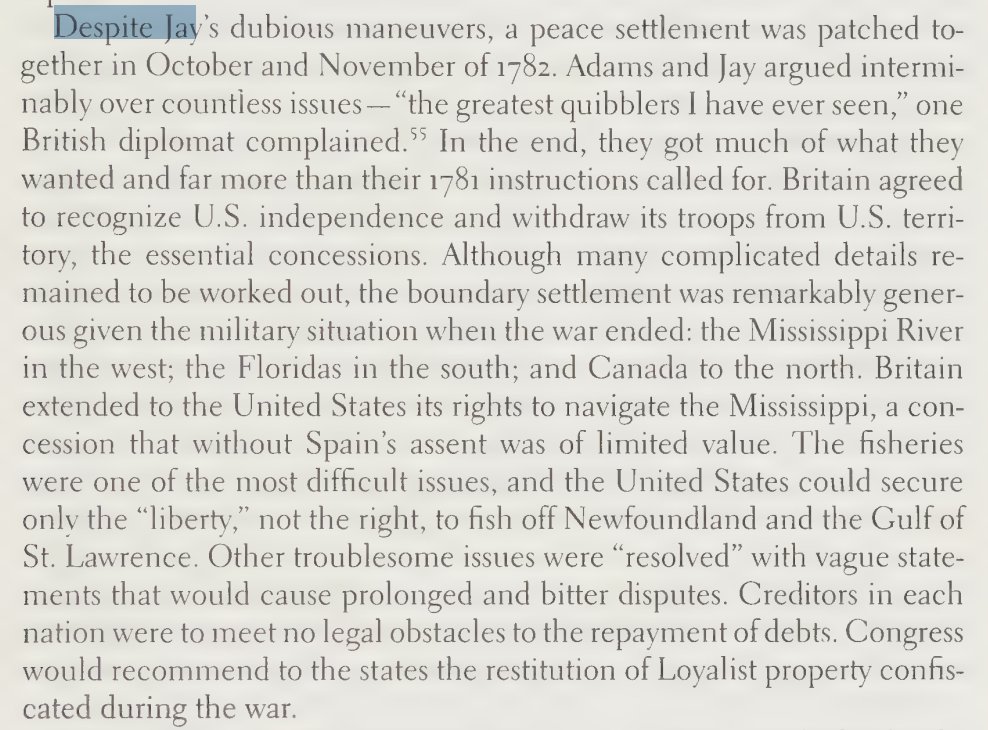
 Americans who moved into Spanish Louisiana retained "allegiance to the United States and displayed open contempt for their nominal rulers." Imagine that.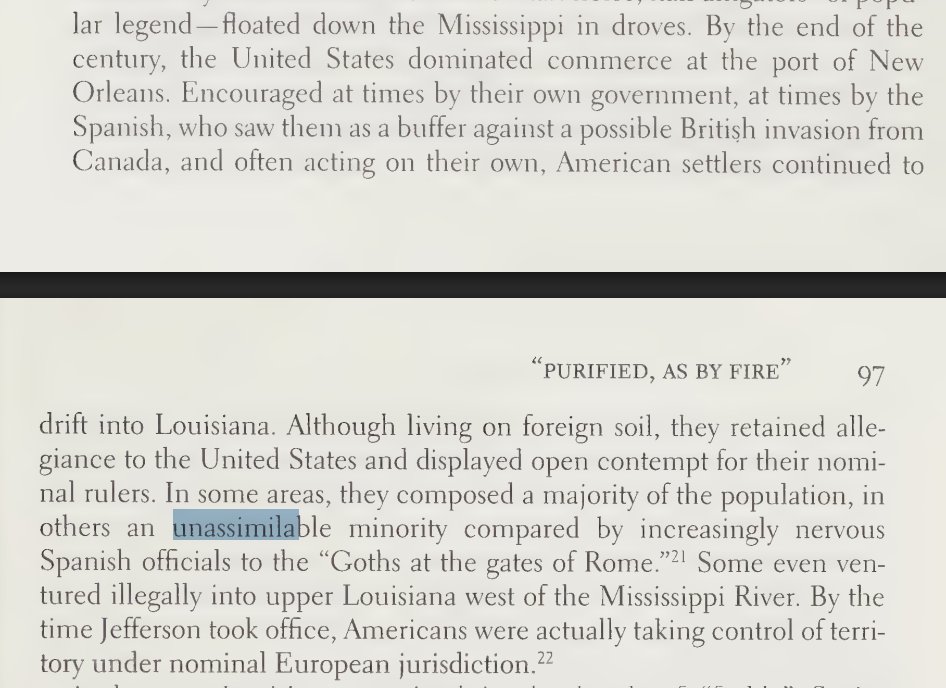

 The thinly-populated, but silver-rich North became a military frontier.