Polse, kjottboller, smakaker, krumkake, lefse, skekt svinekjott pa smorbrod brus, and plenty of aquivit #UffDa
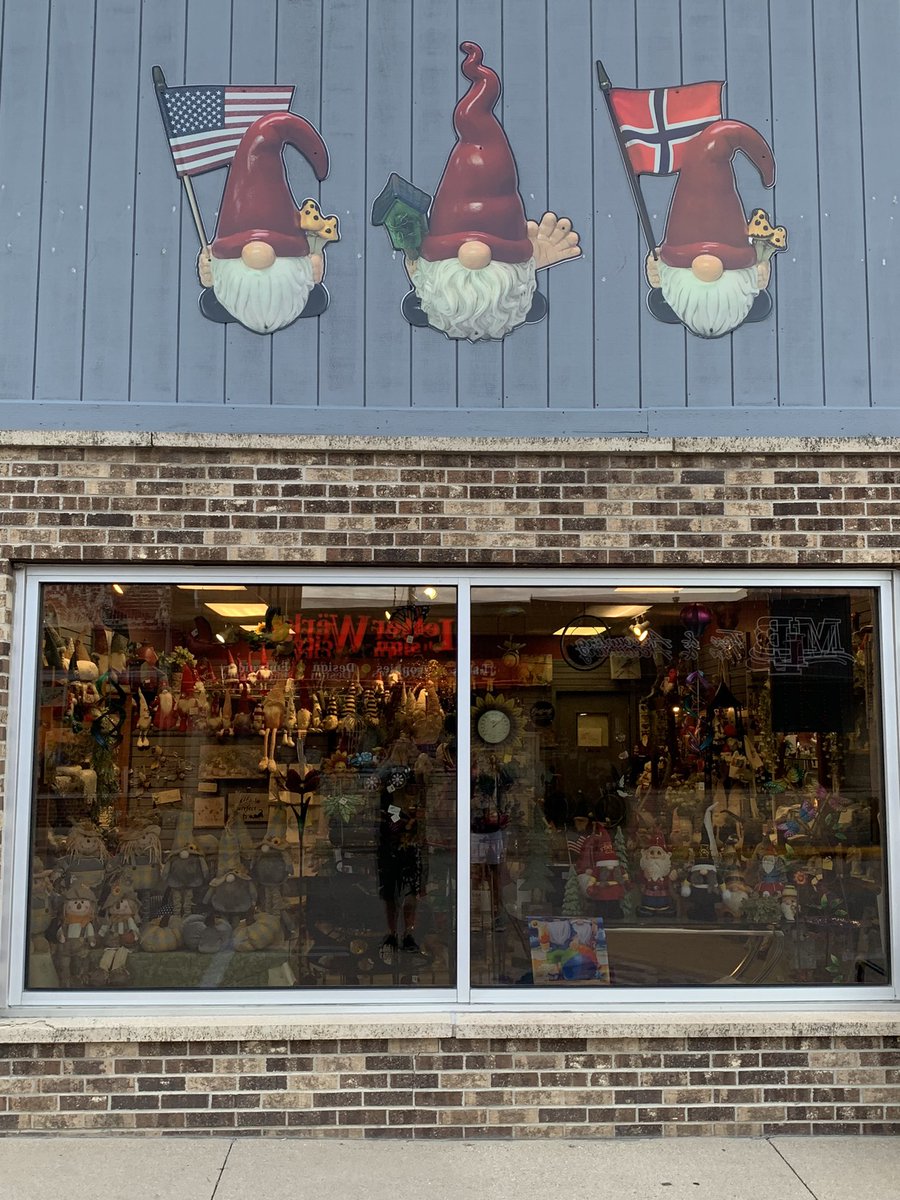
Brought to you by the Gnome Store Decorah, for all your gnome needs
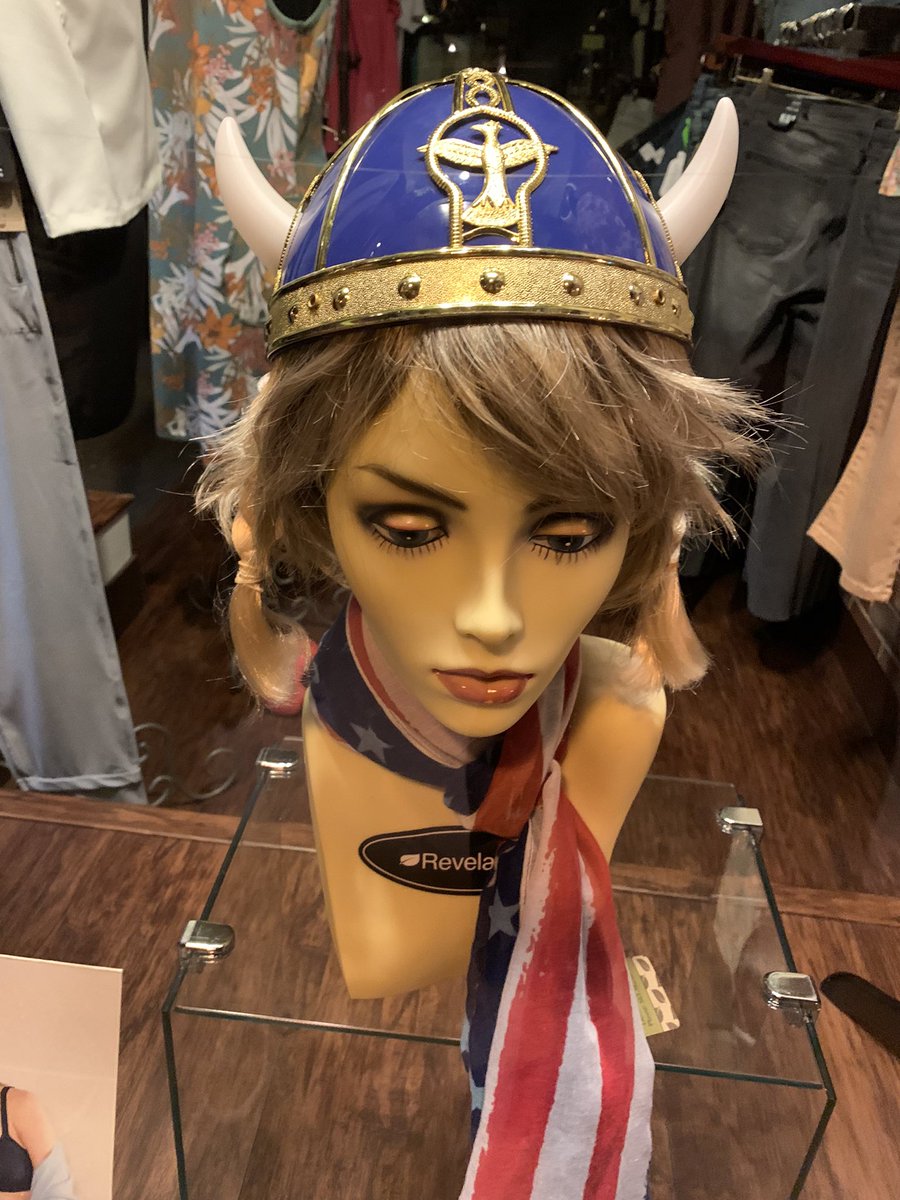
Ladies, what’s keeping you from looking like this
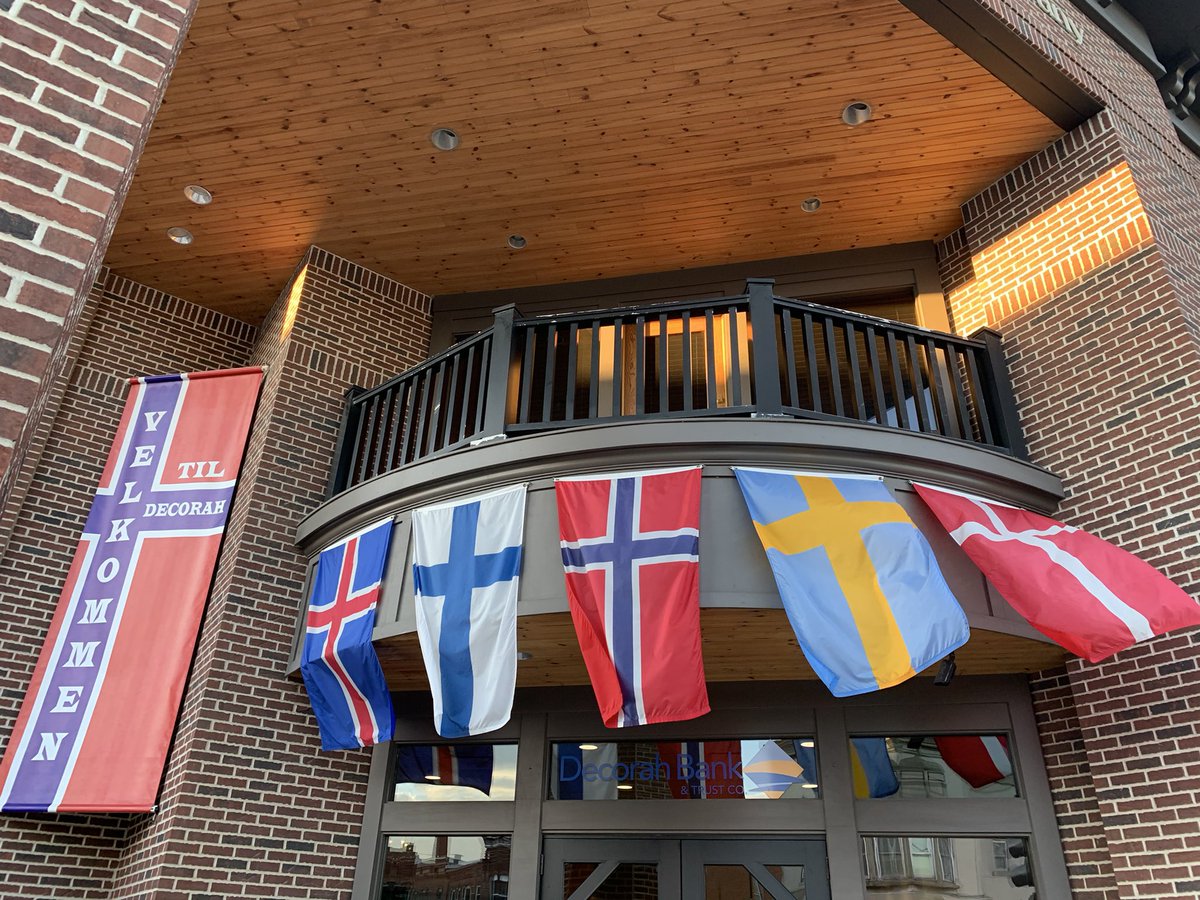
More Scandis than you can shake a stick at
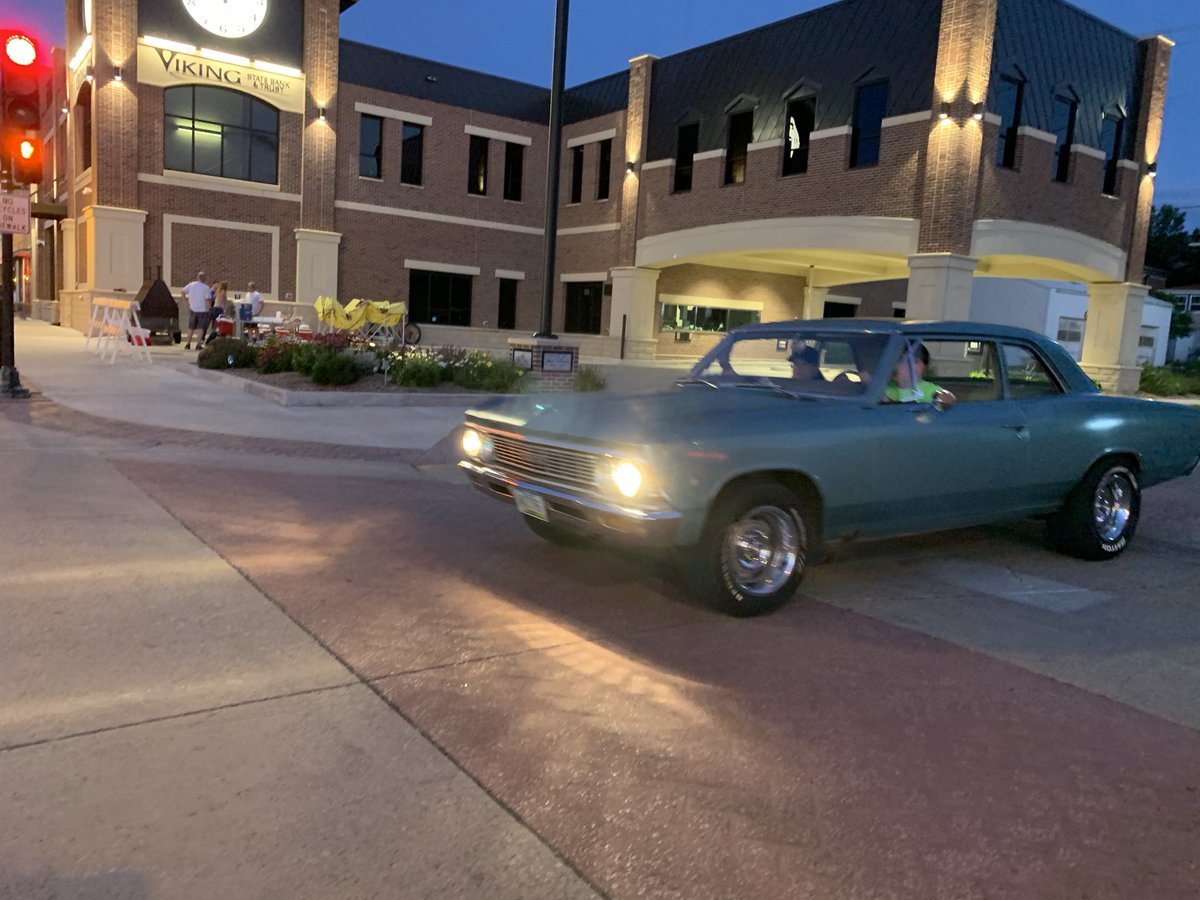
And a bitchin’ 66 big block Chevelle
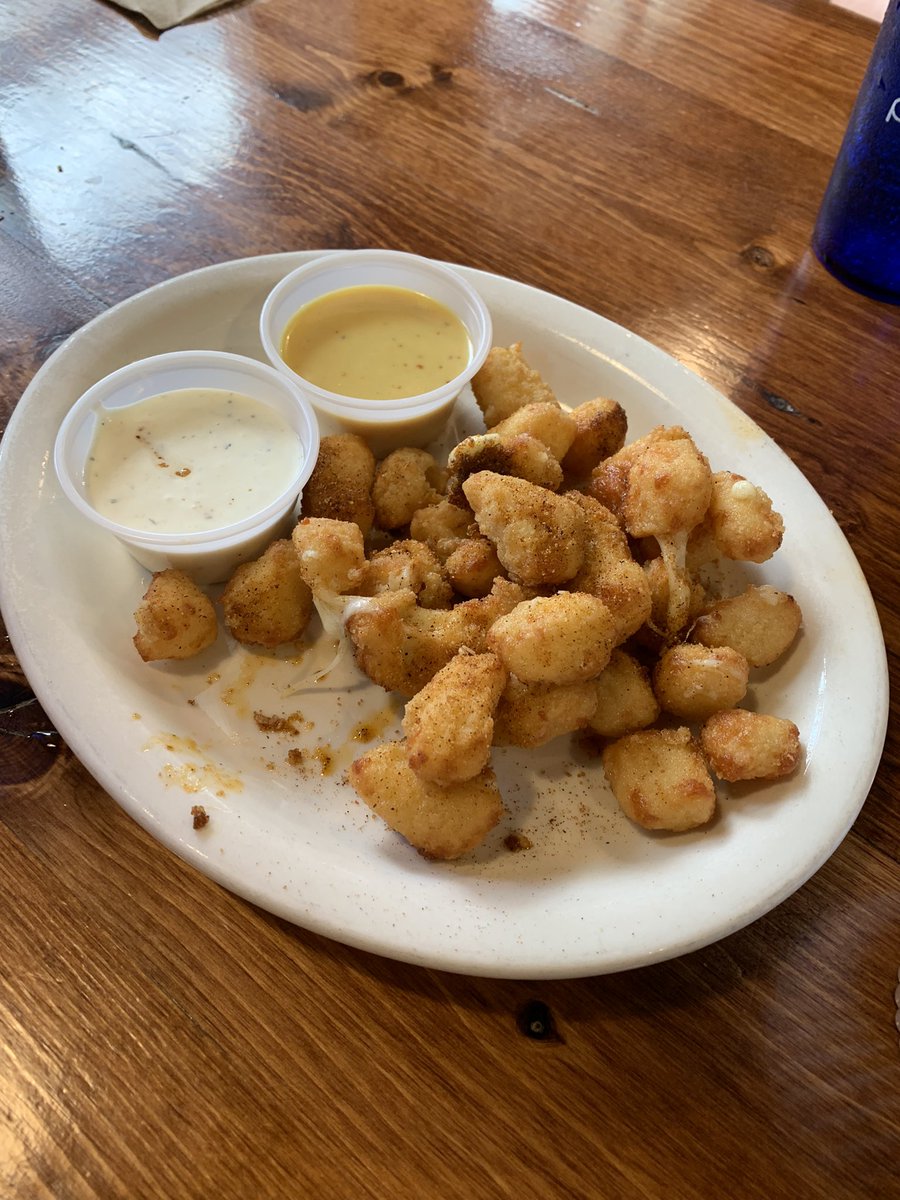
And oh ya hey dere deep fried cheese curds
Hotel Winneshiek is a true gem
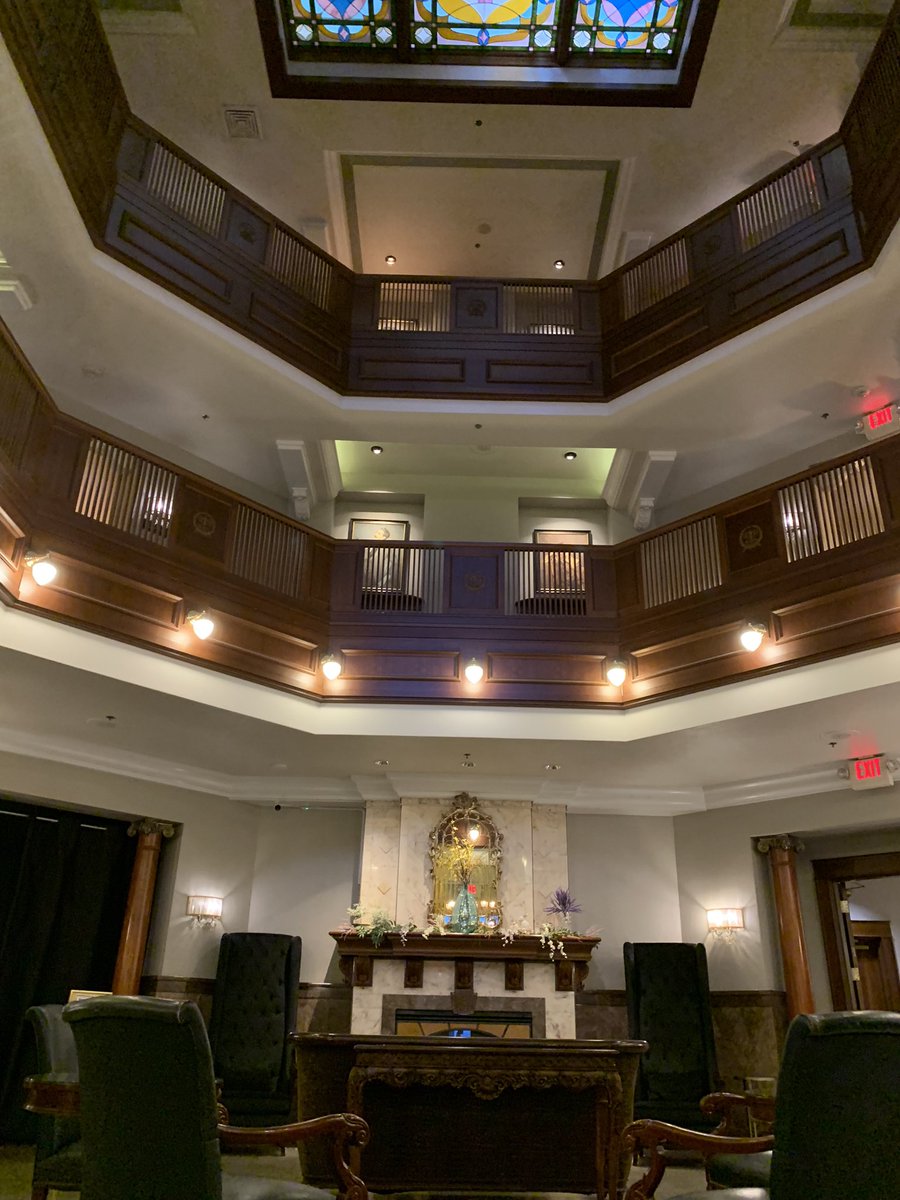
Anyhoo, Decorah is among America’s coolest small towns. Hard to get to, but harder to leave. Hats off to @PRBrewing@TGBrews@HotelWinneshiek@mabespizza and my wife’s amazing family for all the hospitality.
• • •
Missing some Tweet in this thread? You can try to
force a refresh

On the occasion of the 68th running of the Daytona 500, Dave's Car ID Service takes a deep short dive into the cultural roots of that annual event. Starting with George Washington and the Whiskey Rebellion of 1791-1794.
The fledgling nation of the United States was in deep need of tax revenues to satisfy debts incurred during the Revolution. Tariffs were already high, hampering trade, and Treasury Secretary Alexander Hamilton promoted a domestic excise tax on the production of distilled spirits. The "Whiskey Act" was passed in 1791.
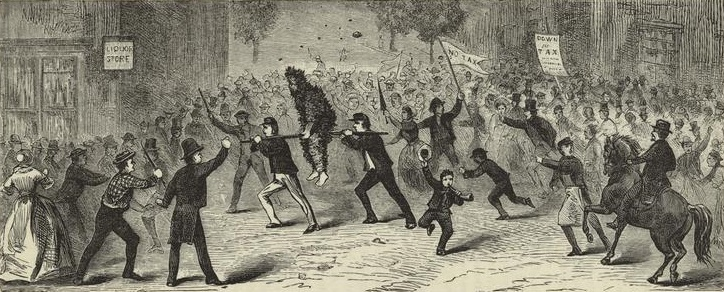
This did not sit well in those hard-drinking times, especially among the Scots-Irish settlers of Appalachian Pennsylvania who had a long tradition of distilling and selling whiskey. Revenue collectors were sent to collect the excise tax and, well, a rebellion ensued. Resulting in literal tarring & feathering, along with being run out of town on a rail, like the unfortunate tax collector depicted below.
That rebellion raged in and around Fort Pitt (later Pittsburgh) for the next 3 years. Newly elected president George Washington dispatched negotiators, and later militias, to quell the rebellion. It collapsed in 1794, resulting in 24 organizers being charged with treason. The Whiskey Tax would continue, and be a major source of federal revenue for the next 125 years.
What does that have to do with stock car racing? Hold your horses, I'm getting to that.
By the early 1900s, 30% of US federal revenue was generated by taxes on alcohol. But by enacting Prohibition with 18th Amendment in 1919, that source of revenue dried up and the federal government began relying more on the newly enacted income tax.
That of course led to all hell breaking loose in the now-contraband alcoholic beverage industry. Law or not, America's demand for hooch remained, and there were still go-getting distillers willing to supply it. Many of whom were from those same Appalachian Scots-Irishmen who rebelled against the Whiskey Tax more than a century prior. Particularly in the remote Southern Appalachians.
It was a golden opportunity for those entrepreneurial hillfolk, and a critical link in the supply chain was transporting freshly distilled corn liquor, a/k/a white lightning, a/k/a moonshine. It took a ballsy youngster who knew his way around cars, willing to risk his neck and jail time by outracing cops on moonlit winding backroads. With a trunk full of contraband flammable liquid.
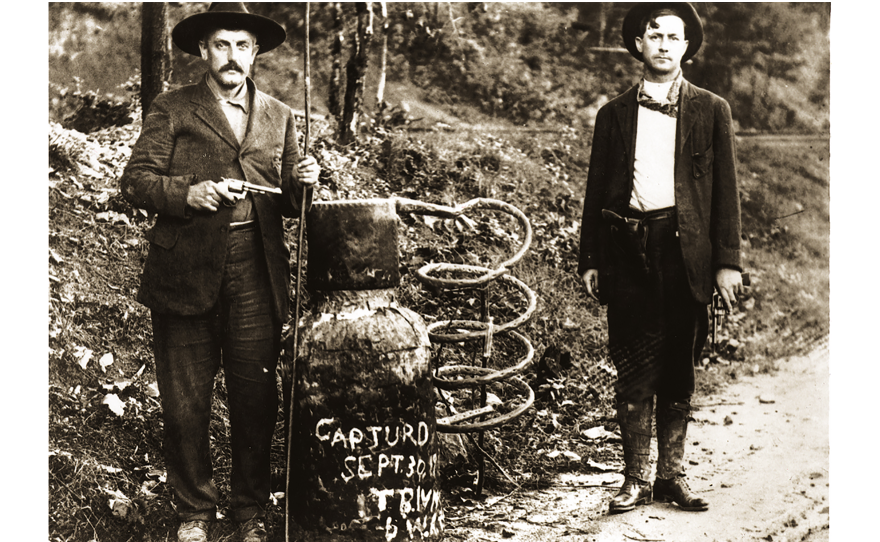
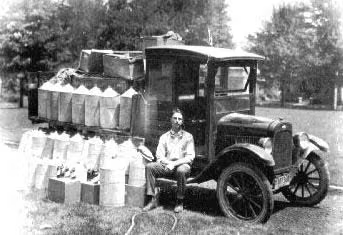
Thus was distilled the spirit of stock car racing, which still exists. Triple pun intended, I guess. In photo 1, a capture Tennessee still circa 1922; in photo 2, a very early moonshine runner with a 1923-25 Chevy flatbed.
Even after the repeal of Prohibition in 1933, moonshining continued. The alcohol excise tax kicked back in, and most of the South remained "dry counties" where Prohibition was, for all intents and purposes, still in effect.
Those mountain boys could still make nice money by transporting untaxed homemade from the backwoods to Atlanta, and Greensboro, and Winston-Salem. What's more, they had a new weapon in their arsenal: the Ford V8. No pursuing revenuer in a heavy government fleet car had a prayer of catching one, especially if it was hopped up, balanced & blueprinted, with shaved heads with triple carburetors.
The apotheosis of the moonshiner car was the 1940 Ford coupe: easily hopped up motor and suspension, huge trunk to contain gallons of hooch, and stealthy enough not to attract attention. A "stock car" if you will.
For recreation, local moonshiner runners around the South would compete against one another to prove their mettle as hopup artists and fearless drivers at local oval tracks. Most all in 1937-40 Ford coupes at the beginning.
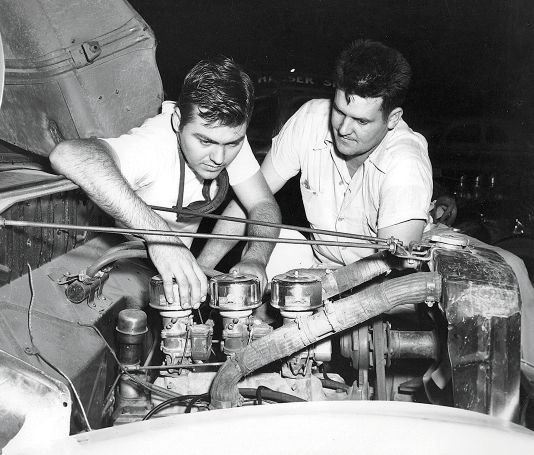
Some of those early outlaws became legends, like Junior Johnson, the subject of Tom Wolfe's "The Last American Hero." In #1, adjusting a Stromberg carb on a 1939-40.
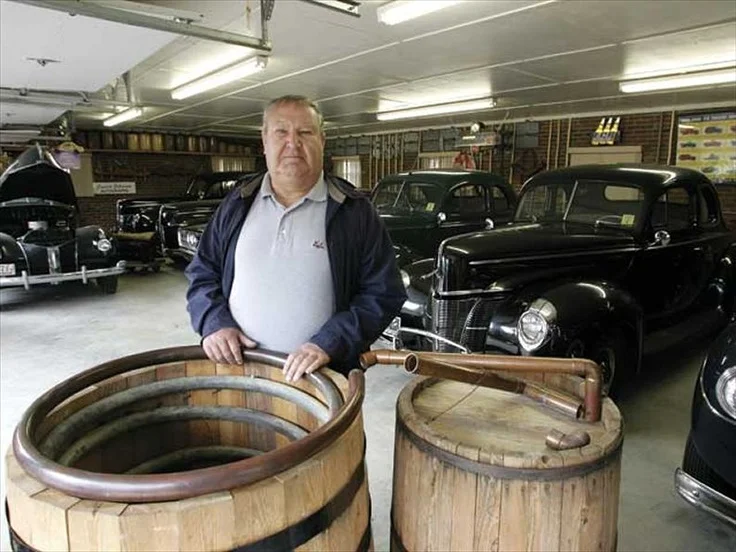
Less well known, but still a legend to your legends, was the late Willie Clay Call of Wilkes County North Carolina. Known to the ATF as "The Uncatchable." He not only made moonshine, but drove it himself. Behind him in #2 is his personal fleet of 1940 Fords, all of which he drove to transport the moonshine he made in those barrels. His legacy lives on in the now-legal Clay Family Distillery.
It feels like some kind of Evangelical holy roller pretend-Catholic cosplay going on here. As far as I remember there's a set list of prayers, Hail Mary, Our Father, Bless Us O Lord, Apostle's Creed, and one had to ask a priest to ask a Saint to pass it up to Celestial HQ
That's the thing, Catholics have prayer protocols and a strict prayer processing system to send it a regimented organized hierarchy, from priest to bishop to pope to saints and so on. This kind of tent revival politics stuff is totally an alien concept
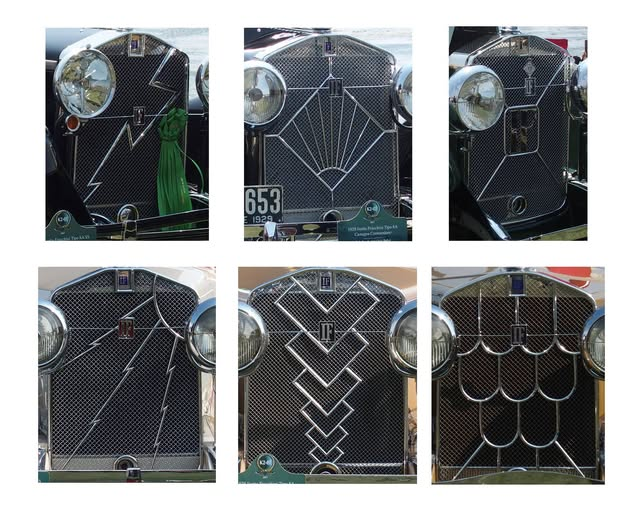
It may not be grilling weather, but it's Grilling Day at Dave's Car ID Service as I take a look at some of my favorite grillework. Starting with Isotta-Fraschini: all these are various I-F Tipo 8As of 1928-32 vintage. While not technically "grilles," these amazing Art Deco grille-protecting stone guards were offered as factory options during that era. They were created by IF's coachbuilder Carrozzeria Castagna in Milan, giving the cars a chic Empire State / Chrysler Building vibe.
*a while back several of you tagged me on this post from Mr. Turnbull, featuring Bogey and a circa 1930 I-F Tipo 8A. You also may remember Norma Desmond's I-F limo in SUNSET BOULEVARD. A visual cue to Tinseltown excess of the late 1920s.
Post-1929 stock market crash, flamboyant automotive excess was a bit passe - if not outright dangerous. If you were an uptown swell, best not be cruising past a breadline in your chauffeur-driven Isotta-Fraschini.
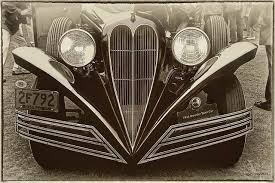
Enter the 1934-36 Ford Town Car by Brewster. Brewster was a New York coachbuilder that made its nut by building bespoke high dollar car bodies for the Park Avenue set; after Black Tuesday their fortunes plummeted like a ruined Wall Street trader. As a compromise, they offered a special bodied town car based on a humble everyman Ford. Featuring this lovely heart shaped "sweetheart grille," a nice Valentine's gift for that special Broadway showgirl.
Now if you were accosted by a mob of enraged Wobblies, you could just roll down the window and explain "it's OK fellas, it's only a Ford!"
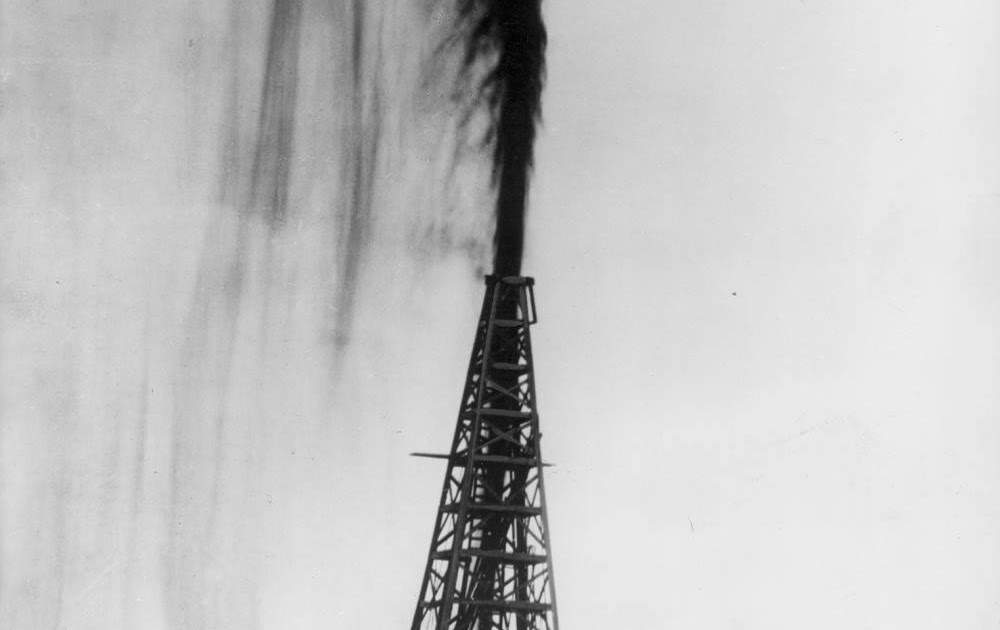
Happy Spindletop Day to all who celebrate from Dave's Car ID Service! 125 years ago today, the first major oil discover in the United States happened at the Spindletop oilfield outside Beaumont Texas, when the 200 foot high Lucas Gusher heralded a brave new world.
That bounty of dino juice created generations of brash new money Texas oil barons, paved the way for Exxon and Texaco, and largely ended the debate of gasoline powered vehicles vs steam vs electric. For better or for worse, the 20th century would be internally combusted.
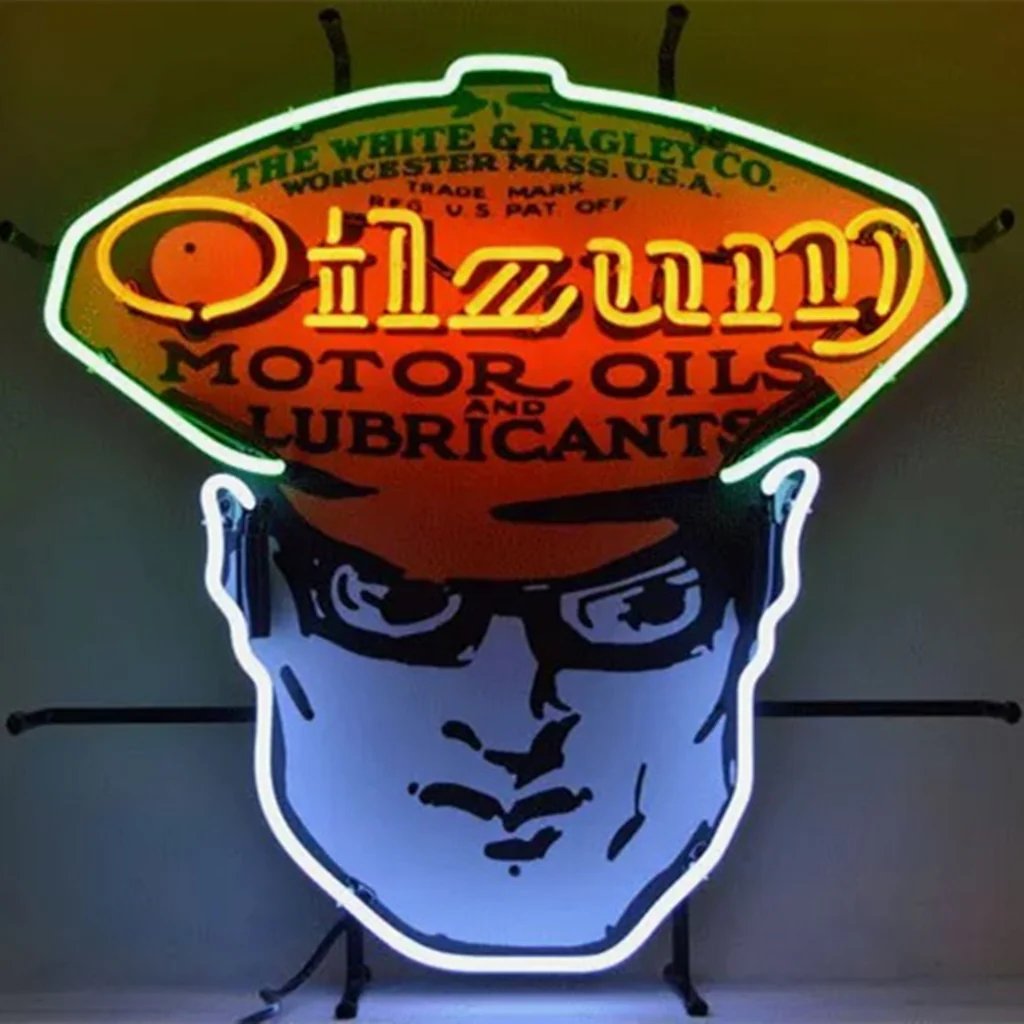
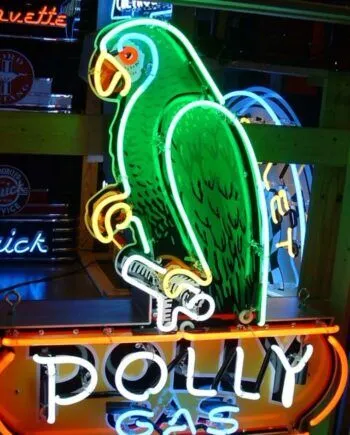
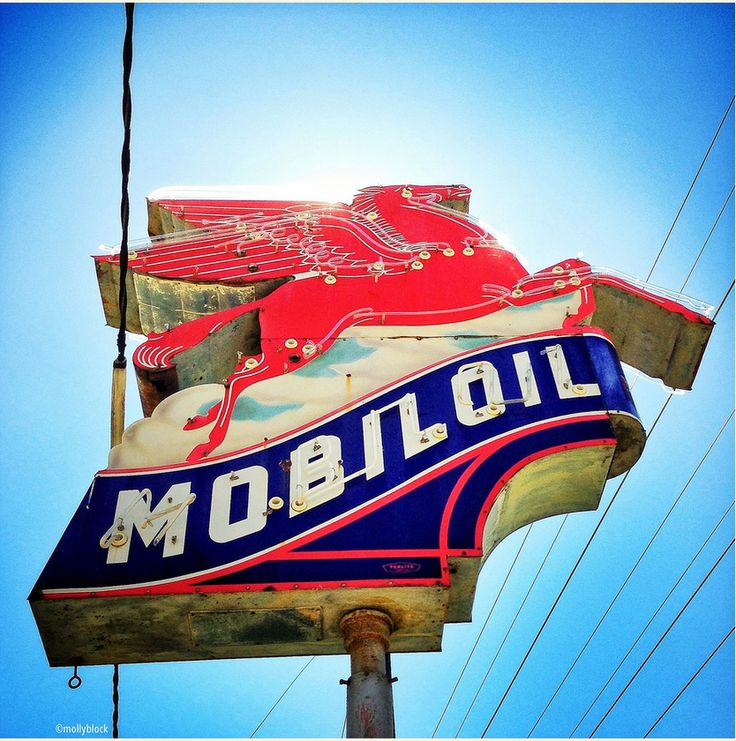
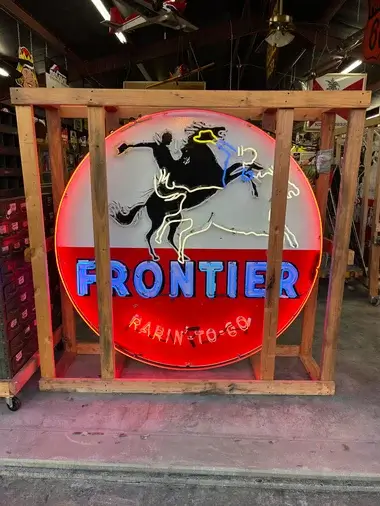
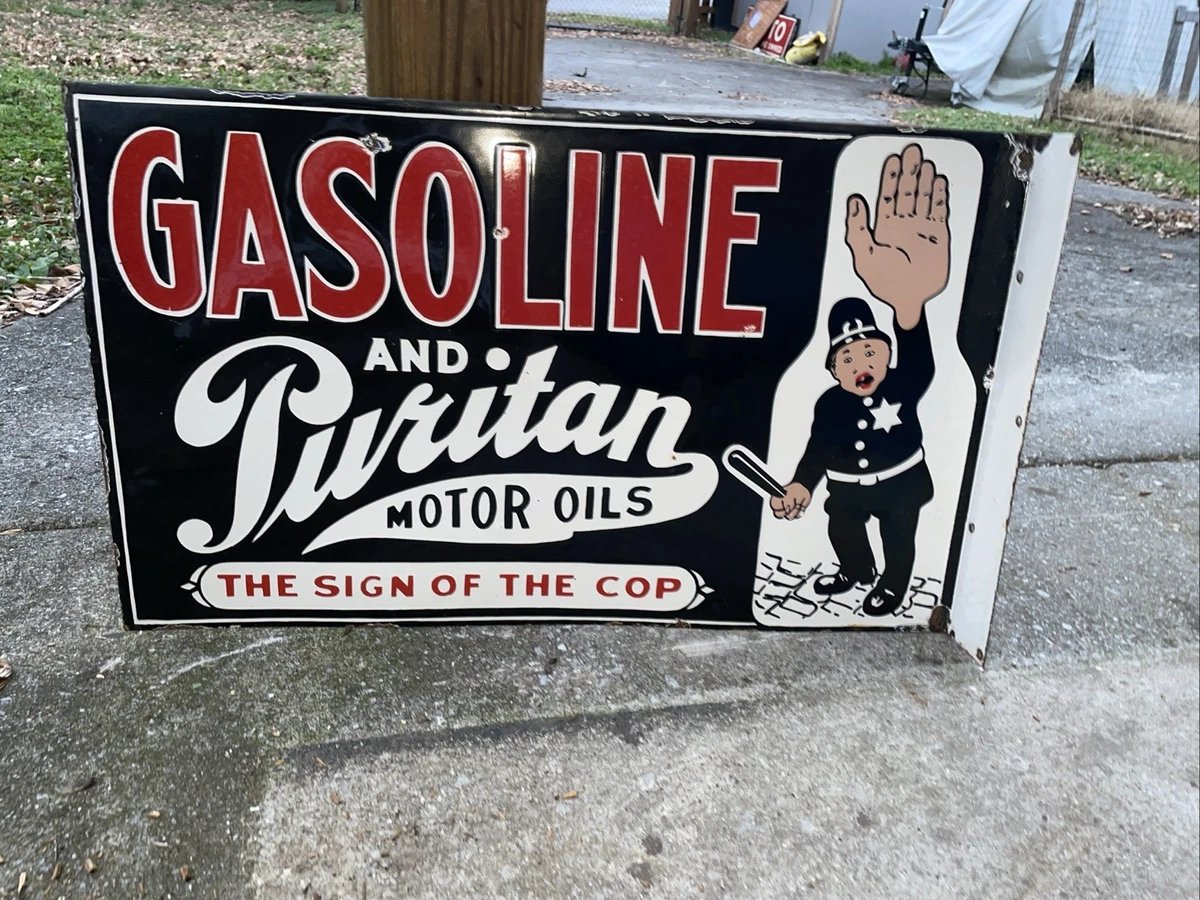
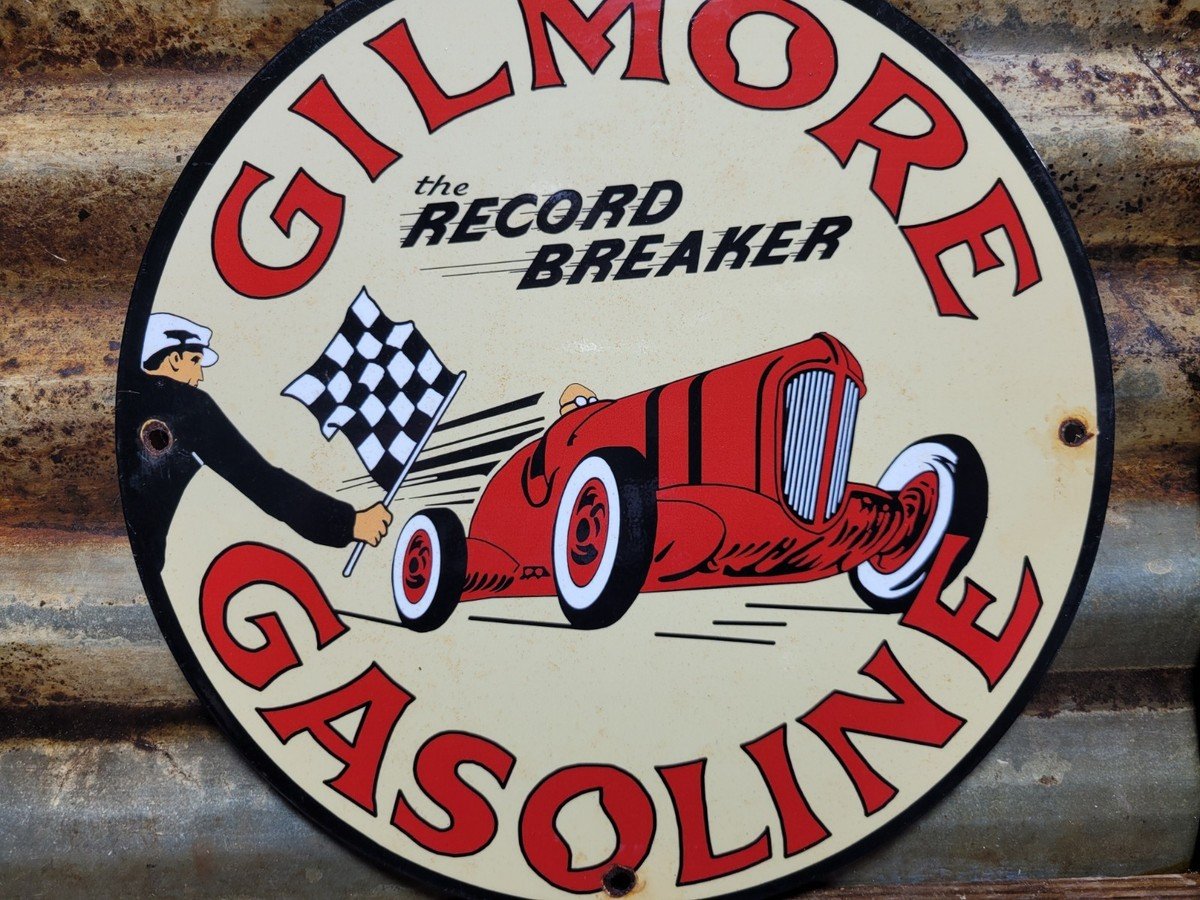
Apologies for the slow start to my car identifyting rounds today, thus this thread intro will be short. But I will note that one of the coolest things that resulted from the Spindletop Big Bang was the rise of petroleum advertising signage. A few examples of which I shall now share, without elaborate explanation. Neon!