
Our latest on excess deaths in Australia, covering all cause mortality to 30 April, plus excess from COVID-19 only to 31 July.
#Covid19Aus
TLDR: 13% excess (+6,800 deaths) Jan-Apr 22.
8% excess (+3,500 deaths) from Covid only May-July.
Covid third leading cause of death in 2022.
#Covid19Aus
TLDR: 13% excess (+6,800 deaths) Jan-Apr 22.
8% excess (+3,500 deaths) from Covid only May-July.
Covid third leading cause of death in 2022.
https://twitter.com/ActuariesInst/status/1554952531670798336
Total excess mortality for the month of April 2022 estimated at 9% (+1,200 deaths).
More than half is due to doctor-certified COVID-19 deaths. Other unspecified causes and coroner-referred deaths (which include some COVID-19 deaths) also made a significant contribution.
More than half is due to doctor-certified COVID-19 deaths. Other unspecified causes and coroner-referred deaths (which include some COVID-19 deaths) also made a significant contribution.

With January at 20% excess mortality, February at 15% and March at 7%, this takes total excess mortality for the first four months of 2022 to 13% (+6,800 deaths).

Deaths were above the above the 97.5th percentile for all but one week of 2022 so far.
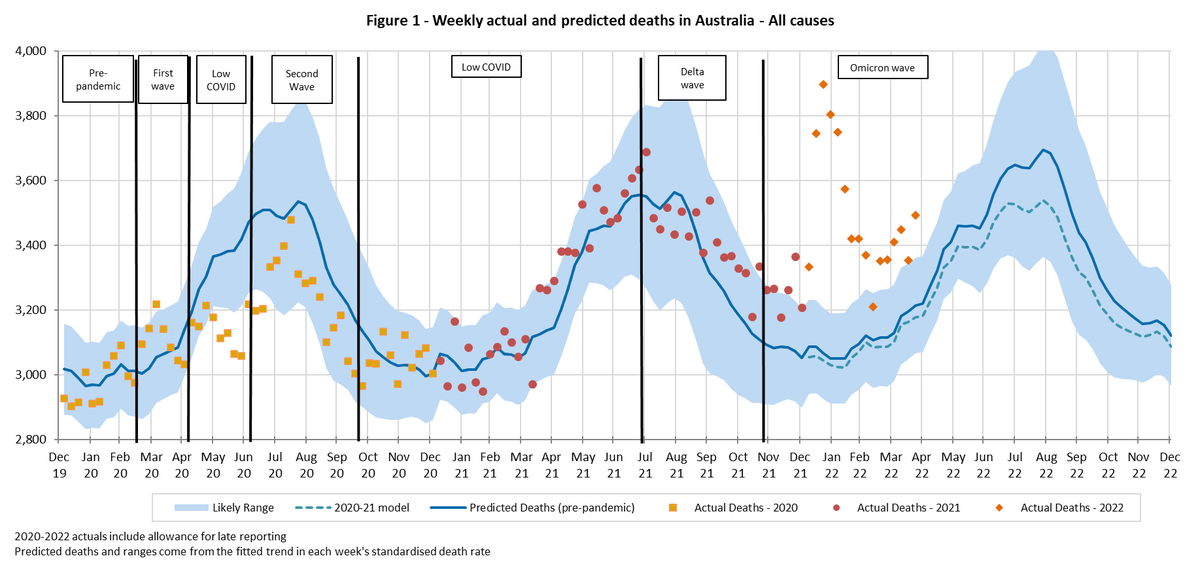
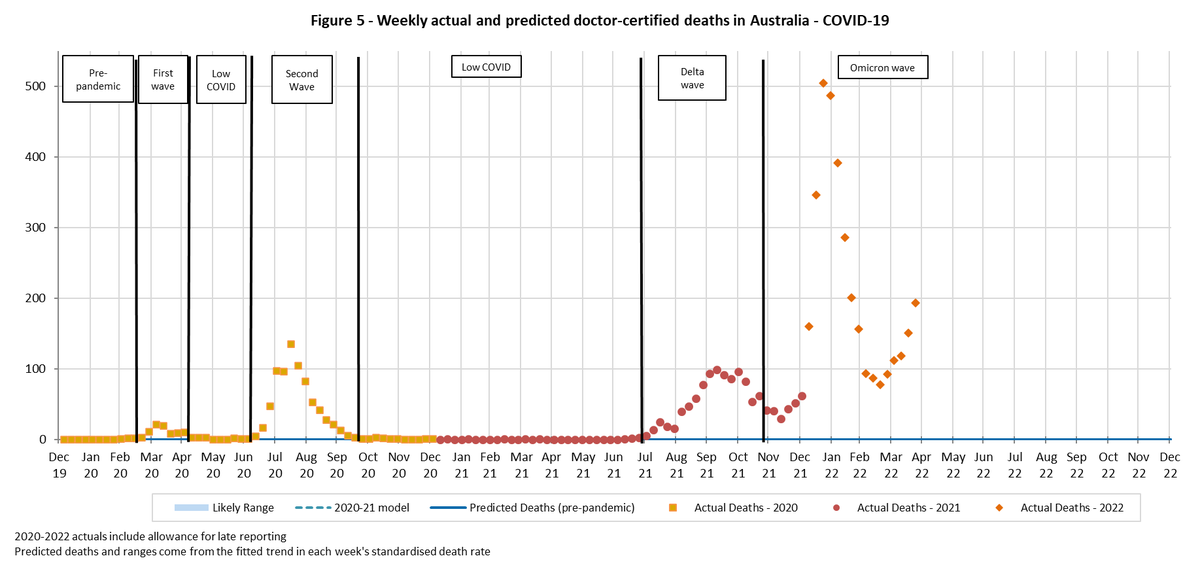
In the first four months of 2022 just over half of excess deaths are from doctor-certified COVID-19 (+3,600 deaths).
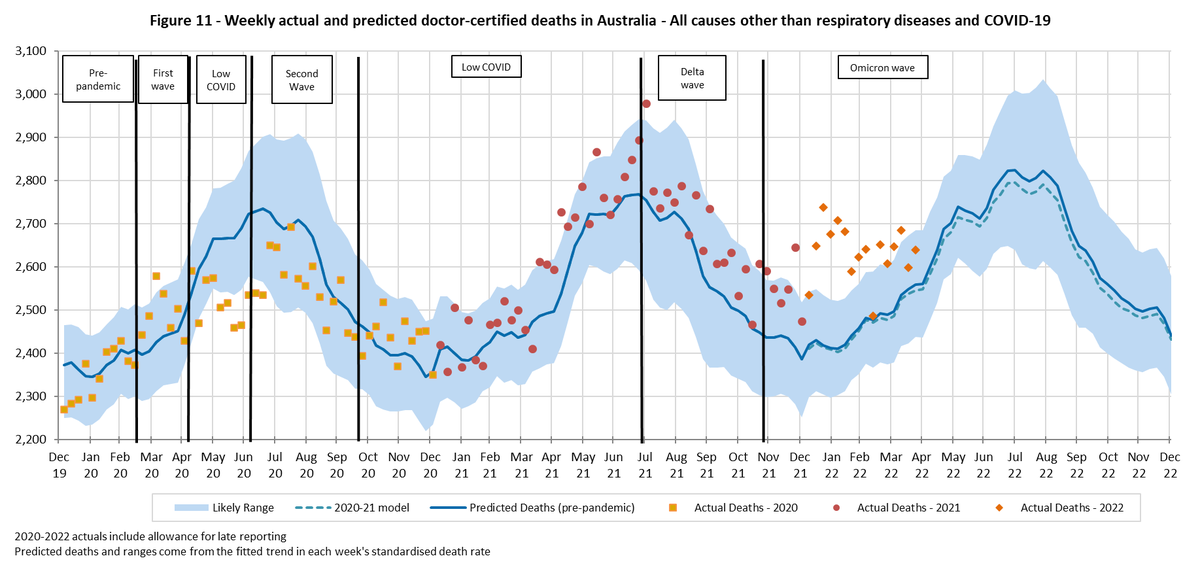
Doctor-certified deaths from heart disease, cerebrovascular disease, diabetes and dementia were all higher than predicted (by 5%-11%).
Doctor-certified deaths from the large catch-all category of “other diseases” were higher than predicted (+1,400 deaths).
Doctor-certified deaths from the large catch-all category of “other diseases” were higher than predicted (+1,400 deaths).
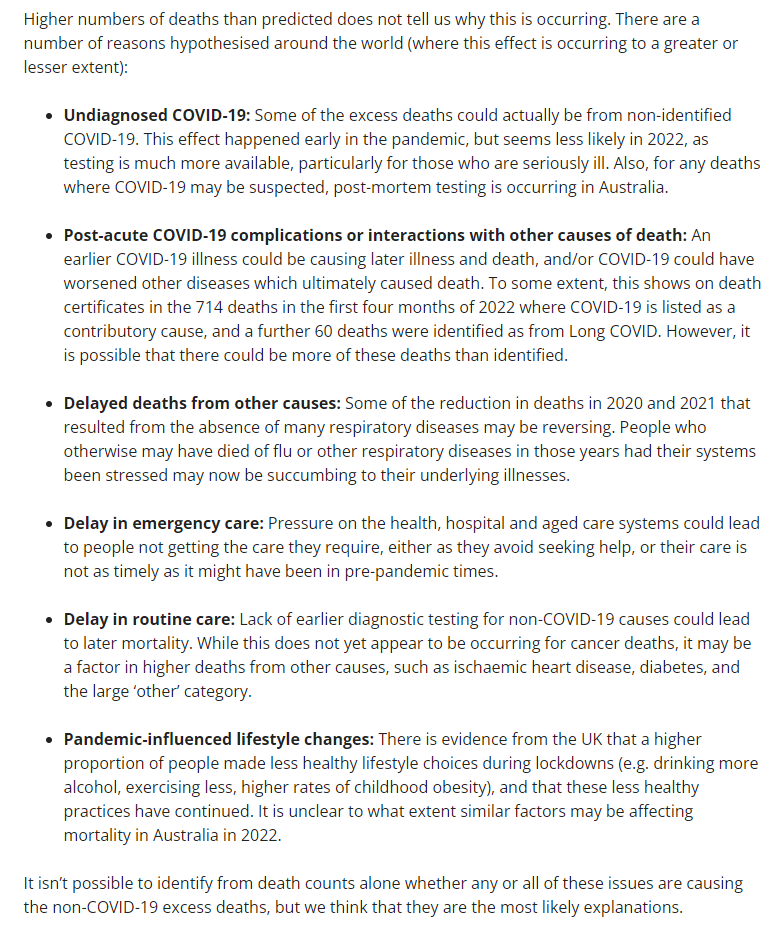
ABS data shows that in the first 4 months of 2022, there were 714 deaths in people who were COVID-19 positive at death but where COVID-19 was not the primary cause. i.e. COVID-19 was potentially a contributory factor in around 1/4 of the excess mortality from non-COVID-19 causes
What else could be causing the non-COVID-19 excess deaths?
(Do not tell me these deaths are due to vaccines. Do not tweet graphs at me that "prove" its vaccines. Do not tweet youtube videos at me that tell me its vaccines. My blocking finger is at the ready!
Vaccine-related deaths will be the subject of a future thread).
Vaccine-related deaths will be the subject of a future thread).
What do we know beyond April?
Daily surveillance reports in the month of July 2022 are the highest yet recorded. In the last three months, around 4,600 deaths from or with COVID-19 have been reported (1,300 in May, 1,400 in June, 1,900 in July).
Daily surveillance reports in the month of July 2022 are the highest yet recorded. In the last three months, around 4,600 deaths from or with COVID-19 have been reported (1,300 in May, 1,400 in June, 1,900 in July).
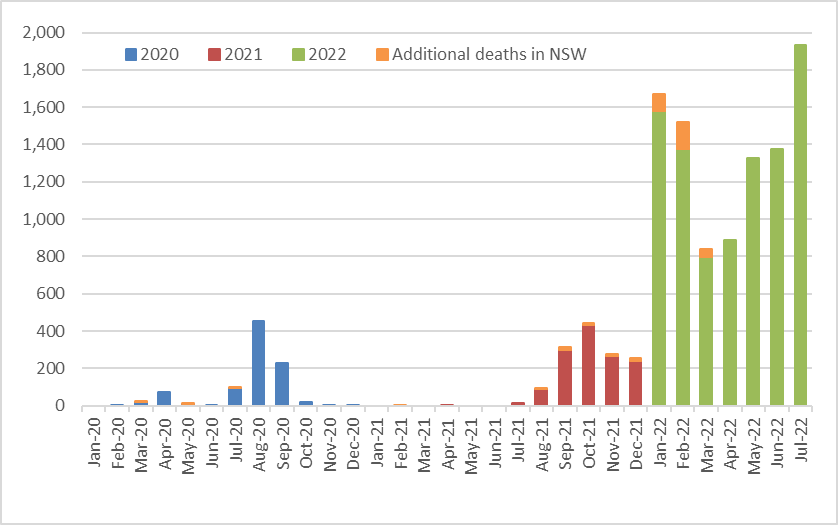
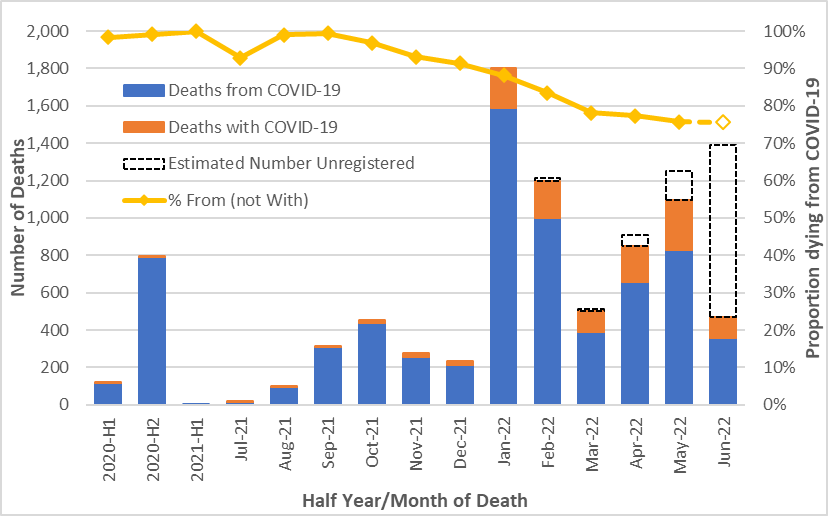
Of these 4,600 deaths, we estimate that 76% will be deaths from (not with) COVID-19.
Thus we estimate that COVID-19 deaths alone will result in excess mortality of around 8% (+3,500) for the months of May-July 2022, with overall excess mortality likely to be higher than this.
Thus we estimate that COVID-19 deaths alone will result in excess mortality of around 8% (+3,500) for the months of May-July 2022, with overall excess mortality likely to be higher than this.
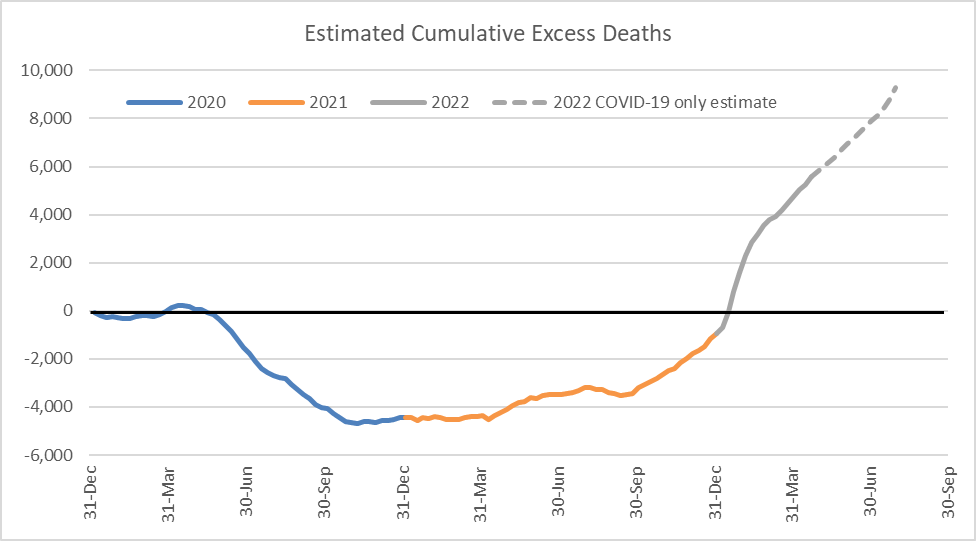
Combining our detailed excess death estimates to 30 April with our preliminary estimate of excess deaths due to COVID-19 only for May-July 2022, our conservative estimate is that Australia had experienced around 9,200 excess deaths across the pandemic by the end of July 2022.
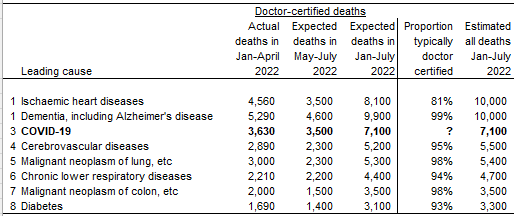
Deaths from COVID-19 are expected to reach 7,100 for the first 7 months of 2022 (3,600 doctor-certified deaths Jan-April plus 3,500 deaths May-July).
This would put COVID-19 as the third leading cause of death, behind ischaemic heart disease and dementia.
This would put COVID-19 as the third leading cause of death, behind ischaemic heart disease and dementia.
The end. Any questions?
• • •
Missing some Tweet in this thread? You can try to
force a refresh






