1/ @the_ins_ru has obtained an archive of complaints made to the Russian military prosecutor's office, which provides some very interesting insights from various perspectives into the experiences of Russian soldiers in the Ukraine war. Here's a 🧵 highlighting some of them.
2/ The girlfriend of a Russian paratrooper, Anatoly Nikolaevich Taimanov, wrote that he had been reported killed in Hostomel near Kyiv on 9 March. He was supposedly burned to death. She and his parents were given a body to bury on 15 April. However, she doubted it was him. 
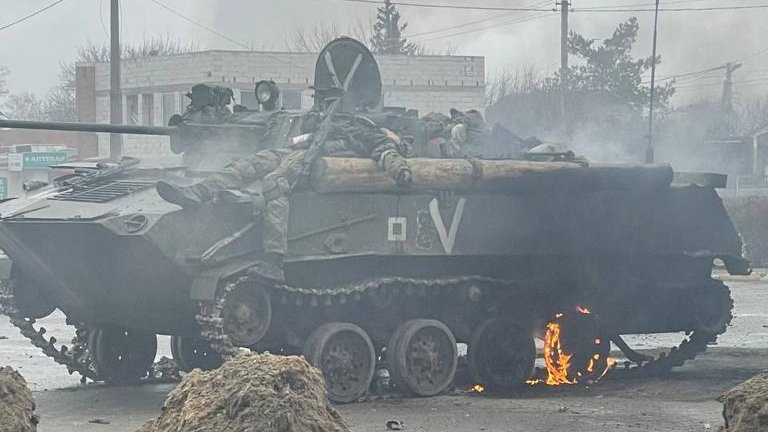
3/ She saw her boyfriend listed as a Ukrainian captive and wanted to verify it. However, Anatoly's parents did not want to help as "they are unwilling to ... try to find their son among the prisoners or the seriously wounded. They are satisfied with monetary compensation."
4/ Many complaints relate to conscript soldiers being sent illegally to fight in Ukraine (under Russian law they are not supposed to be sent to conflict areas). They were often reported to be living and fighting in appalling conditions with a lack of food and equipment.

5/ Several claims are made of conscripts being made to sign contracts fraudulently. As one parent put it, "Please help us return our children alive to their homes, because they did not voluntarily agree to serve under contract and got there by deception ...
6/ "They [commanders] collected military cards from the whole military unit and wrote that they were under contract". The complainant's son "reported that their unit for unknown reasons were forced by fraud to sign a contract, explaining it as a need for field training."
7/ Another conscript soldier, Aleksandr Vasilyevich Dmitriev, requested to sign a contract to serve in an army orchestra (he had previously studied at a musical conservatory). However, in February 2022 he was given a rifleman's contract instead.
8/ Dmitriev signed it on the understanding that he would do two weeks' field training before being transferred to the orchestra. He ended up fighting with the airborne troops (VDV) in Ukraine and had not been heard from since 24 February.
9/ A parent complained that the "rights of the military personnel are [being] violated by forcing them to enter into contracts fraudulently," citing the example of his own conscript son who was made to sign a contract on the basis of false representations by his commanders.
10/ He wrote: "According to some parents who contacted their sons, the command refuses to discharge the conscripts, forcing them to sign contracts, explaining to them, 'You will not be discharged anyway. But if you sign a contract, you will at least get some money.'"
11/ Some conscripts were reportedly simply told they were now contract soldiers. One soldier was taken to Valuyki in Russia the day before the invasion. He and other conscripts were told they were now 'kontraktniki', although none had signed contracts, and were sent to Ukraine.
12/ Another soldier complained that by "fraudulently using his passport data and forging his signature," his unit "illegally concluded a contract to participate in military operations" even though he had neither requested or signed a contract.

13/ An 18-year-old soldier informed his mother that he had refused a contract offer. However, she wrote, she subsequently had "a conversation with a commander who forced my son to sign a contract, persuaded him fraudulently, promising not to send him to the front."
14/ Another mother told the military prosecutor that "my friend's grandson came back wounded and told how [the conscripts] were beaten by commanders, forcing them to sign a contract".
Similar physical and psychological coercion seems to have been used on more than one occasion.
Similar physical and psychological coercion seems to have been used on more than one occasion.
15/ The mother of a Leningrad region soldier wrote how her son and others "were put under emotional pressure, urged to defend the homeland and help the soldiers in the hot spots." Putin's decree forbidding their deployment was overtly ignored, despite the conscripts citing it.
16/ "They were told: 'Watch more television'. And then [the commanders] added that they would be sent anyway, even if they did not sign the contract."
In another instance, conscripts were first sent to Ukraine and then brought back to Russia.
In another instance, conscripts were first sent to Ukraine and then brought back to Russia.
17/ But "on arrival, the conscripts were interviewed to say that they had signed the contract themselves before leaving for the 'special operation' ..."
18/ "A few hours afterwards, my son reported that they had been summoned to headquarters and threatened that they would be sent back to the war zone."
19/ Another parent wrote: "I have information that [my son's] commander is not letting conscripts go and is threatening them with desertion. Everyone in the military unit knows about it, they forced the children to sign contracts, and they forged their signatures."
20/ Russian military prosecutors announced in June that they had punished a dozen officers after conscripts were illegally sent to Ukraine, so the complaints may have had some effect. reuters.com/world/europe/r…
21/ Genuine contract soldiers also found that the army was unwilling to heed their requests to be allowed to resign. One wrote: "On 15 January 2022 I was sent to a training exercise in Syria on a ship."
22/ "But instead we were fraudulently sent to Ukraine, without asking my wish, to participate in a special military operation. From the very first days, my brigade was on the front line, in a firing position. I lost all my close comrades in the fighting."
23/ "I am in a depressed psychological state. I am 21 years old and I really want to LIVE. My commander refuses to accept my report. I have sent my appeal to the Baltic Fleet command. What should I do in this situation?"
24/ A woman complained that her fiancé, a contract soldier, was not being allowed to leave even though his contract was expiring:
"How is it possible that a person's contract is expiring and he is taken to Ukraine right at the registration office?"
"How is it possible that a person's contract is expiring and he is taken to Ukraine right at the registration office?"
25/ "He's been in jail for a month already, he wants to leave at any cost, they said if he tries to leave they will hang him with all the papers, what kind of bestial actions are these? Give me back my man and let me get married normally!"
26/ The threat of jail was being used against soldiers in Leningrad region as well: "Members of the military unit 02511, Leningrad region are being forcibly sent to fight in Ukraine under threat of imprisonment. Please look into this as soon as possible."
27/ Even when they did go, soldiers found themselves fighting indefinitely without any rotation. One complainant wrote of what was likely the 488th Motor Rifle Regiment:
"They have completed their initial task. They have received orders to go forward – or face criminal charges."
"They have completed their initial task. They have received orders to go forward – or face criminal charges."
28/ "But! They have nothing to go forward with, they have lost equipment, lost personnel, they are few there, they have nothing to carry out the order. They were promised a rest after completing the assigned task ..."
29/ Ironically, contract soldiers who deliberately tried to get themselves fired by breaching their contract terms, failing to report for duty, receiving reprimands, publicly posting data about themselves and their duty station on social media, still couldn't get dismissed:
30/ "I have repeatedly declared my unwillingness to serve in the Russian Armed Forces. I have ... [had] unlawful absence from the service, as well as filed a report for dismissal for non-compliance with the terms of the contract on my part."
31/ "I see inaction and complete indifference towards me from the military unit ... I am asking for help in solving this issue – dismissal from military service due to non-compliance with the terms of the contract on my part."
32/ Another one complained:
"Disciplinary practices are very weak, I have 4 severe reprimands, a warning of incompetence, and no performance review board is being conducted in relation to me."
"Disciplinary practices are very weak, I have 4 severe reprimands, a warning of incompetence, and no performance review board is being conducted in relation to me."
33/ One soldier racked up 17 reprimands but still couldn't get himself dismissed: "The military unit sends the documents for dismissal to higher authorities, but ... a refusal comes from there for various reasons (either they find mistakes, or simply leave me...)."
34/ Several of these complaints are written in very similar terms, likely indicating that the same lawyer had advised them to follow a particular strategy to get them out of military service. Interestingly, the complainants include officers as well as ordinary soldiers.
35/ H/T to @EliotHiggins for flagging this up – the archive is linked below (in Russian). I'll continue this thread in a second installment shortly. /end
theins.ru/politika/252097
theins.ru/politika/252097
36/ See below for my other threads on Russian soldiers' experiences in Ukraine:
https://twitter.com/ChrisO_wiki/status/1556386752524320781
*He subsequently (typo)
Thread continuation here:
https://twitter.com/ChrisO_wiki/status/1557469084622721026
• • •
Missing some Tweet in this thread? You can try to
force a refresh