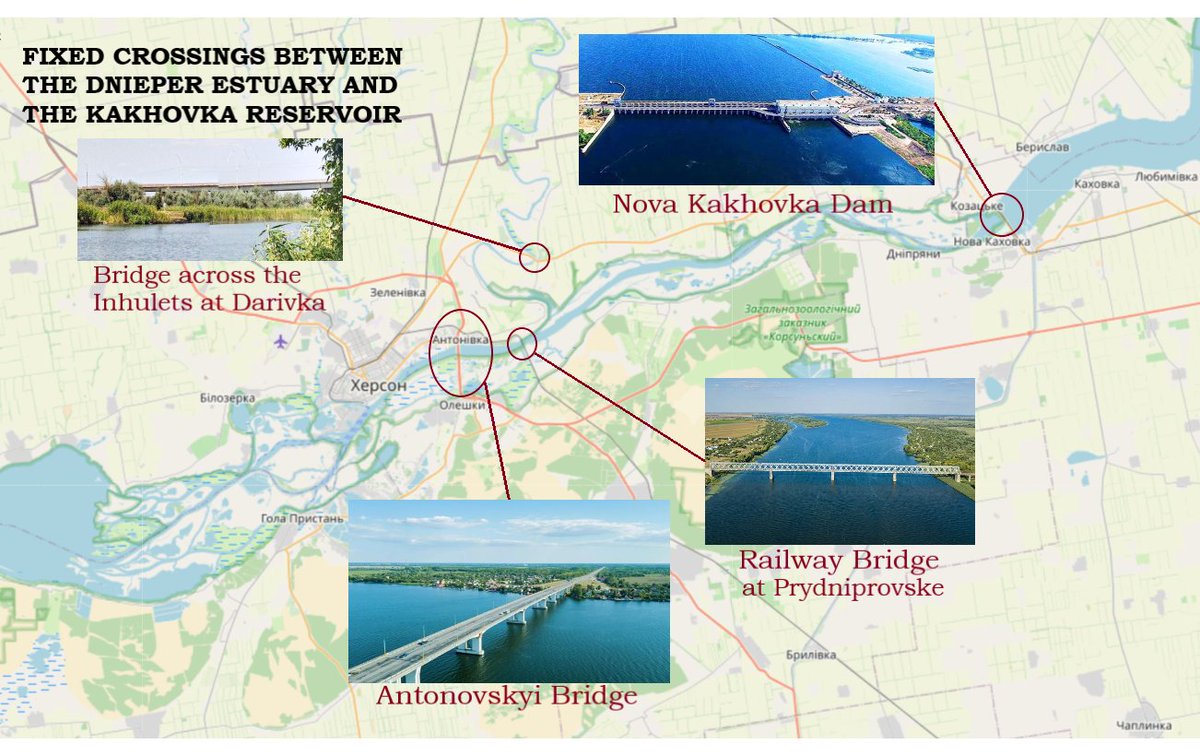
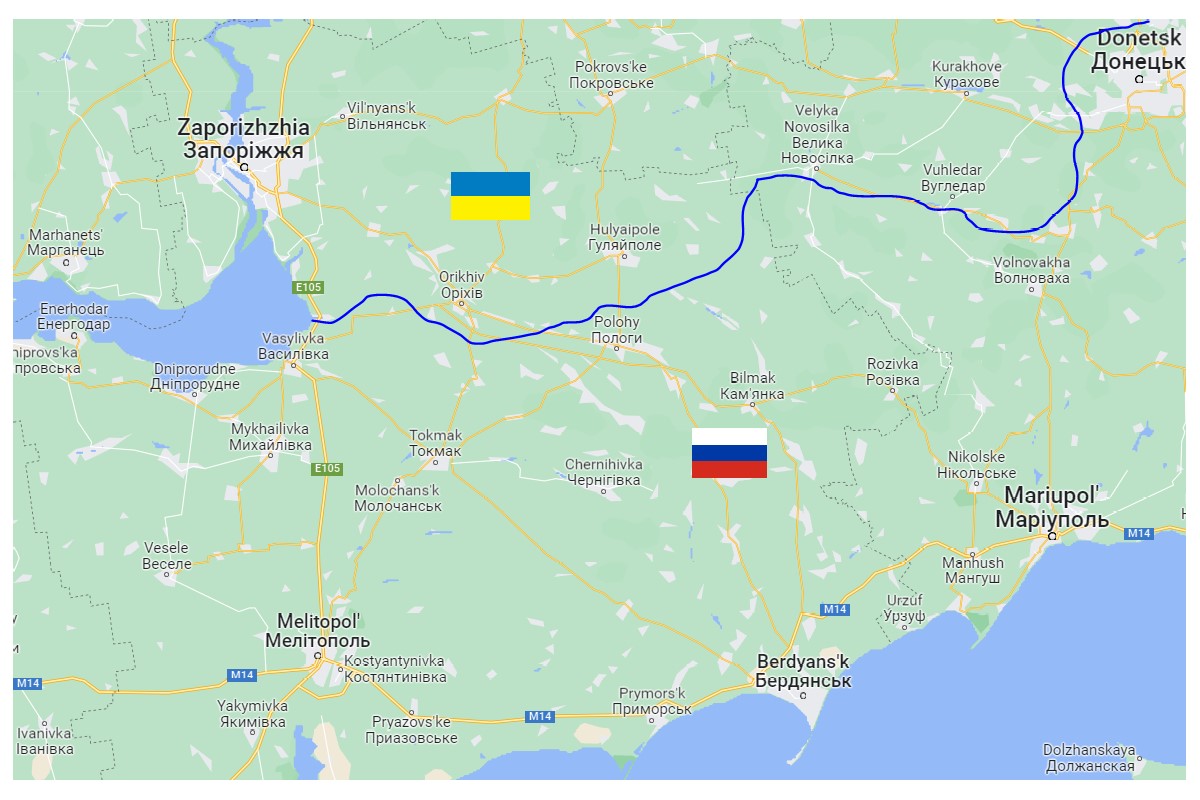
I recently described how 🇺🇦 has sought to cut off 🇷🇺 in northern Kherson Oblast by blasting two strategic bridges over the Dnieper (and another over the Inhulets). This follow-up 🧵 examines the third and last Dnieper crossing - the Nova Kakhovka Dam. 1/21 
https://twitter.com/PaxLusitanica/status/1553377948111196160

As the 6th and southernmost dam on the Dnieper, the Nova Kakhovka Dam was finished in 1956 as part of a hydroelectric plant with a reported capacity of 335-357 MW. It is just north of Nova Kakhovka city (pop. 45,000), now held by 🇷🇺's 22nd Army Corps. 2/21 en.wikipedia.org/wiki/Kakhovka_…
Located 60 km northeast of Kherson city, the dam was a key target for 🇷🇺 forces, who seized it already on 24 February. The P47 regional road (and adjacent railway) on the dam has helped them to supply their troops on the northern bank of the Dnieper. 3/21
https://twitter.com/PaxLusitanica/status/1496816321572401153
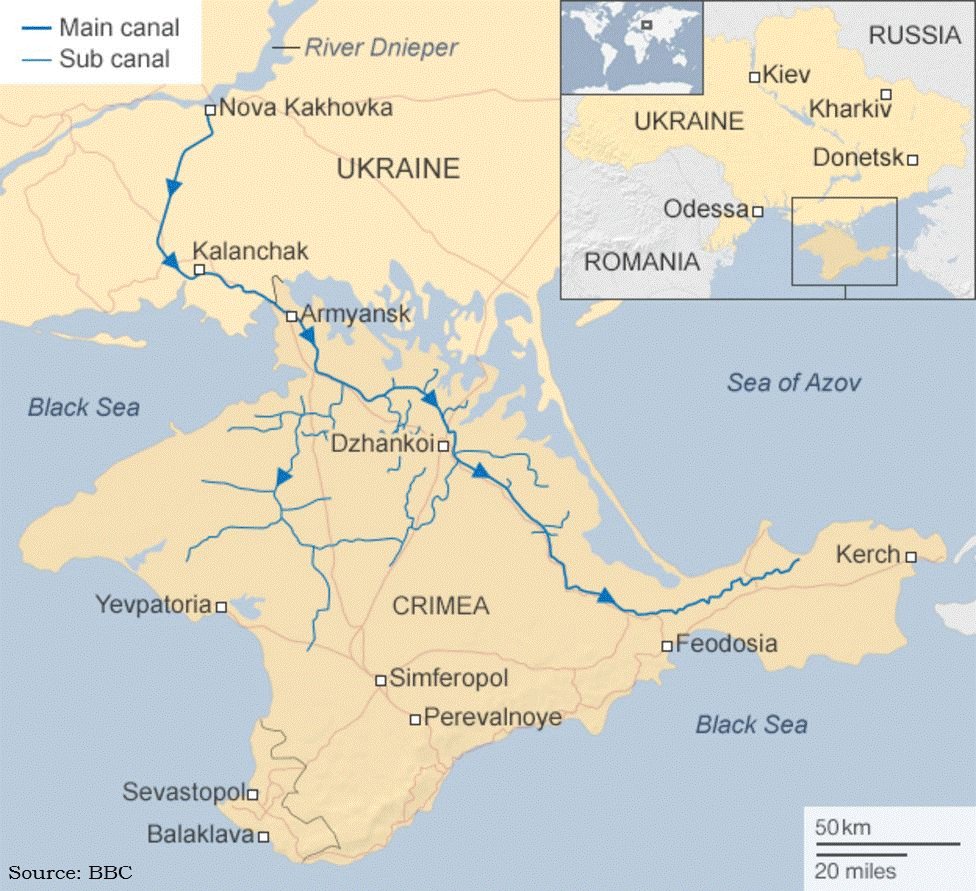
The Kakhovka Reservoir is also the source of the North Crimean Canal, which begins at Tavriisk, 2 km southeast of the dam. Before 🇺🇦 closed it in 2014, the canal supplied 85% of water in Crimea. Since early March, 1.7 million m³ of water has been sent to Crimea daily. 4/21
With the situation now increasingly dire for 🇷🇺 troops in Kherson Oblast, the dam has come to represent a possible 'emergency exit' in case of an evacuation south of the Dnieper. As Sun Tzu says: "When you surround an army, leave an outlet free". 5/21
https://twitter.com/TrentTelenko/status/1556735874745917441

To soften 🇷🇺 defences at Nova Kakhovka, 🇺🇦 forces have in recent weeks used long-range, high-precision HIMARS rocket launchers to wreak havoc on selected military depots and equipment. The success of these artillery strikes has been evident. 6/21
https://twitter.com/bayraktar_1love/status/1546583740184514560
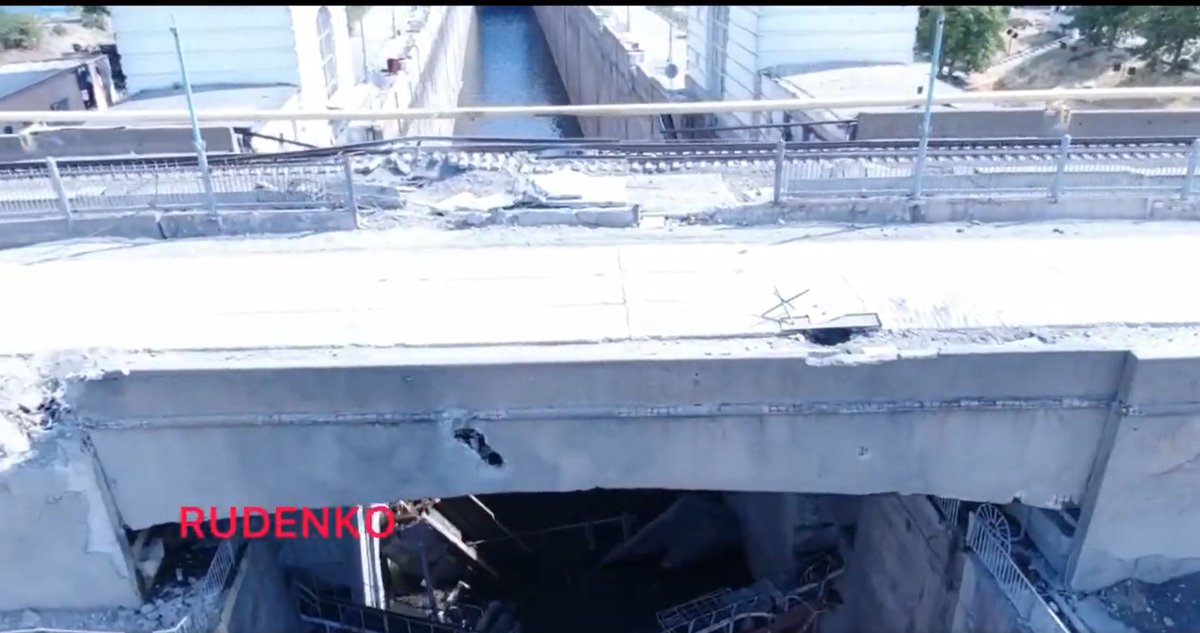
These 🇺🇦 bombardments have also successfully targeted the dam itself - not its walls, but a narrow road-rail bridge on top that straddles the canal locks, which connects the 18 km³ Kakhovka Reservoir with downstream Dnieper and its estuary. 7/21
https://twitter.com/bayraktar_1love/status/1549338782008213505
In a variation on this theme, 🇺🇦 also hit another part of the dam complex earlier this week, namely a curved road section / bridge closer to the main dam walls. This section will prove significantly more difficult, yet not impossible, to repair. 8/21
https://twitter.com/noclador/status/1556586518508195840
With their movement now restricted, 🇷🇺 has continuously sought to carry out repairs. Unlike the two large Dnieper bridges near Kherson, it is not infeasible to fix the two small dam bridges, but fresh 🇺🇦 attacks continue to nullify such efforts. 9/21
https://twitter.com/EuromaidanPress/status/1557479148469112832
Some trigger-happy Twitterati have entertained the thought that 🇺🇦 forces could bring down the entire dam complex, 617 Squadron style, to easier surround and annihilate nearby 🇷🇺 troops. So why not blow the whole dam(n thing) to smithereens? Well, because it is a bad idea! 10/21

In 1941, the massive DniproHES dam on the Dnieper near Zaporizhzhia was dynamited by retreating Red Army in an attempt to cut off the advancing German forces. Thousands of civilians perished in the resulting deluge downstream. 11/21 rferl.org/a/european-rem…
On 29 April, the 🇺🇦 online newspaper Vgoru posted an article in which a purported expert, the anonymous "Mr Vitaly", offered his insight on the likely consequences of any significant damage being inflicted on the Nova Kakhovka Dam. 12/21 vgoru.org/post/obstrili-…
He argued that a 1941 scenario is unrealistic due to a low likelihood of a total dam collapse. External shocks would be unlikely to breach the dam walls due their massive clay-and-concrete construction. Only an internal, deliberate demolition might be able to destroy them. 13/21
A more realistic scenario could be a breach of the dam locks. This would result in significant flooding downstream, but hardly a tsunami-like wave as in 1941, since the water would simply “seep out”. So what would the effects of such a limited breach look like? 14/21
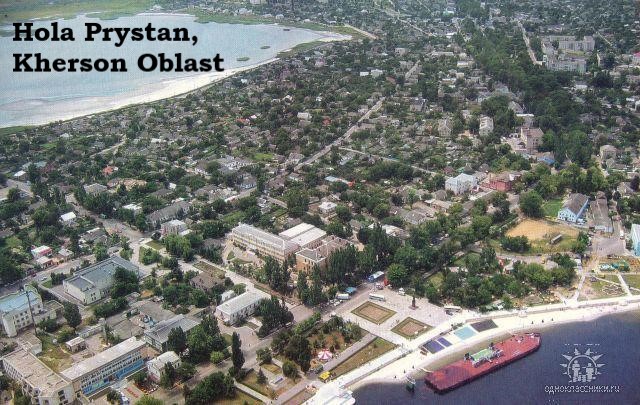
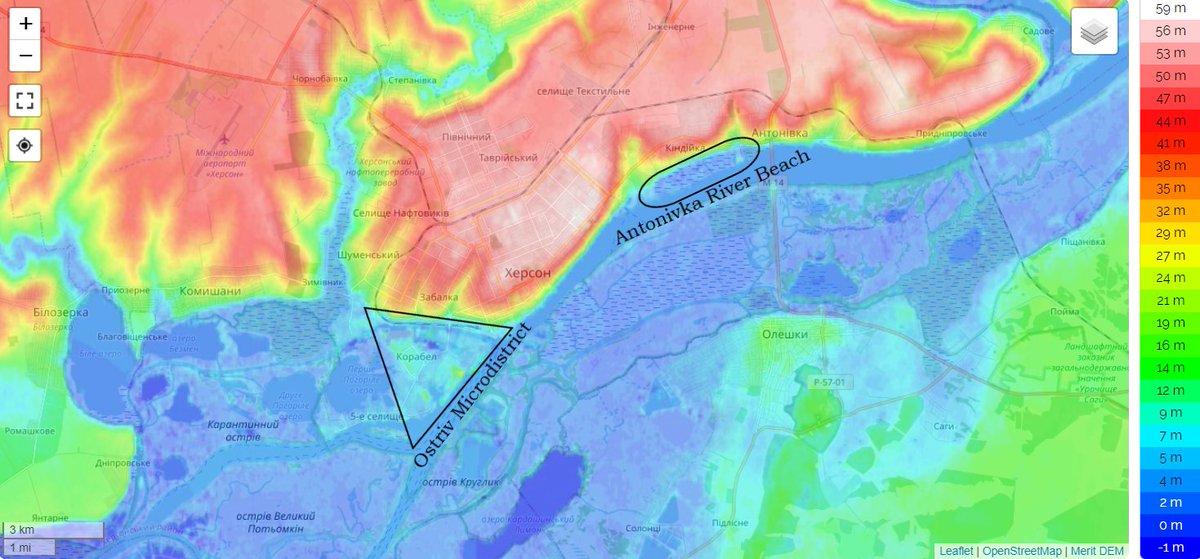
According to "Mr Vitaly", low-lying areas the southern bank would be amongst the first areas to fall victim to the rising waters. This would include parts of Nova Kakhovka itself, but also the stretch from Oleshky to Hola Prystan, directly across from Kherson city 15/21
On the northern shore, some areas in Kherson city would also be flooded, notably the Ostriv (Korabl) Microdistrict. It is mainly an industrial area with a shipyard, but also contains a residential zone that is home to Kindergarten No. 82 and School No. 57 in Kherson. 16/21

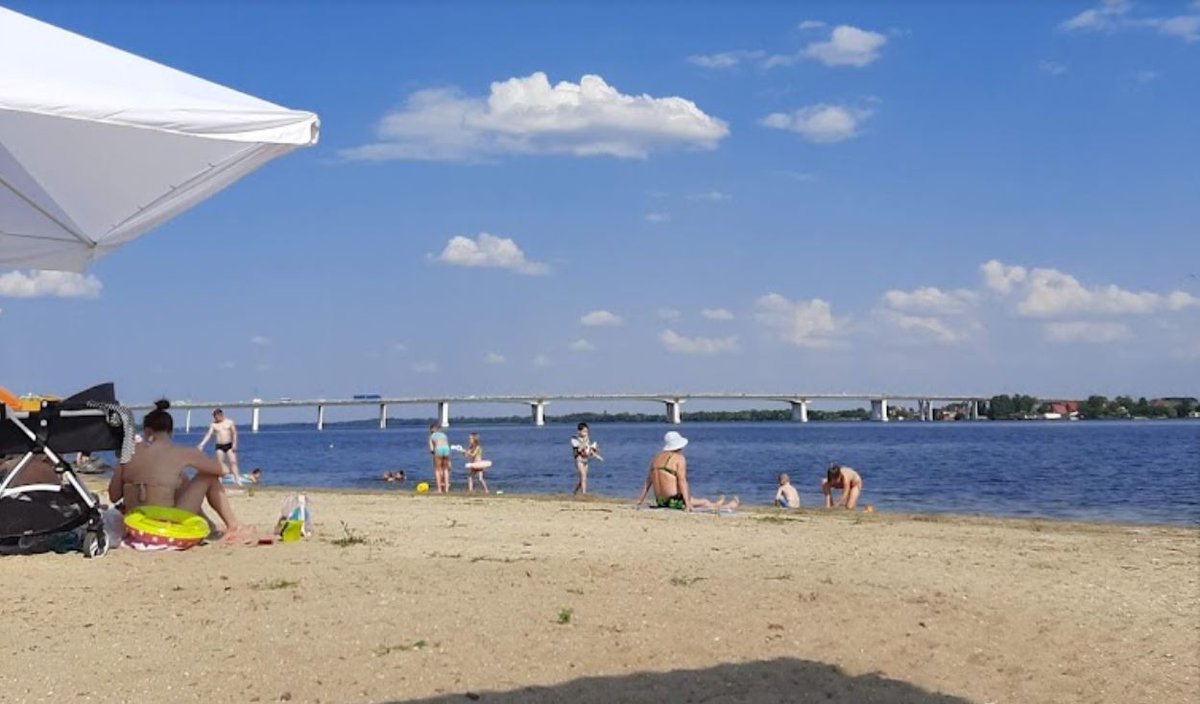
A month ago, I spoke to a 🇺🇦 diplomat from Kherson. She told me that the Antonovskyi Bridge used to be known, in peacetime, as the backdrop of a nice river beach in the suburb of Antonivka. The beach and nearby residential areas could also be flooded if the dam locks break. 17/21
“Mr Vitaly” notably toned down the effects of a (limited) dam breach, arguing that damage would be severe, but not disastrous. Still, being unable to destroy the dam itself, a possible 🇺🇦 breach of the dam locks would achieve little and cause unnecessary civilian suffering. 18/21
So what about a 🇷🇺 destruction of the dam (locks) to cover a retreat south of the Dnieper? Firstly, this could affect the water supply to Crimea. Secondly, the Zaporizhzhia Nuclear Power Plant relies on water from the Kakhovka Reservoir for cooling. 19/21
https://twitter.com/CatManDoo18/status/1498220246854823937
Of course, 🇷🇺 often acts irrationally, for example when disallowing dam repairs in May thus causing some flooding) or by threatening to plant explosives at the nuclear power plant. Anyway, I personally doubt that blowing up the dam is a 🇷🇺 priority. 20/21 odessa-journal.com/it-became-know…
Now, I am no dam engineer and do not possess the background to judge whether “Mr Vitaly’s” assessment is correct. But AFAIK, it so far represents the only real deliberation of what an attack against (or deliberate demolition of) the Nova Kakhovka Dam might incur. End of 🧵. 21/21
• • •
Missing some Tweet in this thread? You can try to
force a refresh