Giving some thoughts on Pathfinder classes and how they compare with options in 5e, but first a preamble.
My real entry into D&D was 3.5 (though after the actual published material had moved onto 4e) so I quickly became familiar with a metagame that was not just overly mature but long in the tooth. There was a steep power curve and a rigid tier system making certain choices "optimal"
By the time I got into DMing I had fairly exhaustively researched much of the player focused content of 3.5 and started to wade into Pathfinder 1e research from 3.5 guides that referenced Pathfinder material.
I was intrigued by the efforts to balance vast power disparities and rectify less fun gameplay loops. Access online via a more open source ethos helped make it more accessible too. Lastly it was still being published so this was my first chance to see the meta evolve in real time
The move from 3.5 to Pathfinder to deemphasize Prestige Classes also meant that more character concepts needed either their own class or an "archetype" (a more versatile but harder to balance forerunner to 5e subclasses), so let's talk about those and how they're realized in 5e!
Before I go into the myriad unique classes in Pathfinder, I'll give some quick thoughts about the Core Rulebook classes and how they differ from their 5e equivalents. Due to the close relationship both share with 3.5 from a starting point, they all have 1 to 1 equivalents. 
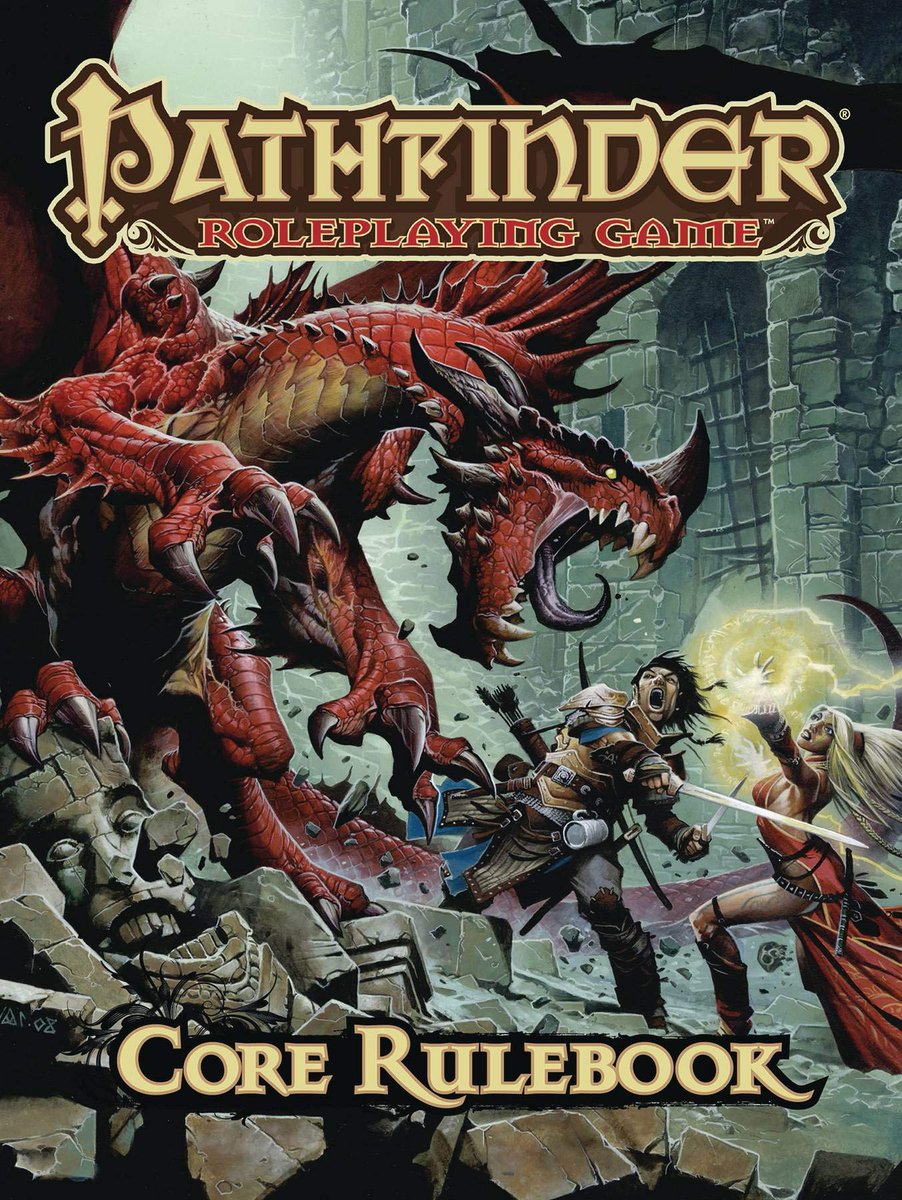
So going alphabetically, we start with the Bard and here you see what becomes the template for the majority of new classes in successive books. D8 hit die, 2/3rds caster, 3/4 BAB (What do those words mean?)
Oy, suffice it to say, this was the class other ideas would build on.
Oy, suffice it to say, this was the class other ideas would build on.

So, Bardic music worked as a limited per day area of effect ability with multiple options. Spellcasting was useable but couldn't be your only strategy in encounters. Made the 3.5 bard a little easier to play but broke some of the op tricks. Archetypes allowed more Martial options
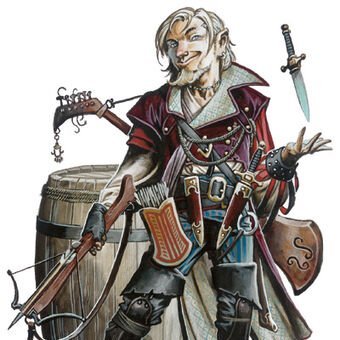
The Pathfinder Barbarian was interesting. To prevent it being just a dip, they had powers that activated when they raged, almost like a whole suite of private feat and they were powerful! Clearly a predecessor to PF2e design. More modular than the 5e Barb but Totem is similar!

The Pathfinder Cleric was meant to nerf the absolutely broken 3.5 Cleric while trading that raw power for more robust class features conferred by their domains. Channel energy fixed the useless Turn Undead and gave an ok non spell healing option. Great class but not missing much.
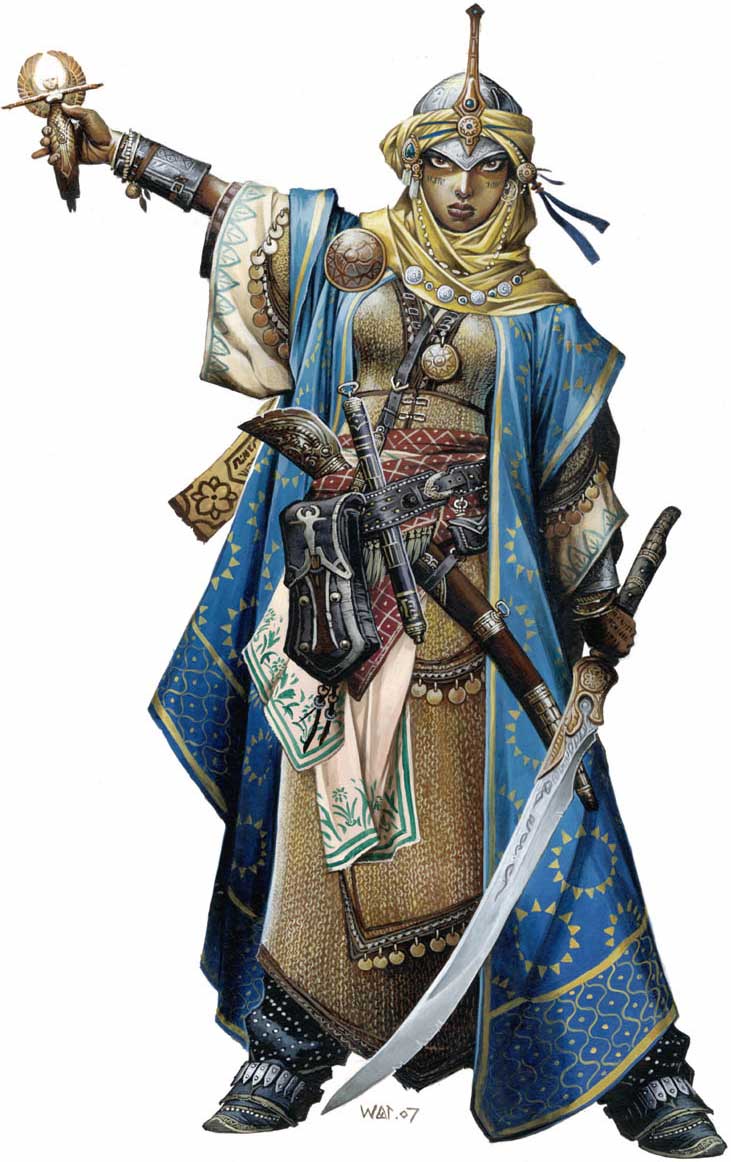
Druid was also broken in 3.5. Pathfinder lessoned that. Wildshape doesnt stack up to a 5e Moon Druid, but no 5e Druid has a companion like the Pathfinder Druid Animal Companion which you could build around. Pathfinder pets in general were more powerful and interesting than 5e.

The Pathfinder Fighter was equivalent to the 5e Champion Fighter: probably numerically fine but incredibly boring. Coming off the 3.5 Fighter which was barely a class, at least it had numbers and some unique feat, but nothing as interesting as action surge making it uncompelling.
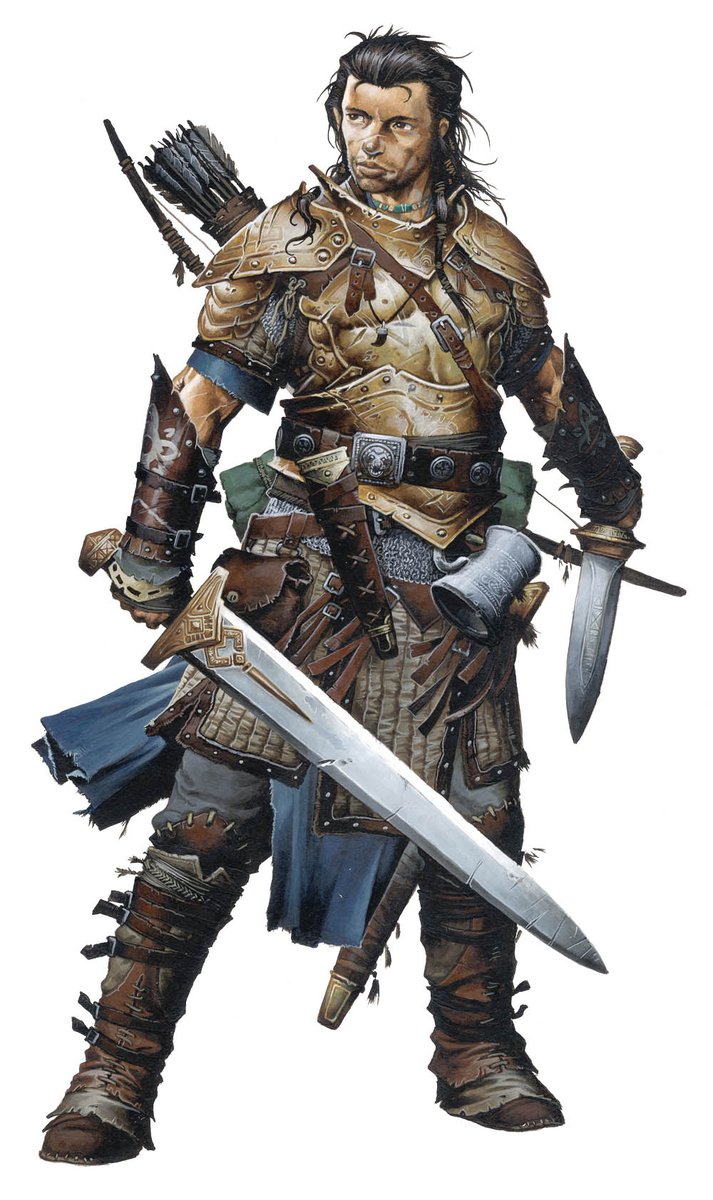
The Pathfinder Monk was attempting to strengthen a weak and confusing 3.5 class, and fixed the weak part. Meanwhile, 5e fixed the confusing part. As the Pathfinder Monk moved towards it's Unchained version, it got closer to the Ki centric 5e design.
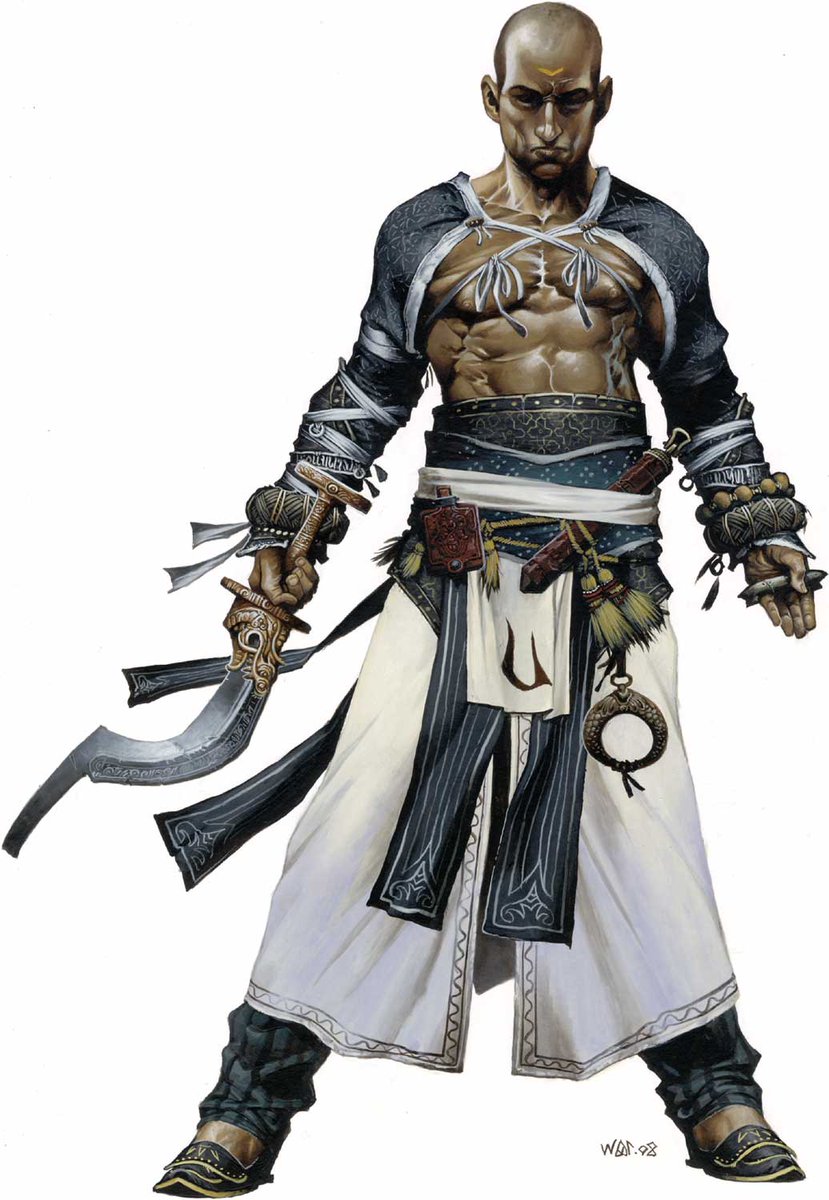
The next two were definitely the most improved from their 3.5 counterparts and thus have the most interesting conversations when talking about comparing Pathfinder to 5e.
In Pathfinder the Paladin was given more uses of all the classic powers and all of them were substantially upgraded. Smite Evil became a mark that added your charisma score to attack and your level to damage on every hit. Lay on hands became a resource pool, much like Ki and Rage

It's the classic style Paladin here, so mostly comparable to the Oath of Devotion. Converting from Pathfinder to 5e, you get an approximation of all the abilities, but they all work differently. However both are strong classes in their respective systems so it's hard to complain.
If you caught that "add your level to damage on every hit" part, this is a good time to point out that numerical bonuses to damage were a lot higher in Pathfinder. It was not uncommon to see a level 11ish Pathfinder Paladin put out damage in a round that would kill a 5e Tarrasque
Also, Pathfinder standardized the number of attacks a class got based on their hit die. Classes with a D12 or D10 eventually got 4 attacks. D8 got 3. And classes with a D6 got 2.
Which leads us to the most shocking improvement from 3.5 to Pathfinder...
Which leads us to the most shocking improvement from 3.5 to Pathfinder...
The Pathfinder Ranger was considered by many to be the "Fighter Replacement". They got the same number of attacks, a good number of bonus feat that bypassed prerequisites, limited spell casting from a strong list, and an animal companion that was much closer to what the Druid had
It shows how delicate the meta can be, since all of the things that the Pathfinder Ranger had going for it were evolutions of things the notoriously weak 3.5 Ranger had. Here a lot of small buffs added up to a very strong martial class.
The Beast master Ranger probably is the closest in 5e, but even with the Tasha buffs, the 5e Ranger is no where near as numerically dominant. However, the the Ranger has come a long way since the PHB and now a player could comfortably port their character and not feel too nerfed
The Drakewarden also works pretty well to accomplish the Pathfinder Ranger, but 5e is just generally less about flat bonuses and myriad class decisions. If there's anything that 5e improved over the 3.x era it's the speed that encounters take place!
I noted the the benefits that paladins and rangers get from spellcasting. I should mention that while they are called half casters, their spell progression is actually comparable to the Eldridge knight and arcane trickster. The spell list were incredibly good for both however.
So the Pathfinder Rogue tried to rectify the lack of class features and fragility from the 3.5 Rogue and added "Rogue Tricks" which were like minifeat. Ultimately, the only archetype that isn't quite nailed in 5e is the Ninja and we'll talk about that later.
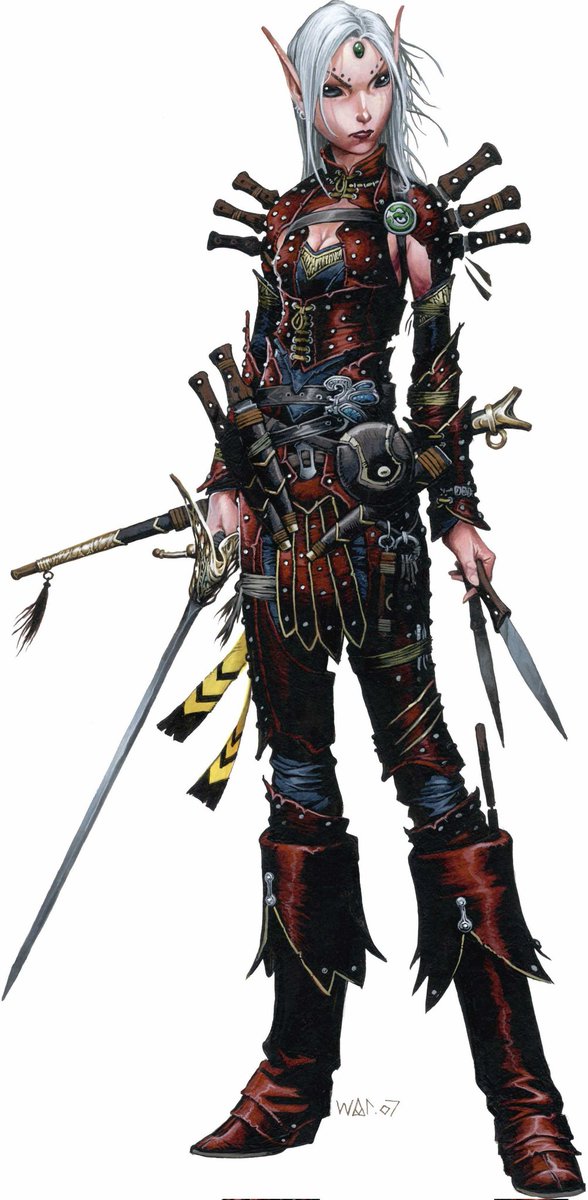
The Pathfinder Sorcerer had to address 3.5's lingering question about a spontaneous wizard and built on the lore note about Dragon blood. While I dig the broader take that 5e has that it's just an innate power, I miss all the wild bloodlines from PF1e, but you end up missing some
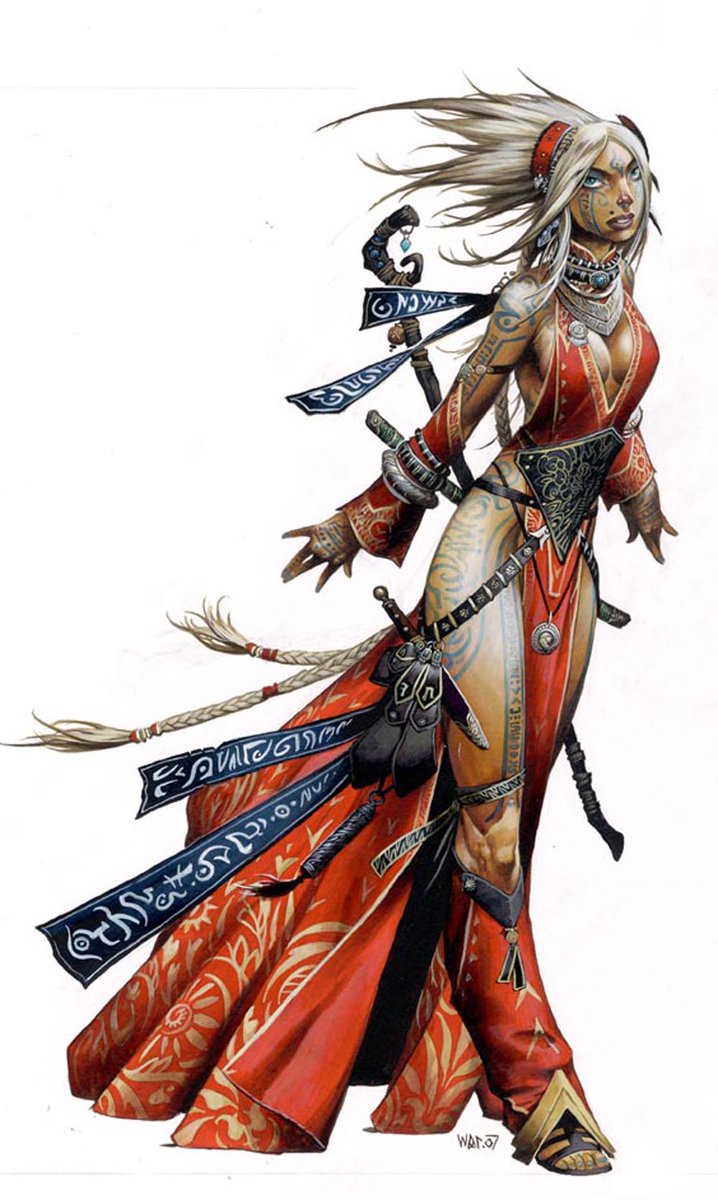
If Charisma wasn't the second super stat in 5e, I might feel like we were missing more (such as a wisdom or intelligence focused bloodline) but both 5e and PF1e came on similar solutions to a shared identity problem.
Weirdly the archetypes I wish the 5e Sorcerer had aren't things the bloodlines addressed, so I think most sorcerer builds will be happy with 5e, but the move from classic Vancian casting (1 spell prepped equals 1 casting) makes diverse spontaneous options less necessary
Next up for 5e players would be the Warlock, but they weren't in the 3.5 handbook, so thus not in the Pathfinder Core Rule Book. I'll talk about them later.
So that leaves the Pathfinder Wizard which much like the Cleric has some broken tricks nerfed and some small class features added. Honestly, whatever idea you had will be supported in the robust subclass system that 5e provides, though remember that 5e HATES summons and pets!
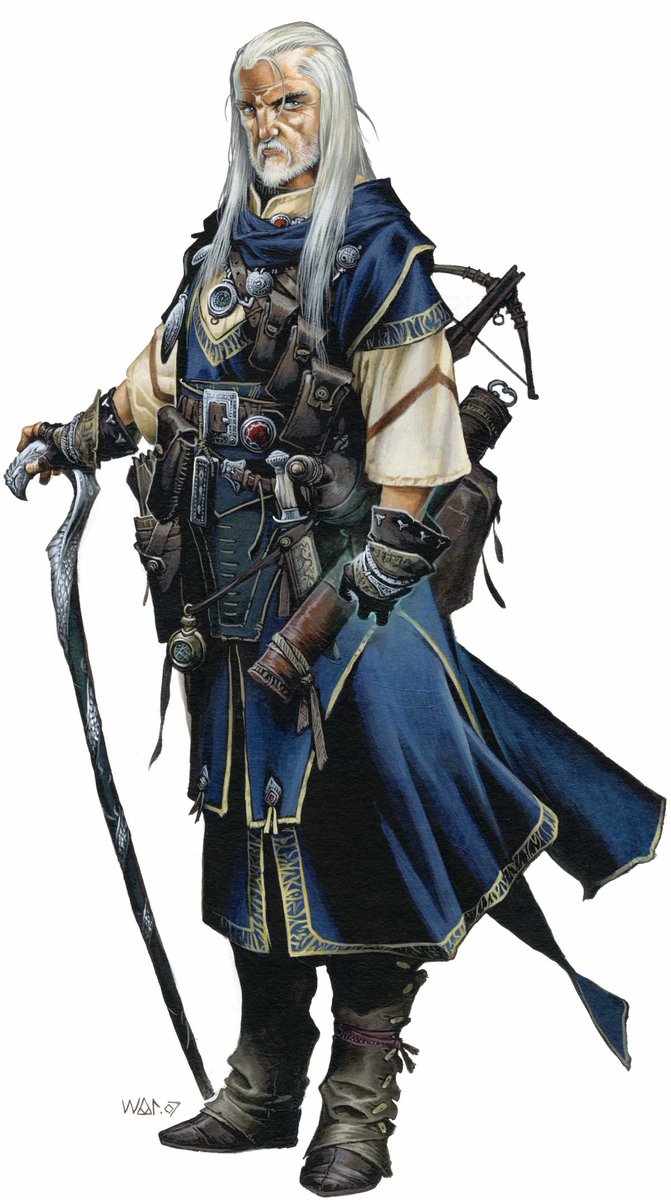
"I cast the most spells" as your defining trait means the system scales to you as long as no one can cast more spells.
So that's the Pathfinder Core Classes and they all map pretty one to one with the main base classes of 5e, probably with the most archetypal subclass too, and the one core 5e class that isn't covered in Pathfinder is the class that kind of feels like a system hack anyway.
So now we're moving on to the Advanced Players Guide and this is where the system assumes that you, the player, need to know what the fuck you're doing.
None of these are "easy" even if they're powerful.
None of these are "easy" even if they're powerful.
This is a good time to admit a bias: Running Pathfinder and allowing 3.5 content, I banned full casters that weren't specialized like the 3.5 War Mage or Healer. Spellcasting bears the risk of being too good and Pathfinder only plugged some gaps instead of fixing the whole thing
And I think Paizo knew this, which is why the game starts to lean towards classes that capped at 6th level spells. But every book has at least one full caster and that bummed me out because the game was built on dipping a toe into existing optimisation chat rather than fixing it
Anyway, the APG. Like I said, these classes are more complicated than Core Classes and honestly anything in later books. Almost all of them map pretty well to a specific subclass of the 5e core classes, too.
O...k... The Alchemist. A weird 6 level spell casting system, bombs, and mutagens. Well now days an Atificer Alchemist covers at least the idea but maybe a whispers bard or arcane trickster at earlier times. I think the artificer covers most builds or maybe the Rune Knight.

I think the 5e Alchemist Artificer does fine even if the subclass is a little weak. If they really wanted to focus on the mutagens there are multiclassing options but those require some headcanon to make fit.
Here we go, The Cavalier! While it shares a name with the 5e Cavalier Fighter, that's more a defender to Pathfinder's Striker! The Cavalier was a martial class that resembled a Paladin without spells. They had a challenge ability that boosted their damage against a specific foe.

They had "orders" that gave small distinct class features, with a few interesting ones that encouraged multiclassing, particularly the Order of the Stars which progressed some Cleric and Paladin abilities.
However, the real standout was the Cavalier steed, which was roughly equivalent to the Druid companion (no spells to share however), which could either be a hardy mount for powerful charge attack or a combat companion.
But several archetypes traded out the mount for other features. Regardless, it was a healthy bargaining chip and could be exchanged for solid options like the Daring Champion which makes for a solid duelist.
Of all the fighters, Battle master or Samurai (ironically for reasons I'll explain later) fit best. But the more morally flexible Paladins of 5e probably do the best here. Although, a small sized Battlesmith Artificer could play the part too. Ditto Drake Warden.
The problem is that all those options have spell casting or don't provide mechanics for a steed/pet. I think that's one of the real missing concepts on 5e: a non magical pet class.
Lastly the Cavalier was designed to use teamwork feats, which required multiple party members to have the same feat and was an idea that was introduced in the Advanced Players Guide but never really worked out. Cavaliers had limited ability to share these feat but wasn't great
The Pathfinder Cavalier was close to great and I can quite confidently state wouldn't take much to be great! We'll get there!
Next up, we have the Inquisitor and this is the class I've had the most conversations about converting to 5e. The most direct comparison I can make to 3.5 is the Divine Bard from the Unearthed Arcana book and it's easy to see why: 2/3 spell casting, 3/4 BAB, d8 hit dice...

6 skill tlranks per level, only surpassed by a Rogue!
The spell list is a smattering of Cleric and Paladin spells. They have Judgements as their main divine ability which is a versatile fuck you to whatever you're fighting.
The spell list is a smattering of Cleric and Paladin spells. They have Judgements as their main divine ability which is a versatile fuck you to whatever you're fighting.
They get to turn their weapon into a bane weapon (basically a "dragon slayer" but it becomes "whatever you're fighting slayer") which is pretty damn competitive with Smites. Oh, and they get a Cleric domain (but can't benefit from the bonus spells) giving them huge versatility!
But in addition to solid spellcasting, a sturdy frame, great class features, and tons of skills, they also get bonus Teamwork Feats and they get to treat any ally as if they also possessed the same Teamwork Feat, this bypassing the big problem with Teamwork Feats.
And this class came out in the same damn book that Teamwork Feats we're introduced! I could believe that they introduced this class once they realized no one was using Teamwork Feats, but they came out the gate saying "don't bother unless you're an Inquisitor."
And a big thing to understand is that Teamwork Feats were across the board not worth two players taking them, but were also generally stronger than a single feat. So this opened up all kinds of wild power moves!
Inquisitors also got good Fortitude (Con) and Will (Wis) saves plus "Stalwart" which was Evasion but for those two saves. They were good at saves is what I'm getting at.
Ultimately, if you had told me that an Inquisitor was just this editions version of a Paladin, I would have believed you. If you were porting a character, the easy answer is a Vengeance Paladin, though maybe with some Bard or Rogue levels.
Inquisitors were more selfish than Bards (weird because you assume the Divine caster would be more altruistic) with all their abilities focused on themselves. Even their teamwork abilities were about them taking benefits not sharing benefits.
Maybe a Trickery Cleric with a Fighter dip or a Whispers Bard build with a lot of heal spells selected, but I think a Vengeance Paladin works mostly well for this.
The problem is that the Inquisitor was just really good and there aren't as many solid generalists in 5e.
The problem is that the Inquisitor was just really good and there aren't as many solid generalists in 5e.
I should also note that later in the run a new mechanic called inquisitions was added which were basically more powerful domains but they lacked bonus spells. With these Inquisitors became extremely malleable gaining abilities like having a cavaliers Mount or a barbarians rage.
It's no surprise that at the same time Pathfinder made the Inquisitor, D&D 4E was introducing the Avenger which also occupied the role of a lighter armored, more skilled focused holy Warrior. I think 5e allows for this character but you have to work to make it.
Next up is the Oracle which was a spontaneous 9th level divine caster, so basically a holy Sorcerer. It had a d8 hit die and 3/4 BAB, just like a Cleric, so it was pretty sturdy. As with pretty much all original Pathfinder classes, there was some modularity to the design.
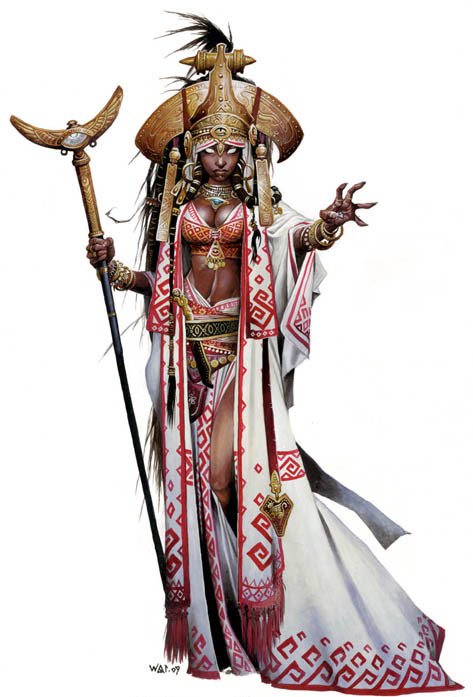
While their "Mysteries" glad you to make multiple types of characters, I don't think there's anything that you couldn't make in 5e with a Divine Soul Sorcerer, Celestial Warlock, or a Cleric. The change in Vancian casting really reduced the need for separate spontaneous classes.
Next up is the highly controversial Summoner, which was another d8, 3/4 bab, 6th level spell caster. The idea for them was that they had a customizable pet that could be used as the primary combatant, though I know people who took a beefier race and turned it into a tag team.
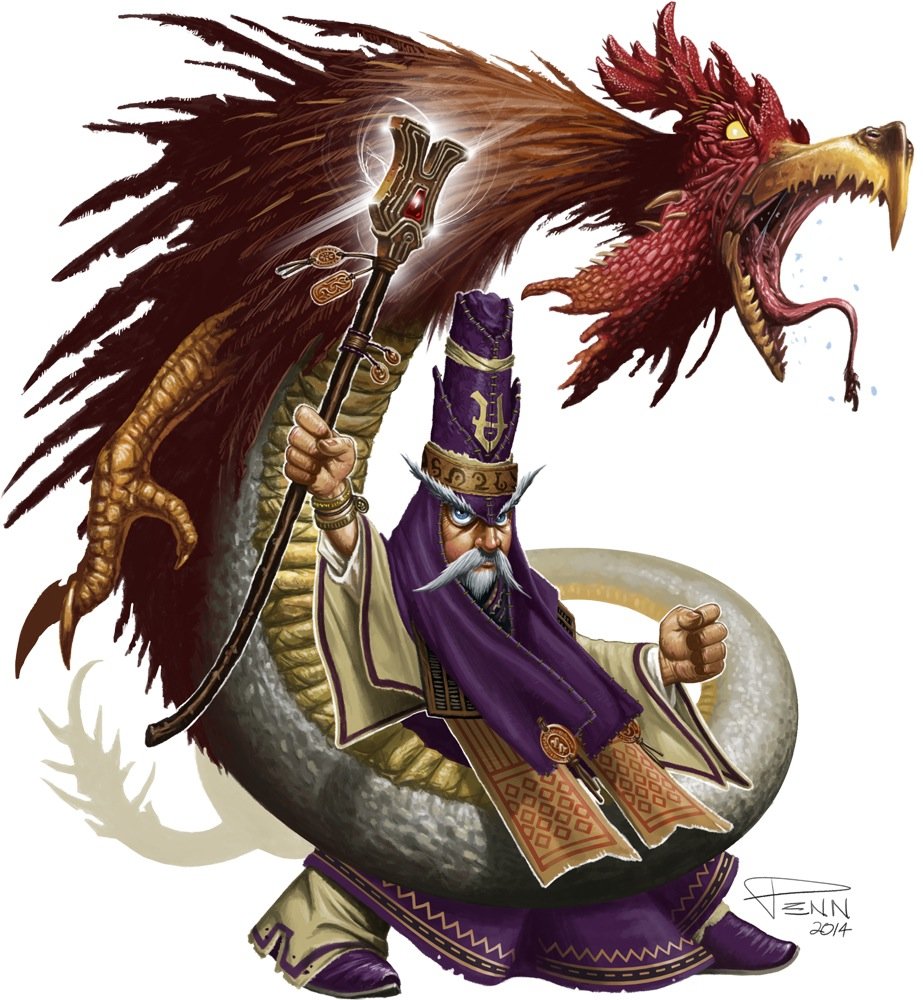
However, I said it was controversial and that was for 2.5 reasons.
.5 - the initial print version of the Eidolon, the pet, was extremely capable and remained competitive with pure Fighters for much of the game, which added it to the disparity between spellcasters and martials
.5 - the initial print version of the Eidolon, the pet, was extremely capable and remained competitive with pure Fighters for much of the game, which added it to the disparity between spellcasters and martials
This got nerfed in later printings and it wasn't like the game was lacking other strong pet options. In fact, arguably the strongest one is yet to come.
1 - the spell list was insane. Owing to its 3.5 legacy, spells could appear at different levels on different spell lists and there was a lot of traditionally 8th and 9th level spells that the Summoner had access to. This got really messy when it came to scrolls & wands.
This list was also nerfed in later printings. In fact it should be noted that this is the only class the major deliberate Nerf during the run of first edition.
3 - The Synthesist Archetype which replaced the pet with a skin that replaced the physical stats of the Summoner allowing them to dump everything but their casting stat. It was often seen as the successor to 3.5's version of wild shape and will seem very familiar to 5e Moon Druid
However, while this archetype was later banned, I think it was actually less powerful than the normal Summoner. Rather than basically getting 2 characters with 2 turns, you just got a beefier caster.
As I mentioned before, 5e is not really friendly towards players who want to use pet classes, but the Battlesmith Artificer does a pretty good job. It feels a little more mechanical than the biological/phantasmal elements of the Summoner, but mechanically works out to be similar
Summoner Wizards in 5e are not very well mechanically supported but you could also go with a Circle of the Shepherd Druid for the general summoning focus, though the difference in casting style gives it a different vibe. A recent UA had a pet focused Druid which would fit nicely.
You could also go pact of the chain Warlock, but that pet is nowhere near capable of being the focus of your combat strategy. It however is the right vibe which the other options in the game don't quite nail.
And, like I said, if you want to be a synthesist, the Moon Druid is right there, thougj the vibe is wrong. The Armorer Artificer also works nicely here. With Tasha's we got more support for summoning spells but 5e in general doesn't love lots of strong pets being in play.
Last class from The Advanced Players Guide is The Witch, a 9th level arcane spellcaster with reliance on its familiar and additional magical abilities that didn't cost spell slots and if you're not drawing comparisons to the Pact of the Chain Warlock, then what are we doing here?
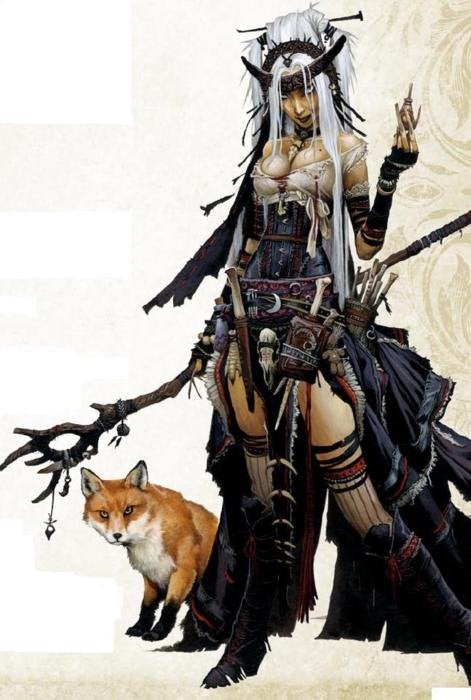
Pathfinder tried to reduce the amount of alternate magic systems from 3.5 (while giving out tons of resource pools for supplemental class features, so not exactly "simplified"), so the idea of something like the 5e Warlock pact magic wasn't in the cards.
Nor was the 3.5 invocations only approach to Warlocks ever goung to happen, since Pathfinder was also not a fan of at will abilities (aside from cantrips which were far weaker than 5e).
But that ends up with the Witch being very similar to a Warlock with regular spell slots progression, which is what a lot of people wish Wizards would do with the 6e (or whatever the final name is) Warlock.
And a reminder that the Warlock was not part of the 3rd edition SRD, so Pathfinder couldn't directly adapt it. I think it's no surprise that the essentially shared archetype of the Warlock was folded into a core class in 5e because it's obviously a niche that players wanted.
So yeah, Pact of the Chain Warlock makes for a natural translation but if you're married to normal spell slots progression, a Wizard with a Familiar can serve the same function but you'd have to RP the preternatural connections. The various Patrons account for a good variety too.
So I'm doing these in release order in order to discuss what archetypes the series utilized and give a sense of when they were introduced. Context matters in terms of how late certain mechanics were introduced and what needs remained to fill.
Anyway, the next couple classes were released in individual themed source books (martial, arcane, etc) so I might get the orders slightly off but all of these were before the next big batch in the Advanced Class Guide.
So without further Ado...
So without further Ado...
The Gunslinger! Generally considered, uh, fucking strong! Like not overshadow a Wizard strong, but very potent in settings that allowed them... And there's the rub! Not every setting is cool with guns and the Pathfinder interpretation of gun combat made for quite the striker!
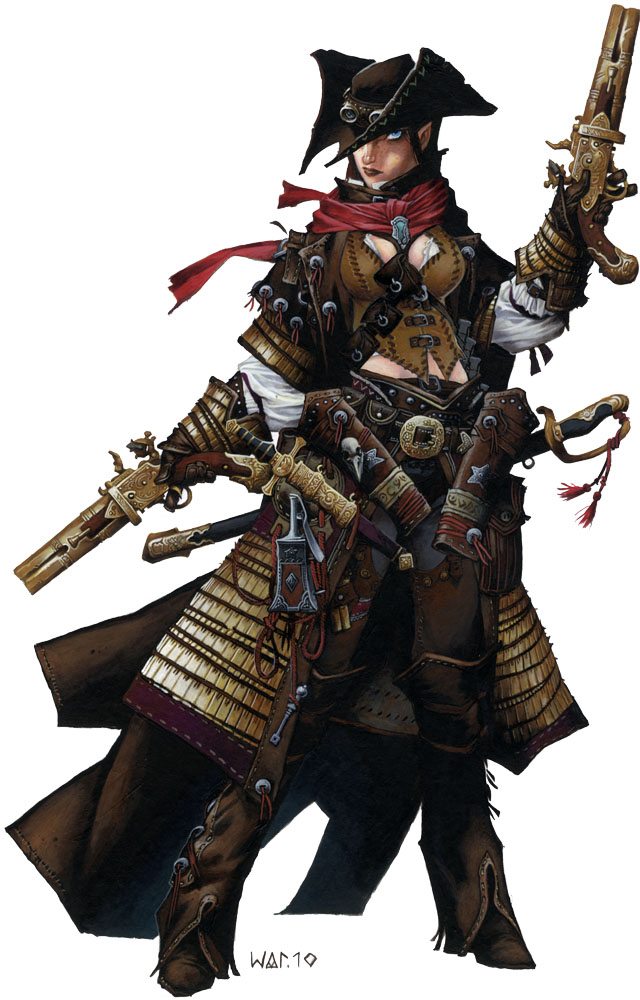
My recollection is that the Gunslinger was originally going to be a Fighter archetype but enough was different that it was made into a full on class. However you can see a similar frame, but with better skills and actual class features. And guns! Guns that almost couldn't miss!
So Gunslingers could target the "Touch AC" of a target which was usually quite a bit lower than a character's regular AC as it didn't factor in armor. Combine that with Full Base Attack Bonus and you had a crazy high hit rate and that was a reason some DMs REALLY hated them.
However they also had Grit! And Grit was fucking dope! Grit introduced a new resource pool system that worked differently than Ki or Lay on Hands by starting at zero and then being accrued in game by scoring critical hits and kills and other moments of badassery.
As you leveled, you gained new ways to spend the Grit. The one complaint was that it was a set list based on your level, rather than anything you chose. However, it was still really cool and was a big reason why some players would use Gunslingers even in gunless settings.
Converting to 5e is interesting because Critical Role famously tackled this problem and homebrewed a class. I'd say a Battlemaster Fighter or Samurai work well here, or possibly a Kensai Monk with guns as their chosen weapon. Superiority Dice and Ki both work pretty well as Grit
I should note that the disparity in the power curve between any kind of spell casting and everything else is still at play here. I mean, why even make an attack roll when your enemy can just fail a safe and be taken out of combat? Magic was just too strong in PF1e. Speaking of...
The Magus! The iconic "Gish in a Can" from Pathfinder aka a weapon using spellcaster! While there plenty of d8 hit die, 3/4 BAB, 6th level casters in the APG, I feel like the Magus is where the system really settled on these stats as the standard frame for class design.

Pathfinder already had the Eldritch Knight (which used the same Wayne Reynolds design for its iconic) as a Prestige Class, but that was a legacy element from 3.5. Prestige classes were phased out pretty quickly in Pathfinder, so that generally was a frowned upon solution
The Arcane Duelist was also out around this point which was an archetype that turned Bards into a martial class, but they still weren't built to be one. So Pathfinder had options that served the concept of a sword welding spellcaster but no base class that exemplified it.
Enter The Magus, considered by many to be the spiritual successor to the 3.5 Duskblade, with their ability to simultaneously use weapon attacks and cast spells, much the way the Witch was to the 3.5 Warlock. It's a fair comparison, even if the flavor isn't exactly the same.
The Magus had ok spellcasting and a very difficult to explain ability to cast while attacking, plus a pool of magical energy that could be used to augment their weapon. It had some design quirks that were smoothed over by archetypes but even the base version was very solid!
Due to the slow improvement of the Magus's ability to cast in armor, most players went with a dex build and tried to improve their crit range. Also, it counted as a fighter for selecting fighter only feat (a first at this point). Solid class. So how does that translate to 5e?
Well, as of 2022, there are a lot of options in 5e for combining Spellcasting with Martial Combat, but 5e is simpler so none of them quite capture the vast arsenal of magical options that Magus had. The key one to look for is some way to hit with weapon plus some kind of magic.
The 5e players handbook had a few real options for this:
Paladins - while divine casters, the smite feels very similar to the Duskblades channel ability
Rangers - the PHB subclasses don't fit the bill but later ones like the Horizon Walker are close
Paladins - while divine casters, the smite feels very similar to the Duskblades channel ability
Rangers - the PHB subclasses don't fit the bill but later ones like the Horizon Walker are close
The Valor Bard - They can cast and hit and are durable, but they are more support focused.
The Eldritch Knight - More leaning on the Martial side of the equation. They're the substantially worse at spellcasting but they are trying to do a similar thing.
The Eldritch Knight - More leaning on the Martial side of the equation. They're the substantially worse at spellcasting but they are trying to do a similar thing.
Oh hey, then there's the Pact of the Blade Warlock! In the PHB you were stuck with a dex build, however we all know what we're here for: The Hexblade! Gets to use charisma as the attack stat and some heavier armor options while still technically a 9th level caster!
The Hexblade also gets a curse to increase crit range, so another similar element if not the same. It's the only full(ish) caster that gets extra attack at 5th level and pact magic having fewer slots but a short rest recharge keeps the vibe of being a more limited spellcaster
Bards got a second martial subclass in Xanathars in the form of College of Swords and that does a really good job here! Blade flourishes can feel magical in nature and they end up being a solid light armor striker with spells. The spell list is still more support focused though.
When Eberron was brought over to 5e, we got the Battlesmith Artificer which gets a lot right plus a pet! They get to use Int as their attack stat to keep the character from being too MAD and get a lot right!
However, I forgot to mention a key thing about the Magus earlier
However, I forgot to mention a key thing about the Magus earlier
See, in addition to counting as a Fighter for qualifying for feat, the Magus also had a spell book like a Wizard. Its a perfect fusion of fighter and wizard and is only not considered a hybrid class because it predated the category!
So the class that for me nails the character concept best is the Bladesinger Wizardz first introduced in the Sword Coast Adventure Guide and updated in Tasha's. While this feels more spellcaster than martial, I think that works here.
The Magus always ended up being light armored anyway, the Tasha update to the Bladesinger gave them an extra attack that could trade an attack for a cantrips which gets the mixed casting and weapons vibe right, and the Wizard spell list is the right list to pull from here.
So while it's a little more fragile and a little more caster, it really feels right!
Go Eldritch Knight if you want to be more martial than caster.
Hexblade or Battlesmith if you want an even split.
Bladesinger or Swords Bard if you want more magic.
Go Eldritch Knight if you want to be more martial than caster.
Hexblade or Battlesmith if you want an even split.
Bladesinger or Swords Bard if you want more magic.
Of all the archetypes that 5e didn't fully stick in the PHB, the Gish is now very well realized in the game with lots of options. Hell, the Blade cantrips allow most casters to at least get in a little on that space!
However, not every Pathfinder concept is as well supported...
However, not every Pathfinder concept is as well supported...
Oh, hi... Ninja... We were just talking about... Not... You...

So the Pathfinder Ninja was an "alternate class" of Rogue, a concept that was more sweeping than an archetype but could be compatible with some archetypes. And, like, we all know what we mean when say "Ninja" in a game of any kind, right? Stealthy, quick, big damage, and mystical
The Pathfinder Ninja was all of the skill ranks and sneak attack of the Rogue but with a ki pool like a monk and better ninja tricks than the equivalent Rogue options. It was really good at being your Ninja Gaiden or Shinobi fantasy!
And, ya know, maybe I'm just a child of the late 80s/early 90s and I remember being fully enthralled by 3 Ninjas, TMNT, and even the Ninja era of Power Rangers. I'm like one of twenty five people to play Zen Inter Galactic Ninja when it first came out!
So let's see how you make a Ninja in 5e...
Oh...
Oh my god...
Ok, so it's better now, but I cannot believe how close but how off the PHB missed the mark. Theoretically the Shadow Monk and the Assassin fill ideas of the Ninja but both have issues.
Oh...
Oh my god...
Ok, so it's better now, but I cannot believe how close but how off the PHB missed the mark. Theoretically the Shadow Monk and the Assassin fill ideas of the Ninja but both have issues.
The problem with the Shadow Monk was that it was not capable of creating that Spike damage that a stealth infiltrator needed. Stunning strike could possibly justify the build but it doesn't replace the expected degree of combat prowess.
We also have the assassin which can do the spike damage but is not particularly good at being stealthy. The big issue is that being a fantasy game it expects more fantasy type abilities in executing the role of infiltrator and the Assassin just isn't that good of a subclass
However with additional subclasses being published there are some okay options but they all lack the specific feel of a ninja.
First: the gloomstalker ranger does a great job, with first round damage bonuses and lots of mystical supplemental abilities, though using spell slots
First: the gloomstalker ranger does a great job, with first round damage bonuses and lots of mystical supplemental abilities, though using spell slots
Also, if you are okay with using spell slots in your Ninja concept, the arcane trickster Rogue is also right there. But, it just feels weird that there isn't a real subclass synergy and trying to create a ninja build between any of those options.
Like I am surprised that there is no Rogue subclass that counts towards ki. But really, it's the fact that the next class was addressed directly here but this archetype was ignored that makes it feel weird, so with that let's talk about the Pathfinder Samurai...
The Pathfinder Samurai is considered an "Alternate Class" for the Cavalier, trading out some of the teamwork abilities and the charge ability that I totally forgot to mention when I was talking about the Cavalier for a boatload of tanking abilities and some archery options.
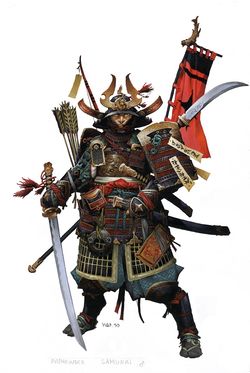
The Samurai retains the Cavalier order ability so it keeps some flexibility but loses some of the required abilities in order to be compatible with the better Cavalier archetypes, unlike the Ninja which was generally compatible with most Rogue archetypes.
But I need to say here that I love the Samurai! It gets Resolve which works similarly to the Gunslingers Grit system, it counts as a Fighter for the purpose of qualifying for combat feat, and gets bonus combat feat inatead of teamwork feat, while keeping the powerful mount!
The Samurai is much more of a tank than the Cavalier, but its also no slouch in the damage department. If the Pathfinder Paladin wasn't so dominant in the unkillable damage sponge department, the Samurai would take the title.
So how do you port that to 5e? Well same problem with the Cavalier: 5e doesn't love pet classes and doesn't support non spellcasters getting scaling pets at all. If that was crucial to your build, consider a Paladin.
However, weirdly the 5e Cavalier nails the tanking aspect and the 5e Samurai gets some damage plus hard to kill aspects, so both would work here. You just won't get the mount part. All in all, fairly easy to convert but you will feel like it's not quite the same.
The last "Alternate Class" to discuss and the last base class introduced before the big batch that the Advanced Class Guide brought us is the Anti-Paladin.
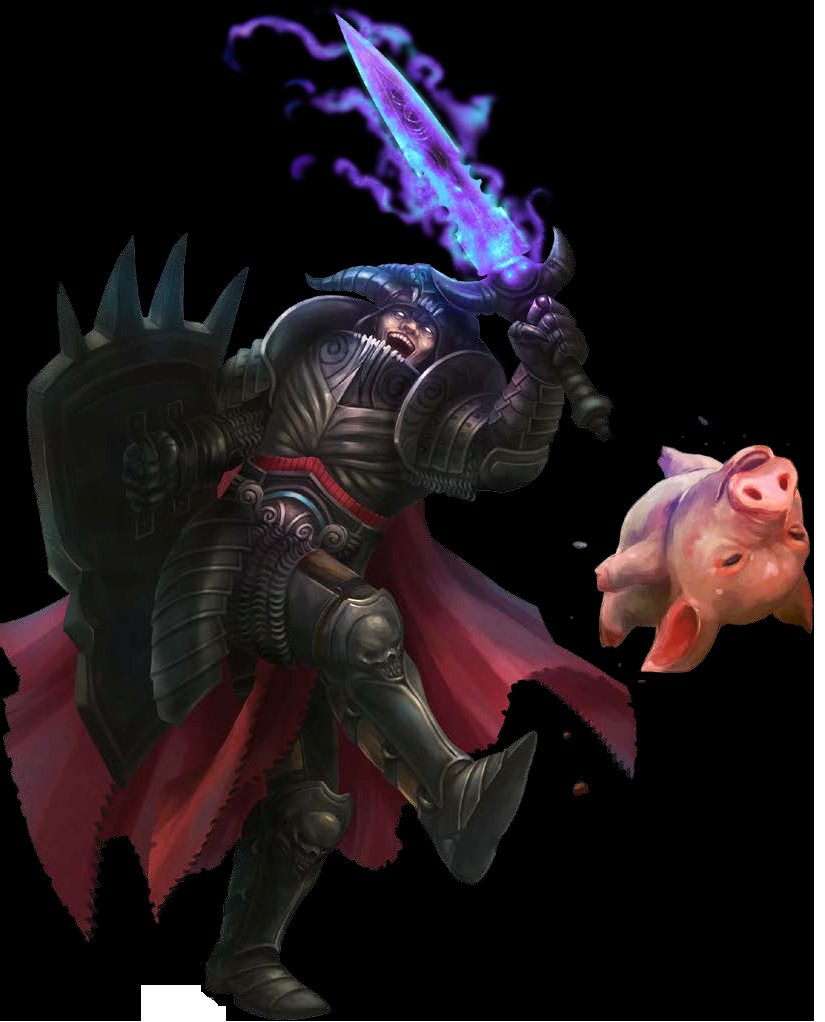
Obviously, this is an alternate class to the Paladin, but I'm not sure if anyone who entered through 5e would immediately get why this is necessary. Prior to 5e where there are various Oaths with a variety of ideals, the Paladin was traditionally Lawful and Good. Full stop.
The Anti-Paladin was this the inverse of the Paladin, a Knight for evil. The name, goofy as it is, dates back to earlier AD&D concepts that I think first appeared in Dragon Magazine, which feels right for a Paizo property.
And the Pathfinder version plays a lot like the regular Paladin except you swap anywhere a class feature states an alignment for the inverse. Smite Evil to Smite Good for example. The big difference is that instead of healing it has damaging and debuffing abilities.
So it ends up being pretty easy to adapt in 5e because there are several takes on the concept of bad Paladin. Oathbreaker is obvious for a fallen knight idea, but Conquest and Vengeance both do well for a Blood Knight take.
As with the regular Paladin, while the mechanics in game will be different, both the Pathfinder and 5e versions of an evil Paladin feel like the same core character concept.
Ok, so now we get to the Advanced Class Guide, which was a big book of new classes and even more archetypes that used mechanisms from this book. Generally the things introduced cater to much more specific character concepts, though a couple are new takes on trodden ground

The big concept was "hybrid classes" which were ostensibly a fusion of two classes, and while they all do definitely occupy a space in character design that sits in the grey area between existing classes, this serves more as a shorthand way to approach the new entries.
After all, classes like the Magus (fighter/wizard), Ninja (Rogue/Monk), and Samurai (Cavalier/Fighter) already existed in this space.
But this makes sense. I noted that the Advanced Players Guide assumed a certain degree of system mastery and it was evident that the new hybrid classes were meant to be more n00b friendly, requiring less work to optimize, despite all having robust class features.
That said, before I go into any of the individual classes, I want to say that I love this book. While they're not all winners, the classes and archetypes that are winners win big-time for me.
Sadly, the first class on that list isn't one of them...
Sadly, the first class on that list isn't one of them...
The Arcanist is not a "bad" class. Hell, it's a 9th level arcane caster that draws its list from the wizard/sorcerer spell list, so it's probably one of the most powerful classes in the game and continued to scale upwards because new spells kept being added.
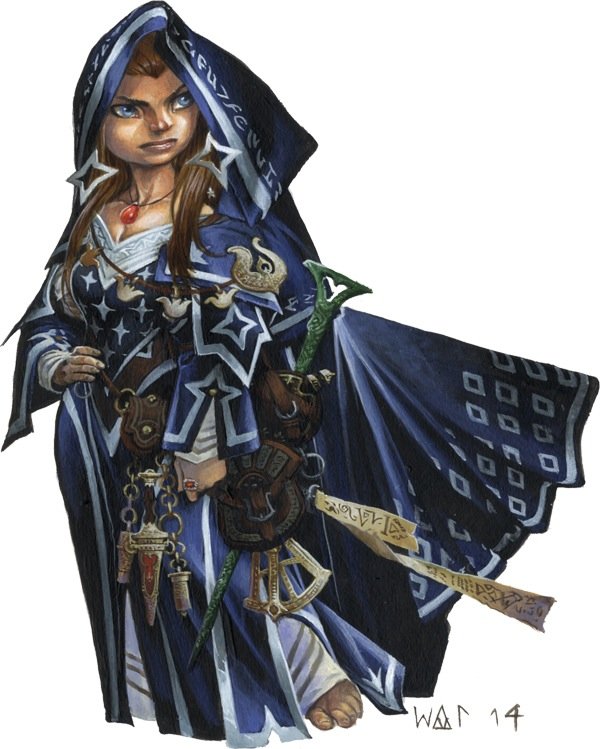
And honestly, I'd probably play an Arcanist before if play a Pathfinder Wizard, but I don't think it occupies a very exciting character concept outside of its mechanical perks. And time to explain how vancian casting has evolved over the years!
So in traditional D&D, spellcasters used what's called Vancian casting where they have a certain number of spell slots and they prepare at the beginning of the day what spell will be used by each spell slot. And yes, I mean prepare each spell slot.
That means if you want to cast magic missile twice in a day, you need to prepare 2 first level slots to have magic missile. Want to cast it a third time? Tough. This was still how Wizards and Clerics operated in 3.5 so thus it was in Pathfinder.
3.5 introduced the concept of "spontaneous casters" with the sorcerer and it's version of the bard, where spell slots could be used for any spell of the right level, but offset by the character only knowing a limited number.
As a fusion of Sorcerer and Wizard, the Arcanist prepared a set number of spells each day from a spell book but could cast them using any available spell slots... Which is exactly how D&D reconceived Vancian casting for 5e.
They also had "arcane exploits" which were rider effects they could add to spells when casting. In practice, these behaved like the various class features that Wizard schools provide in 5e.
I guess the idea for the class was that it was someone with both the natural aptitude for spell casting that a Sorcerer had, while also just as studious to the craft of magic as a Wizard. A mix of talent and training.
However, in practice this is a Wizard on easy mode.
However, in practice this is a Wizard on easy mode.
So if you wanted to convert an Arcanist to 5e... Just play a Wizard. The Arcanist almost feels like a 5e Wizard back ported to Pathfinder, so the conversion should be extremely smooth.
And I don't mean to be down on the Arcanist, because I think it's mechanically very solid, but it still was basically a Wizard.
Actually, a lot of the classes in this book feel like the earliest 3.5 prestige classes, from the DMG and Complete books, with the Arcanist being the Archmage: A More Wizardly Wizard.
The Brawler, however, is a concept that seems like a no-brainer but we rarely get support for in TTRPGs. Pitched as a Fighter/Monk mashup, this was a close combat pugilist!
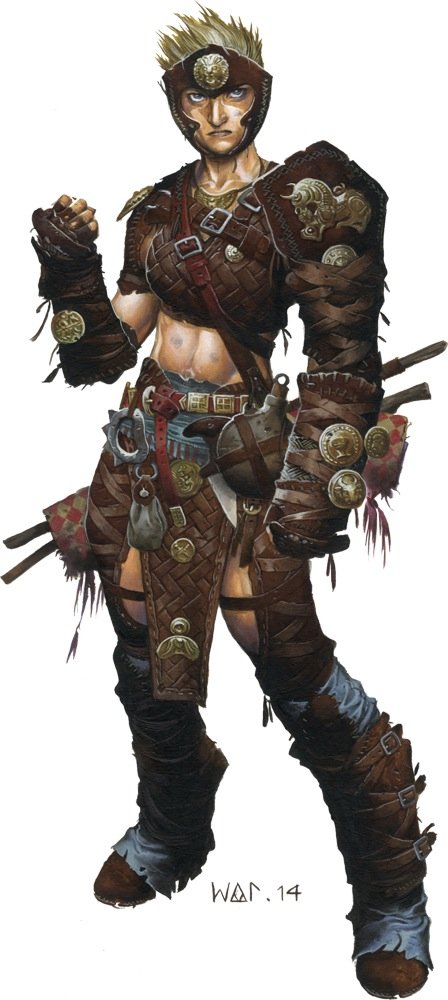
Monks in Pathfinder had no support for dex based combat but still relied on the stat, along with wisdom, so it was incredibly Multiple Attribute Dependant.
The Brawler took out the spiritual and graceful components of the Monk to create a Strength based master of hittin' stuff
The Brawler took out the spiritual and graceful components of the Monk to create a Strength based master of hittin' stuff
The Brawler got a good number of bonus feat that could be picked from either the Fighter or Monk list, unarmed strike progression like a Monk, a version of Flurry (but easier to explain because they were full BAB),a d10 HD, and then one of the coolest abilities in the game...
Martial Flexibility! Aka flexible feat! The Brawler could just "have" whatever feat they needed on the fly a limited number of times a day. As they got higher level, they could do this for multiple feat at once, letting them grab whole feat trees toarch their circumstances.
Knocked prone? Quickly learn the whole Monkey Style feat tree to battle from the ground with no penalties! Is there some exotic weapon that acts as the BBEG's weakness, instantly become proficient and grab the necessary feat to master it.
Feat were a big part of builds in Pathfinder, so this flexibility was incredible! In this book, they introduced a Fighter archetype that had this, which quickly became the default in optimization conversations. Play styles that would never normally work suddenly could be used!
For a system that relied on players planning out every level and feat selection, this was incredibly forgiving and fun.
It made niche options available on demand and that was dope!
It made niche options available on demand and that was dope!
Also, while I haven't mentioned that many archetypes, I gotta call out the Shield Champion, which could toss a shield and have it ricochet off enemies as part of their flurry of blows! It's the closest I've ever seen to a satisfying way to play Captain America!
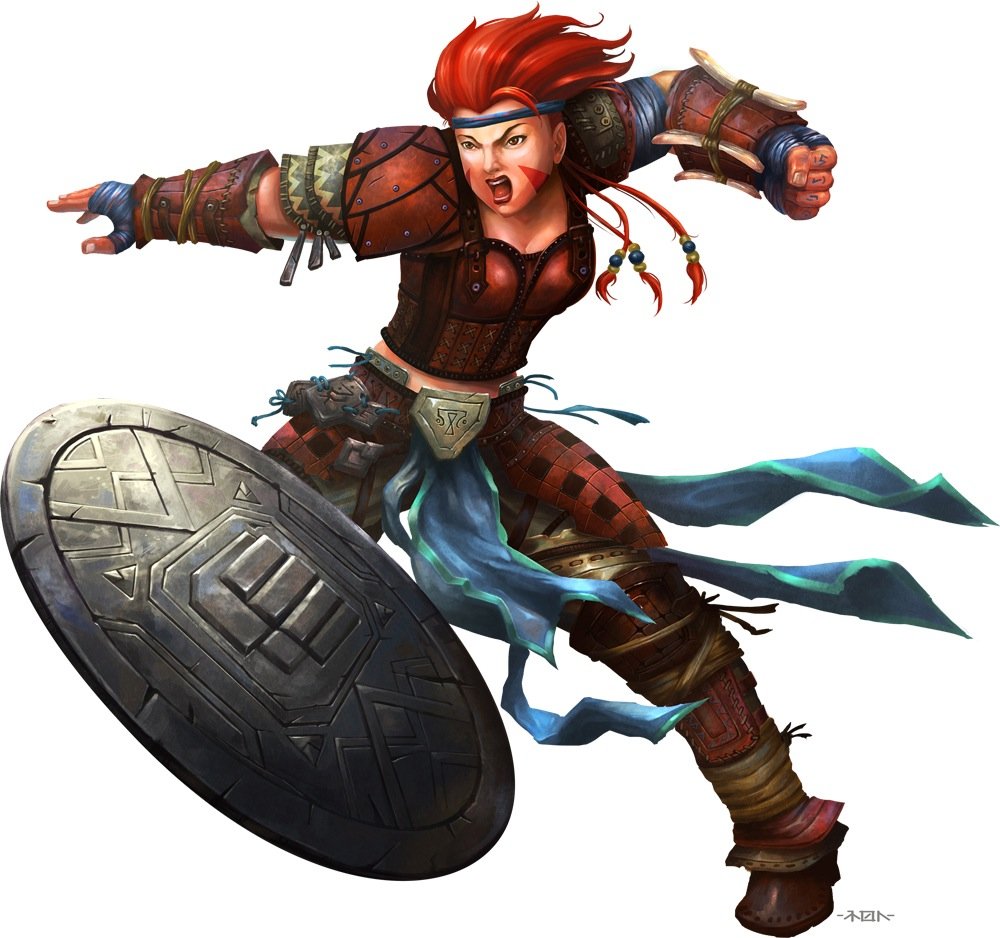
Unfortunately there's no good way to translate the Shield Champion to 5e (which I get, late stage Pathfinder 1e was full of dual shield wielding two weapon fighters, but 5e went hard the other direction). The base Brawler is another story...
I'd probably recommend a mix of fighter and barbarian. The barbarian rage bonus approximates the scaling damage and the unarmed fighting style works for the base unarmed part, but you won't easily get a bonus action melee attack.
Alternatively, you could also go 2 weapon fight with clubs or daggers. That would get you a bonus action attack.
You could also go strength based Monk, but that's hard to make work because your AC will probably suffer and you'll be very MAD of you try to multiclass.
You could also go strength based Monk, but that's hard to make work because your AC will probably suffer and you'll be very MAD of you try to multiclass.
So there are options but it doesn't feel like 5e really wants a variety of ways to punch stuff real good and that's kind of a bummer if you wanted to play a boxer type.
As for the flexibility, 5e doesn't have feat trees the same way, so something more similar would be like the battle master fighter with its weapon agnostic maneuvers. Obviously very different but they can switch between a sword and a bow way more easily than any other option
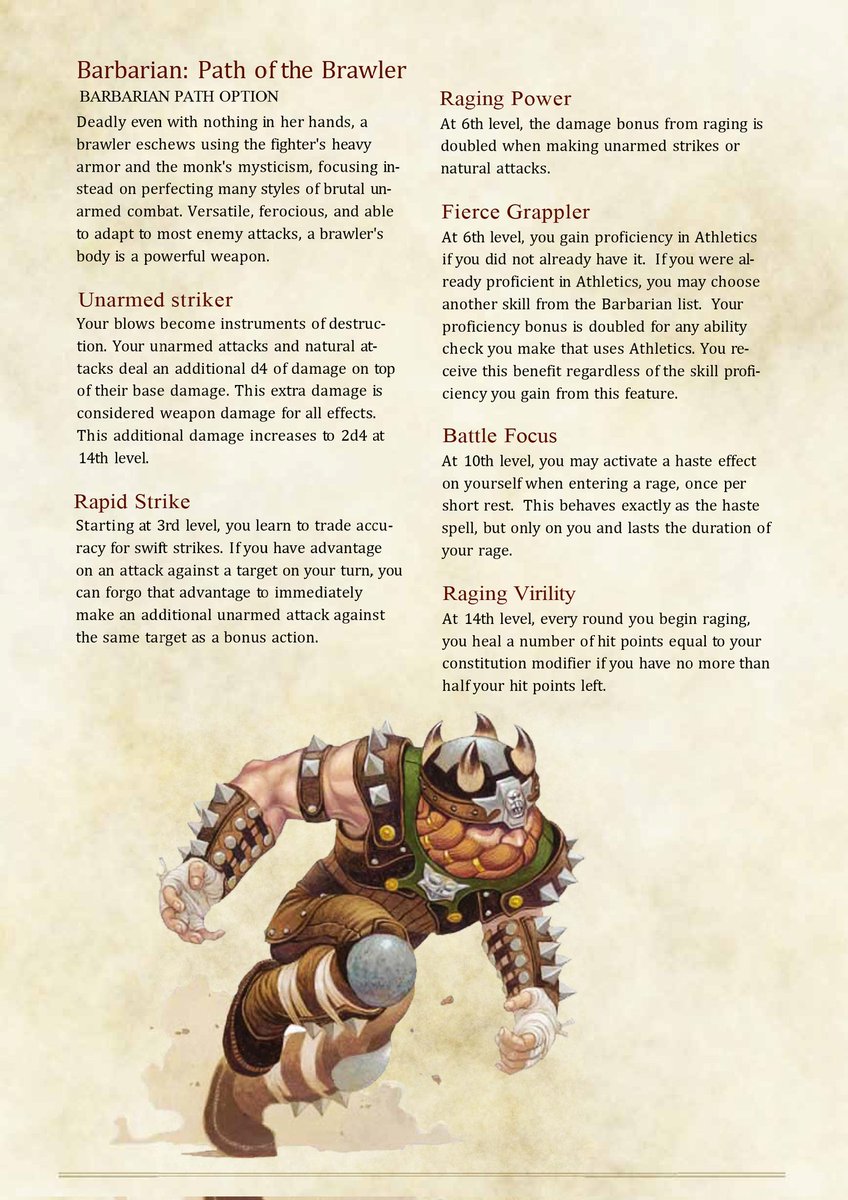
Oh and here's a good time to plug the 5e Barbarian homebrew I did that made it function as a pugilist.
Moving on to the Bloodrager (which I should have done before the Brawler). The Bloodrager is considered a hybrid of the Sorcerer and the Barbarian, but I'm here to tell you that it is the Pathfinder Barbarian with limited spellcasting instead of rage powers.
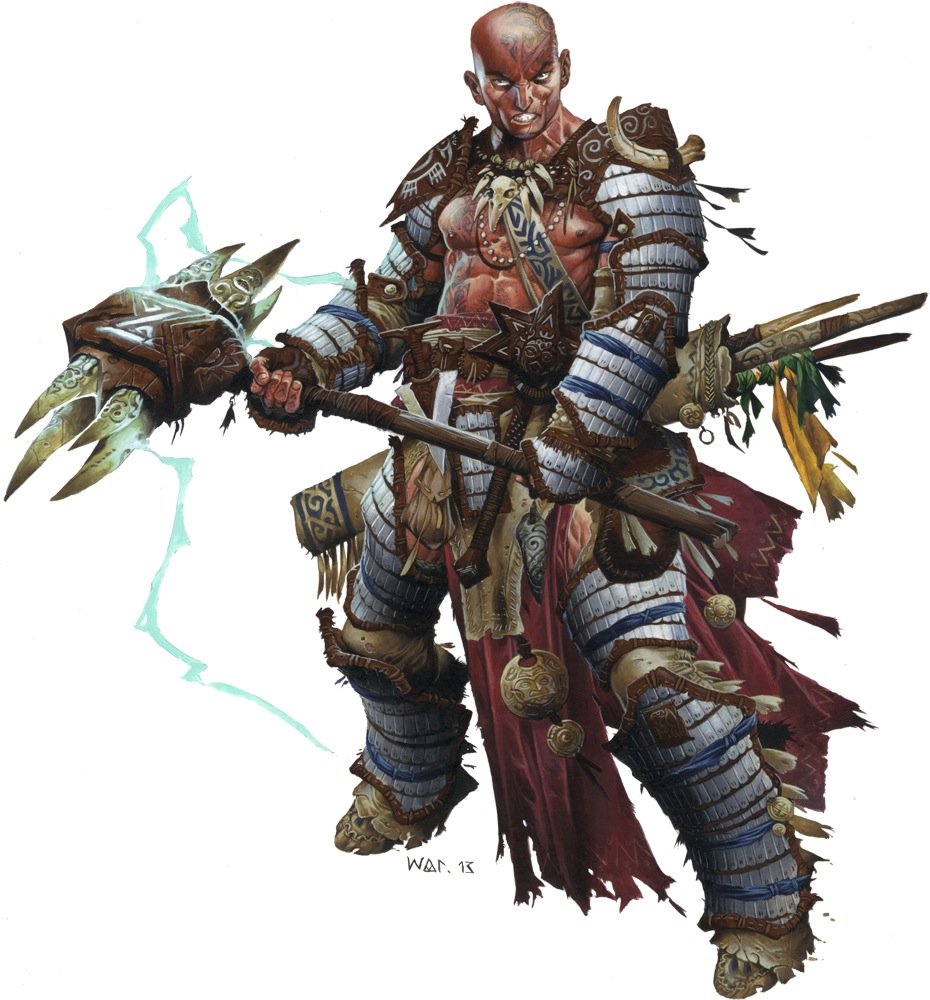
So, yeah, same rage system, full BAB, d10 instead of a d12 HD, then a 4th level spellcasting progression like a Paladin or Ranger, plus Sorcerer-esque Bloodline Powers.
Bloodline Powers only work while raging, so all limited use, and you pick your bloodline at character creation
Bloodline Powers only work while raging, so all limited use, and you pick your bloodline at character creation
This is a "Barbarian who can cast some spells", not a spellcaster who can rage. Fortunately they have a custom list with some solid spells, but you'll need a good charisma score to effectively use them and they'll never be your key strategy.
You can cast while raging, which is very dope, and even cast at higher levels as part of the swift action to rage. Great action economy there! I think the original plan was to have them only able to cast when raging, but that didn't survive the playtest.
The Bloodline Powers on the other hand are very good! Some enable growing to large size or have longer limbs or pyrotechnic effects while raging. Some even gave flight but being limited by Rage Rounds, couldn't really be utilized out of a fight.
There was an archetype that allowed swapping out weaker Bloodline Powers for Barbarian Rage Powers, which is literally the best of both worlds with no drawbacks, so most DMs banned it.
Oh, Bloodlines usually gave set abilities and bonus spells, so in keeping with the Advanced Class Guide, the Bloodrager was easier to build a character sheet for than a Barbarian. It's also just a wild concept, with magic erupting out of you because you ARE SO ANGRY!
I'll note that this wasn't the best way to be raging spell caster, with an option we'll talk about soon, as well as things like the Rage Domain/Anger Inquisition enabling Clerics and Inquisitors to get on the temper tantrums.
And the Bloodrager, owing to its Sorcerer side, feels like the 3.5 Dragon Disciple prestige class (which had a Pathfinder update and plays pretty well together).
Translating the Bloodrager to 5e is not seamless but there are options. Barbarians have the Storm Herald for raw exploding energy and the Wild Magic Barb for random magical effects. Zealots work in place of the Celestial Bloodline.
Sorcerers are the only full caster that have no Gish options (Draconic bloodline at least boosts ac and hp but that's not enough) so I've played around in my head for ways to make a homebreq Sorcerer subclass with a rage style mechanic, but nothing I can share here.
On the other hand, Eldritch Knights do a pretty good job approximating most of their abilities with similar spell progression and martial features that are different but close enough.
And the Rune Knight is great at this too! Their Runes work as a more limited spellcasting (and it's keyed off Constitution!) And their size growing could be your substitute for Rage! Probably your best best, frankly.
And lastly a Vengeance Paladin could do an ok job here and if you focus on Smites can even multiclass with Barbarian a little, but their spell list is very different.
This is an archetype that I think is really exciting once it enters your mind, so people who came over to 5e from PF1E are right to miss it.
Moving on to the Hunter, this is a hybrid of Druid and Ranger, and boy is this squeezing into the narrowest space between! The Ranger already shares a lot with the Druid, so the fusion ends up feeling like a slightly more caster focused Ranger.
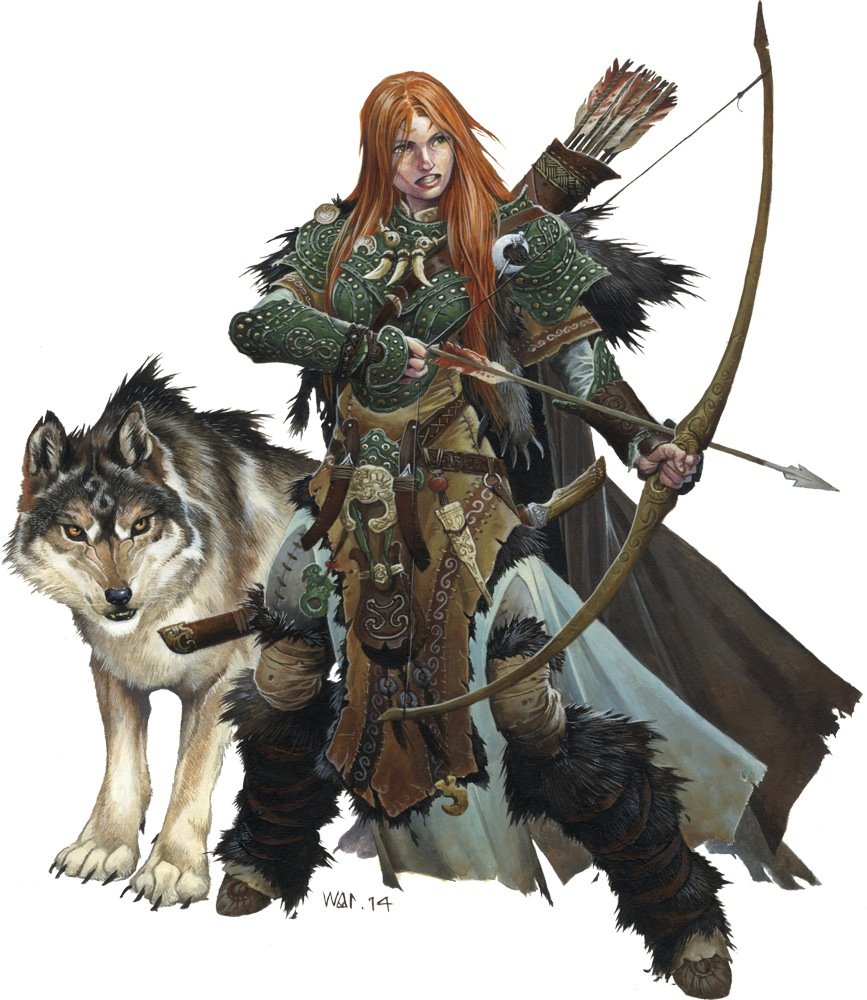
And I need to be clear that I LIKE the Hunter, I'm just aware that it occupies a very particular space.
Stop me if you've heard this: d8 hit die, 3/4 BAB, 6th level spells. They get 6 skill ranks per level which is very nice. That's a pretty good gish frame, and really becoming the stats for the majority of classes, leaving their class features to distinguish them.
So what are those class features? Well the Hunter is focused on the pet, to distinguish it from it's parents, and WHAT A PET!?! A full Druid animal companion, but bolstered by sharing magical augmentations and (bonus) teamwork feat. It strongly compares with the summoner's pet!
The Unchained Summoner's Eidolon is probably about even with the Hunter pet, though I think the original Eidolon is a little stronger, however there's an archetype for the Hunter that gets evolutions on top of the base Hunter pet and it is probably the strongest pet in the game.
The Hunter gets an ability to channel animal powers (not wildshape, more like Animal Man) that she can share with her pet (and the pet has it always on with no limits), plus some bonus teamwork feat that the pet auto shares.
Spell list is anything from the Ranger or Druid list and whichever placement is lower is how they cast it. They are spontaneous casters, unlike either of their parent classes, which weirdly makes them more like the 5e Ranger. It really is a good nature themed gish with a buddy!
So I think what was going on here was WoW was huge at this point and the Hunter was WoW's version of the Ranger, but it's niche had been carved out as THE pet class. Meanwhile in D&D, the Druid was top of dog for pets and Rangers (however improved in Pathfinder) were second rate
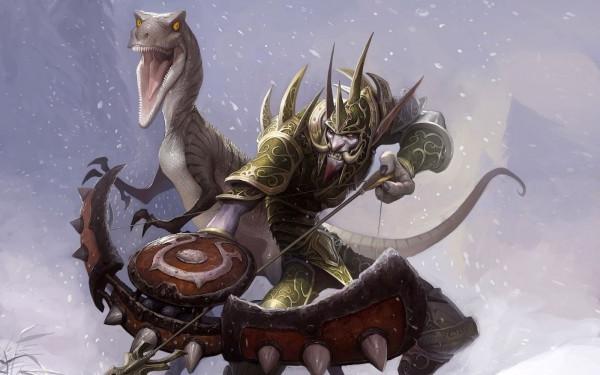
So they made a Ranger that was a little less fighter and a little more Pet/Caster without really feeling at all more like a Druid. I mean, channeling animal spirits is more magical than just really fucking hating one type of person, but the point is to feel like a Hunter from WoW
And I guess it works. It's certainly a solid class to play but not a distinct one. It ends up feeling like a soft reboot of the Ranger that's more of a leader than a striker and uses the new baseline stats.
And yes of course in a 5e port I would say use The Beastmaster Ranger or the Drake Warden Ranger. The 5e Ranger is already a much better Caster than the Pathfinder Ranger and they're just isn't as much support for pet classes in 5e.
I would probably recommend a one level dip in either Nature Cleric or Druid, but that goes back to my usual advice when playing a Ranger anyway. Remember kids, "Never go full Ranger"
This is about as good a time as any to mention that The Advanced Class Guide is the book that killed the Rogue. We already had the excellent Ninja but we got several classes here that occupied similar niches. So let's talk about the most skill monkey of these, The Investigator.

The Investigator was a hybrid of Rogue with Alchemist (sidenote: there was an extremely popular but frequently banned Alchemist archetype that traded their explosive concoctions for sneak attack) and this was a GREAT fusion!
The base body was what you should be expecting at this point: d8 hit die, 3/4 BAB, 6th level spells (well... Alchemical infusions) based on Int as the casting stat, and 6 skill points per level.
I'm honestly shocked in retrospect that they don't get only 4th level infusions, but Pathfinder was very rigid on what frame for what spell levels, and this was not the sturdier Rogue in this book.
But yeah, so the Investigator got literally the exact same casting mechanism from one parent. No mutagens however, so couldn't play a Gish so easily. Instead of sneak attack it had studied combat which gave small bonuses to one target and could then do a studied strike on
This was not as strong in combat but made them at least proficient. They also had inspiration, a ki like pool that boosted skill checks and could be used to fuel other abilities. This is the thing that made them better skill monkeys than Rogues
Some people would describe them as this edition's version of the Factotum, but their abilities feel less scatter shot. All of their abilities feel like an outgrowth of their curiosity and it's a great vibe!
Like, did you see that picture I posted? The iconic Investigator rocks a sword cane and can MacGyver magic out of anything? It is so fucking cool!
In name and broader concept, the Inquisitive Rogue kind of fills this vacancy in 5e, but it's also not very good. The Arcane Trickster does a good job as does The Whispers Bard, Trickery Cleric, and pretty much all of the Artificers although you might need to take a rogue dip
The Monster Slayer Ranger also should be mentioned. I've played around with a Homebrew of a amonk that uses intelligence instead of wisdom and gets skill-based bonuses but in terms of published content I think this is an archetype that still isn't quite satisfied in 5e
Oh, if playing Pathfinder 1e with 3rd party content, please check out the Polymath archetype from Path of War which makes this a two fisted brawler that is one of the best "Jack of All Trades" that I've ever seen!
Moving on to the Shaman, nominally a fusion of Witch and Oracle, but the result is closer to an alternate Cleric. It's a 9th level prepared divine spellcaster with d8 hit die and 3/4 BAB.
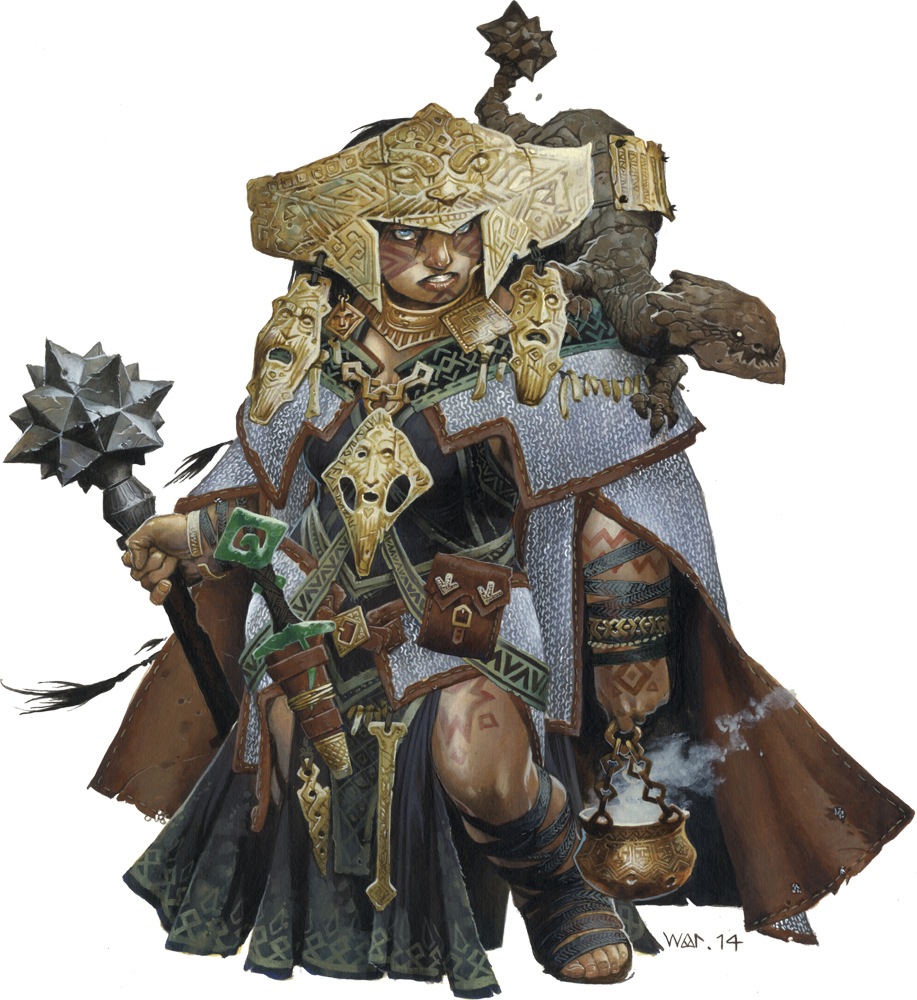
So, I'll note that I've never played a Shaman, nor seen one in action, so my assessment is based my reading of the character without any direct exposure. However, what that amounts to is in my estimation an alternate take on a Cleric weirdly enough.
Just like a Cleric, it's plenty sturdy for a full caster, with different thematic spirits that provide bonus spells and class features. And this is all VERY GOOD, make no mistake. Like, the Cleric was nerfed in Pathfinder, but still a beast of a class.
The Shaman takes from its witch side access to Hexes (but from a dramatically reduced list) and a reliance on a Familiar (which is always nice). That Familiar is linked to the spirit concept that Shamans use which behave similarly to Oracle Mysteries or Cleric Domains.
I would point to the low number of Shaman archetypes to illustrate that I don't think the Shaman succeeded in filling a niche that needed exploring. While there are some mechanical differences, it really is VERY close to the Cleric in concept and execution.
I mentioned that the Hunter was probably inspired by WoW and that might be the case here too, but I don't think it quite shares the vibe. That said it doesn't not do the job and the various spirits afford a broad array of playstyles, from melee to healer to blaster.

The Shaman has a custom spell list, which is a blessing and a curse: while it means that the spells are tailored to the class, it also means that they might miss out on new spells in later splat books. This was a bigger problem in 3.5 than Pathfinder however.
The Shaman was also easier to build than a Witch, since the Hex system was simpler (lacking the multiple tiers that the Witch dealt with) while still offering good utility.
And again, it's a 9th level caster with decent hp that can cast in medium armor while holding a shield, so it's going to do just fine.
Also, the Iconic Shaman was canonically Trans and that was fucking cool! She used a Belt of Gender Reversal (an actual item in the game that my players had way too much fun with when I introduced it to our game) to be the gender that she identified as and that was dope!
But if you're going to port a PF Shaman to 5e, I'd say just play a Cleric, a Celestial Pact of the Chain Warlock, or a non-Moon Druid and spend your wildshape on summoning Familiars. A pretty easy port, all things considered.
So next up is the Skald, a hybrid of Bard and Barbarian. This was the more caster-y barbarian concept getting, stop me if you want to guess first ...
...
...d8 hit die, 3/4 BAB, 6th level Arcane spells. Only 4 skill ranks a level, but they got martial weapons and medium armor!
...
...d8 hit die, 3/4 BAB, 6th level Arcane spells. Only 4 skill ranks a level, but they got martial weapons and medium armor!
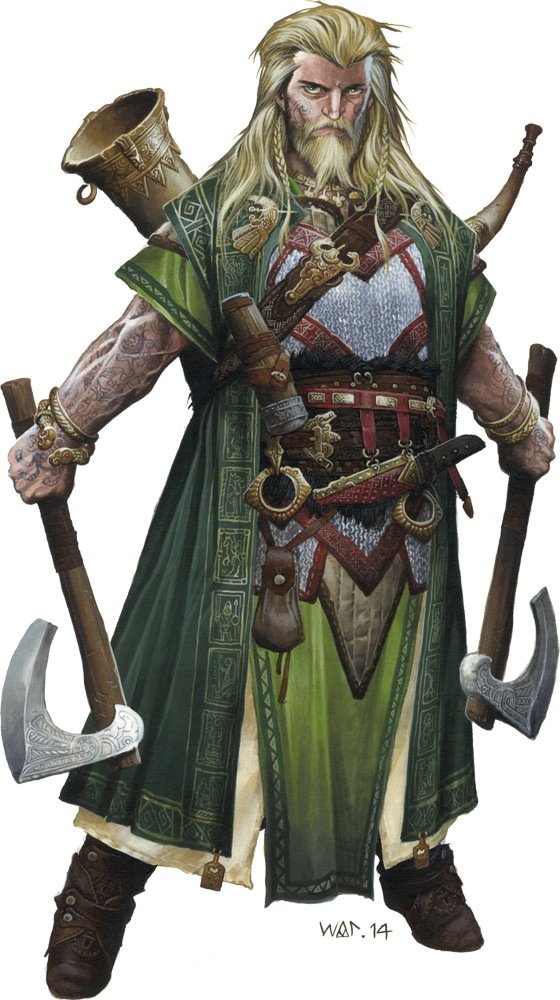
They had good saves and could cast in medium armor, which in Pathfinder was not easy to do if you were an Arcane caster. Plus, they could rage, and not only that they could make all of their allies rage, and not only that they could give their allies rage powers!
The Skald ended up being the closest Piazo published class to a proper Warlord, even getting an archetype called a warlord although it was not particularly good. If you were a Skald in a party alof fighters and monks, you very well might be the key between victory and TPK!
But really in addition to being a more Martial focused Bard it also had an ability called spell kenning which made it a better Caster than a regular Bard too! Plus, did you see the iconic Skald? He looks like he belongs in Metalocalypse! He's the most Metal Bard!
Before we discuss how this fits in 5e, I should note that there were A TON of Skaldic alterbate class features and Prestige classes in 3.5! This was an archetype that people really wanted!
On paper The Valor Bard fits this bill the best, but as a victim of early 5e design, it's not very exciting. Swords Bard feels more dynamic, but neither feel particularly strength based. A whirling dervish of poetry and death that inspires armies to join in the frenzy misses here
If you remove the desire for spell casting, the Zealot Barbarian has a shout ability that is exactly the type of thing I would want a leader type Barbarian to have, but the rest of the class features support a striker build.
The storm herald Barbarian has an element that supports the Allies rather than attacking enemies and that kind of fits the bill here.
But what I would really want is a war shouts based support Barbarian subclass that inspires allies in AOE bursts to be more terrifying on the battlefield!
However, before I move on to the next class, I want to note just how much I love the Skald as a Gish class! While its most potent assets are rage based instead of magic, this feels so gnarly as a warrior of fire and music and pain with axe in hand!
Next up is the Slayer, a fusion of Ranger and Rogue, that replaces any need for the lame Assassin Prestige Class from the Core Rulebook and completed the job of killing the Rogue and, frankly, the Fighter! D10 hit die, full BAB, 6 skill ranks a level, sneak attack, and more!
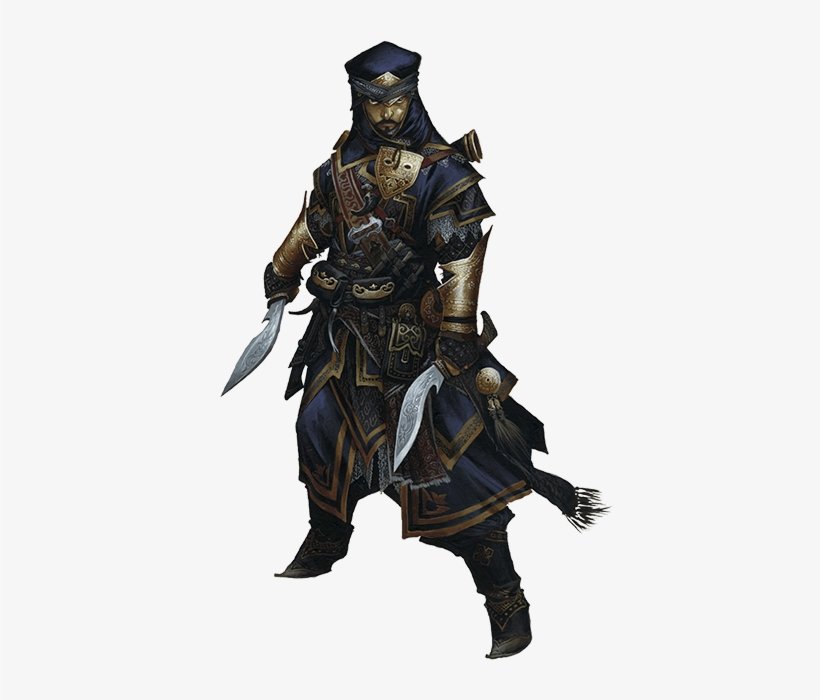
They got "Slayer Tricks", which amount to a list of bonus feat to select from. Some are unique, some are pulled from the Rogue and Ninja list, and some are feat from the Ranger fighting style list. Overall, a good list but probably not quite as good as the Fighters bonus feat.
The best thing about those tricks however is that the Ranger combat feat bypassed prerequisites making the Slayer one of the best options for certain fighting styles like strength based two weapon fighting.
BTW Two weapon fighting in 3.5 and Pathfinder basically required damage bonuses to work and, boy, did the Slayer have that! Not only did they have decent Sneak Attack (which apply to every hit that qualified in this edition) they also had a more versatile version of Favored Enemy
Studied Target worked like a half strength Favored Enemy (providing scaling static bonuses to attack, damage, and certain skills) but could be applied to any target. There was no use limit either, so you were incentivized to always have someone studied.
The Slayer got martial weapons, shields, and medium armor, so it was fairly sturdy. If you wanted heavy armor, there was a Slayer trick for that, and a second one that let them sneak and get their full dex bonus to ac in heavy armor. Saves were Fort (con) and Reflex (dex)
While it lacked the optimization potential of a Ranger, since it lacked spells and a pet, the Slayer was incredibly flexible and made for a potent striker/skill monkey.
And fun fact, as a DM, this was my go to for NPC threats. If I needed a thug or bandit or mercenary, the Slayer provided all the tools I needed with easy to remember combat bonuses that rewarded tactical positioning in grid combat.
You could make just about any martial concept with the class and they would do just fine! They worked well for any fighting style, even sword and board! Hell, they were a solid candidate for einhander, though next up on the list was explicitly designed for that...
Now if you were to try adapting a Slayer to 5e, you have a lot of options, in large part because the Slayer is so flexible, but it does mean you have to ask what the value most.
I would say the easiest conversion is the Gloom Stalker Ranger. It is a very roggish Ranger with excellent spike damage. The Hunter or Giant Slayer could also do ok here. You get some skills and a fighting style. Favored Foe can replace Studied Target pretty easily.
Obviously all Rangers are able to cast spells, so if that's an issue you should look elsewhere or at the very early unearthed arcana where they proposed how to convert to a spellless ranger, trading spells for Battlemaster maneuvers.
Since you should never go full Ranger this is not a bad spot for a Rogue dip (I like a level 1 dip to get the extra skill). If you take it up if you take it up to level three, Assassin makes enough sense here.
Speaking of a Rogue multiclass, you could also go Rogue/Fighter. Starting off with Rogue and then getting at least five levels of Fighter gets you a very solid martial character. You are probably going to go Battle Master for your Fighter here and Assassin for your Rogue.
Rogues and Fighters pretty much multi-class perfectly regardless of the split (even 10/10 isn't awful though clearly worse than 11/9 either way), so whatever gets the right flavor for you.
Oh hey, speaking of Rogue/Fighter multiclasses, we've got the Swashbuckler up next! Facebook it's considered a hybrid of Gunslinger and Fighter. Being a fully martial class with no spell casting you get a d10 hit die, full BAB, 4 skill ranks per level, and a good reflex save.
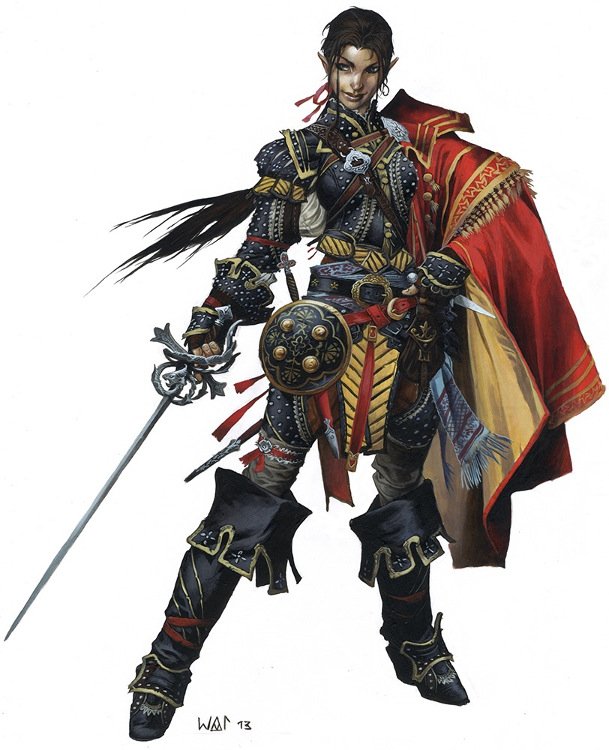
As with many of the classes in this book it occupies a design space that had previously been relegated to a Prestige class, in this case the Duelist, though that Prestige class actually works pretty well here with this as a base.
From its Fighter side the class gets bonus feat, counts as a Fighter for the purpose of qualifying for feat, and weapon training that provides pretty identical flat bonuses to select weapons.
From his Gunslinger side, "grit" was reinterpreted as "panache", which worked mostly the same but was keyed off charisma instead and if you had both via multi-classing would provide two interchangeable pools.
Panache provided the majority of the class's features. Some of the abilities cost panache while others really required that you had some in your tank. Most of the features that the Swashbuckler got were Rogue style features but hidden within the panache system.
So they got Evasion and Uncanny Dodge and a precision based attack that added their swashbuckler level to damage with any one-handed finesse weapon, all undercover of of the bigger panache class feature.
Oh and if that adding your level to all attack damage surprised you, it might surprise you more to discover that this class was considered fairly weak among the martial classes.
See, the reason this class was necessary was that Pathfinder as a system, being based on 3.5, really did not support one-handed weapon styles, nor did it support dexterity focus builds. Adding a boatload of damage that didn't multiply on a crit did not upset the power curve.
And crits I should note were really important. Not only did the class automatically get bonuses to the crit range and modifier, but their panache pool recharge based on successfully making critical hits.
It wasn't super sturdy, getting only light armor and bucklers (light shields), but that was offset a little by a scaling dodge bonus.
The Swashbuckler had some pretty lateral archetypes, including the Mysterious Avenger, which was Zorro as a class!
Also, I have to point out the Daring Champion Cavalier, which got most of the best Swashbuckler class features on a Cavalier in exchange for the mount. It had better armor and could both use Precise Strike and Cavalier Challenge to deal double your class level in damage per hit!
The Magus also had some way to access a panache pool but Errata basically broke it, which is a shame.
And this is an interesting one to convert to 5e because I actually did it! See, I DMed a player running a Swashbuckler in a Pathfinder game and thought it was really fun, so I opted to try to recreate it in a 5e game that I've been in for 5 years now.
Now, 5e leans towards simpler classes with fewer fiddly bits and the system also supports dex builds far more (too much really) since you can use dex in place of strength no feat required for attack or damage.
Now, look, obviously the easiest way to convert is with a Swashbuckler Rogue, which even uses many of the same names, like Panache. Their flexible sneak attack matches up to Precision Strike, too. It's certainly a combative Rogue.
And a straight class Fighter does ok, too. Dueling fighting style is good here and many of the subclasses work well with a dexterity focused build. Battlemaster and, weirdly, Samurai probably work best here.
But as I alluded to at the top, the way I did it was with a Rogue/Fighter multiclass. Swashbuckler for easy sneak attack and Battlemaster for maneuvers that play like Panache/Deeds. I ended up going mostly Fighter, but just about any split it good.
The Kensei Monk is a decent option also. In fact, it better supports going no off hand shield or weapon, though you'll end up doing more unarmed strikes than stabs, even if you're holding a rapier.
If you felt like you were missing Spellcasting in Pathfinder, the Swords Bard is a pretty archetypal Swashbuckler too, but it's also a 9th level spellcaster so you'll end up with a different feel.
This conversion works pretty well because the base Fighter is far better at doing its job than the Pathfinder Fighter, so there was less need for a purely focused Einhander class.
Last up in the Advanced Class Guide is the Warpriest, a fusion of Fighter and Cleric, and what can be said that hasn't been said? No... I mean it you can guess what I'm going to rattle off for the base frame:
D8 Hit Die
3/4 BAB
6th level spells
And jokes aside I love this class!
D8 Hit Die
3/4 BAB
6th level spells
And jokes aside I love this class!

Given their Fighter lineage, they get the martial weapons, shields, and heavy armor (the only class in the book to get Heavy Armor now that I think about it!) plus bonus feat every 3 levels (better than Swashbucklers!) and count their Warpriest levels as Fighter levels.
In order to qualify for combat feats (that usually have a BAB prerequisite) they uses their class level in place of BAB which I'll come back to. And while the lower hit die and BAB make them not quite as innately sturdy as a Fighter but their Cleric side more than makes up for it
Obviously they get prepared spellcasting, pulling from the Cleric list, which is always nice though it lacks some of the juicy unique options that Paladins and Inquisitors get (and no lower level access like Hunters get from their Ranger side), but there are upsides...
Getting their spells from the tremendously popular Cleric list explicitly prevents them from missing out on new spells from later splatbooks (a common problem for non core classes in 3.5, though to a lesser extent in Pathfinder)! Nepotism in class design!
Their combat abilities are magically enhanced, letting them temporarily buff their weapons and armor, making them one of the best "Gish-in-a-Can" options in the game.
But it gets better because they have a lay on hands type feature that, in addition to healing, they can spend charges of to cast spells on themselves as a Swift Action! This means every good buff they have can be applied without costing their combat actions!
This had the weird effect of making them really dangerous in a long fight where they can be constantly buffing themselves each round. Combine with swift action healing and they can really hang in there in a fight! However, its all coming from limited resource pools.
There's more. They get "Blessings" which are all one to one with Cleric Domains and give some pretty neat powers. I compare them to Mega Man powers, less character redefining and more a weapon load out. There are some great options though!
Lastly for big ticket stuff, they get scaling damage for their deities sacred weapon, kind of like a monk, making certain weapons like knives and whips way more viable!
The class was intended to be something of a Paladin that wasn't bound to alignment, which was a big deal prior to 5e. It couldn't do the raw unfettered ass kicking that a Paladin could against an enemy that it marked to Smite, but it was way more versatile.
And it had some great archetypes like the Divine Commander, which gave it a mount to be even more Paladin like, or the Sacred Fist which traded Fighter features for Monk ones and honestly would have replaced the Monk if errata didn't nerf it later.
The Warpriest also had some interesting options because of its weird BAB system, namely Vital Strike! Counting their level as BAB let them pick up that feat chain before they'd gain the corresponding iterative attack, letting them do bigger hits than they should for their level.
The Warpriest feels like the ur-example of the design goal for the ACG: higher floor, lower ceiling. Unlike the APG classes which required greatest system mastery than Core Classes, the ACG classes all were way more forgiving to new players.
Like, compare the Warpriest to the Inquisitor, which on paper is very similar. The Inquisitor is a spontaneous casters requiring more care in spell selection, their bonus feat require understanding weird options, and their combat bonuses need to be more carefully implemented.
Meanwhile the Warpriest can change their spell load out daily, rocks heavier armor, and their divine powers come off more as a load out for a character, rather than an integral part of who they are.
I'd almost across the board recommend a new player to use a class from the Advanced Class Guide instead of either the Core Rulebook or Advanced Players Guide, since they're harder to screw up while less likely to become overpowered.
But converting a Warpriest for 5e...
Well, there's 3 main options:
Paladin
Fighter/Cleric multiclass
Ranger/Cleric multiclass
Well, there's 3 main options:
Paladin
Fighter/Cleric multiclass
Ranger/Cleric multiclass
With the 5e Paladin's lack of alignment restrictions and improved spell casting, it does pretty well here. 5e in general has less "stuff" going on for classes, so the loss of features is understandable and it's still a solid class so no one will really feel cheated.
Fighter/Cleric is really nice. Anything from Fighter 5-11 gets extra attack and martial weapons, while the Cleric isn't falling too far behind on HP and many domains have great combat features! Go Eldritch Knight to grab Shield and advance your spell slot progression a little!
However, if you don't just want a Paladin, Ranger/Cleric multiclass REALLY well! Ranger gives Martial Weapons for all the Domains that don't while most Domains give Heavy Armor. You'll need a 13 in dex, but thats not the end of the world.
Fey Wander plus Nature Cleric is a melee beast with Shillelagh while being able to focus on Wisdom as both attack and spell casting stat, but they all fit together well! Plus, since Ranger is a 1/2 caster instead of 1/3 like an EK, spell slot progression is not nearly as impacted
And, well, I guess you could go straight Cleric. Many of the more Martial domains are solid combatants, but none get you a fighting style or extra attack so you will feel mechanically lacking.
However, this is a character concepts that has always been pretty well covered in every edition of DND (though Christ WotC, please gove us an official Fighter subclass that gets Cleric spells at 1/3 progression! You are literally leaving money on the table).
The base Cleric has always worked as a front line fighter and the Paladin pretty much double downed on that idea. The Warpriest was a really well done set of mechanics, but the flavor isn't too unique. Still loved it though!
Before moving on, I mentioned the awesome Sacred Fist archetype that merged Monk with Cleric and 5e has some interesting options there.
The Way of Mercy Monk is very good at doing the healing / debuffing monk concept, though obviously way less versatile than a 6th level spell caster. Another option though way less optimized is monk 1/ranger x. Pick up the unarmed fighting style and go wisdom/dex and cast a little
Martial Arts isn't by itself enough to justify a Monk dip, but at least here you feel like a monk but get the same time getting all of the spell casting benefits that any version of a ranger would get as well as extra attack.
Rangers like gloomstalkers make excellent ninja bases which fit very nicely with a monk, or Fey Wanderers invoke a very spiritual concept.
So next up is the Vigilante and... OK, so I was following the development of Ultimate Intrigue and was super excited when it was released, but ... This isn't a class that needs to exist...
Because the Vigilante was an attempt to make a superhero class
Because the Vigilante was an attempt to make a superhero class
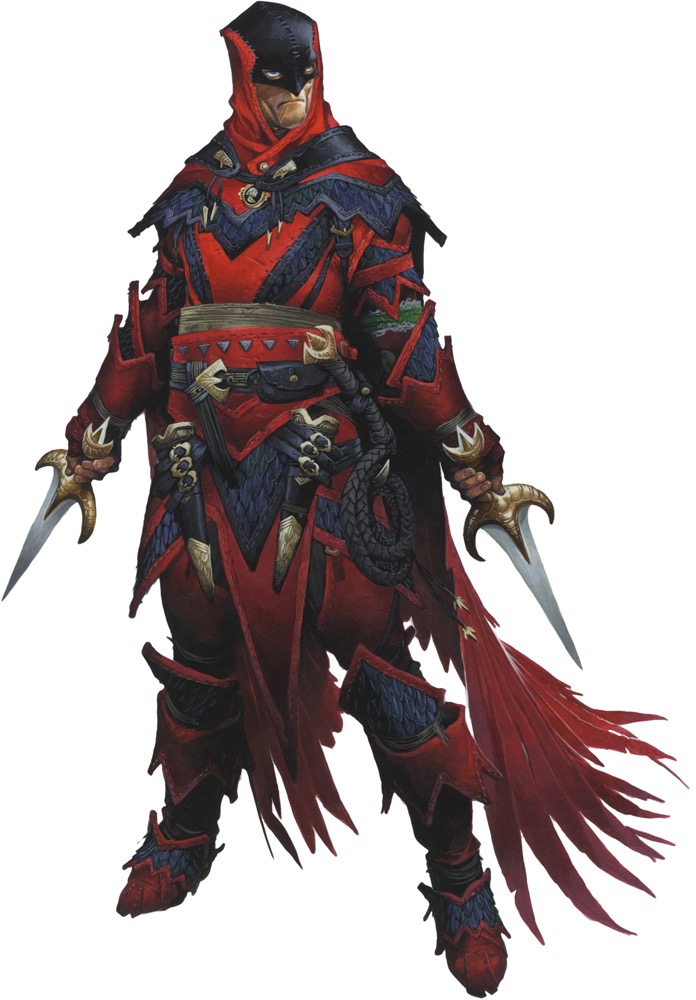
"Hey! I like superheroes! Why can't there be a superhero class?" You ask.
Well I like superheroes too!
A lot! (youtube.com/playlist?list=…)
However, that idea shouldn't be a class. It should be a game mechanic open to all classes
Well I like superheroes too!
A lot! (youtube.com/playlist?list=…)
However, that idea shouldn't be a class. It should be a game mechanic open to all classes
So what was the Pathfinder Vigilante? Well it was designed around flipping between 2 personas with different abilities to each. Liking this so far.
One is a modular "face" class with no combat abilities but tons of options for social interactions.
The other half...
One is a modular "face" class with no combat abilities but tons of options for social interactions.
The other half...
Well the other half was a less focused either fighter or rogue, called the Avenger and the Stalker respectively. Avenger got full BAB and combat talents. Striker got stealth talents and a modified sneak attack.
And that seems limited.
And that seems limited.
Earlier in design, the class was promised to be even more modular, able to purchase all kinds of character traits, like partial casting, or class features from other classes. This wasn't committed to, so instead there were a number of archetypes that emulated classic characters
Great options to make a barely effective Hulk or mostly functional Sailor Moon! The problem is that all of these were basically watered down versions of other classes with some poor design balance that made some options superior to going with classes that they were aping.
Ultimately this was a class that worked fine in an intrigue heavy game, but in that game everyone should just be versions of the Vigilante. Otherwise, you probably aren't going to use this class. So the Vigilante really represents an alternate class system for a more modular game
So why bother? This should have been a feat tree or a line of class archetypes. Remember how the Swashbuckler has the Mysterious Avenger archetype that just WAS Zorro? Or the Shield Champion Brawler that was Captain America? More of that!
Because what it comes down to is a roleplay system and it highlights the issue that the 3.X system had with skills vs combat abilities. Because it's hard for a real fighter to even have enough int or ranks in deception to be a Batman and this addressed that.
So in 5e... I think with the smaller bonuses and most of the classes having some class features that boost skills, I think it's irrelevant. I mean @TheMikeBachmann does a great job being a Batman type character in @DnDPodcast without needing a unique class for it.
That said, there are 2 VERY modular classes that could work here particularly well:
The Warlock and the Artificer
The Warlock and the Artificer
In both cases the innate character isn't that powerful, but through outside sources it can assume a powered form. In the case of warlocks, they summon magic artifacts that many of their abilities work through. Meanwhile the artificer is powdered by special gadgets.
For example, a hexblade warlock could be pact of the blade, but the blade could be some kind of gauntlet or other super weapon. Then, summoning their pack weapon is similar to a Sentai hero transforming. They get extra attack and other combat abilities!
And while comparisons to Iron Man are obvious, if you can't figure out a way to make a 60s style Batman with a utility belt, the I can't help you.
But then, most superheroes can be accounted for with various ideas for multiclassing. That isn't to say that all archetypes for superheroes are covered in 5e, just that the Pathfinder Vigilante wasn't a unique archetype to ask about
I'll talk about Pathfinder Unchained later, since I mentioned the Unchained Classes when I discussed their original appearances, and the multiclassing system that I REALLY LIKE is something I want to discuss after I've gone though all the classes.
And I think the Vigilante was the only class released between the Advanced Class Guide and Occult Adventures, where we get the next big batch of classes. Now be prepared for me to be containing some vitriol and attempting to see the positives in a book that I didn't like.
Why didn't I like Occult Adventures? Well I was excited to see what a proper first party psychic system could look like. I mean, Dreamscarred Press (@dreamscarred) had done a wonderful book updating the 3.5 psionic system, but I was excited to see what Paizo came up with.
Would it be power points like in 3.5? That was in the 3.5 SRD so it was actually fair game. Maybe it would build off Paizo's love of resource pools for abilities, like Inspiration or Ki. I couldn't wait to see!
More regular spellcasting using Vancian magic. That's what they came up with.
So rather than being an alternate power system, Paizo just did more of the same, but with it being a new category of spell casting, as opposed to arcane or divine casting. And from what I know of PF2e, this is what we'd call "foreshadowing"
My take is that Occult Adventures is trying to scratch a Call of Cthulhu itch, playing on late 19th/early 20th century mysticism. Y'know... "the Occult".
I was definitely too hard on the book, but I still find the additions made mostly boring and the setting options not my genre
I was definitely too hard on the book, but I still find the additions made mostly boring and the setting options not my genre
So what classes did Occult Adventures bring? What archetypes were introduced that we'd need to come up with ways of porting to 5e?
Well, enough dillydallying, let's talk about the Kineticist!
So the Kineticist is actually similar mechanically to the 3.5 Warlock, but thematically more of an Avatar the Last Airbender type. You get elementally themed supernatural and spell like abilities with a primary blast ability that is vaguely psychic.

Also the blast ability was keyed off your constitution modifier and I think we all can see how that could be potent. Well Paizo did too and unfortunately they nerfed the concept by making your abilities cause damage to you while not actually being that strong
Some archetypes leaned into the Avatar thing and made the class more Monk like which slightly improved the options you had by making you more of a gish. The problem is that we saw with the 3.5 Warlock how limited this kind of caster type was and this was even weaker than that.
I mean, 5e has basically acknowledged this by making offensive cantrips so ubiquitous. Even if some are better than others in 5e, they all are infinite use and the idea that you could spam an offensive spell was considered verboten in 3.p era design.
And it sucks because the theme of a Bender style Monk is dope one that makes me miss the 3.5 Shugenja. This means and I can't believe I'm writing these words: "The Four Elements Monk would actually be a decent stand in and may actually be a more powerful option"
So would Sun Soul Monk. Hell, you could squint and make Storm Herlad Barbarian fit. Otherwise a Soul Knife Rogue is technically doing a psychic blast build. Or an Aberrant Dragonmark build gets constitution based casting and you can grab firebolt, but then what class are you?
Honestly, I have a fox for a Four Elements Monk that does the best at getting the flavor of the Kineticist. And if you want a clear upgrade to the mechanics? Warlock. None of the Patrons really fit (maybe Deep) but invocations and Eldritch Blast are inherited from the 3.5 Warlock
There's certainly a gap in terms of a prepackaged elementally flavored blaster type with some durability, but you could get their with a evoker and careful spell selections.
5e isn't really there, but then neither was Pathfinder 1e.
5e isn't really there, but then neither was Pathfinder 1e.
Oh, hey! It's the Medium! No joke, this is easily my favorite class in the book and one of my favorite Pathfinder unique classes! It was a Jack of All Trades class and Case loves a Jack of All Trades class! Plus, the audacity to call itself Medium when it is decidedly Mid!

And the wittiness to have it also be a classic occult term and actually a really good representation of the implied mechanics of a fantasy adventure setting version of a "Medium", in addition to a pun about the mechanical use! I mean, this is my exact sense of humor!
OK, so the idea is that you are a pretty bog standard person living in a fantasy world: d8 hd, 3/4 bab, 4 skill ranks per level, in this case only getting 4th level spellcasting. The frame stripped of class features would be perfect for an Eberron Magewright!
But the BIG mechanic is that you can channel the spirits of dead adventurers into you, giving you new abilities and skills, instead of trying to convince you to sign away your fortune! And this is such a cool idea!
Look, I've been vocal about my love for Final Fantasy Red Mages, WoW Shamans, 3.5 Factotums and Chameleons (Prestige Class). Getting that balanced character concept and giving it such a cool roleplaying hook plus an in theme nature... well, my hat's off to the designers!
And, yes, some of that is that this is PERFECT for a character empowered by the Great Wizard Shazam that is still balanced as a player in a game!
So the way it works is that you can channel one of 6 spiritual archetypes into you, with the idea that it can be all kinds of sources like ancestors, local ghosts, lesser gods, or whatever, but each falls into a "flavor" of archetype. From there, each gave bonuses but at a cost!
Archmage: you. will. never. guess! Ok, so obviously this makes you a better arcane caster. You get upgraded to 6th level spellcasting and ultimately some even high level spells as spell-like abilities, while you take penalties to your physical abilities.
Pretty good candidate for a "Power of Zeus"
Champion: An artificial martial spirit. You take penalties to spellcasting in exchange for psuedo-full bab and all the weapon and armor proficiencies you'd want.
This would easily describe someone with the Strength of Hercules.
Guradian: The defensive martial spirit, giving you the armor you need to make yourself a living target. Given 3.P's indifference towards tank builds, this doesn't really end up working that well.
However, this is a solid choice for Stamina of Atlas!
Hierophant: Your cleric stand in. Like the archmage, this boosts you to a sixth level caster and beyond! You are obliged not to kill anyone and follow either druid or paladin style code.
Perfect for the Wisdom of Solomon.
Marshal: The leader style character, in this case mechanically most resembling a bard. Ends up being one of the better spirits to take because you're probably already playing a fifth party member role, so boosting your more specialized allies is a good choice... like a bard!
Inspiring like someone with the Courage of Achilles!
Trickster: Dime store Rogue! It's exactly what you'd expect: mild damage spike ability, skill bonuses, some face abilities. In exchange you become paranoid AF and no one counts as your ally or vice versa!
And considering his reputation as a trickster, someone with the Speed of Mercury would fit in well here.
Anyway, my understanding is that the math actually bears out for the class mostly, even if the Heirophant and Guardian don't really pull their weight. A Champion is only a little behind a Fighter and a second rate Bard is better than no Bard at all...
But Pathfinder is a game that rewards specialization and you'll need to select feat to support a style of character and at that point shouldn't you just play a class designed to fill that role?
Don't get me wrong, I love this. Can you imagine a game of only Mediums and you as the DM rolling for which spirits they had access to? So much potential!
But ultimately the class lacked a means to compete with more specialized classes, either through rapid switching of forms, like a WoW Druid, or interesting combinations of the various abilities, like a FF Red Mage.
In that regard, the Bard fits this class pretty well, with the various subclasses mapping very well to the different spirits (lore=archmage, swords=champion, valor=guardian, creation=heirophant, eloquence=marshal, whispers=trickster) if you didn't care about switching abilities
Meanwhile the flavor fits the most modular class very well, the Warlock. I've played around with a subclass design to make this work, but it is tough to balance!
But mechanically, Artificers might be your best bet since they can rapidly respec their magic items if they need to and that can wildly change their vibe. The Armorer especially can go from defender to striker which covers one option for the Medium.
Then of course Moon Druids can swap out all of their spells each rest and rapidly take combat and stealth forms... kind of why they strike people as very strong, especially at low levels.
Perfecting that flexible but finesse based character that really benefits from strategic uses of ability load outs is key to the class design. It makes me think of an element that I really loved in Mass Effect Andromeda.
Nothing in 5e quite nails it and the Medium wasn't really fun enough to be that interesting in PF1e. The 3.5 Chameleon Prestige Class still takes the spot for me with a floating feat, powerful class emulation, and ok spellcasting, but the Medium is the class that root for.
Next up is the Mesmerist and this frankly was the class that I didn't have a real take about. And can you blame me? In a book that I was already disappointed about the lack of new crunch, another 3/4 BAB, 6th level spell caster, with a d8 hit die wasn't that exciting.
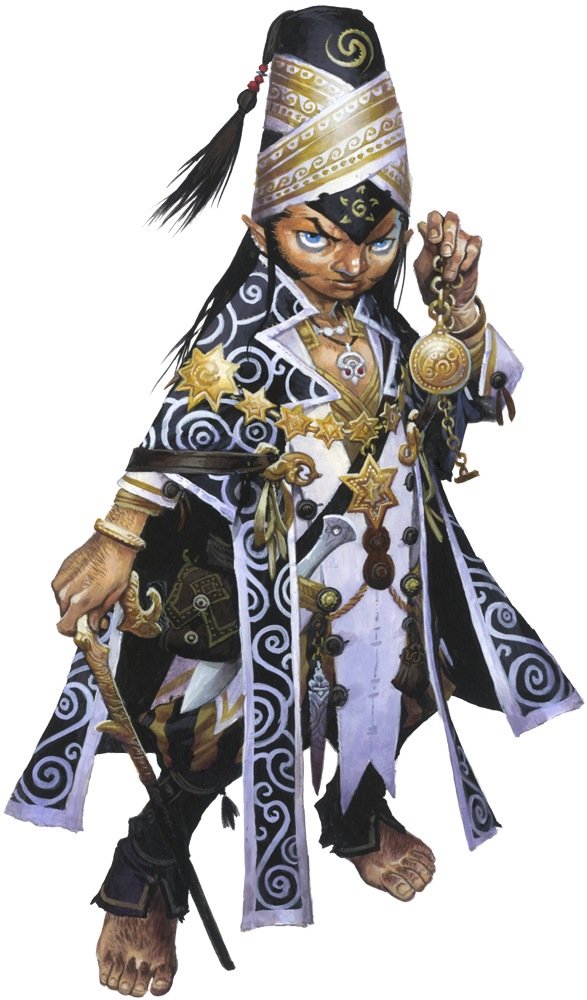
Granted, the class gets 6 skill ranks a level which is great and it has good fort and will saves (second best option after the incredibly rare all three saves). So the frame is perfectly fine, great even.
Spellcasting is charisma based and thus spontaneous (as it is for everyone charisma based but the Paladin) with an emphasis on mind effecting spells. It compares with the 3.5 Beguiler but the class that comes most to mind for me is the Jester class, which was an inverted Bard.
The main thing that distinguishes the Mesmerist in terms of class features is its hypnotic stare. It can be done at will as a swift action and confers minor debuffs that you can power up in customizable ways, making the character's action economy pretty good actually!
Given that the character is all about hypnotizing people, there's a slightly sinister vibe inherent to the class but there are heroic concepts from fiction you can draw on!
The Shadow is of course the first that comes to mind. In fact, there are options for your hypnotic stare that are clearly supposed to support that concept.
And on that note, if you want to tell a Stormtrooper that "these are not the droids you're looking for... Move along", this is an excellent foundation for a Jedi. It even gets Mage Hand to do the lesser telekinesis stuff!
And of course that's because The Shadow is a Jedi
So we end up with a rather fruitful character concept, skillful, capable, and with good face abilities. The problem is that it exists in the larger Pathfinder setting and doesn't quite match up to the power scale that some other classes have.
The Mesmerist has a hard time shining in a setting with Inquisitors and Investigators, so it's much more compelling in a game that only uses Occult Adventures. But that said, the story ideas it presents are much cooler than I had given it credit for!
As far as converting to 5e goes, well you have several pretty good options:
Technically, the Soul Knife Rogue fits the bill, in that it is a skill monkey with psychic powers and the Soul Knives can be interpreted as psychic blasts if you wanted...
...but the Arcane Trickster Rogue is probably your best Rogue option with actual spell casting and an emphasis on mind effecting spells.
Meanwhile the Whispers Bard is personal pick for conversion here, with it's more robust spell casting and similar emphasis on trickery and mind spells. You could also make a Glamour Bard work well here, too.
Then there's the various Wizards like Illusion and Enchantment, but they better fit a class that's yet to come.
Lastly you could go Shadow Monk, but that's only of you're REALLY doing The Shadow as your character concept and want stealth more than mind effects.
You could also make something like a Gloomstalker or Monster Slayer multiclass with a Trickery Cleric work, but that's a lot of effort when the Whispers Bard is right there.
The Mesmerist had a much better hoom than I have it credit for since it was overshadowed (no pun intended) by classes with more bombastic hooks, but looking back I appreciate its subtlety. It knows what it wants to be as well as what evil lurks within the hearts of men!
sigh... much better hook* that I have given* it credit for...
On to the Occultist, the flagship class of the book! Before going further, can we just appreciate the fact that the iconic example of this class is a portly dude with a gut? Good stuff that appeals to my fat self! Anywho, you can guess the base stats...
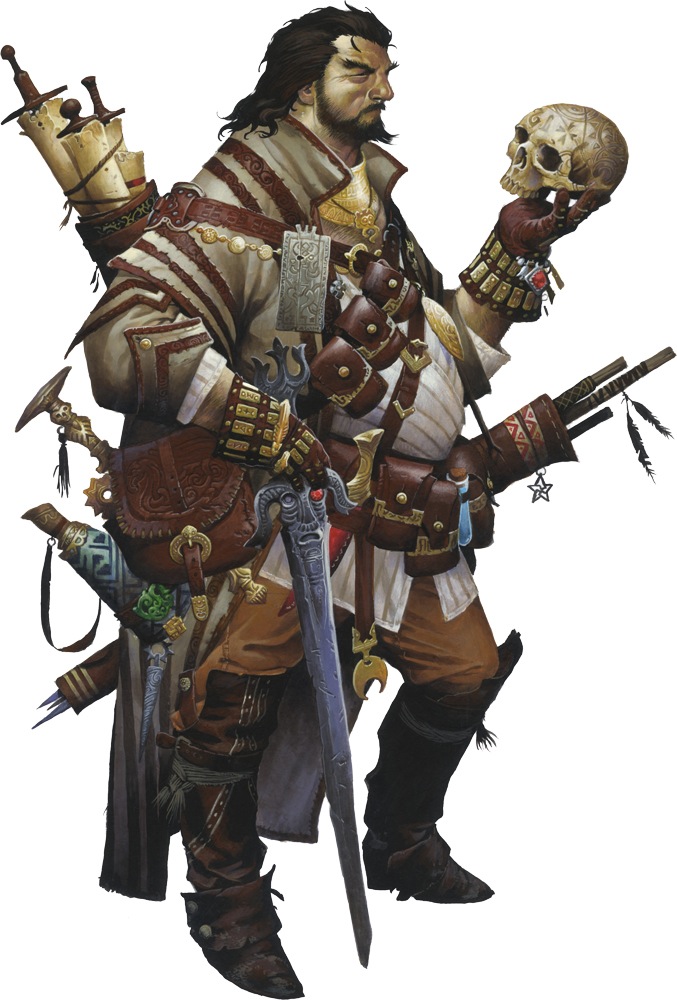
D8 hit dice, 3/4 BAB, 6th level spell caster, in this case the spell casting is based off of intelligence which makes the merely average 4 skill ranks a level more palatable. Good Fort and Will saves (pretty consistent among the classes in this book).
The big unique thing for the class is *Implements" which are the keys to most of its class features. As you level, you select implements and gain access to associated magic schools and abilities. These can then interact in interesting ways that define your character.
At higher levels, once you have several implements, you can learn "Panoplies" which almost are like Prestige Classes nested inside this class. These unlock really powerful abilities that work towards more specialized concepts...
Like making you a full BAB character or a vastly more powerful caster.
Implements and Panoplies give you access to your spells, so much that you aren't considered having spells on your list if they're associated with implements you haven't taken which matters for things like Wands and Scrolls, playing into the complicated meta of PF1e
As a result, the class is extremely modular, with a wide variety of flavors based on your selections.
That said, I wish it wasn't based on player selection. This class seems perfect for a DM table to roll on to determine what implements are available to a player and give them a shelf life so that they have to be swapped out frequently. Imagine how much more dynamic that would be!
However, I understand not wanting to have players feel like they have no choice in what abilities they have, particularly if they're running around with War Priests and Magi. Again, feels like this book works really well standalone from the rest of Pathfinder.
Also... Why is this a psychic caster? Everything about the class screams arcane. The class feels more like a sturdy wizard with a heavy emphasis on material components, not a psionic class.
But c'est le vie. As it stands, this is not a class for beginners, but it's modularity and flavor are great!
It's great for making well rounded Red Mage types, especially ones with bags of tricks! If you want to make Hellboy, here you go! While the Medium could slot into any role like a WoW Druid, this is the WoW Shaman, able to be specced to be pretty good at a few roles.
Converting to 5e, the use of the word "modular" should have tipped you off to my top recommendation: The Artificer! Between the emphasis on enchanting items and the versatile nature of the class and its subclasses, it's probably the best bet at copying the flavor.
After that, the Warlock is on at this. Likewise, all of the build options mean you could mostly approximate any build you had in PF1e.
For more out there takes, the Rune Knight Fighter has similar magic infusion flavor, but with a much more martial bent, and the Monster Slayer Ranger does ok at being a bag of tricks kind of character.
Spending more time with each class from Occult Adventures has made me respect more of what the designers were trying to do.
A creative DM could definitely make these classes really fun to play at a table, but the DM would really need to lean into the flavor and mechanical limitations of each class because otherwise they are easy to gloss over as very samey to what we already had.
Ah, the Psychic, simultaneously the easiest to predict class in Occult Adventures while also being the most disappointing. Is that it's a bad class? Absolutely not! It's a 9th level intelligence based caster with a powerful spell list. It's great. It also doesn't need to exist.
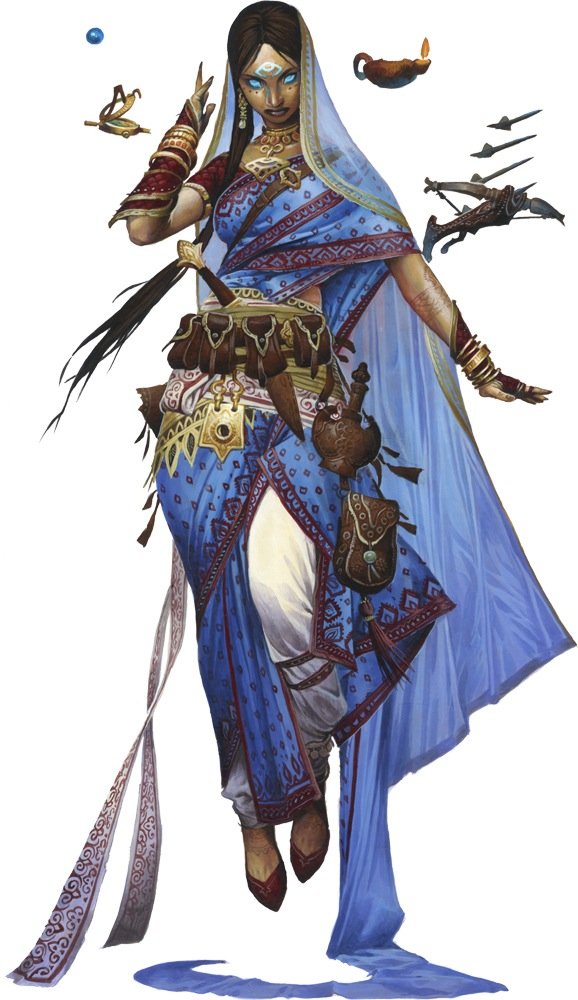
The frame is what you'd expect from the book's only full caster: d6 hd, only a good will save, half BAB. Only 2 skill ranks a level, but that's not a huge issue since the Psychic is intelligence based for casting.
You know? A squishy caster!
You know? A squishy caster!
The spell list is pretty great, though as you'd expect in the book that introduced psychic casting and with a class called the "Psychic" the list is mostly mind effecting spells. As a result this is the OTHER class that gets compared to the 3.5 Beguiler.
It's a spontaneous caster too, which means you get fewer tricks available but more uses for said tricks.

To distinguish one Psychic from another, they choose a discipline which adds some spells to their spells known and some lesser abilities, about equivalent to PF1e sorcerer bloodlines or cleric domains.
As for class features, they get a Phrenic Pool which allows them to modify their spells and is keyed off of either wisdom or charisma (based on their discipline choice) which makes them slightly MAD. This is pretty similar to 5e Sorcery points, actually.
All of this sounds pretty good! Nice varied abilities and class options! So why am I down on the Psychic?
Well, it's hard not to compare it with the 3.5 Psion (or Dreamscarred Press's Pathfinder update) which had a unique casting mechanism. Is that fair? No. Paizo clearly didn't want multiple spell casting systems to muck with like 3.5 had, but it does raise a question...
Why isn't this just a Wizard or Sorcerer archetype?
Pathfinder was no stranger to massively reworking classes with archetypes and the Psychic feels well within what they've done for other classes.
Pathfinder was no stranger to massively reworking classes with archetypes and the Psychic feels well within what they've done for other classes.
On the other hand, I get that they weren't going to put out a book with no full caster and this was very late in the edition to try and reinvent the wheel.
So... It's fine. It definitely does the job and does it well.
As for converting the class to 5e, like obviously the choice is Aberrant Mind Sorcerer. The class features map pretty one to one and the theme is mostly the same.
If you want to be intelligence based, you could go with an enchantment or illusion wizard. Meanwhile, a Great Old One Warlock technically works but really you want the Aberrant Mind Sorcerer if you're trying to convert the Psychic.
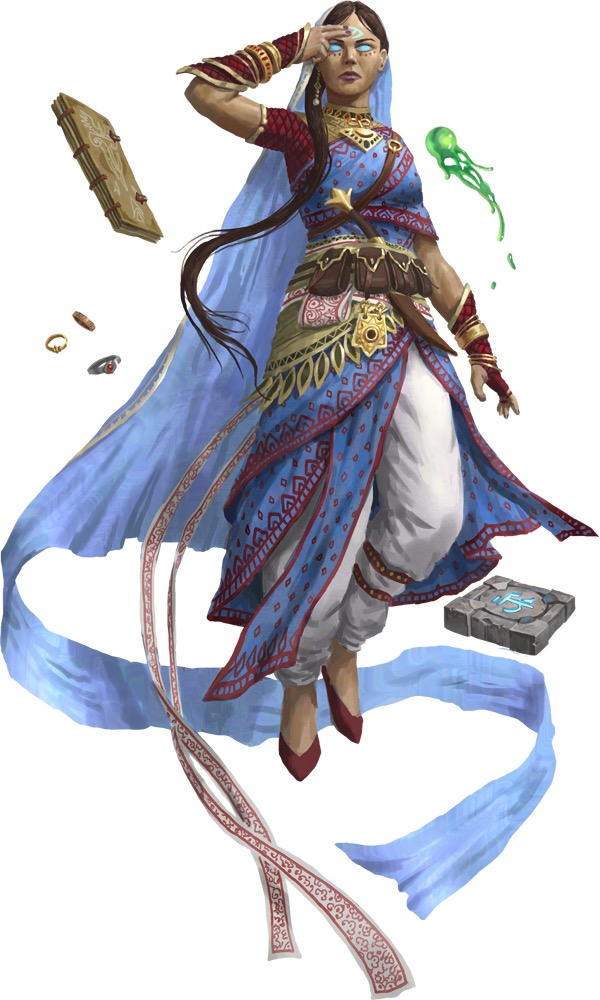
The last class in Occult Adventures is the Spiritualist and see if you can guess what character type this book hasn't provided so far! If you said a full BAB martial class, you're wrong. If you said a Pet class, you got it!

The actual class's frame is what you'd expect: 3/4 BAB, d8 hd, 6th level spell casting. 6 skill ranks per level is very nice, as is a good fort and will save (weirdly almost every class in this book gets those, which is wild, but they're no less amazing).
Spell casting is keyed off of wisdom, though there is an archetype (Fractured Mind) that swaps it out for charisma instead, without really costing you anything. In Pathfinder you can make a case for any spellcasting stat being a good one, so either is fine.
The actual pet is interested. It is theoretically a spirit that is either bonded to you or to the area that you're in, OR in the Fractured Mind's case it's an aspect of your personality made manifest. Whatever the lore you end up going with is, it resonates with a strong emotion.
Each emotion confers a load out for the Phantom's powers (the spirit you summon is called a Phantom, FYI). Emotions like anger or hatred make for striker builds, jealousy makes for a defender, fear is a debuffer, etc.

On top of that, the phantom can either take on an ethereal or ectoplasmic form for scouting vs fighting, or it reside within you to protect it.
This results in a pet class that has a lot of options for what kind of pet is available, but they're not customizable like the Summoner's Eidolon or Hunter's animal companion. And unlike other pet classes the phantom is tethered to you, normally being bound within 50 feet of you.
The phantom also isn't very strong, relative to other pets. I mean, it's solid (when it's not being ethereal, amirite?) But it doesn't measure up to the best in category.
Meanwhile, the spiritualist itself has way fewer class features that don't rely on the Phantom than Summoners and Hunters do, so it ends up picking either being a support caster or a combat partner.
The spell list has a decent number of buffs which can be applied to either your Phantom or to you, so you can be helpful, and it's not super reliant on your spellcasting mod so you can afford to have some ok physical stats.
And being a psychic caster, the spiritualist is able to cast in armor. Thus, this ends up being a very solid choice for a "bash brothers" build, with neither party really being the star.
As with the psychic, there's certainly an argument to be made that this should have just been an archetype for the summoner. Alternatively, you could see this as an option for tables that banned the (unchained) summoner, since it is its own class and undisputably weaker.
While it pales when compared to the two best pet classes, it is definitely a fine choice for a player and it won't create too much build paralysis since you can respecc your Phantom pretty easily by changing the emotion. It's probably the best pet class to give a beginner.
Meanwhile the lore around the class is versatile since any sort of spirit or apparition aiding the player can be used to explain the Phantom. It does have some overlap with the Medium, but I would say that this is definitely the more playable of the two.
As for converting a spiritualist to 5th edition: You have a few options and my favorite is a wild card!

The post Tasha's Beastmaster Ranger works fine here. The animal spirits are explicitly supernatural entities taking physical form and the beast of land works fine as an ectoplasmic phantom while the beast of air works for ethereal ones.
That said, they are still considered animals as opposed to the spirit of your dead war general grandfather, so the flavor.isnt quite the same. Still, mid tier wisdom based spellcasting and a sturdy frame make it mechanically close.
The same can be said for the Battlesmith Artificer, but that Steel Hound is going to have to be some possessed clockwork thing to fit the theme.
Meanwhile, the weaker pet opens up the Warlock and Sorcerer! The Shadow Sorcerer gets the Hound of Ill Omen at 6th level which is an ok pet that is super focused on attacking a single target. While your character won't be built around this one feature, it works ok here.
Meanwhile the Warlock has 2 options (and they aren't exclusive)! Pact of the Chain produces a combat ready familiar that is explicitly extra planer in nature. While it's not particularly strong, it can definitely stand in for a weaker pet class ...
...and the Hexblade Warlock gets the Accursed Specter at 6th level which VERY MUCH feels like what the Spiritualist is selling, producing a ghost that fights by your side.
However, the option that I am most fond of here is the Echo Knight Fighter! If you are going for a bash Brothers type of build, the Echo does a really good job of being a spectral warrior fighting besides a living one!
While it is not a spellcaster you still have lots of magical options! So while it doesn't work for every Spiritualist build, it works really well for a very specific one!
I guess... I glossed over that a bunch of the Spiritualist spell list is of the necromancy school, anyway I guess you could make a case for an Oath breaker Paladin if you wanted to lean into the Grim Reaper with undead minion concept. It works ok.
I think Pact of the Chain Hexblade and Echo Knight Fighter end up doing the job best with Beastmaster Ranger as a backup option.
Anyway, so that was Occult Adventures. Looking back, I'm less bothered by the classes in this book than I remember being. I guess part of it is that I'm used to 5e's stance of REALLY smoothing over the various systems of magic where a spell slot is a spell slot is a spell slot
Where as when this came out I was still grappling with my PTSD from 3.5 and trying to look for interesting multiclassing options that lent to a solid 20 level build. I can still lament homogeneity in game design while still appreciating simplicity after all.
It's interesting that this is the only real big book of classes that centered around a theme in Pathfinder, as opposed to a general design ethos. The Advanced Players Guide was for players who wanted complexity and the Advanced Class Guide was for easier optimization...
This was the only one that was a singular theme. "All psychics". And there's a lot to like here. The Mesmerist comes out my favorite in terms of a balance of themes and power, which is impressive since I had forgotten that it existed...
...while the Psychic is probably mechanically the strongest while the most boring thematically (at least in distinguishing them from other full casters), and the Kineticist is the most disappointing in terms of a strong theme and weak mechanics.
This is the only book that had no full BAB options. It was dominated by the 3/4 BAB, 6th level casting, d8 hd classes with only 1 class that couldn't be lumped into that group (The Psychic)!
Sure the Kineticist and Medium blur those lines but it's clearly a shared design school
Sure the Kineticist and Medium blur those lines but it's clearly a shared design school
By this point, Paizo had nailed the gameplay balance pretty well, so the only class I'd describe as "bad" is the Kineticist which I'd also say is the most daring.
Psychic powers being built out of vancian casting roots is boring, but it works just fine for a power curve
Psychic powers being built out of vancian casting roots is boring, but it works just fine for a power curve
So that puts us in the homestretch! There's only a handful of first party classes left in first edition Pathfinder! That takes us to... Aw, fuck... The Shifter ...
Homestretch here, people!
So, the Shifter, which in Pathfinder was a class, and is not the race like in D&D, is a full BAB d10 martial class that's built around combat wild shaping.
So, the Shifter, which in Pathfinder was a class, and is not the race like in D&D, is a full BAB d10 martial class that's built around combat wild shaping.
When Ultimate Wilderness came out, the class was... Not good... And gained a reputation as such. Since then it's been errated to make it more playable and is ultimately fine but it's still not as good as some more mainstream options like Druids and Monks
As released, the Shifter manifested claws that scaled in damage for attacks, manifest minor animal traits, and ultimately could wildshape. Being full BAB didn't really benefit the class because natural attacks didn't benefit from iteratives and the other abilities scaled poorly
The damage output was so weak going off the rules as written that they had to release errata that explicitly made their natural attacks work with iteratives. As it is, the class resembles an Unchained Monk, getting wisdom to their ac.
But a druid makes a comparable melee combatant when built for that and it also gets to be a full spellcaster (reminder that there was a feat tax for monks and natural weapon builds to go dex based and that hurt your damage output so you were very MAD)
It reminds me of the Wildshape Ranger variant from 3.5 but that frankly was both a minor spellcaster and a better shape shifter. I'm also reminded of the 3.5 Warshaper prestige class which was all about physically boosting a shape shifter build (enter as Bear Warrior!)
However, while Druid is better, that's true of most classes. Even with the nerfs they got in Pathfinder, Druids are still Tier 1. But how does the Shifter compare with a Fighter?
And that's pretty well! Fighters are subtlely stronger in a pure numbers kind of way, but Shifters are way more fun to play in session! They can shapeshift to problem solve and don't need to rely on gear! Being wisdom based does make it blur the monk lines a bit much but whatever
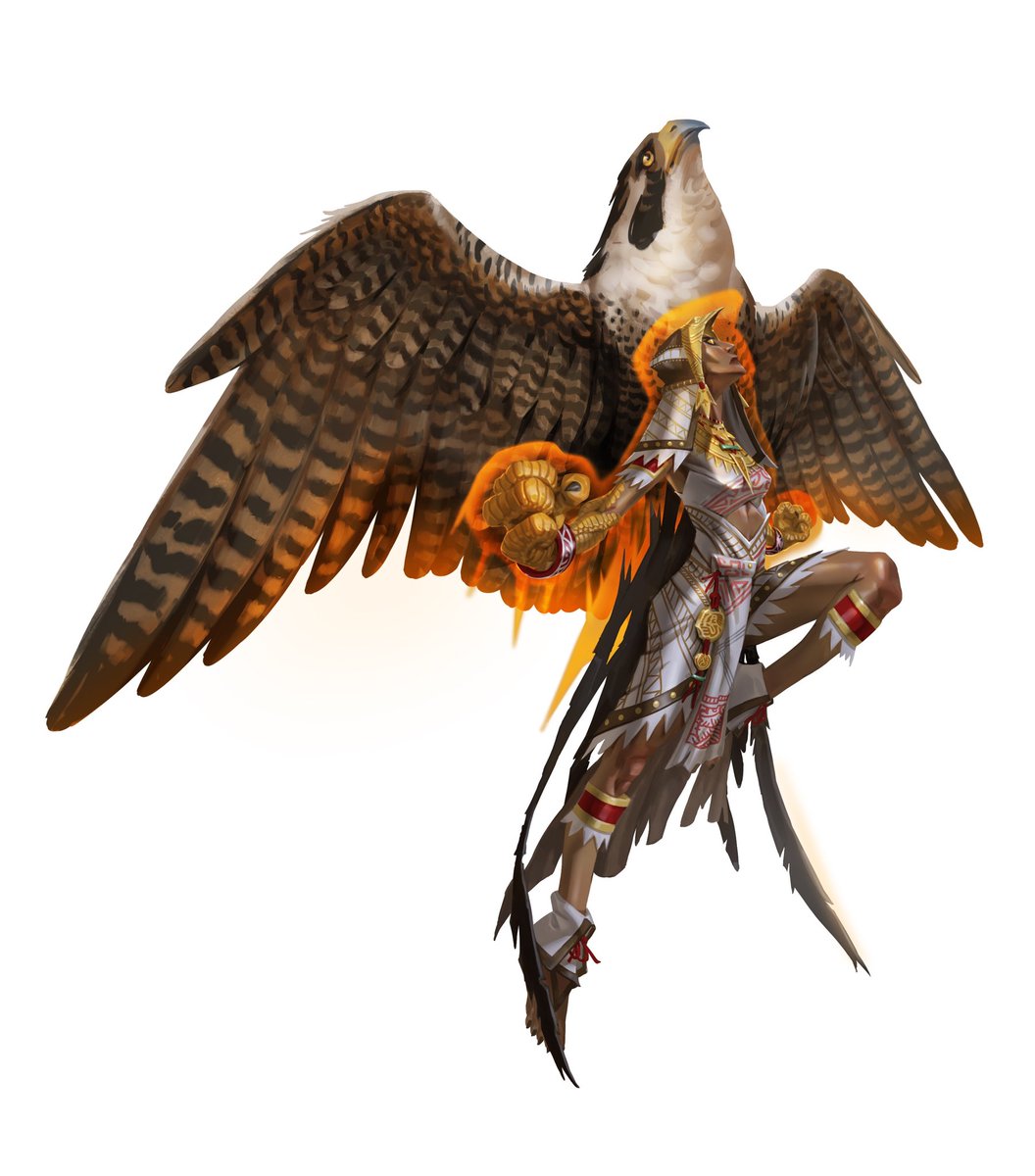
5e has a number of way to approach a similar concept. If you want to come in from a class perspective, obviously there's the Moon Druid and multiclass builds using them (Monks and Barbarians work real well here) but you also have the Beast Barbarian or Beast Totem for that matter
Or you just go Monk and pretend the scaling martial arts damage was natural weapons.
On that note, there's lots of racial options that can get you to have a similar feel!
First up, there is the Shifter. This is the Eberron originating race that is descendwd from Werebeings. They get minor shapeshifting for combat purposes and that mostly works here.
First up, there is the Shifter. This is the Eberron originating race that is descendwd from Werebeings. They get minor shapeshifting for combat purposes and that mostly works here.
While they were introduced in Eberron, you can easily bring them to other settings via being a hybrid of a Werebeing or a lesser curse or an island of dr. Moreau experiment. No DM would object because they aren't particularly strong, lol!
On that note, if you just want a natural weapon build, Fighters or other martial builds with a race that gets natural weapons like Leonine, Tabaxi, Tortle, Minotaur, or Lizardfolk can work quite well!
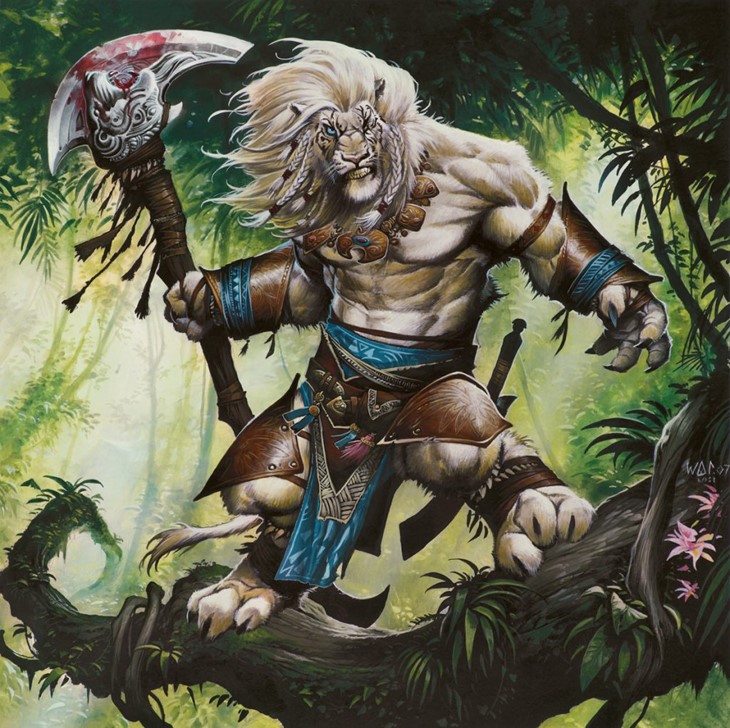
These usually don't provide the versatility of options that class based natural attacks builds do, but your own class choices might provide some! Beast Totem for example doesn't have that vibe by itself so much but pairs well with something like Leonine and Eagle Totem!
Most of these are dex or strength based I think if you want a wisdom based build, a moon druid 2/monk x build or monk 1-5/moon druid x build (maybe with Gloomstalker 3 squeezed in), you get something interesting.
There's definitely a space for a "Fist of the Forest" build that I think 5e almost gets to but doesn't quite hit. It's pretty close though, so I don't want to say you can't make it work
Here's a good spot to mention the fun build of Beast Barbarian, going claws as the natural attack, with Soul Knife Rogue to get a bonus action soul blade attack. As the attack action, do 2 claw attacks and then a psychic blade, then bonus action psychic blade, plus sneak attack
It's Wild Thing, Wolverine's daughter from MC2 but that's a dope adjacent concept to what we're talking about here.
And that's it for uncontested first party base classes from Paizo for Pathfinder 1e. Color me surprised when years later, I revisited the Pathfinder SRD only to see not one but two new bases classes! However, neither are without controversy...
First of the last is the Vampire Hunter. Specifically Vampire Hunter D. For real! The classic manga/anime had an official Pathfinder tie in that got a whole base class designed for it.

This was the anime that got me interested in the format and has stuck with me as one of my great nostalgic loves for years!
One of the reasons I was surprised is that there already was a Vampire Hunter archetype for the Inquisitor, which was a base class that already seemed very similar to a D, not to mention several archetypes for classes like Slayers, Paladins, and Rangers that were similarly themed
Another reason was of course this was just very weird. First party Pathfinder hadn't really done anything like this before, with a licensed property. However, Paizo itself had. This was a common type of feature in Dragon Magazine.
I will note that when I first read the class details. I didn't know it was an official Vampire Hunter D class, but it reads very much like a Vampire Hunter D class. It also works pretty well for Blade (which should be obvious) or Buffy or really any of their ilk.
Now, what about the actual class?
It's a little weird. I overall like it. I wouldn't really recommend it but I also wouldn't discourage anyone from playing it either.
It's a little weird. I overall like it. I wouldn't really recommend it but I also wouldn't discourage anyone from playing it either.
This is a full BAB, 4th level spell caster, like a Ranger or Paladin. In this case it's a spontaneous caster using wisdom as the casting stat and drawing from the Inquisitor list.
Inquisitor list is good, certainly better here than the Cleric's list, but doesn't compare to the Paladin list, which is better suited to a 4th level caster. Wisdom based spontaneous casting is strange but not unheard of and it means you're will save will be quite good.
On that note, they get good reflex and will saves, which is probably tied for third best with good fortitude and reflex, behind the super rare all good, and the now fairly common good fortitude and will saves. It's what you'd expect here given the character it's based on.
6 skill ranks a level, like a Ranger or Inquisitor and a great skill list!
D8 hit die? That's... weird. Pathfinder moved to have all full BAB classes get D10 or D12s so this is bucking that design standard. 3.5 had plenty of D8/Full BAB classes (including the Ranger) however.
D8 hit die? That's... weird. Pathfinder moved to have all full BAB classes get D10 or D12s so this is bucking that design standard. 3.5 had plenty of D8/Full BAB classes (including the Ranger) however.
At will Detect Undead is about what you'd expect.
Bonus feat at first, third, and then every third level after that is nice. You choose from a combat feat or one of the Vampire Hunter feat found in this book. You don't count as a Fighter, nor do you bypass prerequisites.
Bonus feat at first, third, and then every third level after that is nice. You choose from a combat feat or one of the Vampire Hunter feat found in this book. You don't count as a Fighter, nor do you bypass prerequisites.
Also at first level, you get a Vampire Focus, which works like the Hunter's Animal Focus, except you pick one at a time and learn more as you level up. These are pretty good, particularly at low levels, but they become less important at higher levels even though they scale.
And then you get a whole bunch of VAMPIRE STUFF! You get bonuses to staking vampires and scaring them with crosses and tracking vampires and relentlessly pursuing vampires and blah blah blah
Sigh... so here's the problem: the class is super focused on fighting Vampires, but it's not actually that great at that particular task.
A Paladin or Undead focused Ranger is going to outclass the Vampire Hunter from a raw combat perspective, even against Vampires. So will Inquisitors and Clerics.
On top of that, the Vampire Hunter gets a lot of ribbon features, but seems to be missing big crunchy features that these other classes get, like an animal companion or holy weapon.
On the other hand (the one with its own little face), the Vampire Hunter has WAY more going for it than a Fighter in terms of options, especially as a dip. While they don't get heavy armor, they get a veritable blood bag to suck down of goodies at level 1!
They just don't really get anything to make them compete with the other martial classes. I mean, two weapon fighting is out since they don't get meaningful damage bonuses like favored enemy or sneak attack. They don't get anything comparable to an Inquisitors Bane weapon ability
...or the Paladin's Divine Bond (which could be a scaling mount OR a dope sword!).
Hell, I can't get over that they don't have a version of Smite Undead. That was all over 3.5 and while it would be super specific for a base class in Pathfinder to have, my rebuttal is (gestures at most of the Vampire Hunter's class features)
It's also MAD. With a D8 hit die, you're going to need a decent Con score, especially with a bad Fort save. Some of the Vampire fighting abilities are keyed off charisma, but your spell casting is keyed off wisdom. Since you're limited to medium armor you need a decent dex...
...but it's Pathfinder, so all your weapon damage (even from bows) require strength.
This really makes me miss the "Knight of the Raven" prestige class from 3.5. It had an extremely similar theme but had a little more oomph.
But again I like this class. It's just on the weaker side.
I'd put this on the low end of Tier 4. It will meaningfully contribute to the party in a variety of ways but its not an expert at any one area, nor is it so capable a generalist that you could omit a role from your party
I'd put this on the low end of Tier 4. It will meaningfully contribute to the party in a variety of ways but its not an expert at any one area, nor is it so capable a generalist that you could omit a role from your party
If someone picked this class, they get lots of skills and can use a bunch of wands and will have some cool moments where some of these really unique abilities nail the exact circumstances. Especially in an undead heavy game, this is a fine choice, but even in most others it works
But if the table is optimizing at all, they should be politely pointed towards the Inquisitor, Ranger, or Paladin.
And it's a little bit of a bummer because I wouldn't mind an Inquisitor that traded 6th level casting for full BAB, a D10 HD, and 4th level casting. From a design perspective, that's an interesting experiment with "frames". Unfortunately, the Vampire Hunter didn't just do that
But I want to be very clear that the class is just on the weak side. It definitely still looks fun.
More importantly, the archetype is super enticing! On that note, how do we convert to 5e?
More importantly, the archetype is super enticing! On that note, how do we convert to 5e?

The Ranger. The Ranger is how you convert the character to 5e. Or the Paladin. But really it's the Ranger.
Several Ranger archetypes work here. The most obvious is the Monster Slayer which gets most of the lore based trickery down. It's on the lower end of Rangers power-wise, but it nails the theme.
The Gloomstalker also works really well here and is of course the strongest Ranger conclave. All of the class features fit about as well as the Monster Slayer, so it becomes only a question of min/maxing between those.
The Swarmkeeper is also rather good. One of the Vampire Foci of the Pathfinder class allowed them to be swarmed by bats or rats or other vermin and that's exactly what this subclass does! The fact that it's a pretty strong subclass helps!
Meanwhile, Vengeance Paladins fit pretty well. Devotion is also not a bad choice. Watchers also can work well!
So, yeah. Surprising entry on this list. It barely feels like it should be here and many tables don't count it, but the actual concept is extremely alluring. And at least it is some unique things to say, unlike the last class we have to talk about...

And finally we get to the last first party class of Pathfinder 1e. Like the Vampire Hunter, the Omdura is part of a licensed tie in, in this case to a series I've never heard of before called Niobe.

Unfortunately, there's nothing here we haven't seen before. However the good news is that is also intensely playable. Can you guess what I'm about to say? I bet you can at this point!
Yup! 6th level caster, d8 HD, 3/4 BAB. Good Fort and Will save. Charisma based spontaneous casting means you'll work as a party Face but 4 skill ranks a level with no use for intelligence means you'll be able to do ok at a couple of skills but a Skill Monkey you are not
Being a divine caster, you can cast in armor with no problems. You get medium armor and shields, plus simple weapons and whatever your deity's favorite weapon is, just like an Inquisitor.
Because you don't get a domain/blessing/inquisition feature, the only mechanical impact of your deity selection is your alignment and the weapon you get proficiency in.
On that note, you aren't bound to one alignment the way a Paladin in PF1e has to be lawful good or an Anti-Paladin has to be lawful evil. You can be whatever corresponds to your deity, though with the usual caveat of being within one step of their alignment.
Being nuetral gives you weaker versions of some of your class features, but removes restrictions on who you can target which is an interesting compromise.
Then all of your class features are ripped straight from other classes though with small twists. Divine Touch is just Lay on Hands (even counting as such for feat and prestige classes), with Divine Infusion being Mercies or Cruelties as if a Paladin or Anti-Paladin.
Detect Alignment is a straight upgrade to a Paladin's Detect Evil, though you have to pick which alignment you target each time. Divine Might is a nerfed Smite Evil (and doubley nerfed if you're nuetral) until level 18 when it becomes equal to.
(This part feels like a plea to whiteboarders to not write the class off based on level 20 builds that exist only in theory crafting and not for actual play, but have a profound impact on the conversations about classes online)
Dive Weapon is the Paladin Divine Bond feature but you only can pick the weapon option, so no horse for you.
And then there's Infusions, which let you distribute Inquisitor Judgements to everyone in the party! At level 11, you can give everyone 2 Inquisitor Judgements! This is an incredible team ability!
It's also poorly edited.
It's also poorly edited.
So Infusions come online at 1st level and is the only big combat feature the class gets until 4th when you get Divine Might. The text says you give this benefit to your allies and normally that includes yourself, but Pathfinder is inconsistent about how that works.
When you get Greater Infusions at 11th, it makes it explicit that you only get half the bonus from the Infusions you use (and even then there's a question if it's both because of the way it's worded). So logically you'd take it that you didn't get the benefit before now...
But that's:
A) Lame
B) Still unclear
C)Still nerfed!
A) Lame
B) Still unclear
C)Still nerfed!
As a DM, I'd rule you get the half bonus from get go, rounded down (so 0 at first for most), which seems like a fair compromise. However, while I think the class is playable, I don't think it's very strong so I wouldn't have an issue even ignoring the half bonus part altogether.
Spells are drawn from the Inquisitor and Cleric lists, where, like with the Hunter, you pick the better level of the spell if it appears on both. This is pretty sweet as the Inquisitor has some juicy spells but the Cleric obviously has better splatbook support.
The Omdura comes off as a better rounded Paladin. Less focused on encounter breaking abilities and more on spellcasting and team support that feels intentional instead of accidental.
I honestly put this as a lower Tier 3 class, which is a pretty good spot to be in! It can fill multiple party roles pretty well and has the versatility that being a 6th level caster brings! Besides the Cleric and Oracle, this is probably the best divine support caster!
In my Pathfinder 1e games, I generally ban 9th level casters, so this is a great substitute for a player who wants to heal a bit on top of having some other options! Tier 3 is generally the sweet spot for class design and this fits nicely there.
Even in a vacuum where we disregard the fact that all of its class features are taken from other classes, I still think I prefer the Inquisitor and War Priest. Both seem better defined while the Omdura found it's niche in the infinitesimally tiny gray area between them.
But that gray area is less relevant in 5e. For one thing, fewer classes give bulk static bonus to allies and the power curve of casters is considerably less pronounced (though definitely still there). The 5e Paladin ends up being a bit closer in design by virtue of better auras

And better spellcasting. And being less restricted by alignment. And by the single target obliteration factor being toned down. Yeah... Paladin is probably your best bet to recreate the Omdura in 5e.
Paladin multiclasses also have a place here. Bard, Warlock, and Sorc all have great option to multiclass with Paladins to get a slightly more caster focused build.
You could also go Cleric, either straight or multiclassed. You'd be more Wisdom focused, but if that multiclass is with a Fey Wanderer Ranger you could still be the party Face.
The Omdura I've seen described as the "Unchained Paladin" and that is entirely fair. It works better in more enviroments but isn't quite so overwhelmingly powerful in the specific areas that Paladins excel at.
Is that what the came needed by the time it was introduced in 2019??? Absolutely not! Is it a problem that the class exists? Nah. It's fine. No player is going to feel like they're really missing out by playing one (unlike say the 3.5 Paladin) but it won't break the game.
It's just not a very exciting conclusion to the list of unique Pathfinder classes after the highs of the Advanced Players and Class Guides and the fascinating oddities of Occult Adventures.
But first edition Pathfinder took what was the core of Dungeons and Dragons third edition and attempted to salvage what players loved while losing some of the dense crud that afflicted that edition. The team at Paizo filled out their game with interesting character options...
...options that could be approximated in newer systems, but not fully replicated. It was an edition that supported crunch and rewarded system mastery but you could see attempts to be less punitive to novices than the take that birthed it .
With that, I end this thread on first party Pathfinder classes and how to convert them to 5e. It was eye opening to go back and really look at them all. Some I grew to like a lot more and others I saw their flaws more clearly, but all showed a spark of creativity that I admire!
@threadreaderapp please unroll
• • •
Missing some Tweet in this thread? You can try to
force a refresh