COVID-19: Upgrading to an elastomeric respirator
Now that so few other people are wearing masks indoors I have been looking to upgrade my disposable N95 earloop mask to something better and have finally found one that both fits, is comfortable, and very breathable. 🧵1/
Now that so few other people are wearing masks indoors I have been looking to upgrade my disposable N95 earloop mask to something better and have finally found one that both fits, is comfortable, and very breathable. 🧵1/
I had tried the @flo_mask pro respirator which was super breathable but unfortunately didn't fit my face properly and caused bruising and pain on the bridge of my nose. 2/
The flo mask also took a bit of getting used to with the bottom of the respirator fitting between your bottom lip and chin so pressed against the roots of your teeth instead of under your chin like most masks. 3/
Their customer support was great and for people whose face does fit properly, it may be a great choice ( flomask.com ). They also have respirators for kids. 4/
The [breathe] respirator by @Prescientx1 was recommended to me by @jasmith_yorku having very soft silicon so I decided to buy one and see ( prescientx.com/products/breat… ). It comes with multiple colour/clear options depending on your preference. 5/ 
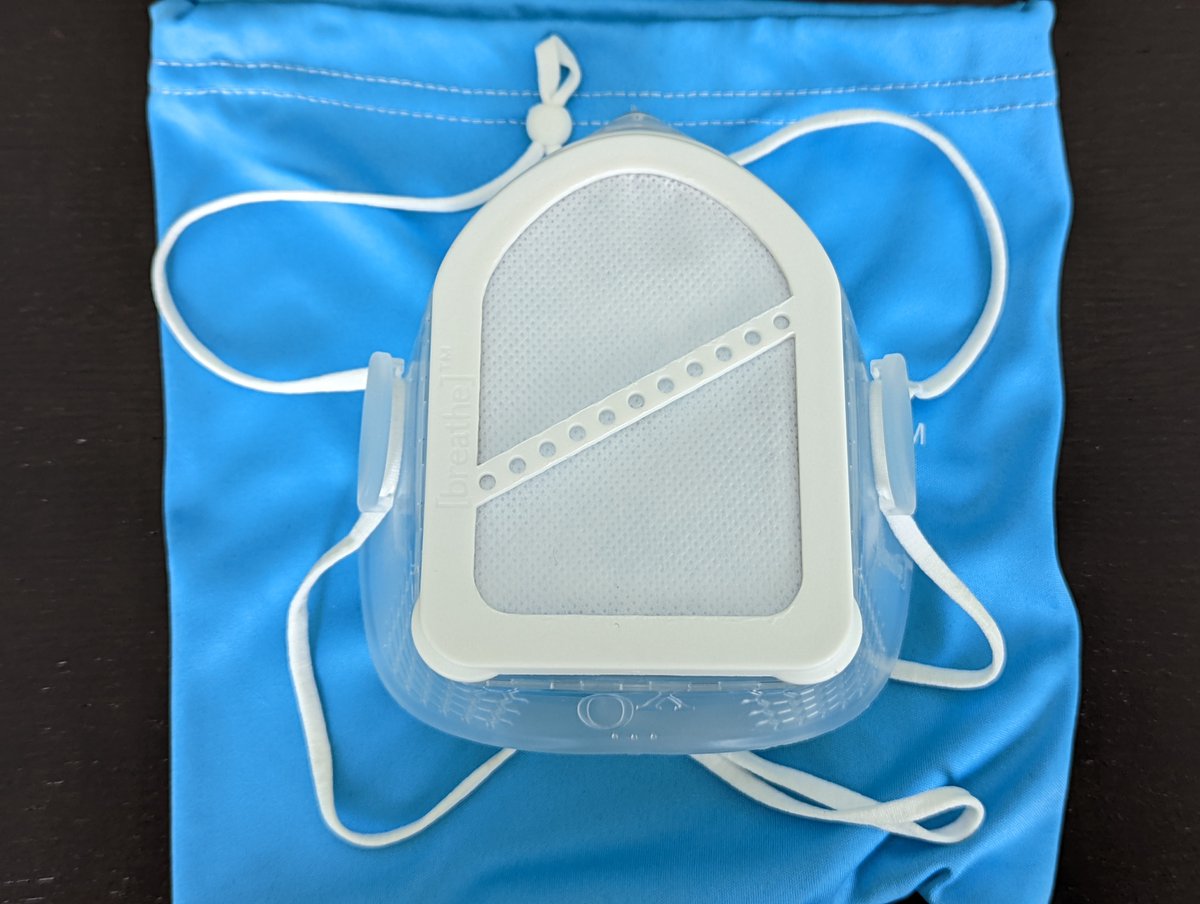
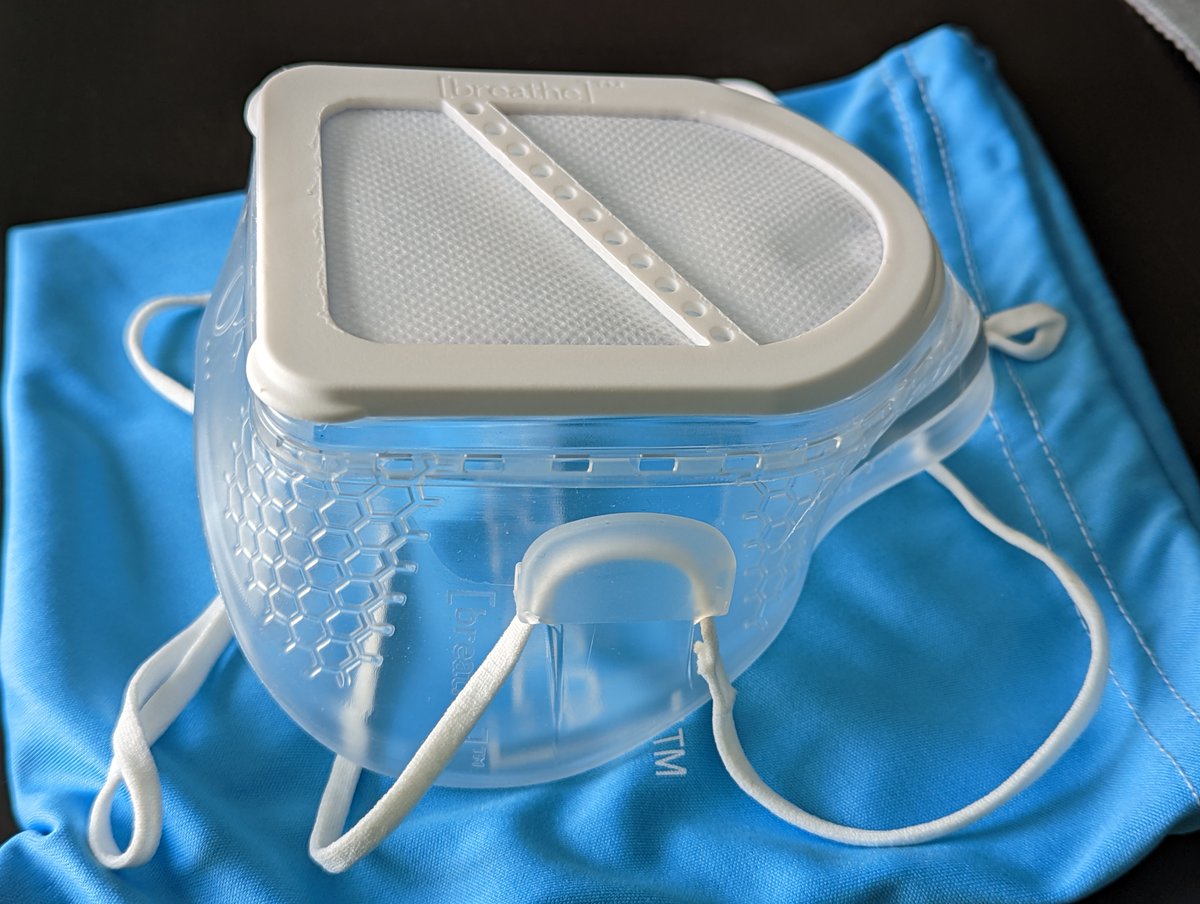
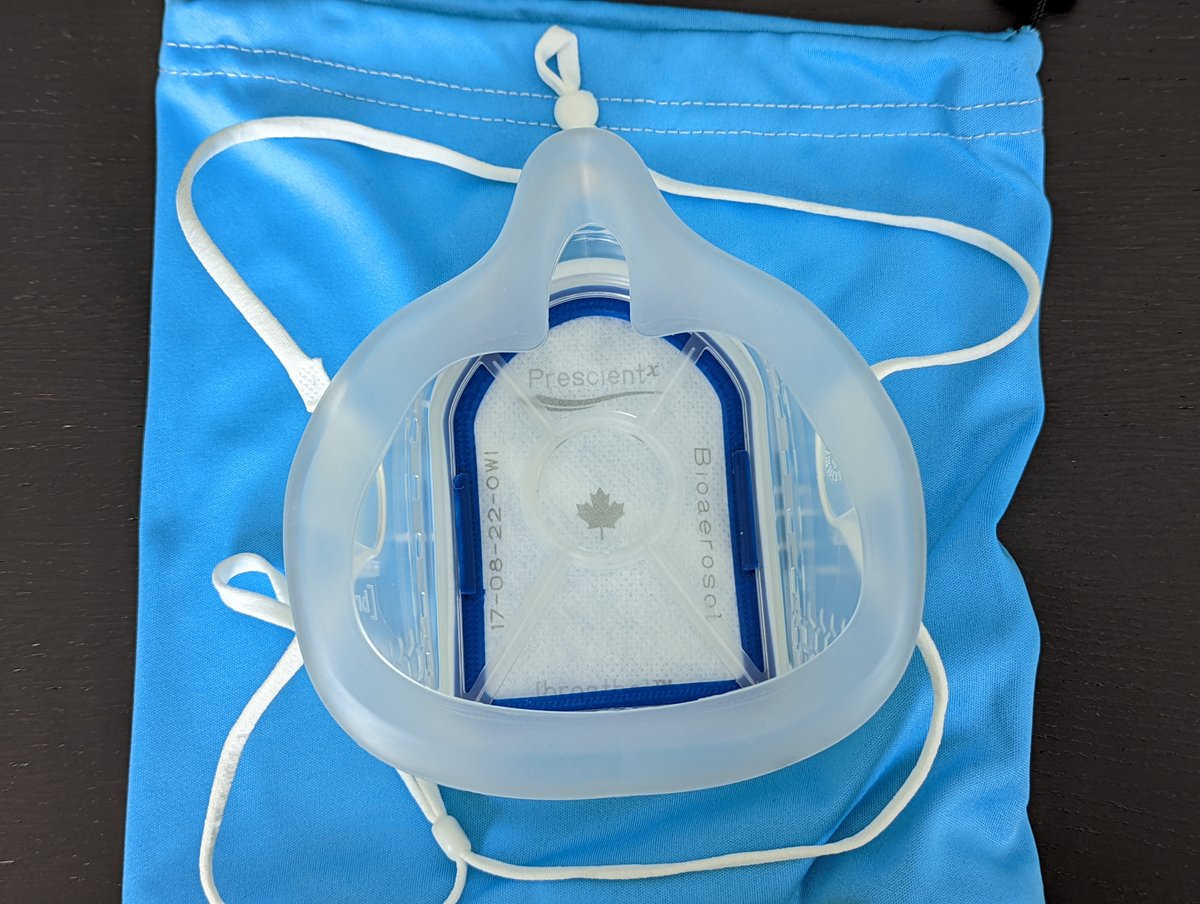
Thankfully the [breathe] respirator fit my face well, was super soft and created a great seal. It comes with straps that can be used as earloop and a second set for head straps depending on which configuration you prefer. 6/
I found the head straps allowed the mask to fit better and no pressure on my ears. Since the seal was so great and the filter is just at the front away from eyes, no fogged glasses either! 7/
While the initial cost is higher than disposable masks, the filters are replaceable and last a long time. The company recommends that if you use the mask 2-3 hours a day 2-3 times a week and let them air dry after each use, the same filter can be used for up to 6 months. 8/
If you use it 8 hours every day in a dirty/dusty environment, they recommend changing it at least monthly. 9/
The company makes two different filters, the Bioaerosol version ( prescientx.com/products/breat… ) which was designed to protect against airborne viruses and is extremely breathable. 10/
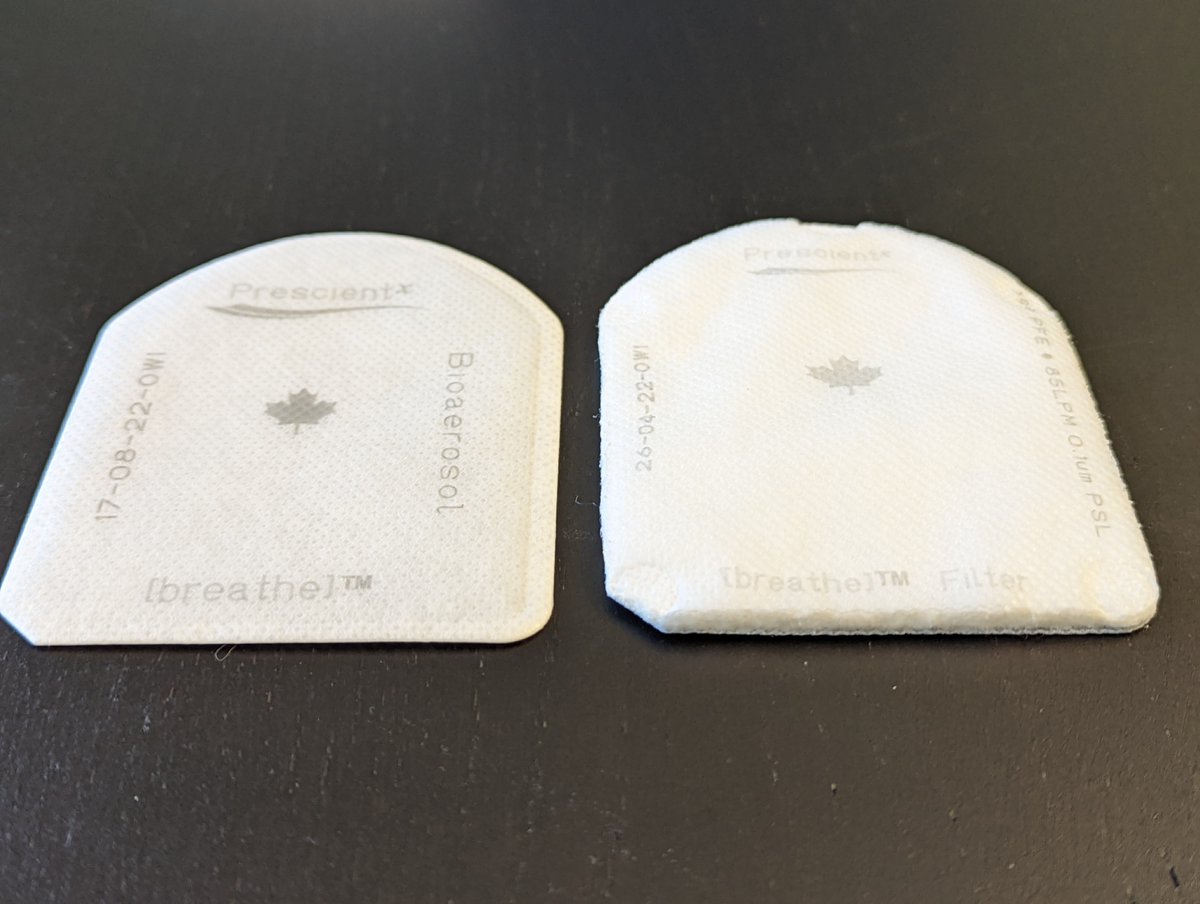
They also make a Particulate version ( prescientx.com/products/breat…) which is thicker and designed to capture small, dense, sharp particles like mineral dust as well as airborne virus which still has good breathability. 11/
Both were tested by a third party and found the Bacterial Filtration Efficiency (BFE) was >99.9% ( cdn.shopify.com/s/files/1/0295… ) and ( cdn.shopify.com/s/files/1/0295… ). 12/
The respirator comes in 3 different sizes so be sure to measure yourself before you order, instructions here ( cdn.shopify.com/s/files/1/0295… ). 13/
I have worn this respirator for up to 6.5 hours (with a 30 minute break for lunch) and was not too tight anywhere and only left a little mark on my face where the seal was which quickly went away, unlike other respirators that left major marks that lasted for hours. 14/
The Bioaerosol filters are super breathable, much more than my earloop N95s which were already pretty good, and even more than a procedure mask which touches your lips. So you get a better seal, more breathability, less waste, and reduced cost long-term over disposables. 15/
One thing about elastomeric respirators is that condensation can form inside the mask. Other respirators I have tried needed strips inside to absorb the condensation and even with that, I could pour some water out after long usage when taking off the respirator. 16/
For whatever reason, the condensation in the [breathe] respirator wasn't as bad and more evenly spread out around the silicon, it didn't all drip to the bottom. There wasn't a pool of water taking off the mask and it was easy to wipe the inside when cleaning. 17/
Customer service at @Prescientx1 has been excellent answering questions and arranging to ship my respirator quickly to arrive before a trip. Even the founder of the company @BarryHunt008 answers people's questions and goes the extra mile to ensure customers are taken care of. 18/
Note, I paid regular price for the respirator and filters, and do not make any money off the sale of this product, I'm just very impressed with this Canadian company and the product they are selling. If you are looking for a better mask, this might be one to consider. 19/
Looks like there will some new [breathe] v2 snap-in modules in a couple of months that you can attach to the current [breathe] respirator they are selling for a different look (
https://twitter.com/BarryHunt008/status/1564620371894194184). 20/
You can see 3 designs here (
https://twitter.com/BarryHunt008/status/1564652439898308610). 21/
Purpose of the updated [breathe] snap-in filters? Improved breathability, which is already excellent with the current design (
https://twitter.com/BarryHunt008/status/1564822686857138176). 22/
** I need to clarify, when I said "N95 earloop" mask in the first tweet, I should have said N95-like mask, it is not actually NIOSH certified but is a 5-layer mask that has been third-party tested to have >98% filtration. 23/
Here is a short video of @jasmith_yorku replacing the ear loop straps with head straps and performing a user seal check ( ). 24/
• • •
Missing some Tweet in this thread? You can try to
force a refresh