If you pick stocks, you MUST learn how to read a balance sheet.
Here’s everything you need to know:
Here’s everything you need to know:
The balance sheet is one of the 3 major financial statements.
It shows:
▪️Assets: What a company owns
▪️Liabilities: What a company owes
▪️Shareholders Equity: The net worth attributable to its owners (shareholders)
At a fixed point in time
It shows:
▪️Assets: What a company owns
▪️Liabilities: What a company owes
▪️Shareholders Equity: The net worth attributable to its owners (shareholders)
At a fixed point in time

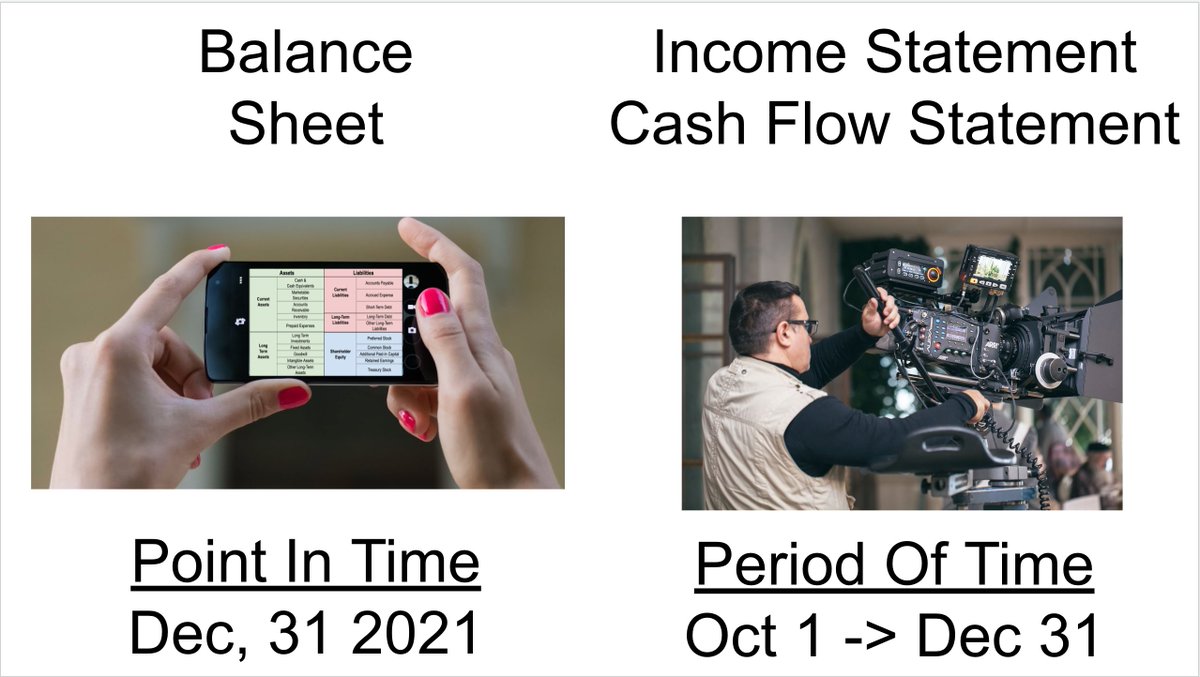
That “at a fixed point in time” part is key!
A balance sheet is a SNAPSHOT of a company’s net worth at a POINT in time, usually measured at the end of a quarter/year.
That differs from an income statement or cash flow statement, both of which are measured over a PERIOD of time
A balance sheet is a SNAPSHOT of a company’s net worth at a POINT in time, usually measured at the end of a quarter/year.
That differs from an income statement or cash flow statement, both of which are measured over a PERIOD of time
Most public companies show their balance sheet in their quarterly earnings press release, but not always
Find them by looking at:
▪️10-Q (quarterly report)
▪️10-K (annual report)
▪️Aggregator websites like @theTIKR
Find them by looking at:
▪️10-Q (quarterly report)
▪️10-K (annual report)
▪️Aggregator websites like @theTIKR

All balance sheets follow the same formula:
Assets = Liabilities + Shareholders Equity
This formula must be in balance at all times
(Hence the term “balance sheet”)
Assets = Liabilities + Shareholders Equity
This formula must be in balance at all times
(Hence the term “balance sheet”)
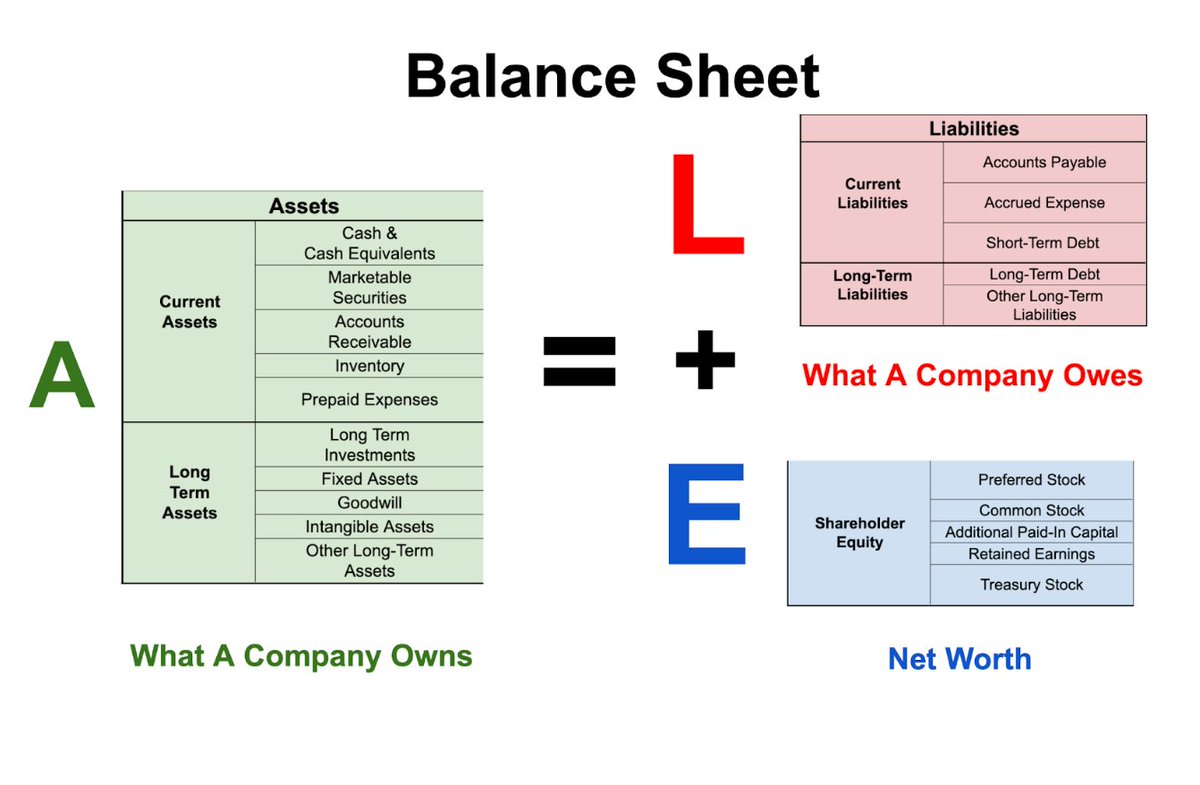
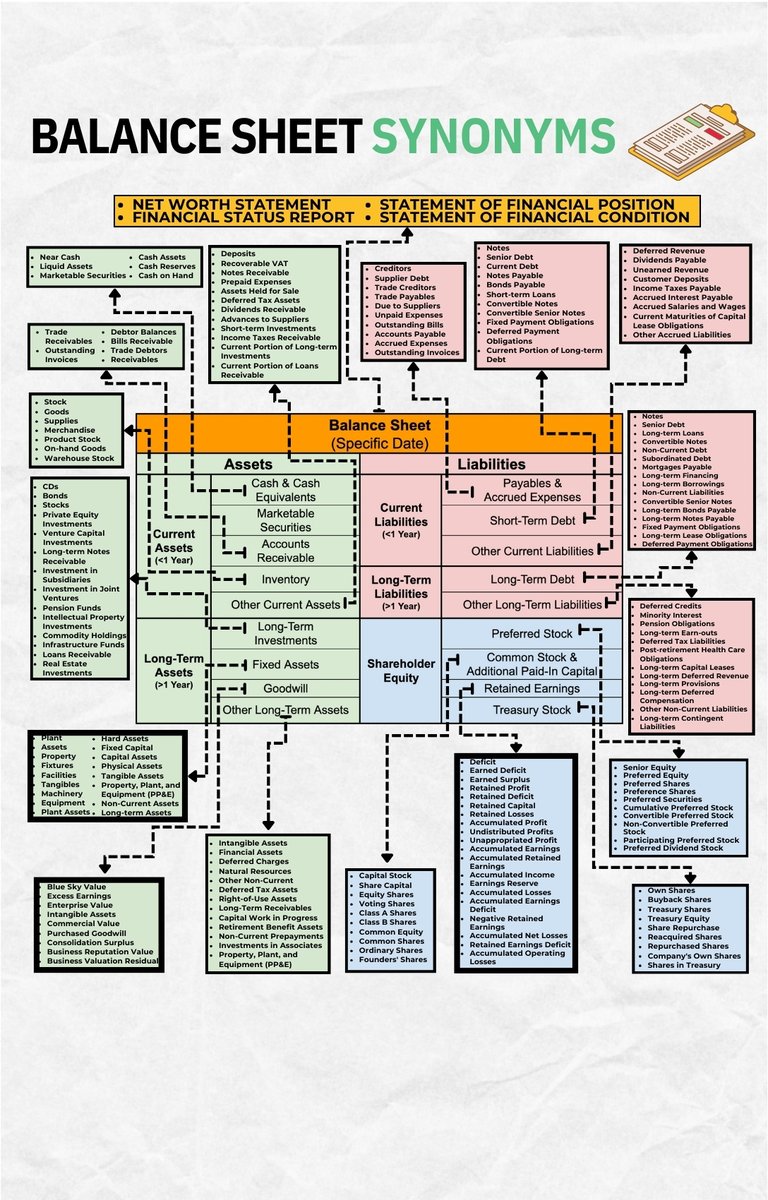
Companies get leeway in how they categorize each item on their balance sheet
This graphic shows some of the most commonly used categories & terms
This graphic shows some of the most commonly used categories & terms
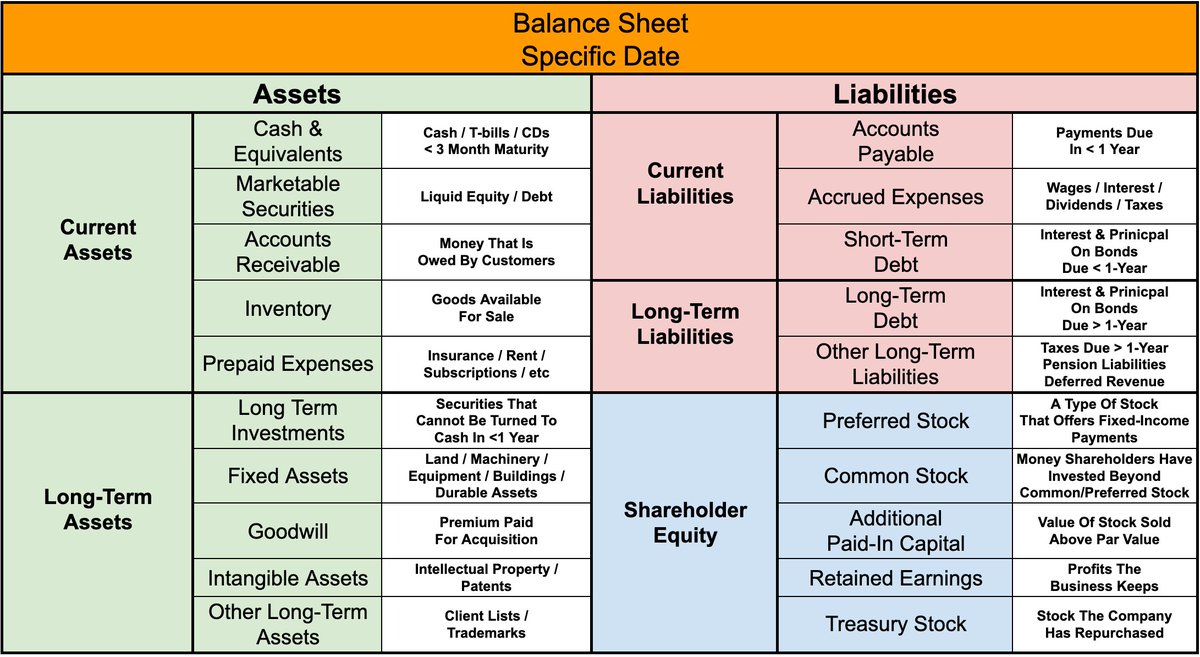
Let’s start with assets, which is what a company OWNS
Assets are listed in order of LIQUIDITY, which means how quickly a security can be turned into cash
The most liquid assets are at the top, the least liquid on the bottom
Assets are listed in order of LIQUIDITY, which means how quickly a security can be turned into cash
The most liquid assets are at the top, the least liquid on the bottom

There are two categories of assets:
Current assets:
▪️Assets that are expected to be used in <1 year
Long-term assets:
▪️Assets that a company will benefit from for >1 year
Current assets:
▪️Assets that are expected to be used in <1 year
Long-term assets:
▪️Assets that a company will benefit from for >1 year
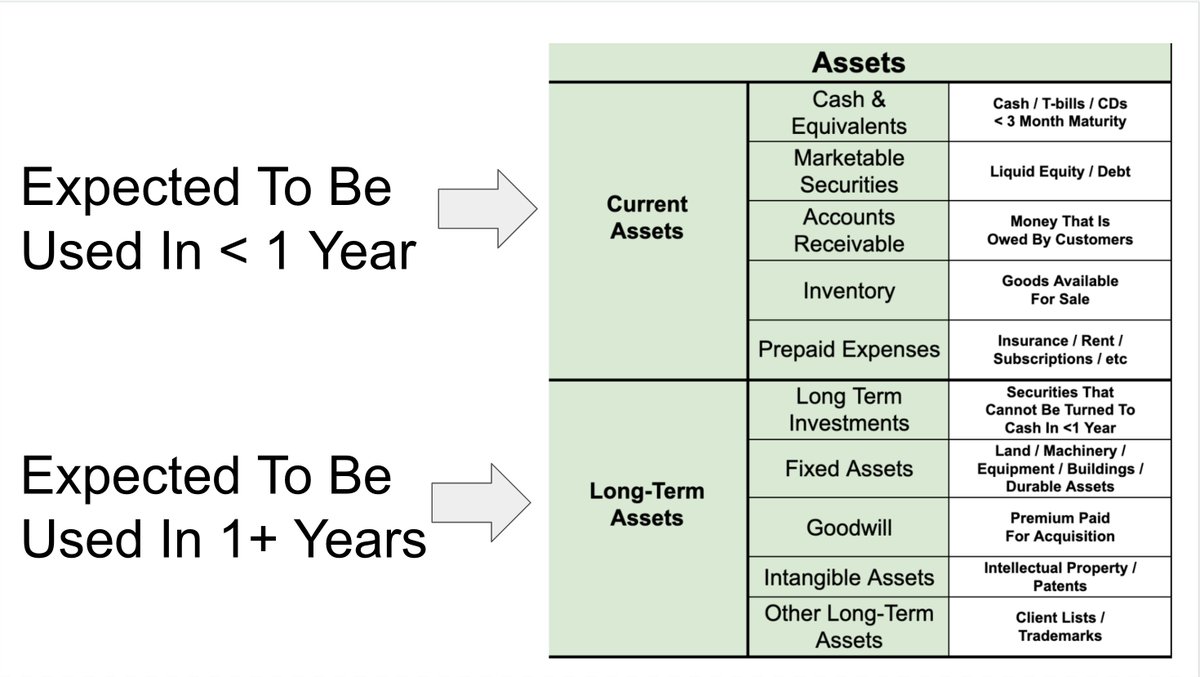
Common current assets:
▪️Cash: Checking account, t-bills, CDs w/ <3 maturity
▪️Marketable Securities: Stocks, bonds...etc that can easily become cash
▪️Accounts Receivable: Money it is owed by its customers
▪️Inventory: Unsold goods
▪️Prepaid expenses: Insurance, rent, etc…
▪️Cash: Checking account, t-bills, CDs w/ <3 maturity
▪️Marketable Securities: Stocks, bonds...etc that can easily become cash
▪️Accounts Receivable: Money it is owed by its customers
▪️Inventory: Unsold goods
▪️Prepaid expenses: Insurance, rent, etc…
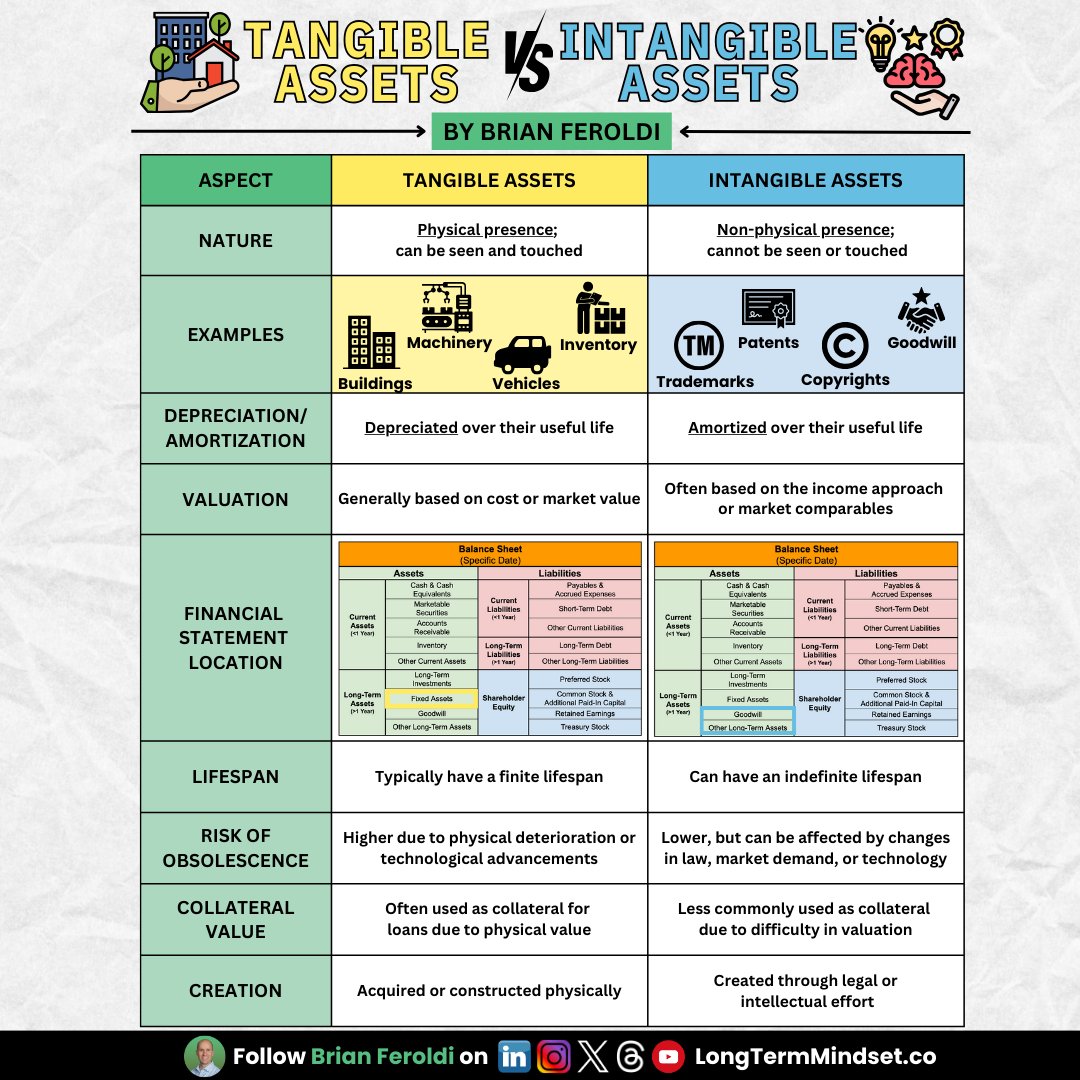
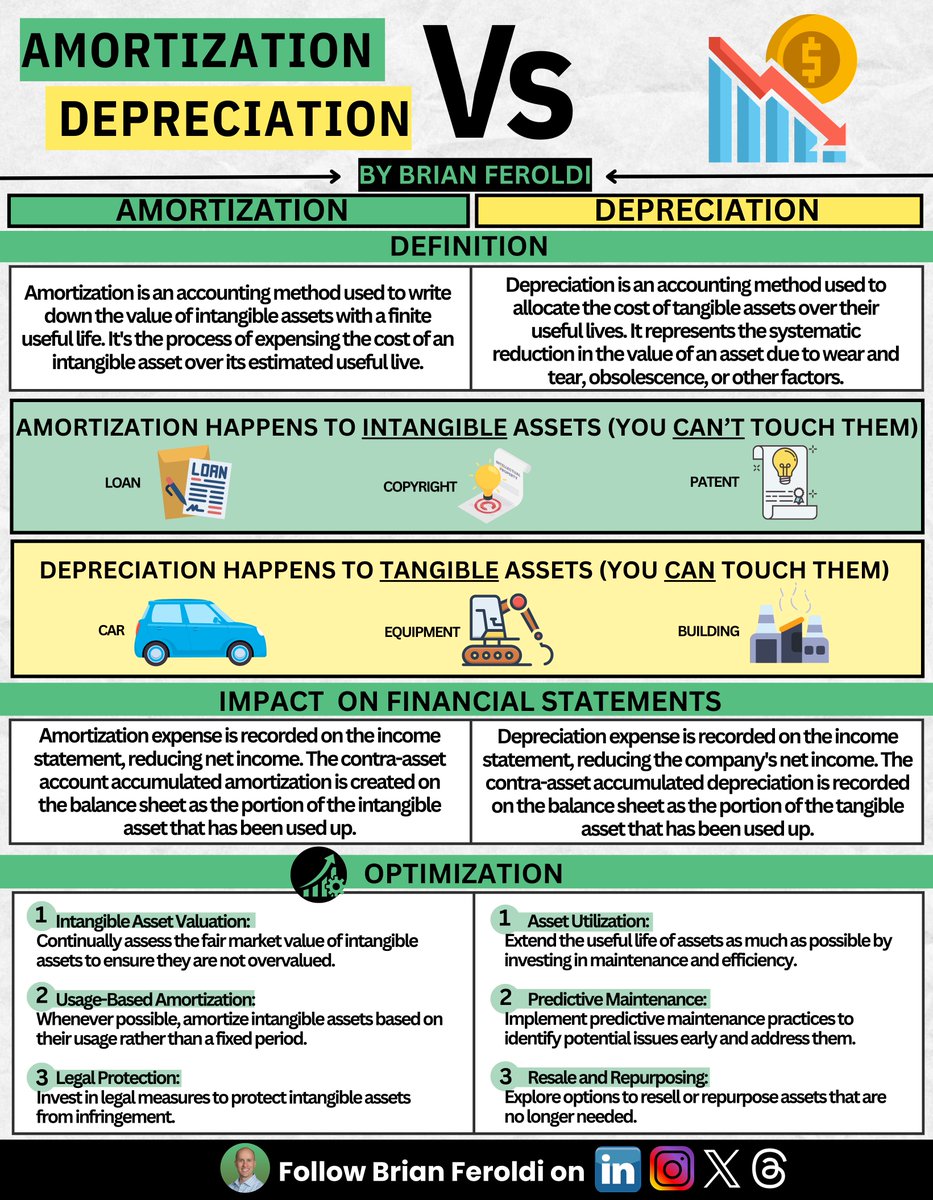
Long-term assets come in 2 forms:
1: Tangible Assets (You can touch them)
▪️Buildings
▪️Equipment
▪️Property
▪️Stores
2: Intangible Assets (You can't touch them)
▪️Trademarks
▪️Goodwill (premiums paid to make an acquisition)
▪️Patents
▪️Stocks/Bonds held >1 Year
1: Tangible Assets (You can touch them)
▪️Buildings
▪️Equipment
▪️Property
▪️Stores
2: Intangible Assets (You can't touch them)
▪️Trademarks
▪️Goodwill (premiums paid to make an acquisition)
▪️Patents
▪️Stocks/Bonds held >1 Year
Now for Liabilities, which are what a company OWES
There are 2 categories of liabilities:
1: Current liabilities:
▪️Bills that will be paid in <1 year
2: Long-term liabilities:
▪️Bills that are due in 1+ years
There are 2 categories of liabilities:
1: Current liabilities:
▪️Bills that will be paid in <1 year
2: Long-term liabilities:
▪️Bills that are due in 1+ years

Common current liabilities (due <1 year):
▪️Short-term debt
▪️Accounts payable (money owed to suppliers)
▪️Interest
▪️Unpaid Wages
▪️Dividends
▪️Taxes
Common long-term liabilities (due 1+ years):
▪️Long-term debt (also called "Notes")
▪️Customer pre-payment
▪️Taxes
▪️Pension
▪️Short-term debt
▪️Accounts payable (money owed to suppliers)
▪️Interest
▪️Unpaid Wages
▪️Dividends
▪️Taxes
Common long-term liabilities (due 1+ years):
▪️Long-term debt (also called "Notes")
▪️Customer pre-payment
▪️Taxes
▪️Pension
Finally, there is "Shareholders Equity
This is money attributable to the business owners (shareholders)
It's kind of like a company's "net worth"
This is money attributable to the business owners (shareholders)
It's kind of like a company's "net worth"

Common categories:
▪️Common Stock: Money invested in the company
▪️Additional Paid-In Capital: Amount shareholders have invested beyond common/preferred stock
▪️Retained Earnings: Net profits a company reinvests in the business
▪️Treasury Stock: Money used to buy back stock
▪️Common Stock: Money invested in the company
▪️Additional Paid-In Capital: Amount shareholders have invested beyond common/preferred stock
▪️Retained Earnings: Net profits a company reinvests in the business
▪️Treasury Stock: Money used to buy back stock
Here's an example of a real balance sheet
This is taken from $HD's balance sheet as of July 31st, 2022
This is taken from $HD's balance sheet as of July 31st, 2022

Notice that $HD's Shareholder Equity is really low?
Don't worry -- that's just because of the company's massive stock buyback program ($84.5 billion spent so far)
Treasure stock is listed as a negative number in shareholder's equity
Don't worry -- that's just because of the company's massive stock buyback program ($84.5 billion spent so far)
Treasure stock is listed as a negative number in shareholder's equity

If you pick stocks, it's CRITICAL to learn accounting
Want help? @Brian_Stoffel_ and I created a course that teaches accounting in plain English
Registration is currently open
Interested? DM me for a special coupon code
maven.com/brian-feroldi/…
Want help? @Brian_Stoffel_ and I created a course that teaches accounting in plain English
Registration is currently open
Interested? DM me for a special coupon code
maven.com/brian-feroldi/…
Prefer to learn by reading books?
These three are excellent:
These three are excellent:

Want to learn more about the nuances of accounting?
This thread I wrote on the income statement can help:
This thread I wrote on the income statement can help:
https://twitter.com/BrianFeroldi/status/1563863961283477506?s=20&t=EFGuRgqQaBjjeQlhmPCmpw
• • •
Missing some Tweet in this thread? You can try to
force a refresh