

1/ Why have Russia's non-Russian ethnic minorities joined the Russian army in large numbers to fight in Putin's wars? A fascinating and sad interview of a reindeer herder turned contract soldier helps to explain. A 🧵 giving the wider context of the interview. 

2/ See the link below for the full interview, which is by the recently established independent Russian media outlet Cherta (Threshold). It's in Russian so you'll need Google Translate or similar to read it in your language. cherta.media/story/nenec-po…
3/ Cherta's interviewee is a Nenets man named Alexander (a pseudonym for obvious reasons). The Nenets are an indigeneous people of north-western Siberia who live near the Arctic Ocean coast. There are only about 45,000 of them.

4/ Like many other indigenous peoples, they've suffered badly from colonialism. Alexander's interview highlights the role of poverty, exploitation, corruption and environmental degradation in making military service economically vital for Russia's impoverished ethnic minorities.
5/ Alexander describes how climate change and environmental degradation have made the traditional Nenets practices of reindeer herding and fishing economically unviable:
"Eight years ago we had a herd of four hundred reindeer, my family and I roamed around, living in a tent.
"Eight years ago we had a herd of four hundred reindeer, my family and I roamed around, living in a tent.
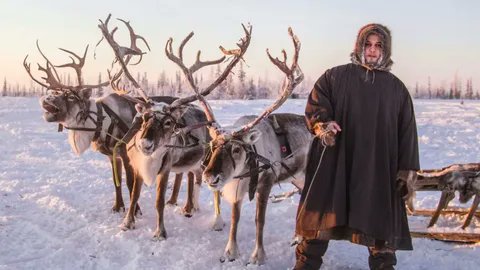
6/ "Then it rained in winter - it had never rained before. Reindeer died because of the ice. Some of us had no reindeer left at all ..."
7/ Alexander is likely referring to freezing rain caused by rapid temperature changes. This covers the lichen that reindeer eat with a thick and impenetrable layer of ice. The result is that the animals starve.
8/ Alexander gave his surviving 50 reindeer to his brother and moved to a village, where he and his wife sold fish they had caught. But his business was crippled by the small fishing quotas set for indigenous people by the government.
9/ The inadequate quotas meant the Nenets had to fish illegally to make a living, but they suffered from the attention of corrupt officials who got the fisherpeople to inform on each other, levy bribes and steal the catches.
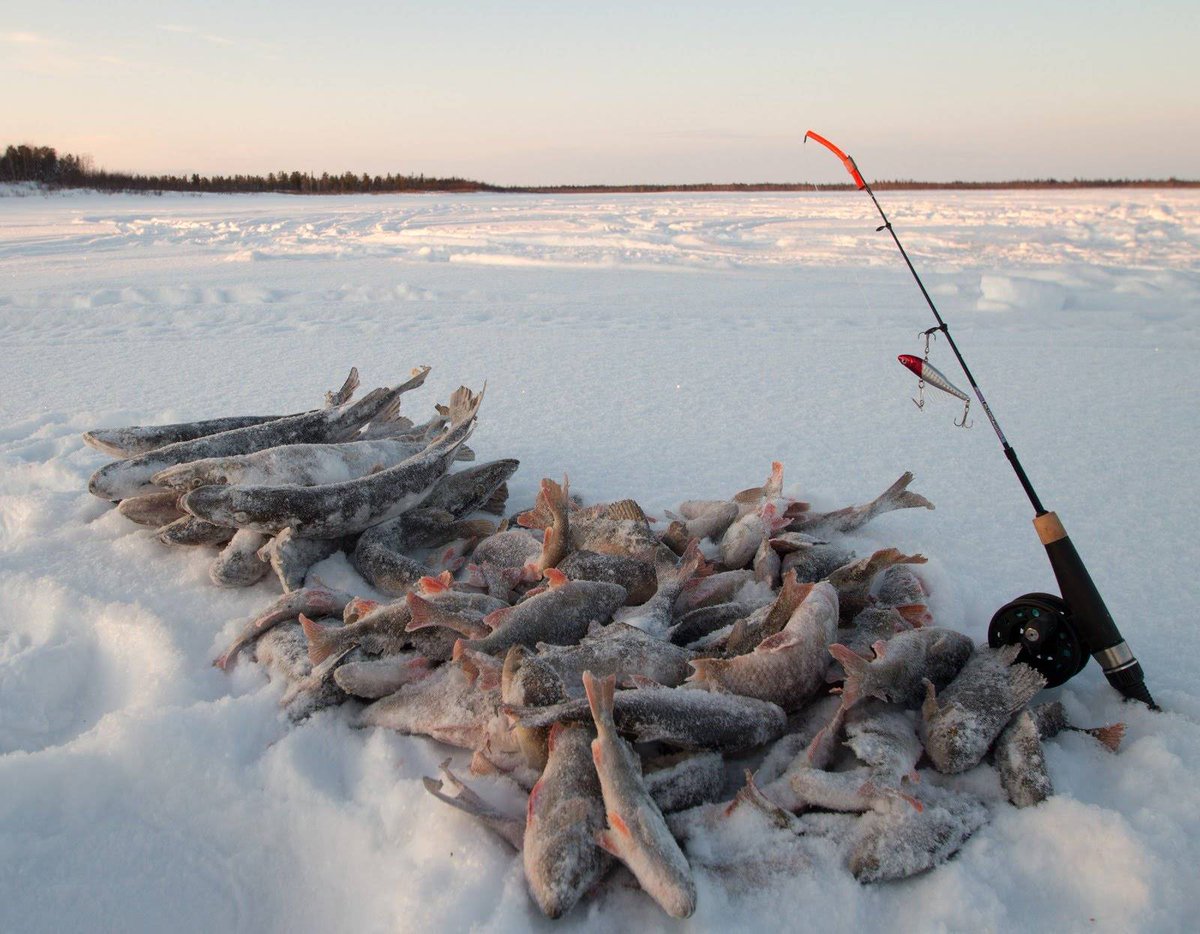
10/ "The locals tell each other who is facing a criminal case [for poaching], and [the officials] say 'We can help you, just tell us who is fishing here. [When I was caught] I had eight sacks of fish with me - they gave me an 18,000 [ruble] fine and took away one sack."
11/ The officials were themselves members of minority groups. "We had cases when fish inspectors beat and intimidated indigenous people, but this was not done by Russians, but by Uzbeks, Dagestanis, and Ukrainians. Because of this, [we felt] hatred towards them [Ukrainians]."
12/ Alexander's business was further crippled by the disappearance of the fish: "This year there is no fish at all in the lake, and on the Ob [river]. We fish all day long - we catch two or three pieces. It's already unbearable.
13/ "Maybe they poisoned it or we caught it all by ourselves. Last year we had fish, and this year people panic, they don't know what to do. I heard that there are families, where it had already reached starvation."
14/ Climate change is implicated again, as is the development of the Yamal region for oil, gas and mineral extraction. This has resulted in widespread ecological damage, such as groundwater and fishing grounds being poisoned.
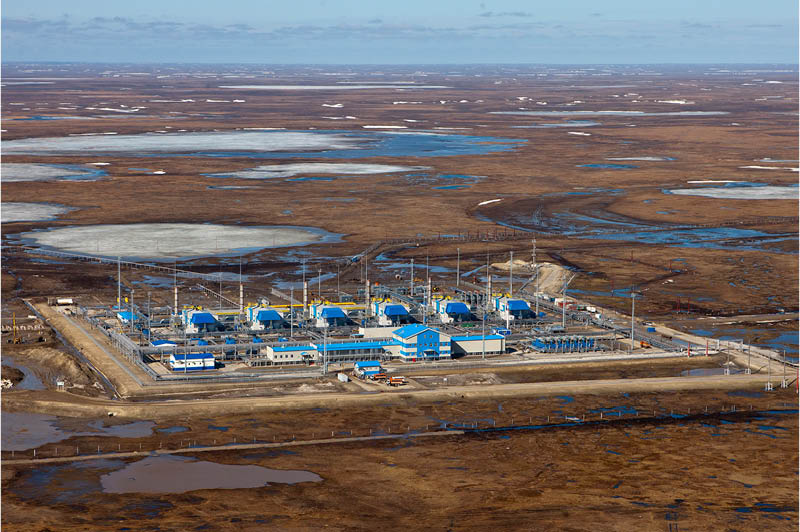
15/ The Nenets have the misfortune to live on top of massive oil and gas deposits which have been exploited intensively since the 1990s, causing large-scale destruction of plant cover and vegetation. The industry employs mostly ethnic Russians, so the Nenets benefit little.
16/ Reindeer herding is also in crisis, as prices for products such as antlers have plummeted. "There is no place to sell them, no one is buying them and that is why the prices are so high [sic, should presumably be low]. People don't know how to live."
17/ Antlers are sought-after for Asian traditional medicine, particularly in China, Japan and Korea. However, the trade is only semi-legal due to a lack of regulation and bureaucratic obstacles. Instead, there's a 5 billion ruble black market in antlers.
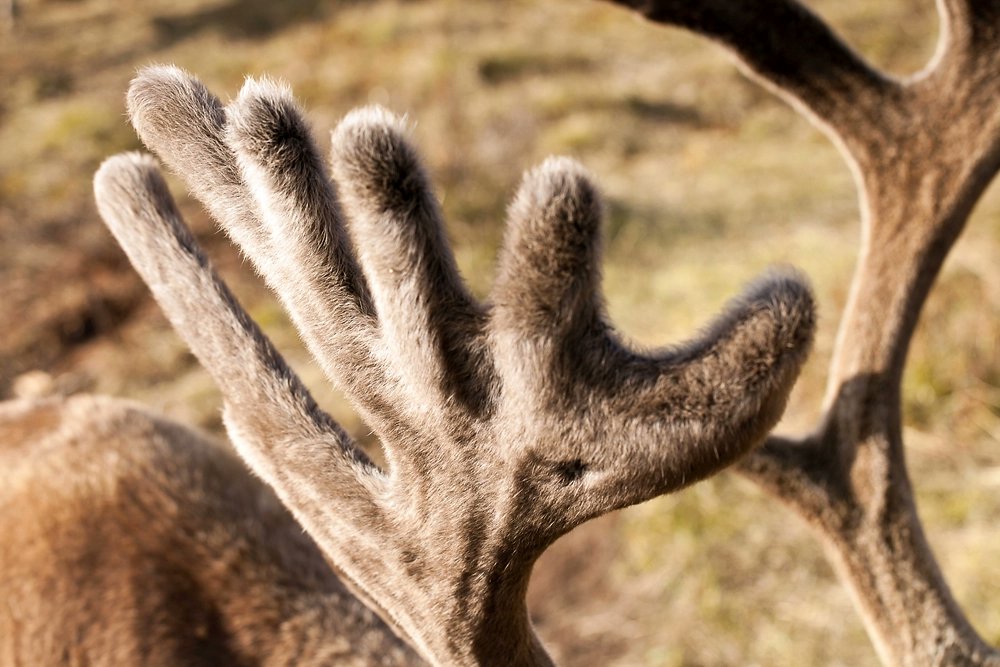
18/ Because it's a black market, dependent on shadowy Chinese exporters and lacking a regulatory framework, it's vulnerable to disruption. This is presumably what has happened to the antler market in Alexander's region.
19/ The Nenets are a minority in all of their native regions, where ethnic Russians predominate. They occupy a position at the bottom of the local ethnic hierarchies and face systematic discrimination. Russification has led to many losing their language and culture.
20/ "The Nenets people are not taken to work, I don't know why that is. We have people from abroad working at the boarding schools. Our people graduate from universities but they're rejected everywhere and start hanging around, getting drunk.
21/ Basically, people drink themselves to death or spend time in prisons."
Poverty is pervasive for the Nenets, with low salaries failing to keep pace with prices that were already high before the war and have spiralled higher since.
Poverty is pervasive for the Nenets, with low salaries failing to keep pace with prices that were already high before the war and have spiralled higher since.
22/ "The salaries are very small and the prices are such that it is impossible to survive on 30,000 [$488]. My salary is 23,000 [$374] and the utility bill for a two-room flat is 9,000 [$146] a month ... only pensioners can survive on [their] benefits."
23/ Alexander was trapped by debt, a common problem for Russia's poor. "[People] don't have enough money to live on, they have accumulated so much debt that there is no way out. Credit on credit and credit on top. I have a million-something in debt accumulated gradually."
24/ Unregulated predatory microcredit at insanely high interest rates – as much as 1% a day – has trapped millions of Russians like Alexander in poverty. Poorer Russians are unbankable, so they have to rely on payday lones from dubious microfinance companies.
25/ Getting into debt with microfinance companies is a bad idea – they overlap with organised crime and their collection methods are often thuggish. Debt collectors adopt fake Chechen names for intimidatory value and go after friends, relatives and employers of the indebted.
26/ (See the deeply dystopian thread by @kamilkazani below for more on the impact of Russia's microfinance industry.)
https://twitter.com/kamilkazani/status/1527725818717573120
27/ The impact of the war in Ukraine has caused further economic stress. Muscovites may have lost their McDonalds, IKEA and Starbucks, but the impact in Russia's impoverished regions has been far more severe.
28/ Alexander cites the rising cost of food: "Until February the prices of foodstuffs were OK but because of the war they rose: bread cost 41 roubles and now I was personally buying it for 100 roubles. A tin of condensed milk used to cost 100-120 rubles, now it's 250."
29/ Now, he says, it's a case of "'Either starve to death, or this.' In the end I had to take such a risky step and sign a [military] contract - there was no other way out. It was either starve to death or this. Now it's just become unbearable, people [have to] go to war."
30/ Having first served as a conscript in Chechnya 20 years ago, he signed a contract with the army paying 270,000 rubles ($4,430) a month, which in theory should wipe out his debt in a few months – if he survives. "This decision was very difficult, but there was no choice.
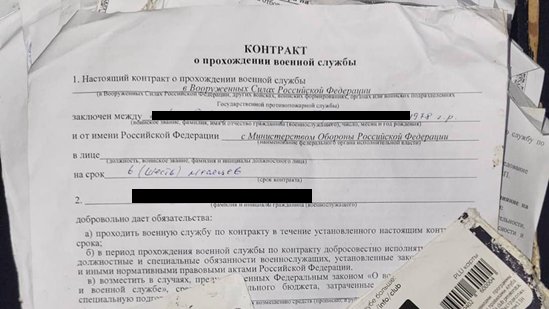
31/ "Debts will grow and grow, working for 20-30,000 is simply unrealistic to get out of this situation. And so at least some hope to escape. But if you're not lucky, of course, you can die."
32/ Alexander's decision was supported by both his wife and his ten-year-old daughter, who both recognised the plight the family was in. When his daughter "saw that there were no fish, she said: 'Dad, how are we going to live?'"
33/ He initially felt sympathy towards the Ukrainians after seeing video on YouTube, but later got fully behind Putin, as did his neighbours – more for economic and social reasons than anything to do with patriotism.
34/ "[E]veryone wants the Russians to win this war. Support Putin. Whatever he is, he still has to win. I go myself to earn money. If it weren't for the loans, I wouldn't sign the contract."
35/ Others went for the social prestige. "It happens that the children of very rich people who have several thousand heads of deer go to war. They consider themselves superior to humans. They go not for money, but to feel power.
36/ "They say: 'I'm rich and a hero, I'm not afraid of anything.' Recently, my cousin was left without a leg in the war. He went not for money, but in order to be cool in Yamal."
Some Nenets believed that killing whites would somehow help to improve their own situation in Yamal.
Some Nenets believed that killing whites would somehow help to improve their own situation in Yamal.
37/ "I know that some go to war to vent hatred on Ukrainians: “Why do we live so badly? I think it was your fault!". They believe that the more whites are killed, the more likely our indigenous population is to survive."
38/ Alexander also mentions what motivated Russians he knew, though as a shamanist he didn't share it: "I had guys I knew, they said: 'Here, the Ukrainians are a disgrace to our Christ, they want to hold gay parades, they desecrate our Jesus, they need to be punished.' "
39/ He says his survival is in the hands of Num, the main Nenets god. He consulted a local shaman and "asked: 'You didn’t have sleep, maybe I don’t have to go? Will I make it back alive? Will I become crippled?' He said: 'You will be fine, God will protect you.'" /end
• • •
Missing some Tweet in this thread? You can try to
force a refresh





