

This 2 min 20 sec length video is a walk through of a 122mm Grad rocket launcher battery ammunition supply point after being struck by artillery counter battery fire.
Every vehicle has fragmentation, fire and blast damage.
21st Century Fire Support 🧵
1/
Every vehicle has fragmentation, fire and blast damage.
21st Century Fire Support 🧵
1/
https://twitter.com/GirkinGirkin/status/1574292484049584135
The fundamental issue of artillery combat in the 21st century is artillery batteries that group together, die together.
Counter battery radar gives searching drones a "Hot datum" from firing batteries to vector drones to search.
This puts a premium on 'shoot & 'scoot'
2/
Counter battery radar gives searching drones a "Hot datum" from firing batteries to vector drones to search.
This puts a premium on 'shoot & 'scoot'
2/
...in order to survive.
Grad rocket launchers can do that tactic.
However Grad rocket launchers, unlike a HIMARS launchers, have an extended manual labor reload times running into hours.
3/
Grad rocket launchers can do that tactic.
However Grad rocket launchers, unlike a HIMARS launchers, have an extended manual labor reload times running into hours.
3/
That means they cause groups of trucks to sit at ammunition resupply points for extended periods of time while the 122mm Grad rockets are being fused & loaded into launchers for the next fire mission.
4/
4/


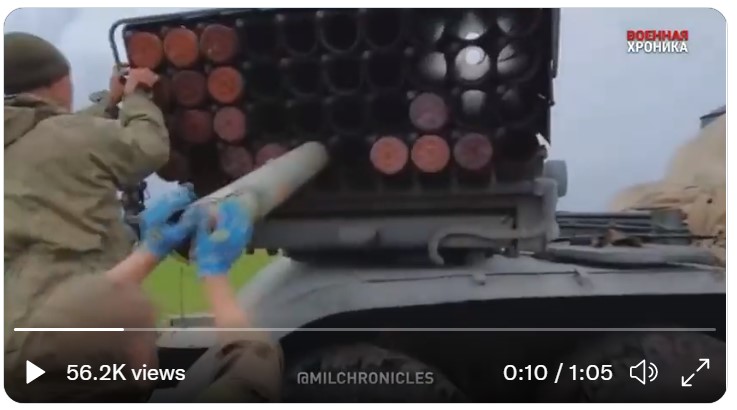
Competent military intelligence officers looking at counter battery radar data and listening to/direction finding on radio traffic can identify operational patterns to predict lists of areas where they can 'task' drones to investigate for these ammunition supply points.
5/
5/
The US Army designed it's MLRS system to avoid this issue and have "reload & scoot" ammunition supply points to go with individual or small units of "Shoot & scoot" launchers.
6/
6/
This @noclador thread helps explain the difference between the HIMARS/M270 "Reload & Scoot" rocket pod system and the 'sit in place for hours and get killed' reloading of Russian artillery rocket launchers.
7/
7/
https://twitter.com/noclador/status/1561448407771791361
The problem going forward in the 21st century is towed guns and manually reloading self-propelled guns are increasingly going to get killed while grouping at ammunition resupply points.
If you aren't hiding or moving between fire/reload positions in single or small numbers.
8/
If you aren't hiding or moving between fire/reload positions in single or small numbers.
8/
The chances are you are going to get picked up by counter battery surveillance drones or loitering munitions vectored by your logistical operational patterns related to your radar spotted firing positions.
9/
9/
There are only so many likely places battery sized groupings of fire support & logistical vehicles can be, based on road networks & firing points.
It is the inability of modern militaries to keep drones out of its less than 2000 foot altitude airspace deep into
10/
It is the inability of modern militaries to keep drones out of its less than 2000 foot altitude airspace deep into
10/
...its tactical depth that is driving this phenomena of "Artillery batteries that reload & fire together, die together."
Artillery is simply too vulnerable to its own kind with universal drone spotting to survive as grouped six-to-eight gun/launcher batteries.
11/
Artillery is simply too vulnerable to its own kind with universal drone spotting to survive as grouped six-to-eight gun/launcher batteries.
11/
The pending 150 km range GMLRS for M270/HIMARS means shoot & scoot will work for them for the simple reason they have far greater areas to hide & scoot in.
Guns & large mortars of 40 km or less range are going to have real issues with loitering munitions suppressing their
12/
Guns & large mortars of 40 km or less range are going to have real issues with loitering munitions suppressing their
12/
...fire simply by inhabiting the air space overhead within line of sight.
This Chinese compound helicopter drone mothership dropping a dozen Switchblade 300 class loitering munitions is the sort of counter battery threat
13/
This Chinese compound helicopter drone mothership dropping a dozen Switchblade 300 class loitering munitions is the sort of counter battery threat
13/
https://twitter.com/TrentTelenko/status/1458103896031776769
...that will dominate M777 class guns.
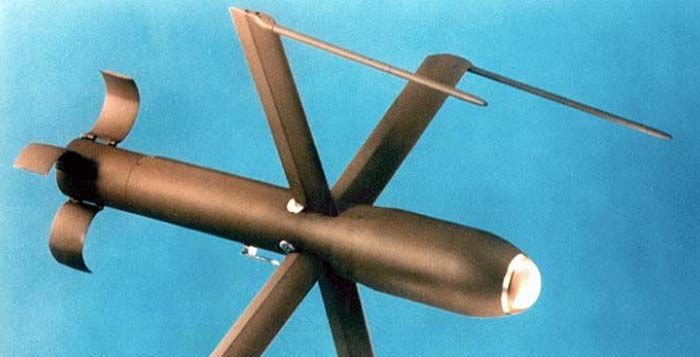
Switchblade 300 class drones fitted out with directional microphones and imaging sensors like the Northrop Grumman Brilliant Anti-Tank (BAT) munition will literally fly to the sound of the guns & mortars.
14/
en.wikipedia.org/wiki/Brilliant…
Switchblade 300 class drones fitted out with directional microphones and imaging sensors like the Northrop Grumman Brilliant Anti-Tank (BAT) munition will literally fly to the sound of the guns & mortars.
14/
en.wikipedia.org/wiki/Brilliant…
I've talked over and over again about the USAF Standoff Munitions Activity Center (SMAC) at Barksdale AFB because what they do for JASSM targets can be done for small drones with a local digital map on an armored fighting vehicle.
15/
15/
https://twitter.com/TrentTelenko/status/1507837896820150283
There is absolutely no reason that a similar capability for nape of the earth multi-copter drones on a local digital map can't be out into an AFV for piloting it's own drones.
16/
16/
The Stryker air defense vehicle equipped with the AeroVironment Shrike electric quadcopter and Hellfire missiles would be an ideal candidate for such an app.
17/
17/
https://twitter.com/TrentTelenko/status/1458104917688733706
The Stryker's stated 8km Hellfire missile range is likely high understated, similar to the GMLRS was before Ukraine's use exposed it real abilities.
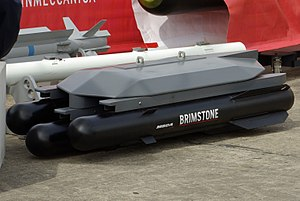
1st Gen UK Brimstone missiles using the same engine reach 12km fired by helicopters.
18/
en.wikipedia.org/wiki/Brimstone…
1st Gen UK Brimstone missiles using the same engine reach 12km fired by helicopters.
18/
en.wikipedia.org/wiki/Brimstone…
A 12 km fire & forget Hellfire directed by a AeroVironment Shrike with BAT style directional microphones homing on gun & mortar blasts will make 155mm/39 caliber/18 liter propellent charge class guns obsolescent in the close support role.
19/
19/
https://twitter.com/noclador/status/1571601694886350848
The range push back of such small forward observer drones will require 155mm/52 caliber/23 liter propellent guns to simply maintain 1991 Desert Storm era close support artillery fan coverage.
20/
20/
And, frankly, the 70 km range of a US Army 155mm/52 caliber/23 liter propellent ERCA guns is utterly inadequate for the heavy division general support role given the range & sensor trends of 21st Century drone warfare.
21/
21/
This @battle_order video on the US Army heavy force restructuring is painfully embarrassing to watch given the trends in drone tech.
Fifty four M106A6 155mm/L39 guns and zero M270 or HIMARS GMLRS launchers?!?
What the heck was the US Army thinking?
22/
Fifty four M106A6 155mm/L39 guns and zero M270 or HIMARS GMLRS launchers?!?
What the heck was the US Army thinking?
22/
US Army divisional artillery force structures built around 54 155mm/L39 caliber guns is the ground force equivalent of the US Navy's Littoral Combat Ship.
It is a force structure which will get it's servicemen killed in 21st century peer-to-peer conflict if attempted.
23/
It is a force structure which will get it's servicemen killed in 21st century peer-to-peer conflict if attempted.
23/
This level of ossification and technological illiteracy leaves the US Army artillery branch leadership looking a whole lot like John Knowles Herr, the last chief of the US Army Horse cavalry.
24/
en.wikipedia.org/wiki/John_Know…
24/
en.wikipedia.org/wiki/John_Know…
The US Army field artillery branch leadership is no more willing to give up the 155mm/L39 gun that General Herr was to give up a single cavalry horse.
My guess, based on that WW2 US Army institutional history, is that it will suffer the same fate.
25/
My guess, based on that WW2 US Army institutional history, is that it will suffer the same fate.
25/
The Field Artillery is going to be abolished and replaced by a new drone combat branch like the horse cavalry was killed/absorbed by the Armor branch.
The vestiges of the Field Artillery hanging on in name-only like "Armored Cavalry Regiments" have in the armor branch.
25/25 End
The vestiges of the Field Artillery hanging on in name-only like "Armored Cavalry Regiments" have in the armor branch.
25/25 End
@threadreaderapp unroll please.
• • •
Missing some Tweet in this thread? You can try to
force a refresh




