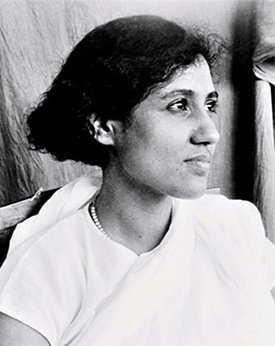
When ‘Mughal-e-Azam’ was released on 5th August 1960, it broke box-office records and became an all-time high-grossing film. Here are some fascinating characters and even more fascinating incidents that went into making the magnum opus. A thread. 1/23 

In the early 1950s, Naushad Ali was working on the music of ‘Uran Khatola’. At the time, he was paid a visit by Asif Karim, also known in the film industry as K Asif. His visit wasn’t just a formality, Asif had come to hire the music maestro. 2/23

Asif Saheb had done only one film by then, ‘Phool’, which met with relative success. Around 1945, he wanted to make a film based on the Urdu novel, ‘Anarkali’, by Syed Imtiaz Ali and planned to cast the eccentric Chandramohan, Sapru & Nargis in the lead roles. 2/23

The film would be titled ‘Mughal-e-Azam’. Shooting had begun when Chadramohan tragically died of a heart attack in 1949. Asif had to replace the entire cast and, in the meantime, he also decided to rope in Naushad Ali for the music of the film. 3/23
Things weren’t always easy between Naushad and Asif Saheb. As their conversation continued, Asif said to Naushad, “I am making ‘Mughal-e-Azam” to which Naushad replied, “So, what are the orders for me?”, though he probably knew the answer. 4/23
Naushad was reluctant to take up the offer. He had other commitments and wasn’t keeping well either, but Asif Saheb did not back down. He took out a bundle of money amounting to almost a lakh and placed it on Naushad Saheb’s harmonium. 5/23
The conversation got so heated that Naushad even flung the bundle of money on the floor. But, seeing Asif’s persistence, he ultimately yielded. It was not going to be easy and this was unlike anything Naushad had done before. 6/23
The first song to be composed was ‘Prem Jogan Ban le Sundari Piya ore Chali’. The scene in which this was to be played initially had dialogue, but Asif didn’t like them. Instead, he wanted a song sung by Tansen in the background. 7/23
But who would be brave enough to impersonate Tansen? After deep discussion, Naushad suggested to K. Asif, “if Tansen is going to sing on screen then his voice should be that of the Tansen of current times”. 8/23
What followed was a slightly awkward and quite intriguing conversation with the Tansen of modern times, Bade Ghulam Ali Khan. Khan Saheb was very reluctant to sing for movies and his displeasure was well-known in the industry. But Asif Saheb was not taking no for an answer. 9/23
Rehearsals for ‘Prem Jogan’ started at Nasuhad’s home but were not going according to plan. Asif and Khan Saheb didn’t operate on the same wavelength. The matter, however, was resolved when Khan Saheb was shown footage of the scene from the film. 10/23
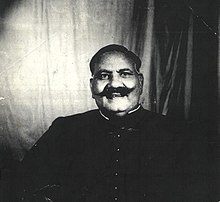
Khan Saheb reportedly said, “I’ll sing on one condition – the film should keep playing.” At a time when top singers were paid 500 to 1000 rupees, Khan Saheb was paid a whopping 50,000 rupees for both ‘Prem Jogan’ and another song he sang, ‘Subh Din Aayo Raj-Dulaare’. 11/23
While recording the second ‘Mohe Panghat pe Nandlal Chhed gayo re’, Asif and dance director, Lachchhu Maharaj, cornered Naushad one day and asked him to make the song reminiscent of the Thumri and Dadra of Nawab Wajid Ali Shah. 12/23
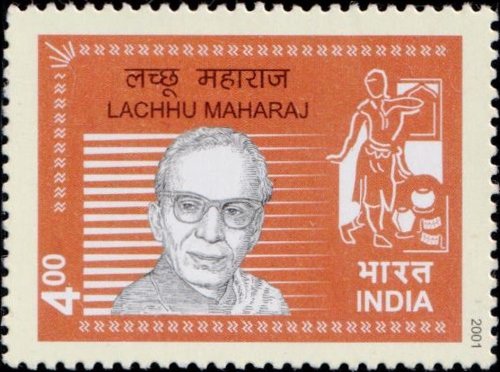
Naushad was initially apprehensive whether Madhubala, who was cast to play the role of Anarkali, would be able to pull off the expressions and gestures needed for the song but was convinced by Lachchhu Maharaj that Madhubala would pull it off. 13/23
The song is based on the raag Gara, a rare raag usually rendered in the afternoon or late evening. Gara gained popularity in the late 1940s when it was used extensively by classical vocalists from North India, especially of the Agra Gharana. 14/23
Interestingly, it was Lachchhu Maharaj’s father, Kalka Maharaj, who was supposed to have written the original Mukhda of the song. With his elder brother Bindadin, they formed the famous duo, Kalka-Bindadin, who wowed the Awadhi court back in the day. 15/23
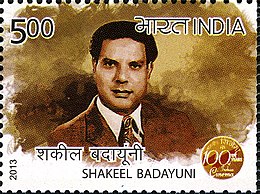
However, it’s believed that a modern version of the Thumri was written by Raghunath Brahmbhatt ‘Raskavi’ in the 1920s for a Gujrati play called ‘Chhatra Vijay’. For the film, the song (Mohe Panghat Pe) was written by the famous Urdu poet, Shakeel Badayuni. 16/23
Badayuni did his graduation from Aligarh Muslim University and moved to Bombay in 1944 to write songs for the Film Industry. While going around and meeting people, he came in contact with Naushad and became his close confidante over the years. 17/23
When Lachchhu Maharaj heard Naushad and Shakeel’s creation,he became emotional and said to Naushad,“You have re-ignited the memories of my father”. Naushad and Shakeel were then tasked to create another song, it was going to be shot inside a palace of mirrors (Sheesh Mahal).18/23
They spent an entire night locked in a room, chalking out the lyrics of the song, and after much tolling, were able to find the perfect ones, “Pyar kia to darna kya, Pyar kia koi chori nahi ki,”, slightly inspired by a poorbi (purvi, a unique raga) song. 19/23
The song allowed Anarkali to show her defiance against the all-powerful Emperor in a manner that clearly outlined the potency of her actions but in a much more restrained way. After he heard the song, Asif Saheb said, “This is exactly what I wanted.” 20/23
For female vocals, Lata Mangeshkar lent her voice to most of the songs. In the famous qawwali duel, ‘Teri Mehfil Main’, Lata was paired with the indomitable Shamshad Begum. Mohammed Rafi was roped in to lend his voice to ‘Ae Mohabbat Zindabad’. 21/23
Some of the songs, however, couldn’t make it to the final cut of the film and that irked Naushad back then. When the film was released, people stood in long queues, not only in front of the halls but also outside music shops, waiting to buy the album of the film. 22/23
Mughal-e-Azam still remains a spectacle. Every scene, dialogue, and song is etched in our memory. What remains unseen is the immense amount of effort put in by technicians, artisans, musicians, and dancers that went into the making of this magnum opus. 23/23
Sources: Naushad ki kahani, Naushad ki zubani, Shama 1984; Yeh Un Dinoñ Ki Baat Hai: Urdu Memoirs of Cinema Legends by Yasir Abbasi for Bloomsbury.
Image Sources : @WikiCommons; @Bollywoodirect
Video Source : Tangible Emotions (YouTube)
Image Sources : @WikiCommons; @Bollywoodirect
Video Source : Tangible Emotions (YouTube)
• • •
Missing some Tweet in this thread? You can try to
force a refresh