What is EBITDA?
Here's everything you need to know about this confusing accounting word:
Here's everything you need to know about this confusing accounting word:
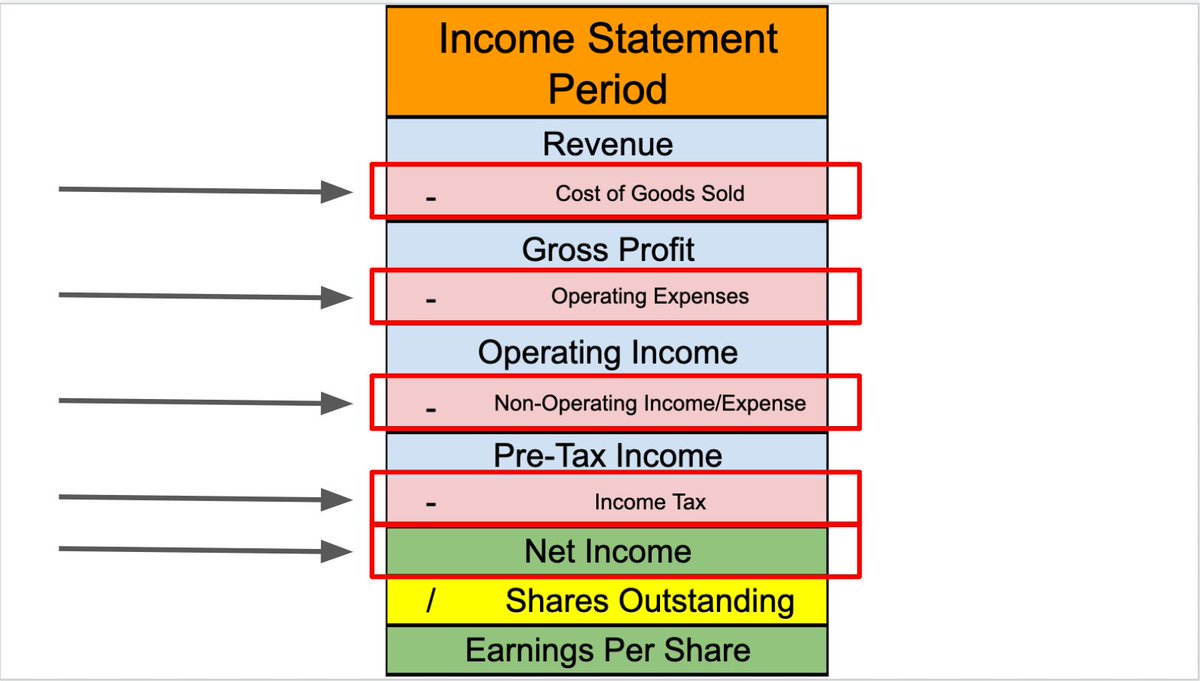
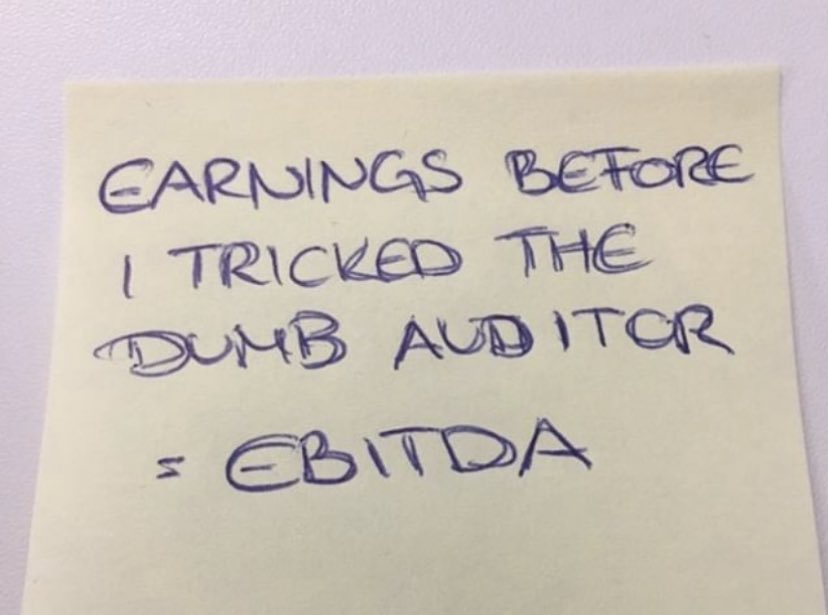
EBITDA is an accounting term that is an alternative way to measure a company's profitability.
EBITDA is simply an acronym:
EBITDA is simply an acronym:
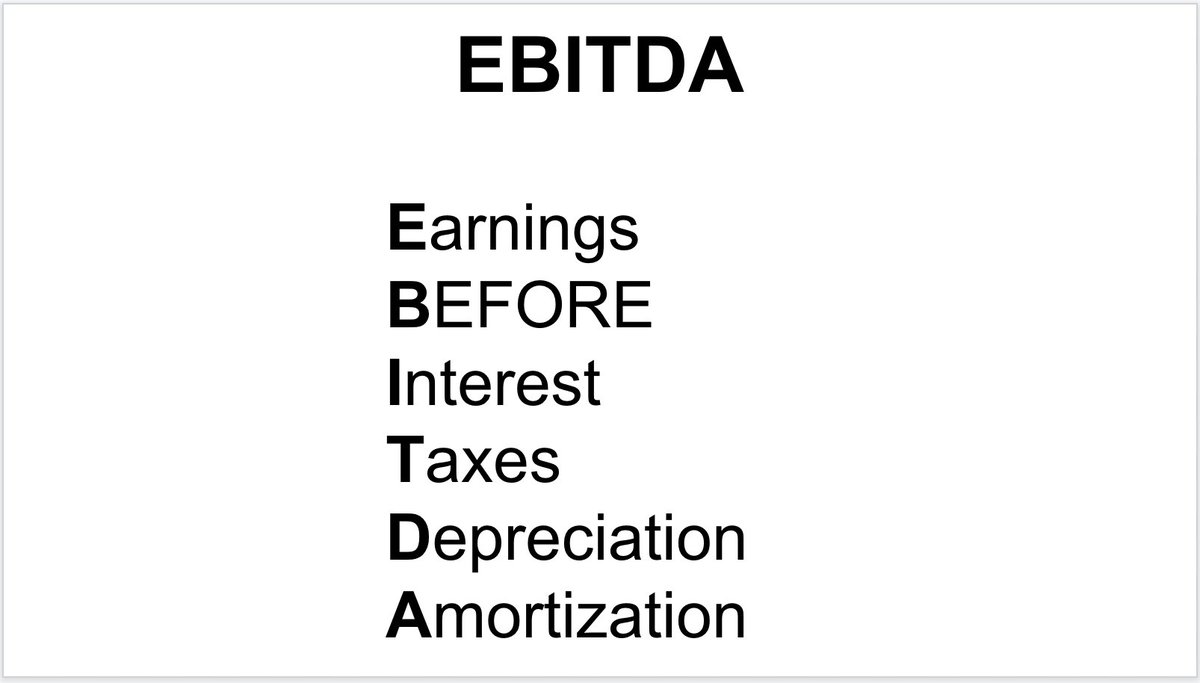
To calculate EBITDA, you start with Net Income (also known as Earnings).
Then you add back Interest, Taxes, Depreciation, and Amortization
Then you add back Interest, Taxes, Depreciation, and Amortization

EBITDA is a Non-GAAP number, meaning it doesn’t comply with “Generally Accepted Accounting Principles”
For that reason, you won’t see it on many companies’ financial statements.
However, some management teams do provide it and focus on it heavily.
For that reason, you won’t see it on many companies’ financial statements.
However, some management teams do provide it and focus on it heavily.
Earnings, Interest, and Taxes are easy terms to understand.
What about Depreciation & Amortization?
Those need a little bit more explanation...
What about Depreciation & Amortization?
Those need a little bit more explanation...
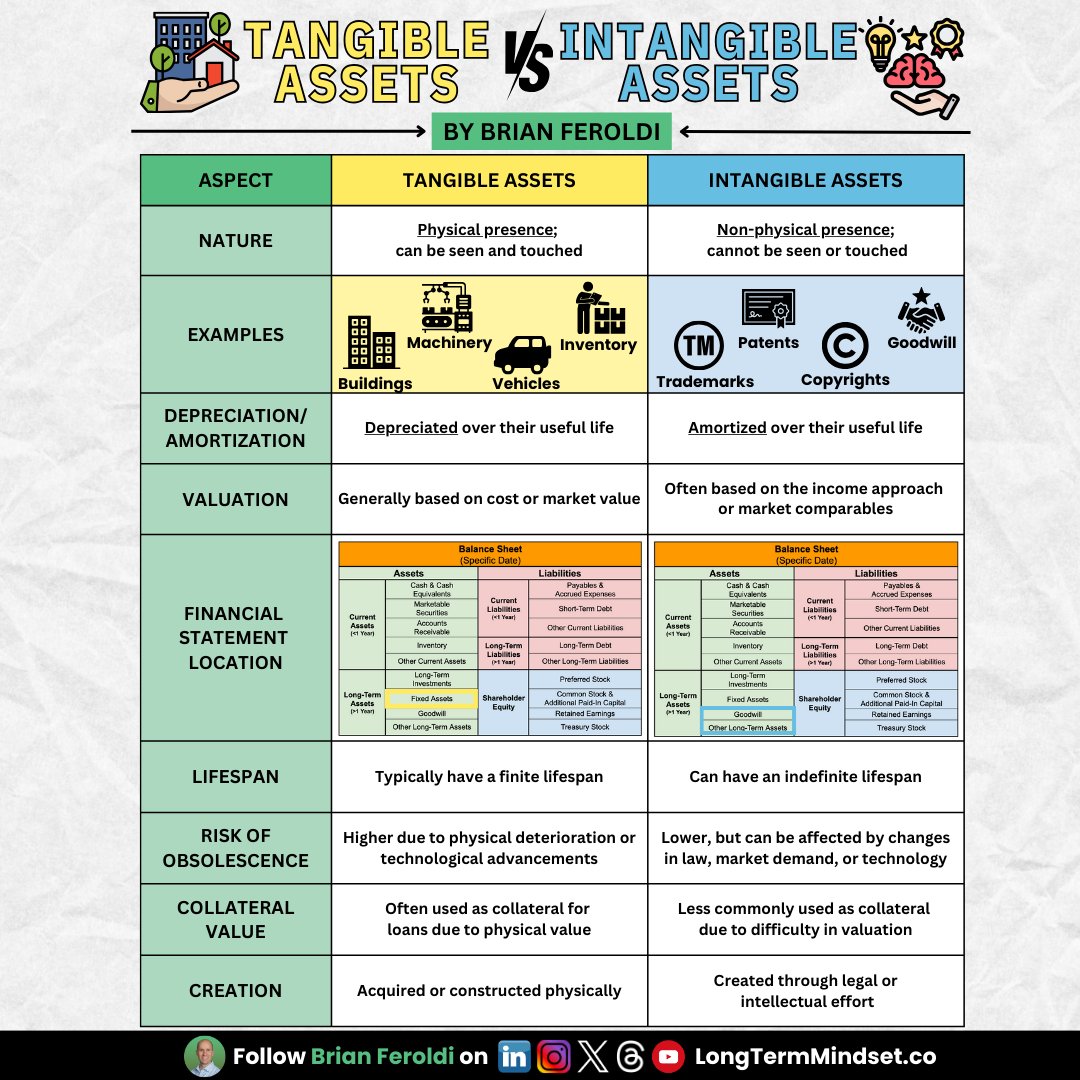
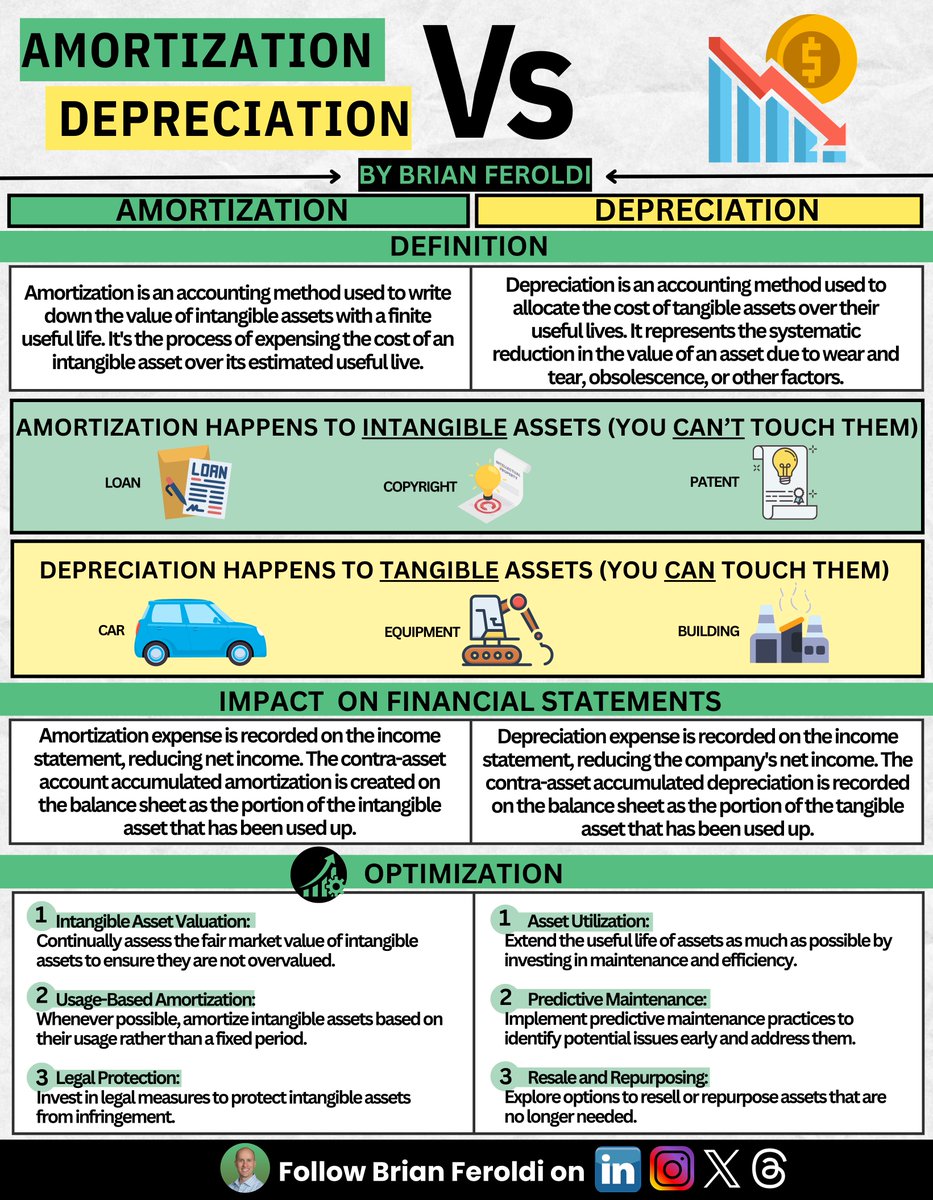
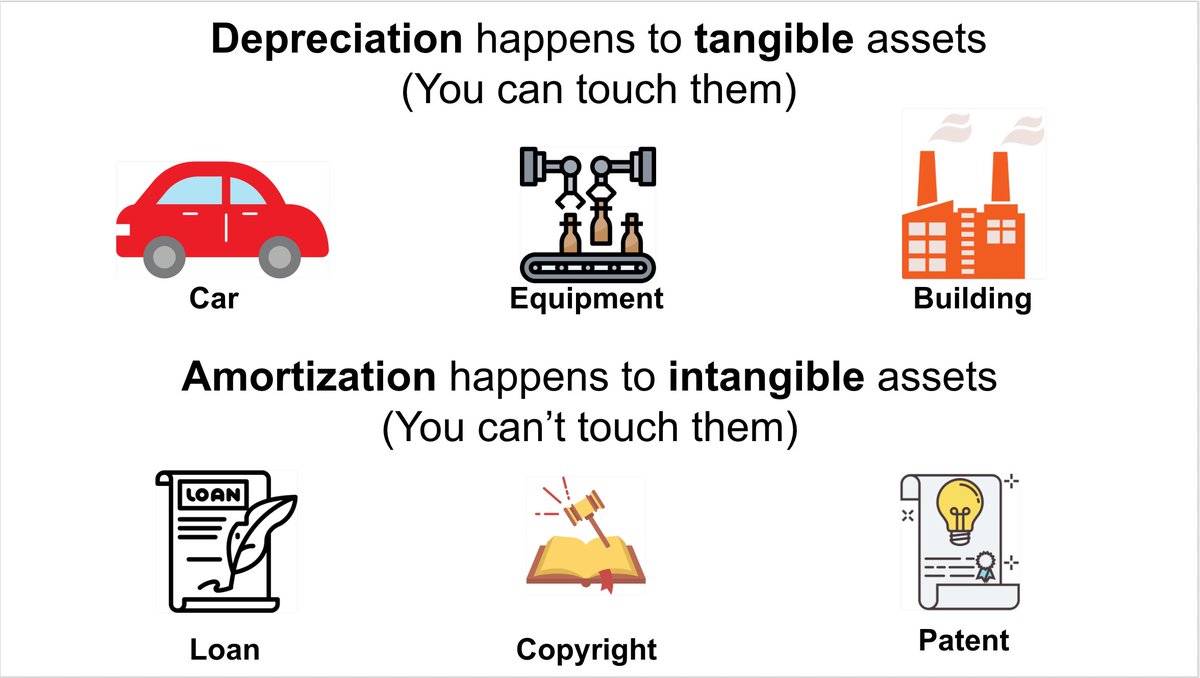
Depreciation: the accounting method used to allocate the cost of a TANGIBLE asset over its useful life.
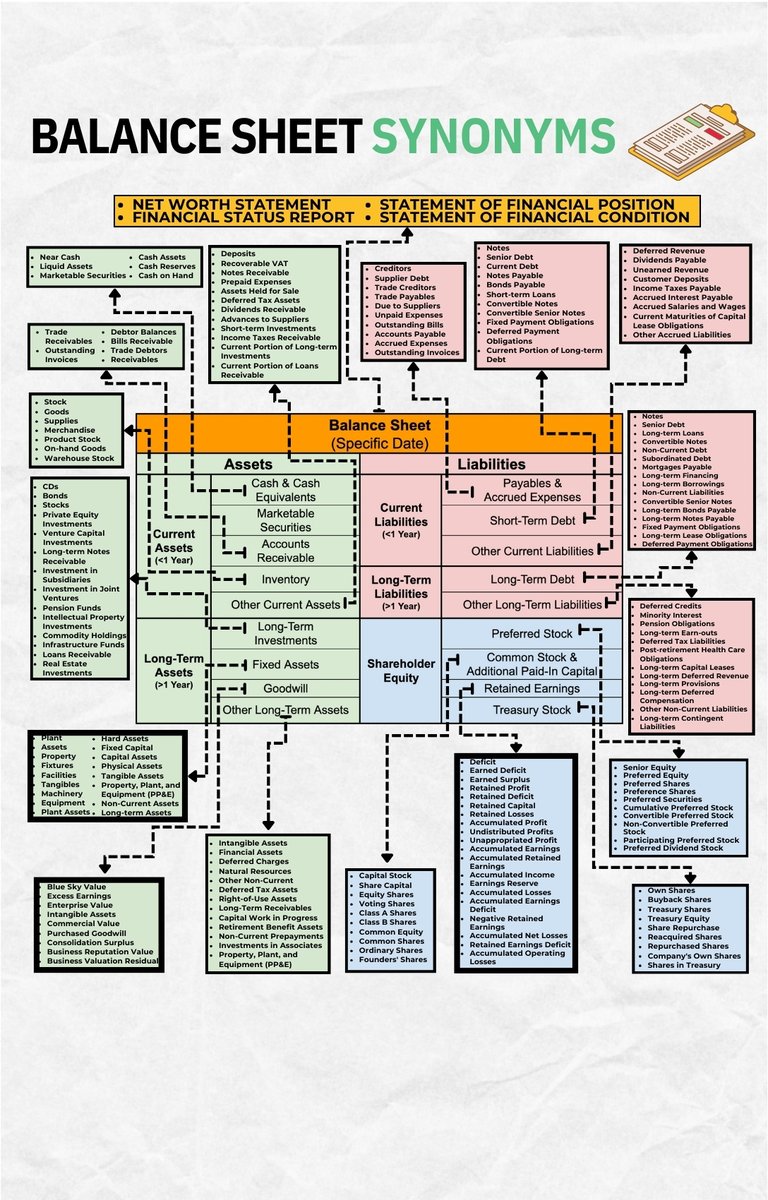
A TANGIBLE asset is something you can physically touch (house, car, factory)
Depreciation represents how much of a tangible asset's value has been "used up"
A TANGIBLE asset is something you can physically touch (house, car, factory)
Depreciation represents how much of a tangible asset's value has been "used up"
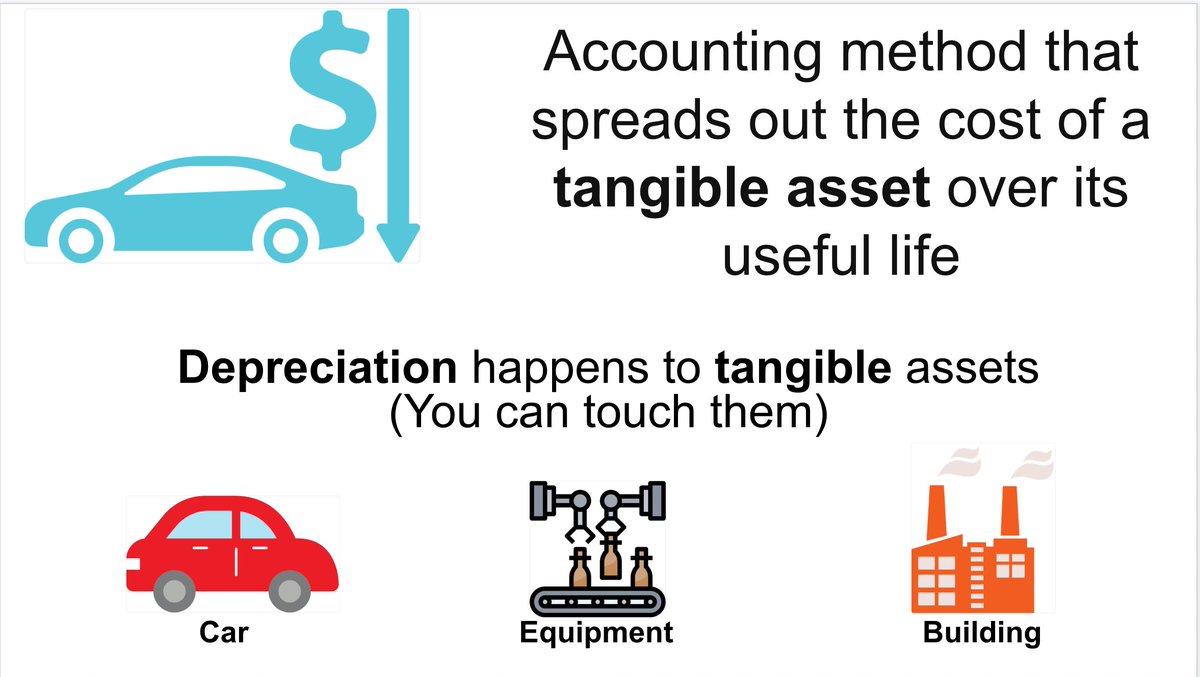
Example: You buy a new car for $33,000
10 years later, you sell it for $3,000
Depreciation tracks the car’s value decreasing over time as you drive it.
In this case, the car's Depreciation Expense is $3,000/per year
10 years later, you sell it for $3,000
Depreciation tracks the car’s value decreasing over time as you drive it.
In this case, the car's Depreciation Expense is $3,000/per year

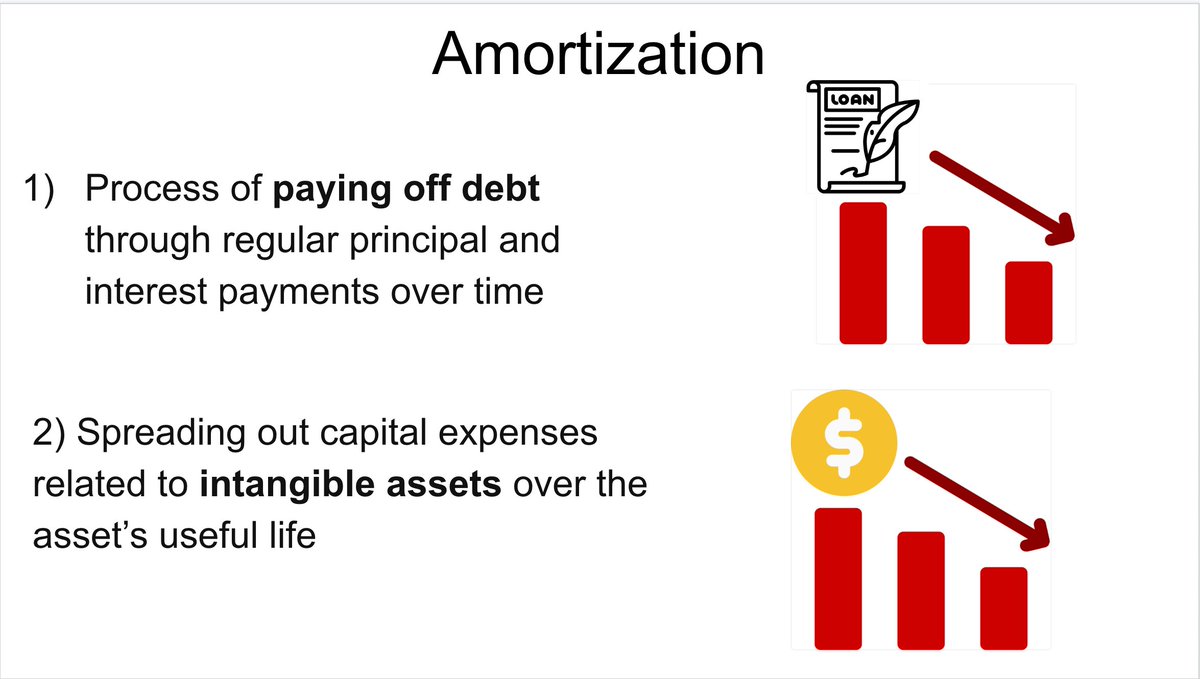
Amortization: The accounting process of writing down the value of a loan or an INTANGIBLE asset.
It’s VERY similar to depreciation, but amortization happens to “Intangible” assets, which are assets that you can’t physically touch (patents, trademarks, goodwill)
It’s VERY similar to depreciation, but amortization happens to “Intangible” assets, which are assets that you can’t physically touch (patents, trademarks, goodwill)
Remember:
Why measure EBITDA at all?
EBITDA was popularized by one of the best owner/operators of all time:
John Malone
Malone became a billionaire primarily by buying & operating cable companies
EBITDA was popularized by one of the best owner/operators of all time:
John Malone
Malone became a billionaire primarily by buying & operating cable companies

Malone LOVED using leverage (debt) to grow and HATED paying taxes.
He used interest + deprecation expenses to minimize his tax bill
A side effect is that this LOWERED net income.
He used interest + deprecation expenses to minimize his tax bill
A side effect is that this LOWERED net income.
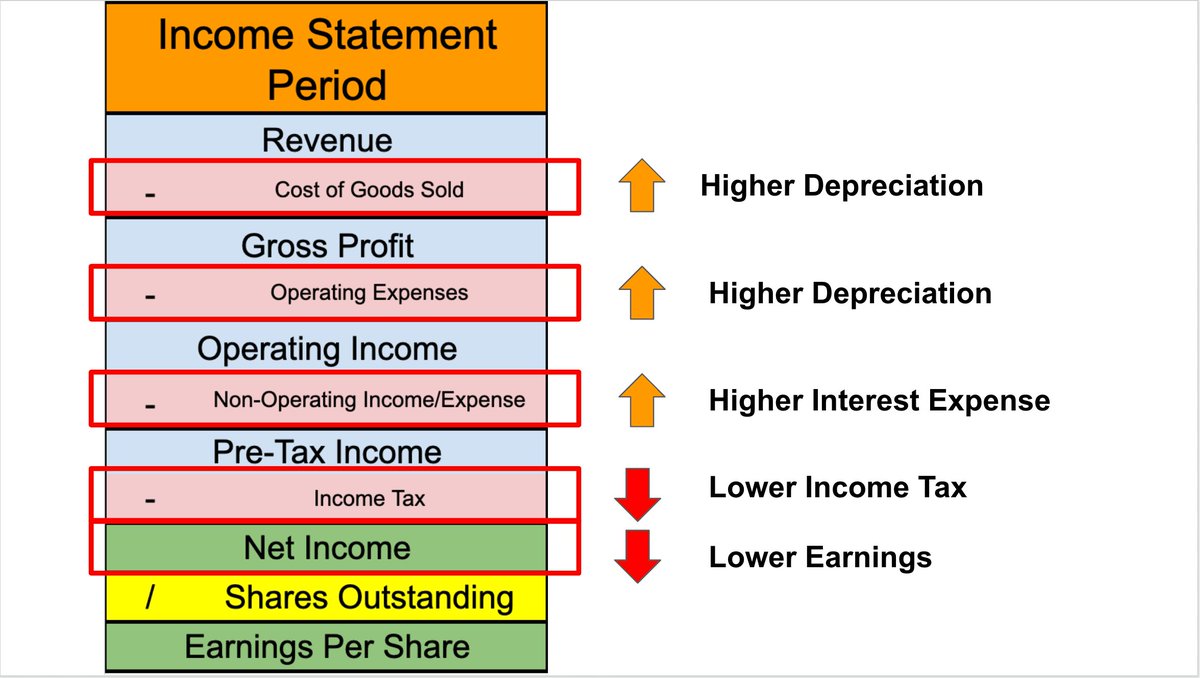
Lowering net income was a problem since it’s an important number for investors & lenders.
Malone convinced them to focus on CASH FLOW instead of earnings.
EBITDA is a quick & easy way to roughly measure a company's cash flow.
Malone convinced them to focus on CASH FLOW instead of earnings.
EBITDA is a quick & easy way to roughly measure a company's cash flow.

Malone succeeded, and EBITDA has become a popular metric with some investors, especially those in private equity
Why?
EBITDA ignores interest expense, so it allows companies with different capital structures to be compared.
Why?
EBITDA ignores interest expense, so it allows companies with different capital structures to be compared.
Consider two businesses with the exact same revenue + margins.
Business A is funded with 100% equity, 0% debt.
Business B is 50% equity, 50% debt.
Business A is funded with 100% equity, 0% debt.
Business B is 50% equity, 50% debt.
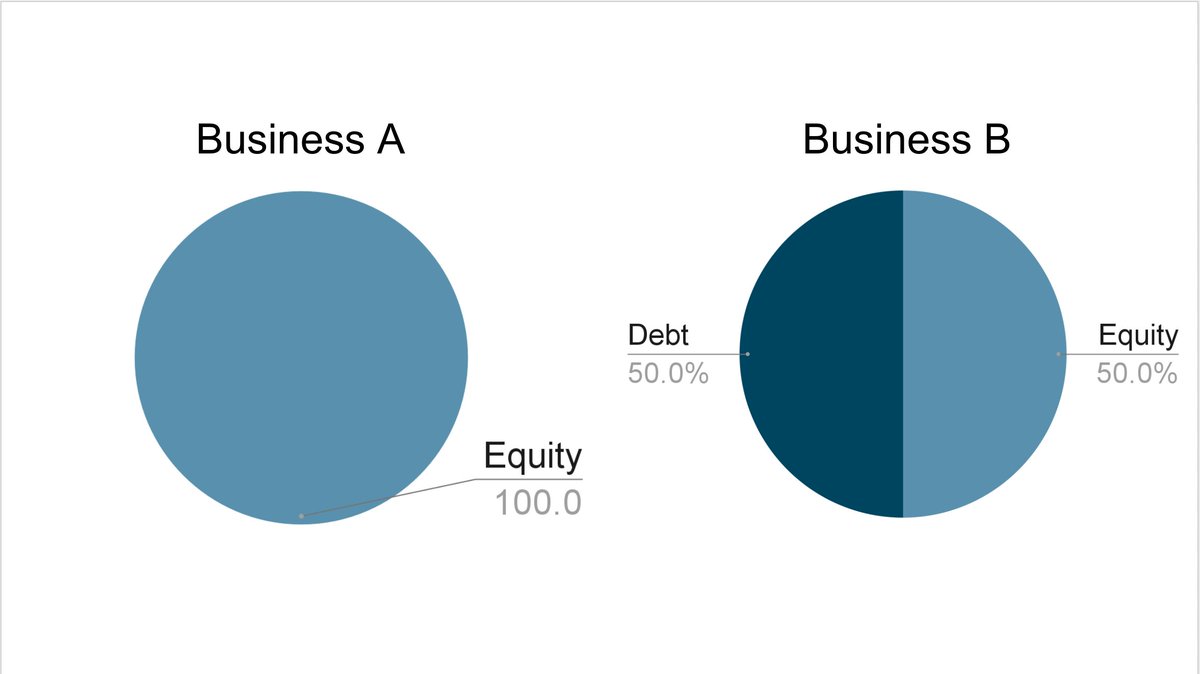
Business A has NO interest expense, so its earnings will be HIGHER than business B, even though revenue + margins are the same!
This is completely due to capital structure (debt vs. equity), NOT the business performance.
This is completely due to capital structure (debt vs. equity), NOT the business performance.
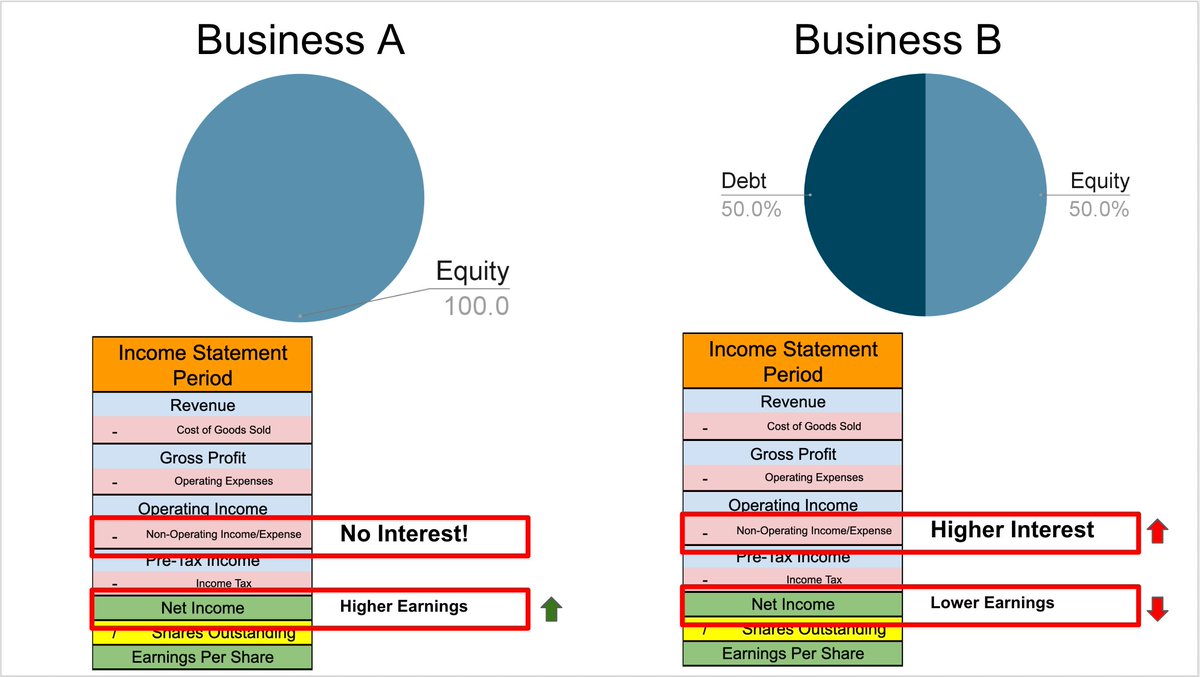
EBITDA fixes this problem because it is calculated BEFORE interest expense, making comparisons fairer.
It also enables comparisons between companies with different deprecation & amortization expenses
It also enables comparisons between companies with different deprecation & amortization expenses
EBITDA has become very popular over the last 20 years.
That’s in part because it enables Wall Street to justify higher borrowing power & higher valuations.
That’s in part because it enables Wall Street to justify higher borrowing power & higher valuations.
Wall Street might love EBITDA, but lots of investors do not.
Why? EBITDA can be very misleading.
Ignoring “depreciation” as an expense is a big reason why, as Buffett explained in 2017.
Why? EBITDA can be very misleading.
Ignoring “depreciation” as an expense is a big reason why, as Buffett explained in 2017.

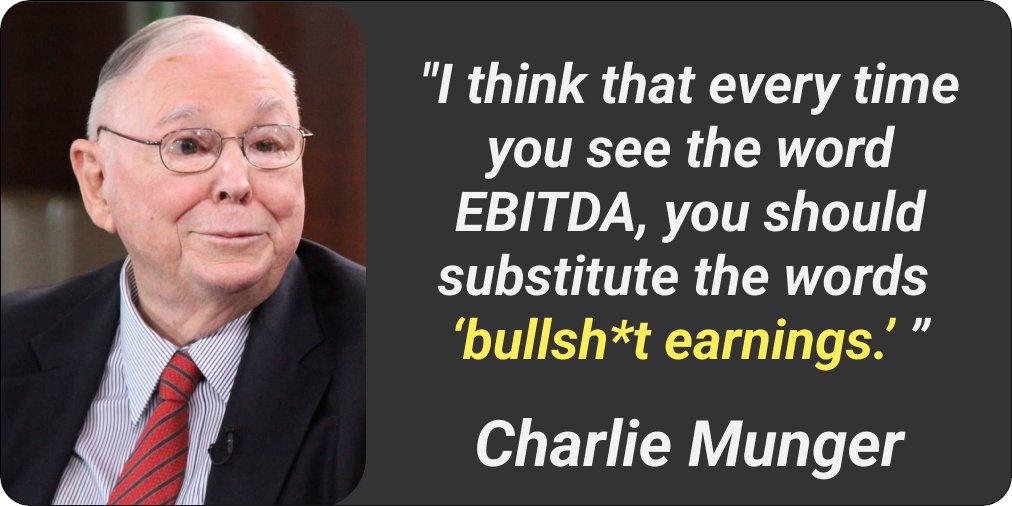
Charlie Munger agrees, and his argument is more succinct:
Personally, I don’t like using EBITDA.
Even worse is "Adjusted EBITDA", which ignores LOTS of other expenses, such as stock-based compensation.
But, if you invest, it's a very important term to understand.
Even worse is "Adjusted EBITDA", which ignores LOTS of other expenses, such as stock-based compensation.
But, if you invest, it's a very important term to understand.
Enjoy this thread?
Follow me @BrianFeroldi
I demystify finance with daily tweets and 1 thread per week.
Follow me @BrianFeroldi
I demystify finance with daily tweets and 1 thread per week.
You'll also LOVE my free newsletter.
Each Wednesday, I email:
▪️ One simple graphic
▪️ One piece of timeless content
▪️ One Twitter thread
▪️ One resource
▪️ One quote
Interested? Join 40,000+ others:
mindset.brianferoldi.com
Each Wednesday, I email:
▪️ One simple graphic
▪️ One piece of timeless content
▪️ One Twitter thread
▪️ One resource
▪️ One quote
Interested? Join 40,000+ others:
mindset.brianferoldi.com
Want to keep learning?
Check out this thread I wrote about 8 confusing accounting terms explained in plain English:
Check out this thread I wrote about 8 confusing accounting terms explained in plain English:
https://twitter.com/BrianFeroldi/status/1528782733022994434?s=20&t=1qVVMlOgdNfluRASq5MQXQ
• • •
Missing some Tweet in this thread? You can try to
force a refresh