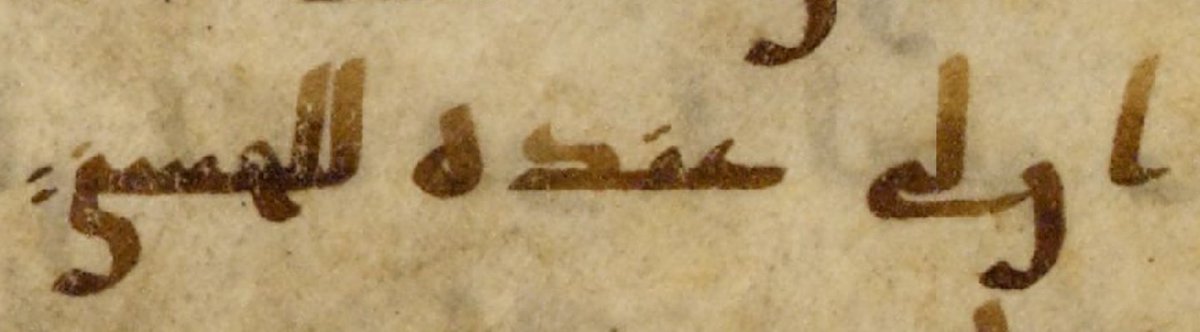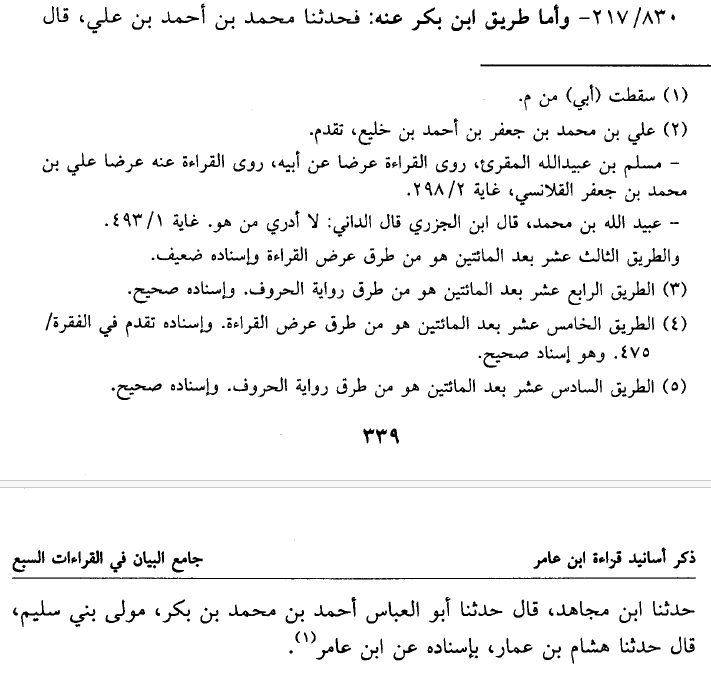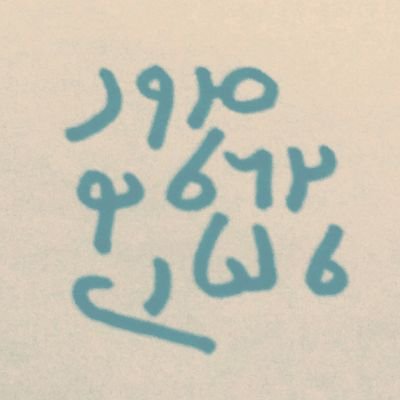
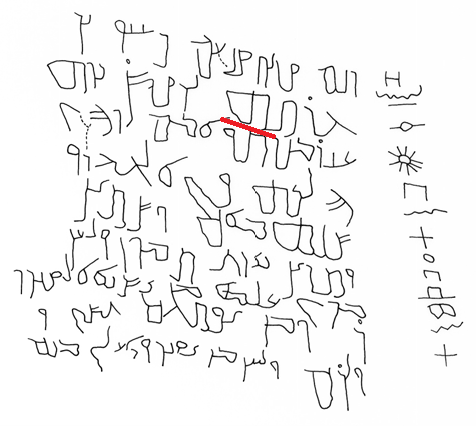
It may not look like it, but the script of this inscription is the script that would eventually evolve to become the modern Arabic script. This is the Nabataean Aramaic script, and I wanted to do a little thread on the evolution of its letter shapes. 🧵 
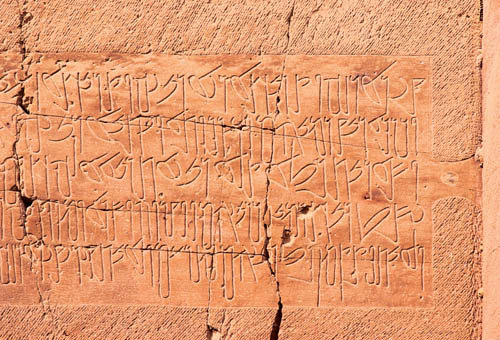
The Nabataean script was originally used primarily for writing a form of Aramaic -- even though many people of the Nabataean Kingdom appear to have been Arabic speakers. Aramaic, however, had much fewer sounds than the Arabic script...
The dental stops (ت د ط) were used to also represent the interdental fricatives (ث ذ ظ).
The pharyngeals fricatives (ح ع) were also used to represent the uvular fricatives (غ خ).
The alveolar fricatives (س/ص) were also used to represent the lateral fricatives (ش ض).
The pharyngeals fricatives (ح ع) were also used to represent the uvular fricatives (غ خ).
The alveolar fricatives (س/ص) were also used to represent the lateral fricatives (ش ض).
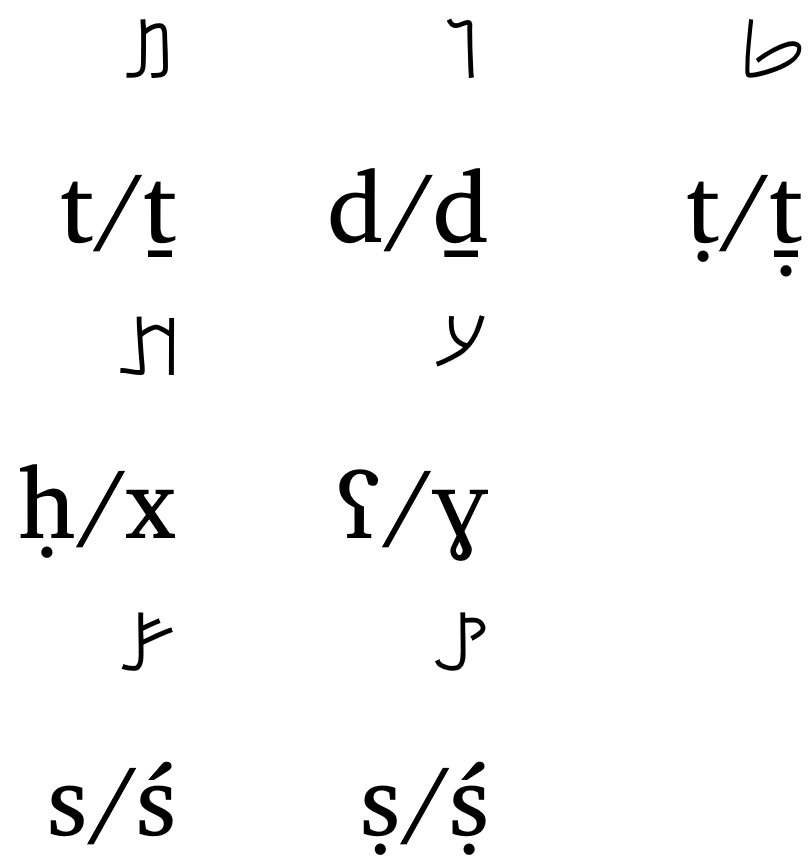
The mismatch between Arabic phonology and what Aramaic script could support therefore gave rise to the 14 Arabic sounds being associated with only 7 letter shapes.
You may also note that the modern Arabic script today marks those 'non-Aramaic' sounds with an extra dot!
You may also note that the modern Arabic script today marks those 'non-Aramaic' sounds with an extra dot!
That consonantal dotting system did not yet exist in pre-Islamic times, when the Aramaic script was adopted for Arabic. Our earliest evidence for such consonantal dotting is the papyrus PERF 558 which dates to 22 AH/643 CE.
en.wikipedia.org/wiki/PERF_558
en.wikipedia.org/wiki/PERF_558
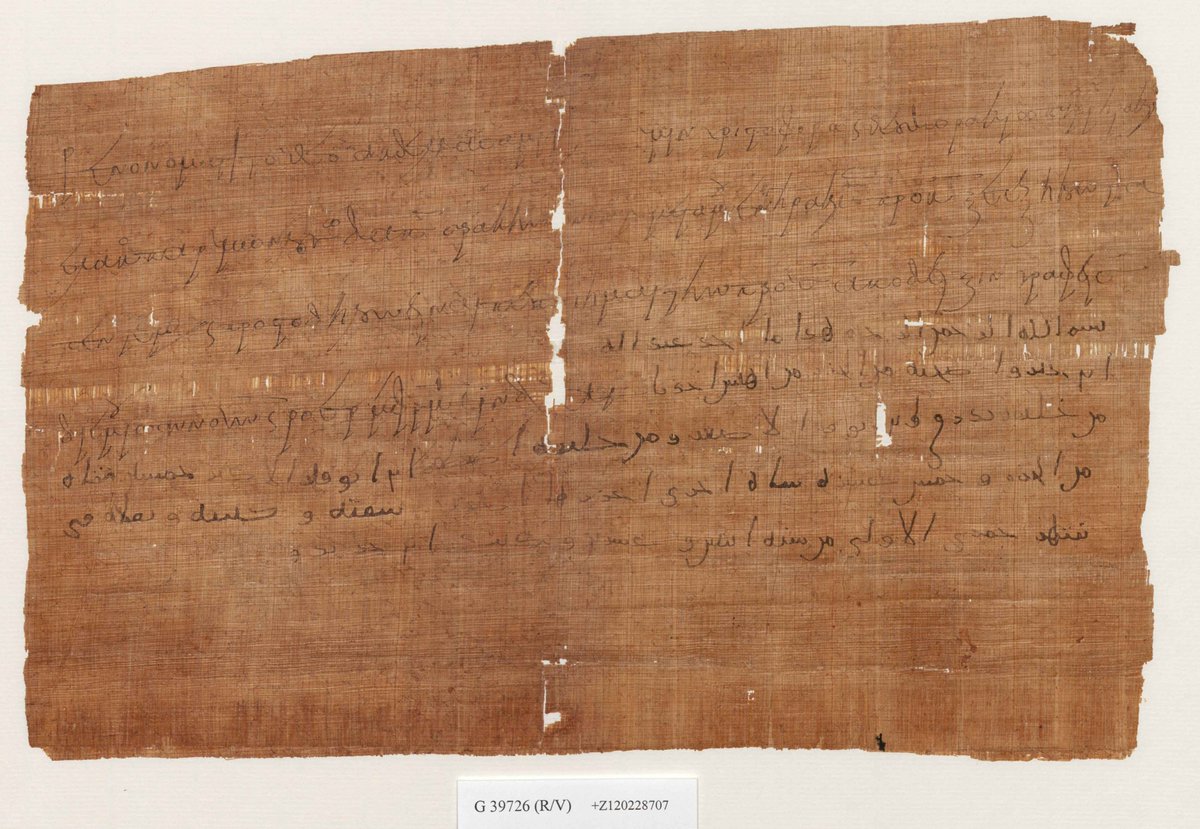
Those familiar with the Arabic script will note that these letters mentioned above are not the only ones distinguished with consonantal dots in the the modern Arabic script. Today the Arabic script has only 18 distinct letter shapes word-finally and only 15 word-internally.

Over the centuries, towards the Islamic period, the Nabataean script started to evolve, becoming more and more cursive over time. Cursive meaning that more and more letters starting to be connected in writing (an indication that the script was being used on perishable materials).
Due to this cursive nature of the script, a fundamental difference developed between 'word-medial' and word-final. In word-medial position, letters had to be written together and as a result started losing distinct features they were able to maintain in word-final position.
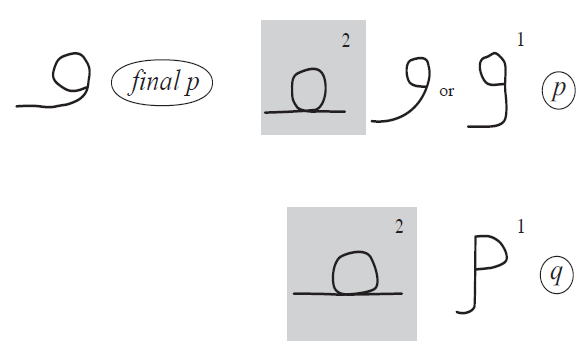
As a result, the p (= f ف) and q (ق) which were mostly distinct due to a distinct curve in their tail, merged completely in word-medial position, but remained distinct in final position (something that is true for Arabic even today!)
In a parallel manner the b (ب) and n (ن) started to merge in medial position, but n retained a distinct descending curve that b did not have in final-position.
But neither of those immediately merged with the t/ṯ (ت/ث) or the y (ي) which are merged today.
But neither of those immediately merged with the t/ṯ (ت/ث) or the y (ي) which are merged today.
Both t/ṯ and y started to take on a distinctive zig-zag shape in medial position, but remained distinct in word-final position, where interestingly the y had two options, both zigzag (which became modern ي) and curved back (which became modern ے).
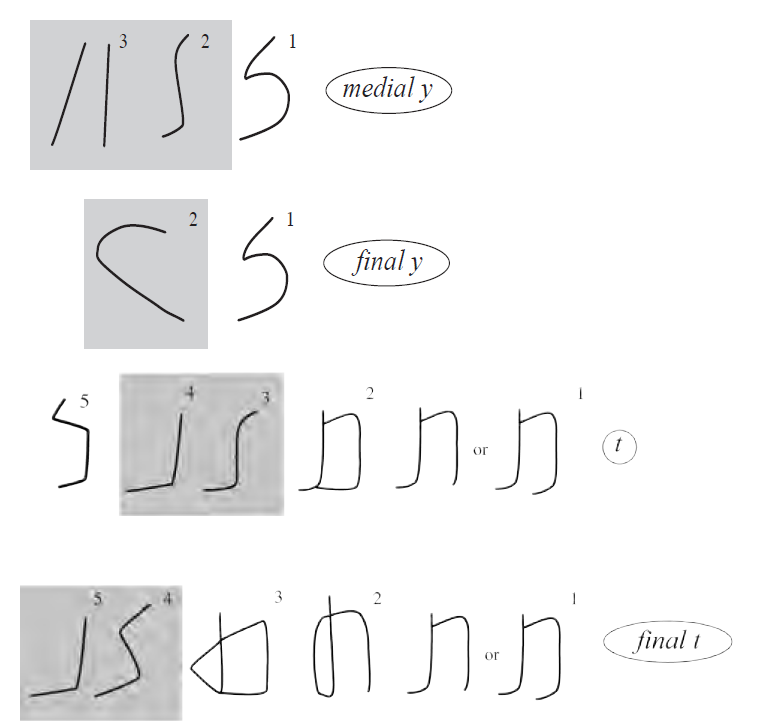
Eventually t/ṯ and y lose their distinctive zig-zag shape in word-medial position, at which point their shape becomes identical to word-medial b and n. This brings us to the modern situation where a single medial denticle ٮـ can stand for 5 consonants (t, ṯ, y, n and b)!
In the modern script, however t/ṯ has merged in word-final position with the final b. It is not so obvious how this happened. For most of the letter's development, the t/ṯ clustered with yāʾ, and in final position retained this really distinctive 'looped' shape.
The ḥ/ḫ (ح خ) and ǧ (ج) in the modern script have merged completely, but in the oldest stages of the Nabataean script (as is the case in the closely related Hebrew square script) these signs were still completely distinct.
These develop very similar to the other letters...
These develop very similar to the other letters...
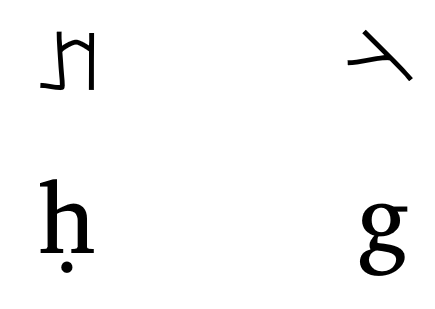
That is to say: the signs start to merge in word-medial position early on, but retain a distinct shape in word-final position. ḥ/ḫ took on a curved tail in word-final position whereas the ǧ had a horizontal tail in word-final position.
This is very reminiscent of the evolution of ب/ن and ف/ق where likewise it is specifically the curve of their final tail that continues to distinguish them in word-final position.
Image 1: BBR Ḥ = bi-yarḥ 'in the month of'
Image 2: ḤG = ḥaǧǧ 'feast'
Image 1: BBR Ḥ = bi-yarḥ 'in the month of'
Image 2: ḤG = ḥaǧǧ 'feast'

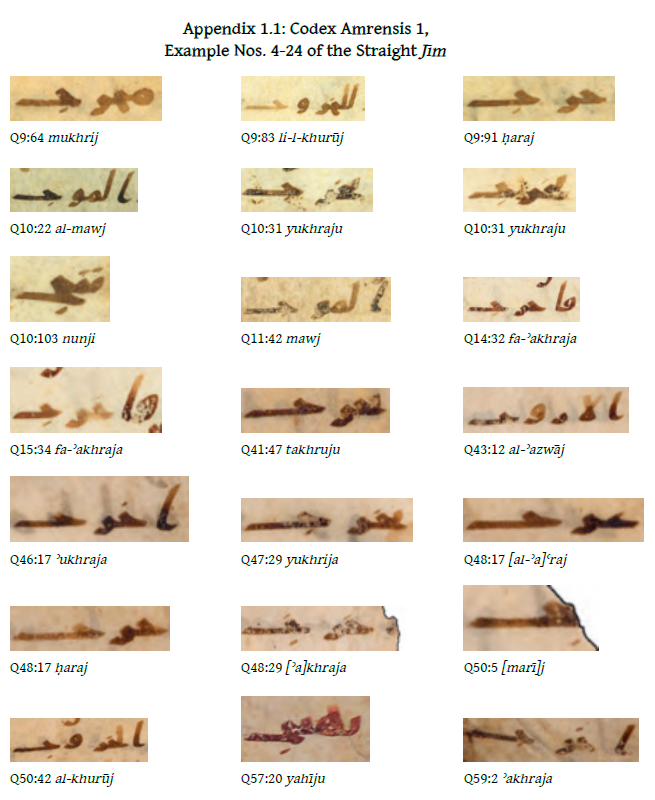
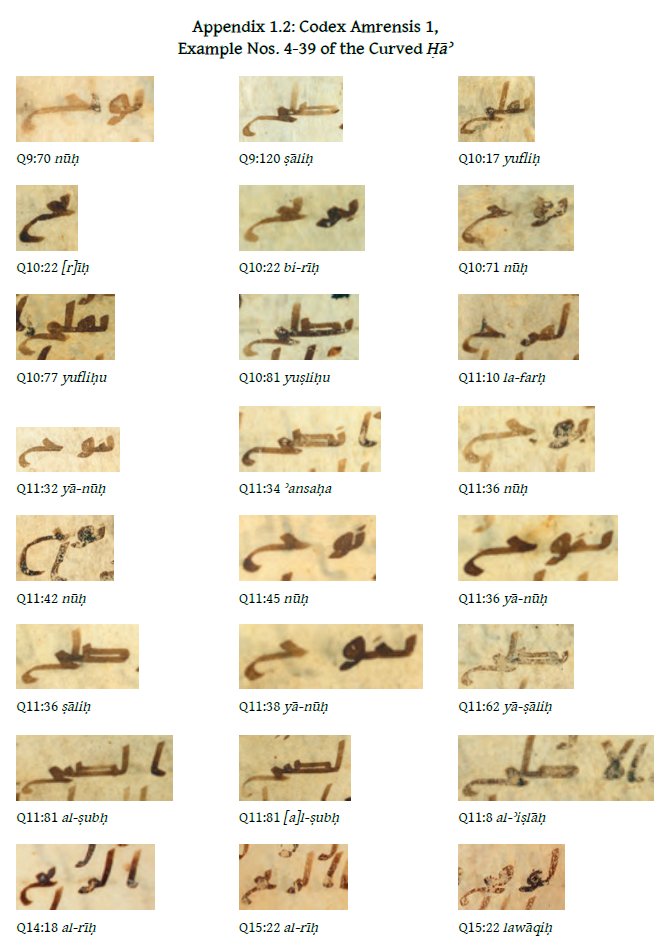
A really cool discovery that I made in 2019 is that it turns out that the merger of the final ḥāʾ/ḫāʾ from the ǧīm was not yet complete in the Islamic period. I discovered a number of ancient Quranic manuscripts that clearly keep them distinct.
journals.library.columbia.edu/index.php/alus…
journals.library.columbia.edu/index.php/alus…
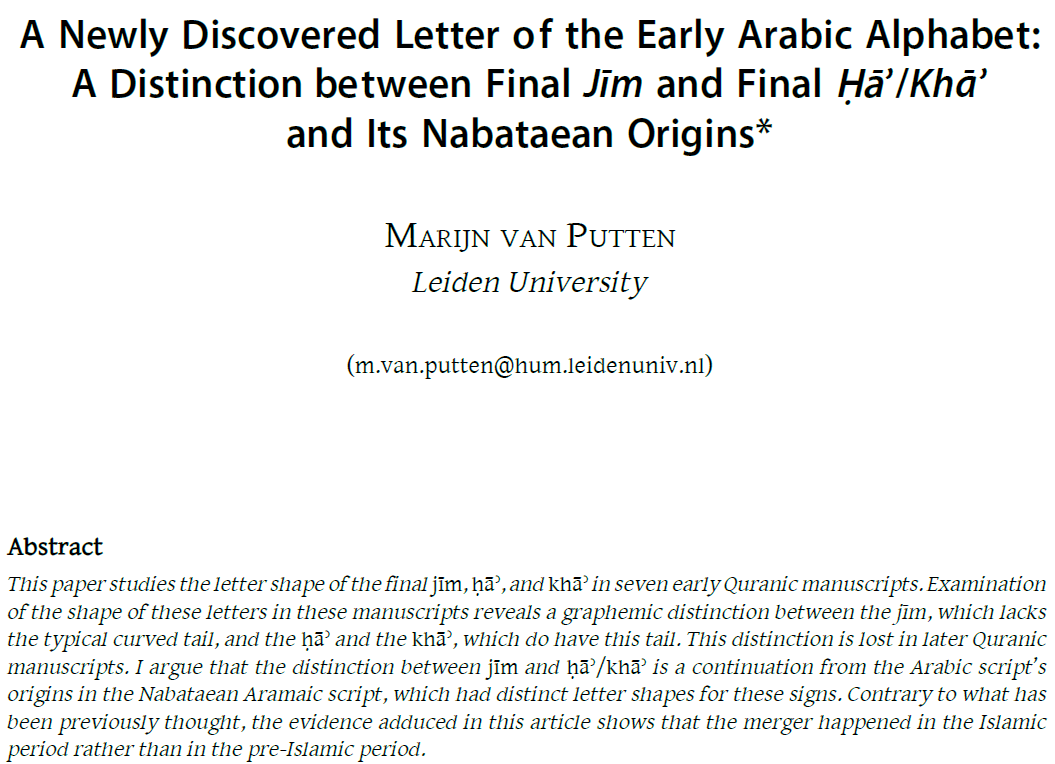
Here is an overview of just one of the seven manuscripts that I discovered that maintained this distinction. But even early in the Islamic period the merger was underway. For example, some of the scribes of the Codex Parisino-Petropolitanus had the distinction, others didn't.
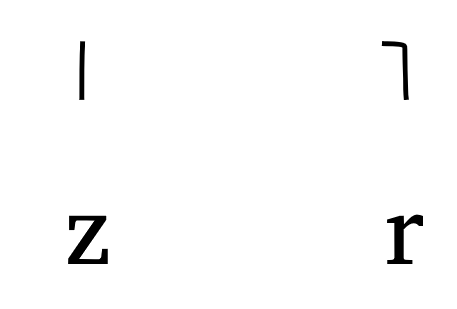
A final merger that would take place is between the r (ر) and the z (ز). These signs were distinct in the earliest stages of Nabataean and only have word-final forms because they could not connect to letters on the left side.
Here too, it is not so clear when the merger completes
Here too, it is not so clear when the merger completes
So to summarize:
From the start some were not distinct: t/ṯ, d/ḏ, ṭ/ẓ, s/š, ṣ/ḍ, ḥ/ḫ
Some only merged but remained distinct in final position: b/n, t/y, f/q.
Some merged only in the Islamic period: ḥ/ǧ
Some details of mergers remain unclear: r/z, final t/b.
From the start some were not distinct: t/ṯ, d/ḏ, ṭ/ẓ, s/š, ṣ/ḍ, ḥ/ḫ
Some only merged but remained distinct in final position: b/n, t/y, f/q.
Some merged only in the Islamic period: ḥ/ǧ
Some details of mergers remain unclear: r/z, final t/b.
And here's a small bibliography of article I consulted to write up this paper!
• • •
Missing some Tweet in this thread? You can try to
force a refresh