So, I've opened a Mastodon account as a precaution against the possible Muskocalypse on this site: mastodon.online/@pkrugman
Let me talk about motivation, which may be a bit different from other Twitterati 1/
I use Twitter in a somewhat restricted way. I don't, for the most part, respond to or even look at replies — too many followers, and too much hate even with content moderation. I do dialogues, when I do, via retweets 2/
What I use the site for is partly broadcasting, but mostly to follow people who actually know a subject, whether it's energy policy or national security. Getting information from such people in more or less real time is extremely valuable 3/
So a mass influx of crazy people won't directly hurt the way I use Twitter. But I worry about loss of critical mass. As Musk's apparently uncontrollable nastiness and childishness drives away users and advertisers, it's easy to see how Twitter's usefulness could collapse 4/
I have no idea what will replace Twitter if and when that happens. But I'm doing what I can to retain an alternative social media foothold 5/
• • •
Missing some Tweet in this thread? You can try to
force a refresh

If you were worried that we needed much lower wage growth to make up for declining productivity, yesterday's report suggests that the decline earlier this year wasn't a sustained trend; probably a temporary effect of high churn 2/
Here's the picture. My guess is that we'll soon see productivity growth, though not necessarily level, return to historical norms 3/
My guess is that hardly any voters know that Republicans will almost surely try to make major cuts to Medicare and Social Security if they prevail 1/ nytimes.com/2022/11/02/us/…
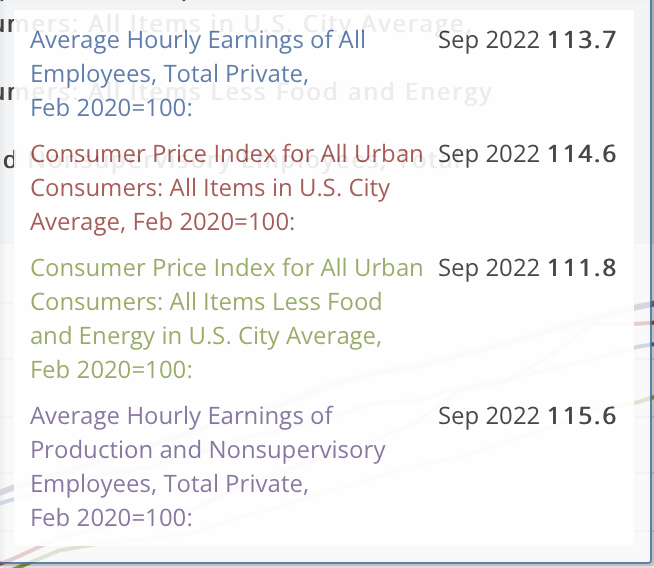
So we've returned to full employment, but with unacceptably high inflation. And inflation is bad because it reduces real wages — right? Actually, the facts if you compare the current situation with pre pandemic, are kind of surprising 1/
Two wage measures: overall and nonsupervisory (regular people). Two price measures: overall and excluding food and energy, which are not much affected by policy. 2/
How to think about the GDP advance release: it make claims that we were in a recession in the 1st half of the year look silly, but it suggests, at least to me, that there's a lot of contraction still in the pipeline 1/
Since the beginning of this year, we've seen soaring mortgage rates and a soaring dollar, both largely reflecting Fed tightening. Both should exert strong contractionary effects over time 2/
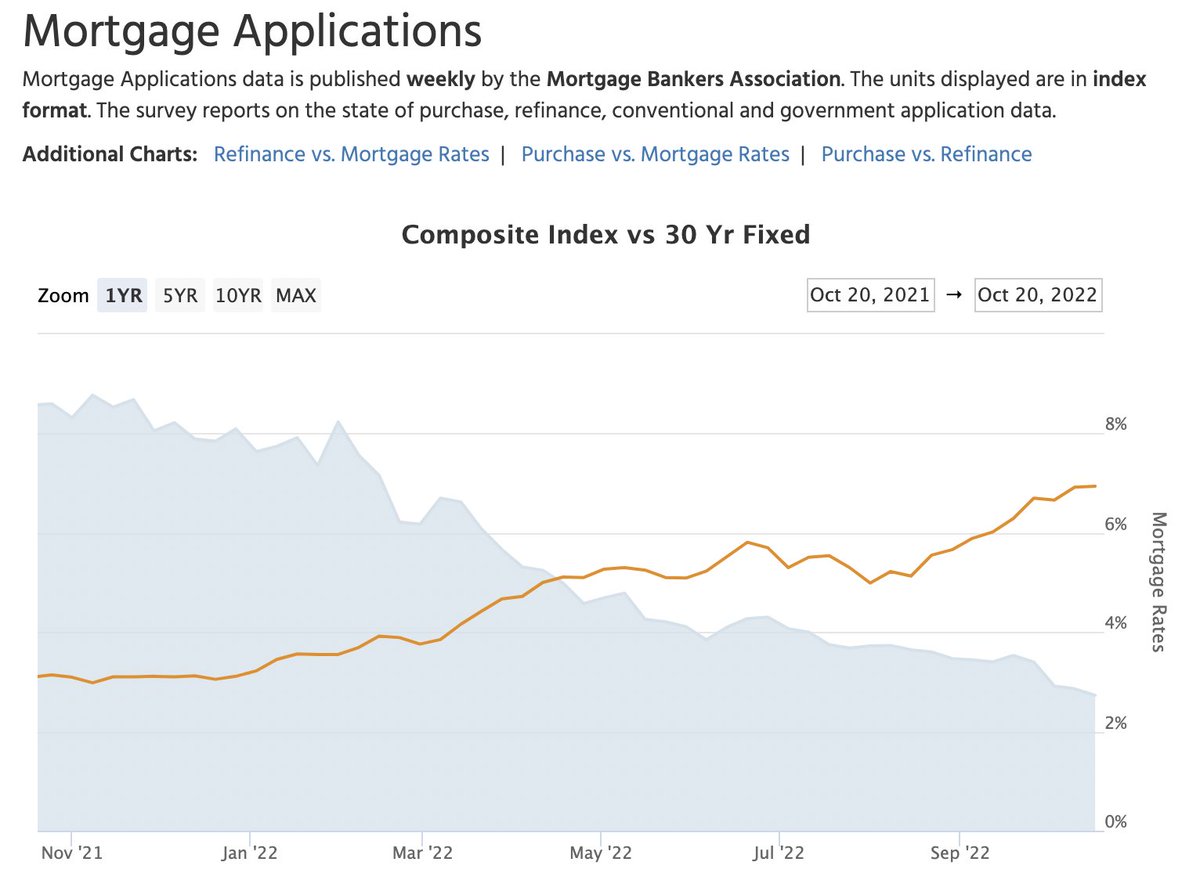
It's useful to compare the latest numbers with 2021Q4, before the tightening began. Real residential investment is down 12.5%, not trivial but still fairly small given the surge in mortgage rates and the collapse in mortgage applications 3/ mortgagenewsdaily.com/data/mortgage-…
Want to preregister a take on tomorrow's GDP advance release: if residential investment hasn't fallen much, that's a sign that Fed policy is too tight, not too loose. Why? Because it means that large negative effects of rate hikes are still in the pipeline 1/
Mortgage applications are down 70%, so a large housing slump is already baked in. If it hasn't shown up yet, just wait 2/
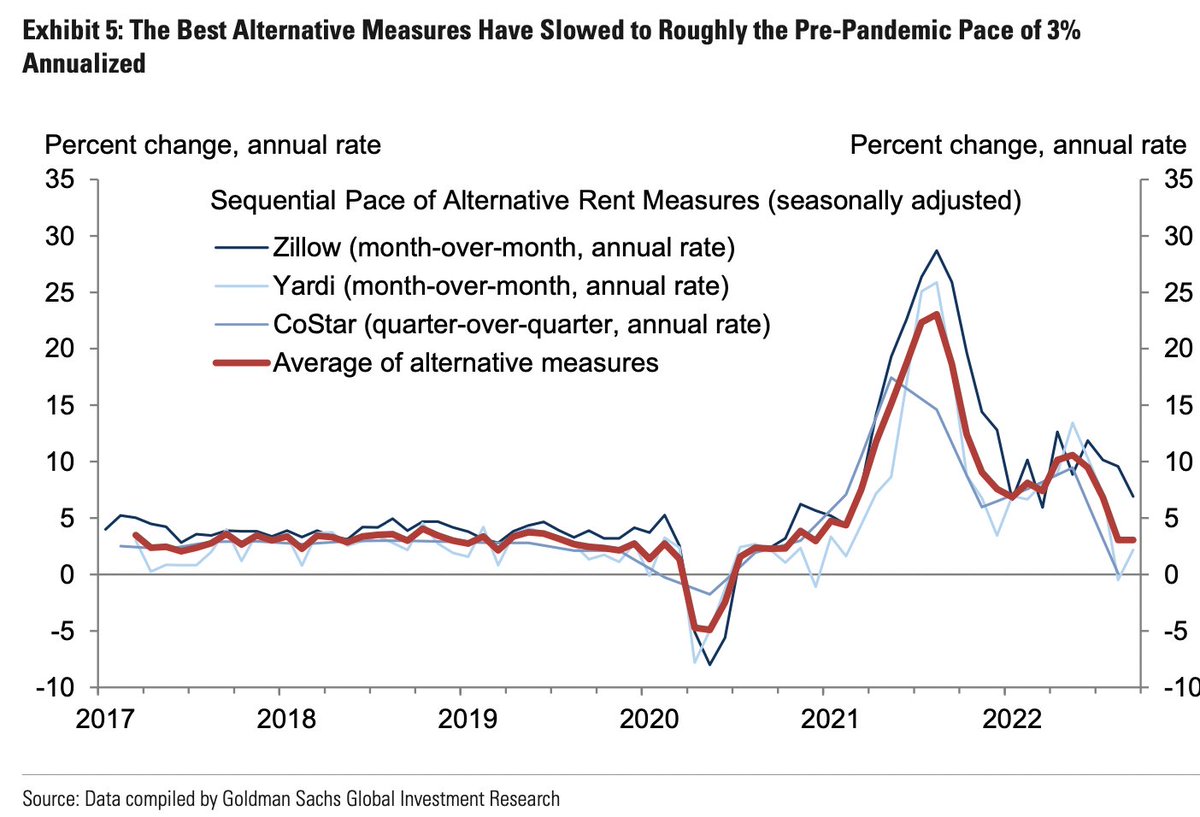
A substantial decline in core inflation is also baked in, because market rents — reflected in shelter CPI with a long lag — are rolling over. So if this report suggests that the depressing effects of Fed hikes are still mostly ahead, good case for a pivot 3/