What is Chapter 11 Bankruptcy
FTX infamously collapsed this week from a $32B empire to filing for chapter 11 bankruptcy.
What does that mean?
Is FTX now worth ... 0?
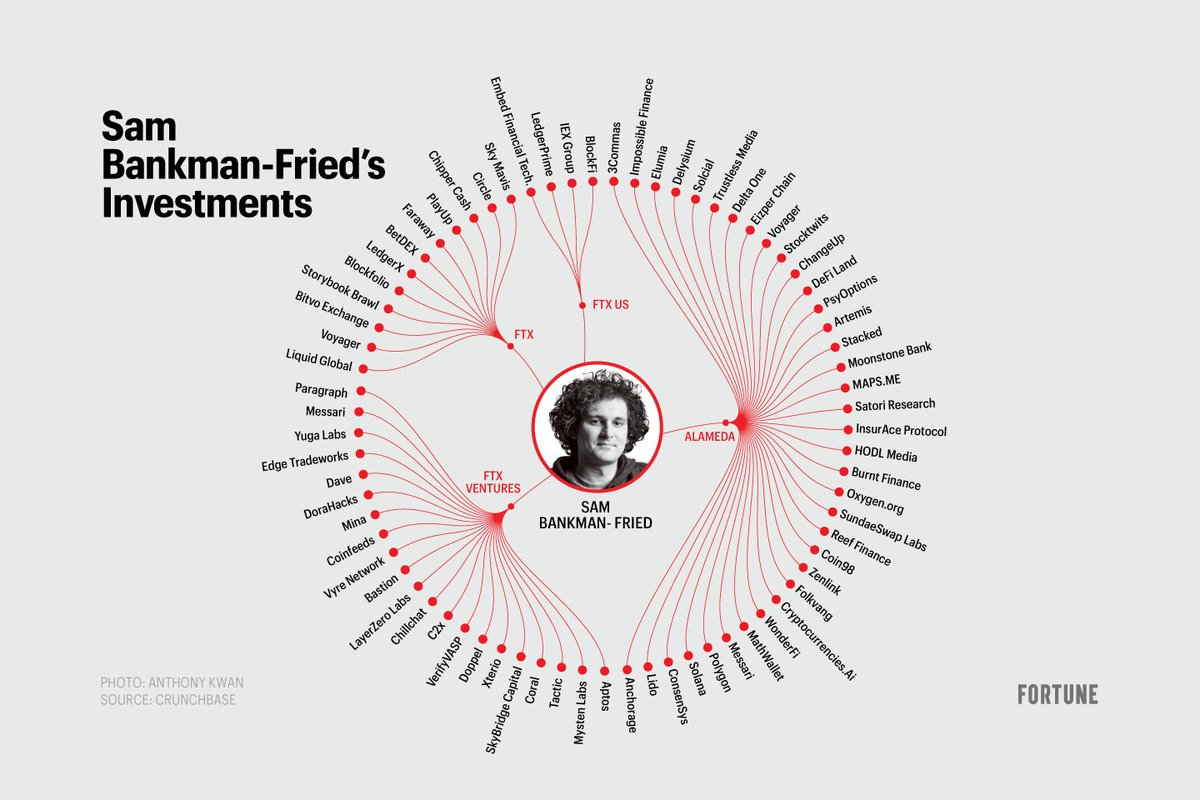
What happens to BlockFi, Voyager, LedgerX & all its other investments?
👇👇
CHAPTER 11 BANKRUPTCY EXPLAINED
🧵/
FTX infamously collapsed this week from a $32B empire to filing for chapter 11 bankruptcy.
What does that mean?
Is FTX now worth ... 0?
What happens to BlockFi, Voyager, LedgerX & all its other investments?
👇👇
CHAPTER 11 BANKRUPTCY EXPLAINED
🧵/

1/ Types of Bankruptcy
Basics first:
bankruptcy =/= fire sale
doesn't mean company is worth 0!
(that's only 1 type)
There's 2 main types:
Ch 7 - "fire sale"
Ch 11 - "restructuring" (adjusting debt terms)
Chart below summarizes the major differences between chapter 7 and 11:
Basics first:
bankruptcy =/= fire sale
doesn't mean company is worth 0!
(that's only 1 type)
There's 2 main types:
Ch 7 - "fire sale"
Ch 11 - "restructuring" (adjusting debt terms)
Chart below summarizes the major differences between chapter 7 and 11:

2/ Chapter 7
This is when the company dissolves entirely: all assets immediately liquidated in fire sale & used to pay down debt acc. to a seniority waterfall.
If there's not enough to go around, subordinate creditors lose their principal. Any remaining debt is wiped/forgiven.
This is when the company dissolves entirely: all assets immediately liquidated in fire sale & used to pay down debt acc. to a seniority waterfall.
If there's not enough to go around, subordinate creditors lose their principal. Any remaining debt is wiped/forgiven.
3/ Chapter 11
This is when a debtor remains in business while taking initiatives to stabilize its finances (cut costs, sell some assets, renegotiate its debts by extending maturities, etc).
No debt is wiped/forgiven, merely "restructured."
Company may come out & still be alive.
This is when a debtor remains in business while taking initiatives to stabilize its finances (cut costs, sell some assets, renegotiate its debts by extending maturities, etc).
No debt is wiped/forgiven, merely "restructured."
Company may come out & still be alive.
4/ Claims Hierarchy
Image below shows a typical seniority waterfall -- i.e. who gets paid first vs last (agnostic to ch7 vs ch11).
If FTX's corporate structure follows that of a normal bank's, depositors sit w/ general unsecured creditors & employee wages sit w/ admin expenses.
Image below shows a typical seniority waterfall -- i.e. who gets paid first vs last (agnostic to ch7 vs ch11).
If FTX's corporate structure follows that of a normal bank's, depositors sit w/ general unsecured creditors & employee wages sit w/ admin expenses.

5/ What about FTX customers? What about VCs?
Do they get paid before or after all other FTX creditors?
Short story is it's yet unclear but most likely:
- first all the senior corporate creditors get paid
- then FTX employees
- then FTX customers
- then VCs
- then the founders
Do they get paid before or after all other FTX creditors?
Short story is it's yet unclear but most likely:
- first all the senior corporate creditors get paid
- then FTX employees
- then FTX customers
- then VCs
- then the founders
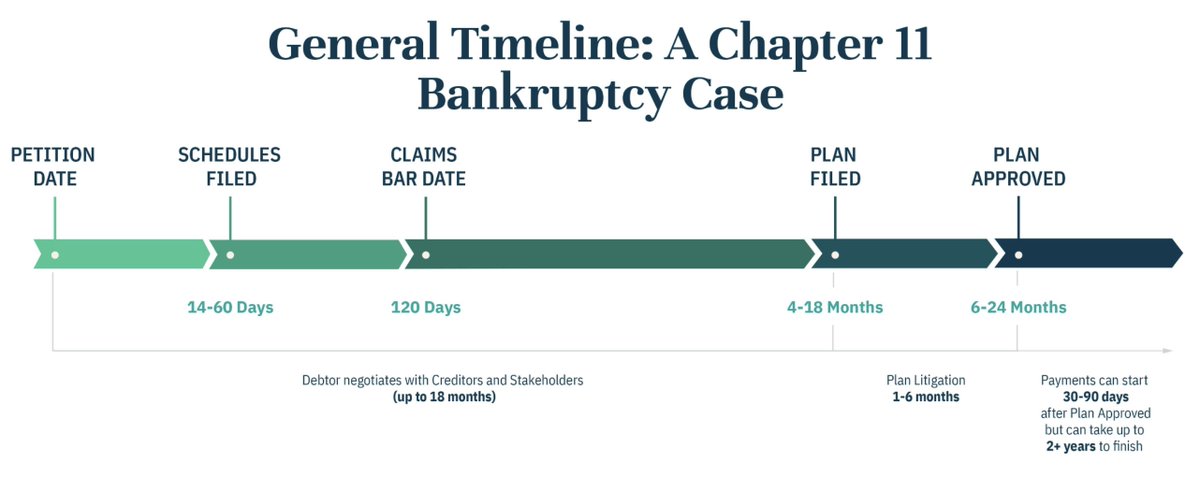
6/ Timeline to Get Money Back
Unfortunately, it takes a long time (6-24 months) to get one's money back following chapter 11.
Steps that need to happen:
- appointment of a trustee
- initial petition filing
- reorg plan filing
- voting on reorg plan
Timeline + Reorg Steps 👇
Unfortunately, it takes a long time (6-24 months) to get one's money back following chapter 11.
Steps that need to happen:
- appointment of a trustee
- initial petition filing
- reorg plan filing
- voting on reorg plan
Timeline + Reorg Steps 👇

7/ Pros & Cons of Chapter 11
Most companies first try to emerge from 11 alive.
If they fail, they resort to 7.
Pros:
- business can continue to operate during process
- possible 2nd chance
- creditors must stop harassing execs during "automatic stay" period
Cons:
- time
- cost
Most companies first try to emerge from 11 alive.
If they fail, they resort to 7.
Pros:
- business can continue to operate during process
- possible 2nd chance
- creditors must stop harassing execs during "automatic stay" period
Cons:
- time
- cost
8/ What happens to BlockFi, Voyager, LedgerX & all other FTX/Alameda investments?
FTX will try to sell them off, piecemeal, until customers are whole and interests are paid.
Theres a chance many portfolio companies will go for ~$0 since they were bailed out in the first place.
FTX will try to sell them off, piecemeal, until customers are whole and interests are paid.
Theres a chance many portfolio companies will go for ~$0 since they were bailed out in the first place.
Enron's bankruptcy process as a historical example shown below:
(all asset sale events highlighted in yellow)
(all asset sale events highlighted in yellow)

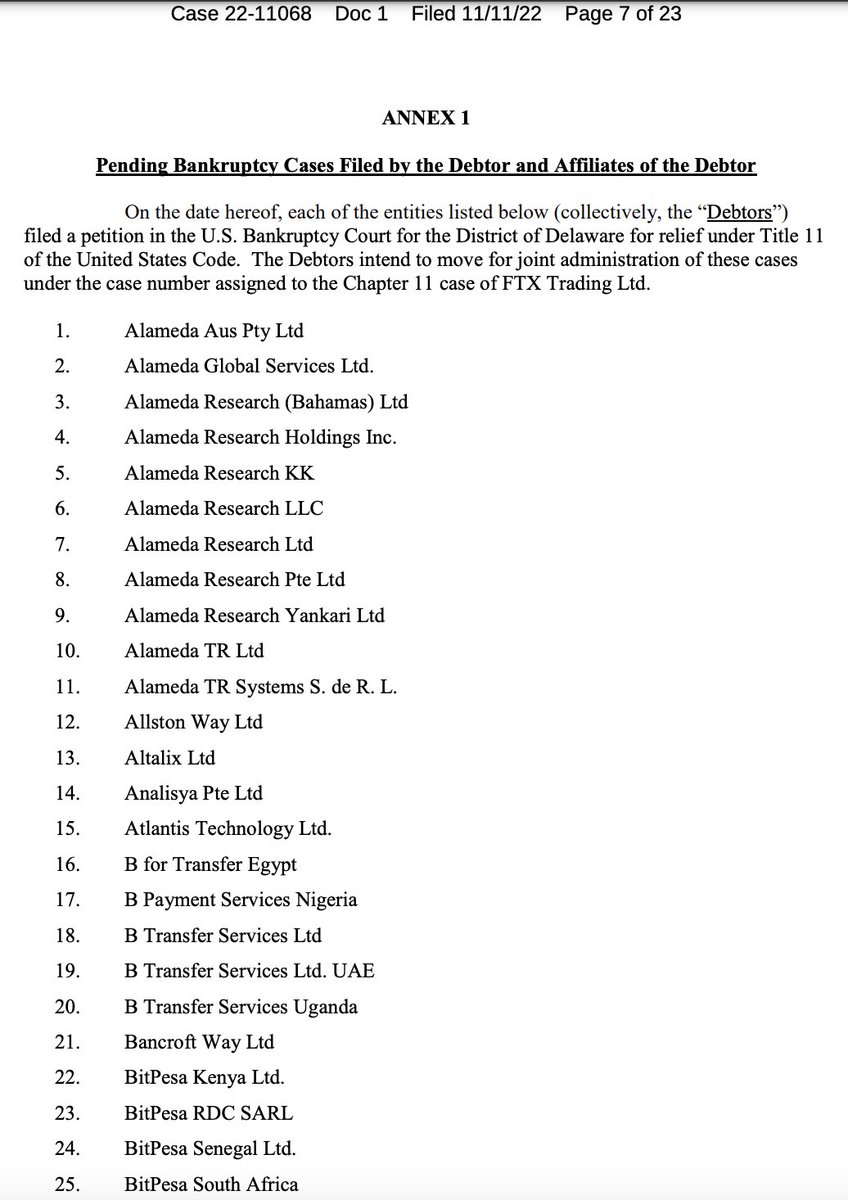
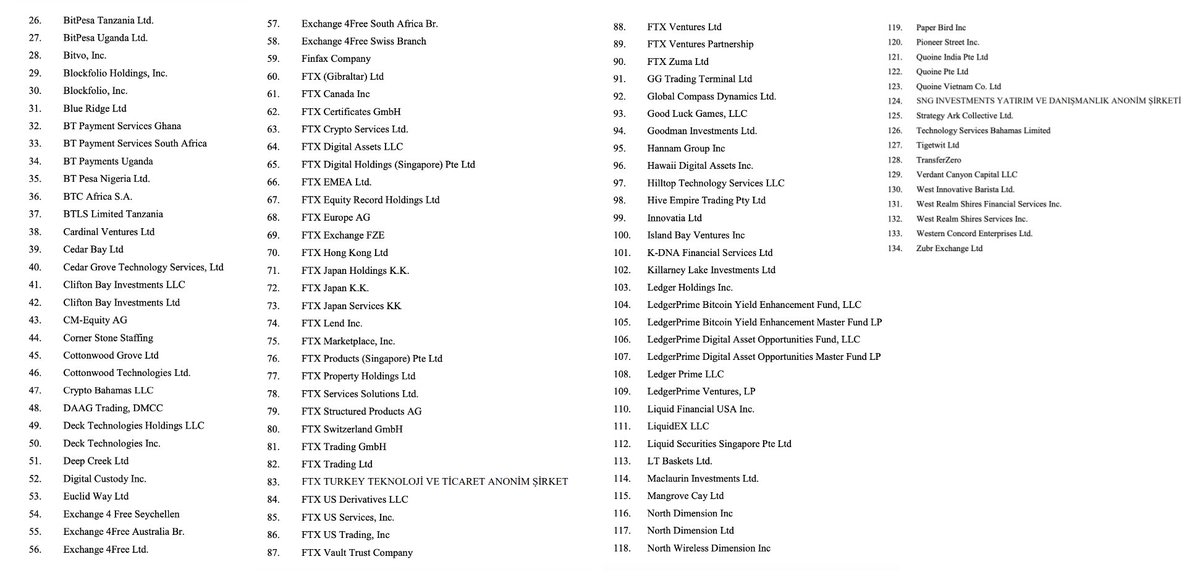
8/ FTX's Official Bankruptcy Filing
Finally, if u want to read the complete and unabridged FTX Chapter 11 Filing:
bit.ly/3TsXLE5
Notable points:
- JJ Ray 3 (the Enron turnaround guy! 😲) is now FTX trustee and new CEO
- In total 134 entities filed for bankruptcy!
Finally, if u want to read the complete and unabridged FTX Chapter 11 Filing:
bit.ly/3TsXLE5
Notable points:
- JJ Ray 3 (the Enron turnaround guy! 😲) is now FTX trustee and new CEO
- In total 134 entities filed for bankruptcy!
End/
FTX is not worth 0.
Most creditors can still get paid.
Sequoia wrote investments to 0 cuz it's an equity holder (i.e. bottom of totem pole, last to get paid)
Before reading every sensational headline at face value, try to understand:
- what chapter 11 means
- how it works
FTX is not worth 0.
Most creditors can still get paid.
Sequoia wrote investments to 0 cuz it's an equity holder (i.e. bottom of totem pole, last to get paid)
Before reading every sensational headline at face value, try to understand:
- what chapter 11 means
- how it works
• • •
Missing some Tweet in this thread? You can try to
force a refresh