The Kanye stuff caused me to read this book from 1995, here is a thread of some parts I found interesting:
amazon.com/Jewish-Power-I…
amazon.com/Jewish-Power-I…
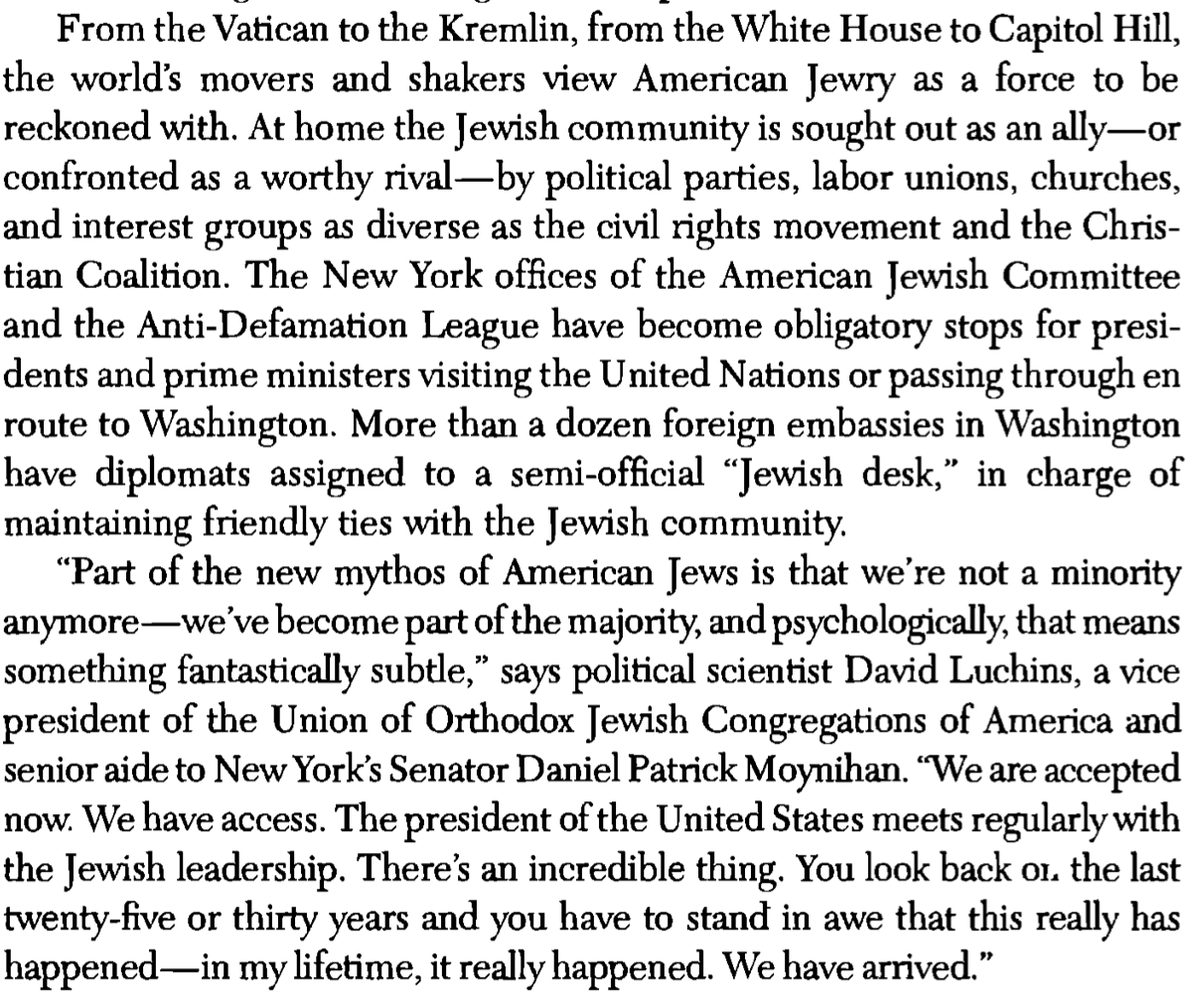
Many embassies have a desk for maintaining a positive relationship with American Jews 
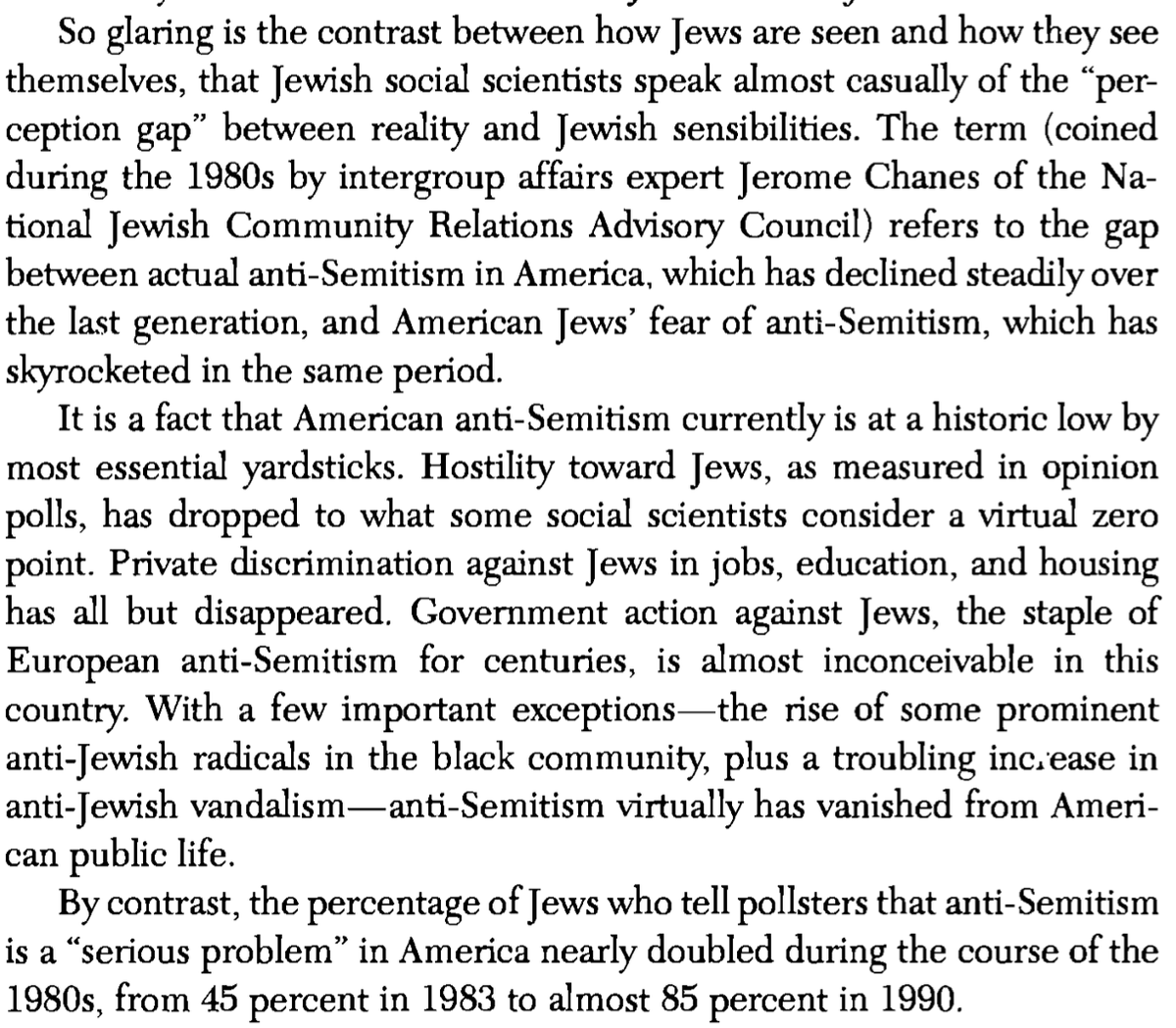
As anti-semitism declined, Jews became more paranoid
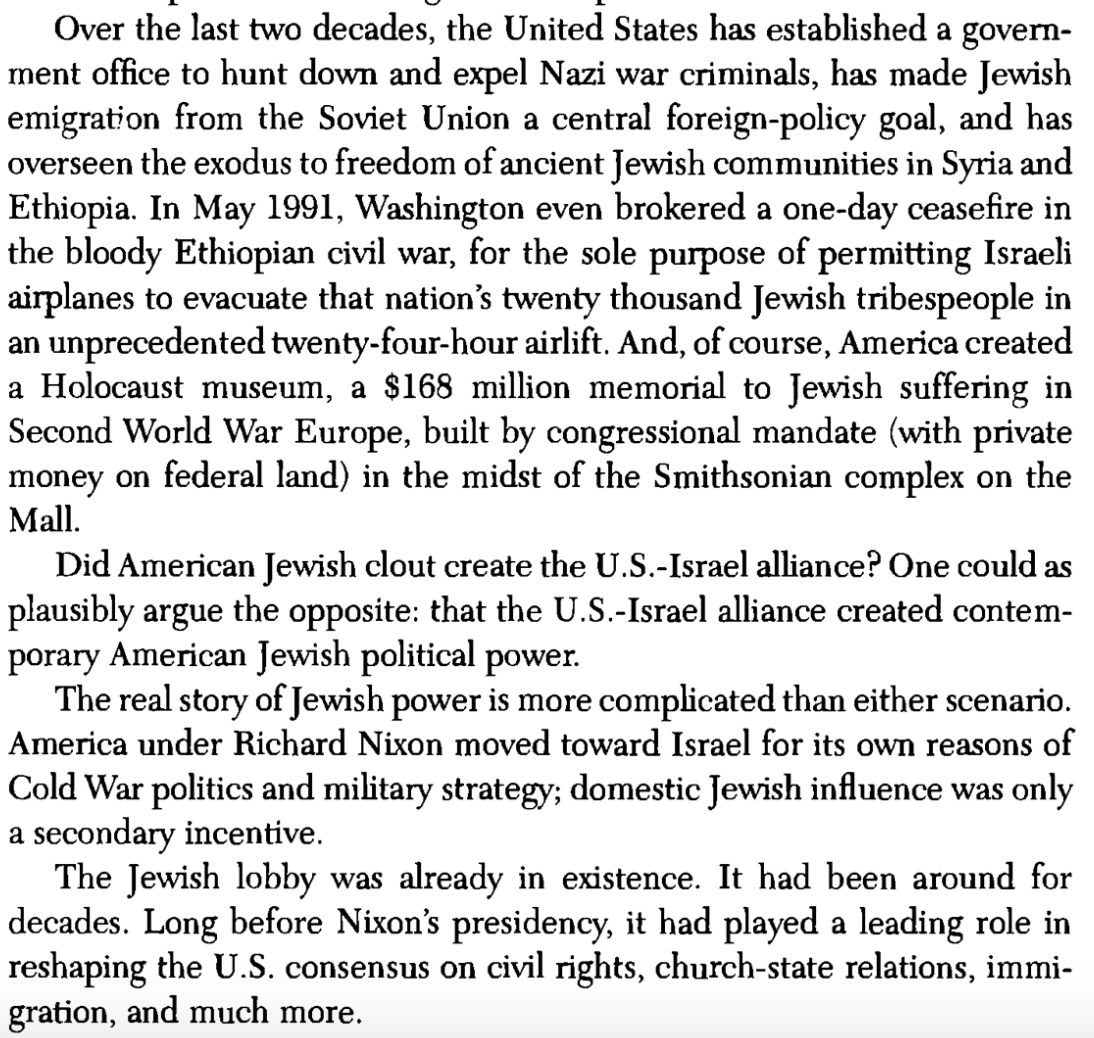
Summary of the Jewish lobby and its role in America:
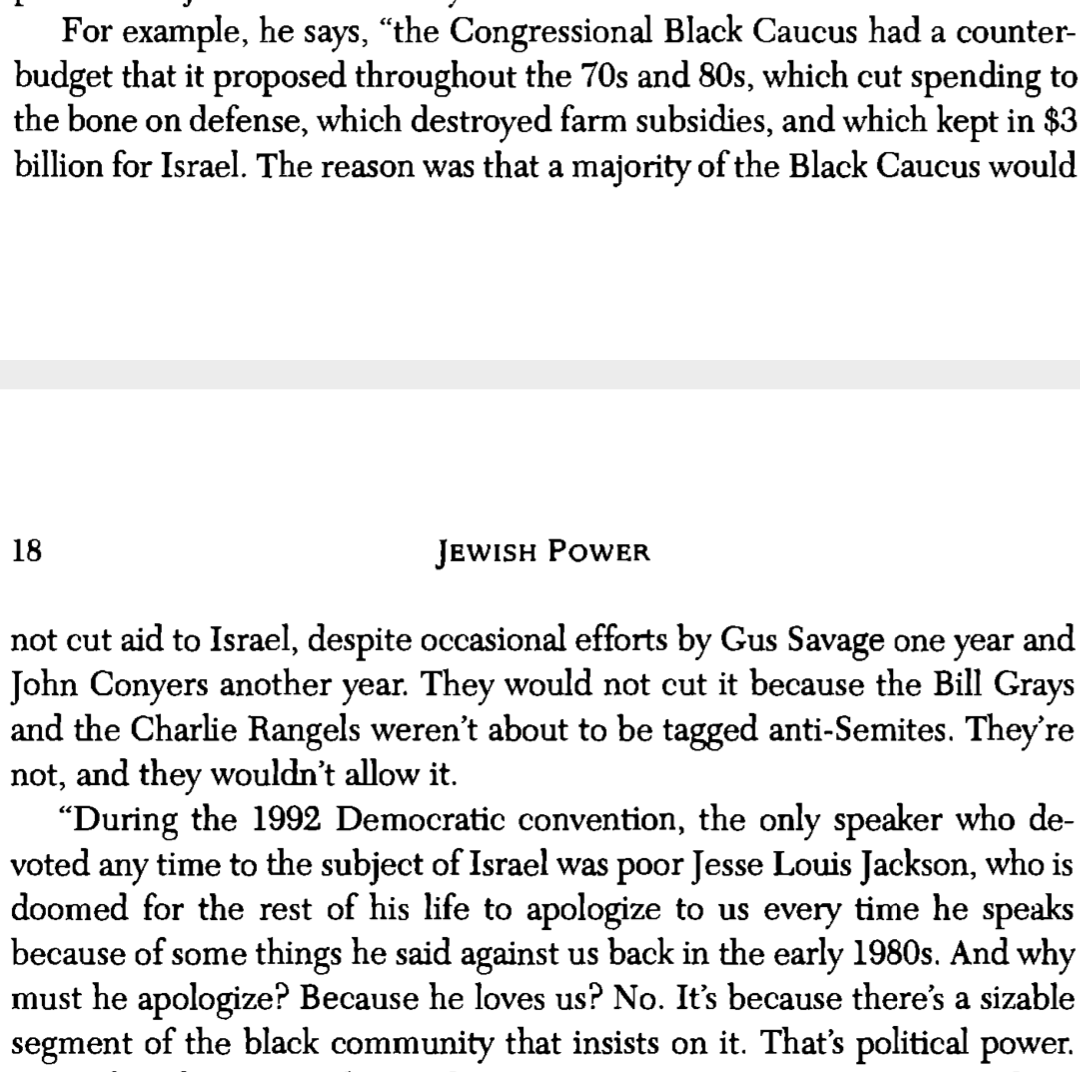
CBC didn't want to cut aid to Israel to avoid being seen as "anti-Semitic"
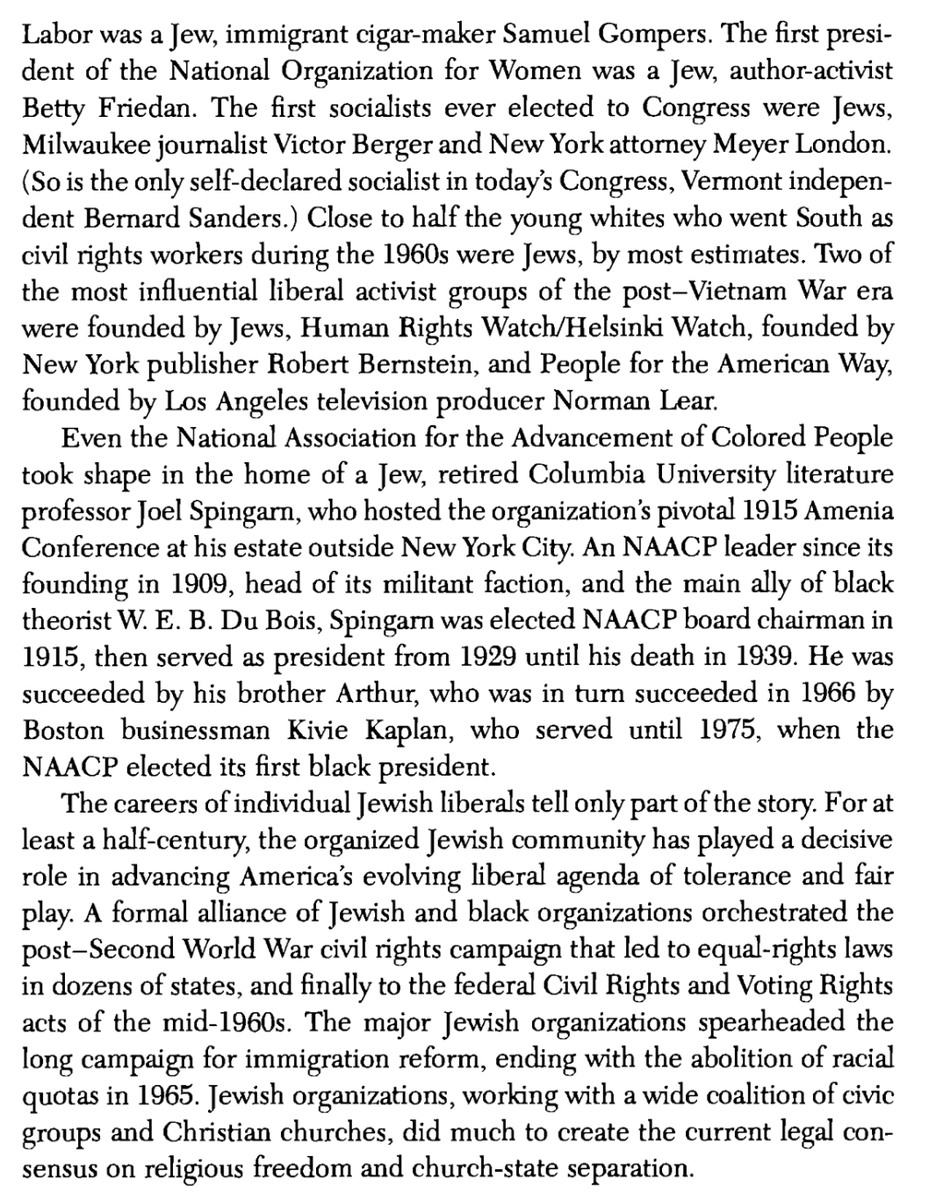
Passage on Jewish role in the left:
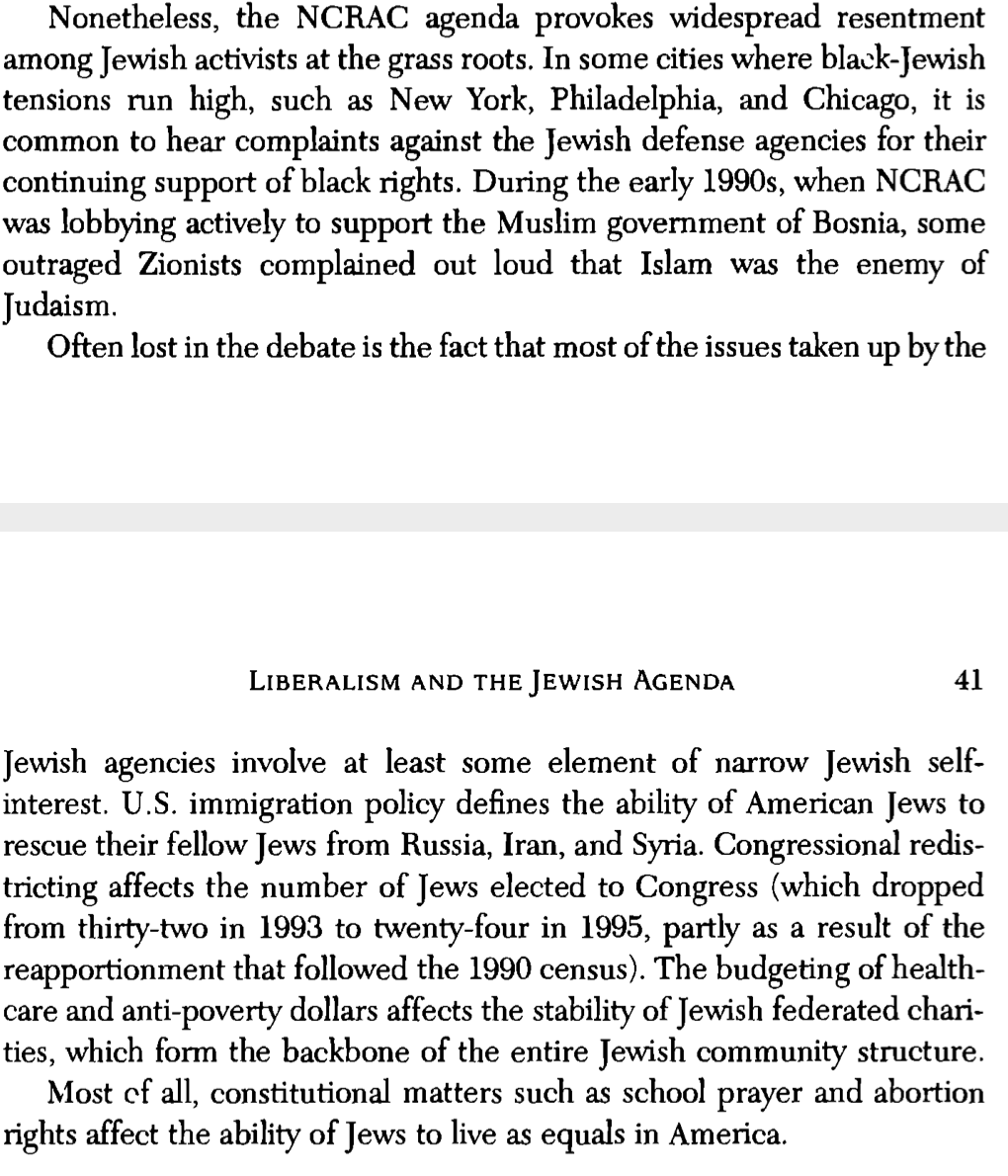
Talks about the NCRAC (now JCPA) and their interest in politics:
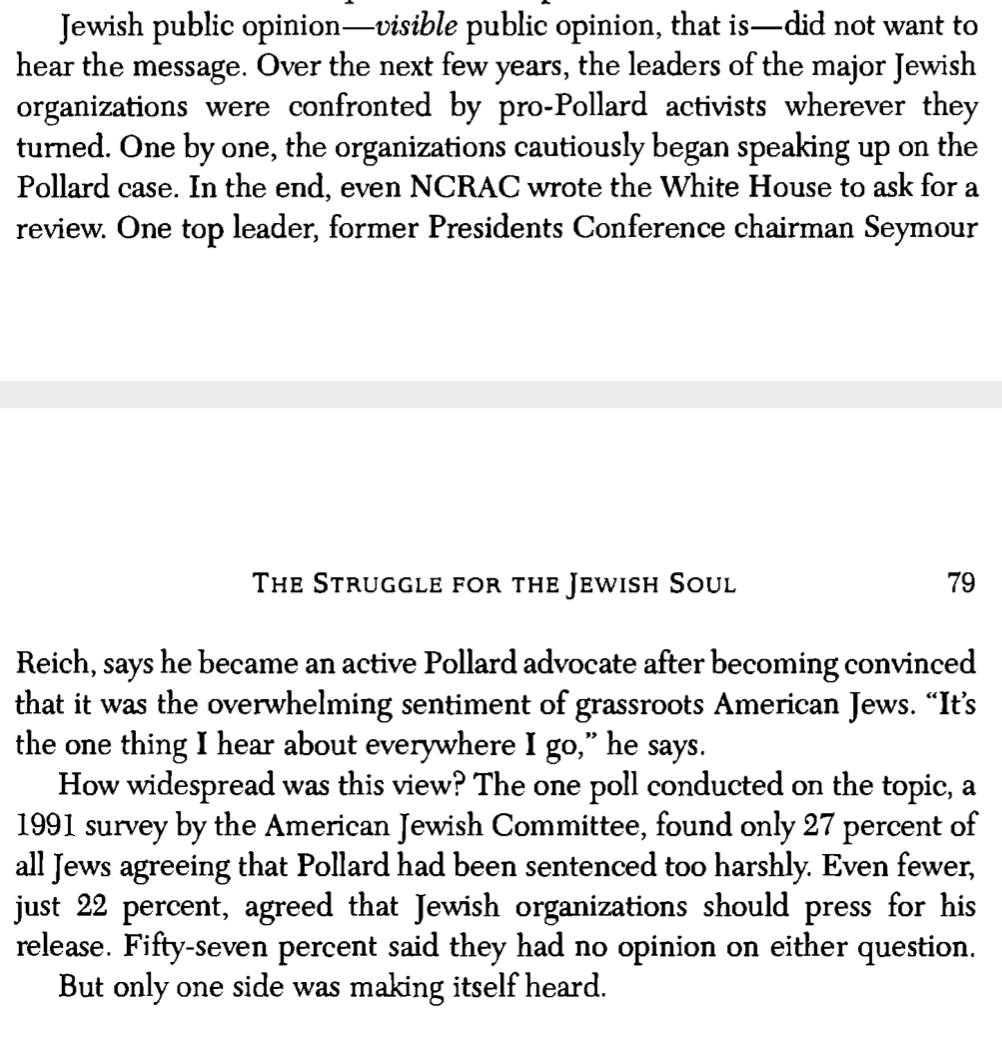
Jewish opinion on the pollard case:
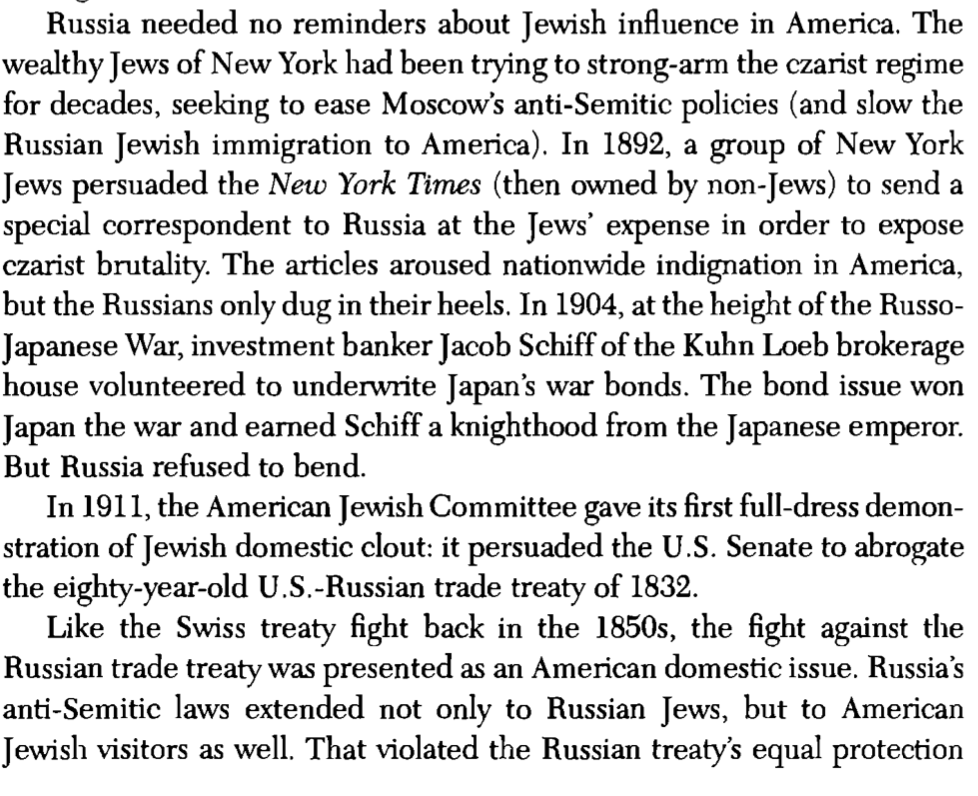
With the abrogation of a treaty with Russia in 1911, Jewish power started flexing its might
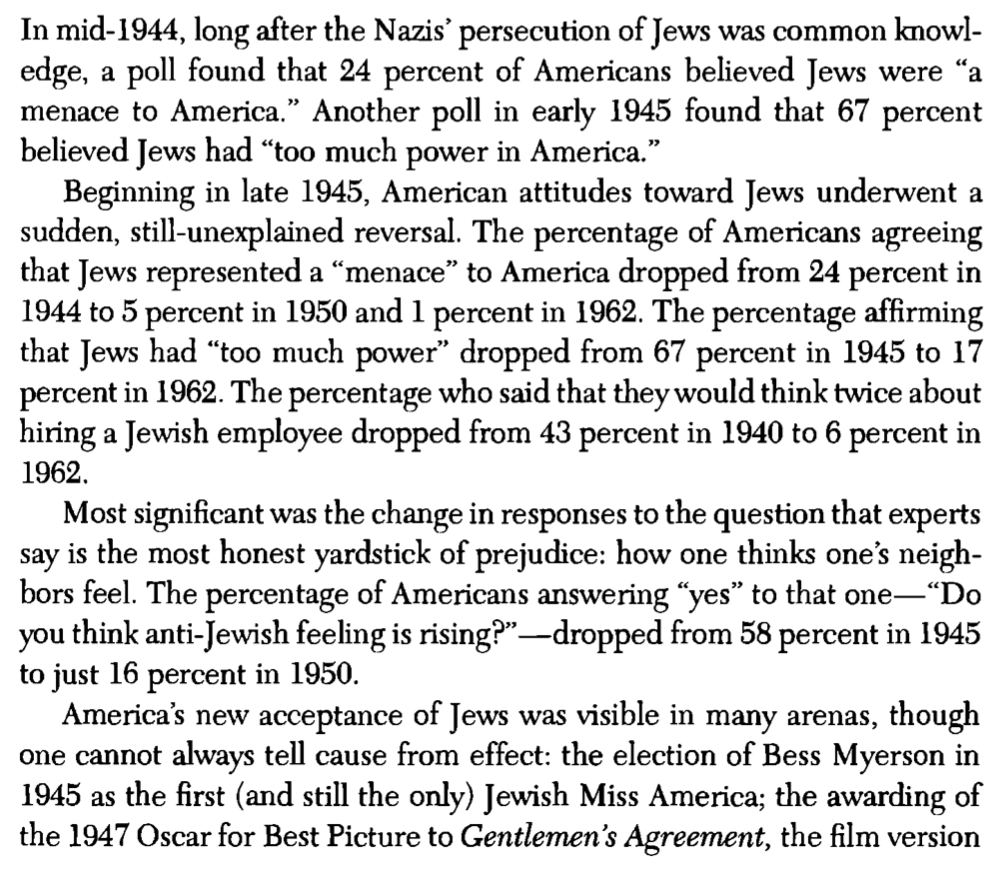
After the war, anti-semitism declined pretty rapidly, and the reasons why aren't exactly clear.
Seemingly McCarthy went out of his way to avoid accusations of anti-semitism
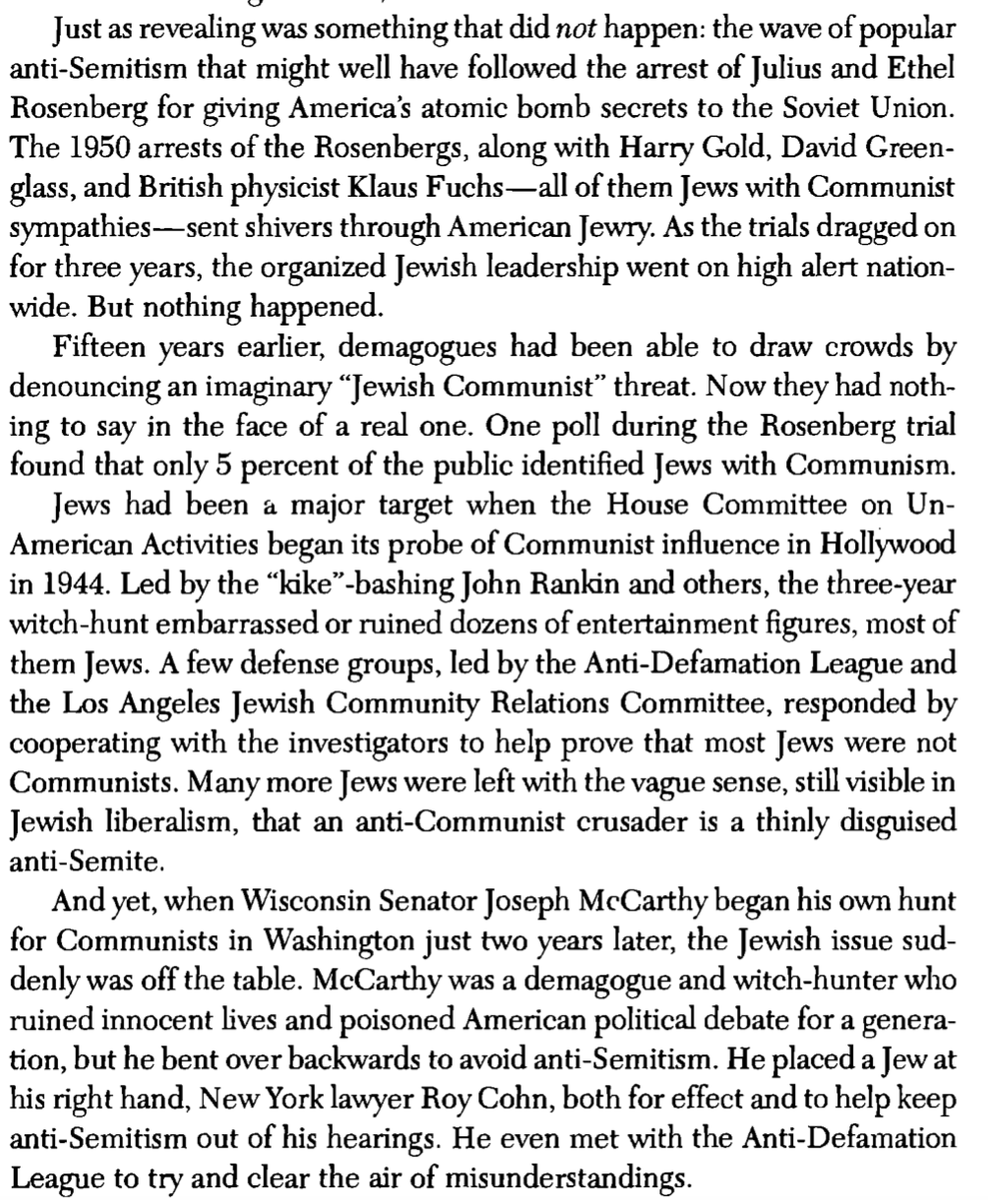
After the war, the organized Jewish community launched a legal campaign to eliminate discrimination
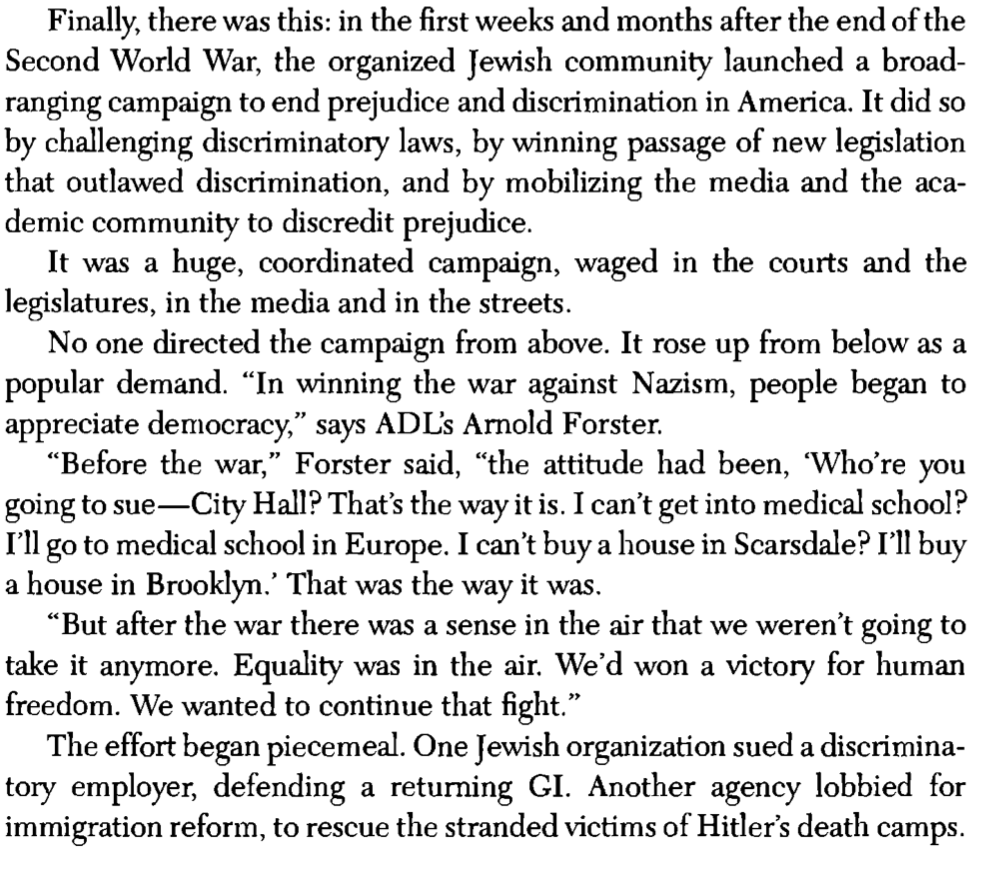
Describes the campaign in greater detail:

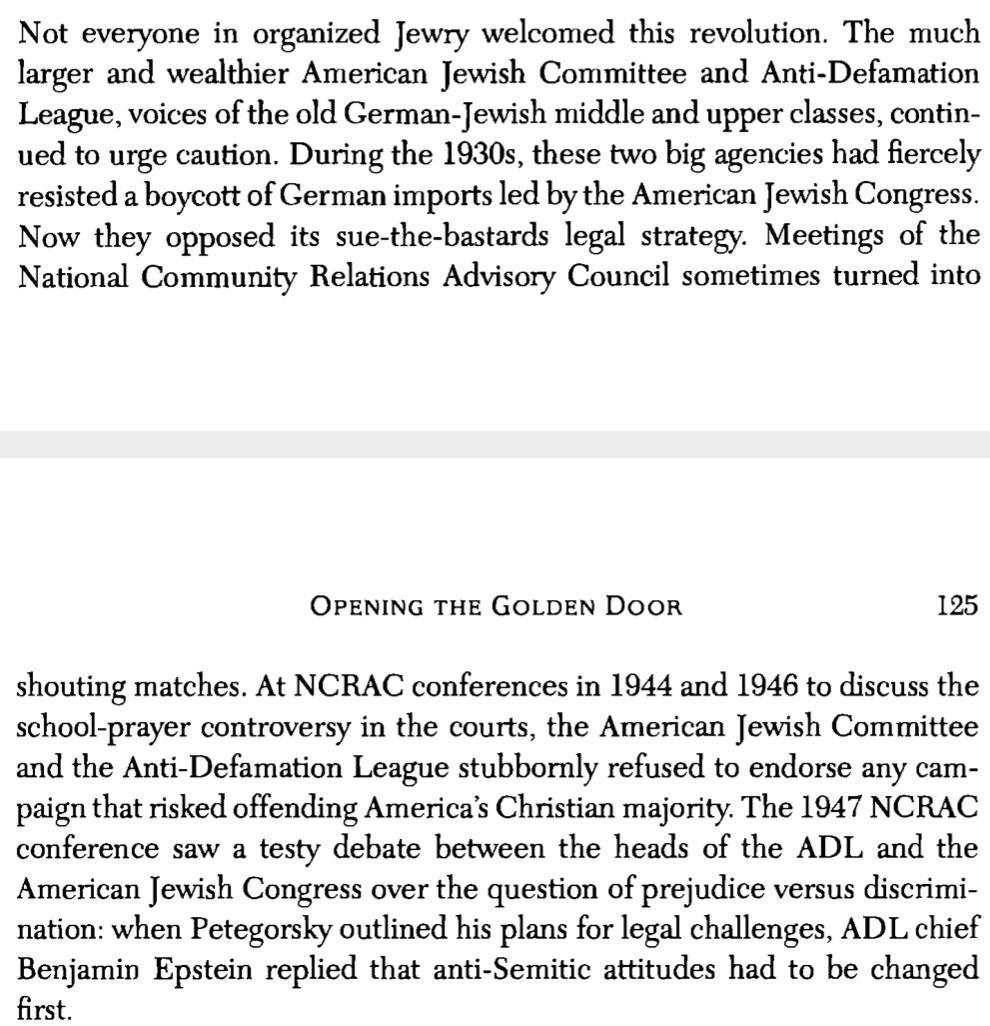
Seemingly the ADL was more skeptical of this type of campaigning:
The AJC worked to fund the research of the Frankfurt school:
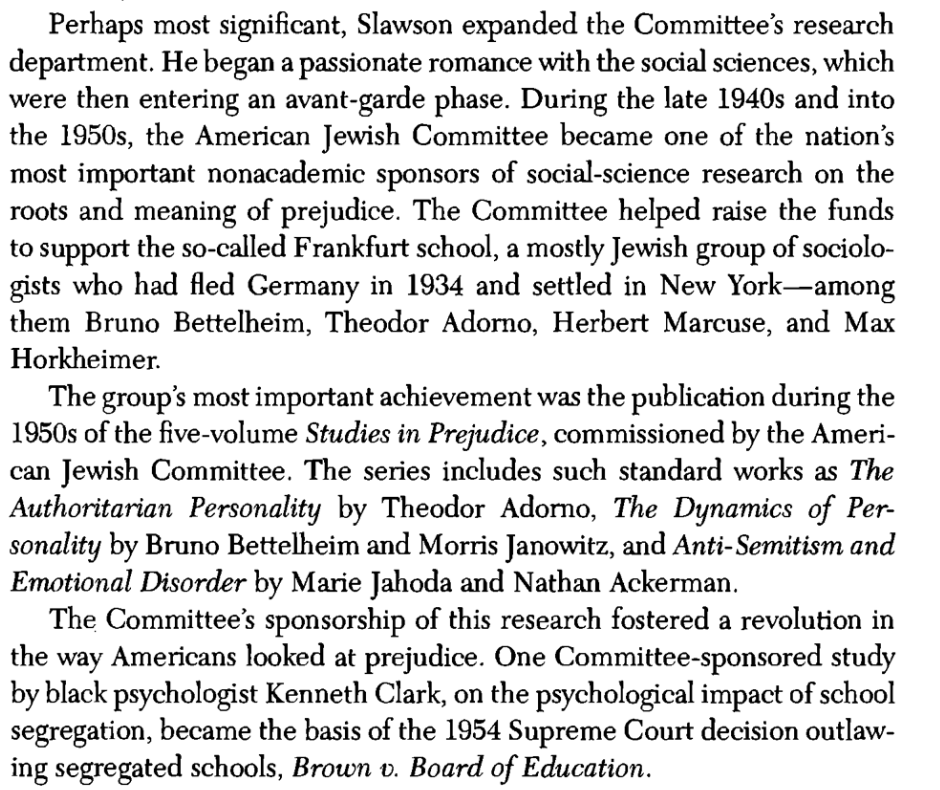
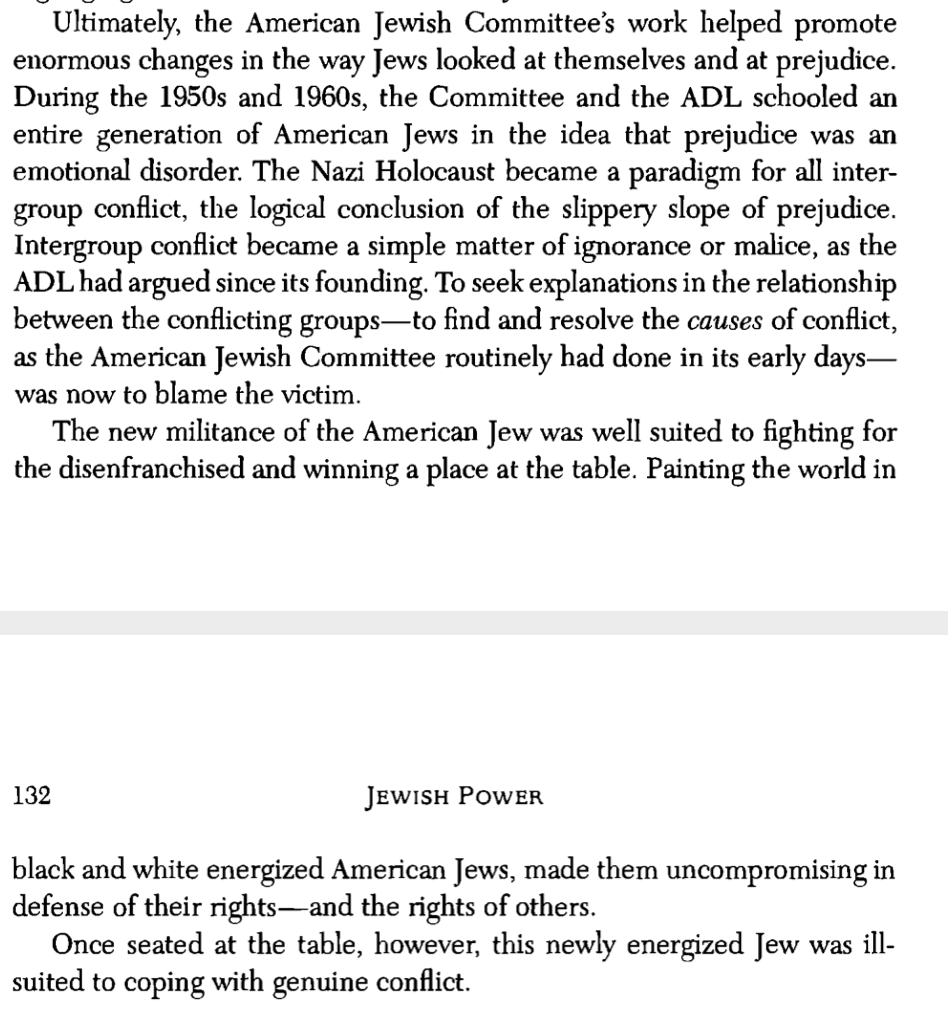
Increasingly, prejudice was seen as black and white, and to try to look at the causes was to blame the victim.
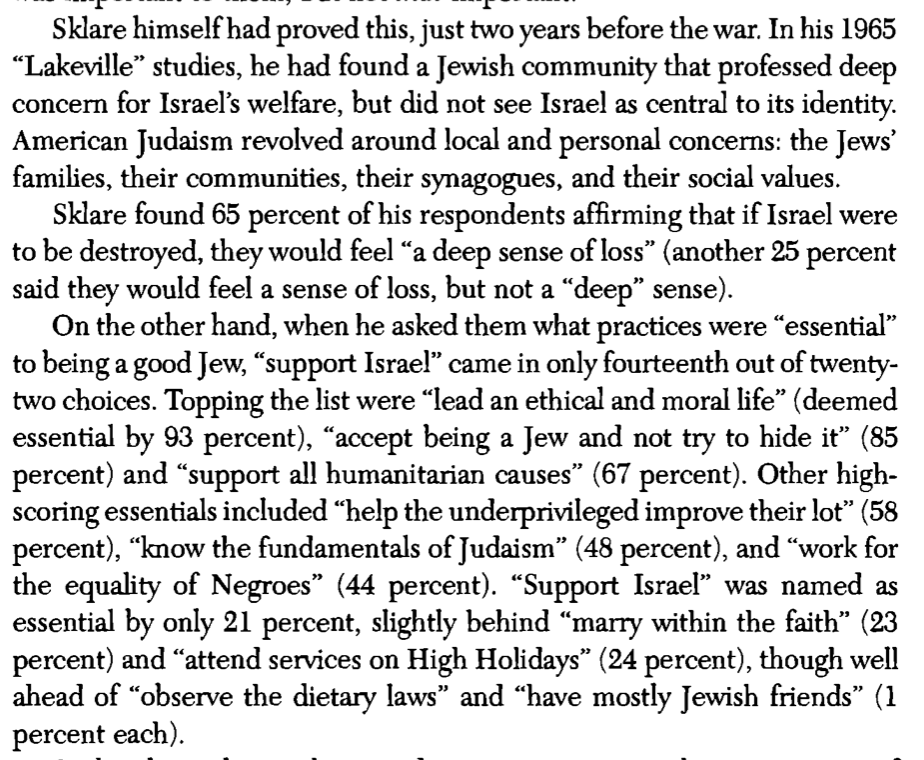
One researcher found 44% of respondents in the community he was surveying say that working for the equality of blacks was an essential part of being a good Jew:
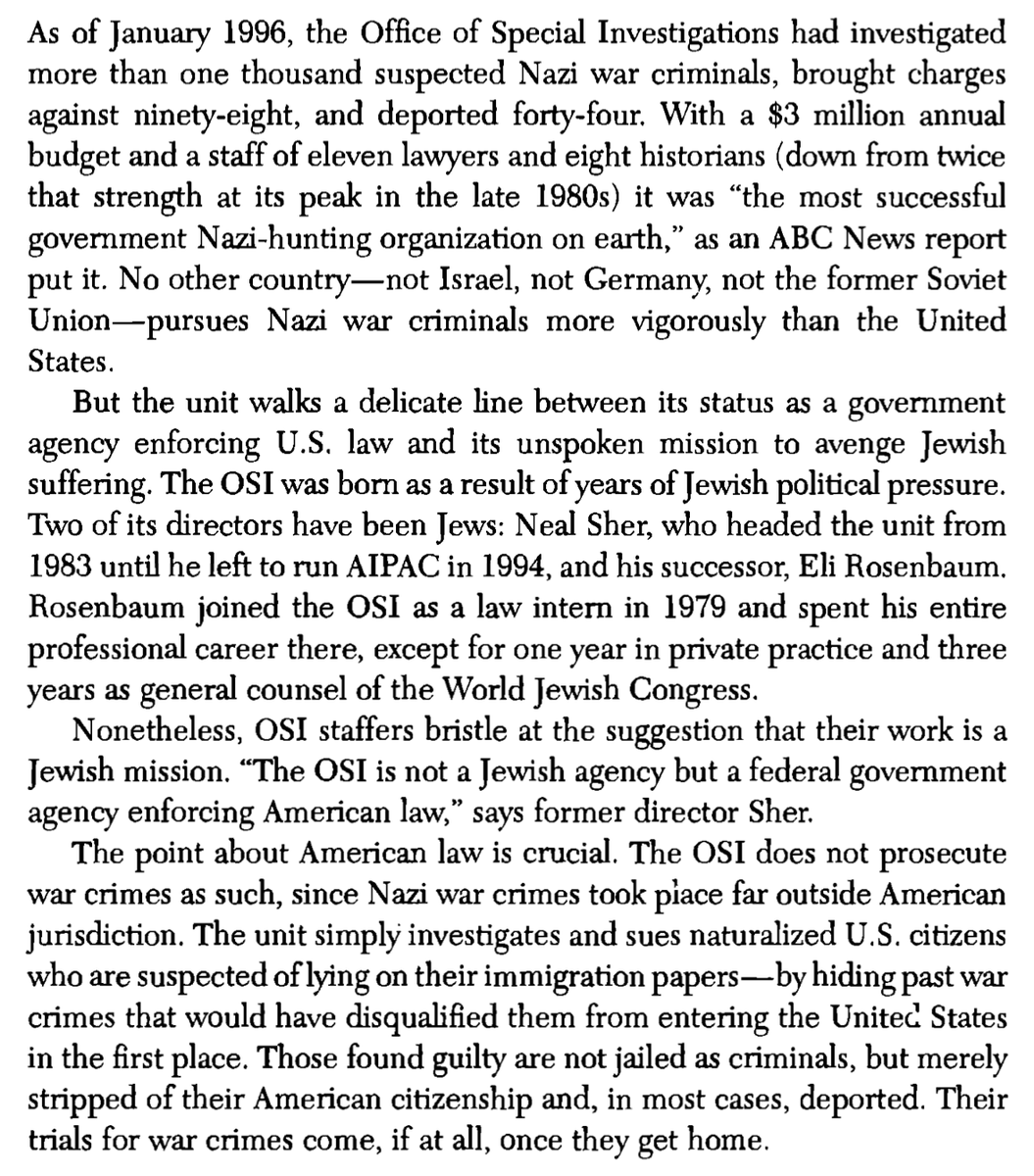
Passage on the Office of special investigation for Nazi War crimes:
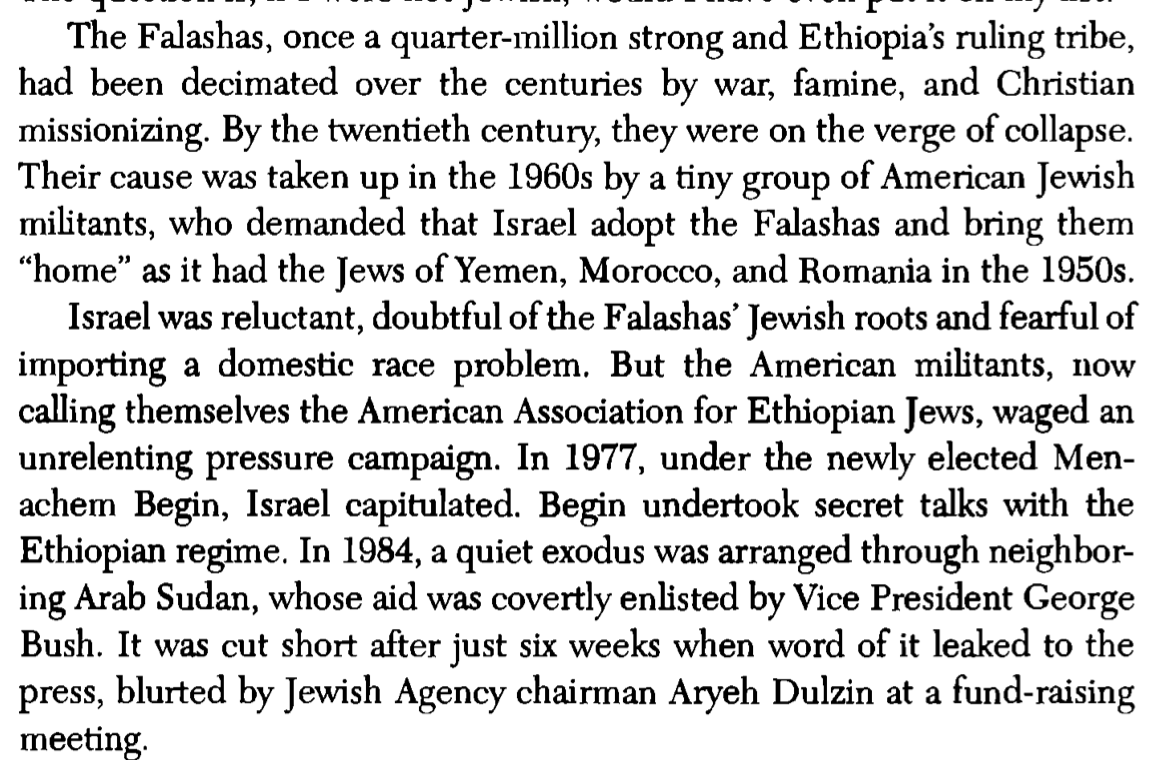
Israel was reluctant to accept Ethiopian Jews, because they didn't want to import a race problem.
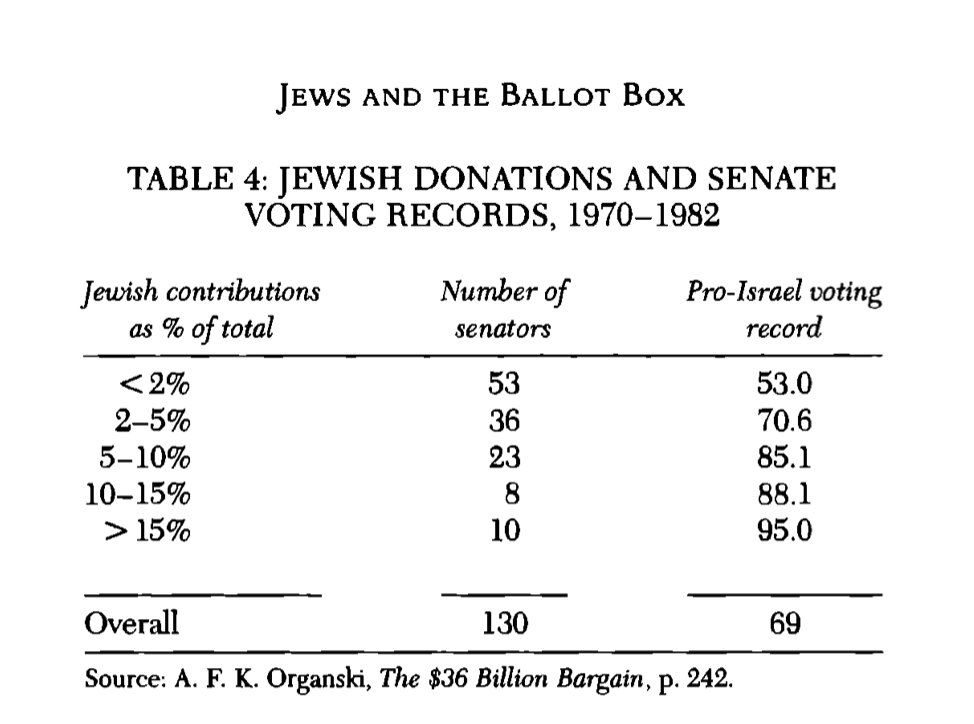
Seemingly, the more money for Jews a candidate got, the more likely they were to support pro-Israel causes.
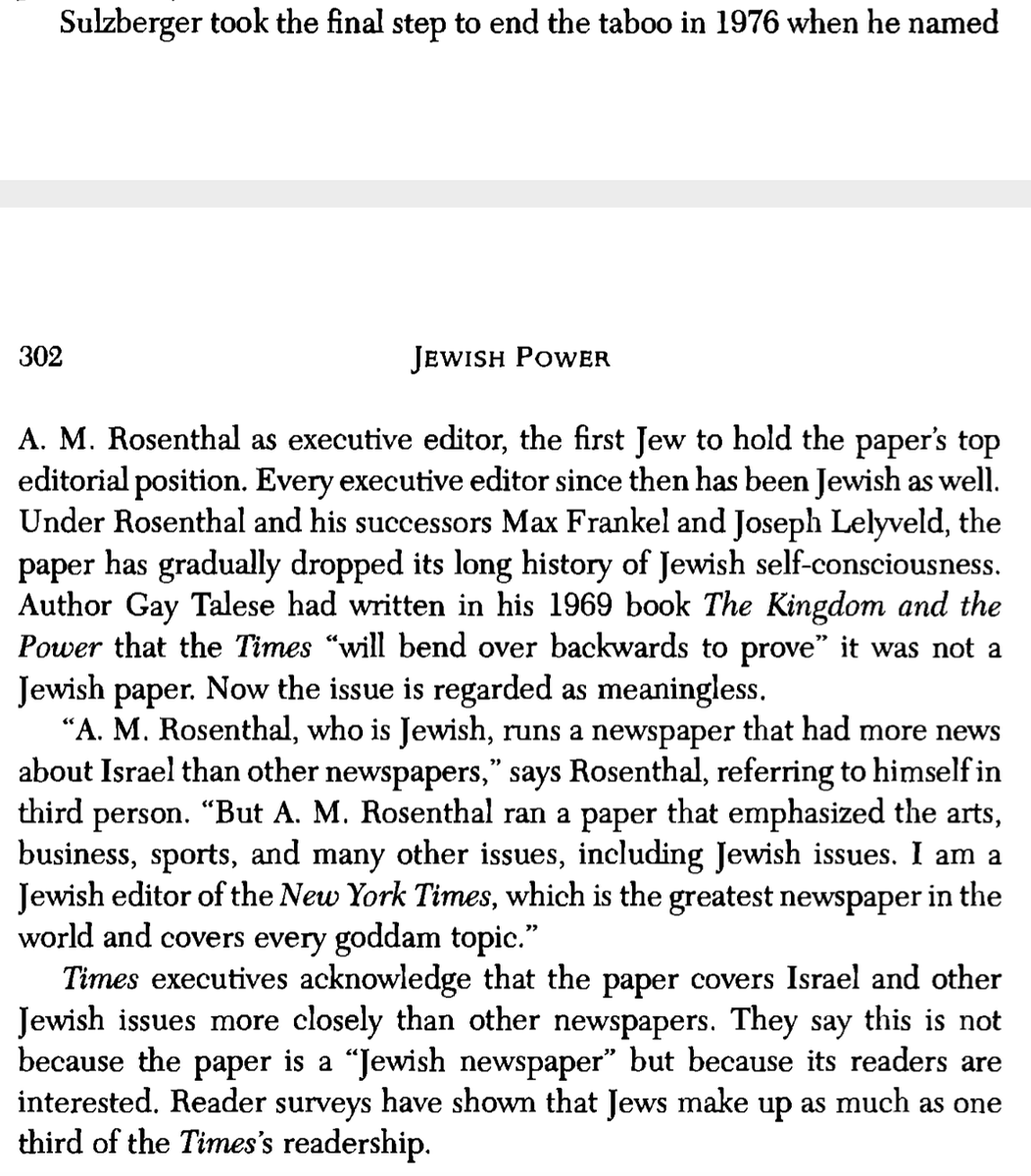
There was a taboo on having a Jewish executive editor at the NYT until 1976. Since then until the book was written in 1995 was Jewish, every EE was Jewish. Estimated 1/3 of the readers of the NYT were Jewish
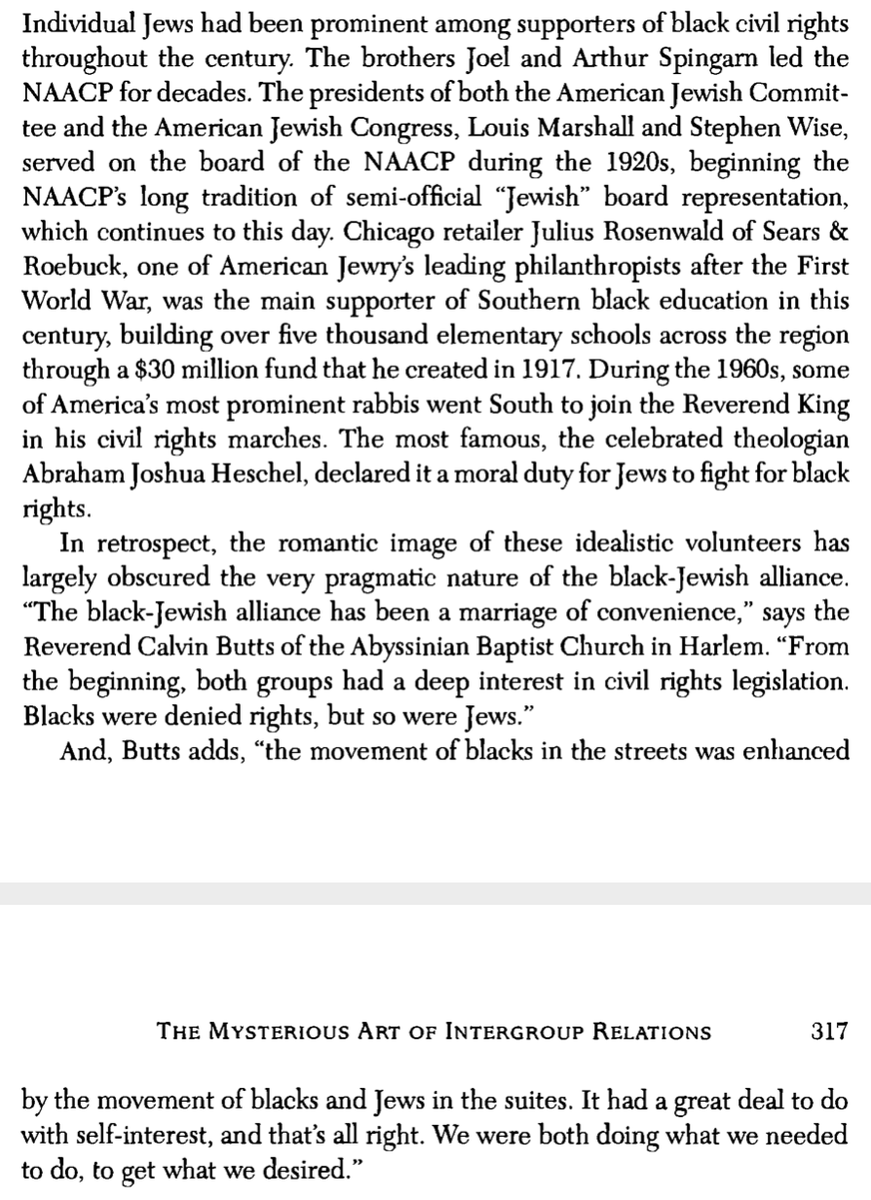
passage on the black Jewish relationship:
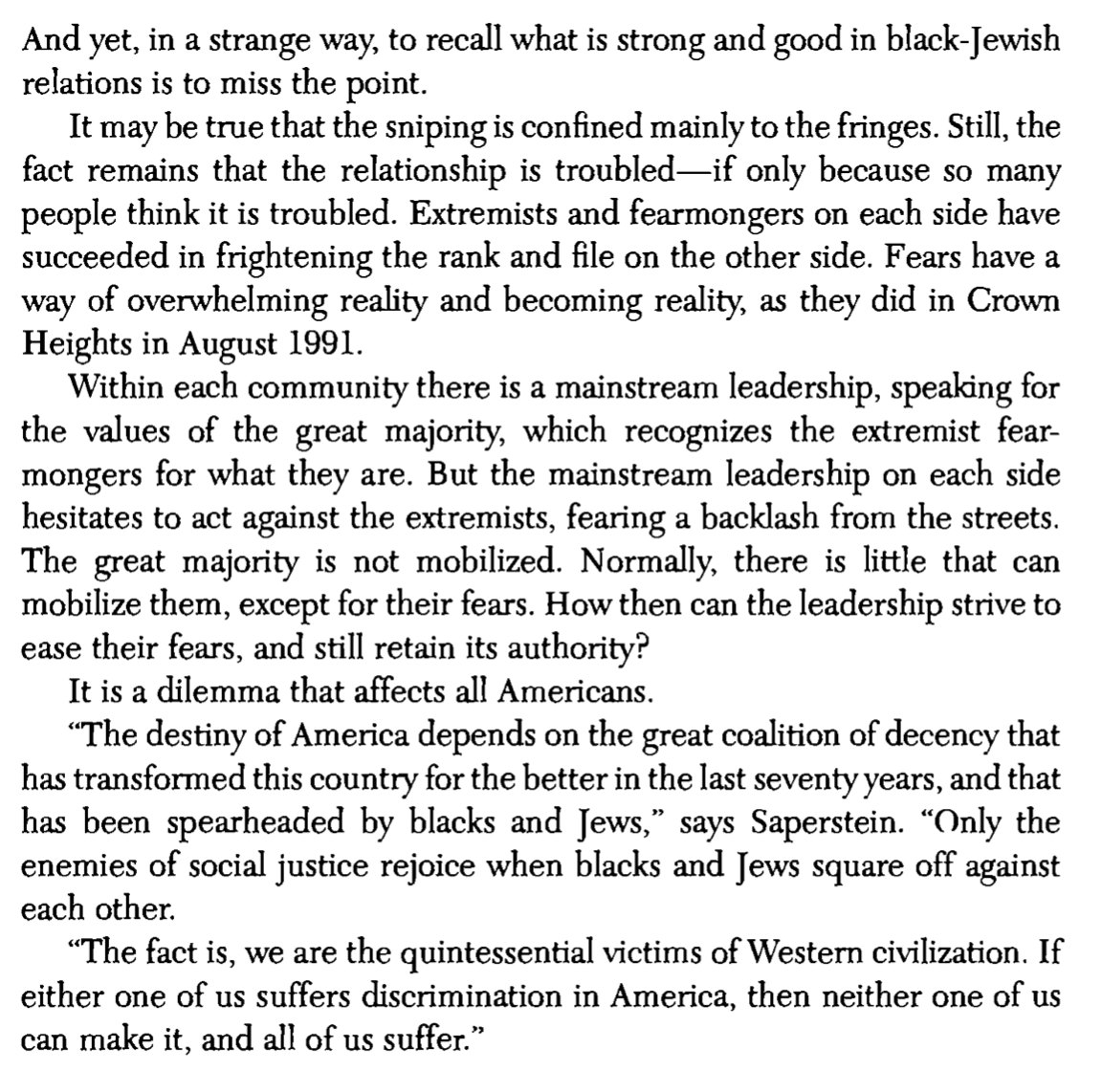
"Only the enemies of social justice rejoice when Black and Jews square off against each other. The fact is we are the quintessential victims of Western Civilization"
• • •
Missing some Tweet in this thread? You can try to
force a refresh