So many arguments about what's wrong with medicine today are predicated on imagined (and inaccurate) histories. Let's take some examples from my colleagues who imagine a "golden" age of the exam:
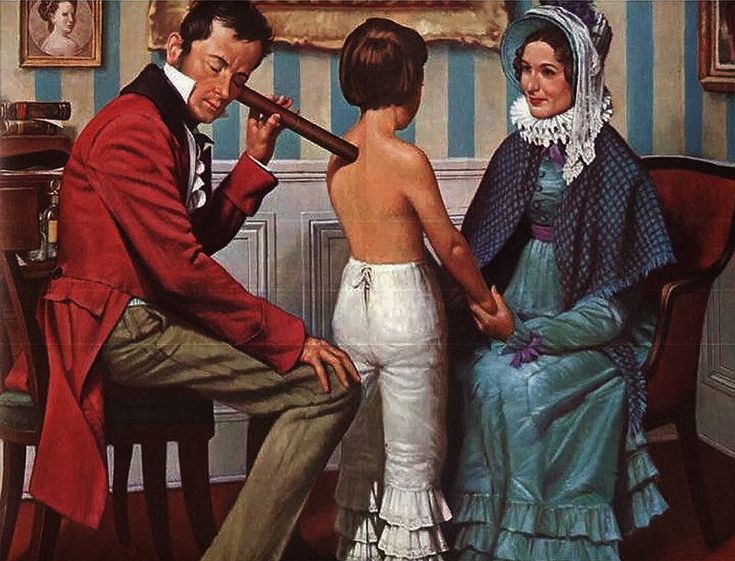
The physical exam is barely older than modern diagnostic tests. For example, the neurological exam was developed in the 1890s, the same time as the x-ray. We were ALREADY performing blood spears and gram stains and checking hematocrits when the neurological exam was developed.
Nineteenth century physicians didn't even see a difference between performing an exam and other tests; they were all the same to them! There's wonderful language describing increased white blood cells on a smear in the same way you describe exam findings!
Patients who presented in the wards of the "greats" had end stage tuberculosis, lung cancer, and horrible consolidative pneumonias. If you read descriptions of patients from, say, Laennec -- no wonder you could hear wonderful rales -- half their lung was scarred down with TB!
Physicians did not perform exams on their hospitalized patients every day -- they didn't even see them everyday! Yes, even William Osler, though he did lavish attention on his wealthy patients who paid him 10s of thousands of dollars in today's money.
And historically, the physical exam has NOT been a way to connect with patients -- in fact, there's historiography suggesting that its use was the ERASE the importance of the patient's perspective in their own disease (pubmed.ncbi.nlm.nih.gov/19433521/)
The "ancient" and "sacred" exam that we imagine Hippocrates, Avicenna, Vesalius, Laennec, and Osler all performed lovingly on their patients before us moderns got distracted by alienating technology NEVER EXISTED. It's a 20th century nostalgia, not based on historiography
And to all the trainees out there -- be very skeptical when anyone makes arguments about "the good old days," including the exam.
The reason that we do ANYTHING in medicine needs to be based on reasoning based on the medical conditions and realities of today -- and not imagined histories of the past.
I also wrote a thread of reading recommendations if you want to explore this historiography (and perspective) more for yourself:
Since my thread on the historicity of the exam can gained some traction, here's a reading list if you're interested in gaining perspective on the nature of clinical reasoning -- rather than "just so" stories about imagined halcyon pasts (the era of "the Giants")
"What does curiosity have to do with the humanistic practice of medicine? Couldn’t it just convert
patients into objects of analysis? I believe that it is
curiosity that converts strangers
(the objects of analysis) into people we can empathize with."
Faith implicitly groks that our "scientific" interest in patients (the Foucauldian "clinical gaze") takes something AWAY from that human relationship. Curiosity might inculcate us.
I want to keep highlighting some of the amazing speakers we have at the @iMedEducation#DigitalEducation2022 conference, held virtually on October 7th, and in person in Boston on October 8th!
Everyone has a professional or educational message that we want to get out to the world.
@AshleyGWinter is an expert at education and advocacy for sexual health and sexual medicine. She is going to be sharing her insights about this journey for all of us!
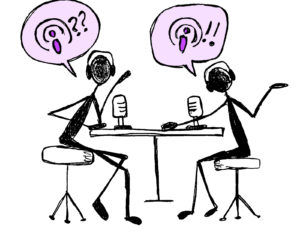
We listened to (and coded) the top 100 podcasts on the Apple podcasts US medicine chart to find out!
A 🧵⬇️
There were 2⃣ inspirations for this study.
@ShreyaTrivediMD and I at @iMedEducation think that what makes digital education unique from eg an uploaded lecture on YouTube is that that it is produced as part of a virtual community of practice and not traditional institutions.
So we had a hypothesis: the most popular medical podcasts would *not* be produced by medical schools, residency programs, or other large institutions, but rather by individuals (or separate companies/nonprofits).
Almost exactly a year ago, I had a modestly controversial tweet about routine daily physical exams -- and about how we should probably spend more time actually talking to our patients daily rather than pretending to examine then.
1⃣: the exam was historically developed as a DIAGNOSTIC test. And it remains an incredibly great diagnostic test in many instances, with innumerable examples validated through both physician experience, and more recently epidemiological studies (think McGee and Rat Clin Exam)
My (preaching to the choir) 🔥 take: digital educational skills -- whether teaching on #MedTwitter, podcasting, or making videos -- are essential #meded skills for the 21st century. And we can teach these to future educators.
✅A listener of @BedsideRounds?
✅A medical student at a US or Canadian medical school?
✅Interested in medical history, philosophy, and epistemology?
And then question 2:
✅Do you want to collaborate on a research project?
If so, 🧵⬇️
First, some details! Over the past six years, I've made a lot of podcasts (some of them better than others), and I know they're being used for teaching at medical schools across the country.
The subjects that I cover -- history, epistemology, diagnostic reasoning, philosophy -- are generally not part of medical school curricula, or are only briefly touched (though there are amazing electives).