

🚨 JMP alert 🚨 #EconTwitter
👉 Fractionalization along dimensions like ethnicity or class can undermine economic performance.
❓How does fractionalization affect social groups’ abilities to respond to economic shocks?
I study this question in the context of 70s Korea.
👉 Fractionalization along dimensions like ethnicity or class can undermine economic performance.
❓How does fractionalization affect social groups’ abilities to respond to economic shocks?
I study this question in the context of 70s Korea.
Why study Korea?
1) The unique Korean social context isolates one dimension of fractionalization: the density of family clans that shared the same parental lineage.
2) Korea's structural transformation in the 70s saw a 60% growth in agricultural output per household.
1) The unique Korean social context isolates one dimension of fractionalization: the density of family clans that shared the same parental lineage.
2) Korea's structural transformation in the 70s saw a 60% growth in agricultural output per household.
I combine the cross-sectional variation created by family clan density with the time variation in market access created by the construction of a new bridge, the Namhae bridge, in 1973. 

Using data from newly digitized historical documents, I find that less fractionalized villages experienced 30% faster agricultural productivity growth, driven by...
1) technology adoption and
2) complementary investments in public goods
But, why was this possible?
1) technology adoption and
2) complementary investments in public goods
But, why was this possible?
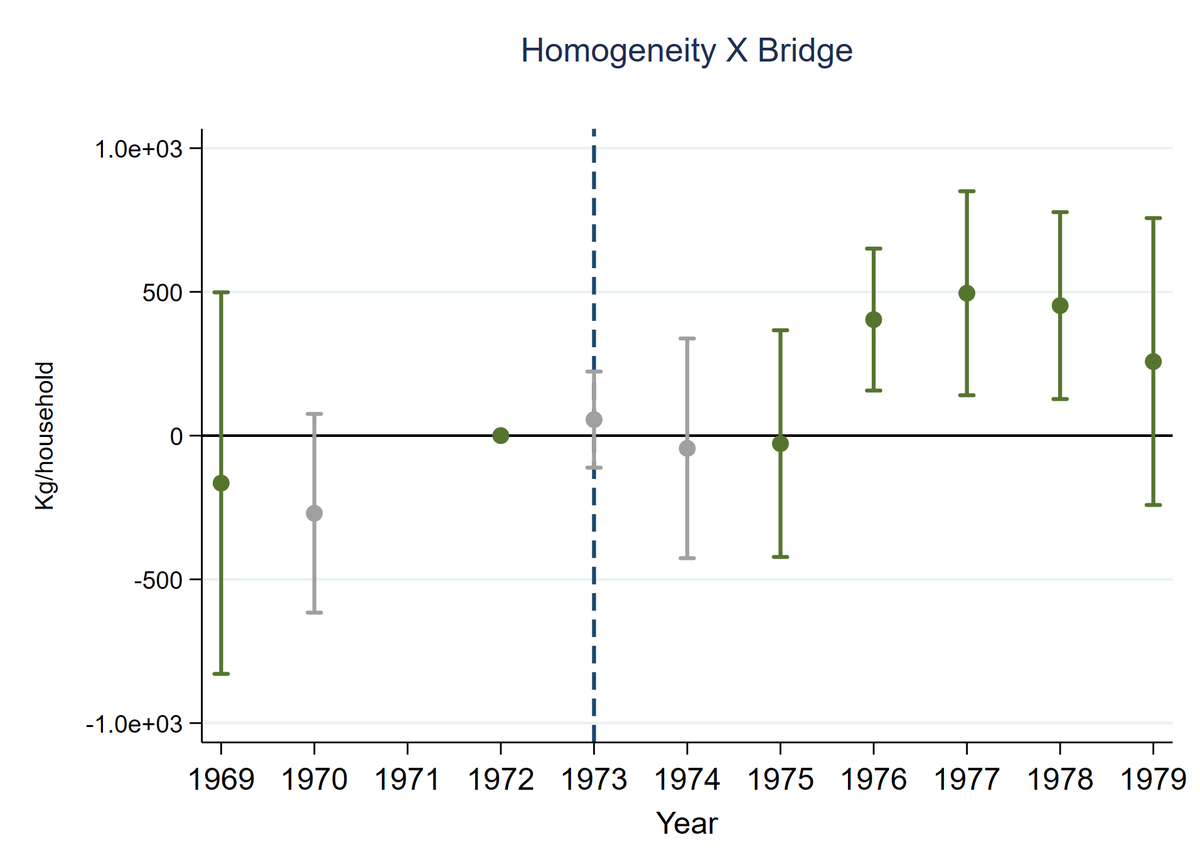
I find suggestive evidence that they have a more cohesive society--shown in the number of village meetings, the number of participants in the meetings, and village projects.
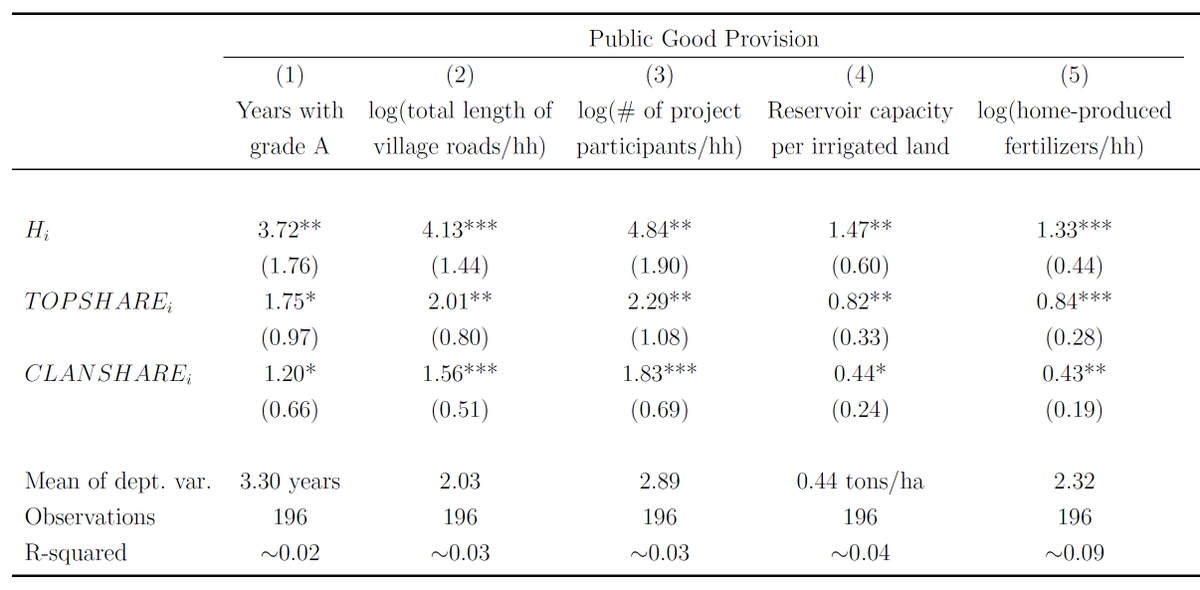
The results suggest that social fractionalization influences local-level responses to new economic opportunities and policies.
These results also help explain the success of Korea’s rural development.
Thanks for reading!
Full paper available at: bookangseol.com
These results also help explain the success of Korea’s rural development.
Thanks for reading!
Full paper available at: bookangseol.com
• • •
Missing some Tweet in this thread? You can try to
force a refresh




