1/ Three yurts are to be sent from the Russian republic of Buryatia to protect Buryat soldiers fighting in Ukraine from HIMARS attacks. Shamans will use them to restore the souls of shell-shocked soldiers and to obtain assistance from the spirits of ancient Hun warriors. ⬇️
2/ A Buryatian civil society organisation, the Fund for the Revival of the Historical Heritage (known as the "Hun Fund") is sponsoring the initiative to provide yurts for soldiers to undergo shamanic rites and restore their morale.
3/ Hun Fund chairman Oleg Bulutov (on the left here) says that "Only shamans can, for example, return the soul. It happens that a person is frightened, hit by an explosion or something else. Shamans have the ability to quickly restore a person.
4/ Or if you are injured, have a concussion, then baryashins ("bone-setters") can promptly help on the spot - correct the spine or do something else."
5/ According to the group's spokesman Erdem Taphaev, "If a person does not have a soul, he is lost, he is dangerous to everyone, because he has a weapon in his hands.
6/ With the help of rituals, [the soldier's] soul will be returned, and then as a fighting unit he will be fully operational. It's primarily spiritual help."
7/ The yurts are also intended to attract the spirits of ancient Hunnish warriors to help their descendants fighting in Ukraine. Bulatov says: "When a ceremony is held, the Hun warriors, they come there ...
8/ Let's say, HIMARS, we call them "Chimeras". If the Chimera is moving, the Hun warriors who were asleep wake up. They need a place, they need yurts, they see their home, all sorts of paraphernalia, and help our fighters."
9/ Bulatov sees historical echos in the war in Ukraine: "History is repeating itself. Once our ancestors – the great Huns – defeated the Goths, protecting the Slavs. As you can see, history that happened 16 centuries ago is repeating itself today."
10/ The arrival of the yurts is also intended "to make the Ukrainians a little afraid: they still have a little memory [of the Tatar-Mongol yoke]", Taphaev says.
11/ The Buryats originally intended to bring the yurts to the Russian-held Starobesheve district of Donetsk oblast, as "the closer they are to the line of contact, the faster the fighters can get there, and the rites have a different power," according to Bulatov.
12/ However, things haven't quite worked out as planned: while the yurts have already been taken on trucks to Rostov-on-Don, they are not now going to go into Ukraine. According to the "Baikal People" Telegram channel, the Buryats are worried about the Ukrainians bombing them.
13/ "Information about our yurts had leaked to the Ukrainian side, and they are already rubbing their hands about covering them with artillery fire," Taphaev says "Even the bombing of the Crimean bridge would be nothing compared to this possible [attack]."
14/ To avoid this scenario, the Buryats plan to keep the yurts in Rostov along with a rotating crew of shamans and the paraphernalia they need – rams, sacrifices, fires and so on. Buryat soldiers will be able to visit them from mid-December. /end
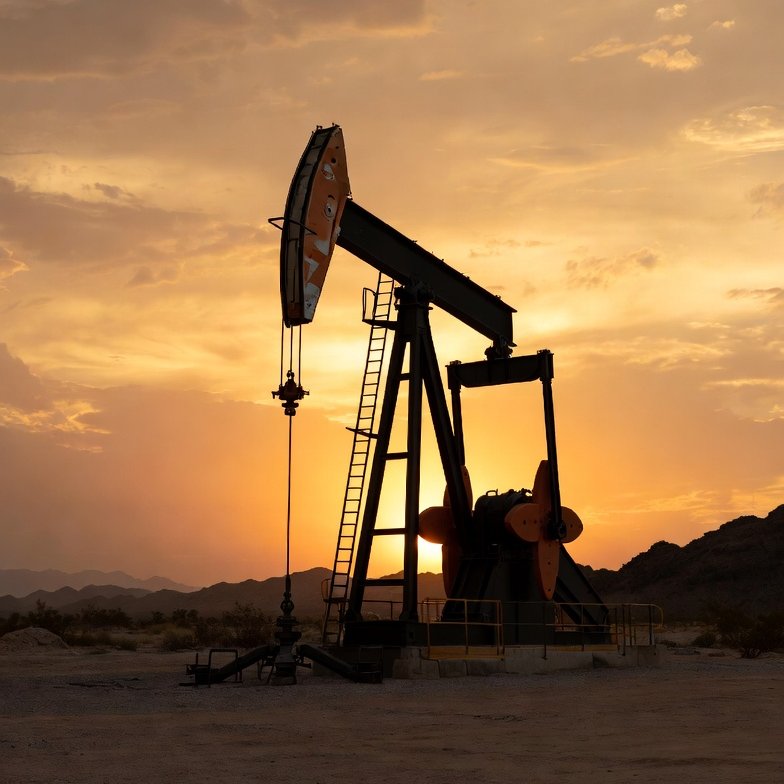
1/ Global oil and gas shortages are likely to persist for months, industry insiders are warning. This is due to shut-in, or idled, wells suffering progressive damage that is becoming increasingly severe as the Iran war drags on, leading to long delays in restarting production. ⬇️
2/ Wells manage the release of oil and gas that is under great pressure from underground reservoirs. While they are designed to throttle flow up and down as required and can be shut in for short periods for maintenance, they are not designed for indefinite shut-ins.
3/ Shut-ins put stress on the well structure, the machinery, and the reservoir itself. The effects include:
♦️ Casing and cement degradation: Wells are designed for active production, where fluid movement helps maintain pressure equilibrium.
1/ The Russian IT sector faces being crippled by new, harsh penalties for using VPNs. The Russian public also faces an imminent ban on the use of foreign AI systems, which developers say will wreck Russia's development of its own AIs. ⬇️
2/ Russia's Ministry of Digital Development, Communications, and Mass Media has put forward a bill on state regulation of artificial intelligence, which essentially outlaws the use of foreign AI systems such as ChatGPT, Claude, and Gemini.
3/ Although they are officially blocked in Russia, foreign AI systems are widely used via VPNs. 51% of Russians – and 81% of those under 34 said in a 2025 TASS poll that they had used AI in the past year, with ChatGPT and Deepseek accounting for 47% of the Russian market.
1/ Russians fighting in Ukraine are now unable to buy Chinese-made drone jammers due to Internet blocking, according to one Russian soldier. His account illustrates the practical – and quite possibly lethal – frontline impact of the Kremlin's Internet restrictions. ⬇️
2/ 'Marmot of the Burning Prairie' writes:
"I had the dubious pleasure of experiencing whitelisting firsthand. I was stunned.
Without the skills to bypass blocks:
- no Telegram
- no LiveJournal
- VK hasn't changed much, just as slow
- no IMO"
3/ "But that's just mere lip service. There are no Google services, no Apple, which means some modern phones will turn into outrageously expensive phone apps.
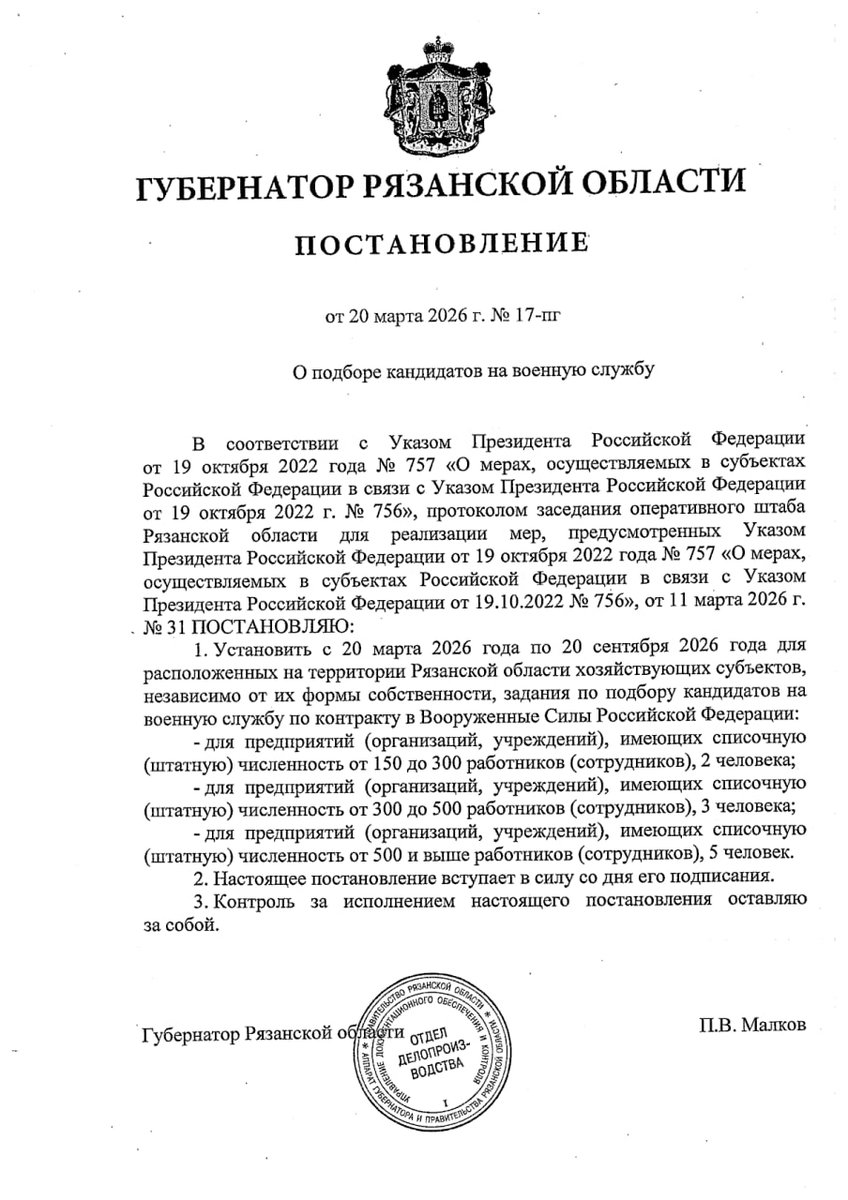
1/ With losses escalating in Ukraine, a Russian region has ordered businesses to send their employees to fight. Varying recruitment quotas have been set depending on the size of the business. The 'voluntary-compulsory' scheme appears to be a de facto form of mobilisation. ⬇️
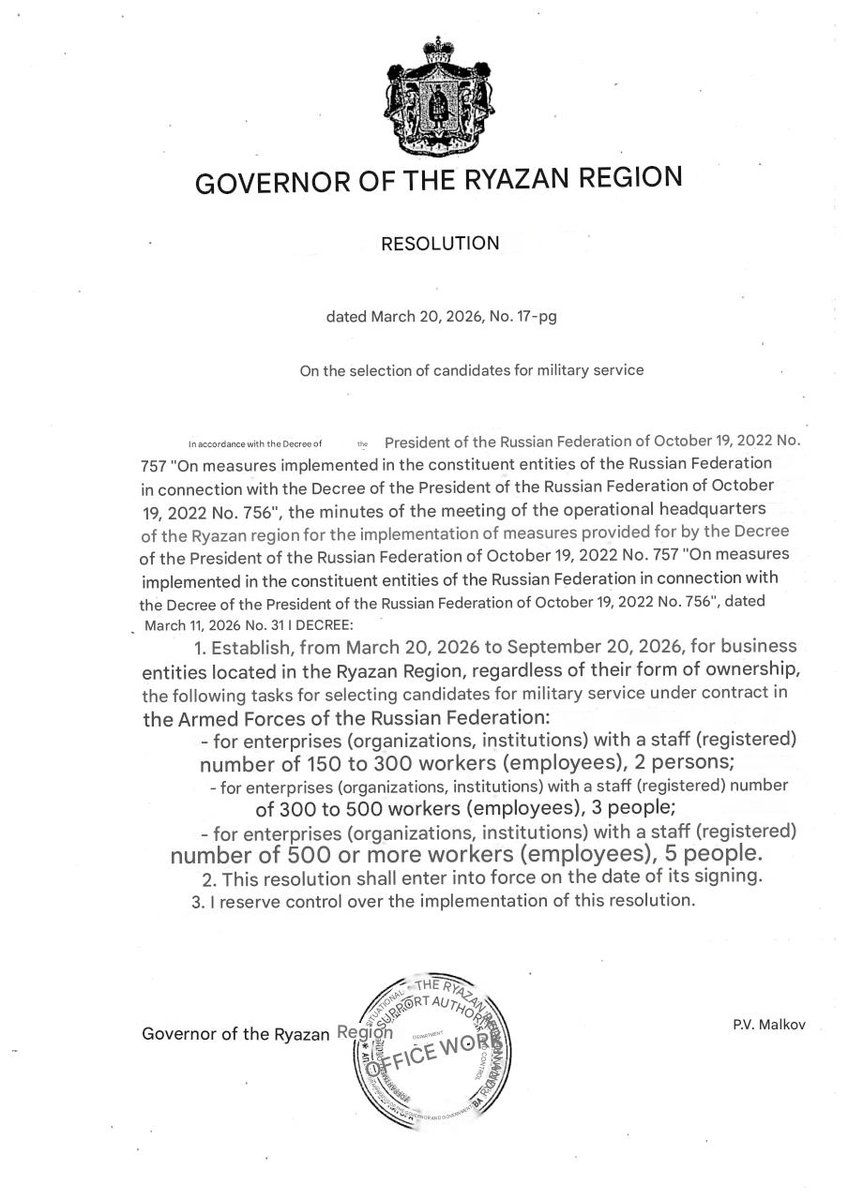
2/ 'Military Informant' publishes the text of the decree:
"The Governor of the Ryazan Region has established a plan for local businesses to recruit contract soldiers into the military."
3/ "According to a published decree by regional governor Pavel Malkov, all business entities in the Ryazan Region will be required to recruit candidates for contract military service in the Russian Armed Forces from 20 March 2026 to 20 September 2026:
1/ Russian billionaire Oleg Deripaska has proposed that Russia should shift to a 12 hour working day and 6 day working week to halt the country's deepening economic crisis. This has not gone down well with Russian commentators, who compare it to slavery and feudalism. ⬇️
2/ Writing on his personal Telegram channel, Deripaska argues that "in difficult times, we know how to pull ourselves together and work more. And the sooner we switch to this new schedule—from 8 a.m. to 8 p.m., including Saturdays—the faster we will undergo this transformation."
3/ Gennady Onishchenko, the former head of Rospotrebnadzor (Russia's national consumer rights agency) and academician of the Russian Academy of Sciences, has gone further: he says that Deripaska's proposal must become mandatory and enshrined in law.