

Yes, European Integration is about peace.
Peace WITH Germany, full stop.
[THREAD]
Peace WITH Germany, full stop.
[THREAD]

In this clip from a @TimothyDSnyder lecture, Snyder says that the common story of European Integration is that the Europeans, after WWII, realized how "peace was good and war was bad." The solution was to (paraphrase) "trade our way to peace."
https://twitter.com/JeremyCliffe/status/1600867532839452672
Snyder challenges that narrative, pointing out that the Europeans continued to fight wars, lots of wars. But these were Imperial Wars, such as France's War in Algeria.
foreignpolicy.com/2021/02/13/fra…
foreignpolicy.com/2021/02/13/fra…
I agree with Snyder's broader point that European Integration was NOT due to a broad post-World War II enlightenment within Europe that "War was bad". Nope, Europe was still the same place that resulted in "The Bloodlands"
amazon.com/Bloodlands-Eur…
amazon.com/Bloodlands-Eur…
The lesson following World War II wasn't "War is Bad".
The lesson was "Germany is a problem that needs to be solved."
cambridge.org/core/journals/…
The lesson was "Germany is a problem that needs to be solved."
cambridge.org/core/journals/…
The "German Problem" is sometimes also called "The German Question", but the idea is still the same, namely...
direct.mit.edu/jcws/article-a…
direct.mit.edu/jcws/article-a…
...how to prevent another repeat of 1870, 1914, and now 1939 (though, from Austria's perspective, 1938)?


Part of the solution was reached at the Potsdam Conference in 1945: Divide Germany.

But that still left a sizable "West Germany" in the heart of Europe (still bordering the Netherlands, Belgium, Luxembourg, and France).
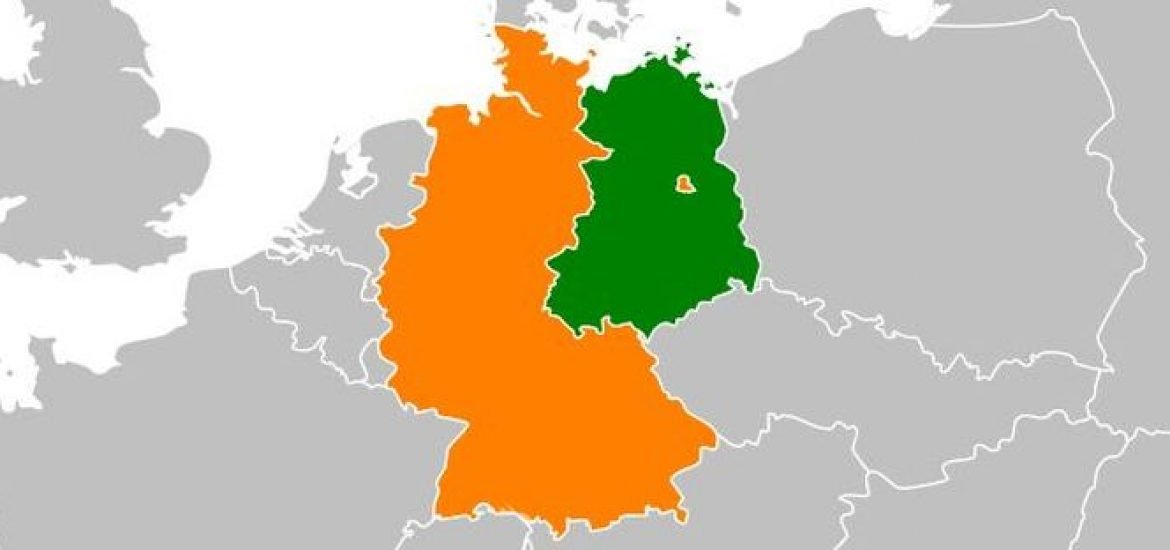
So division didn't "solve" the problem. It was only a first step. More had to be done to make Netherlands, Belgium, Luxembourg, and France feel secure.
A second step was to ensure supporting one another in case of an attack. In other words, alliance formation. That went through a series of stages:
- 1947 Treaty of Dunkirk (b/w 🇫🇷🇬🇧)
- 1948 Brussels Pact (b/w 🇫🇷🇬🇧 + 🇧🇪🇳🇱🇱🇺)
- 1949 North Atlantic Treaty
nato.int/cps/en/natoliv…
- 1947 Treaty of Dunkirk (b/w 🇫🇷🇬🇧)
- 1948 Brussels Pact (b/w 🇫🇷🇬🇧 + 🇧🇪🇳🇱🇱🇺)
- 1949 North Atlantic Treaty
nato.int/cps/en/natoliv…
Those alliances guarded against a divided Germany (and to be clear, NATO was about more than Germany, as I explain 👇), but...
amazon.com/Arguing-about-…
amazon.com/Arguing-about-…
...could more be done to directly engage with Germany? That led to the third step to solving the "German Problem"
Enter Robert Schuman, longtime French political figure and the French Foreign Minister from 1948 to 1953.

In 1950, Schuman was to meet with British Foreign Minister Ernest Bevins and American Secretary of State Dean Acheson on May 10 to discuss the future of Germany.


This brings us to Jean Monnet, who was then serving as Commissioner of the French Plan Commission (the entity planning out French reindustrialization).

According to his memoir...
amazon.com/Memoirs-Jean-M…
amazon.com/Memoirs-Jean-M…
...Schuman "had no constructive proposals to take with him" for his meeting with Bevin and Acheson.
Monnet saw this as an opportunity to put forward a plan he had teased back in an interview for Fortune in 1944: to place German industrial capacity under European-wide authority.
Monnet saw this as an opportunity to put forward a plan he had teased back in an interview for Fortune in 1944: to place German industrial capacity under European-wide authority.

To prepare a proposal for Schuman to present at the May meeting, Monnet met with two of his trusted friends and collaborators -- Paul Reuter & Étienne Hirsch -- at his home on Sunday, April 16.


As Monnet recalls in his memoir: ``It was there, on that Sunday [April 16], that we drafted the first version of what was to become the French Declaration of May 9, 1950...I can no longer distinguish which of us contributed what to the text…
...I can only say that, without Hirsch and Reuter, it would not so quickly have assumed the final form that made it the European Community’s true founding document.’’
Reuter took the notes of the meeting (Monnet rarely wrote). Here is an image of the notes from the Monnet archives at the Monnet Foundation (jean-monnet.ch/en/)

Notice the first three lines of the notes. Those stated the goal of the plan.
"Peace
Europe
France-Germany"
"Peace
Europe
France-Germany"
The notes then state the "method" for achieving this goal:

Those notes would then become a month later "The Schuman Declaration", which states, ""The pooling of coal and steel production... will change the destinies of those regions which have long been devoted to the manufacture of munitions of war."
european-union.europa.eu/principles-cou…
european-union.europa.eu/principles-cou…
A year later, in 1951, the European Coal and Steel Community was formed, with Monnet as the head.

For me, this shows that the ECSC and European integration more generally, was pursued to solve conflict among the European countries, primarily Germany.
This is in contrast to Snyder & claims like Rosato's, that the ECSC was formed to balance the USSR.
amazon.com/Europe-United-…
This is in contrast to Snyder & claims like Rosato's, that the ECSC was formed to balance the USSR.
amazon.com/Europe-United-…
To be clear, the "German Problem" didn't fully go away. It would come back BIG time in 1989-90, with the collapse of the Berlin Wall and the reunification of Germany. I wrote a paper a long time ago about how that contributed to the formation of the EU
tandfonline.com/doi/abs/10.108…
tandfonline.com/doi/abs/10.108…
Stated differently, I think of European Unification as a non-aggression pact...
journals.sagepub.com/doi/abs/10.117…
journals.sagepub.com/doi/abs/10.117…
...underpinned by issue linkages.
cambridge.org/core/journals/…
cambridge.org/core/journals/…
In sum, Europe is a peace project, but of a specific type: peace between the other European states and Germany.
[END]
[END]
• • •
Missing some Tweet in this thread? You can try to
force a refresh






