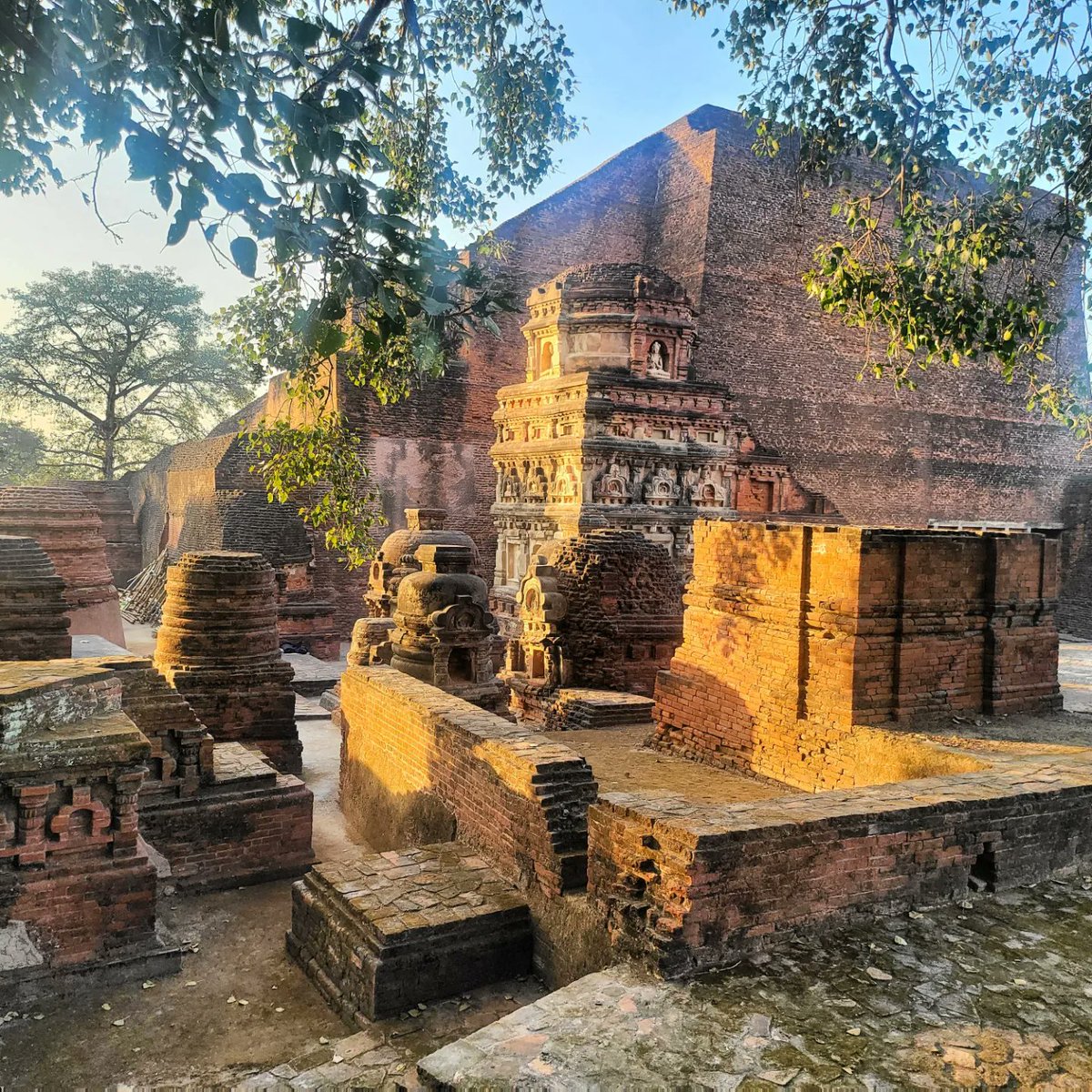
Nalanda, the greatest centre of learning in ancient India. 

Here is Huili, the chela & biographer of the 7th century Chinese monk Xuanzang on Nalanda at its peak: "“Six kings built as many monasteries around the site, one after the other & an enclosure was made with bricks to merge them all into one monastery with one common entrance...
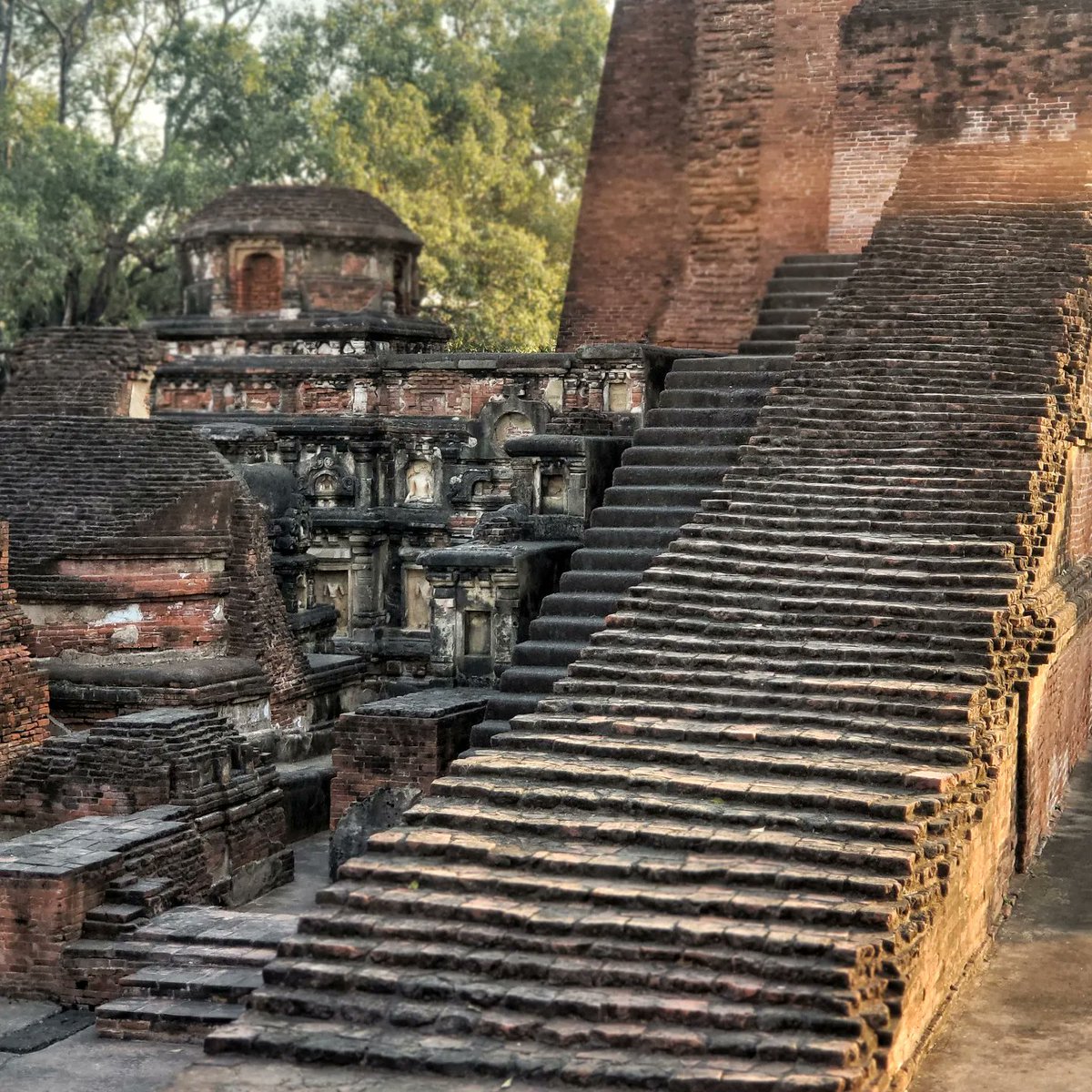
"There were separate courtyards, divided into eight departments. Precious terraces ranged like stars in the sky and jade storeyed pavilions spired like lofty peaks. The temples stood high in the mist, and the shrines hovered over the rosy clouds....

"Breeze and fog rose from the doors and windows and the sun and moon shone alternately at the eves of the building. Moreover, brooks of clear water meandered the compounds with blue lotuses and water lillies growing inside them.
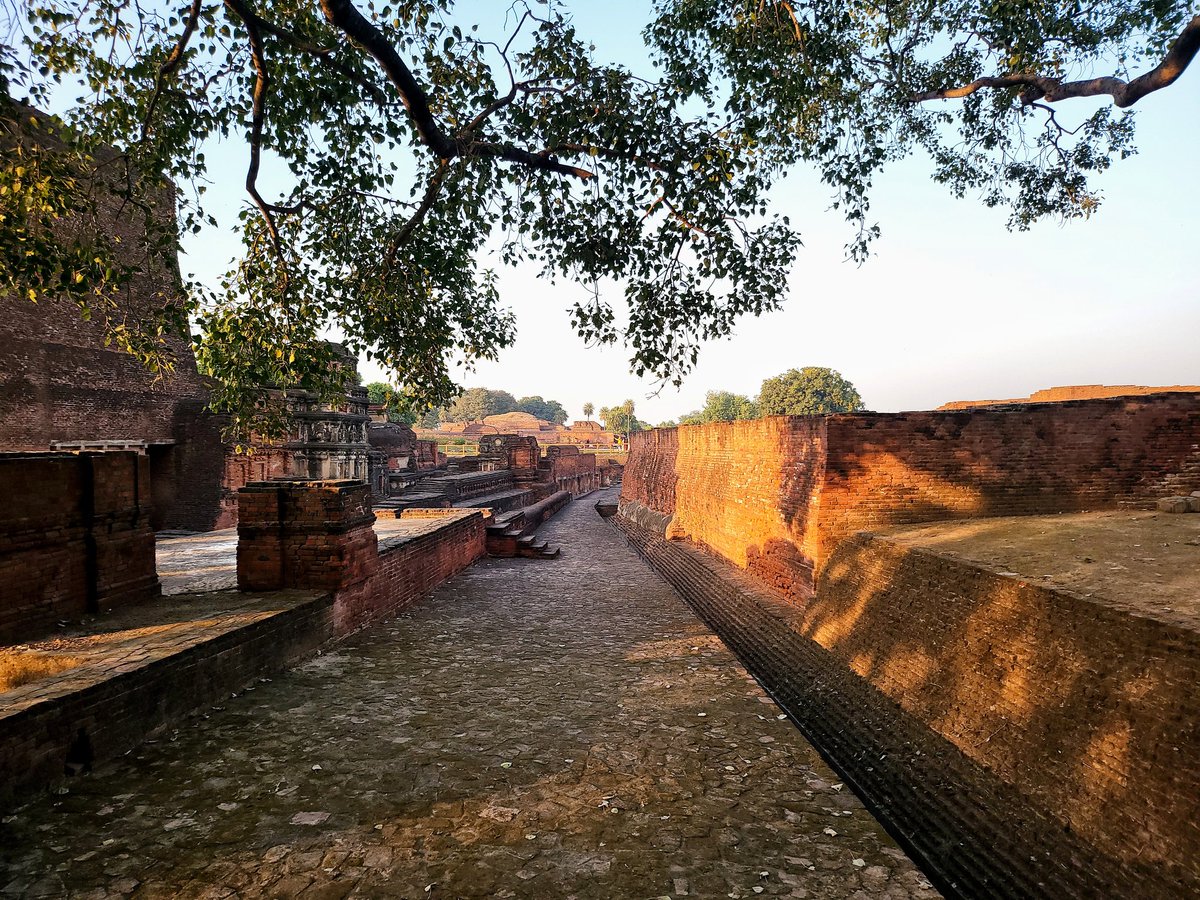
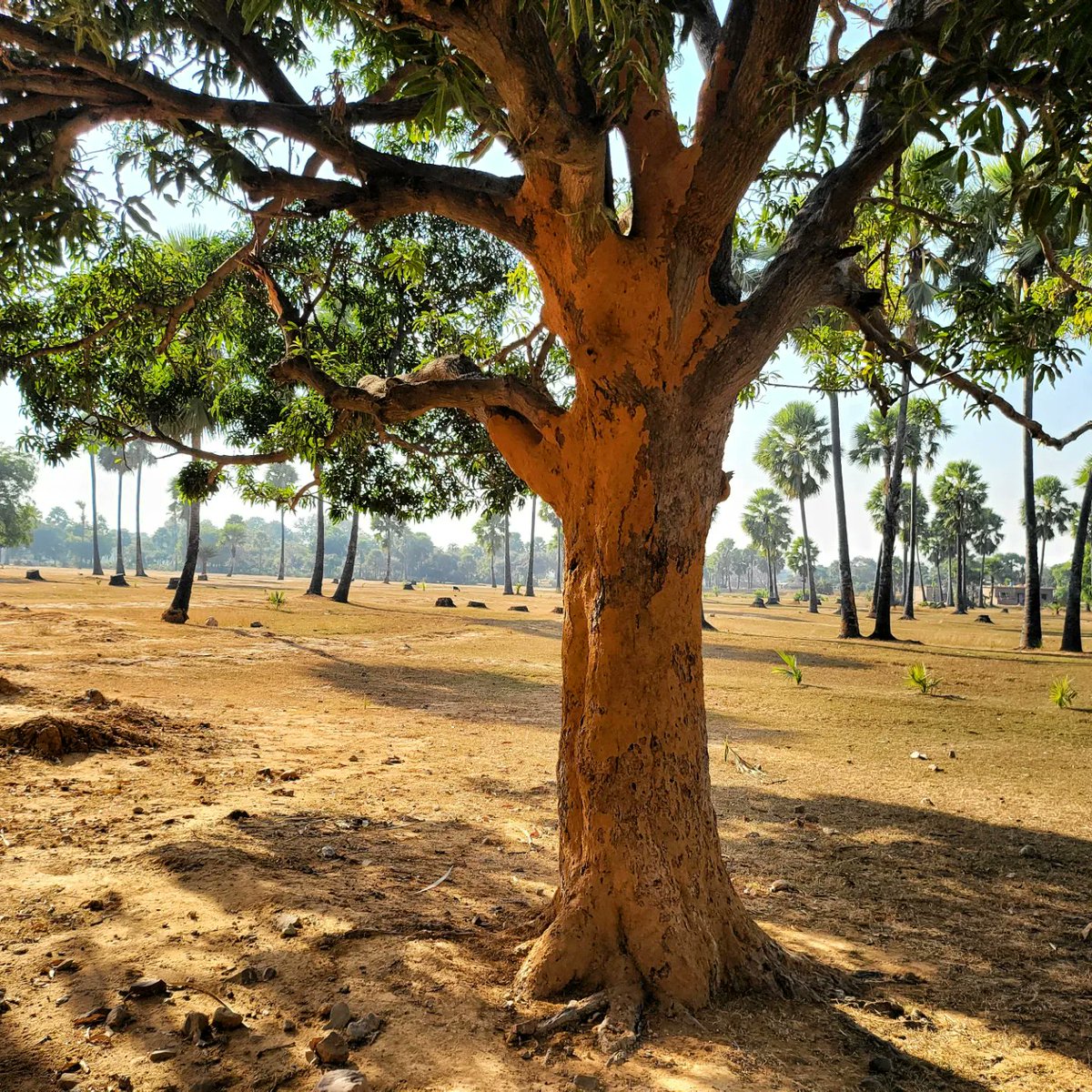
"The flowers of sandalwood trees glowed inside the enclosure, and outside it there was a dense mango orchard. All the monks’ chambers in the different departments had four storeys....
"The ridgepoles were carved with little dragons, the beams were painted all the colours of the rainbow, and green struts contrasted with the crimson pillars. The frontal columns and railings had ornamental engravings and hollowed-out carvings.
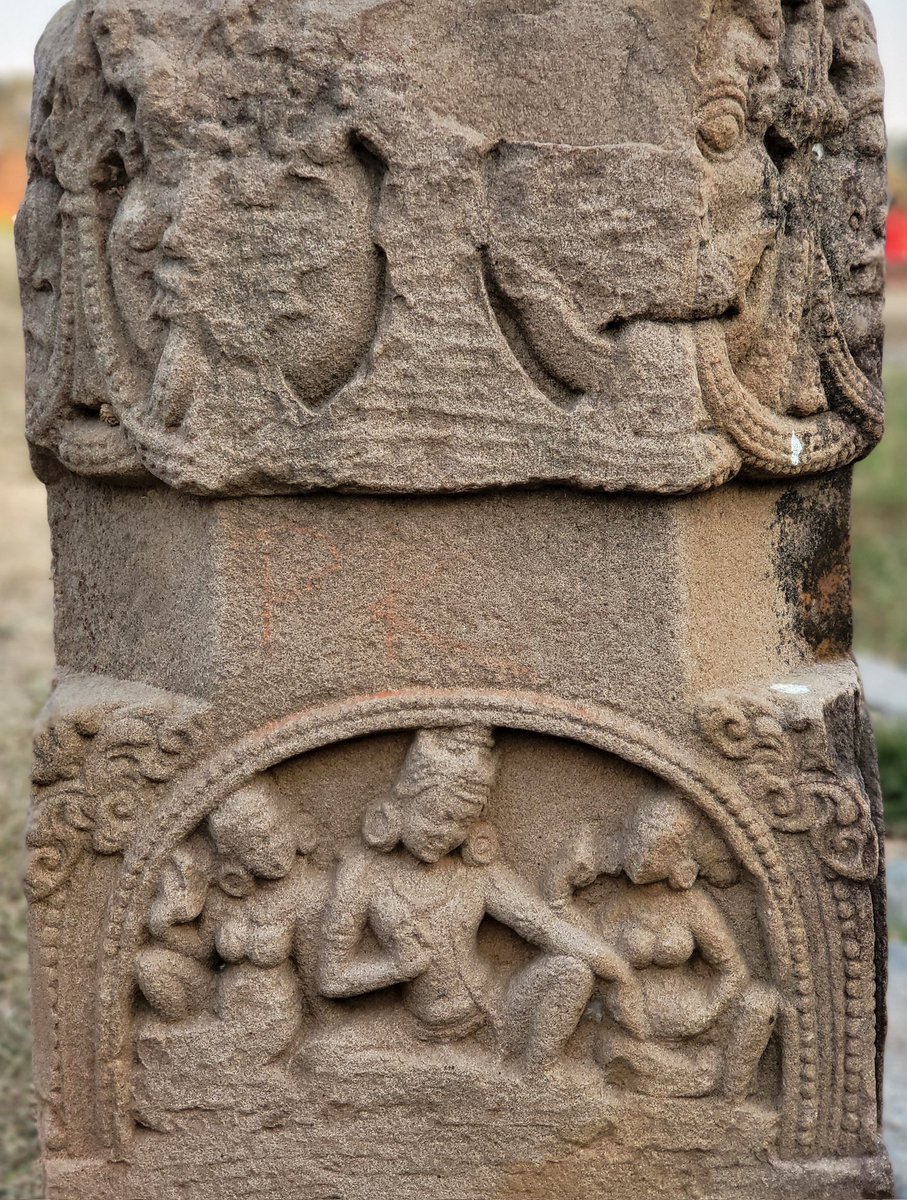
"The plinths were made of jade & the tips of the rafters were adorned with drawings. The ridges of the roofs stood high in the sunlight & the eves were connected with ropes from which hung coloured silk pendants.
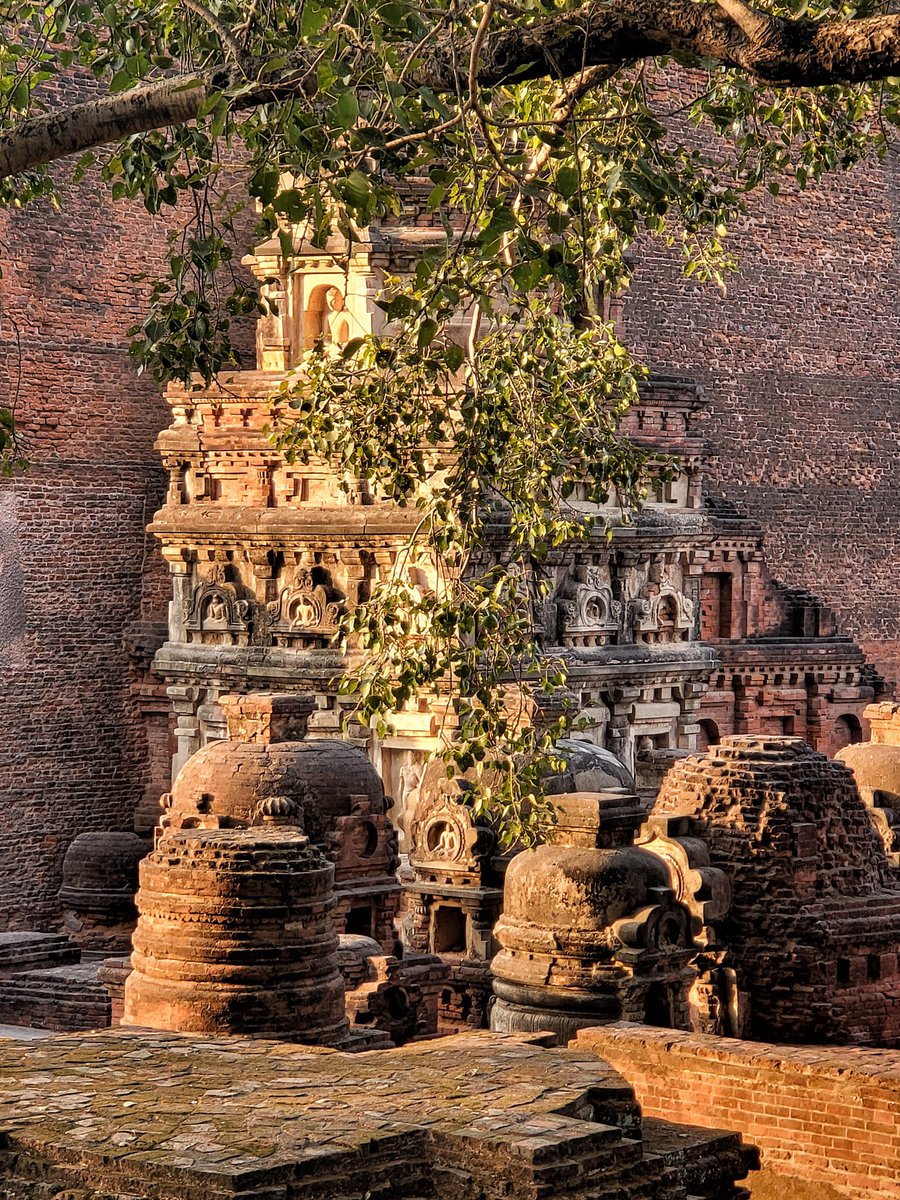
In India there were thousands of monasteries, but this was the most magnificent and sublime of them all."
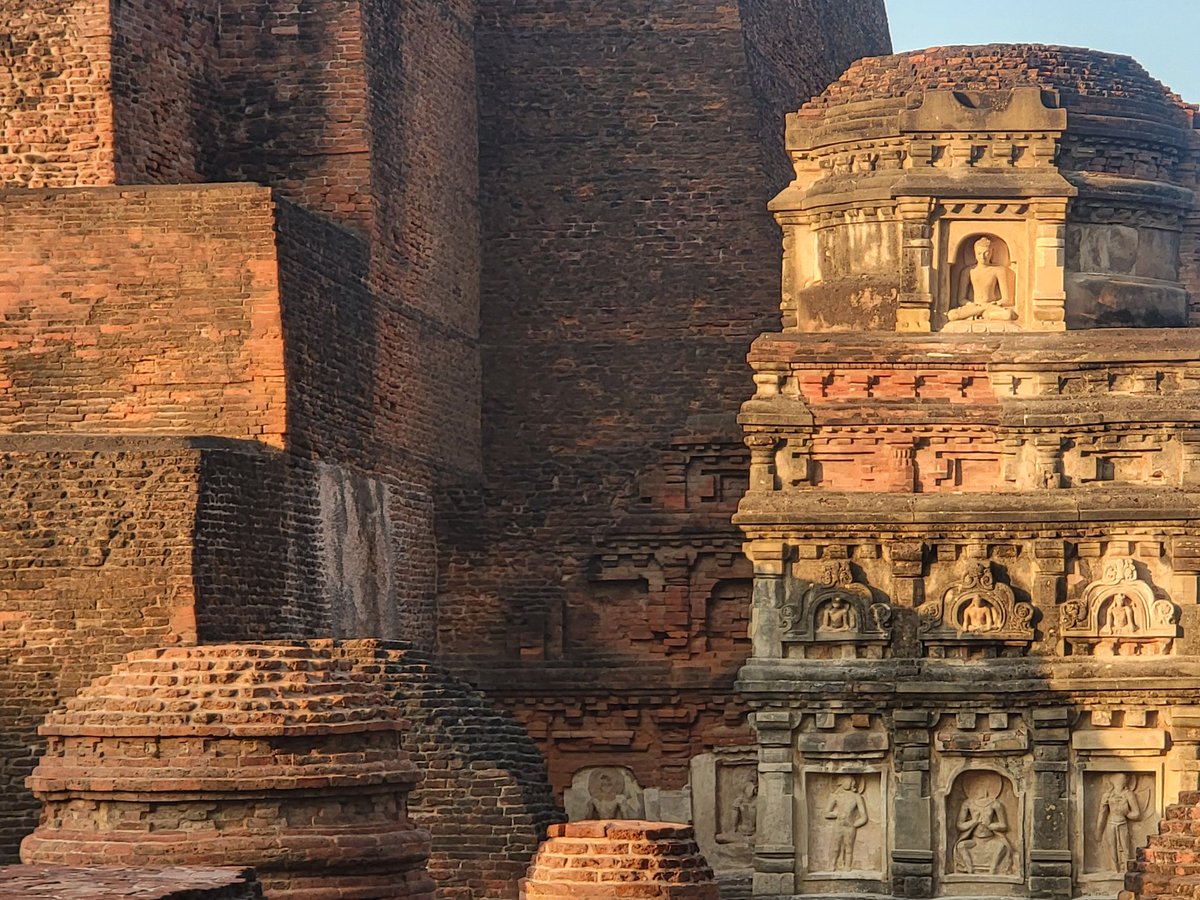
Here ten thousand monks studied the different schools of Buddhism, as well as the Vedas, logic, grammar, philosophy, medicine, metaphysics, divination, mathematics, Sanskrit, astronomy,literature and magic.
The biggest draw of all was in the centre of the complex, the Nalanda library. According to the later Tibetan monk Taranatha, the Nalanda sutra depository—quite possibly the greatest library in the world after the destruction of Alexandria-- was named the Dharmaganja.
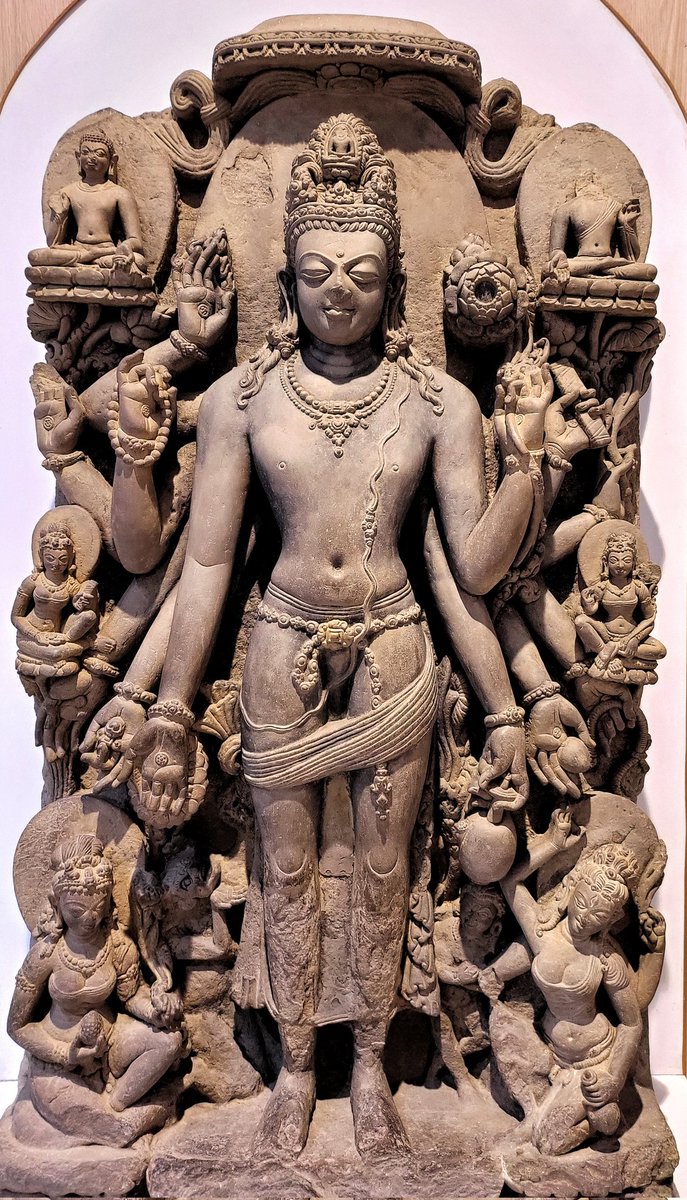
It was nine storeys high and contained three divisions: the Ratnodadhi, the Sea of Jewels, the Ratnasagara, the Ocean of Jewels, and the Ratnaranjaka, the Jewel-Adorned.
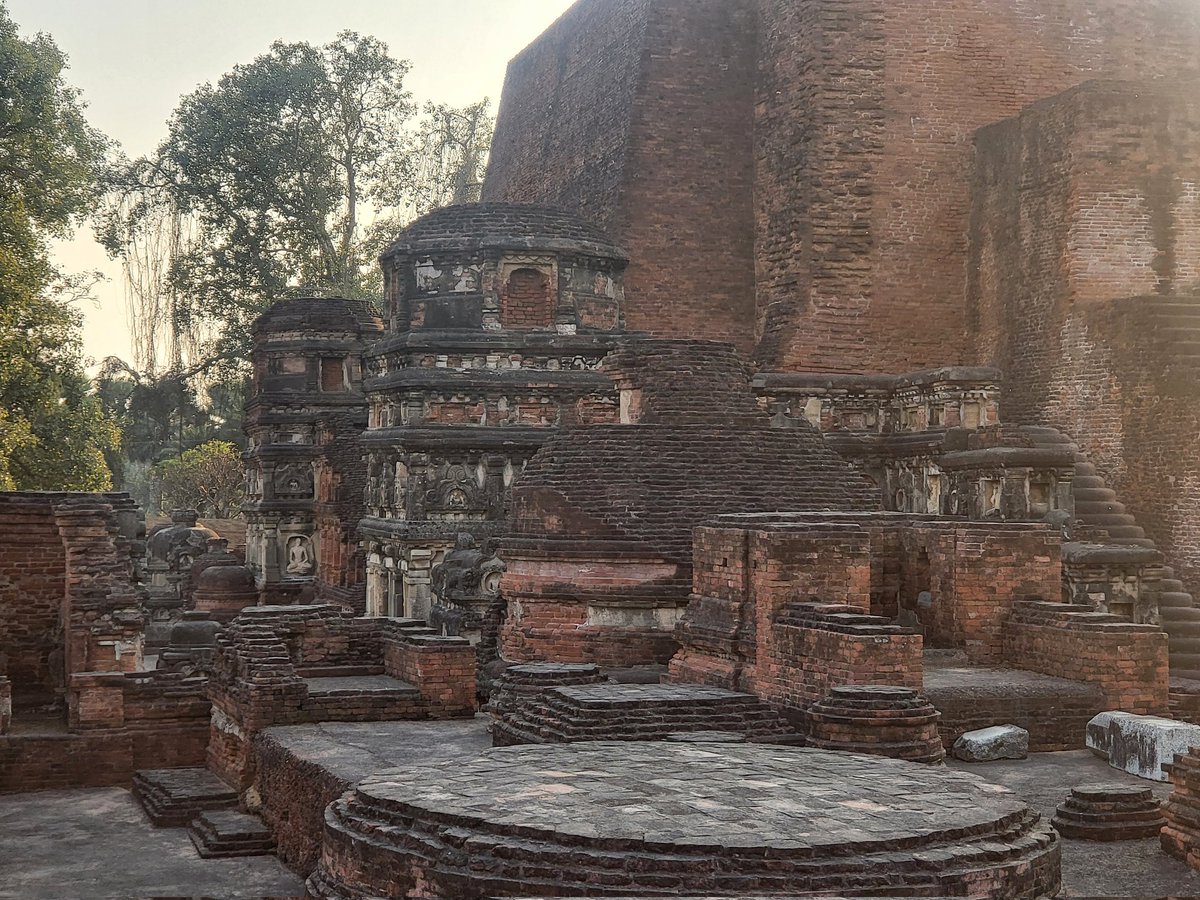
“The priests, to the number of several thousands, are men of the highest ability and talent,” wrote Xuanzang. “Their distinction is very great at the present time. The day is not sufficient for asking and answering profound questions.
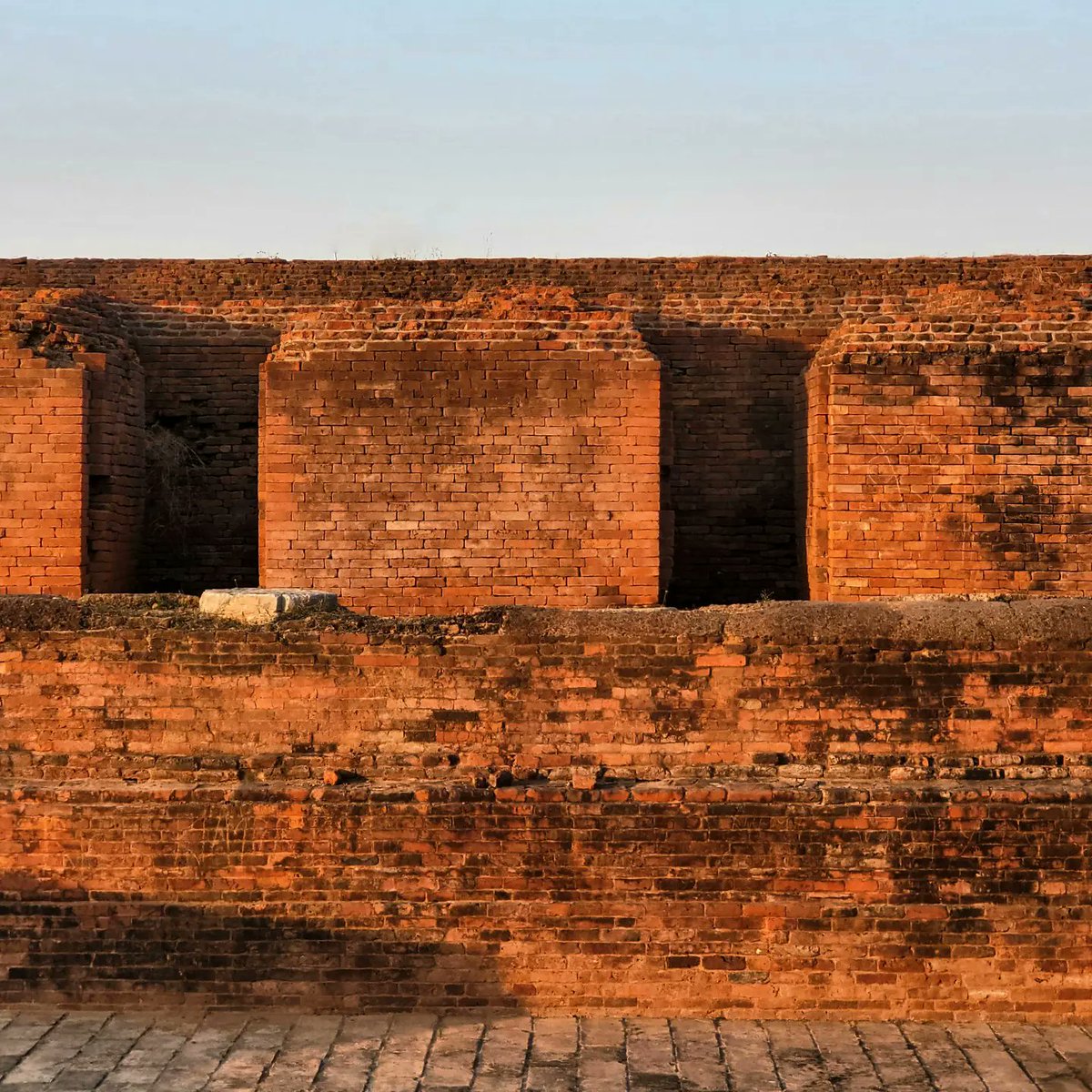
"From morning until night they engage in discussions; the old & young mutually help each other.” Lectures were given in a hundred different halls each day “and the students studied diligently without wasting a moment. The atmosphere of the monastery was solemn and dignified.”
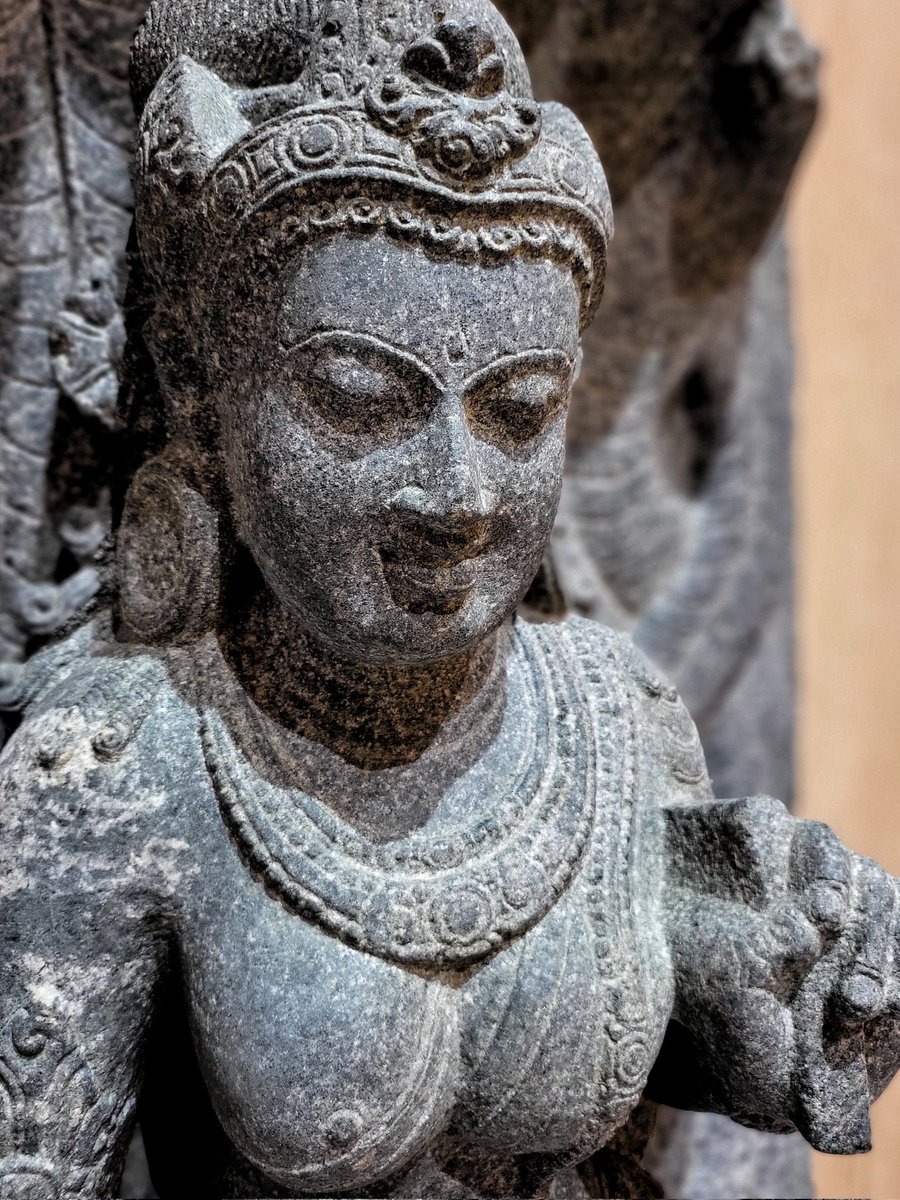
Many students and teachers had come from far away to study in the greatest centre of learning of its day. As well as China, we know the names of monks who came to Nalanda from Nepal, Tibet, Sri Lanka, Sumatra and even Korea.
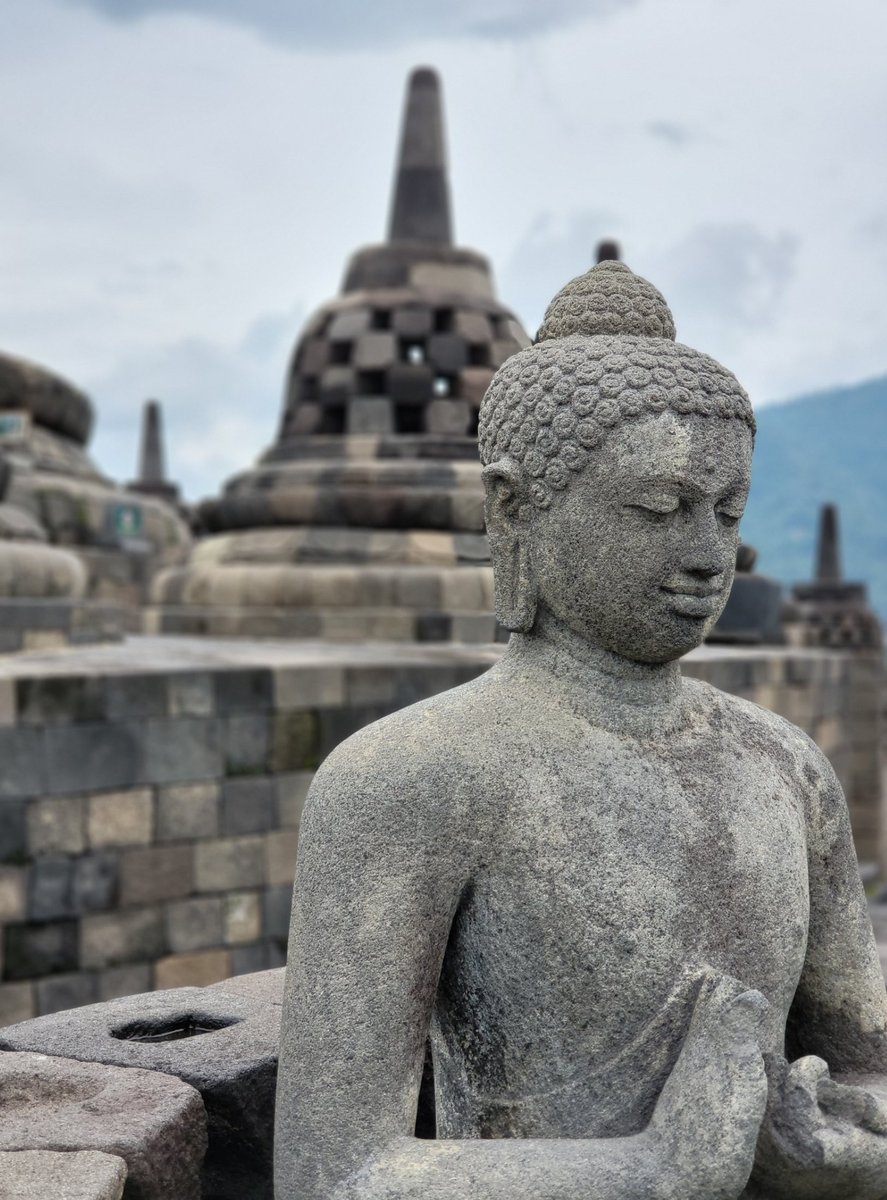
A little after Xuanzang one entire monastery-college was built & endowed by the passionately Buddhist ‘Lords of the Mountains,’ the Sailendra rajas of far-distant Indonesia, who were probably also responsible for building the largest Buddhist temple ever built, Borobodur in Java
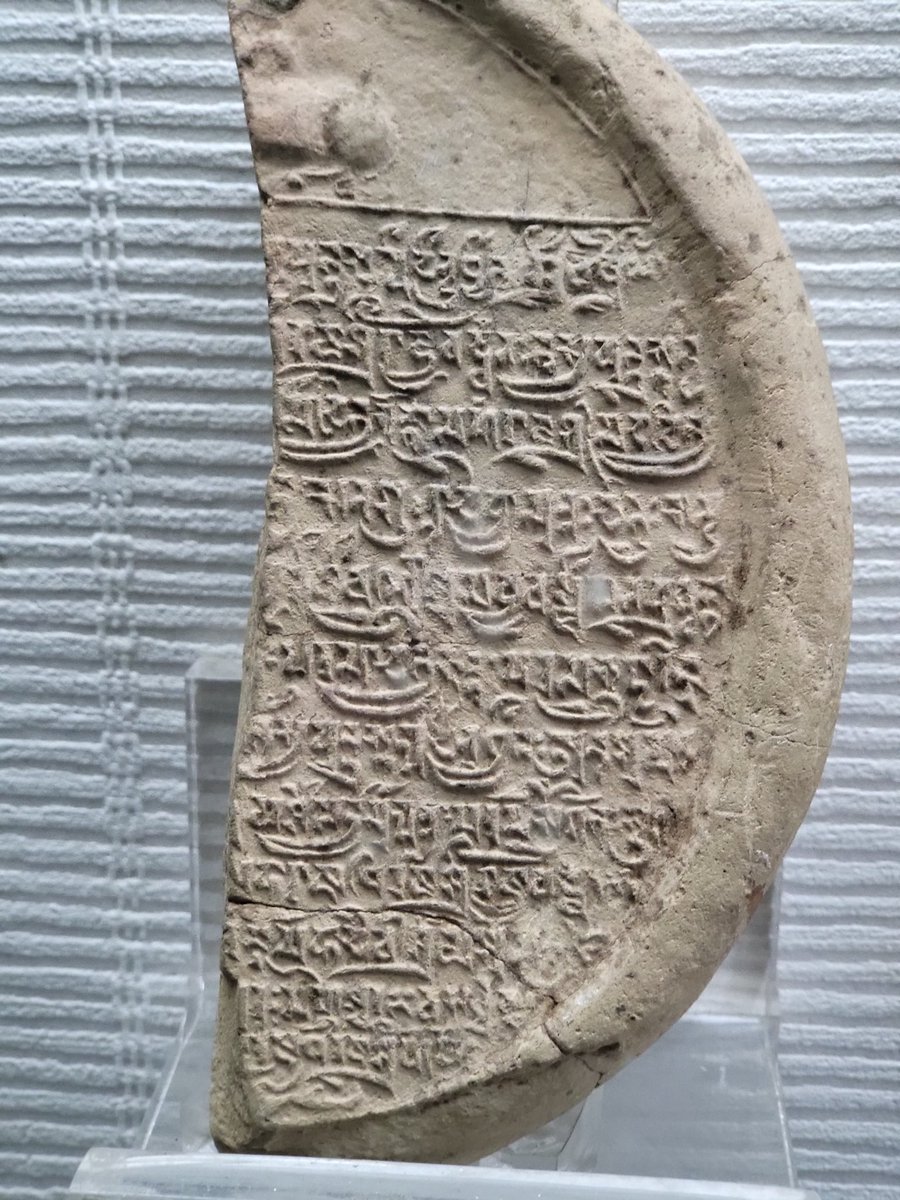
One later Chinese pilgrim talks of a Chinese college at the monastery. It was probably the influence of Nalanda that has resulted in inscriptions carved in the Siddhamatrika, a northeastern Indian script native to the area of Nalanda, turning up as far away as China and Japan.
One scholar has gone as far as suggesting that Nalanda “was the cultural centre that dictated the predominant religious & aesthetic paradigm across the entire Buddhist cosmopolis from the 8th- 13th century.” It also played a major role in transmitting esoteric Buddhism to Tibet.
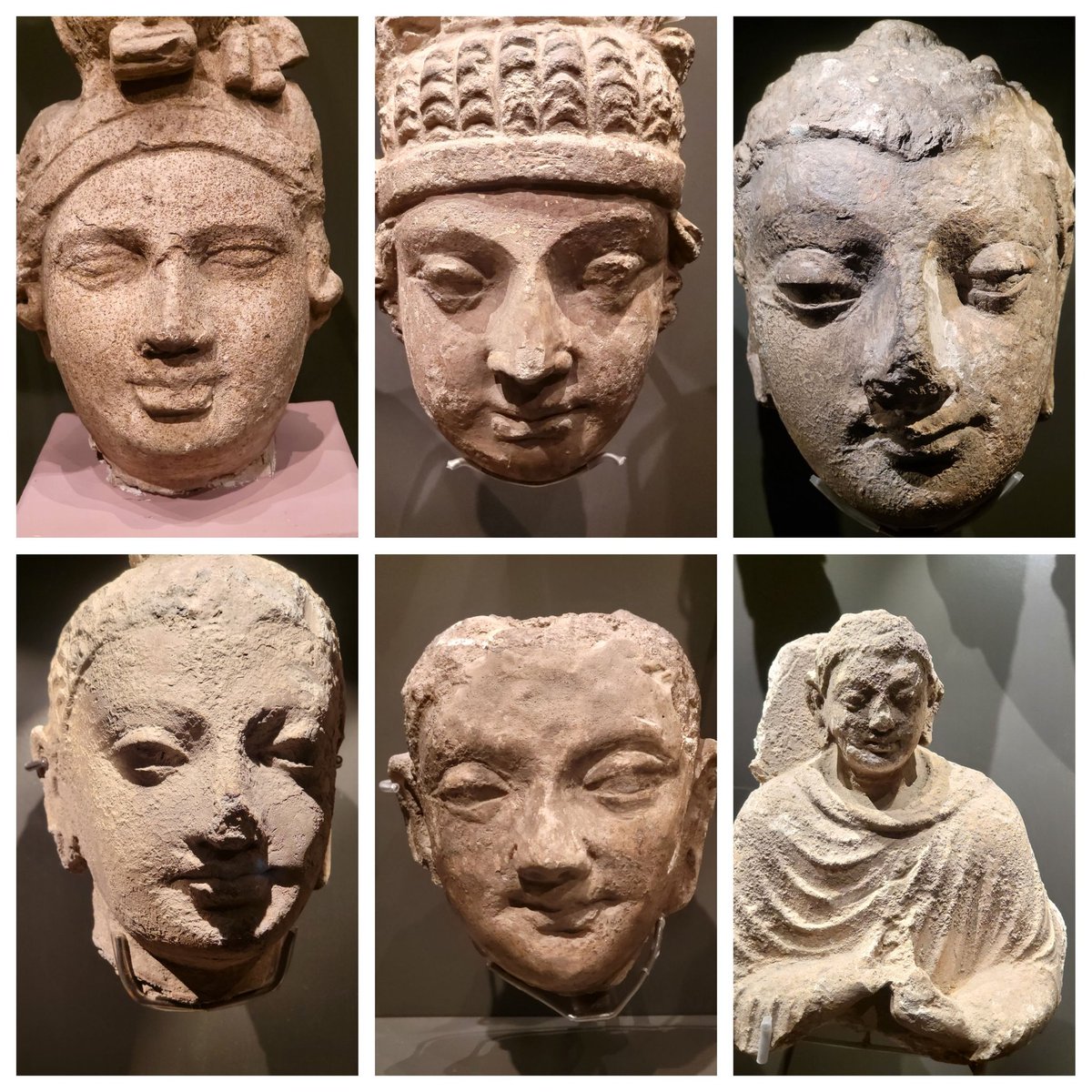
Faces of Nalanda- small terracotta images found during the excavations at the Nalanda mahavihara, now on display in the spectacular new @BiharMuseum in Patna
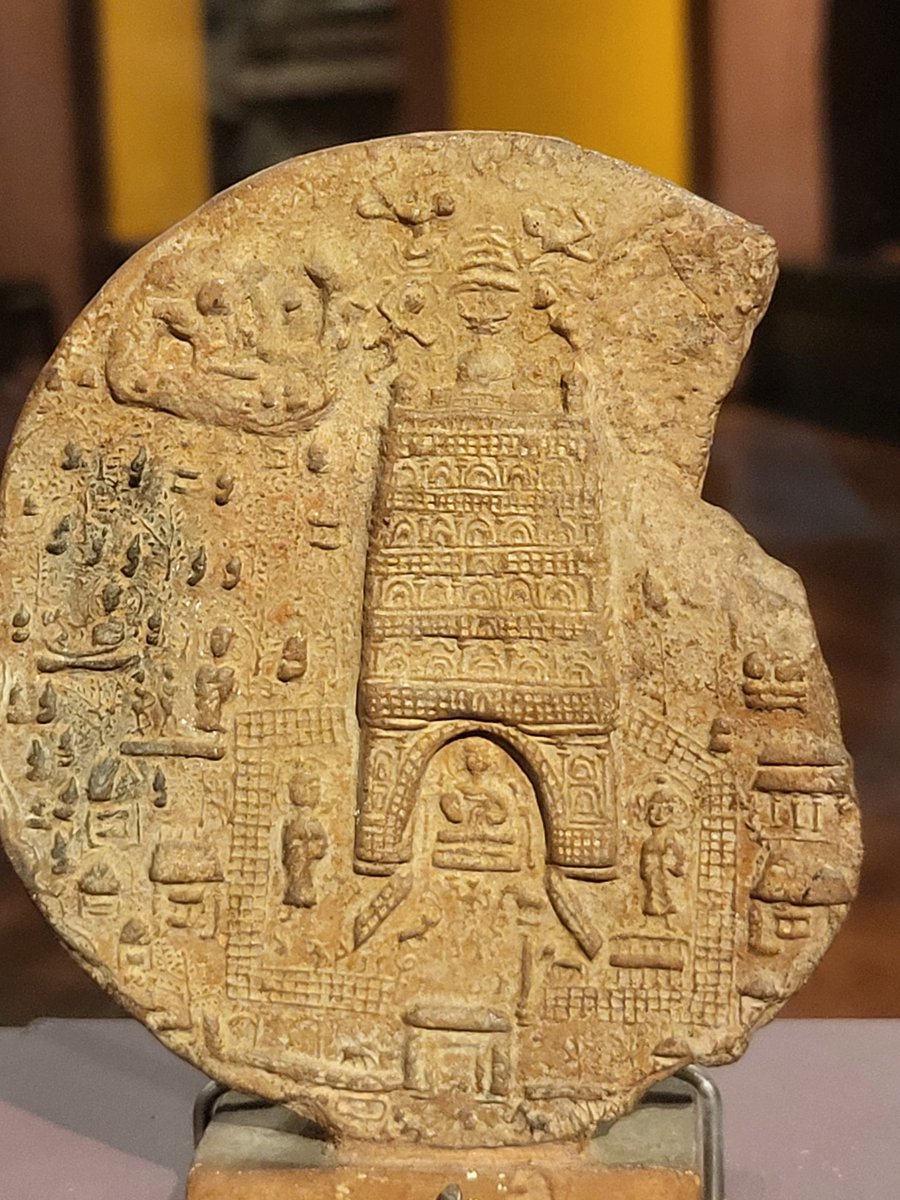
The Towers of Nalanda: possibly the earliest image of what Nalanda originally looked like in the early Gupta period, c5thC, with high, possibly wooden towers flanked by a river, water meadows and flowering trees. Terracotta seal from Nalanda, in the spectacular new @BiharMuseum
@andy142sbbj Contemporaries describe it as a Mahavihara- a Buddhist monastery with a scholarly bent, not a University in our modern sense.
Since posting this picture, I have learned that many scholars consider it to be the earliest image not of Nalanda but of the Mahabodhi temple in Bodh Gaya- which is clearly resembles
• • •
Missing some Tweet in this thread? You can try to
force a refresh