1/ QUICK THREAD on the Russian military trying to learn from past attacks to defend Crimea from Ukrainian drone strikes. Main points below on the December 23-24 drone strike with Mugin-5 commercial drones in Ukraine;' service.
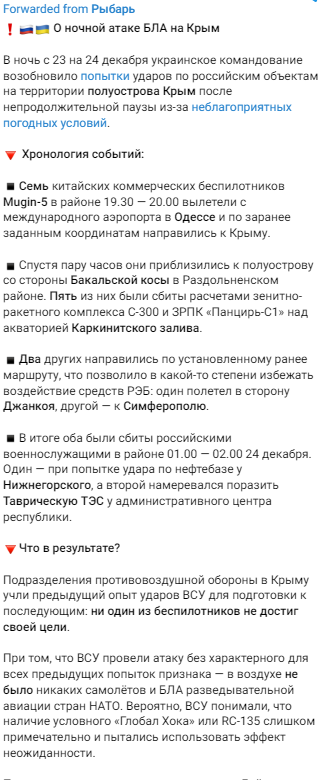
2/ According to Russian sources, "seven Chinese-made Mugin-5 commercial drones took off at 19.30-20.00 on December 23 from Odessa airport and headed for the Crimea at predetermined coordinates."
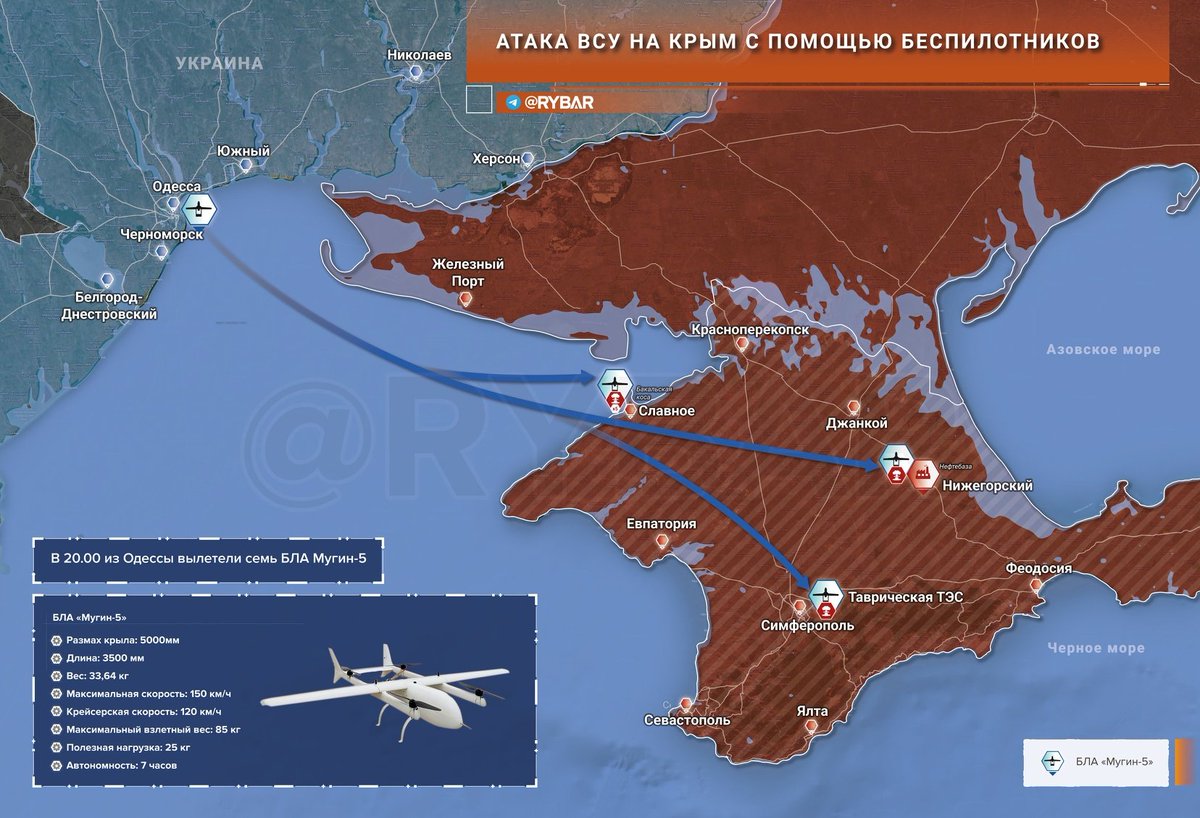
3/ "After a couple of hours, they approached the peninsula from the Bakalskaya Spit in the Razdolnensky district. Five of these drones were shot down by S-300 anti-aircraft missile system and the Pantsir-S1 anti-aircraft missile system over the waters of the Karkinitsky Gulf."
4/ "The other two drones went along the previously established route, which made it possible for them to avoid the impact of Russian electronic warfare to some extent: one flew towards Dzhankoy, the other towards Simferopol."
5/ "In the end, both remaining Mugin-5 drones were shot down around 01.00 - 02.00 on December 24. One was downed when trying to hit the oil depot near Nizhnegorsky, and the second intended to hit the Tavricheskaya TPP near the Crimea administrative center." Map below.
6/ "What's the result? Crimean air defense units took into account the previous experience with Ukraine's drone strikes in order to prepare for the next wave: none of the drones reached their goal."
7/ "This took place despite this attack lacking a major characteristic of previous attempts - there were no NATO reconnaissance planes or UAVs near by, since the presence of Global Hawk or RC-135 was too obvious and Ukraine tried to use the element of surprise."
8/ "At the same time, it is still possible to use Bayraktar TB2 drones from Odessa to track the actions of Russian air defense systems. The cameras installed on the TB2 make it possible to conduct reconnaissance at a great distance, such as over Snake Island this summer."
9/ "The use of UAVs has expanded significantly with the beginning of the war. Now, in addition to military aerial vehicles, commercial UAVs are also actively used, equipped with the DIY weapons."
10/ "Such a (commercial) reconnaissance-strike tool has great potential due to its extremely low price, ease of maintenance and a high-quality camera. The Ukraine military uses dozens of them almost every day, without really worrying about (such drone) losses."
11/ "The cost of one Mugin-5 UAV, which is freely available, does not exceed $10,000, which is much less than the cost of manufacturing anti-aircraft missiles for modern air defense systems." (muginuav.com/product/mugin-…)
12/ According to this Russian analysis, "...the Ukrainian military will continue to attempt strikes on the Crimea using these simple but dangerous UAV systems. At the same time, there will be changes to the tactics, quantity, and nature of such drone strikes".
13/ In fact, Russian government of Crimea stated earlier that the "main threat to Russian forces (on the peninsula) comes from Ukrainian drones," highlighting that Ukrainian tactics have a lasting military and psychological effect. taskandpurpose.com/news/ukrainian…
• • •
Missing some Tweet in this thread? You can try to
force a refresh

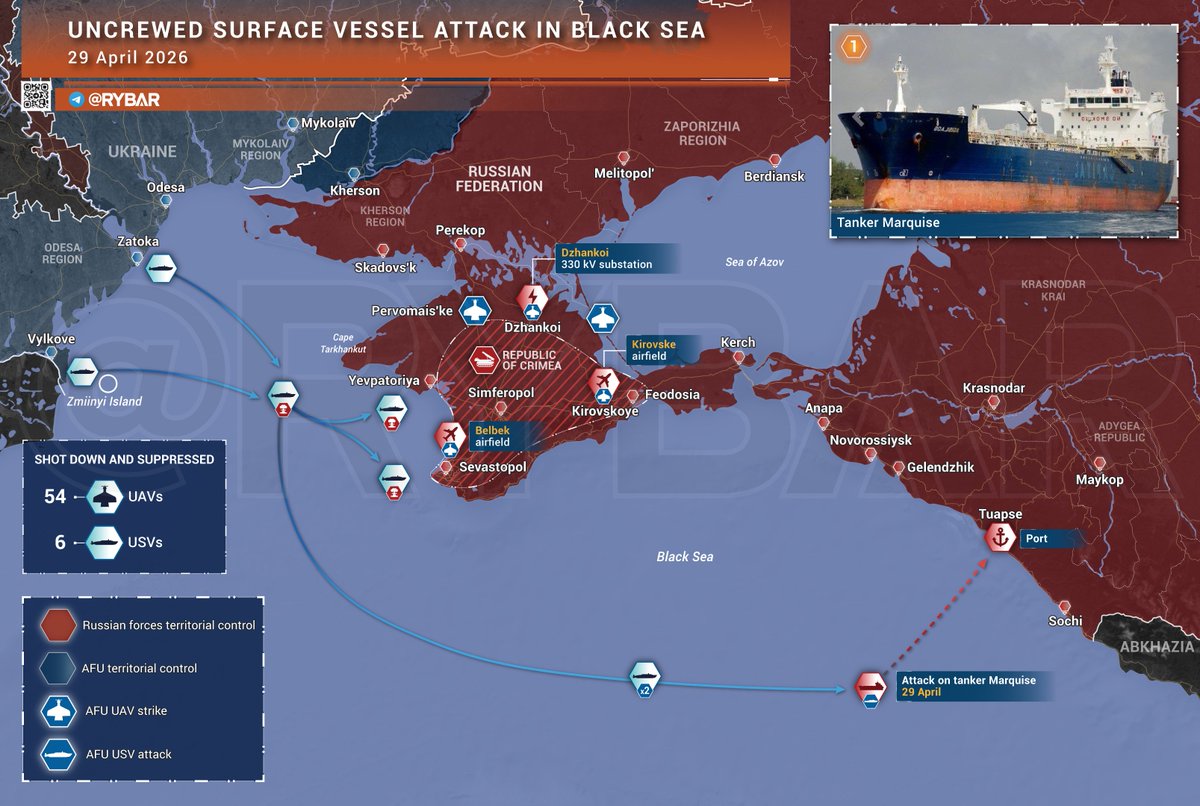
1/ Russia's Rybar, pro-Kremlin TG channel, on the recent Ukrainian USV (and UAV) strike against Rus Black Sea targets: "A group of unmanned surface vessels was first detected as early as yesterday. Their exact point of origin remains unknown." t.me/rybar/79879
2/ "However, judging by their trajectory, the main contingent (5–6 USVs) appears to have departed from the Danube region, while two others approached from the direction of Zatoka. Early on the morning of April 28, they began maneuvering near the Shtormovoye gas condensate field."
3/ "One USV broke away from the group, approached Cape Tarkhankut, and was disabled by a Rus "Lancet" drone crew, guided by a "Skat" recon UAV. By evening, another five USVs headed toward the line between Yevpatoria and Sevastopol."
1/ A Rus graphic on the challenges of resource allocation when it comes to maintaining existing air defense expertise vs. resources needed for training interceptor pilots against UAV threats. t.me/polyvoennaja/6…
2/ The general in the middle is caught between legacy systems/practices and new threats, and he is ambivalent about it: "Just give me a saber and a steed, and send me to the firing line! As for petty palace intrigues (budget and resource battles?) —that’s simply not for me!"
3/ "As we (Rus military) expand the number of FPV interceptor crews within air defense units, we are—unfortunately—forced to reduce the number of anti-aircraft missile crews (squads); in doing so, we lose specialists who have undergone extensive, long-term training."
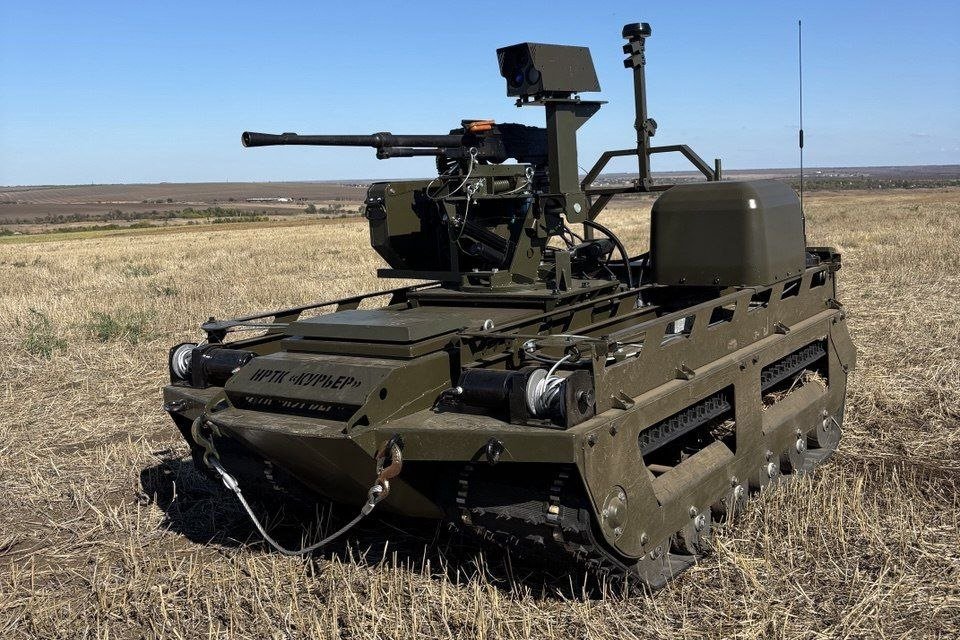
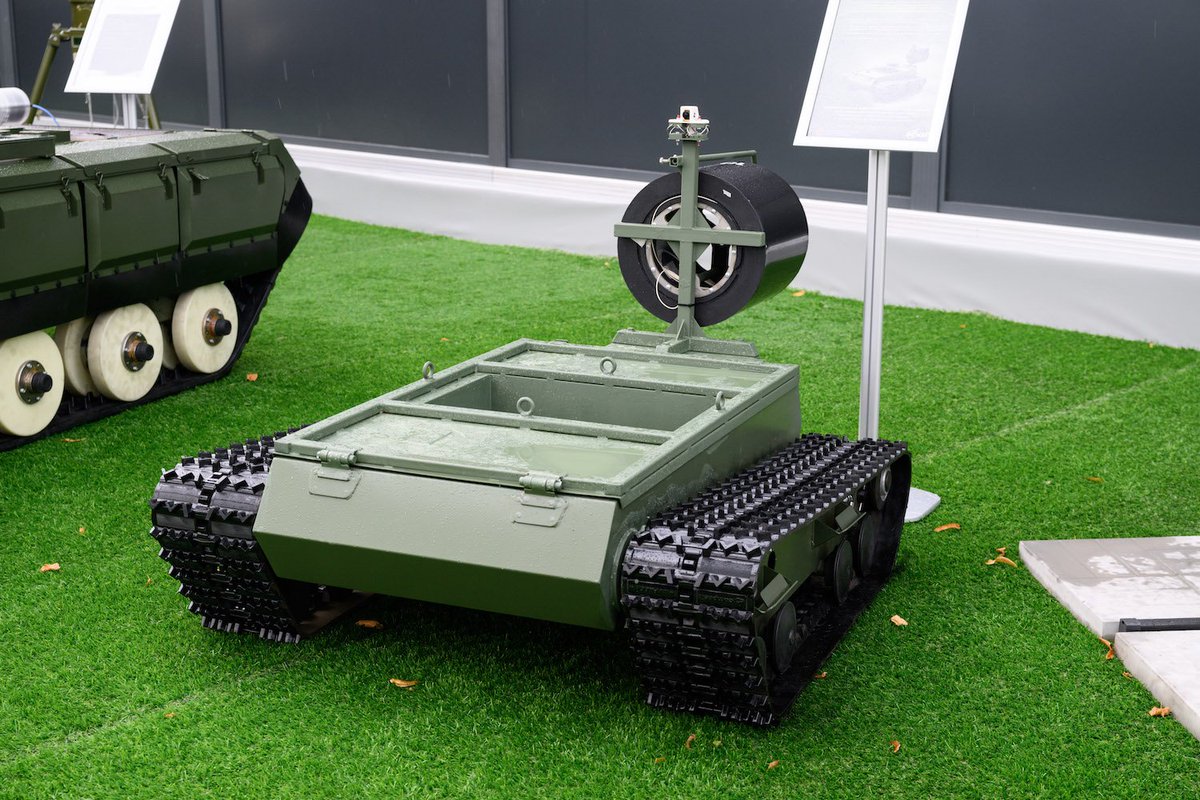
1/ QUICK THREAD: Alexey Chadaev, one of Russian key volunteers and the director of Ushkuynik Enterprise, on the domestic combat UGV developments: "This is curious - Ukraine is increasing the frequency of UGV deployment, while we are scaling ours back." t.me/chadayevru/4674
2/ "And this isn't because we are physically short on them—thousands are sitting in our warehouses. The first key reason is communications. As long as Starlink was available, these units could operate almost anywhere. Now, however, losses often result..."
3/ "...not from enemy attacks, but simply from entering a "radio shadow" (which can happen in any low-lying area)—are extremely high. We (the "Ushkuynik" team) proposed a viable solution involving a wheeled platform tethered by a reinforced fiber-optic cable..."
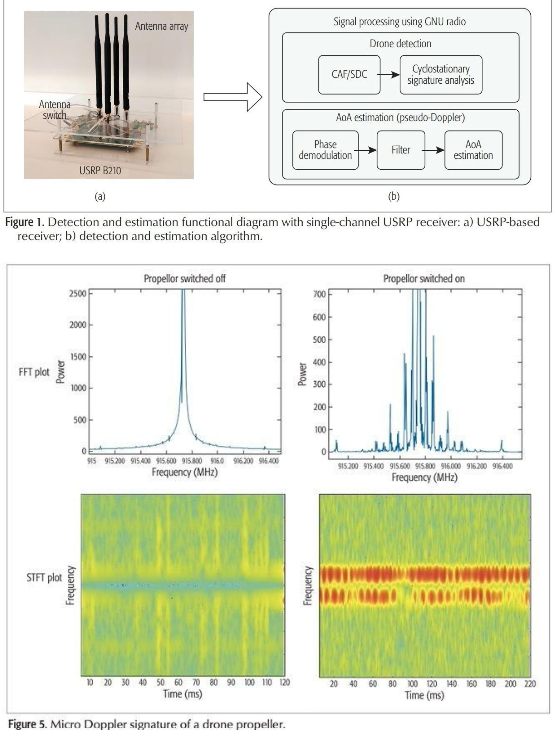
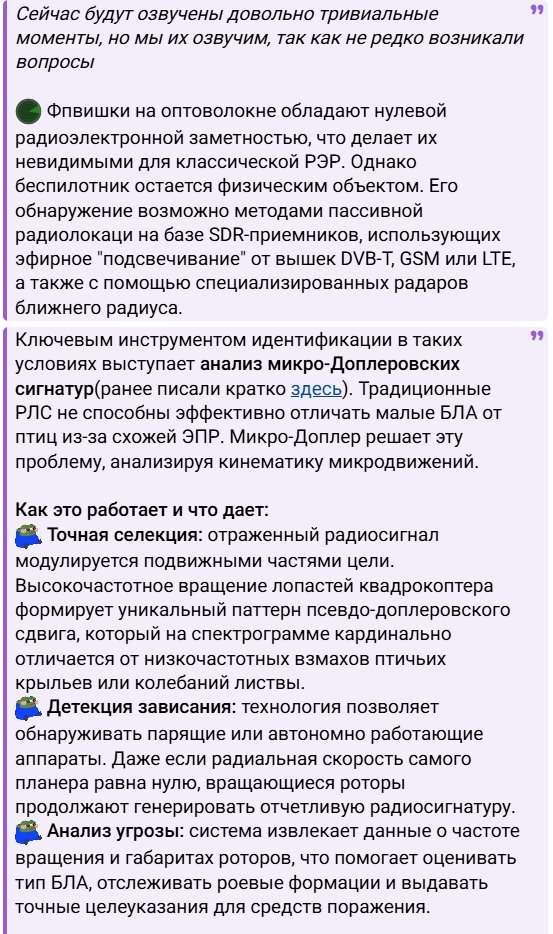
1/ QUICK TAKE by Rus mil bloggers who translated a paper on identifying and tracking fiber-optic drones in flight: "FPV drones utilizing fiber-optic links possess zero electronic signature, rendering them invisible to conventional electronic intelligence (ELINT) systems." t.me/VBiblioteka/17…
2/ "However, a drone remains a physical object. It can be detected using passive radar techniques based on SDR receivers—which leverage ambient radio illumination from DVB-T, GSM, or LTE towers—as well as through the use of specialized short-range radars."
3/ "Under these conditions, the key tool for ID-ing is the analysis of micro-Doppler signatures. Traditional radar systems are unable to effectively distinguish small UAVs from birds due to their similar radar cross-sections (RCS)."
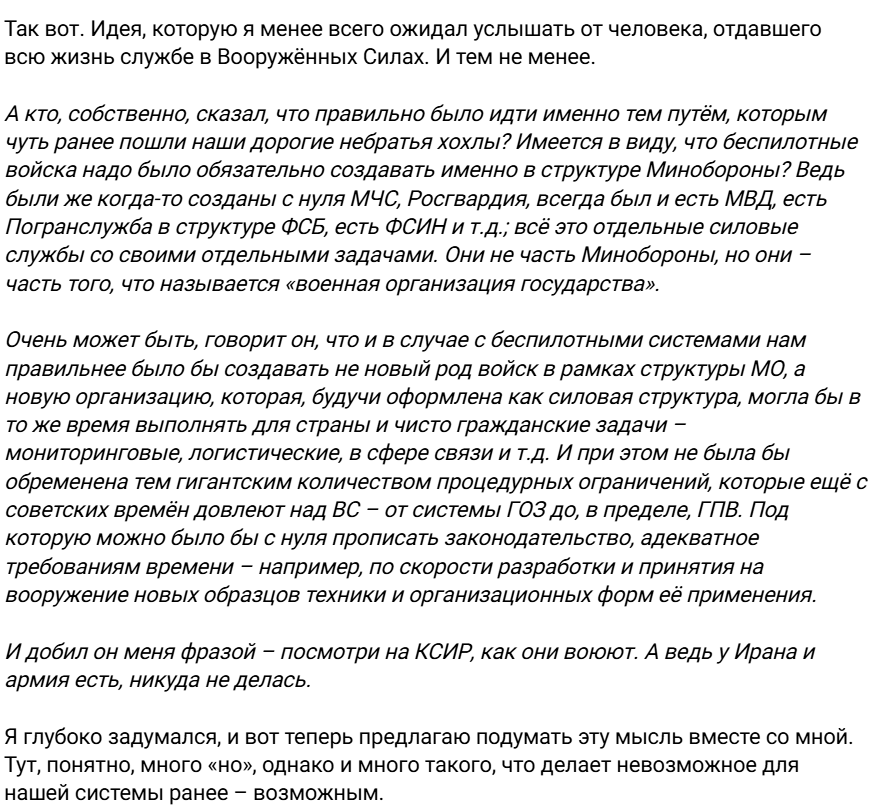
1/ QUICK TAKE: a debate among Rus volunteers on how the country's Unmanned Systems Forces (USF) "could have" developed - instead of the MOD creating the USF, they theorize Rus' National Guard/Interior Ministry-type forces or Iran's IRGC-type scenario. More info in the thread: t.me/chadayevru/4634
2/ "Who, exactly, said it was right to follow the path taken a little earlier by [the Ukrainian military]? Does this mean that unmanned forces had to be created within the Russian Ministry of Defense?"
3/ "After all, the Rus Ministry of Emergency Situations (FEMA-like organization once headed by Shoigu who became the DefMin) and the National Guard were once created from scratch. There has always been a Ministry of Internal Affairs; there is a Border Service within the FSB."
1/ QUICK TAKE: Other Russian mil bloggers are echoing the points made in the quoted thread: "Drone warfare has ceased to be a mere "supplement" to artillery and reconnaissance; it has become the very medium of battle." t.me/barantchik/354…x.com/sambendett/sta…
2/ "This is no longer a story about individual drones, but rather about how the front line has transformed into a zone under constant surveillance and constant fire—a place where any movement of vehicles, troop rotation, ammunition resupply..."
3/ "...or casualty evacuation is under threat. The share of combat losses attributable to drones surged from 10% in 2022 to 80% as early as 2025; the average time required for casevac in certain sectors has ballooned to over three days; and—according to enemy sources—ground robots alone executed more than 7,000 missions in January 2026."