In 1930, the union of American singers spent the equivalent of $10m on a campaign to stop people from listening to recorded music and watching movies with sound. 1/ 
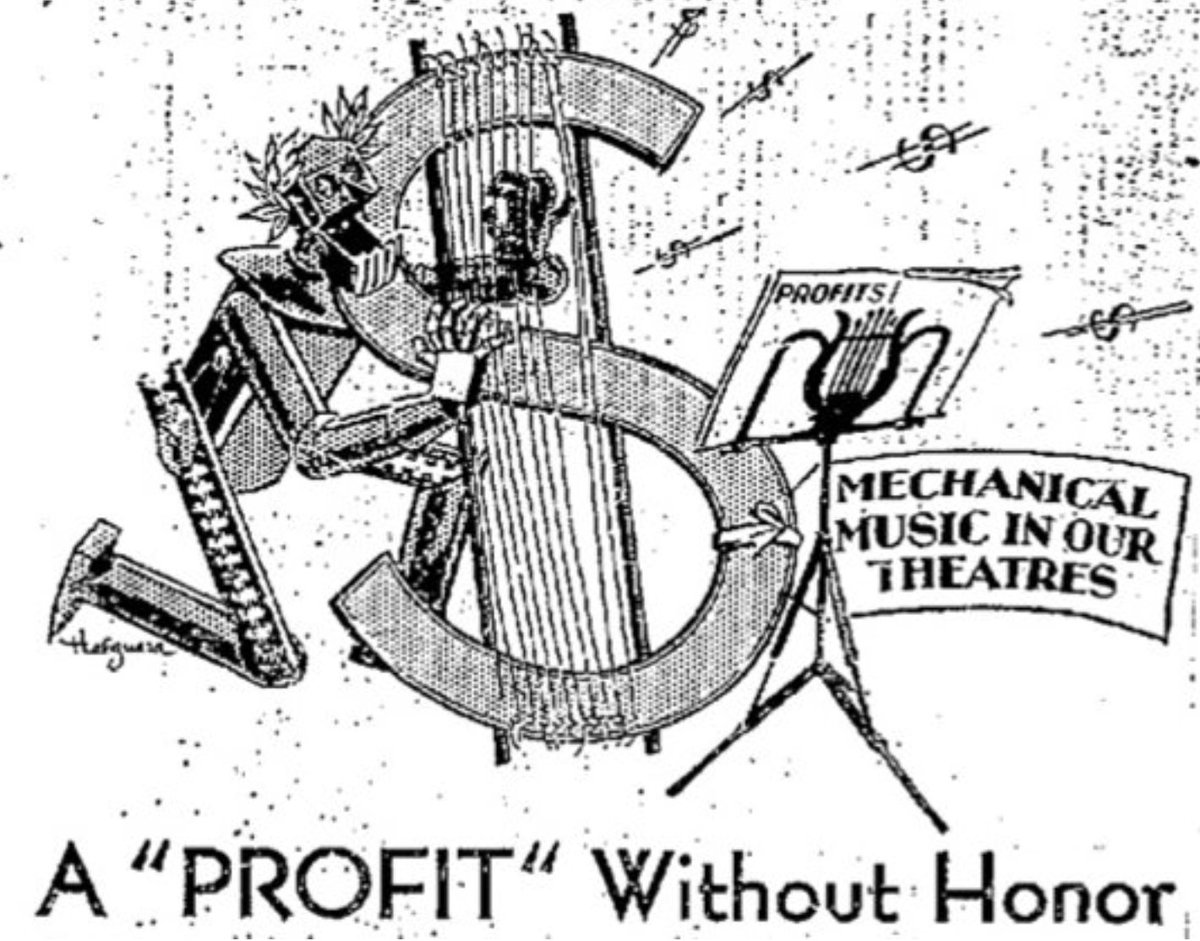
When films were silent, theatres employed local musicians to accompany each screening. But once films gained a soundtrack, local musicians were no longer necessary.
The economic implications were significant: 2/
The economic implications were significant: 2/

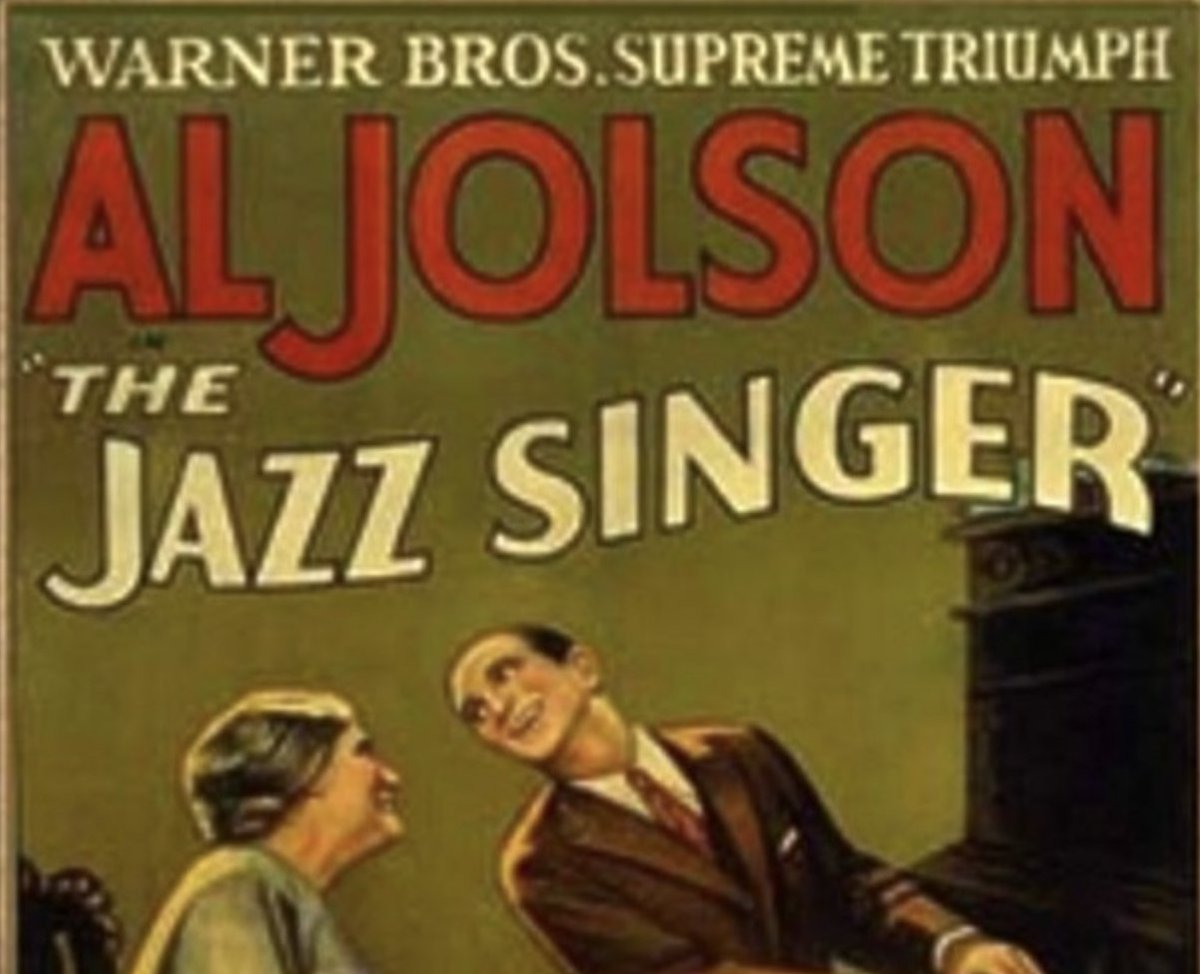
In 1927, around 24,000 musicians were employed in theatres across the US and Canada. But then came the first talking film — The Jazz Singer. 3/
By 1930, some 7,200 musicians lost their jobs — 30% of the pre-talkie total. In some markets, such as New York and Cincinnati, musician unemployment reached 50-75%.
Over time, all theatre musicians were eliminated, and recorded soundtracks became par for the course. 4/
Over time, all theatre musicians were eliminated, and recorded soundtracks became par for the course. 4/
The advent of records, radio, and talking films made creative work scalable:
"300 musicians in Hollywood supply all the 'music' offered in thousands of theatres. Can such a tiny reservoir of talent nurture artistic progress?" 5/
"300 musicians in Hollywood supply all the 'music' offered in thousands of theatres. Can such a tiny reservoir of talent nurture artistic progress?" 5/
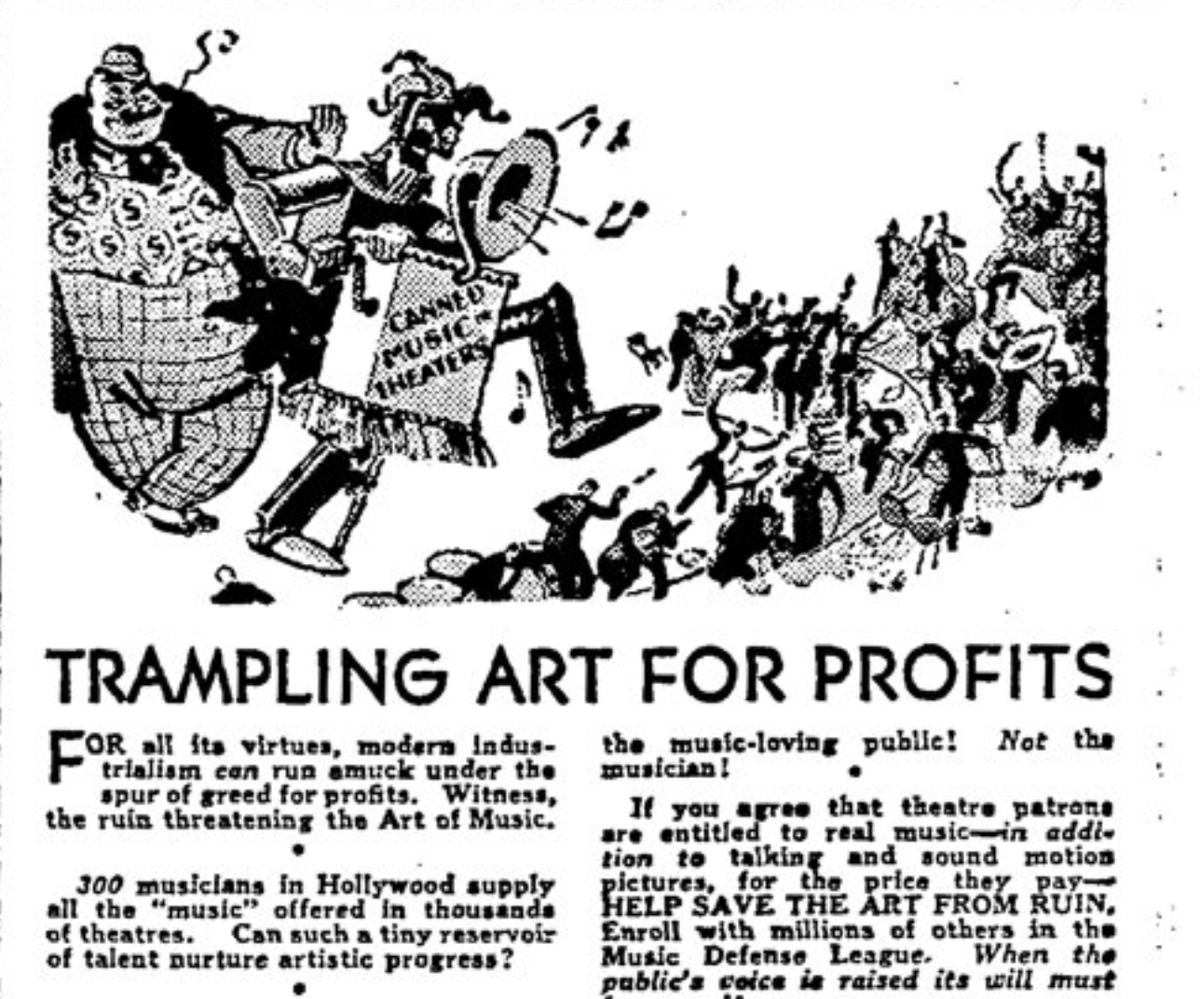
A hundred years ago, it seemed improbable that "canned music" would replace "real" music. Joseph N. Weber, president of the American Federation of Music, predicted that the public will not always accept "like-less, soulless, synthetic music." 6/
Edward More, the Chicago Herald Tribune music critic, agreed with Weber, stating that "the films have a long way to go before they can duplicate living musicians"
Films never managed to "duplicate" living musicians. They didn't have to. 7/
Films never managed to "duplicate" living musicians. They didn't have to. 7/
Disruptive technology doesn't seek to "replicate." More often, it sidesteps and makes old standards and processes redundant.
Records and talking films made music cheaper and accessible to a much larger audience. Most of the audience didn't care about traditional quality. 8/
Records and talking films made music cheaper and accessible to a much larger audience. Most of the audience didn't care about traditional quality. 8/
As a result, we tend to underestimate technology's power to turn in-person work into scalable work.
In many "creative" professions, fewer people can already capture a larger share of the market than ever.
9/
In many "creative" professions, fewer people can already capture a larger share of the market than ever.
9/
Such professions include programmers and designers, but also teachers and fitness instructors.
A Peloton instructor earns about 12 times more than an offline competitor — and can service many more clients at the same time.
nytimes.com/2021/08/31/ups…
10/
A Peloton instructor earns about 12 times more than an offline competitor — and can service many more clients at the same time.
nytimes.com/2021/08/31/ups…
10/
We assume that most professions cannot be scaled in the same way. But there is already evidence to the contrary. Many things that seem ridiculous to us now will seem obvious to our grandkids.
11/END
drorpoleg.com/the-scalable-i…
11/END
drorpoleg.com/the-scalable-i…
To read more about the music wars of the 1930s, check out this piece by @paleofuture:
smithsonianmag.com/history/musici…
smithsonianmag.com/history/musici…
Did you enjoy this thread? I write a weekly newsletter about the future of work, cities, and finance:
drorpoleg.com
drorpoleg.com
• • •
Missing some Tweet in this thread? You can try to
force a refresh