🧵Before 1917, Karl Marx was a niche figure, known mostly to fellow socialists and to economists who critiqued and rejected his system. It was not until Lenin & the Soviets that he attained mainstream salience. This is widely attested in the intellectual history of Marxism.
We start with Karl Kautsky, something of a designated successor to Engels & probably the most prominent Marxist theorist working between the 1890s-1917. He wrote in his memoirs that very few of his fellow socialists read Marx's Capital, and even fewer understood it. 

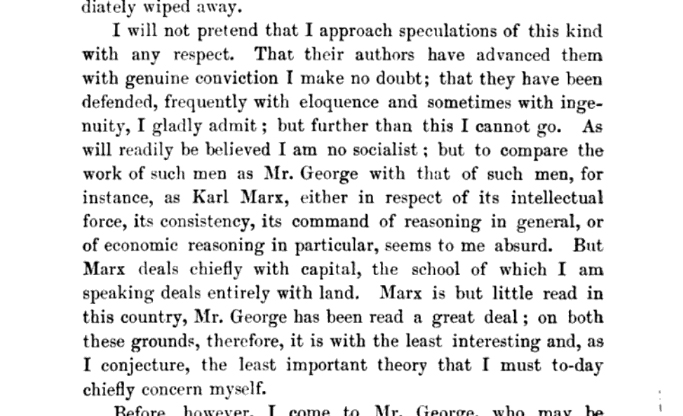
Arthur Balfour, future PM of the United Kingdom and a famously well-read political thinker in his own right, observed in 1885 that Marx was practically unknown in England, compared to the well-known Henry George.
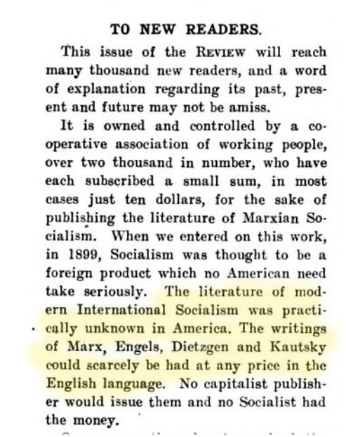
In 1909, the US-based International Socialist Review acknowledged to its readers that it was only in the last decade that Marx became accessible to even fellow socialists in the United States due to a lack of a publisher. Before that he was "practically unknown."
All of that started to change in 1917, when Lenin's Bolsheviks seized control of the Russian government.
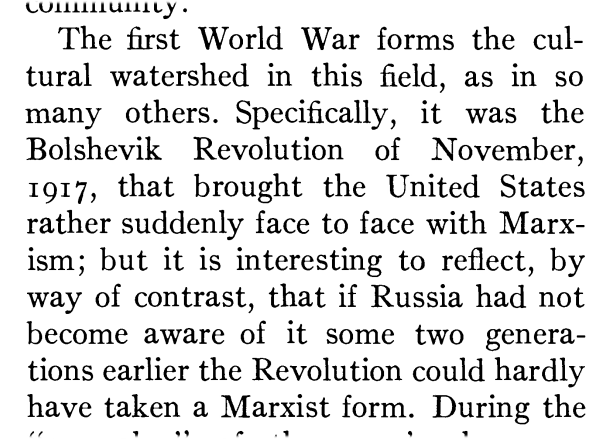
Thomas Nixon Carver taught the main course on socialist theory at Harvard at the time. Here's what he said in 1922 about the Bolsheviks elevating Marxism into the mainstream.
Thomas Nixon Carver taught the main course on socialist theory at Harvard at the time. Here's what he said in 1922 about the Bolsheviks elevating Marxism into the mainstream.

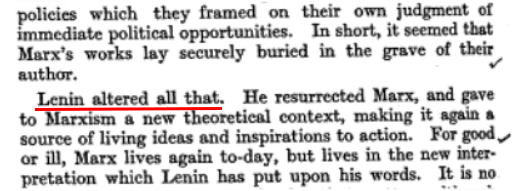
Non-Marxian socialists had a similar reaction. Here is G.D.H. Cole, a Fabian Society member, writing in the New Statesman in 1924 about how Lenin resurrected Marx from the grave.
After the Russian Revolution, numerous scholars remarked that 1917 was a watershed moment for Marx's reputation. Here is Solomon Bloom in 1943 in the Journal of Political Economy.
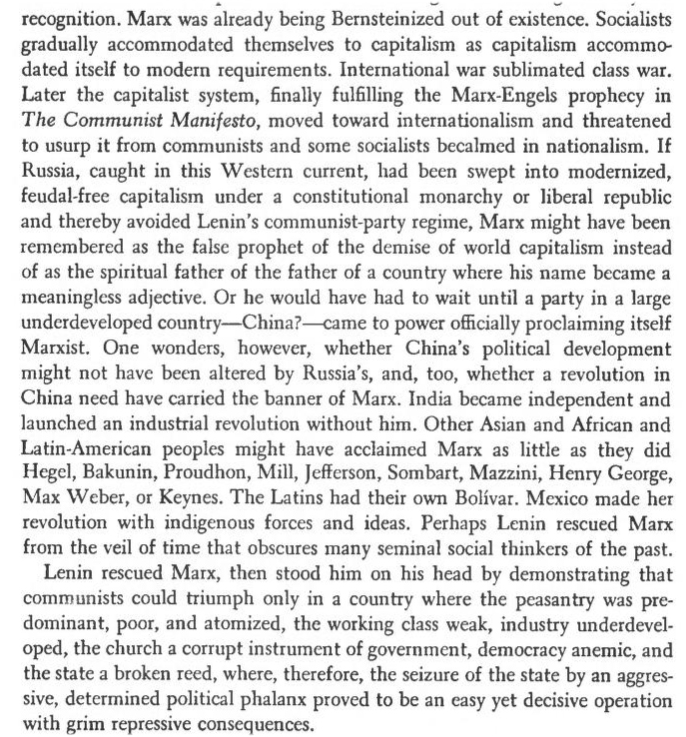
By mid-century, the role of Lenin in elevating Marx from relative obscurity was well known. Louis Fischer pondered as much in his National Book Award-winning intellectual biography of Lenin in 1965.
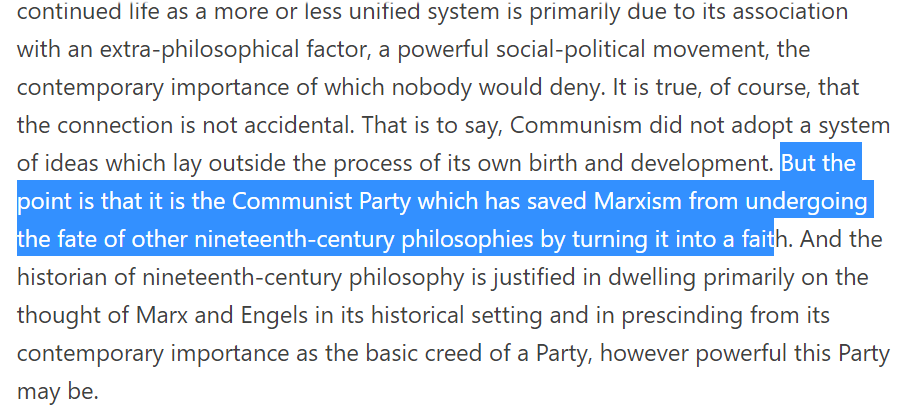
Frederick Copleston, in his landmark multi-volume history of philosophy, makes a nearly identical point by noting that the Bolsheviks saved Marx's reputation from fading into 19th century obscurity.
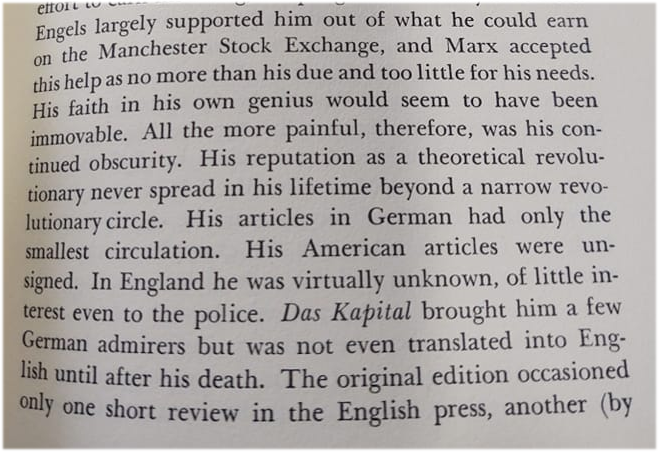
Scholars from across the political spectrum have long observed that Marx was indeed a relatively obscure figure in his own lifetime, and for a good while thereafter. Here is the British historian C. Northcote Parkinson in 1967 noting as much:
Thomas Sowell noting the same thing in his 1985 study of Marxism. Marx was little-known in his lifetime and died in relative obscurity.
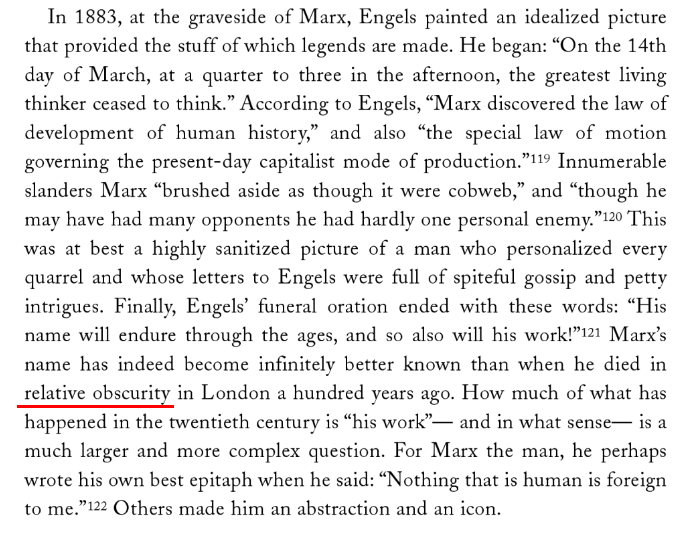
We need not rely on Marx's critics though to confirm these observations. Eric Hobsbawm, arguably the leading Marxist historian of the last century, said as much in his study of the Communist Manifesto's dissemination. It was not until Lenin that Marx gained widespread attention.
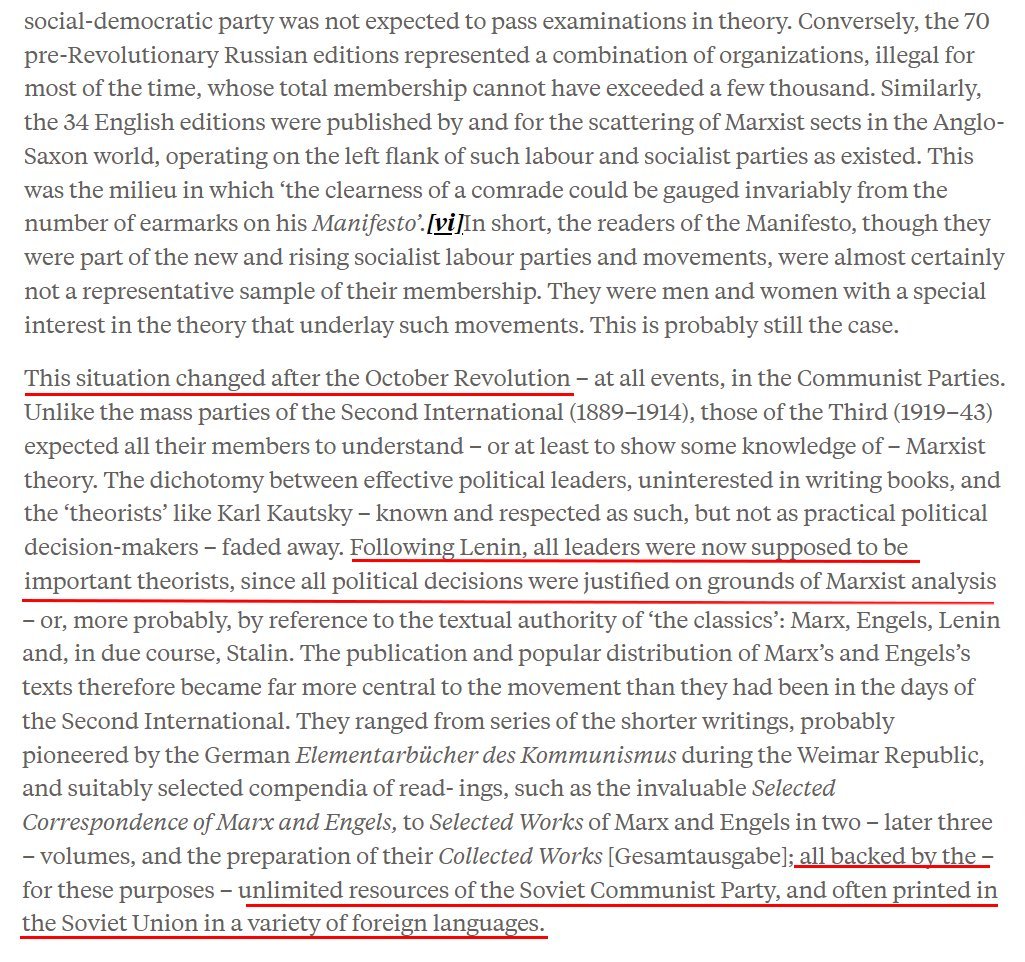
Kirk Willis (1977) similarly observes that Marx was either ignored or rejected by most readers in his classic study of the dissemination of Marxist thought in late 19th century Britain.
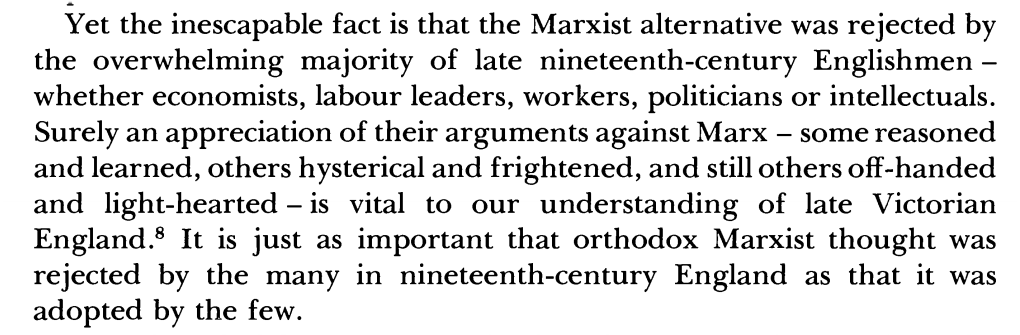
Perhaps Alan Ryan, distinguished political philosopher and professor emeritus at Princeton, summarizes it best in the intro to his own 2014 book on Marxist political thought.

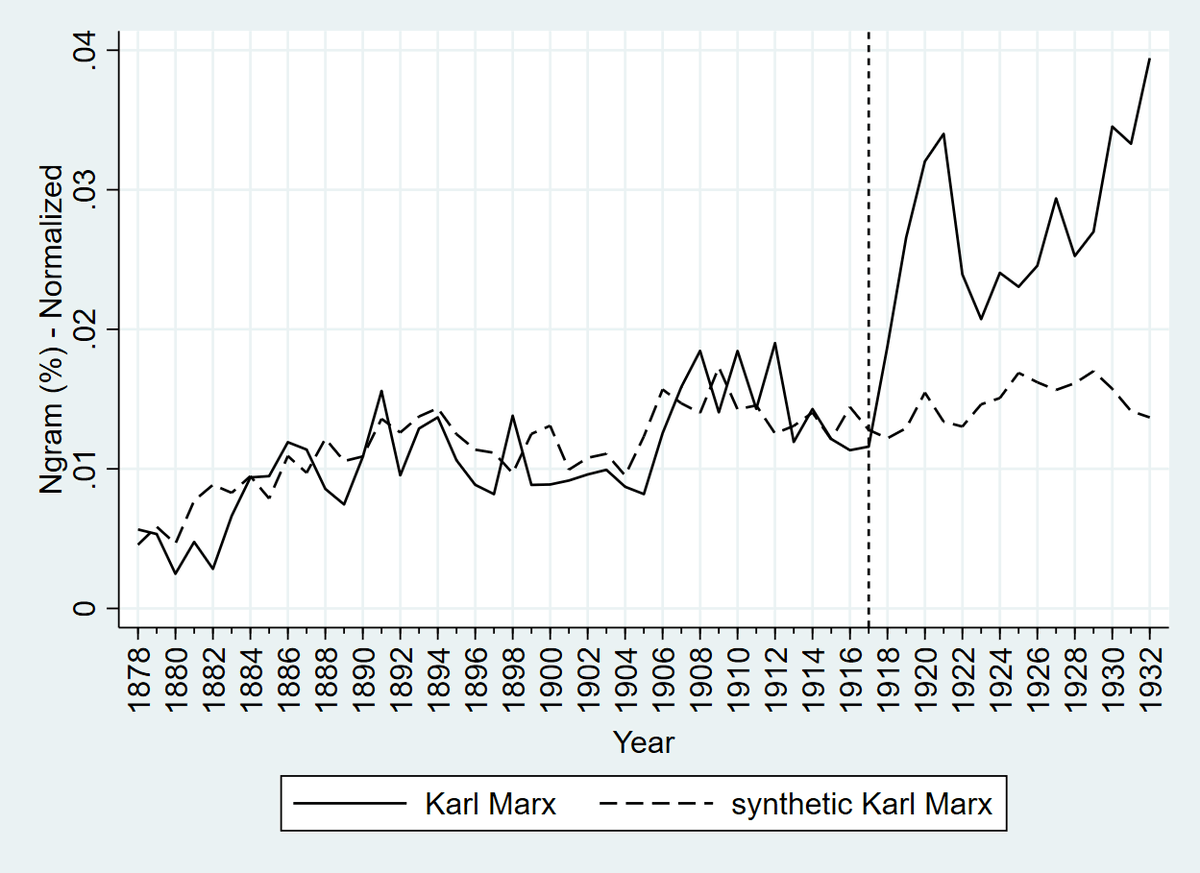
And yes, we now have empirical validation of these observations, which date back over a century. Marx's citation patterns had a significant boost from the Bolshevik Revolution in 1917, after remaining relatively flat in the preceding decades.
journals.uchicago.edu/toc/jpe/0/ja
journals.uchicago.edu/toc/jpe/0/ja
Addendum:
Here is W.E.B. Du Bois (himself a Marxist) complaining in 1933 that Marx was little-known in the United States and largely dismissed by intellectuals as a crank until the Soviets put him on the map in 1917.
Here is W.E.B. Du Bois (himself a Marxist) complaining in 1933 that Marx was little-known in the United States and largely dismissed by intellectuals as a crank until the Soviets put him on the map in 1917.

Addendum II: Here is H.G. Wells in 1933, making a similar observation.
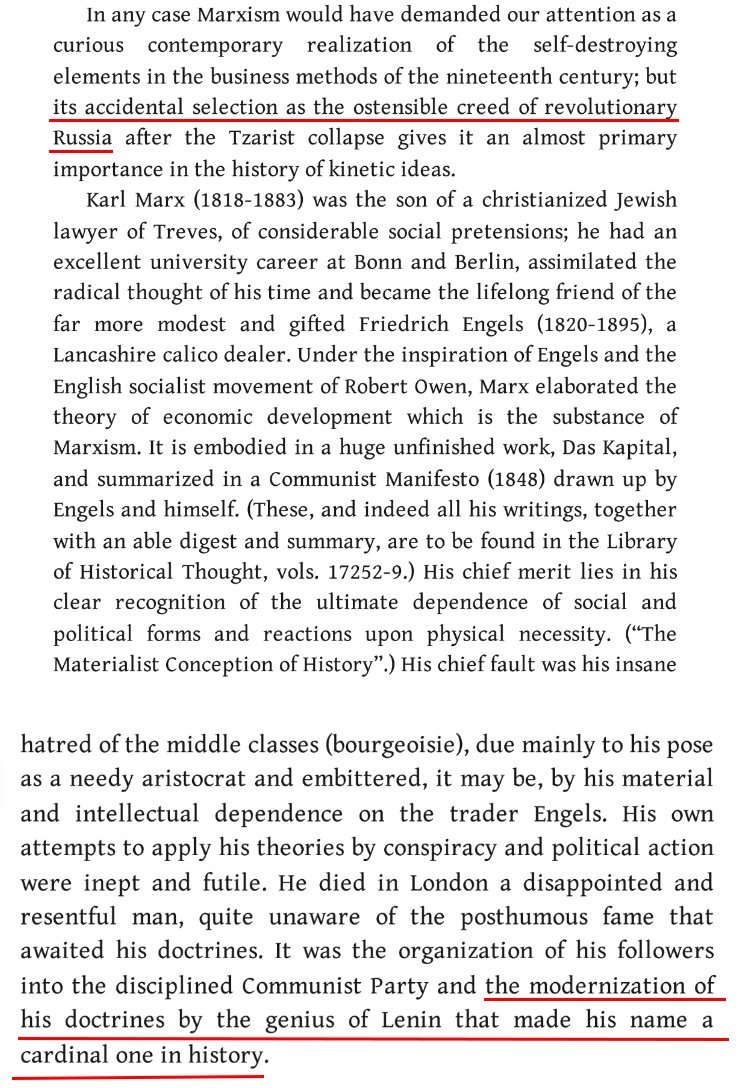
Addendum III:
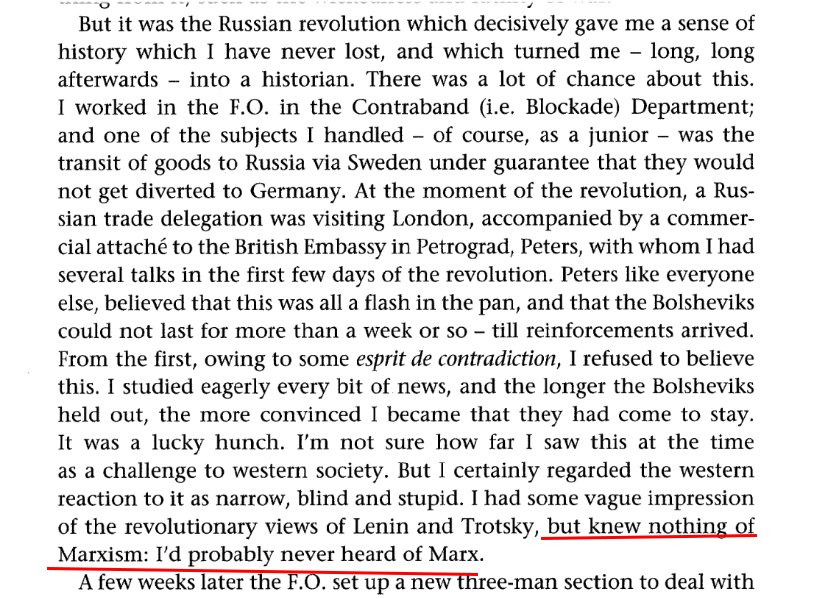
British historian E.H. Carr, who wrote one of the first major histories of the Soviet Union, admitting that he had never even heard of Karl Marx until the Bolsheviks carried out a revolution in his name.
British historian E.H. Carr, who wrote one of the first major histories of the Soviet Union, admitting that he had never even heard of Karl Marx until the Bolsheviks carried out a revolution in his name.
Addendum IV: William Woodruff in his "Concise History of the Modern World," pointing out that Marx might have remained an unknown figure if not for Lenin.

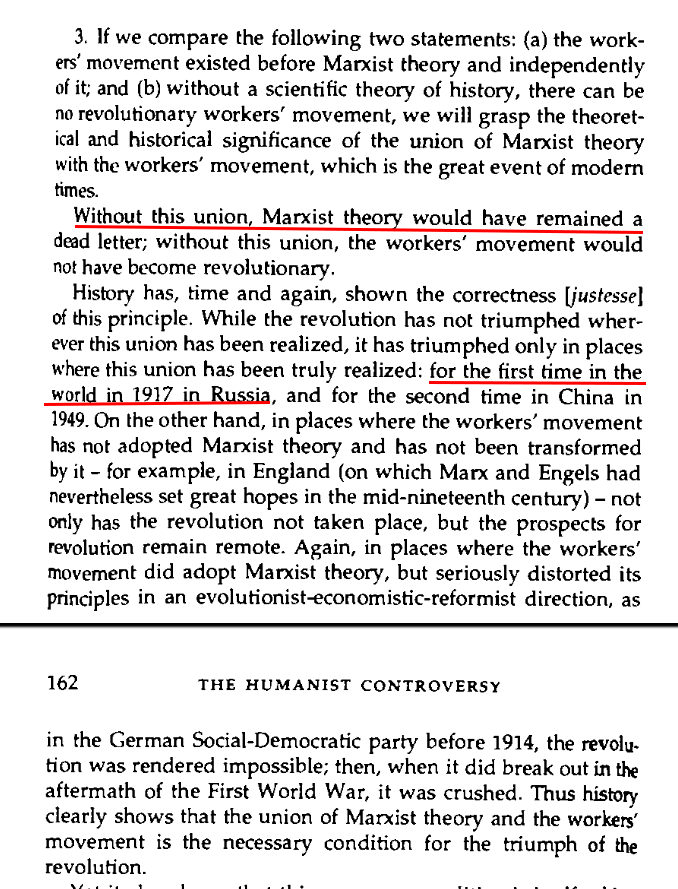
Addendum V: Here is the Marxist theorist Louis Althusser in 1967, stating that without the formula successfully acted on by the Soviets in 1917, "Marxist theory would have remained a dead letter."
He's also a tad skeptical of the earlier SPD iteration.
He's also a tad skeptical of the earlier SPD iteration.
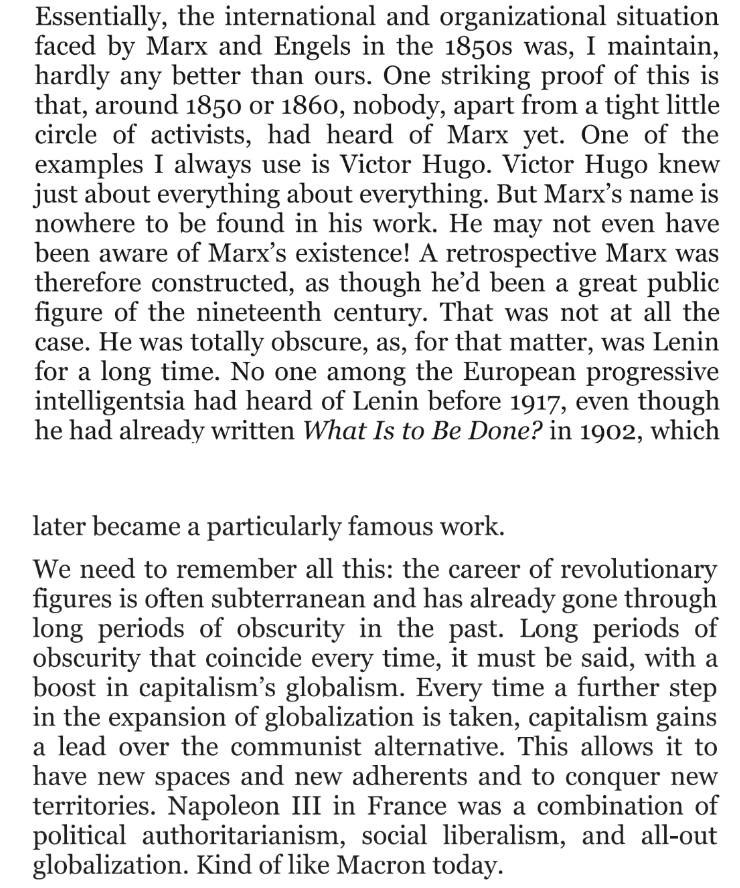
Addendum VI: Alain Badiou, the French Marxist-Maoist philosopher, stating in no uncertain terms that Marx was an obscure figure in the 19th century, and that his reputation as a prominent thinker in that century is a retrospective reconstruction.
Addendum VII: Karl August Wittfogel, one of the original participants in the 1923 seminar that founded the Marxist Frankfurt School, writing in 1960 that Lenin salvaged Karl Marx's reputation from fading into obscurity.
Addendum VIII:
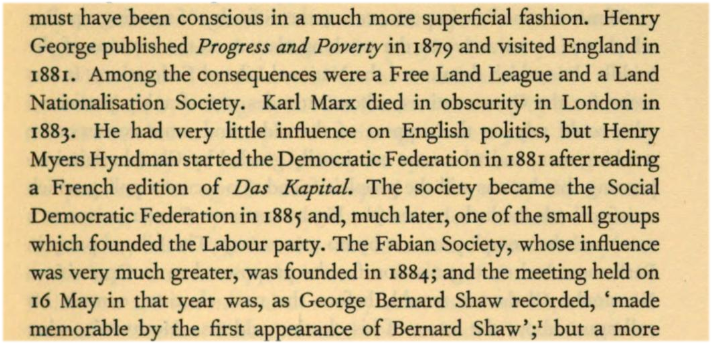
Ivor Jennings, British academic and jurist, remarking on Karl Marx's death in obscurity and limited influence in England.
Ivor Jennings, British academic and jurist, remarking on Karl Marx's death in obscurity and limited influence in England.
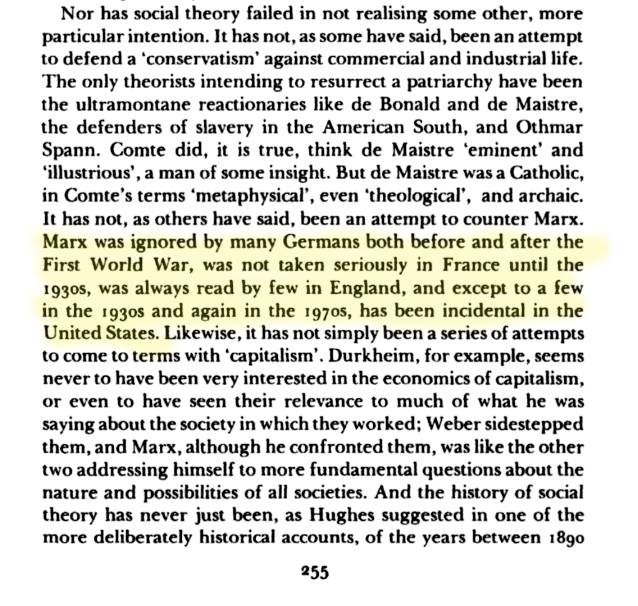
Addendum IX: Sociologist Geoffrey Hawthorn, pointing out that Karl Marx was not read or taken seriously in most countries until long after his death.
Addendum X:
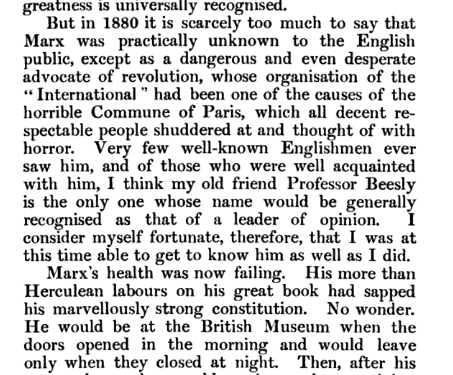
British socialist Henry Hyndman writing in 1911 about how Karl Marx was an obscure figure with almost no recognition in the British public around the time of his death.
British socialist Henry Hyndman writing in 1911 about how Karl Marx was an obscure figure with almost no recognition in the British public around the time of his death.
Addendum XI:
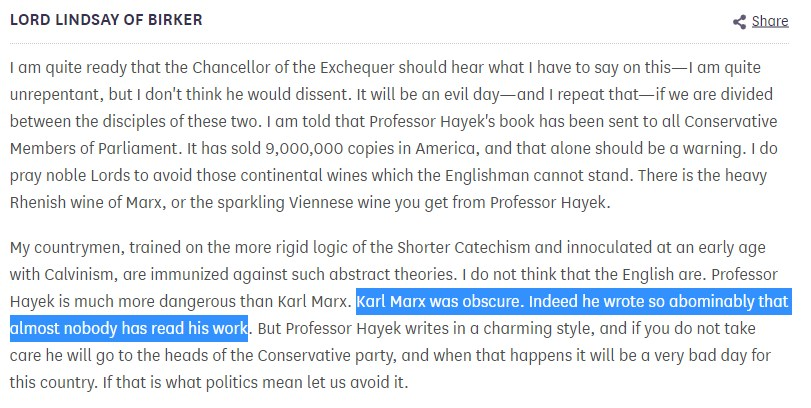
1946 speech by Lord Lindsay of Birker, himself a prominent political thinker, comparing Marx's obscurity in his day to Hayek's prominence after Road to Serfdom came out.
1946 speech by Lord Lindsay of Birker, himself a prominent political thinker, comparing Marx's obscurity in his day to Hayek's prominence after Road to Serfdom came out.
Addendum XII:
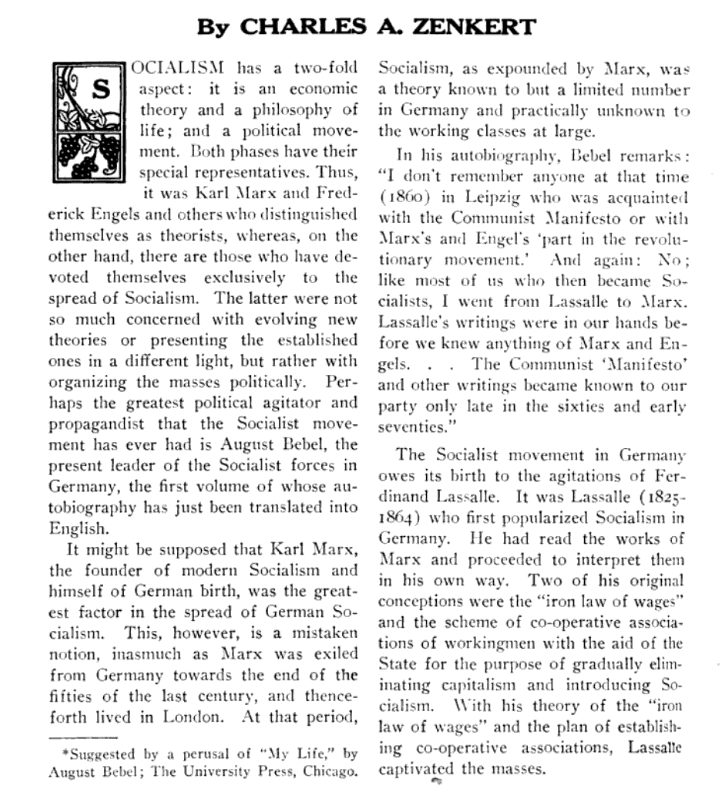
July 1913 issue of the Common Cause magazine, recounting how Marx was "practically unknown" in his lifetime outside of a small number of German socialists.
July 1913 issue of the Common Cause magazine, recounting how Marx was "practically unknown" in his lifetime outside of a small number of German socialists.
Addendum XIII:
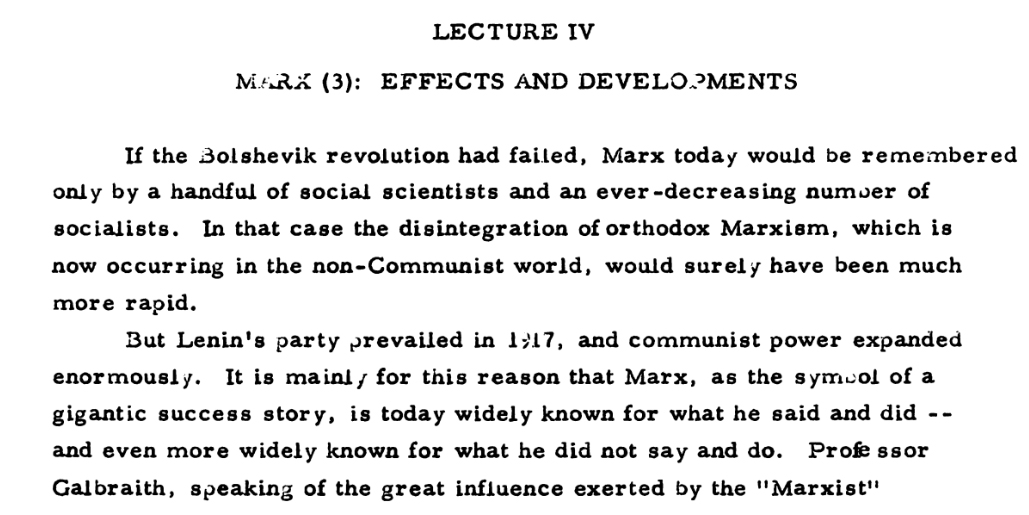
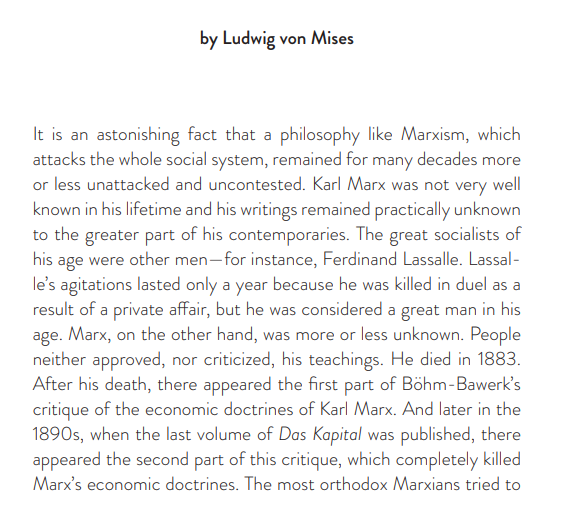
Austrian economist Ludwig von Mises in a 1952 lecture about Marxism, noting that Marx was "practically unknown" in his lifetime and ignored for some time thereafter.
Austrian economist Ludwig von Mises in a 1952 lecture about Marxism, noting that Marx was "practically unknown" in his lifetime and ignored for some time thereafter.
Addendum XIV:
Ludwig von Mises again, in a 1944 essay about how Marx was little-known in Germany's SPD due to a separation between the party's Marxist intellectual elites and its rank and file members, who never even heard of Marx's ideas in any meaningful way.
Ludwig von Mises again, in a 1944 essay about how Marx was little-known in Germany's SPD due to a separation between the party's Marxist intellectual elites and its rank and file members, who never even heard of Marx's ideas in any meaningful way.

Addendum XV:
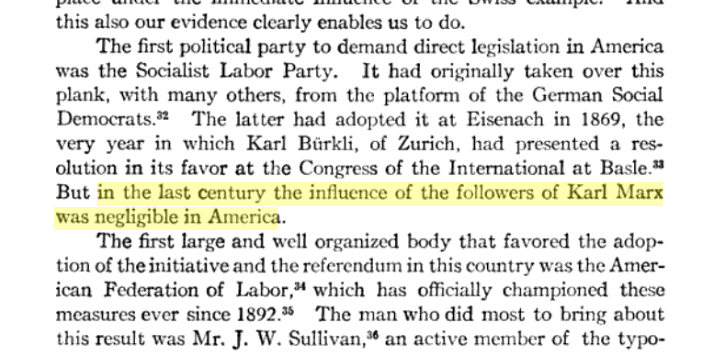
1912 article by Harvard professor William Rappard in the Annals of the American Academy of Political Science, noting that Marxists had a negligible presence in America in the 19th century.
1912 article by Harvard professor William Rappard in the Annals of the American Academy of Political Science, noting that Marxists had a negligible presence in America in the 19th century.
Addendum XVI - Marxist historian CLR James in 1960, correctly observing that until 1917 the notion of a Marxian socialist state emerging was considered nonsensical. Lenin changed that.
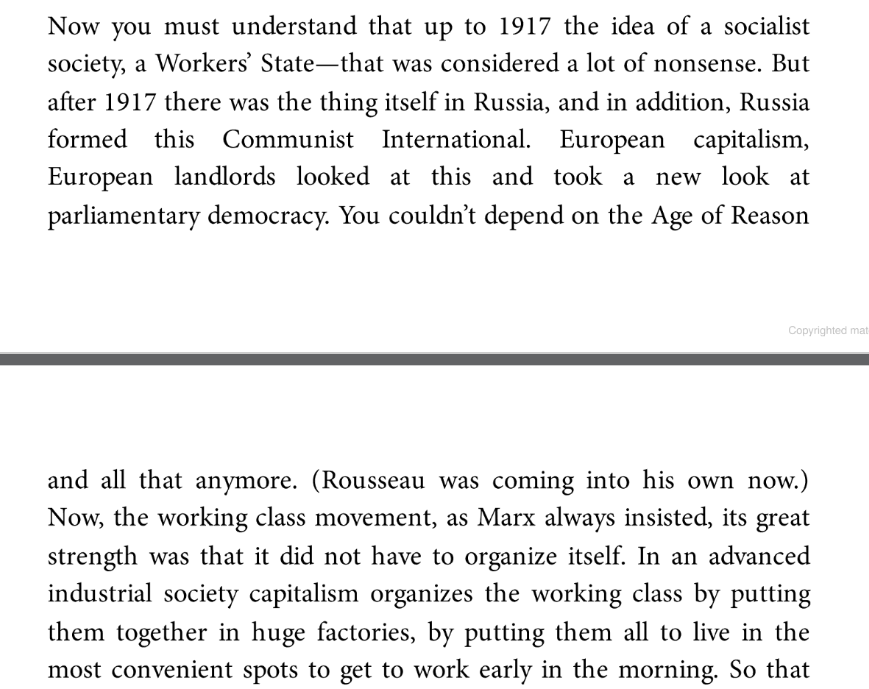
Addendum XVII: here is Marxist theorist Rosa Luxemburg in 1918, carrying on about how the Bolshevik revolution had saved Marxist socialism from social democracy.

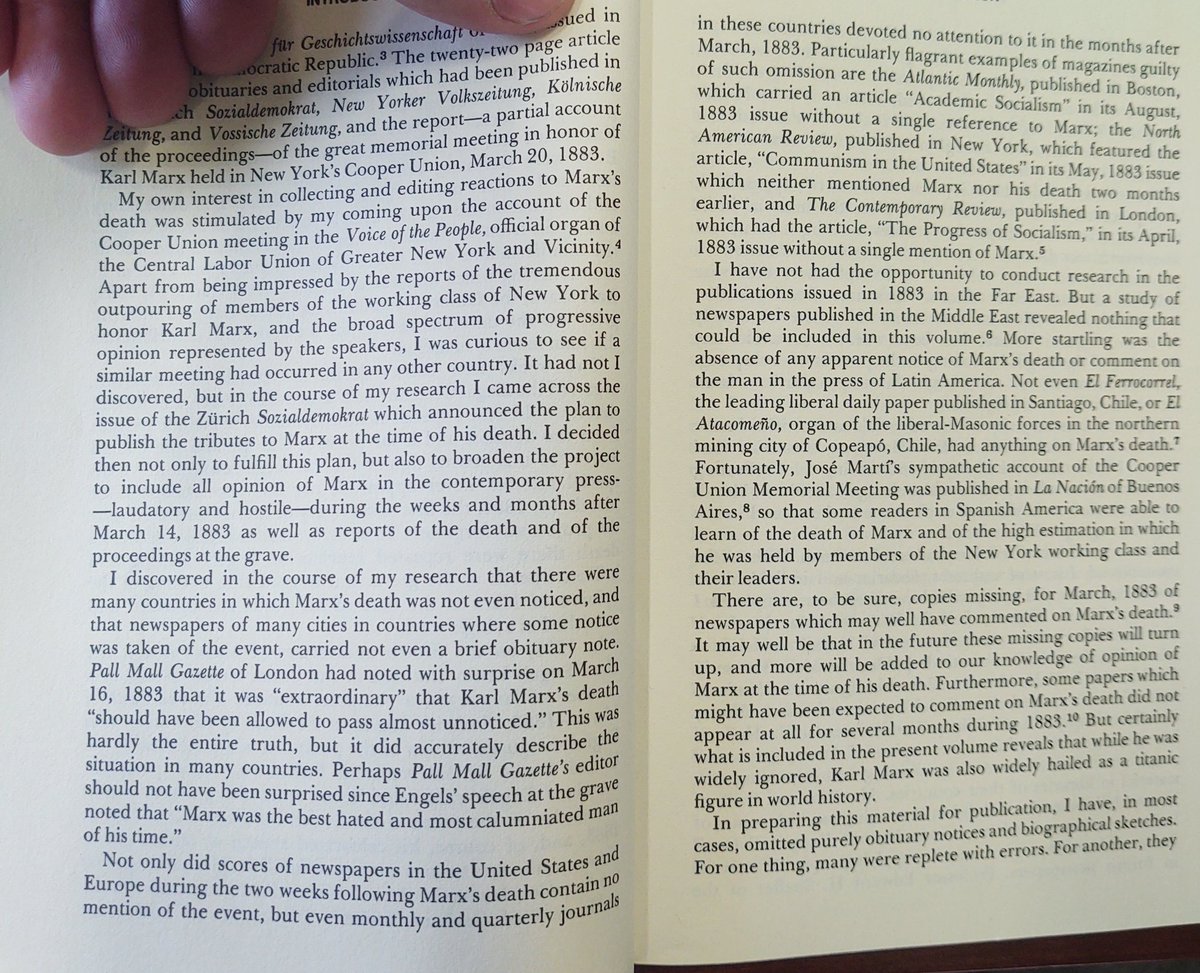
Addendum XVIII: socialist historian Philip S. Foner documenting his surprise that almost nobody noticed Karl Marx's death outside of the socialist far-left.
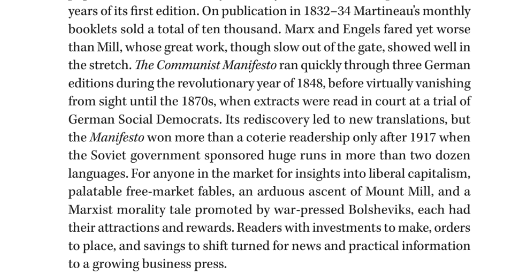
Addendum XIX: Edmund Fawcett in "Liberalism: the Life of an Idea"
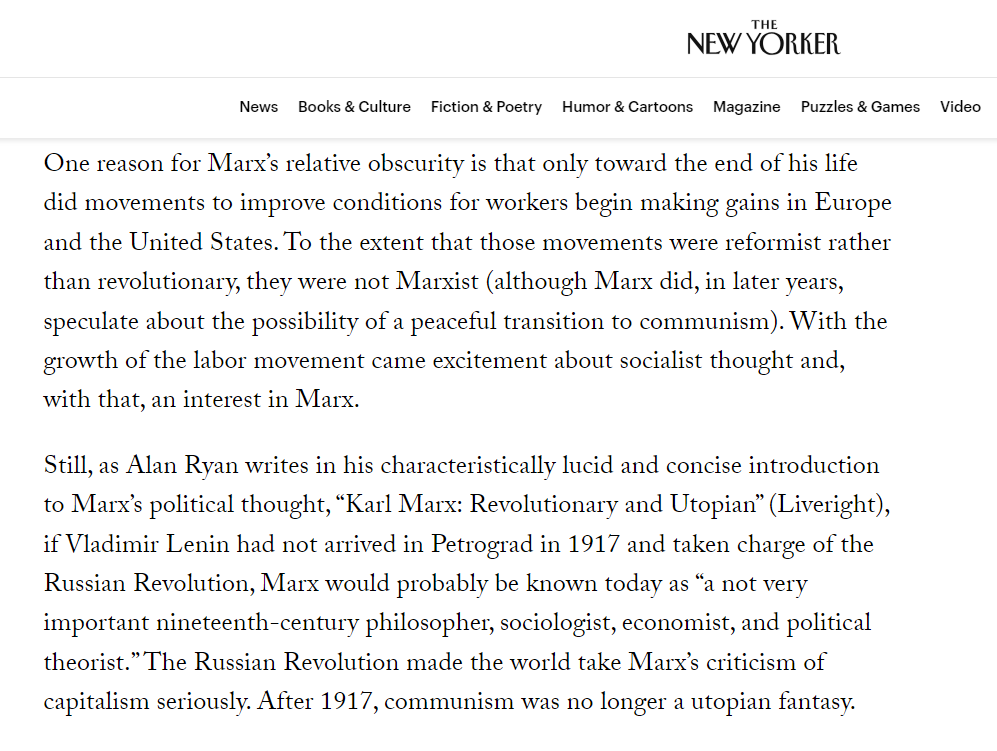
Addendum XX: Louis Menand in the New Yorker in 2016, noting Karl Marx's "relative obscurity" in his lifetime while also repeating Alan Ryan's observation that the Soviet Union put Marx on the map in 1917.
newyorker.com/magazine/2016/…
newyorker.com/magazine/2016/…
Addendum XXI:
Here is British historian Paul Adelman in his 1972 history of the Labour Party, noting that Marx died in obscurity as an almost completely unknown figure in Britain.
Here is British historian Paul Adelman in his 1972 history of the Labour Party, noting that Marx died in obscurity as an almost completely unknown figure in Britain.

Addendum XXII:
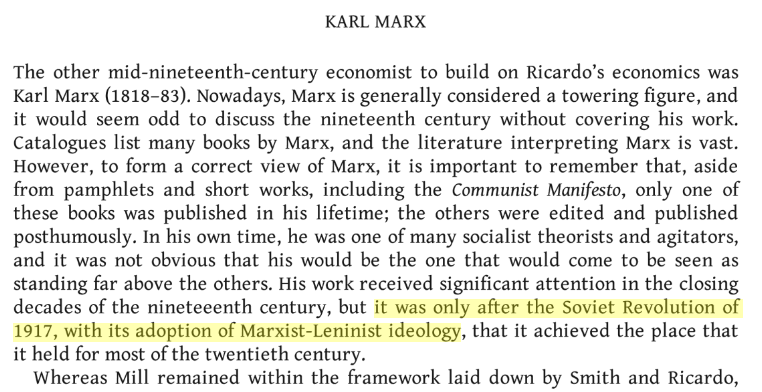
Roger E. Backhouse, "The Penguin History of Economics" (2002)
Roger E. Backhouse, "The Penguin History of Economics" (2002)
• • •
Missing some Tweet in this thread? You can try to
force a refresh