Phil Magness Profile picture
Economic historian @independentinst. Opinions = my own. Co-author of the most comprehensive study ever done on the question of "what is neoliberalism?"
Apr 25 9 tweets 5 min read
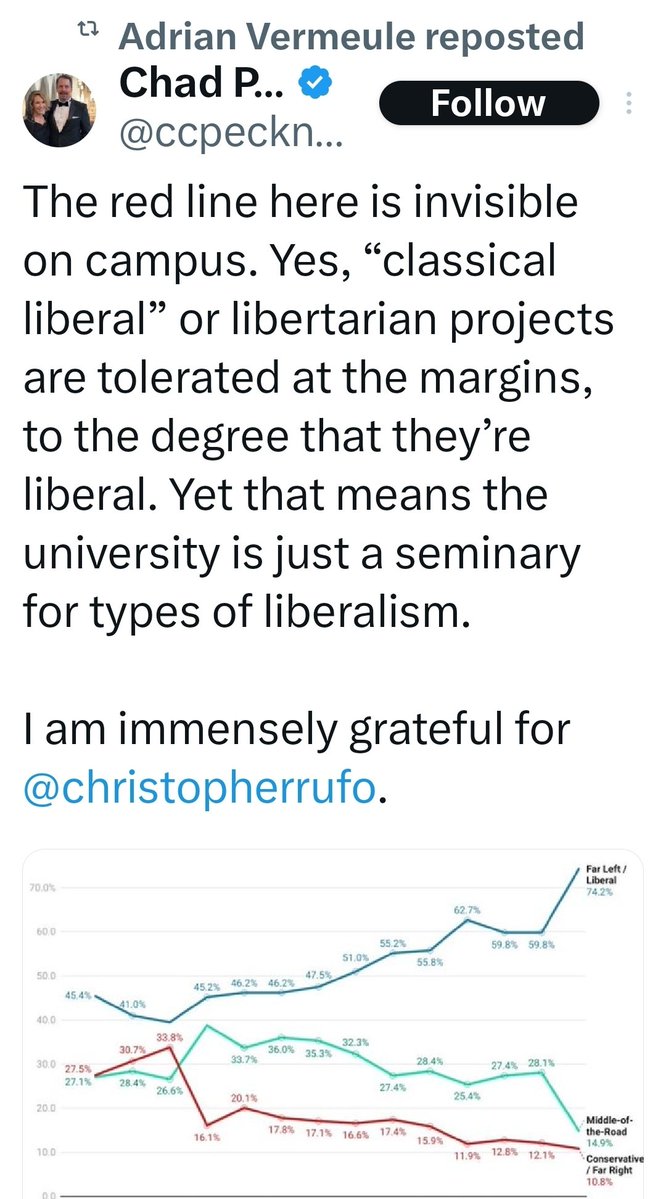
1. There are very few libertarian/classical liberal hubs in academia.

2. Those that exist are under a barrage of Nancy MacLean-style attacks from the far left.

3. Pecknold has never experienced that, nor has he done anything to move the campus needle rightward in his own career Image I speak on this from experience, btw. I was in the trenches fighting the AAUP, the Unkoch mvmt, MacLean etc. for a decade.
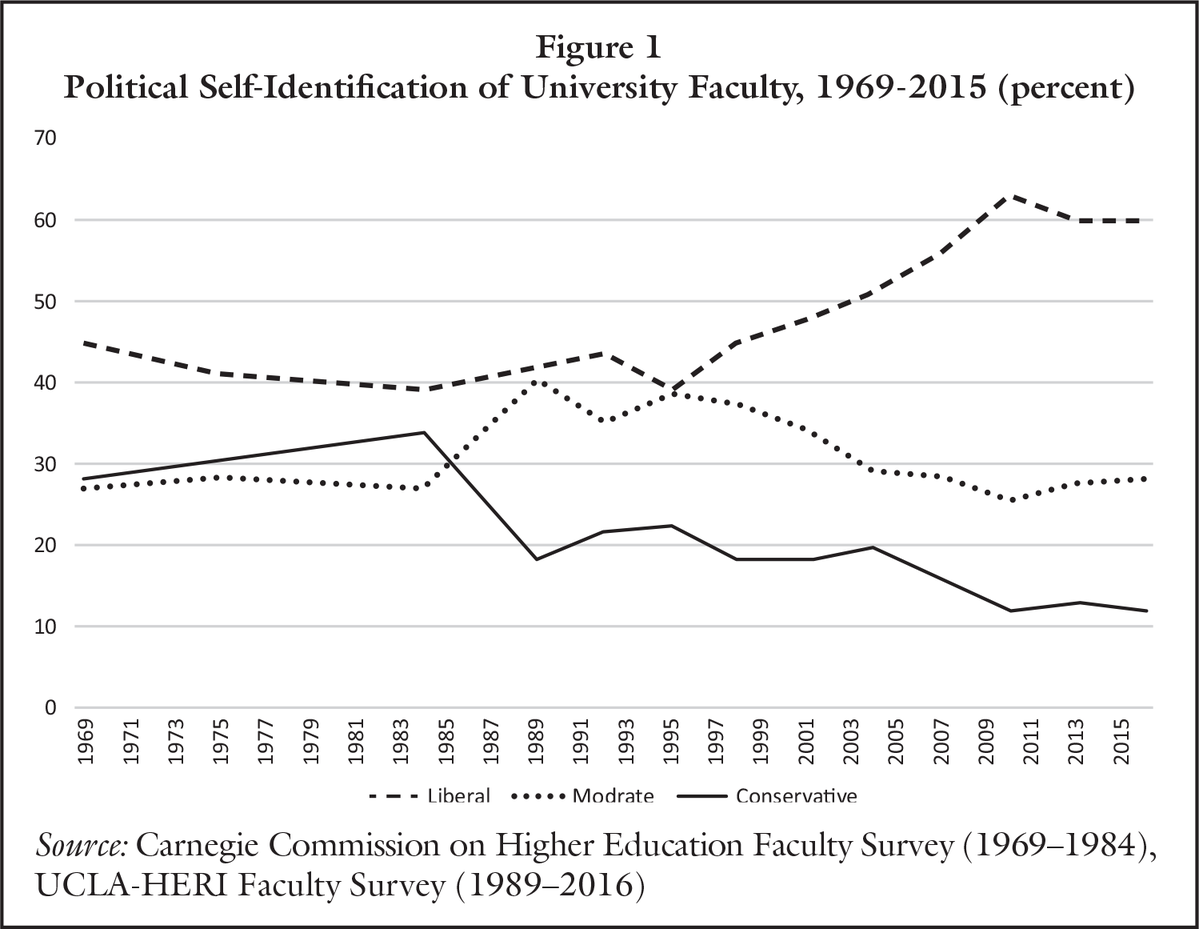
Also, I assembled the original version of the faculty ideology chart Pecknold shared above as part of my research on higher ed bias. I published it in my book w Jason Brennan, and in several subsequent journal articles and popular outlets.

Pecknold was AWOL from that fight and a complete nonentity in the scholarly debate around it.Image
Apr 24 4 tweets 5 min read
Time for a history lesson.

In the founding era, a 10 miles square block was seen as sufficiently large space for a capital that could encompass the whole of the federal government's operations. This was done out of a concern that the federal government's presence in any one state would exert undo influence upon that state's own government, and also become unduly influenced by the host state's political establishment. Both problems were very real and tangible issues in the 1780s-90s when the capital was located in Philadelphia, New York, and briefly in a few other locations. The decision to create a new and completely distinct federal district was a direct response to that problem.

Originally, 100 square miles was more than sufficient to contain the operations of the federal government and keep them relatively buffered from the neighboring states. Unfortunately, the federal government eventually outgrew the District. Part of that happened in 1846 when, at the behest of slaveowners, Congress reverted the Arlington side to Virginia (recall that Arlington Cemetery was formerly the site of a large plantation belonging to Robert E. Lee's wife). The measure was controversial at the time. Former president John Quincy Adams, then serving in Congress, thought that the retrocession was blatantly unconstitutional and hoped that it would be challenged at some point in the Supreme Court (a challenge was attempted in the 1870s, but the Court punted on the issue of retrocession and settled the case on technicalities that avoided weighing in on its constitutionality).

Retrocession had immediate consequences for the capital, because it took away a geographic buffer around the city that had thus far insulated it from the politics of the two surrounding states. Abraham Lincoln called attention to this problem during the Civil War because it also made the capital less-defensible from military attack. In 1861 he explicitly asked Congress to repeal the 1846 retrocession and return Arlington to the District. Congress never acted on his request though, as the battle lines of the war soon shifted away from the capital (in 1861-62 when Lincoln's request was pending, they came within a few miles west of the city, with major battles in Manassas, Virginia). Lincoln also hoped to bring Arlington back into the District because he was working on a bill to abolish slavery inside the capital's boundaries and that would have freed the slaves on the Custis-Lee plantation and other neighboring Virginia estates (he signed it in April 1862).

After the Civil War, the federal government continued to grow until it eventually ran out of space in the now-shrunken District. In 1909 President Taft recognized this problem on the horizon, and tried to unretrocede Arlington as expansion space for federal offices and federal parkland. He made it a major goal for his second term after the 1912 election, but lost the race.

The federal government grew rapidly in the following years, particularly during World War I. The War Department outgrew its office buildings and had to erect temporary structures along the present-day national mall, which were still there at the start of World War 2. They had planned to move into a new permanent structure in the Foggy Bottom neighborhood but it was too small upon completion (the State Department now occupies that building).

DC effectively ran out of room sometime in the WW2 period and outgrew its residual boundaries on the former Maryland side. The construction of the Pentagon in 1941 became the solution, as well as a major milestone that set the precedent for "core" federal departments spilling out beyond the boundaries of the district. Congress was concerned about this effect at the time as it placed essential federal functions in the jurisdiction of neighboring states. During the war, they even gave serious consideration to a bill from Sen. Pat McCarran that would have reverted Arlington to the District in conjunction with the War Department's relocation to the Pentagon. Much like Lincoln's efforts during the Civil War, the McCarran bill withered after the end of World War 2 because it was no longer seen as a pressing issue.

But the Pentagon move set the precedent, and in the decades that followed dozens of other departments started to spill over into Virginia and into neighboring Maryland.

We've now reached the point in both states that the federal government's presence exerts a controlling influence on their respective state governments - or precisely the scenario that the founders aimed to avoid in 1789-91 when they created the 10 miles square federal District of Columbia. The DC suburbs are now the tail that wags the dog in Annapolis and Richmond, such that the politics of both states are largely subservient to federal government interests and people living hundreds of miles away from DC are now governed by the political preferences of those living inside the DC beltway. One other twist of the story:

Prior to the 1960s, most state legislatures followed the design of the US Congress in how they allocated their districts. The state House seats were divided by population according to the census, but state Senate seats were divided by geography to represent different regions of the state (yes, both were susceptible to being gerrymandered, but the idea was to have different political subdivisions in each chamber so that no faction or region gained a controlling monopoly on the state government). We know that this split design was the intention of the founders, because they implemented it and even based the Constitution's House/Senate distinction on older state-level versions of the same system.

In the 1960s though, the Warren Supreme Court issued a series of rulings that invalidated all state constitutions that allocated their senate seats by geography. The new court order required apportionment by population, so state senate seats simply became larger versions of state house seat. Virginia was one of the most heavily affected states, because the populous DC suburbs gained the most in state senate representation. In the decades that followed, that shifted the entire political locus of the state to the DC Beltway. And now it is the tail that wags the dog for the entire state.
Apr 21 8 tweets 3 min read
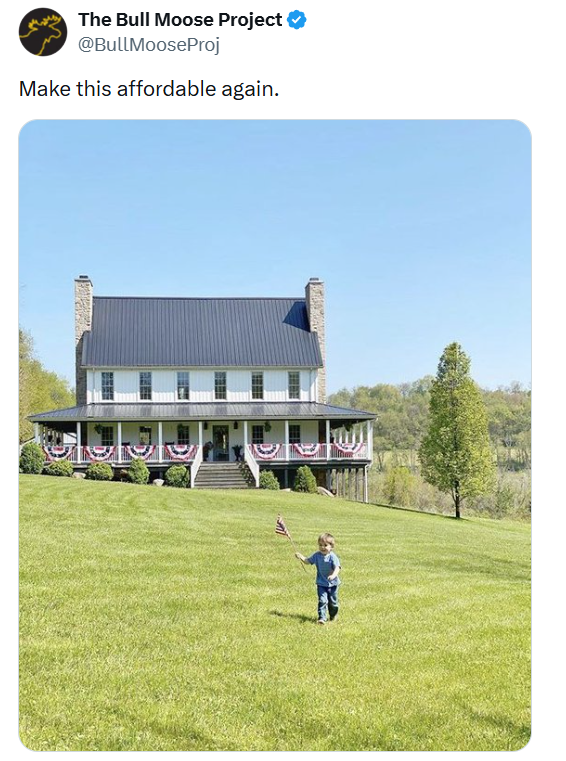
🧵Yesterday, a Vance-aligned group called the Bull Moose Project posted this viral picture of an old farmhouse on sprawling acreage, purporting to illustrate how once-common rural housing became unaffordable in the United States.

I did some digging into the photo... Image It turns out that there are lots of pictures of this house online...because it isn't a historic farmhouse. It's a modern design of a house intended to look like a historic farmhouse. Image

Apr 11 4 tweets 2 min read
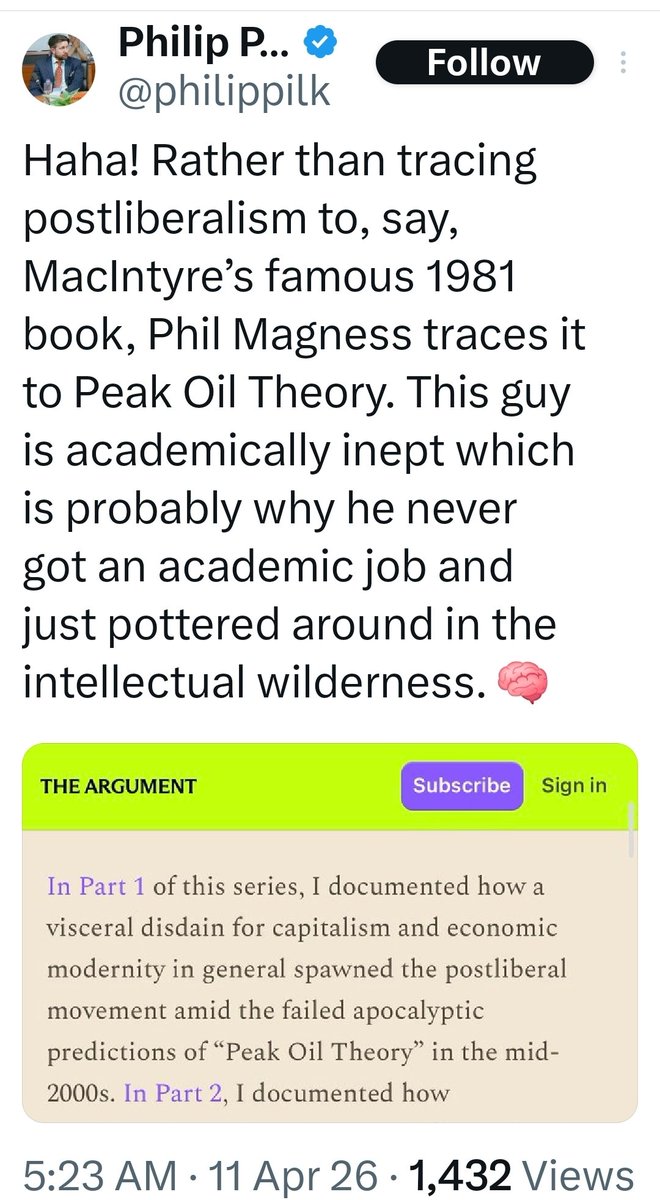
Oh my. Pilkington is mad at me over my article on the Orban government's subsidization of careers for postliberal activists.

What he doesn't mention: he is employed by the Orban government and depends on that same goulash train for income. Image Link to the full article:

theargumentmag.com/p/god-orban-an…
Feb 12 4 tweets 2 min read
"The rise in anti-Semitism on the right is attributable to a handful of individuals whom Hazony is too cowardly and embarrassed to condemn. Like a vengeful alcoholic at an intervention, he is lashing out and blaming everyone but himself for the wreckage he helped create" commentary.org/articles/james… Also note: the picture of Hazony in the banner image is from him speaking at an event cosponsored by MCC, aka Viktor Orban University.
Jan 17 6 tweets 2 min read
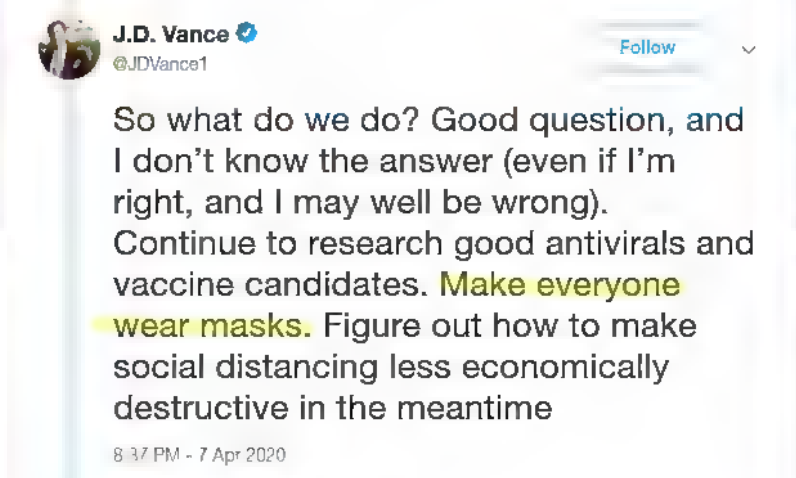
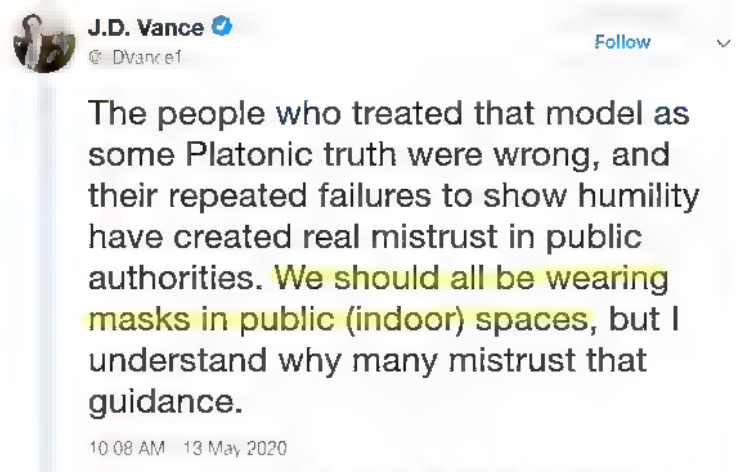
Another scrubbed JD Vance tweet from 2020 where he calls on the government to "make everyone wear masks."

Note that in 2022 Vance reinvented himself as a mask opponent for his senate campaign. Image Another one from May 2020: Image
Jan 13 6 tweets 4 min read
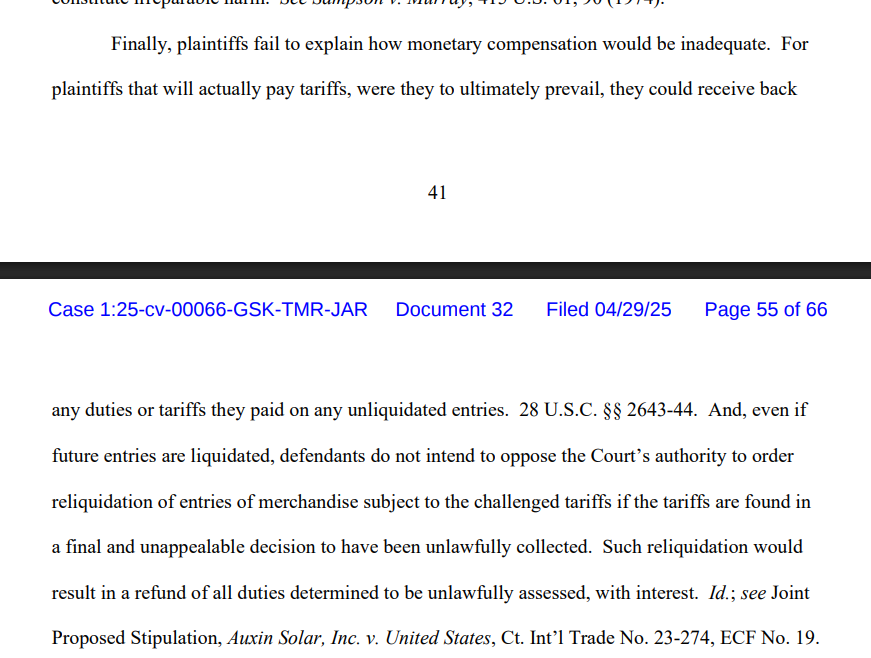
Earlier today, President Trump made a last ditch attempt to salvage his tariffs before the Supreme Court by claiming that it would be impossible to refund them.

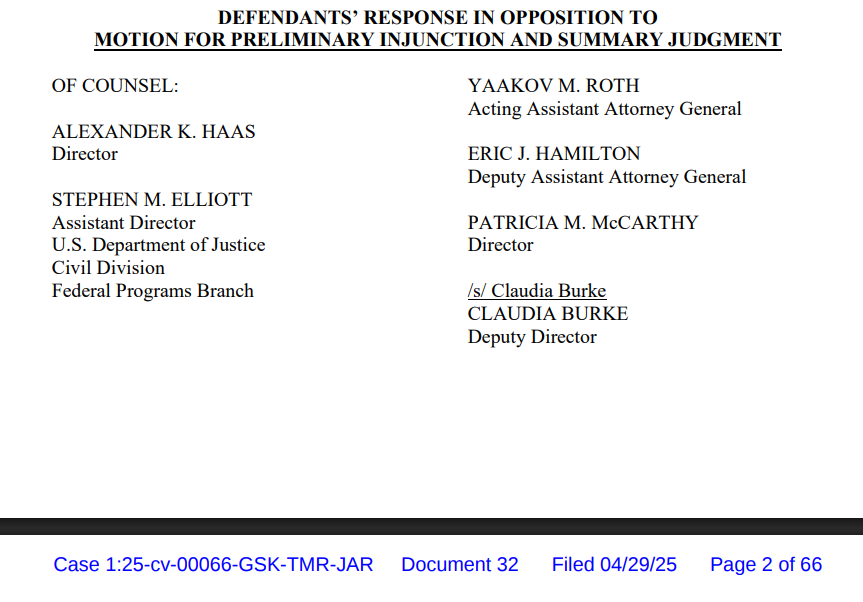
There's a problem. Trump's own DOJ has been admitting in court filings for months that refunds are possible.🧵 Here's the Trump DOJ's initial response on April 29, 2025, admitting that if they lost an unappealable decision, the government would refund the illegal tariffs with interest.

libertyjusticecenter.org/wp-content/upl…Image
Image
Nov 4, 2025 10 tweets 2 min read
10 things to listen for in tomorrow's SCOTUS hearing on tariffs:

1. Will the DOJ try to argue that tariffs are not taxes, but regulatory "surcharges" under the international commerce clause out of the hope that this gives them more leeway under delegation of congressional power? 2. Will Roberts accept a "tariffs are not taxes, they're regulations" argument from Trump in light of his (in)famous Obamacare tax argument from Sebelius?
Oct 22, 2025 5 tweets 2 min read
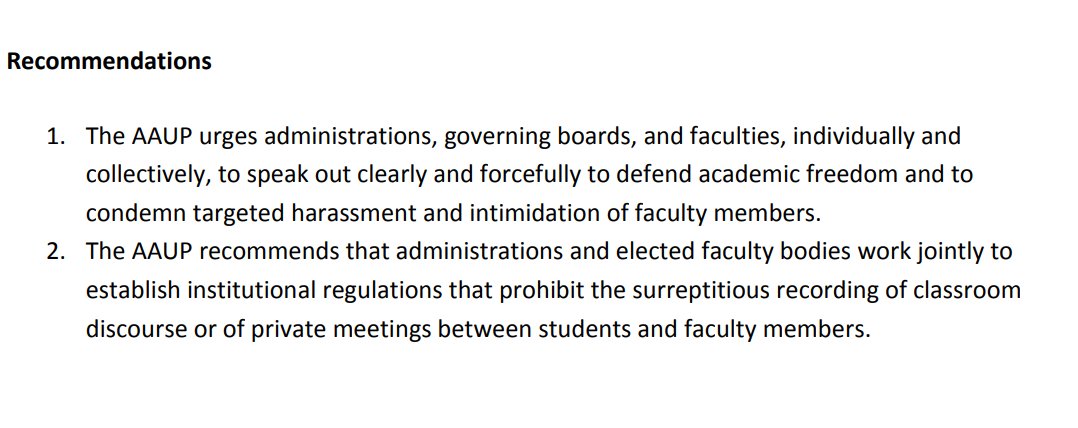
In 2016 the @AAUP launched a campaign urging colleges to ban conservative students from recording professors in the classroom.

I FOIA'd emails of Hank Reichman, their VP at the time & author of the policy. It revealed he was working with a Marxist group to secretly record free-market economics faculty at a conference he disliked.

The AAUP has always been a coven of left wing partisan hacks and hypocrites. @AAUP For those who asked, here is the policy recommendation adopted by Reichman's committee.

aaup.org/sites/default/…Image
Oct 8, 2025 9 tweets 3 min read
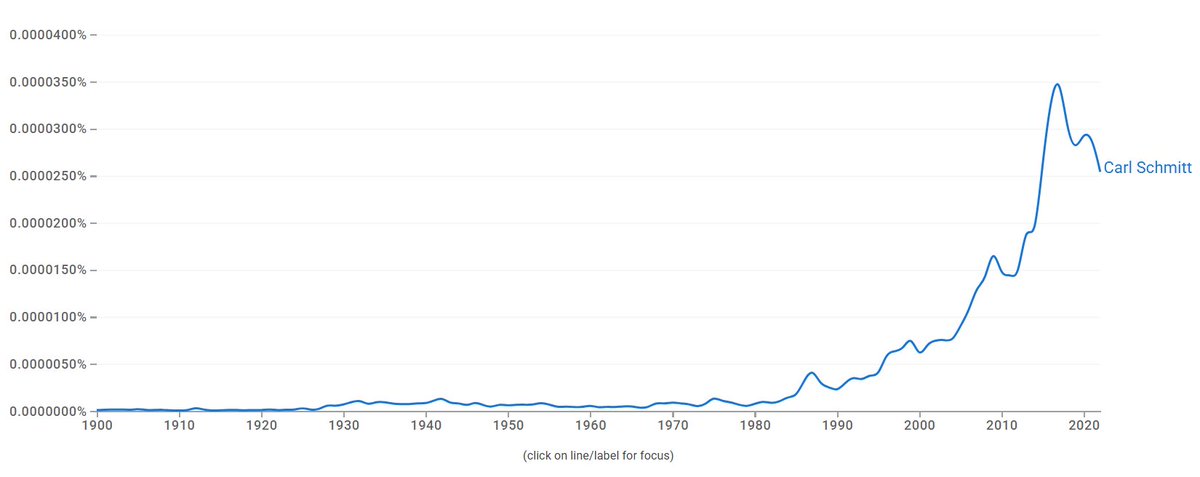
A bibliometric tour of Carl Schmitt, attesting that his alleged "importance" is a very recent phenomenon of only the last ~30 years. 🧵

First we start with English Ngram, which shows Schmitt had a negligible amount of citations until the 1990s. Image What about other language groups though? Here's French, where Schmitt had a slightly earlier rise no-thanks to Derrida and a few other postmodernist oddballs started engaging with him. But also, a very recent phenomenon that's almost entirely in the 1990s-2000s...and then drops. Image
Oct 4, 2025 13 tweets 4 min read
"Auron MacIntyre": I've never heard Darryl Cooper say anything about Carl Schmitt!

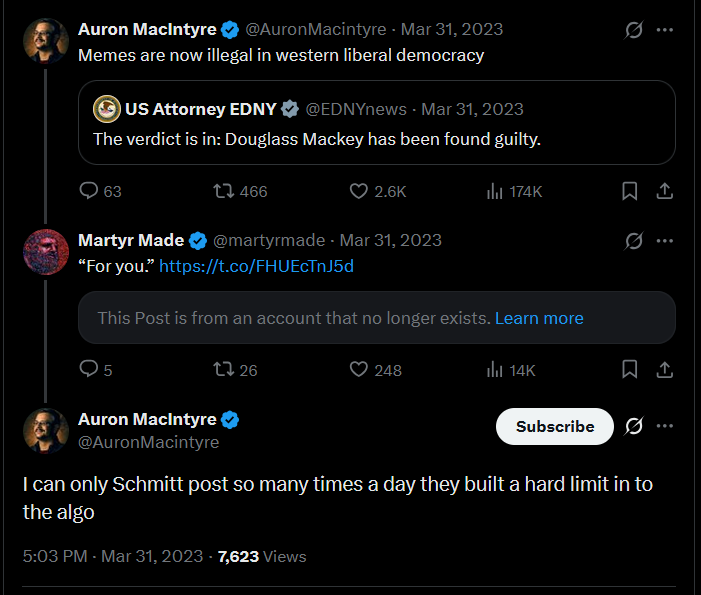
Meanwhile, here's "Auron MacIntyre" & Darryl Cooper casually making Schmitt jokes in their twitter banter. Image Post from 2020 suggesting this is when "MacIntyre" first encountered Schmitt.

His twitter feed subsequently became a Schmitt Show of fawning praise for the Nazi jurist. Image
Sep 7, 2025 11 tweets 3 min read
Here's JD Vance's long-since-deleted Twitter thread from April 2020, where he shares his opinions on the Covid lockdowns and dismisses skeptics. Image Image
Aug 12, 2025 9 tweets 4 min read
🧵Steve Miran is a pending nominee to the Federal Reserve Board. In addition to his fringe views on dollar devaluation, he has a long history of making basic errors about economics. The first example comes from a bizarre speech he gave after Liberation Day back in April.

Miran declared - without any evidence - that the entire economics profession is "wrong" to oppose tariffs.

whitehouse.gov/briefings-stat…Image
Jul 31, 2025 5 tweets 2 min read
So.,,Who wants to break it to Michael Brendan Dougherty that this misquotation of Disraeli is from a speech he gave in support of the protectionist Corn Laws, which in turn were a contributing cause of the Irish famine? 🧵 Image The actual quote was not from 1843, but rather a speech by Disraeli in 1845 where he attacked Richard Cobden and the free traders over their push to repeal the Corn Laws.

It also referred to *protection* as the "expedient," not "free trade." Image
May 30, 2025 9 tweets 3 min read
There's an extremely stupid talking point going around the MAGA/Tarrif-Bot world that claims Trump's tariffs are justified under the Trade Expansion Act of 1962.

Let's investigate it.🧵 First, let's start with the USCIT case that struck down Trump's tariffs.

This case was NOT about Section 232 tariffs under the 1962 Act. It was about the "Liberation Day" tariffs, which Trump imposed under the International Emergency Economic Powers Act of 1977 (aka IEEPA). Image
May 5, 2025 12 tweets 3 min read
I genuinely believe that Bessent is one of the leveler heads in a White House that's stocked full of protectionist crackpots. That said, he still grossly misunderstands tariffs, as per his piece in today's WSJ.🧵 Case in point here. He starts by arguing that tariffs are a negotiating tool to "reduce trade barriers in other countries." Image
May 1, 2025 6 tweets 1 min read
Marxists: You can't use GDP to show prosperity because it's just a construct of the neoclassical paradigm to reinforce capitalist power disparities.

Also Marxists: Rising inequality proves that capitalism is failing, as per Piketty's stats...which use GDP as their denominator. Marxists: Capitalism is responsible for climate change, colonialism, slavery, the bubonic plague, and every other disaster and death in human history.

Also Marxists: You can't fault Marxism for the atrocities of explicitly-Marxist states. Those weren't real Marxism.
Mar 23, 2025 8 tweets 2 min read
Tariffs are extremely unpopular with the American public (61% view them as harmful) and are uniformly opposed by economists. So why are we pursuing a trade war?

A. Trump stacked his economic team with fanatical band of Tariff Fundamentalist crackpots who support them anyway. Unlike most tariffs in the receng past, there isn't even a strong lobbyist push behind these ones. Lobbyists usually try to carve out tariffs for specific goods or industries, not impose them on entire countries. That suggests the source of the current tariffs is ideological.
Mar 2, 2025 5 tweets 2 min read
This is the fringe and error-riddled economic history that JD Vance brought into the White House.

americancompass.org/rediscovering-… It's rooted in a bizarre rehabilitation of the economic philosophy of 19th century Sen. Henry Clay, a large slaveholder from Kentucky who believed that the role of the federal government was to centrally plan the national economy, all fueled by debt finance and a National Bank
Nov 18, 2024 16 tweets 5 min read
This exact same pattern may be found for almost every trendy jargon term from academia.

It starts as an obscure proprietary concept on the Marxist far-left fringes of the professoriate. Then from about 2015 onward, it's everywhere. Image Two simultaneous trends explain why:

1. Starting around 2000, the academy shifted hard-left. With this shift, low-rigor ideological dreck from the Critical Theory fringe became the dominant perspective.

2. Journalism followed academia in adopting & promoting the same concepts.
Sep 3, 2024 7 tweets 2 min read
Academic leftists: "The reason academia skews left is because we do better research & reality has a left wing bias!"

Also academic leftists: "Here's my CV. I mainly do postcolonial ethnographies of how neoliberal capitalism oppresses indigenous Marxist sex workers in Greenland." Academic leftists: "Our department won't hire anyone on the right because their research isn't good enough, according to us."

Also academic leftists: "Here's my CV. I mainly write Marxist cat poetry using a critical theory lens. Sometimes my cat is credited as the coauthor."